Two hours in the Louvre, zero line stress. This hosted entry gets you past the skip-the-line doors and straight toward the big-name rooms people come for.
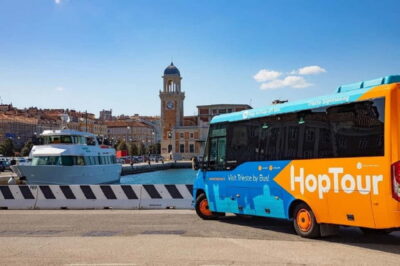
I also like that you don’t end the day at the museum. The hop-on hop-off double-decker bus pass keeps the itinerary moving with easy photo stops at top sights.
One caution: this setup is more of a hosted orientation than a full, room-by-room guide to every gallery. With limited time in the Louvre, you’ll want to go in knowing what you’re there to see.
In This Review
- Key points to know before you go
- Meeting at Arc du Carrousel: the Louvre-friendly start
- Reserved Louvre entrance and Mona Lisa orientation with your host
- The big highlights inside the Louvre in about 2 hours
- Picking your priorities: what 2 hours really means
- How the hop-on hop-off double-decker bus fits your day
- Stop-by-stop: what to look for along the bus route
- Price and value: is $122 per person a smart deal?
- Logistics that matter: what to bring and what to avoid
- Who this tour suits best
- Should you book this Louvre + bus day?
- FAQ
- FAQ
- Where do I meet for the Louvre experience?
- How long is the Louvre visit?
- Does this experience include skip-the-line access?
- Is the Louvre fully guided by a museum guide?
- What bus ticket is included and how long is it valid?
- What should I bring and what is not allowed?
- In what languages is the host/greeter available?
Key points to know before you go
- Reserved access through a separate entrance means less time stuck at the museum gates
- Host accompaniment to Mona Lisa so you get oriented and find the right starting point fast
- A focused 2-hour Louvre orientation hitting major works across multiple departments
- A 1-day double-decker bus pass that helps you string together Paris highlights without over-planning
- The bus route covers classic stops like Ile de la Cité, Place Vendôme, Invalides, Champs-Élysées, Eiffel Tower, and Palais Garnier
- 2-hour museum time is great for the essentials, but you’ll miss some galleries if you want total depth
Meeting at Arc du Carrousel: the Louvre-friendly start
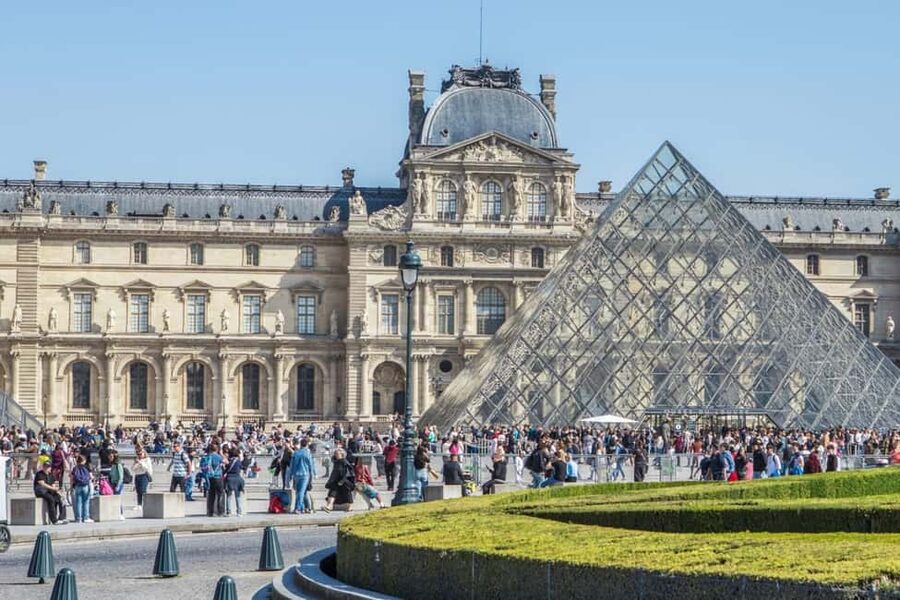
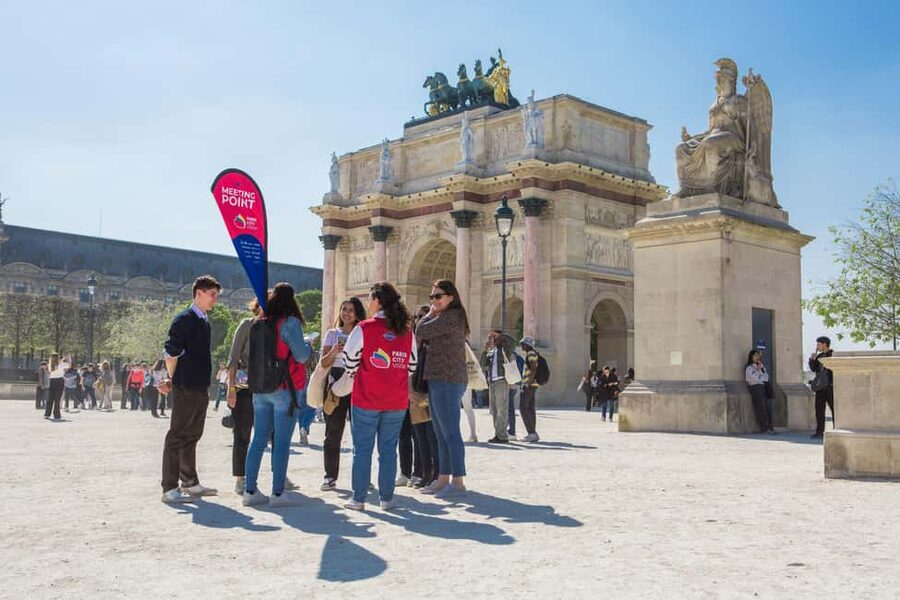
Your day begins at the Arc du Triomphe du Carrousel, right by the Louvre side, meeting at the Arc facing the Louvre pyramid. It’s a smart choice because you’re not commuting across town just to start the museum experience. You’re already in the right neighborhood, and the Louvre is the main event.
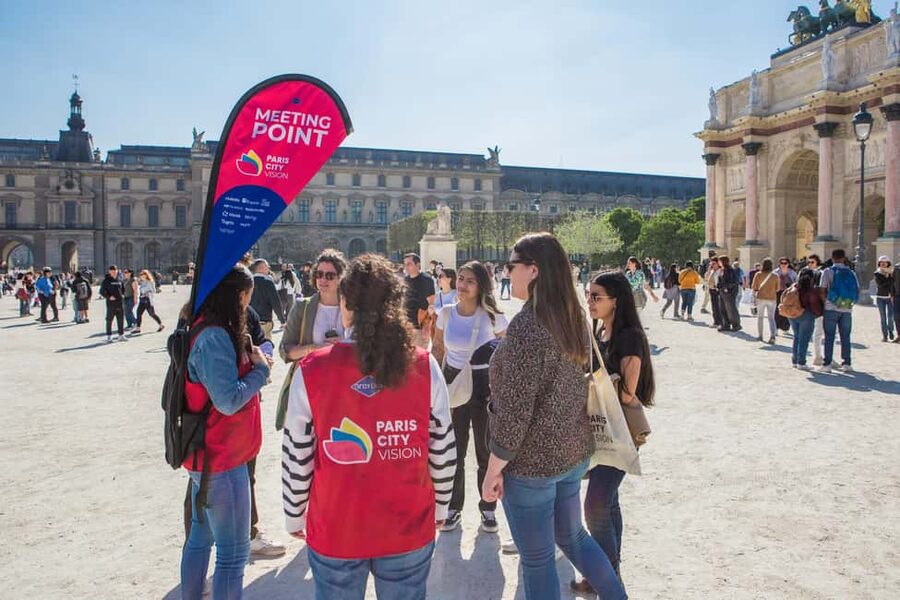
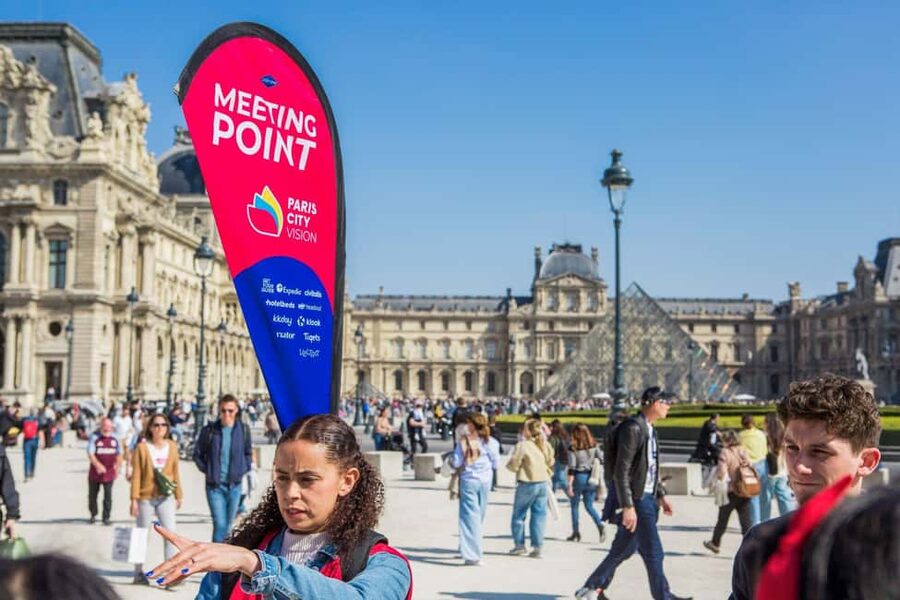
This is also where the tone gets practical: you’re meeting your host/greeter, getting pointed the right direction, and moving toward the Louvre without wasting early energy. If you’ve ever shown up at the Louvre and then immediately faced a maze of lines and entry logic, you’ll appreciate a plan that starts clean.
You’ll want to wear comfortable shoes. The Louvre is large—this itinerary gives you a taste in a short window, so your feet should be ready for fast walking.
Reserved Louvre entrance and Mona Lisa orientation with your host

The headline here is skip-the-line access. Instead of lining up with everyone else, you use a separate entrance with reserved entry. That matters because the Louvre is so popular that even short delays feel long once you’re inside.
Once you’re in, your host leads you through a structured orientation focused on the museum’s most famous stops. You’ll get accompaniment to the Mona Lisa, which is a big deal in practice. The Mona Lisa area is one of the busiest in the museum, so having someone help you reach the right place and understand the flow saves your day.
One important nuance: you’re not getting what many people think of as a full guided tour of the entire Louvre. Your time with the host is designed around a targeted orientation and key-room route. After that, you’ll still be making your own decisions about what to spend a little extra time on.
That’s actually a good fit for many first-timers. You get the structure to avoid wasting your limited visit time, while still getting to look at what grabs you.
The big highlights inside the Louvre in about 2 hours
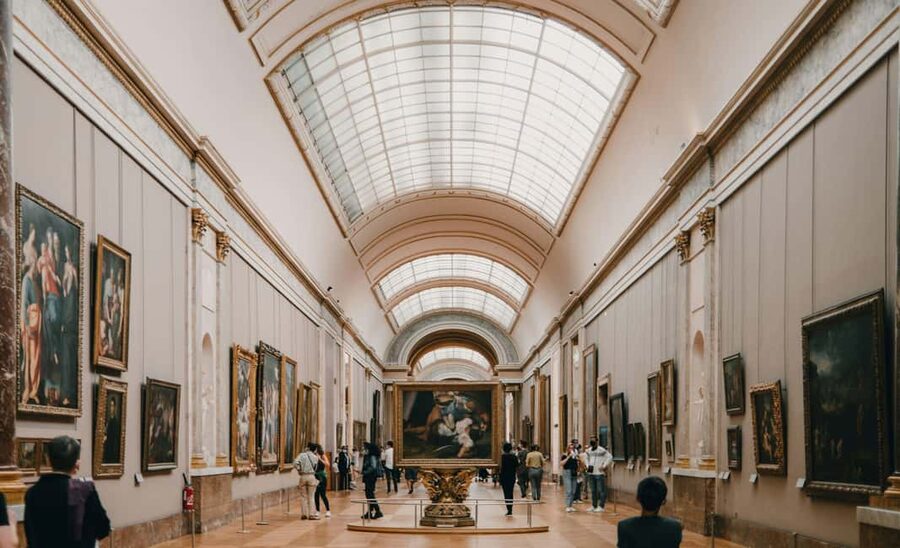
This plan works because it doesn’t try to cover the Louvre like a textbook. Instead, it hits major works and major “world” areas across different parts of the museum.
Here are the stops that anchor your orientation:
- Leonardo da Vinci’s Mona Lisa (painted in 1506)
You’ll see it as the centerpiece, with your host helping you reach it as part of the flow rather than trying to “figure it out” while crowds swirl.
- The medieval foundations of the palace
This is the sort of background that helps the Louvre make sense. You’re not only seeing art—you’re also seeing layers of the building’s history.
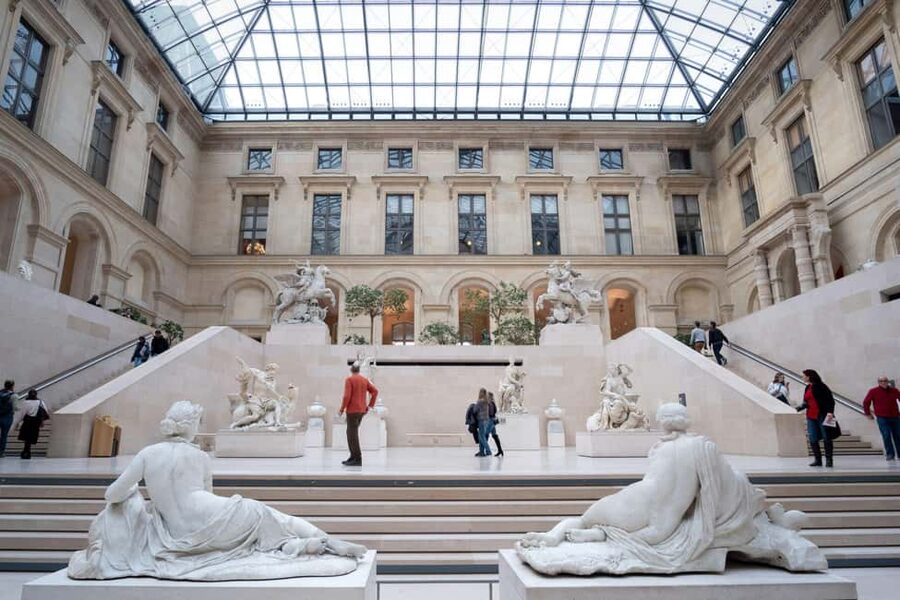
- Antiquity stars: Venus de Milo and the Caryatids
These aren’t just famous because they’re famous. They’re useful checkpoints for understanding how sculpture, posture, and material show up across eras.
- Etruscan collections
If you’re usually stuck with Egypt or Greek when you visit museums, this is a helpful change of pace. It broadens your sense of what “ancient” includes.
- Pharaonic Egypt, including the Seated Scribe and a mummy
Even in a short visit, Egypt tends to land hard emotionally. Seeing those objects in person gives you scale and context that photos can’t.
- Galerie d’Apollon
This is where decorative power becomes part of the experience. It’s the kind of space that makes you look up even if you came mainly for artwork.
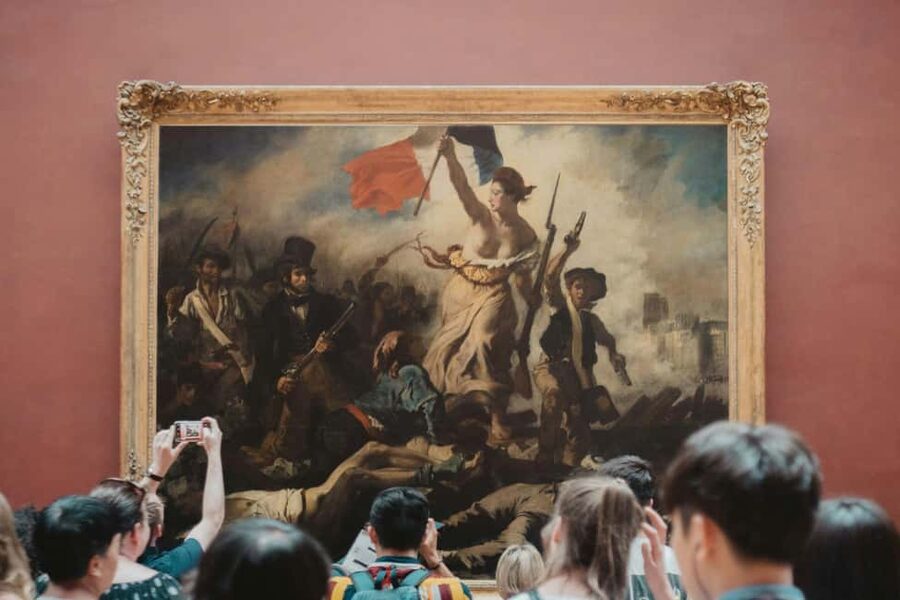
- French painting and political art: Liberty Leading the People
This is one of those works you can feel even if you don’t know every historical detail. It also helps connect the Louvre to France’s modern story, not just ancient civilizations.
- Royal decorative arts and the apartments of Napoleon III
This is the Louvre as palace, not just gallery. If you like architecture and how spaces were lived in, this angle is worth your attention.
- The Richelieu Wing and its French sculptures
This helps tie the museum’s identity together with a sense of French artistic legacy across time.
- Ancient Near East history through Mesopotamia, Syria, Persia, and Islamic Art
The orientation specifically points you toward origins tied to writing and culture, plus architecture and artistic traditions you might not expect to find in the Louvre.
Because the Louvre is enormous, a route like this is about efficiency. You’re not trying to see everything. You’re trying to see the right things first, so the museum doesn’t become a blur.
Picking your priorities: what 2 hours really means
Two hours inside the Louvre is useful, but it’s also a boundary. You’ll likely spend your time where the museum concentrates its most iconic works and where your host’s route guides you.
So here’s the best approach for your first visit: come with a shortlist of your must-sees—like Mona Lisa, an antiquities highlight (Venus de Milo or Egyptian pieces), and one French painting or sculpture moment (like Liberty Leading the People). Then let the host’s route do what it’s good at: directing your attention.
If you’re the type who wants quiet time, you might still find yourself moving with the group. But that’s also why the reserved entry helps. You start earlier, waste less time, and have more odds of catching your favorite pieces without losing the whole morning to logistics.
How the hop-on hop-off double-decker bus fits your day
After the museum, you transition to a different kind of sightseeing: view-based, flexible, and quick. The bus pass included here is a 1-day ticket that’s valid from the moment you get on the bus.
This matters because it changes how you should schedule your day. You don’t need to cram in every landmark with museum-style patience. You can use the bus as a moving vantage point, then choose whether you want to hop off for a closer look later.
Also, the stops are set up as photo stops for several landmarks. That’s a practical format. You get Paris’s greatest hits from the open-top feel of a double-decker, then you decide if the area deserves extra walking time on your own.
Stop-by-stop: what to look for along the bus route
Here’s how to make the bus route feel like more than just passing scenery. Think of each stop as a cue for what to look up at and where to position your camera.
- Ile de la Cité
This is a strong choice because it’s tied to Paris identity. When you look out over it from the bus route, it gives you a sense of the city’s historic core.
- Place Vendôme
Go for the symmetry and the classic Paris streetscape feel. Even if you don’t get out, you can frame photos that look like the postcards because the geometry is so clean.
- Invalides
This area is recognizable and visually monumental. If you care about France beyond the museum, it gives you a physical anchor to the country’s story.
- Champs-Élysées
This is Paris spectacle territory. Treat it like a visual corridor—watch for the way the avenue pulls your eye straight ahead, and use it to orient yourself for later.
- Notre Dame Cathedral
You’ll get a photo stop here. That’s enough to locate it in the city grid so your later street-level exploring makes sense.
- Eiffel Tower
This is the moment of scale. From the bus route, it helps you understand how Paris is shaped around major landmarks rather than separate “attractions.”
- Palais Garnier
Another iconic target. Even as a photo stop, it helps you connect Paris opera culture with the city’s grand building style.
If you want to stretch your day, consider hopping off for one or two stops you care about most, and keep the rest as quick “orientation photos.” That way you still have energy for evening plans.
Price and value: is $122 per person a smart deal?

At $122 per person, you’re paying for a bundle: skip-the-line Louvre access, a host-led orientation experience centered on major highlights (including Mona Lisa accompaniment), plus a 1-day double-decker bus pass.
It’s good value if you want a one-day Paris “greatest hits” structure:
- You save time at the Louvre with reserved access.
- You get a guided on-ramp to the museum’s most famous rooms.
- You don’t have to separately plan transportation for major sights after.
It may feel less efficient if:
- You already have your own transport plan for the day.
- You’re the type who prefers spending half a day or more deep inside the Louvre without any set route.
- You know exactly how to navigate the Louvre and you don’t need help finding your key objects.
In other words, think of this as a time-saver and a decision-maker. If that matches your travel style, the price usually lands in the right zone.
Logistics that matter: what to bring and what to avoid
Bring comfortable shoes, sunglasses, and a sun hat. You’ll walk more than you expect, and Paris daylight can be bright even when the weather looks mild.
Don’t bring pets, oversize luggage, or large bags. Smoking isn’t allowed either. The museum and the meeting flow are tight enough that big items can slow you down.
For meeting day, keep your confirmations handy. There’s limited patience for mix-ups when timed entry is involved. If any part of your day depends on ticket activation or matching details at the bus side, you’ll feel calmer having your booking information ready.
Who this tour suits best
This experience is a great fit if you:
- Want Mona Lisa without getting lost or burned by lines.
- Like having a short plan that still covers major categories: antiquities, Egypt, French painting, royal interiors, and sculpture.
- Want a smooth transition to a bus route that strings together central Paris sights.
It’s less ideal if you’re hoping for a long, detailed museum lecture style where every work is fully explained. This route is built to move, not to linger all day.
Should you book this Louvre + bus day?
Yes, if your goal is a smart first pass through the Louvre plus an easy way to see major Paris landmarks without another day of logistics. The reserved entrance plus the host’s orientation gives you momentum, and the bus pass helps you keep your day from collapsing into separate planning blocks.
But if you’re a slow museum explorer or you already have a tight plan for the Louvre from start to finish, you might prefer a more open-ended museum strategy and separate transport.
FAQ
FAQ
Where do I meet for the Louvre experience?
You meet at Arc du Carrousel 75001 Paris, facing the Louvre pyramid.
How long is the Louvre visit?
The Louvre Museum visit is listed as 2 hours.
Does this experience include skip-the-line access?
Yes. It includes skip-the-line access to the Louvre Museum through a separate entrance.
Is the Louvre fully guided by a museum guide?
No. It’s described as not a guided visit for the Louvre, with a host who accompanies you to the Mona Lisa and provides an orientation-style experience through key areas.
What bus ticket is included and how long is it valid?
You get a 1-day pass in a double-decker bus, valid 1 day from the moment you get on the bus.
What should I bring and what is not allowed?
Bring comfortable shoes, sunglasses, and a sun hat. Pets, oversize luggage, smoking, and large bags are not allowed.
In what languages is the host/greeter available?
The host/greeter is available in English, Spanish, Portuguese, Italian, and German.