Berlin’s biggest landmarks, explained live.
This hop-on hop-off bus tour is an easy way to learn what you’re looking at, with guides who switch between German and English and keep the story moving with humor. I especially like the way the ride connects the dots between key sites, like the rise and fall of Potsdamer Platz and the sharper edges of the WWII and Cold War stops.
Two other things I like: you get practical pacing with frequent buses between roughly 9:30 AM and 5 PM, and the route is built for first-timers who want to map Berlin fast. The main drawback to keep in mind is that this is still a bus ride with occasional route detours and, at peak times, some departures may run only audio rather than a live guide.
In This Review
- Key things to know before you ride
- Why the live German and English format works so well
- Price and time value: $22 for a whole day of major sights
- Where you can start matters more than you think
- Your route, stop by stop: what to expect and what to watch for
- KaDeWe area to Potsdamer Platz: from shopping Berlin to Cold War scars
- Topography of Terror and the Checkpoint Charlie wall area: learn hard history without extra tickets
- Gendarmenmarkt to Alexanderplatz: classic squares, then Berlin’s big skyline
- Museum Island and Humboldt University: the brainy part of the center
- Unter den Linden and Friedrichstraße: grand boulevard meets specific landmarks
- From embassies to the Brandenburg Gate: the memorial sequence is the emotional center
- Tiergarten to Bellevue Palace: ending with the green and the official face of Germany
- How often the buses run (and how to use that freedom)
- What to listen for: small details that make the tour feel more real
- Buses, comfort, and practical rules that affect your day
- Should you book this Berlin hop-on hop-off bus tour?
- FAQ
- What language is the commentary on this tour?
- How long is the tour?
- How often do the buses run?
- Can I start from any stop on the route?
- Is there a hop-on hop-off option?
- What sights are included on the route?
- What happens if the guide is not available due to capacity or illness?
- Is the tour wheelchair accessible?
- Are there restrictions on luggage or items?
Key things to know before you ride
- Live German and English commentary instead of only recordings, with many guides praised for smooth language switching.
- Hop on, hop off all day at major sights, so you can spend 30 minutes or two hours where it matters to you.
- Cold War and WWII stops are direct and close-up, including Potsdamer Platz, Topography of Terror, and Checkpoint Charlie.
- Unter den Linden may involve bypass routing, and a few central stops can be skipped during specific road constraints.
- Frequency is high (usually every 15–30 minutes, less frequent in winter), so you won’t feel trapped on the bus.
- You may miss the stop timing during seasonal events, such as Christmas market closures at certain stops.
Why the live German and English format works so well
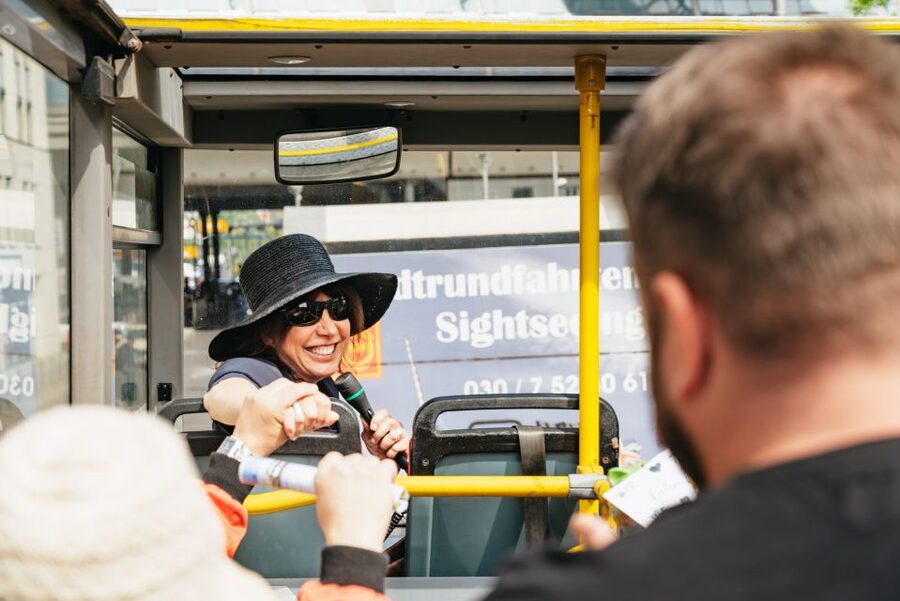
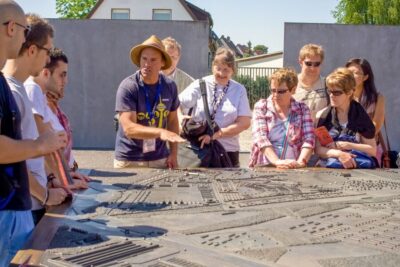
Berlin is one of those cities where everything looks like a postcard… until you learn the backstory. This tour makes that backstory useful, not heavy. You’ll get guided narration in German and English, and the best part is that the guide can adjust in real time. If you’re the type who asks small questions like Why was this here? or What changed? you’ll appreciate that human commentary.
Even if you’re staying only a short time, this format helps you build a mental map. KaDeWe and the Kulturforum area give you a sense of Berlin’s “grand city” face. Potsdamer Platz and the Holocaust Memorial area pull you into the harder chapters. By the time you’re at the Brandenburg Gate and the government district, the city feels less like separate attractions and more like a timeline.
A practical note: one reason reviews consistently praise the tour is the difference between a live guide and an all-audio experience. Some riders specifically called out that live commentary can make the whole day feel less like sightseeing “from a window” and more like walking through a story.
Price and time value: $22 for a whole day of major sights
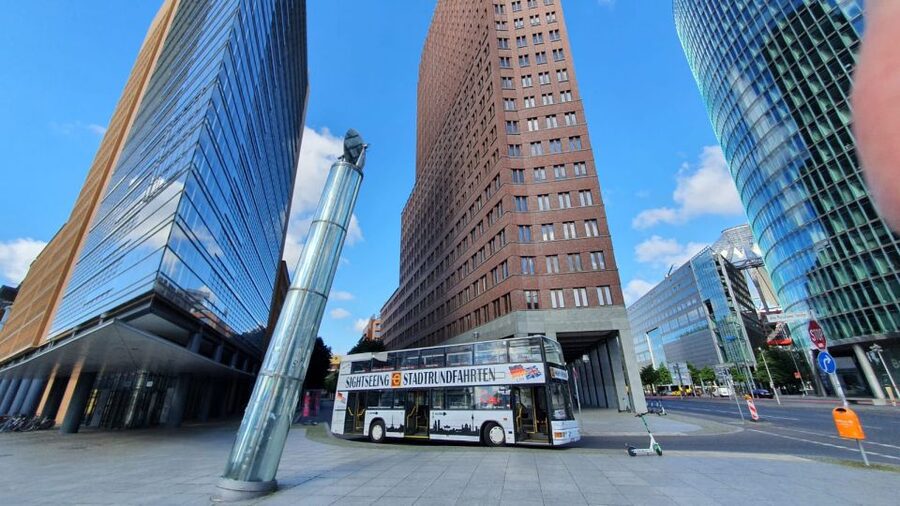
At about $22 per person for a 1-day ticket, the value is in how many big, iconic stops you can cover without planning a complicated route. You’re not just buying transportation. You’re buying someone else’s route logic plus a guided overview that’s hard to recreate on your own in one day.
Here’s why that matters for your time. Berlin’s central sights are spread enough that you can easily waste an entire afternoon switching trains, walking cross-town, and then realizing you missed a stop. With a hop-on hop-off setup, you can do the “big hits” first, then hop off later for whatever you want to see up close.
The day runs roughly from 9:30 AM to 5 PM, and buses run at least every 15–30 minutes (and every 30–45 minutes from November to March). That timing is generous if you plan with simple common sense: start early, do your long-look stops first, and save shorter photo stops for later.
Where you can start matters more than you think
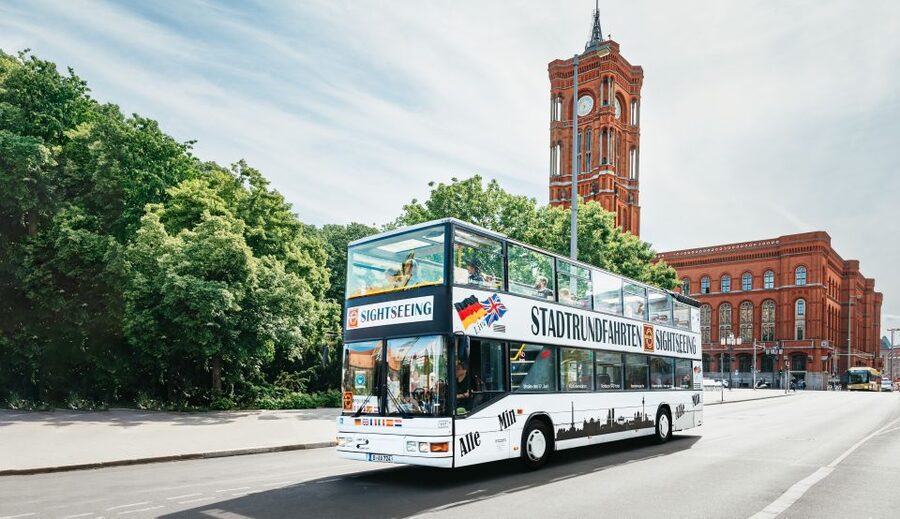
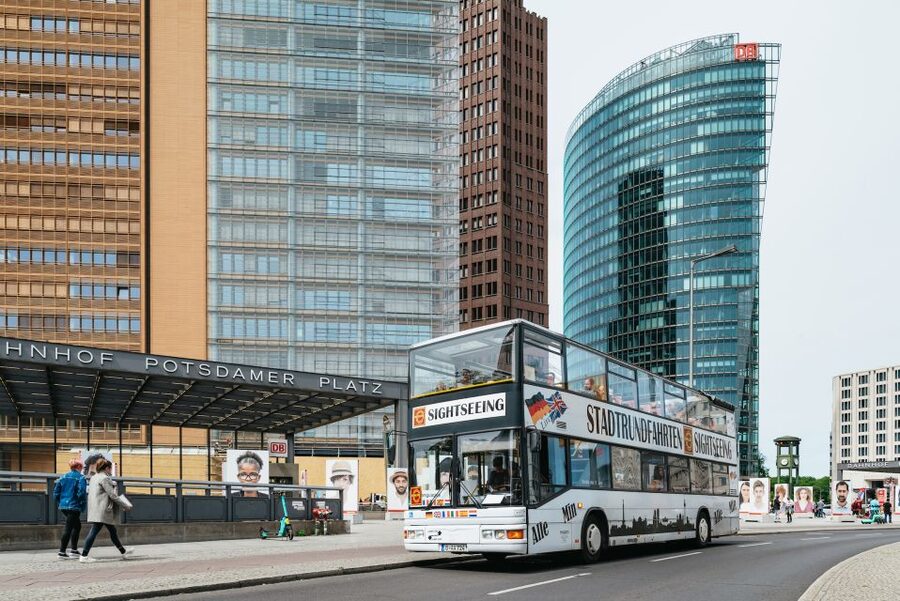
The tour is flexible about where you board. You can start at multiple points along the line, including Kurfürstendamm 231 in front of Galeria, the KaDeWe main entrance, Potsdamer Platz near the Kolhoff Tower, Alexanderplatz by the TV Tower/Spandauer Str. area, and down toward Brandenburg Gate and Reichstag.
For your decision-making: if you’re staying near west Berlin shopping zones, starting by KaDeWe can feel efficient. If you’re near the Mitte/central cluster, starting nearer Alexanderplatz or Museum Island saves you from spending your best daylight traveling.
Your route, stop by stop: what to expect and what to watch for
KaDeWe area to Potsdamer Platz: from shopping Berlin to Cold War scars
You’ll pass KaDeWe, then work your way toward the Cultural Forum area before arriving at Potsdamer Platz. This stop is one of the tour’s strongest “then and now” moments.
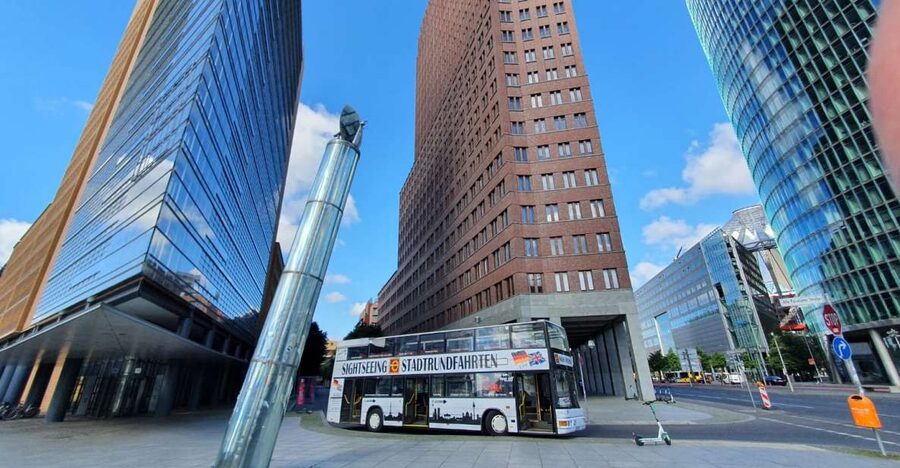
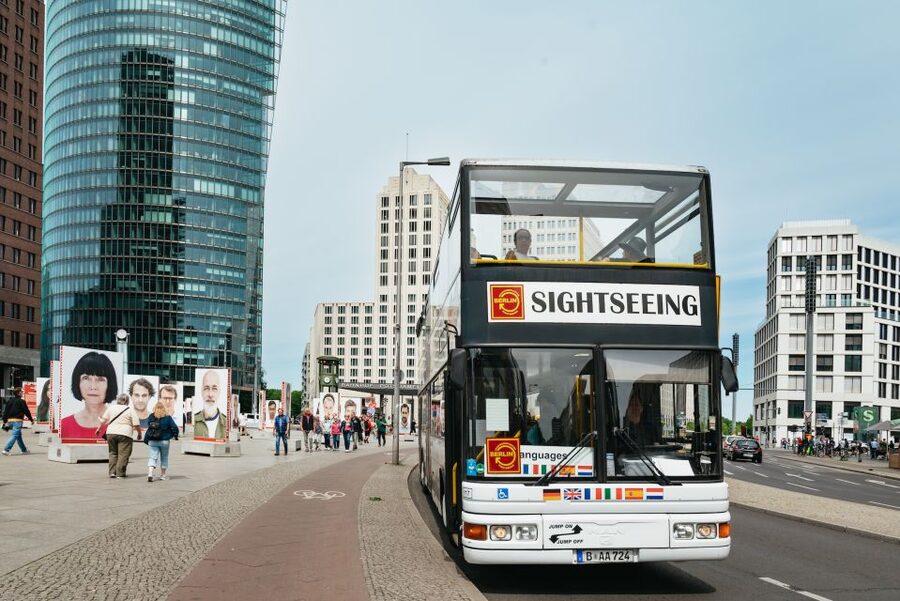
Potsdamer Platz was one of Berlin’s most public squares in the 1930s. After World War II, it became no man’s land—with the Berlin Wall turning it into a tense, controlled border area. Today it’s filled with new towers and city energy, including the Legoland Discovery Center on Potsdamer Platz, which makes the area feel surprisingly modern compared to its past.
What to do with the hop-off time: if you’re into photography, Potsdamer Platz is worth a focused look, because the architecture creates an immediate contrast with the Cold War story you just heard.
Topography of Terror and the Checkpoint Charlie wall area: learn hard history without extra tickets
Next comes Topography of Terror, tied to Nazi persecution and the suffering of Jewish people under Nazi rule. Even if you don’t go inside for a long time, the bus commentary sets context that you can’t easily get from a quick street glance.
After that, you reach the Checkpoint Charlie Wall Museum area. This is one of those places where the location itself is the lesson—Cold War Berlin made borders into everyday theater, and this stop keeps that idea in view.
Practical consideration: if you have limited time, decide in advance whether you want to spend more time here or keep the day moving. This tour makes it easy to hop off, but the best use of your time depends on your interests.
Gendarmenmarkt to Alexanderplatz: classic squares, then Berlin’s big skyline
At Gendarmenmarkt, you’ll see one of Berlin’s more glamorous squares. From there, the route continues toward Alexanderplatz, including Neptune Fountain and the TV Tower area.
A useful detail for your understanding: the Neptune Fountain area used to be tied to the former Berlin City Palace. So when the tour frames what you’re seeing now, you get a sense of how Berlin layers eras on top of eras.
Also along the way you’ll pass SEA LIFE Berlin, which is handy if you’re traveling with kids or want a quick indoor break from the weather.
Seasonal note: if the Alexanderplatz / Neptune Fountain stop is closed due to a Christmas market, the tour uses the Karl-Liebknecht-Str. 5 stop instead.
Museum Island and Humboldt University: the brainy part of the center
You’ll ride past Museum Island and the Humboldt University of Berlin area. This is where Berlin’s “learning city” identity shows up in stone. The bus doesn’t turn this into a museum ticket pitch, but it gives you enough context to make a future visit feel smarter.
If you want a short stop here, aim for 30–60 minutes. If you truly want museum time, you’ll likely want a separate day because hop-on hop-off is built for orientation and select deepening, not full museum marathons.
Unter den Linden and Friedrichstraße: grand boulevard meets specific landmarks
The Unter den Linden stretch is one of Berlin’s showpieces. You’ll pass sights connected to the boulevard’s official and cultural vibe, including Bebelplatz, Bud Spencer Museum (Unter den Linden 10 area), and stops around Friedrichstraße, including ZDF Capital City Studios at Unter den Linden 36.
There’s also Madame Tussauds Berlin at Unter den Linden 74. This is a good “keep moving” stop if you want an easy attraction without the planning burden.
Important detour reality: there is a tunnel structure on Unter den Linden considered at risk due to vehicles that are too heavy. As a result, the tour may bypass the route, and sometimes it may be unable to reach stops around 11 to 13. On the bypass, you may see places like Hackescher Markt, the New Synagogue, and Friedrichstadt-Palast—so the detour can still be productive, even if it changes which exact stops you touch.
From embassies to the Brandenburg Gate: the memorial sequence is the emotional center
When you head toward the Brandenburg Gate, you’ll see embassies from the UK, Russia, France, and the US. Then comes the Holocaust Memorial, with the stop at Platz des 18. März.
This segment is more than a sightseeing checklist. The emotional weight here is why the guided framing matters. Even if you only step off for photos, the narration helps you connect the memorial to the wider history the tour has already been building.
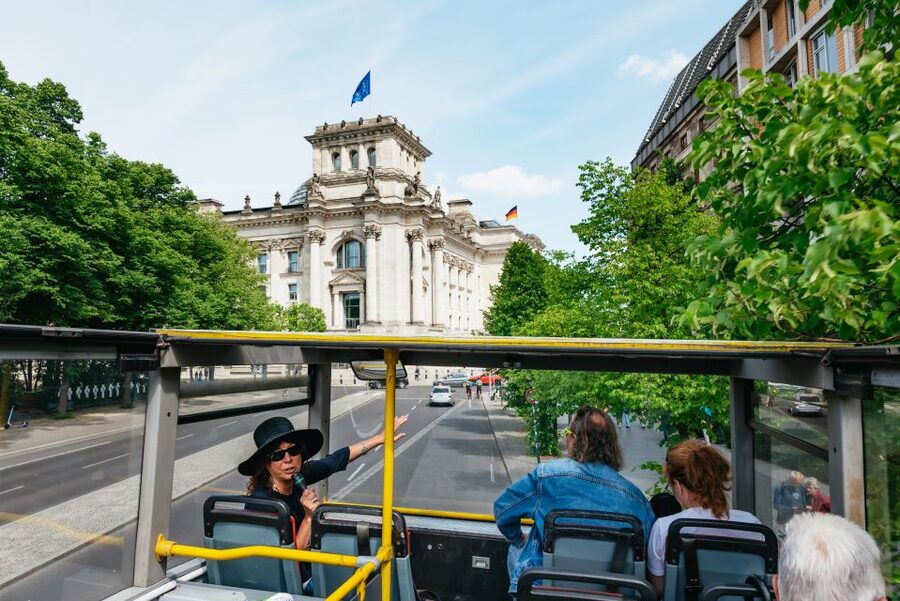
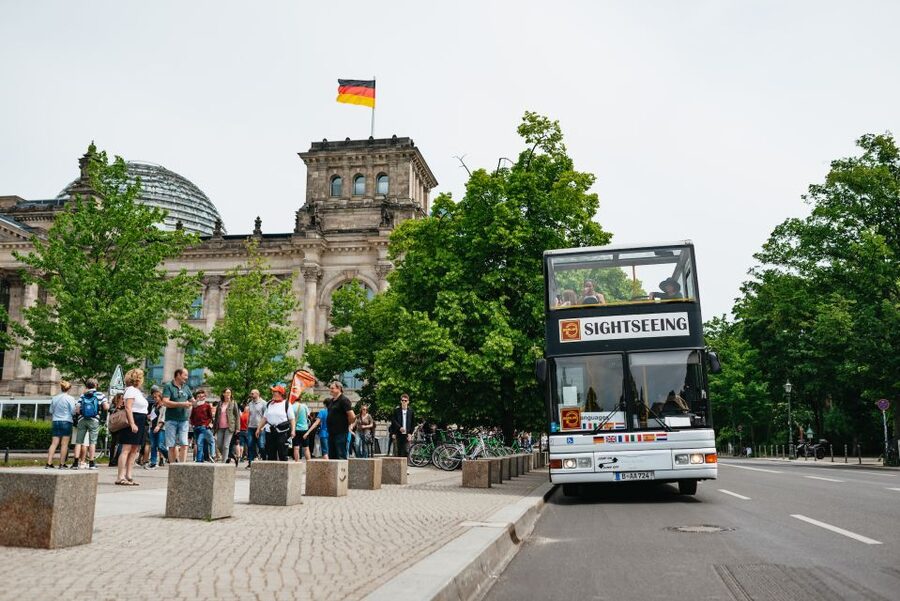
After that, you continue past the Reichstag and toward the government district, including the view area around Berlin Hauptbahnhof.
One special surprise mentioned in the tour description: you’ll get a world-famous view of the German Chancellery and the Reichstag, plus a Berlin nickname called Fujiyama as part of the sightseeing beats.
Tiergarten to Bellevue Palace: ending with the green and the official face of Germany
The route crosses Berlin’s “green lung,” Tiergarten, which the tour notes is bigger than New York’s Central Park. It’s a nice change of pace after all the heavy historical stops.
Then you’ll pass Congress Hall and reach Bellevue Palace, the official residence of the President of Germany. Nearby you can see Siegessäule, with the golden Victoria statue on top.
If you want a final photo window without chaos, this is a solid end-of-route area. It also gives you options: hop off, take a slow look, then stay in the area to keep exploring.
How often the buses run (and how to use that freedom)
You’re not stuck waiting forever. The tour notes that scheduled buses run at least every 15–30 minutes between about 9:30 AM and 5 PM (and every 30–45 minutes from November to March).
That means you can make a simple plan:
- Do the “hard history” and “big monuments” first.
- Use later hop-offs for whatever clicked in your mind.
- Don’t over-plan. If you’re tired, stay on the bus and watch the city transition.
One more practical heads-up: there can be times when, due to illness or higher-than-expected passenger volume, a bus may run with audio system only instead of a human guide. The next bus should bring the live-guided experience back.
What to listen for: small details that make the tour feel more real
The live guides frequently add personal touches and humor, and some names came up again and again in praise: Martin, Otti, Thilo, Steve, Dimitri, and Kerstin.
You can use that as a strategy. When your guide starts explaining the “why,” don’t tune out. For example:
- Potsdamer Platz isn’t just a photo spot. It’s a story about reconstruction and the Wall’s shadow.
- The Holocaust Memorial stop is strongest when you slow down for 2–3 minutes instead of rushing for one picture.
- When you reach Unter den Linden, treat it like a “walk-through” of official Berlin, then use hop-off time to match your interests.
Buses, comfort, and practical rules that affect your day
The tour is wheelchair accessible.
A few rules affect logistics day-to-day:
- No smoking.
- No luggage or large bags.
- You’ll want a passport or ID card (copy accepted).
Comfort can vary by bus. Some reviews mention that certain vehicles can feel outdated. If you’re sensitive to that, board earlier buses when you can, and if the one you’re on feels uncomfortable, switch at the next stop during the hop-off loop.
Weather can also change your day. Berlin can be cold outside the summer months, and open-air temps at stops can add up.
Should you book this Berlin hop-on hop-off bus tour?
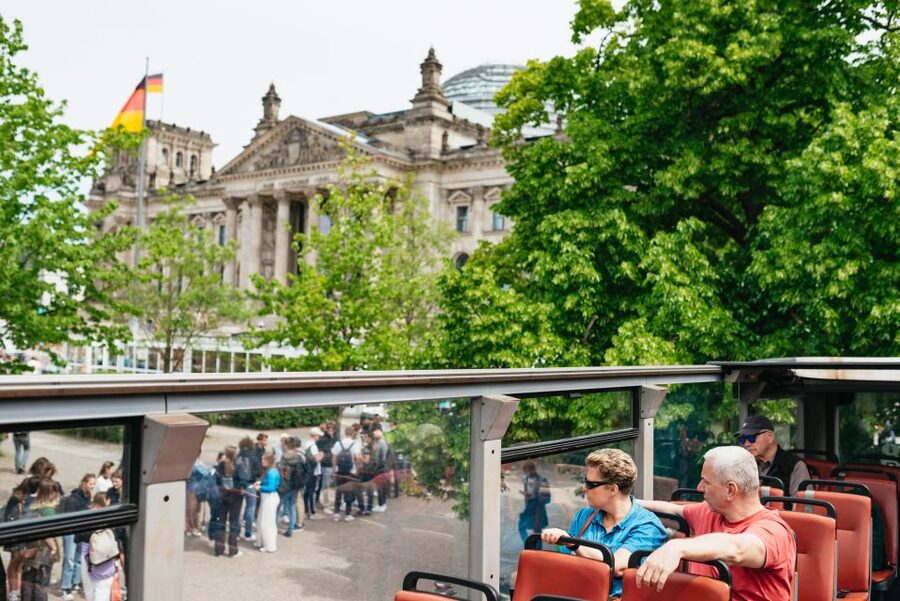
I’d book it if you want a one-day big-picture orientation that still touches the city’s most important historical sites. It’s also a strong choice if you’d rather spend your energy asking a live guide questions than hunting down the right subway line to string everything together.
I would skip it or pair it with other plans if you need deep museum time for multiple attractions. This is a smart sampler. It gets you oriented and points you toward what to do next, but it won’t replace a dedicated visit to places like Topography of Terror or the museum island area.
If live commentary is your priority, this tour is the version that tends to satisfy. Many riders explicitly praised guides for being funny, energetic, and good at switching between German and English, including names like Otti and Dimitri.
FAQ
What language is the commentary on this tour?
The tour includes audio guide and tour guide commentary in German and English.
How long is the tour?
The ticket is valid for one day and the ride operates roughly between 9:30 AM and 5 PM.
How often do the buses run?
Buses run at least every 15–30 minutes. From November to March, it’s typically every 30–45 minutes.
Can I start from any stop on the route?
Yes. You can start from multiple pickup points, including stops near Galeria/KaDeWe, Potsdamer Platz, Alexanderplatz, Brandenburg Gate, Reichstag, and Zoologischer Garten.
Is there a hop-on hop-off option?
Yes. Your ticket is hop-on hop-off, so you can get off and rejoin later buses.
What sights are included on the route?
The route covers major areas such as Potsdamer Platz, Topography of Terror, Checkpoint Charlie, Gendarmenmarkt, Alexanderplatz, Museum Island/Humboldt University, Unter den Linden, Madame Tussauds, Brandenburg Gate, Reichstag/government district, Tiergarten, and Bellevue Palace.
What happens if the guide is not available due to capacity or illness?
In some situations the bus may run with an audio system only. If that happens, the next bus should have a human guide.
Is the tour wheelchair accessible?
Yes, it is listed as wheelchair accessible.
Are there restrictions on luggage or items?
You can’t bring luggage or large bags, and smoking is not allowed.