Buda Castle stairs can be brutal. This official electric hop-on bus helps you glide up and hop off at major landmarks around Castle Hill. I love the open-air feel of the ride, because you get great sightlines without the constant uphill slog.
I also like how easy it is to get started and keep moving: a greeter welcomes you near the Chain Bridge area and scans your ticket. Once you’re on, you’ll find frequent departures so you’re not trapped waiting around if one bus fills up.
The catch is planning: the ticket is not an unlimited, all-day loop. Your ticket expires once you return to the starting point at Clark Adam Square, so you’ll want a simple order for your hop-offs.
In This Review
- Key Points Worth Knowing Before You Ride
- Electric Comfort Up Castle Hill
- Price and Value: When $21 Makes Sense
- Boarding at Clark Adam Square and How the Loop Works
- How Often the Electric Buses Run
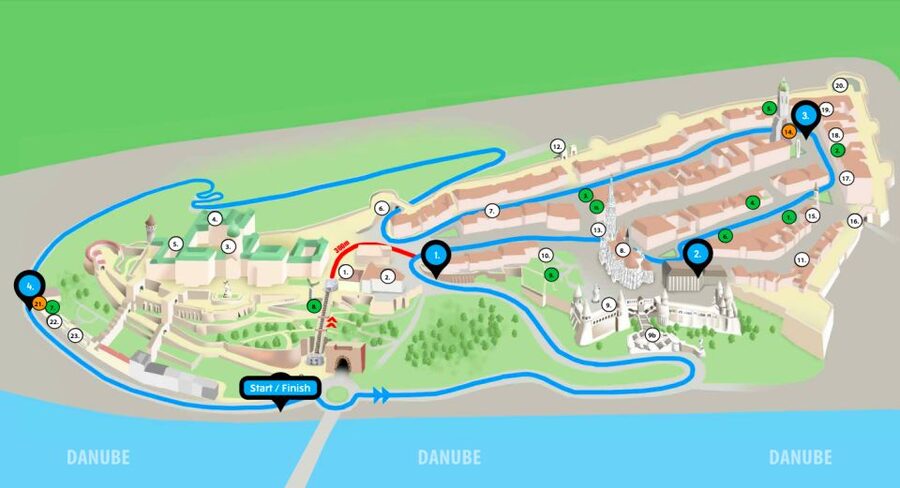
- Stop-by-Stop: What to See on Castle Hill
- 1) The Royal Palace Zone: Major Hungary landmarks
- 2) Jewish Heritage on the Hill: Mikve and the Labyrinth area
- 3) Matthias Church and Fisherman’s Bastion Views
- 4) Towers, Statues, and Under-Gravity Curiosity
- 5) Gates and Archive Buildings: more outer-ring exploration
- Using the Bus for Lunch and Drinks
- Where the Bus Falls Short: Planning Beats Spontaneity
- Best Fit: Who Should Book This Bus
- Should You Book the Official Buda Castle Electric Hop-On Bus?
- FAQ
- FAQ
- How much does the Budapest Castle electric hop-on bus cost?
- How long is the ticket valid?
- Where do I meet the bus?
- Is this bus a guided tour?
- Can I hop off and hop back on at the stops?
- How many times can I use the ticket?
- Does the ticket include rides within the Castle Hill protected zone?
- What are some major stops or landmarks on the route?
- How often do the buses run?
- Is free cancellation available?
Key Points Worth Knowing Before You Ride

- Official electric hop-on hop-off for Castle Hill: you’re moving inside the protected Castle Hill area, not across the whole city.
- Easy boarding near the Chain Bridge: get scanned at the start, then hop on at official stops.
- You control your time on foot: hop off to explore, then hop back on at the next stop.
- Views from the bus are part of the experience: the upper-level, open-air ride makes the climb feel less punishing.
- Plan for the ticket rules: it’s valid for one round and tied to returning to Clark Adam Square.
Electric Comfort Up Castle Hill
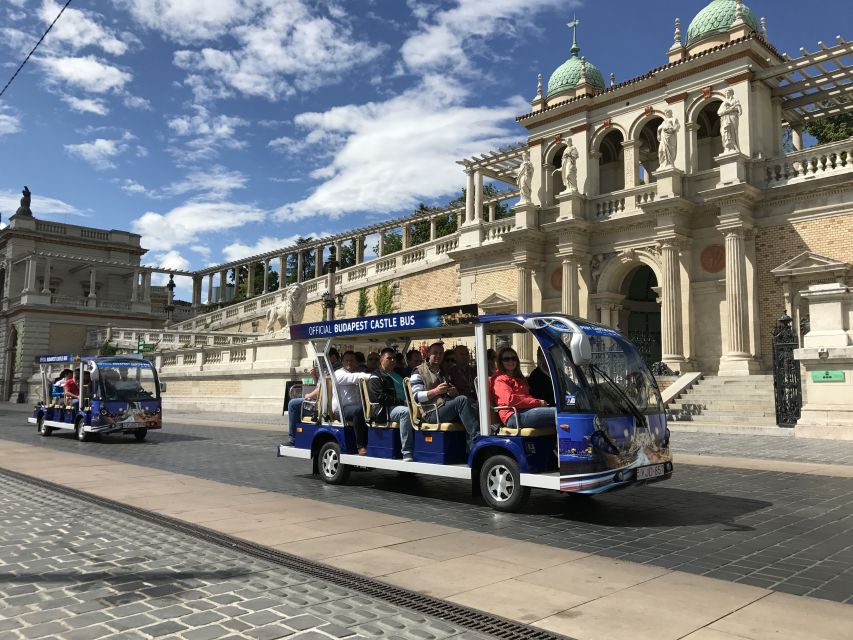
The Buda Castle district is gorgeous, but it’s also built on steep ground. That’s exactly where an electric hop-on bus earns its keep. Instead of doing the same uphill walk again and again, you can ride up, hop off for the sights that interest you, then re-board when you’re ready.
What’s nice here is the bus experience itself. It’s an open-air electric bus, so you’re not sealed inside a stuffy cabin while the city climbs past you. I’d treat the ride as part of sightseeing. You’ll get a steady flow of views over the river and across the castle area as you move between the main zones.
Also, this is the official Castle Hill shuttle concept. That matters because you’re not guessing which bus goes where or how far you still have to hike to reach the next attraction. The stops are tied to well-known landmarks on Castle Hill, letting you build a day that matches your energy level.
Price and Value: When $21 Makes Sense
At about $21 per person for a 1-day ticket, the value comes down to one thing: how much walking you want to avoid. Castle Hill is not just “a bit hilly.” It’s a place where your feet do real work, especially if you’re bouncing between viewpoints like Fisherman’s Bastion, Matthias Church, and the Royal Palace zone.
If you’re the type who likes to see a lot without turning your trip into a stair workout, this fits well. You can spend your energy on actually exploring the sights once you’re at street level, rather than burning time and legs on the uphill transfers.
The bus also helps you change plans mid-day. You might start with one landmark, then realize you’d rather linger at a viewpoint or grab a snack near a stop before moving on. The service is built for that stop-and-start rhythm, and the frequency helps too.
That said, you should buy with the ticket rules in mind. This isn’t a pass that lets you roam indefinitely until you feel like returning.
Boarding at Clark Adam Square and How the Loop Works

The easiest way to picture this day is simple: you start near Clark Adam Square by the Chain Bridge area, get scanned by a greeter, then you ride up to the Castle Hill stop network.
Even though the meeting point is listed as any official castle bus stop, the day is designed around the Clark Adam Square start/finish point. Your ticket is controlled at the start, and the service runs within the Castle Hill protected zone, meaning you’re focused on that district rather than citywide hopping.
One important detail: the ticket is valid for one round and expires when you get back to Clark Adam Square. So don’t think of it like a forever loop. Think of it like a ride up and around, with a defined finish back near the bridge.
In practice, that means your best strategy is to decide your priorities before you board:
- Start with the sights you don’t want to miss.
- Use the bus to save walking time between zones.
- Return when your ticket window ends, not when the day naturally ends.
Also note the service concept around hop-ons. The information you’re given includes that your ticket can be used a limited number of times (you’re told you can use it up to three times), and other instructions emphasize you’re expected to get off when you reach the start/finish area. So plan as if the bus ride is flexible, but not endless.
How Often the Electric Buses Run
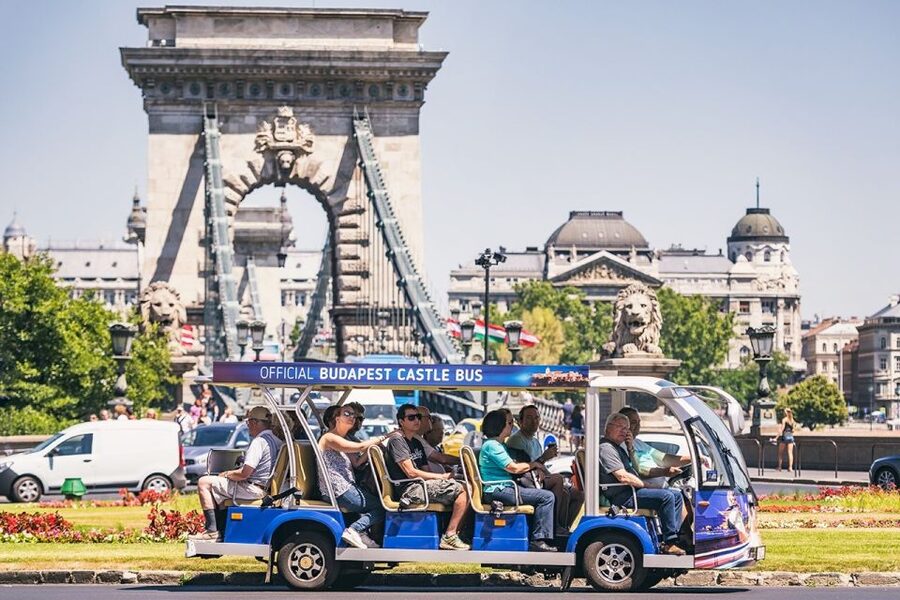
This is one of the practical strengths of the service. You’re not stuck waiting a long time between rides. There’s a good rhythm, with buses coming frequently—about every 5 minutes in normal conditions.
That matters for your comfort and time. When you’re hopping between viewpoints, you want low friction: get off, look around, and move again without a long wait. Frequent service also helps if a bus is full when you arrive at a stop.
One more small tip: drivers can be helpful and explain what you can see as you pass stops. The amount of detail varies depending on where you sit, so if you want to hear the driver’s remarks, sit closer to the front or toward the middle rather than the far end of the upper level.
Stop-by-Stop: What to See on Castle Hill
Instead of trying to cover everything on foot, use the bus to jump between the big landmark zones. You’ll recognize the sights right away, and you can tailor your time at each place.
Below are the main hop-off moments and what each one is good for. Since the route is built around five main stops/areas, each hop-off point is essentially a launchpad for a few well-known sights.
1) The Royal Palace Zone: Major Hungary landmarks
This is where the day can feel most “official.” You’ll get access to the Royal Palace area and nearby landmark points such as Alexander Palace, the Prime Minister’s Office, and the Royal Palace – Hungarian National Gallery.
Why it’s worth prioritizing: it’s central to the whole Castle Hill story. If you want grand buildings, museum-sized architecture, and the feeling of being in the heart of the district, this zone is the one to target first or second.
Time tip: if you’re short on time, don’t try to do every interior. Use the bus to land here, walk the perimeter, then pick one indoor option based on your interests.
2) Jewish Heritage on the Hill: Mikve and the Labyrinth area
Another standout area you can reach by bus is the Jewish-related historic sites on Castle Hill, including the Ritual Jewish Bath (Mikve) and the Labyrinth of Budapest Castle. This area is also connected with other listed historic sites like the Medieval Jewish Prayer House.
Why I like this as a contrast: it shifts the mood from big palace scale to something more intimate and layered. It also gives your day variety, since you can bounce from churches and viewpoints to a very different kind of history without changing neighborhoods by foot.
Practical note: these are places where you may want a little extra time inside, especially if you plan to read signage carefully.
3) Matthias Church and Fisherman’s Bastion Views
If you want that “this is Budapest” photo moment, aim for the classic church-and-view combo. Your route includes Matthias Church and Fisherman’s Bastion, both of which are real anchors for the district.
What’s great about using the bus here: you don’t have to grind uphill repeatedly to chase the viewpoints. Hop off, look around slowly, then use the next ride to reposition.
Downside to be aware of: viewpoint zones tend to be busy. The bus helps reduce your walking burden, but you’ll still want to plan for crowds once you reach the top sights.
4) Towers, Statues, and Under-Gravity Curiosity
Between the big monuments, you can also access stops tied to structures and “oddly fascinating” history-science type places. On the route you’ll see names like:
- Museum of Music History and Institute for Musicology
- Hospital in the rock
- Holy Trinity Statue
- Maria Magdalena Tower (Buda Tower)
This is where I’d tailor your stop choices to your curiosity. If you’re the kind of traveler who likes one or two “weird-in-a good way” stops, the names here are a strong hint. If you’re more architecture-and-views focused, you might spend less time in the museum-style options and use the bus primarily as your transport between signature viewpoints.
5) Gates and Archive Buildings: more outer-ring exploration
Finally, the route reaches beyond the most famous postcard spots into the more structural edges of the district. Stops include places such as:
- Vienna Gate
- National Archives of Hungary
- City Hall
- Hungary’s No.1 Flag
This is a good time to slow down and notice details you might otherwise rush past. Gates and archives aren’t always the first thing people plan for, but they can make your visit feel more complete.
If you’re running out of energy, you can also treat this zone as a “stroll and regroup” area—enough to break the day up, not so much walking that you lose the rest of your afternoon.
Using the Bus for Lunch and Drinks
One of the smart parts of this shuttle is that it connects to the areas where you can pause for food and drinks. The service stops near restaurants and bars along the way, so you can hop off, grab a snack or refreshment, then re-board.
I recommend a simple rule: don’t eat in a way that forces you to rush the next hop. Choose a spot near your stop so you’re not adding extra walking on top of the day’s already-steep terrain.
If you’re traveling with kids or older relatives, this “food breaks without extra climbing” style is especially helpful. It keeps the day from becoming all effort, no enjoyment.
Where the Bus Falls Short: Planning Beats Spontaneity
The biggest limitation is ticket structure. This service is not an unlimited, all-day bus-freedom pass. Your ticket is valid for one round, and it expires when you return to the starting point at Clark Adam Square.
That changes how you should think about your day:
- Decide what you want to see first.
- Use hop-offs as small explorations, not as open-ended wandering until dusk.
- Remember that you may be limited in how many times you can re-board (you’re told up to three times), and you’ll be expected to get off when you hit the start/finish area.
Also, it’s not a guided tour. You should not expect a full commentary that explains everything in depth. Some drivers provide helpful explanations as you pass stops, but the service is fundamentally a transport solution, not a lecture.
Best Fit: Who Should Book This Bus
This is a great choice if any of these describe you:
- You want to see a lot of Castle Hill sights in one day without turning your calves into dust.
- You prefer planning short strolls between stops rather than one long hike.
- You’re traveling with senior citizens or families and want an easier path between viewpoints and landmarks.
- You like comfort plus views—especially the open-air electric ride.
It’s less ideal if you’re the type who wants an “information-forward” guided tour experience. In that case, you’ll likely want a separate plan for interpretation, because this is about moving efficiently and letting you explore on your own.
Should You Book the Official Buda Castle Electric Hop-On Bus?
I’d book it if your goal is to cover Castle Hill efficiently, especially if you’re worried about the uphill walking. The price is reasonable for what you get: official electric transport inside the Castle Hill zone, frequent service, and easy hop-off access to the district’s big-name landmarks.
Skip booking only if you’re already perfectly comfortable with steep walking and you don’t mind moving between attractions mostly on foot. If that’s your style, you can still enjoy Castle Hill—but the bus is the easiest way to reduce friction and keep your day enjoyable.
FAQ
FAQ
How much does the Budapest Castle electric hop-on bus cost?
The price is listed as $21 per person.
How long is the ticket valid?
It’s a 1-day ticket. Your exact start times depend on availability, and the ticket is tied to the one-round route structure.
Where do I meet the bus?
You can meet at any official castle bus stop. The start/finish point tied to ticket expiry is Clark Adam Square near the Chain Bridge area.
Is this bus a guided tour?
No guided tour is included. It’s a hop-on, hop-off bus service so you can explore on your own.
Can I hop off and hop back on at the stops?
Yes. You can hop off and re-board at the official stops along the route.
How many times can I use the ticket?
You’re told you can use your ticket up to three times, and the ticket is also described as valid for one round and expires after returning to Clark Adam Square.
Does the ticket include rides within the Castle Hill protected zone?
Yes. It includes unlimited rides on the official Castle Hill hop-on hop-off bus within the upper level of the protected zone of Castle Hill, with the ticket expiring when you return to the start.
What are some major stops or landmarks on the route?
The route includes stops tied to landmarks such as Alexander Palace, the Prime Minister’s Office, the Royal Palace (Hungarian National Gallery), the Ritual Jewish Bath (Mikve), Labyrinth of Budapest Castle, Matthias Church, Fisherman’s Bastion, and several others.
How often do the buses run?
Buses are described as coming frequently, about every 5 minutes.
Is free cancellation available?
Yes. You can cancel up to 24 hours in advance for a full refund, and you can reserve without paying immediately.