
Buenos Aires clicks into place on this bus. This hop-on hop-off route gives you a clear overview of classic stops and newer neighborhoods, with multilingual audio that explains what you’re seeing. What I like most is the frequent 25-minute service and the simple freedom to hop off for as long as you want (then rejoin when you’re ready).
One thing to keep in mind: the loop can take a while, so if your schedule is tight you may only get a single proper stop for lunch and photos. Timing can also slip a bit due to boarding and city traffic, so plan with a little wiggle room.
Key points at a glance
- 24, 48, or 72-hour ticket: Your time starts the first time you board, so you can pace it your way
- 25 stops across the city: You get a full “choose your own day” tour instead of one fixed route
- Audio guide in many languages: Plus a live guide on board in Spanish, English, and Portuguese
- Double-decker with sunroof and air con: Great for taking breaks while still seeing the sights
- WiFi onboard and at stops: Useful when it works, and handy for quick map checks
In This Review
- First impressions: a hop-on loop that really covers Buenos Aires
- Price and what you get for your $35 ticket
- Start points and how the route loop works (so you don’t waste hours)
- The vibe on board: WiFi, open-top views, and audio clarity
- Stop-by-stop: what each major stop is good for (and what to watch)
- Downtown anchors and first sights
- Puerto Madero and the waterside reset
- Big plazas and modern-city stops
- River-edge atmosphere and airport-side energy
- Stadium area and sports culture stops
- Recoleta and the final classic monuments
- Two-day strategy: how to get more than one “real stop”
- Who this tour is best for (and who should choose something else)
- Small cautions that can affect your day
- Should you book the Buenos Aires hop-on hop-off bus?
First impressions: a hop-on loop that really covers Buenos Aires
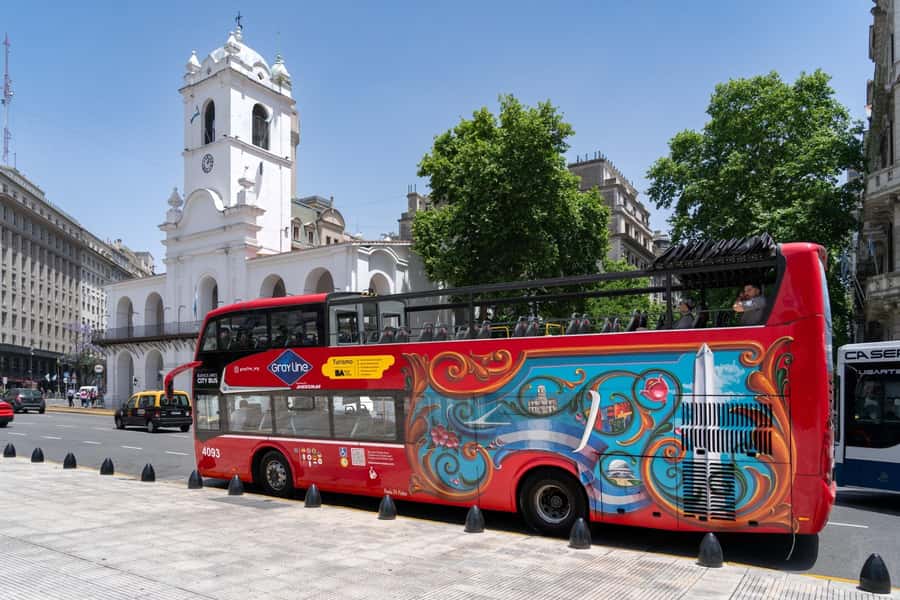
Buenos Aires is big, and it’s not the kind of city where you want to “guess” your way around for a whole day. This bus loop helps you get your bearings fast by turning neighborhoods, landmarks, and viewpoints into a steady sequence of stops you can repeat as many times as your ticket allows. You’re not locked into one plan, which matters when the city’s mood changes hourly.
I like that the tour feels structured without being rigid. You can stay on through the full circuit for a long, cinematic “see the city” ride, or you can treat it like a toolbox: hop off at the stop you care about, then reboard later. The on-board mix of a live guide (Spanish, English, Portuguese) and a multilingual audio guide (including Japanese, Chinese, Russian, Italian, French, German, Ukrainian, and Korean) means you can understand the narration even if you’re not near the person speaking.
Do expect that open-top sightseeing takes energy. Even with air conditioning on the double-decker, the sun and walking add up. If you want maximum stops with minimum stress, give yourself enough hours to actually get off the bus, not just ride past.
Price and what you get for your $35 ticket
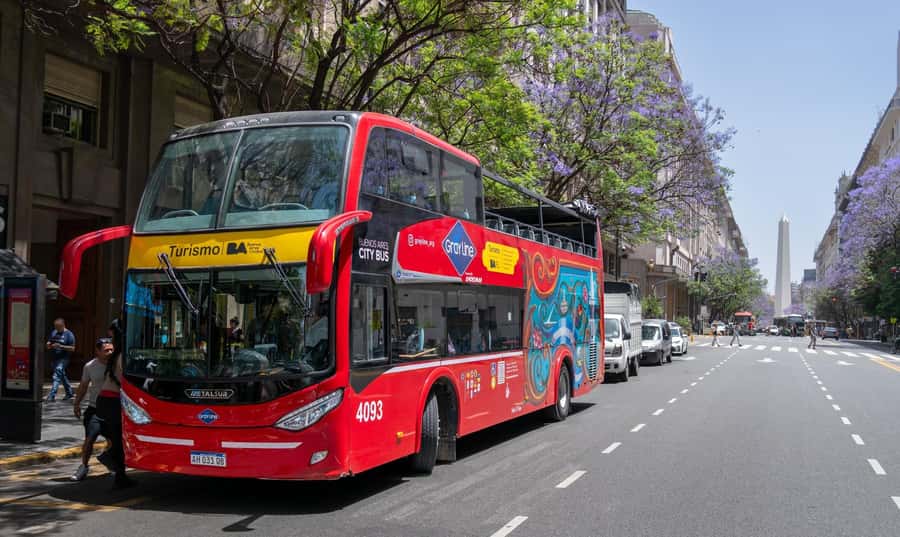
The price is listed at about $35 per person, and what makes this feel like good value is the bundle: bus time + the hop-on hop-off access + narration. You’re not paying for a single attraction ticket where you leave after one checkmark. Instead, you’re paying for mobility across multiple areas.
This tour also includes open-top double-decker buses with air conditioning and a sunroof, plus a multilingual audio guide. Add to that the frequency of buses every ~25 minutes (during the day), and you get something practical: fewer decisions about timing, and less time stuck figuring out how to move between neighborhoods.
Where the value can dip is when you only have a few hours. The full loop can take time, so if you buy a short option and then spend most of your day just passing by, you may wish you had more chances to hop off.
Start points and how the route loop works (so you don’t waste hours)
You can start at multiple locations, which helps if you’re staying somewhere outside the exact downtown core. The two main starting options are:
- Av. Pres. Roque Sáenz Peña 728
- Av. Santa Fe 808 (Plaza San Martín, the office)
From the day’s start, the bus begins circulating at 9:20 a.m. from those starting points. The service runs Monday to Sunday from 9:30 a.m. to 6:00 p.m., and the last buses leave at 5:30 p.m.—after that, the buses only return about half the route.
Here’s the key planning point: your hop-on hop-off ticket is based on duration (24/48/72 hours), but the clock starts when you first board. You also have 6 months to start using your purchased ticket. That’s great if your plans are flexible or you’re waiting for the weather to behave.
If you’re trying to squeeze everything into Day 1, you’ll likely do a long loop ride before you commit to where to get off. If you can stretch it to 2 days, you’ll get the best payoff: one day to sample neighborhoods, the next day to linger where you liked what you saw.
The vibe on board: WiFi, open-top views, and audio clarity
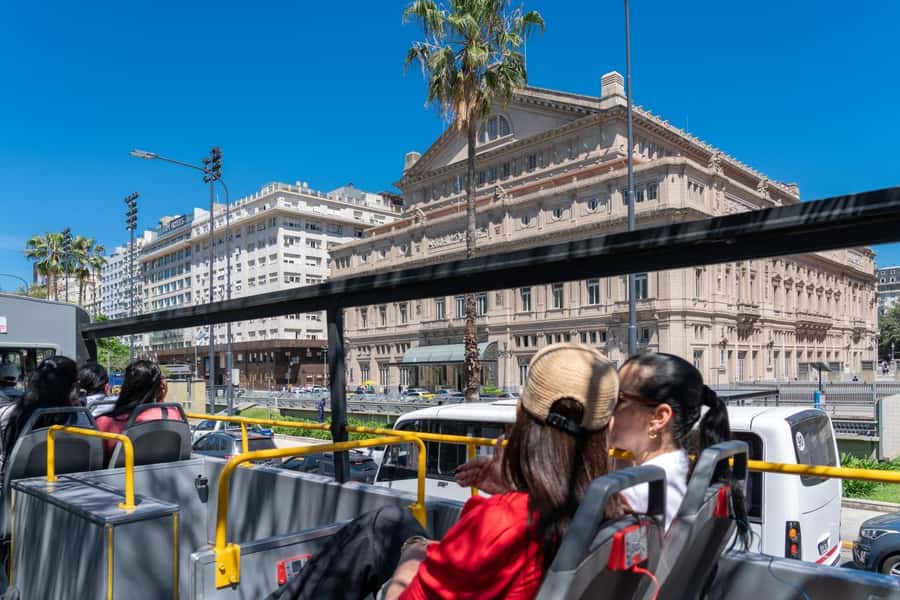
This is the kind of tour where the “comfort factor” affects how much you enjoy it, and the bus is built for that. The double-decker includes air conditioning and a sunroof, which helps when Buenos Aires weather flips from cloudy to bright.
You also get free WiFi onboard and at bus stops. One thing to know: WiFi isn’t guaranteed to work perfectly. Some people found the network didn’t behave reliably during their time on the bus. Still, even when WiFi is spotty, you’ll often have enough connection to check maps and your next hop-off plan.
Audio is a big part of the experience here. There’s an audio guide in a large set of languages, and there’s also a live tour guide operating in Spanish, English, and Portuguese. A small downside: on some rides, the narration can feel slightly out of sync—like you’re already near the exact spot being described—so you’ll get the most from listening while you’re moving, then confirming with a quick look outside or at the stop signage.
Stop-by-stop: what each major stop is good for (and what to watch)
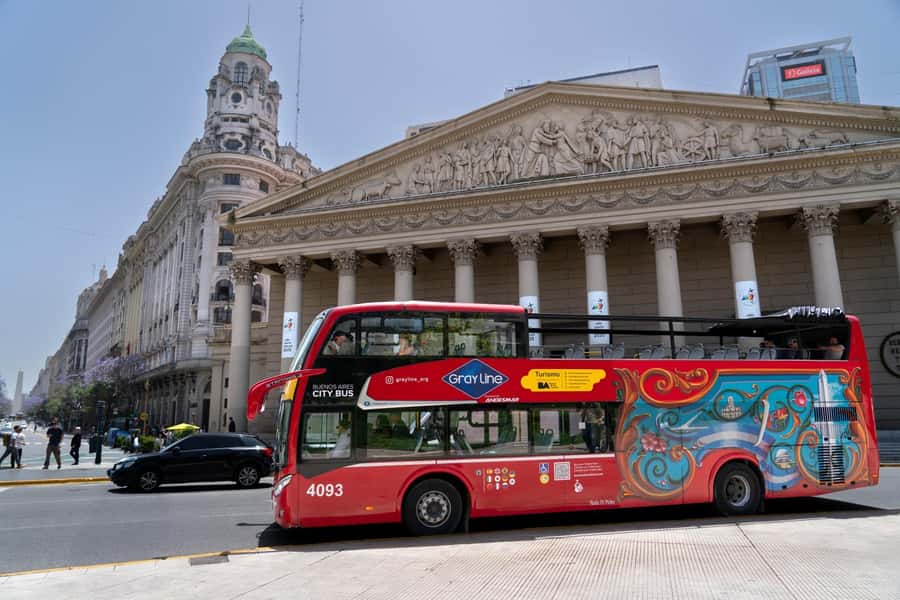
The loop includes 25 stops, and you can hop on and off at them during your ticket period. Below is the practical “what’s worth it” way to look at the route.
Downtown anchors and first sights
Stop 2: Palace of the Argentine National Congress (pass by)
This is one of those big, civic landmarks that sets the tone for the city. Even if you don’t hop off, it’s worth staying on for a pass-by, since it frames Buenos Aires as a capital with real political weight.
Stop 3: El Loco Chávez – Paseo de la Historieta (pass by)
If you like art that’s playful and story-driven, this stop is a nice reminder that Buenos Aires isn’t only about monuments. Hoping off here can work if you want something less “grand building” and more “culture in street form.”
Stop 4: Plaza Dorrego (pass by)
This is the kind of stop that often pulls people toward neighborhood time. If you want atmosphere—then walking—this is a good candidate. The downside is obvious: once you get off, you may lose time deciding where to wander next.
Stop 5: Usina del Arte (pass by)
A strong stop if you like modern cultural spaces. It’s also a good way to break up the day so you don’t only see “classic postcard” areas.
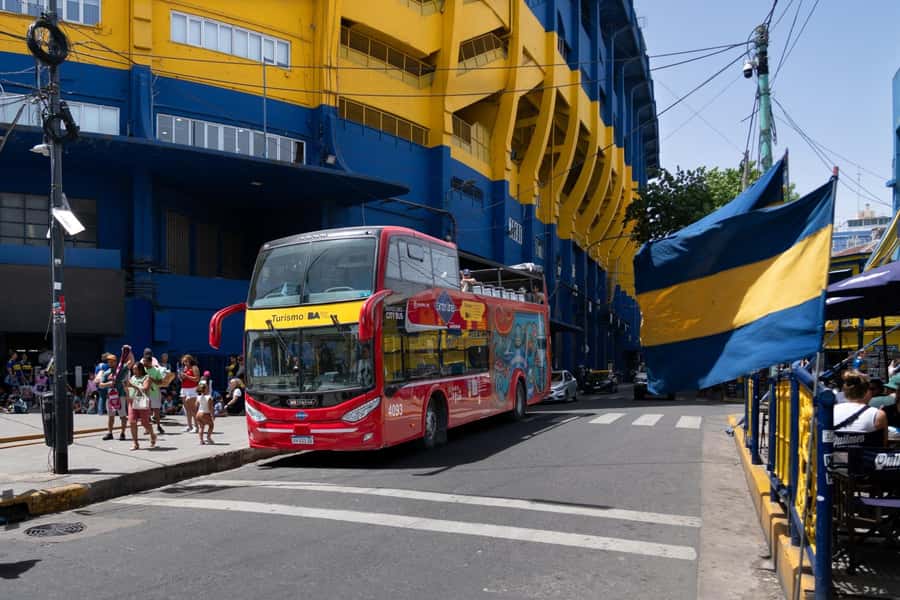
Stop 6: La Bombonera (pass by) and Stop 7: Caminito (pass by)
If you only choose a couple of stops, I’d put these at the top. This is a famous Buenos Aires corner, and the bus route gives you a smooth way to reach it without figuring out transit. I’d especially suggest getting off for at least a bit of time rather than treating it like a quick photo stop.
Stop 8: Costanera Sur (pass by)
This is your shift toward water and longer views. It’s a solid stop if you want a breather from walking around architecture-heavy blocks.
Puerto Madero and the waterside reset
Stop 9: Puerto Madero (pass by)
Puerto Madero is where Buenos Aires feels more modern and polished. Even if you only pass it, it helps you understand how the city layers time periods side-by-side.
Stop 10: Estación Fluvial (Bus Turístico-Circuito Rojo y Amarillo) (pass by)
This works best as a “reference point” stop—use it to orient yourself before you decide where you’ll spend a longer afternoon.
Stop 11: Galerías Pacífico (pass by)
If you want an easy stop for a break, this is the kind of place that suits it. Even if you don’t go inside, it’s useful for resetting your energy without needing a full meal plan first.
Big plazas and modern-city stops
Stop 12: Plaza General San Martín (pass by)
A key pause in the route. It’s also close to one of the starting options, which makes it convenient if you want to start, hop off, and later return without backtracking.
Stop 13: Floralis Genérica (pass by)
A visual stop that works especially well if you like recognizable landmarks. The bus gives you the chance to see it from the route without planning transit.
Stop 14: Museum of Latin American Art of Buenos Aires (pass by)
This is great if you’re the type who likes to see what a museum looks like from the outside first, then decide if you want to go in later. Just remember: admission isn’t included, so plan that spend separately if you decide to enter.
Stop 15: Planetario Galileo Galilei (pass by)
A good family-friendly pause if you’re traveling with kids or anyone who likes astronomy/interactive science spaces. If you’re not planning to go inside, you can still enjoy the surrounding area as part of the “city overview.”
River-edge atmosphere and airport-side energy
Stop 16: Club de Pescadores (pass by)
This is more about the atmosphere of the riverfront. It’s a useful stop if you want something calmer than shopping or theater zones.
Stop 17: Jorge Newbery Airfield (pass by)
This gives you a “Buenos Aires isn’t only sightseeing” perspective. It’s also helpful for understanding how transport and airport areas shape city movement.
Stop 18: Parque de la Memoria de Buenos Aires (pass by)
A reflective stop. If you want your day to include something heavier than monuments, this is a strong candidate to hop off and walk for a while.
Stadium area and sports culture stops
Stop 19: Estadio Monumental Antonio Vespucio Liberti (pass by)
This is one of the most useful stops if you care about River Plate or the stadium district. The tour also notes you can access the River Museum from this stop. If you want to avoid stadium crowd timing, just keep an eye on the calendar.
Stop 20: Chinatown, Buenos Aires (pass by)
A nice contrast stop—use it if you want a different food-and-walking vibe, even if you don’t plan a full meal right then.
Stop 21: Argentine Polo Association (pass by)
This is another “different side of Buenos Aires” stop. If you’re interested in sports and society traditions, it gives context without requiring a separate booking.
Stop 22: Carta Magna Monument (pass by)
A quick, meaningful spot. You’ll probably appreciate it more if you already enjoy political or civic symbolism.
Recoleta and the final classic monuments
Stop 23: Recoleta (pass by)
Recoleta is a neighborhood you’ll feel instantly once you arrive. If you want a “walkable, postcard” afternoon, this is usually a top choice to hop off and spend time.
Stop 24: Teatro Colón (pass by)
The grand finale. Even if you only pass it, it’s a signature Buenos Aires landmark. If you’re scheduling your day, this stop is a good end-point so you don’t miss one of the city’s most iconic sights.
Two-day strategy: how to get more than one “real stop”
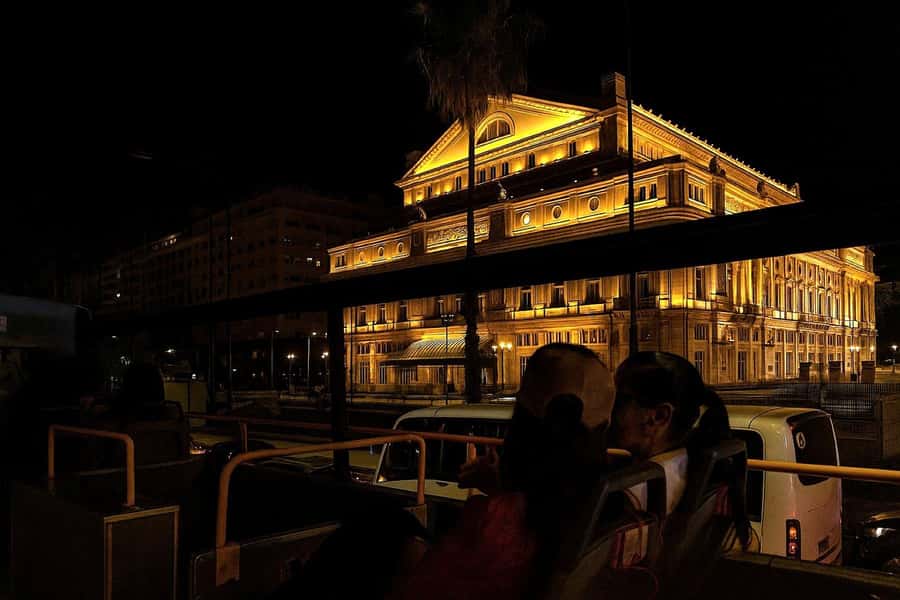
The loop is long. Some people end up staying on for much of it and only hop off once for lunch. That can be fine, especially if you’re mostly after the commentary and the overview. But if you want more out of your time, use this simple plan:
- Day 1: ride a big chunk of the loop while listening, then hop off for 1 to 2 priorities.
- Day 2: return to the neighborhoods you liked and spend more time walking than riding.
Because buses run about every 25 minutes during the day, you’re not trapped in a “miss it and wait forever” situation. Still, boarding delays happen. One solid tip: don’t treat the bus as a clock. City traffic and stop crowds can stretch wait times.
Also, don’t forget the route notes about stadium days: on days when River or Boca play at their stadiums, no tours will take place. If you’re planning around a match, build in flexibility.
Who this tour is best for (and who should choose something else)
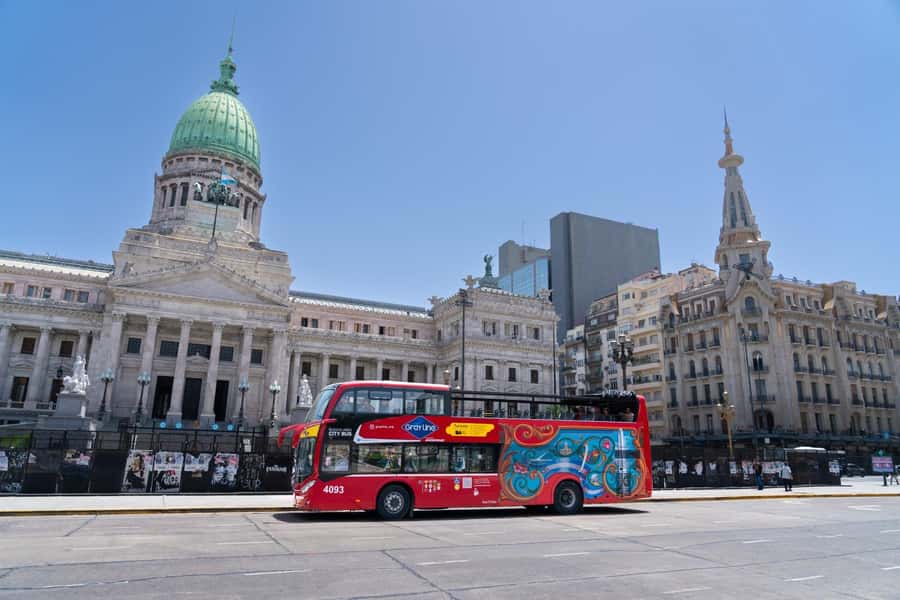
This bus tour is ideal if you want:
- A practical way to cover many neighborhoods without studying transit maps
- An on-board audio guide that helps you understand what you’re seeing as you pass it
- A simple “hop when you want” system for classic sights like La Bombonera and Caminito, plus areas like Puerto Madero and Recoleta
It’s also great for travelers who like a mix of resting and sightseeing. The open-top double-decker means you can see while keeping your legs mostly unbothered.
You might want to skip this type of bus if your entire trip is only a few hours in the city and you already know exactly where you’re going. In that case, a focused walking route or a smaller guided tour might match your time better.
Small cautions that can affect your day
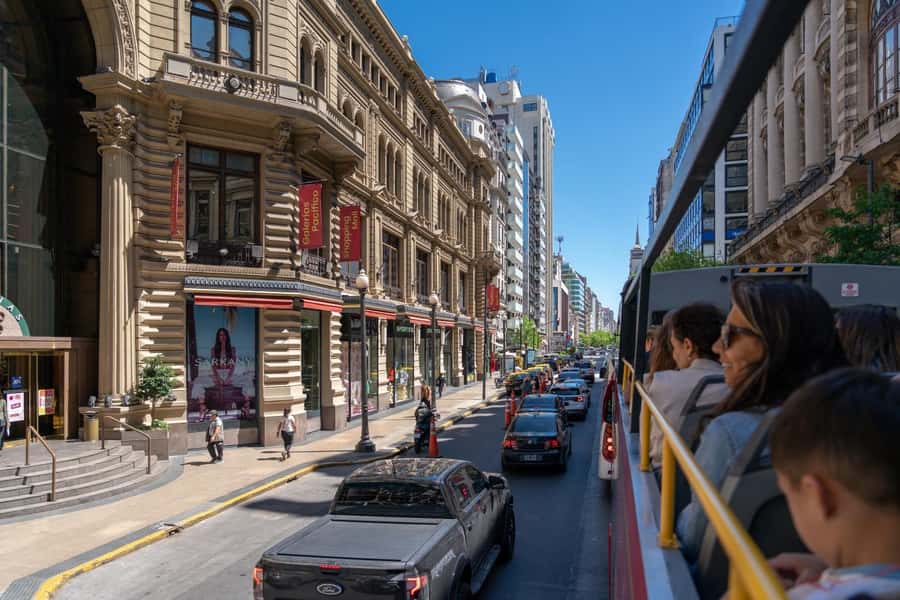
A few details can change your experience:
- WiFi may not be reliable onboard. It’s included, but don’t build your whole plan on it working flawlessly.
- Headset comfort: some seats may have ear plugs that feel short for the headset setup, so you might adjust how you listen.
- Audio timing can slip: sometimes the commentary may reach a description after you’re already right by the spot, so don’t expect perfect timing.
- Bus frequency isn’t a guarantee: it’s often around 25 minutes, but waiting can stretch (like when boarding takes time).
Should you book the Buenos Aires hop-on hop-off bus?
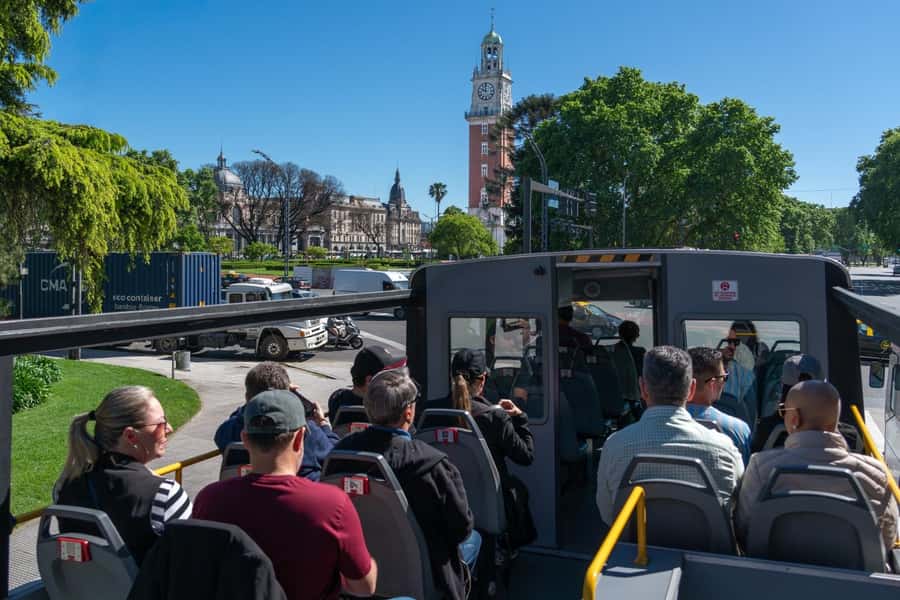
I’d book it if you want a low-effort, high-coverage overview of Buenos Aires, especially with the multilingual audio guide doing the heavy lifting while you focus on the sights. The biggest reason to choose this is flexibility: you can stay on for the full loop, or you can hop off and build your own mini itinerary around stops like Caminito, Puerto Madero, Recoleta, and Teatro Colón.
I’d choose the 48-hour option if you can. One full day can feel like “riding past,” while two days give you time to re-visit the parts you liked and actually slow down. If your trip is shorter, the bus is still useful, but plan to prioritize fewer stops and commit to them.
If you’re going to Buenos Aires when River or Boca have matches, double-check your timing because the tour notes that tours won’t run on those match days.
Provider: Gray Line Argentina.