Santiago’s views come in layers. This hop-on hop-off bus day packs the city’s best landmarks with optional time at each stop, and the ride adds the Teleférico + Funicular combination for major payoff overhead. I like how the route ties together shopping malls, parks, and classic history in one ticket, so you’re not bouncing between separate tours all day.
One catch: getting on can feel a little more hunt-and-search than you’d expect. A few stops have unclear signage, and the meeting point is specific, so plan to arrive early and use the Turistik app if you want smoother navigation.
In This Review
- Key things to know before you ride
- A day that stitches together Santiago’s malls, history, and San Cristóbal
- Route game plan: hop on as you go, and don’t miss the last circuit
- Starting point in Las Condes: Parque Arauco and an easy first win
- Las Condes malls, Sky-area views, and where to relax after a ride
- Parque Arauco Mall (Stop 1)
- Costanera Center (Stop 9)
- Las Condes Interactive Museum (Stop 10)
- Aviation Plaza (Stop 8)
- Bicentenario Park and the first round of big-photo energy
- Bicentenario Park (Stop 2)
- Teleférico to San Cristóbal: 360° views start with a short walk
- Santiago Cable Car stop (Stop 3)
- Funicular from Bellavista to the hill (and what changes on Mondays)
- Santiago Funicular (Stop 4)
- Panoramic buses inside Metropolitan Park
- Historic center hits: Plaza de Armas, La Moneda, and Santa Lucía Hill
- Plaza de Armas (Stop 5)
- La Moneda Palace (Stop 6)
- Santa Lucía Hill (Stop 7)
- Price and value: what $60 buys you, and how to get your money’s worth
- Practical logistics that can make or break your day
- Signage and stop spotting
- The Turistik app as a timing tool
- Frequency and pacing
- What to bring
- Who should book this Santiago day pass (and who should skip it)
- Should you book this Santiago hop-on hop-off day pass?
- FAQ
- What does the ticket include?
- How long is the tour?
- How many stops are on the route?
- Which Santiago attractions are affected on Mondays?
- Where do I meet the bus?
- What time should I plan around?
- What should I bring?
- Is audio included, and what languages are available?
Key things to know before you ride
- 10 hop-on stops let you choose how long you stay at each area instead of rushing straight through
- San Cristóbal access depends on the day: Teleférico, Funicular, and panoramic buses don’t operate on Mondays
- Cable Car stop is walk-access from Parquemet (about a 5-minute walk once you get off the bus)
- Audio is built in with recorded commentary in multiple languages, including English, Spanish, Portuguese, German, French, and Chinese
- Try the center twice: Plaza de Armas and La Moneda are close, and Santa Lucía Hill is a great add-on nearby
- Time matters since you’ll want the last full circuit before 4:00 PM to experience everything you paid for
A day that stitches together Santiago’s malls, history, and San Cristóbal
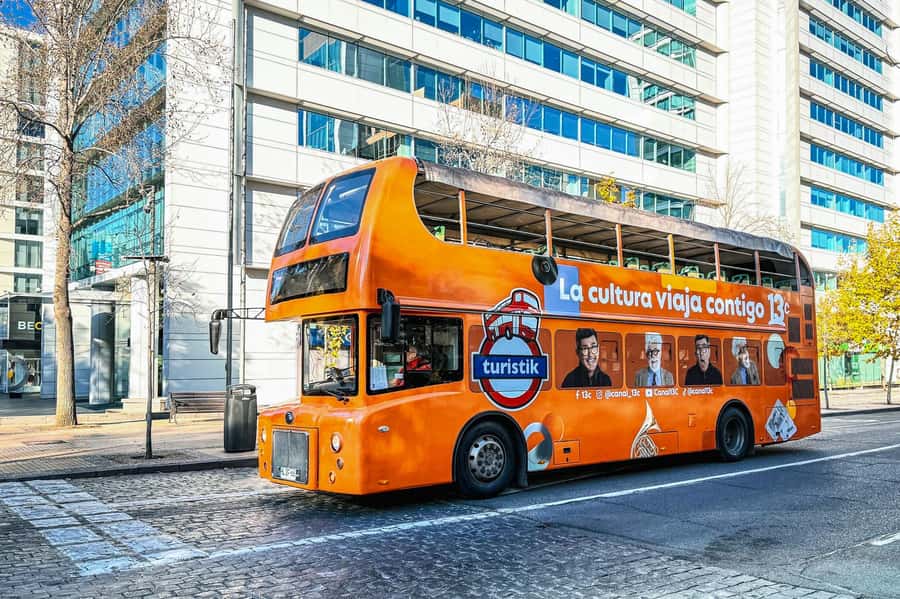
This is a smart “first-day in Santiago” plan because it covers a lot of ground without asking you to master the city’s transit system. You start on a classic double-decker bus format and then branch into panoramic rides tied to Cerro San Cristóbal, one of Santiago’s top sights.
The best part is the variety. You’re not only seeing viewpoints. You’re also rolling through neighborhoods and areas known for shopping, parks, and the government-and-cathedral part of the historic core. Add the cable car and funicular tickets for your first day, and you get that elevated perspective people travel to Santiago for.
Route game plan: hop on as you go, and don’t miss the last circuit

This is built for flexibility. With unlimited hop-on hop-off access for one day, you can ride, get off, spend time, and then continue on the route again later. You’ll also get recorded audio along the way, which helps you connect what you’re seeing with what it means.
Here’s how I’d use the day:
- Start with whichever stop is closest to where you are staying. The tour notes that you’ll get the easiest flow by beginning near you.
- Aim to hit the San Cristóbal experience early enough that you don’t feel rushed. The tour specifically recommends catching the last full circuit before 4:00 PM to get the complete experience.
- If you rely on wayfinding, give yourself buffer time. Even with a map, some stops are harder to spot than others.
Also, remember the simple logistics: this ticket does not include transport to or from your hotel, so you’ll need to get to the meeting point on your own.
Starting point in Las Condes: Parque Arauco and an easy first win
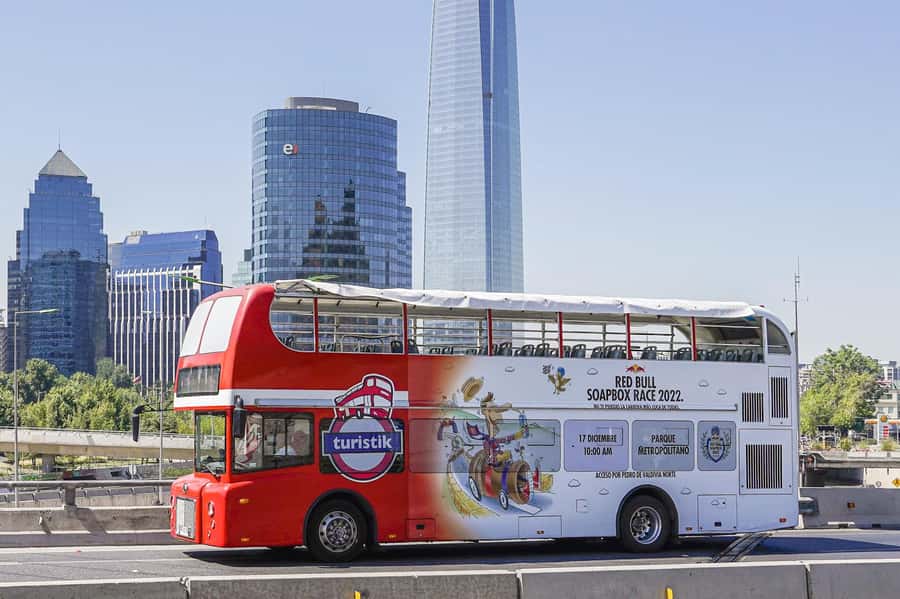
Your meeting point is Av. Pdte. Kennedy Lateral 5059, next to Parque Arauco, by the red info center (kiosk) in front of Ripley. Arrive about 15 minutes before your departure time so you’re not sprinting in Santiago traffic with your ticket already in hand.
Why this start works: Parque Arauco is one of those places where you can quickly reset. If you arrive early, it’s a logical place for water, quick snacks, and figuring out what you want to do next.
When you first step on the bus, the recorded commentary starts doing its job. It helps you place what you’re passing—so later, when you get off near a viewpoint or a landmark, it feels less like a random stop and more like a chosen move.
Las Condes malls, Sky-area views, and where to relax after a ride
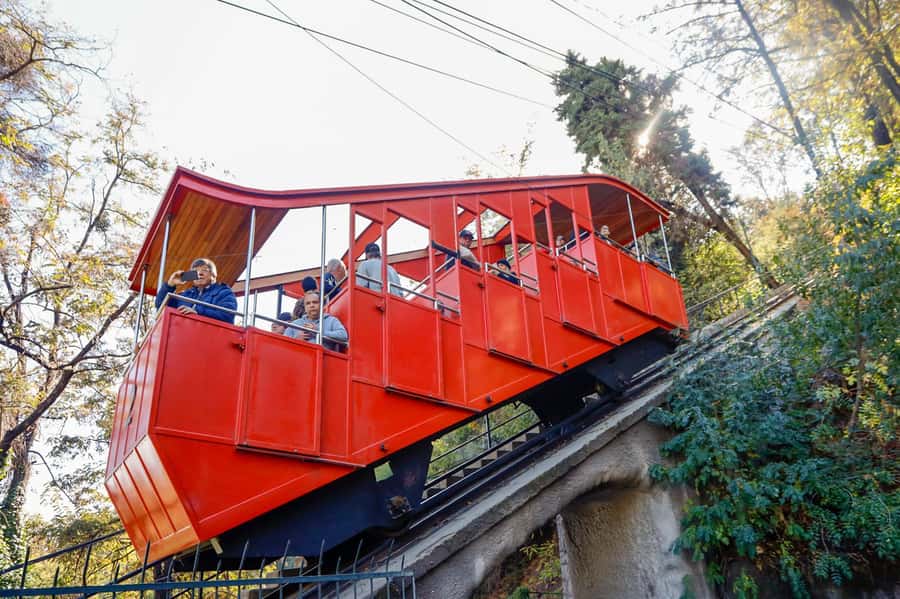
This ticket doesn’t treat Las Condes like a throwaway shopping zone. It uses the area as an efficient anchor for a few high-value stops.
Parque Arauco Mall (Stop 1)
This is the major shopping launchpad on the route. Expect a mix of mainstream brands and the kind of food-court style convenience that’s useful if your day needs a reset. It’s also a handy place to grab small souvenir items before you wander into more historic (and less shopping-heavy) areas later.
Costanera Center (Stop 9)
If you’re curious about Santiago’s modern side, this is a key stop. It’s listed as next to Sky Costanera observatory, which signals that you’re in the newer, taller-building zone. Even if you don’t buy an observatory ticket, getting off here gives you a sense of where Santiago’s skyline energy is concentrated.
Las Condes Interactive Museum (Stop 10)
This stop is positioned in the modern part of Las Condes with restaurants nearby. If you’re traveling with kids or anyone who likes hands-on learning, this is a better-than-average option for filling time between rides.
Aviation Plaza (Stop 8)
This one’s more about breathing space than buying things. The Aviation Plaza stop is known for a fountain and green areas by the Mapocho River, so it can be a good short stop when you want to stretch your legs without committing to a long museum visit.
Bicentenario Park and the first round of big-photo energy

Before you jump into the San Cristóbal portion, you pass through a park stop that works well for photos and a slow moment.
Bicentenario Park (Stop 2)
This stop is in Vitacura and is described as having lagoons and wildlife. It’s a great place to get out of the traffic loop and take a breath. Even if you don’t stay long, the park setting can help you transition your mindset from city traffic to viewpoints.
A nice strategy here: use Bicentenario Park as your “I need 45 minutes to feel human” stop. Then you’re ready for the climb and panoramic rides later.
Teleférico to San Cristóbal: 360° views start with a short walk
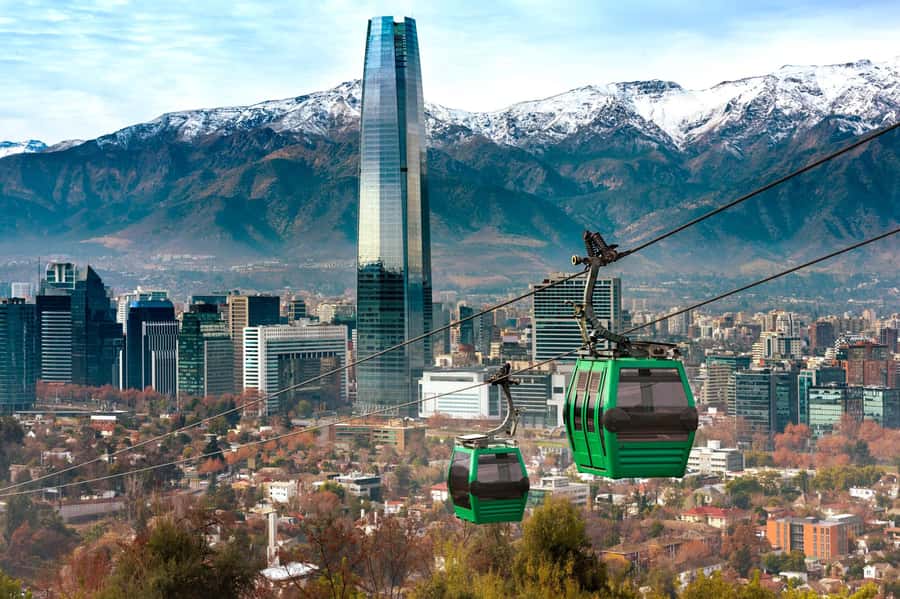
The ticket’s view payoff is tied to Cerro San Cristóbal. The route includes a specific stop for the Teleférico, and the details matter so you don’t lose time.
Santiago Cable Car stop (Stop 3)
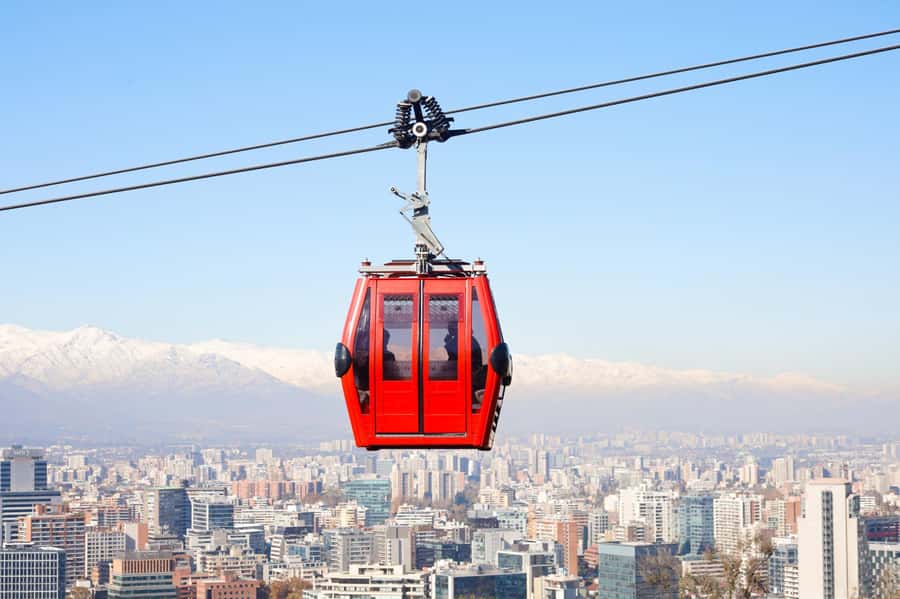
You get off at Los Conquistadores & Pedro de Valdivia Norte, in Providencia, and the guide notes it’s a 5-minute walk from Parquemet. From there, you take the cable car and enjoy 360-degree panoramic views of Santiago.
What you’ll like about this segment:
- You’re not just seeing one angle. The 360 setup is designed for sweeping city perspective.
- The cable car experience is different from regular city rides, so the day feels varied instead of repetitive.
Quick planning tip: if you care about light for photos, try to time your cable car ride around the part of the day you like best. The tour doesn’t force a schedule beyond the circuit timing, so you can adjust based on your priorities.
Funicular from Bellavista to the hill (and what changes on Mondays)
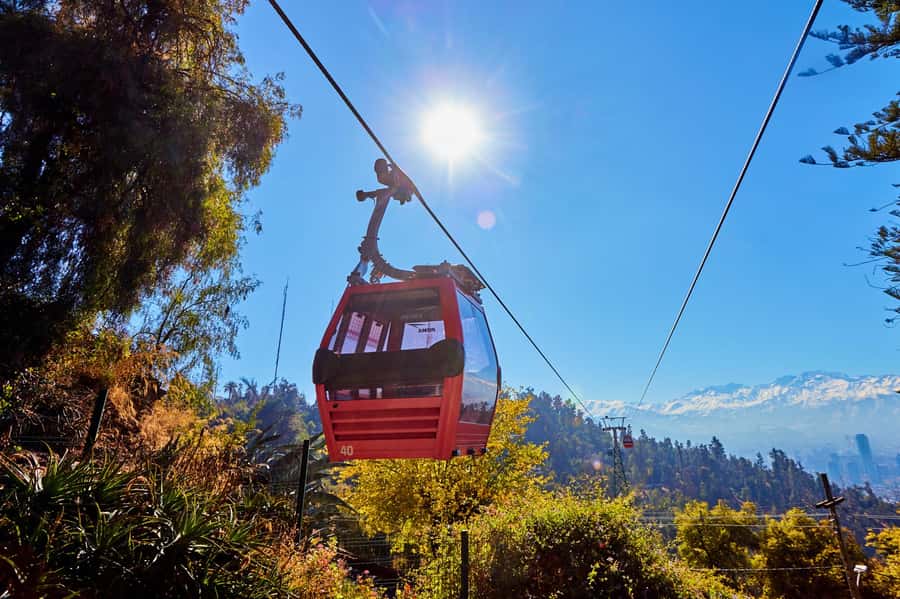
The ticket includes the Funicular as well, which connects Bellavista to San Cristóbal Hill.
Santiago Funicular (Stop 4)
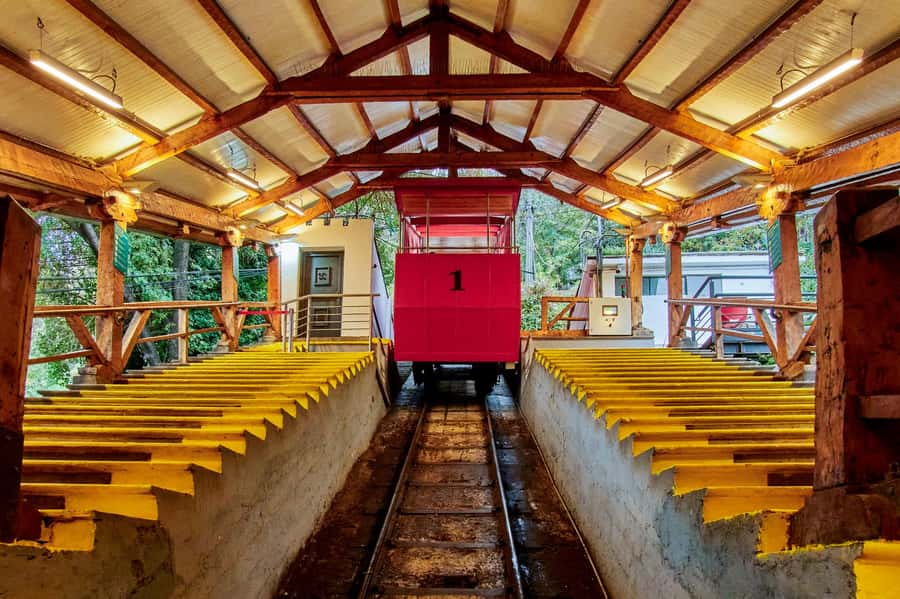
The funicular stop is at Pío Nono 445, Providencia. This is listed as a historic funicular and a link between Bellavista and the hill, so it’s a great complement to the Teleférico. Together, they give you two ways of climbing and two different vantage feelings.
Panoramic buses inside Metropolitan Park
You also get unlimited use of panoramic buses inside Metropolitan park (as included). This is the part that helps you move around the hill area without needing to figure out local transport on your own.
One important reality check: on Mondays, the attractions at Cerro San Cristóbal—including the Teleférico, Funicular, and panoramic buses—do not operate. If you’re visiting on a Monday, you’ll need to shift expectations. You can still enjoy the rest of Santiago on the bus, but you won’t get the full San Cristóbal portion.
Historic center hits: Plaza de Armas, La Moneda, and Santa Lucía Hill
After the hill viewpoints, this route brings you back down into Santiago’s classic landmarks. This is where the ticket feels like more than transport—it starts feeling like a guided day of highlights.
Plaza de Armas (Stop 5)
The stop is at Plaza de Armas 2, Santiago. This is the historic city center core, and it’s a natural place to orient yourself. Even if you only walk a little, it’s the kind of stop that helps you understand where you are in relation to everything else.
La Moneda Palace (Stop 6)
This stop is directly in front of La Moneda Palace, the Chilean government headquarters. It’s one of those landmarks that instantly gives context to the city beyond views and shopping. If you like clear, iconic stops, you’ll appreciate how direct this is.
Santa Lucía Hill (Stop 7)
Santa Lucía Hill is listed at Av. Alameda 390, Santiago, and it’s described as a historic urban hill with terraces and viewpoints. The info also notes it’s near Lastarria district, so it can be a good option if you want to keep walking toward a neighborhood after your bus stop.
Why this cluster works: Plaza de Armas and La Moneda are both in the historic center, and Santa Lucía is close enough to make the day feel logical. If you’re short on time, this is one of the easiest parts of the route to “do well” without running across town.
Price and value: what $60 buys you, and how to get your money’s worth

At $60 per person for a one-day ticket, the real question isn’t whether it’s cheap. It’s whether it saves you time and ticket complexity.
Here’s what’s included for your first day:
- Unlimited hop-on hop-off access for the day (with the Monday San Cristóbal exception)
- Cable car ticket (for the Teleférico experience)
- Funicular ticket (for the hill connection)
- Unlimited panoramic bus use inside Metropolitan park
- Audio guide in multiple languages (English, Spanish, Portuguese, German, French, Chinese)
That combination is the value driver. If you were to buy separate tickets and then also coordinate transport, your day can quickly get messy. With this pass, you can build an itinerary on the fly.
How to make it worth it for yourself:
- Plan to actually use the San Cristóbal attractions if your day isn’t Monday.
- Don’t treat the historic center stops as quick look only. Spend at least a short walk time at Plaza de Armas and around La Moneda.
- Use the audio guide while you’re riding, then pick one or two spots to linger longer.
There’s also a human element. One review highlighted a guide named Nicole as kind and helpful, and another praised friendly staff and organization. That kind of support matters most when signage gets confusing.
Practical logistics that can make or break your day
This tour is easy in concept: hop on, hop off. In practice, small wayfinding issues pop up.
Signage and stop spotting
Some reviews point out bus stops can be hard to identify, with cases where signage feels minimal. Another review found the signage clearer by following staff directions as they exited the bus. Translation: be ready to ask, and keep your phone map handy.
The Turistik app as a timing tool
You’ll see encouragement to use the Turistik app for stop info and real-time bus location. That’s a big deal because it reduces guessing when you’re deciding whether to walk back to the curb or wait.
But don’t rely on tech alone. One review complained about missing an online bus tracker. In real life, that means you should plan for both: app help when it works, plus extra confidence when it doesn’t. Arriving a few minutes early at stops helps.
Frequency and pacing
One review says the bus comes every 30 minutes. Even if your day’s schedule varies, that’s frequent enough to build a flexible plan, as long as you don’t treat every stop as mandatory.
What to bring
Bring a passport or ID card and water. That’s basic, but it’s also the stuff you’ll wish you had once you’re off the bus and moving between areas.
Who should book this Santiago day pass (and who should skip it)
You’ll love this pass if:
- You’re visiting Santiago for the first time and want a fast sense of the city’s layout
- You like having built-in flexibility instead of a strict schedule
- You want both city viewpoints and major landmarks without buying multiple separate tickets
- You’re the kind of person who likes convenience when walking uphill or timing views
You might skip it if:
- You’re staying far from the Las Condes meeting area and you don’t want to factor in extra transport to reach the start
- You already know you only want a single area (like just downtown or just San Cristóbal) and you’d rather pay for a tighter, cheaper plan
Should you book this Santiago hop-on hop-off day pass?
If your goal is to cover Santiago’s top highlights in one day, I think this is a solid booking. The combination of the hop-on hop-off bus with Teleférico and Funicular tickets gives you a payoff that’s hard to replicate with only walking or single-route transport.
My “yes, book it” call comes with two conditions: you should visit on a day other than Monday, and you should be comfortable using a map for stop spotting. If you do those two things, you’ll get the most value out of your time—views when you need them, history when you want it, and shopping if you feel like rewarding yourself after the climb.
FAQ
What does the ticket include?
You get unlimited hop-on hop-off access for one day (except Mondays), plus cable car and funicular tickets for the first day. It also includes unlimited use of panoramic buses inside Metropolitan park, and an audio guide in multiple languages.
How long is the tour?
It’s listed as a 1-day experience.
How many stops are on the route?
The route includes 10 strategic hop-on stops.
Which Santiago attractions are affected on Mondays?
On Mondays, attractions on Cerro San Cristóbal, including the Teleférico, Funicular, and panoramic buses, do not operate.
Where do I meet the bus?
The meeting point is Av. Pdte. Kennedy Lateral 5059, Las Condes, next to Parque Arauco, at the red info center (kiosk) in front of Ripley.
What time should I plan around?
The tour recommends catching the last full circuit before 4:00 PM so you can enjoy the complete experience.
What should I bring?
Bring a passport or ID card and water.
Is audio included, and what languages are available?
Yes. The audio guide is included and available in English, Spanish, Portuguese, German, French, and Chinese.