Chicago’s river has a way of explaining the city fast. This combo pairs a Chicago River Architecture cruise with a two-day hop-on hop-off bus pass, so you can match what you learn with what you see. My favorite part is the quick path from the Riverwalk to major landmarks like Millennium Park and the Willis Tower area.
I also like the built-in flexibility: you’re not stuck on one rigid route, and the digital audio plus self-guided walking tours help you pace your day. One thing to consider: ticket pick-up and stop-finding can be confusing if signage is slow to show up or if you’re using a third-party voucher.
In This Review
- Key Highlights Worth Your Time
- A Smart Combo for First-Time Chicago: Cruise + Hop-On Flex
- Price and Value: What You’re Really Paying For
- Where You Start at 98 E Wacker Dr (And Why That Matters)
- The Hop-On Stops That Actually Cover Chicago’s Big Hits
- Stop 1: Chicago Riverwalk (98 E Wacker Dr)
- Stop 2: Skydeck Chicago and Willis Tower (319 W Jackson Blvd)
- Stop 3: Millennium Park and The Art Institute of Chicago (South Michigan Ave & East Adams St)
- Stop 4: Hilton Chicago and Grant Park (800 S Michigan Ave)
- Stop 5: Adler Planetarium (500 E Solidarity Dr)
- Stop 6: Museum Campus (425 E McFetridge Dr)
- Stop 7: Sheraton Grand Chicago (441 N Columbus Dr)
- Stop 8: Navy Pier (800 S Harbor Dr area on the route)
- Stop 9: Water Tower and Magnificent Mile (163 E Pearson St)
- Stop 10: 360 CHICAGO and John Hancock Center (150 E Chestnut St)
- Stop 11: River North (614 N Clark St)
- Digital Audio, Live Tracking, and App-Based Control
- Self-Guided Digital Walking Tours: How to Stretch One Day Into Two
- The Cruise Part: Architecture Stories and Photo Power
- Guide Styles Matter: From Justin and Jim to Juan and Candice
- When Things Get Messy: Signage, Stop-Finding, and Ticket Redemption
- Stop 1 signage timing
- Stop 1 location details
- Ticket redemption confusion
- The mix of cruise boarding points
- Best Use of a Two-Day Pass: A Simple Strategy
- Who This Tour Fits Best
- Should You Book It? My Decision Guide
- FAQ
- FAQ
- How much does this tour cost?
- How long is the experience?
- Where do I redeem my ticket?
- Is the tour offered in English?
- Does the bus pass cover more than one day?
- What is the cancellation policy?
Key Highlights Worth Your Time
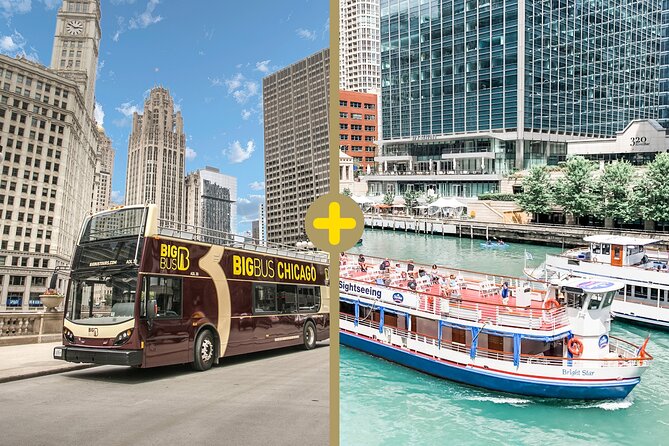
- Willis Tower view from the route: you’ll get a great vantage point without needing a separate tour ticket.
- Two-day pass, not a one-shot ride: you can return to the stops that grab you most.
- Digital commentary and app tracking: you can follow the route and check where the bus is.
- Self-guided walking tours: Chicago Architecture, Chicago Riverwalk, Public Art, and Millennium Park.
- Photo-friendly river views: the cruise is a strong option if you care about pictures.
- Guide style varies: some guides lean more humorous, so pick based on your vibe.
A Smart Combo for First-Time Chicago: Cruise + Hop-On Flex
This is the kind of Chicago plan that helps you get your bearings quickly. The river architecture cruise sets the story—how Chicago grew, what styles meant, and why the skyline looks the way it does. Then the Big Bus part lets you translate that story into real street corners and landmark stops.
I like that you get both structure and freedom. The cruise acts like a guided “primer,” and the bus pass helps you extend it for a second pass through the same neighborhoods at your own speed.
The schedule is listed as about 2 hours, which usually means you’re not going to feel trapped in a long day. With the two-day bus pass, you can spread the rest of your sightseeing across the second day.
Price and Value: What You’re Really Paying For
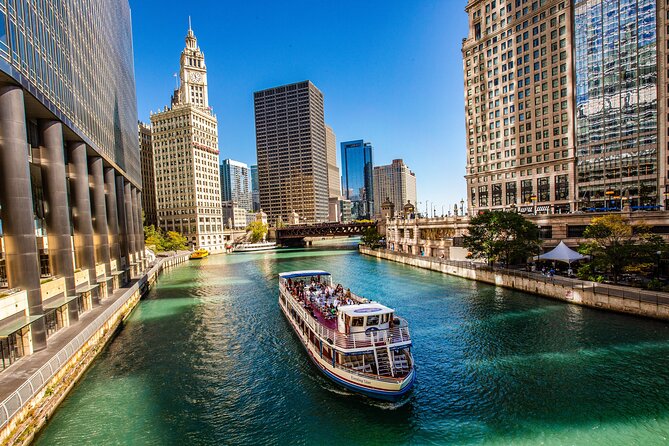
At $99 per person, you’re paying for a bundle, not just one activity. The value comes from three things you don’t always get together:
First, you get the river architecture experience plus a bus route that touches the major museum-and-landmark cluster around the Loop, plus the lakefront side toward Navy Pier.
Second, you get a two-day bus pass, which matters more than it sounds. If you find one stop is the best one—Millennium Park, the museum area, or the Magnificent Mile—you can go back instead of squeezing everything into one run.
Third, you get digital supports: onboard digital commentary, the Big Bus app for route/stop info and live tracking, plus several self-guided walking tours (Chicago Architecture, Chicago Riverwalk, Public Art, Millennium Park). This is practical value: fewer guesswork moments.
If you’re the type who likes to see the highlights without building a detailed plan from scratch, this price usually feels fair. If you already know the city well and hate guided formats, you might feel like you could do it cheaper on your own.
Where You Start at 98 E Wacker Dr (And Why That Matters)
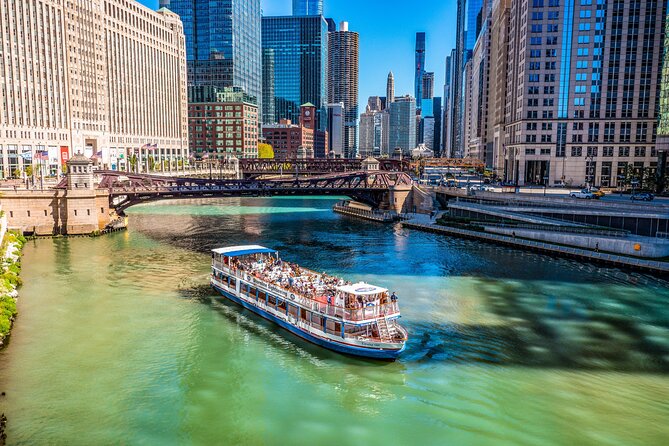
Your ticket redemption point is 98 E Wacker Dr, Chicago, IL 60601. That’s a big deal because the whole experience is anchored around the Riverwalk area. You’re close to the neighborhoods and sights that the bus route serves, so you aren’t spending your day crossing the city just to reach the “starting zone.”
Also note this: you’re told it’s near public transportation, so you can arrive without needing a car plan. That’s helpful because this area can get busy, especially if you arrive right at popular start times.
One practical tip: go in with the assumption that signage for bus stops and tour pickup can be inconsistent at first. A few experiences have reported trouble finding Stop 1 and confusion about where the architecture tour portion begins. Your best bet is to use the Big Bus app and confirm you’re at the right address before you assume your stop is correct.
The Hop-On Stops That Actually Cover Chicago’s Big Hits
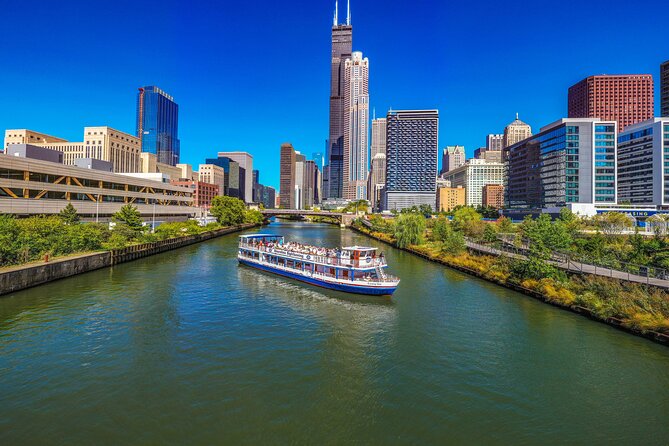
This bus route reads like a greatest-hits list, but the value is in how the stops connect. Here’s what to look for at each stop—and what you’ll likely want to do once you’re off.
Stop 1: Chicago Riverwalk (98 E Wacker Dr)
You start at the Riverwalk. This is more than a convenient meetup spot. It’s also where you can orient yourself: flat walkways, river views, and a clear “this is why people love Chicago” vibe. If you’re doing the self-guided Chicago Riverwalk tour, this is a good place to start listening while you’re physically near the buildings.
Stop 2: Skydeck Chicago and Willis Tower (319 W Jackson Blvd)
This stop is a win if you want that Willis Tower skyline moment without extra legwork. Even if you don’t go up, you’ll get a strong viewpoint from the route. If you do plan to visit Skydeck, hopping off here is the simplest way to pair the architecture story with the tallest landmark energy.
Stop 3: Millennium Park and The Art Institute of Chicago (South Michigan Ave & East Adams St)
This is where Chicago goes from “interesting city” to “wow, I’ve seen this in photos.” Millennium Park is great for people-watching and quick sightseeing, and it also puts you close to the Art Institute area.
If you’re using the digital walking tour options, this is the natural stop to connect the dots: you can listen first, then walk it off.
Stop 4: Hilton Chicago and Grant Park (800 S Michigan Ave)
Grant Park is the open-space anchor of this whole area. It’s a good stop when you want a breather between museums or when you want to roam a bit without committing to a specific ticketed attraction.
Stop 5: Adler Planetarium (500 E Solidarity Dr)
This is the science/museum side that keeps the itinerary interesting for families and anyone who likes learning. If you’re traveling with kids, it’s also an easy way to keep the day from turning into only buildings and street grids.
Stop 6: Museum Campus (425 E McFetridge Dr)
Museum Campus is one of those Chicago zones where you can lose time—in a good way. You can choose the one museum you care most about (or simply use it as a base for walking).
If you’re doing the digital walking tours later, you can also use this stop to reposition your second day. The area is wide enough that a “bus hop” feels like a smart upgrade.
Stop 7: Sheraton Grand Chicago (441 N Columbus Dr)
This one feels more like a convenient “service stop” for that hotel-and-theater belt. It’s useful if your sightseeing rhythm matches big-city hotels, or if you want a landmark-based way to time your movement between Museum Campus and the lakefront.
Stop 8: Navy Pier (800 S Harbor Dr area on the route)
Navy Pier is a magnet for views, walks, and easy evening energy. If you want a simple plan for your second day, or you’re traveling when the weather is iffy, Navy Pier is often an easier choice than trying to hit five tightly timed stops.
Stop 9: Water Tower and Magnificent Mile (163 E Pearson St)
This is the shopping-and-stroll zone, but it’s also a great “Chicago in motion” slice of the city. If you like to wander, this is where you’ll get it—wide sidewalks, iconic storefronts, and plenty of opportunities to stop for snacks.
Stop 10: 360 CHICAGO and John Hancock Center (150 E Chestnut St)
Another skyline anchor. Even if you don’t go up, the area gives you that vertical Chicago feeling. It’s a great stop for skyline photos and for building a “big moments” route across two days.
Stop 11: River North (614 N Clark St)
River North is where the city feels a bit more like street life than pure landmark sightseeing. It’s useful as a place to end your hop-on plan and then continue exploring on foot.
Digital Audio, Live Tracking, and App-Based Control
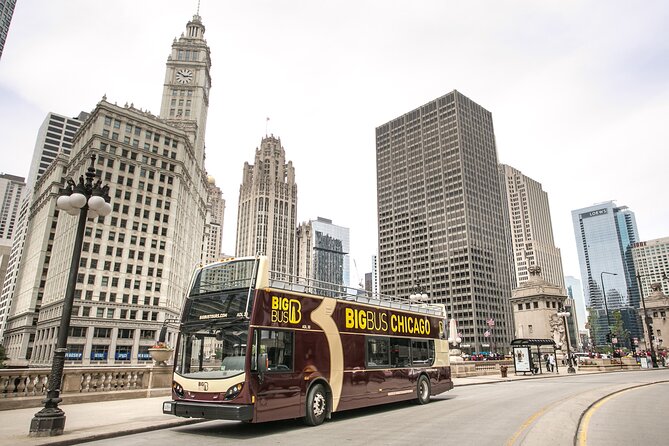
This tour leans heavily on digital tools, which is good news if you prefer clear instructions on demand.
You’ll download the Big Bus app for route and stop information plus live bus tracking. That single feature can save you from the classic hop-on hop-off problem: staring at the street corner and wondering if you missed the right bus.
You can also activate tickets either in the app or in person with Big Bus staff. If you like an easy start, check your phone before you join the line so you’re not scrambling later.
One caution I’d give: if you’re relying on app instructions, keep your screen brightness up and battery charged. In the Riverwalk area, you’ll walk in and out of direct sun. You want the phone to stay readable.
Self-Guided Digital Walking Tours: How to Stretch One Day Into Two
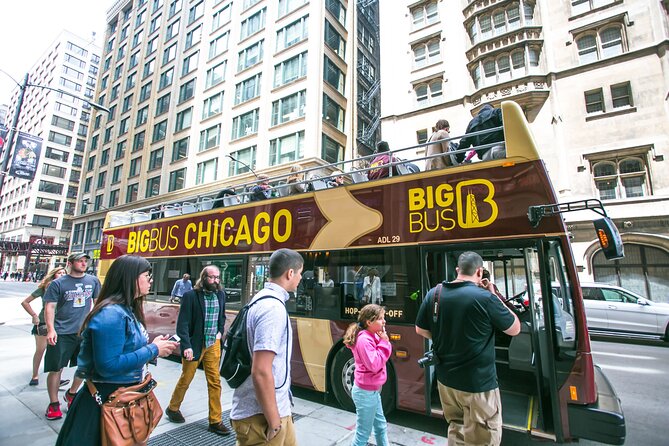
The tour includes self-guided digital walking tours, and that’s where you can squeeze extra value out of the pass.
Your available themes are:
- Chicago Architecture
- Chicago Riverwalk
- Public Art
- Millennium Park Tour
How to use them in a smart way: don’t try to listen to everything on the bus and then force a long walking session. Pick one theme per stop zone. For example:
- Use Chicago Architecture near the Willis Tower / Riverwalk area.
- Use Millennium Park Tour when you step off near Millennium Park.
- Use Public Art if you’re walking slowly and want story points, not just photos.
This turns the experience into a choose-your-own-adventure day. You’re not stuck on a fixed pace, and you’re not stuck with only the bus view.
The Cruise Part: Architecture Stories and Photo Power
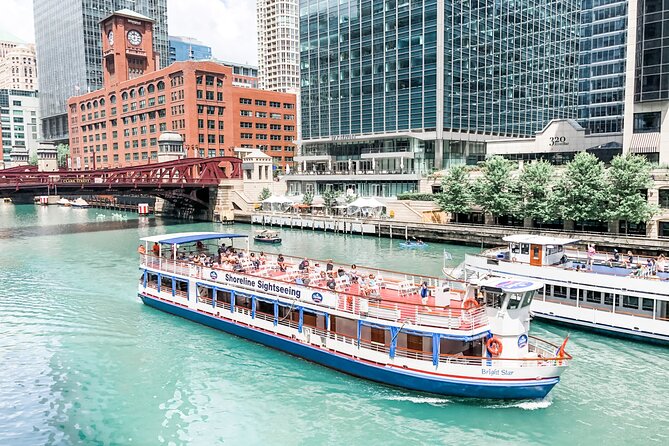
The river cruise is the heart of the architecture half. The big win is that you learn what you’re looking at as you go—so buildings stop being random blocks and start being part of a bigger Chicago story.
From what I’ve seen with guides on similar setups, the best moments come when the narration lines up with your camera angle. If you like photos, the cruise is often a “best-of” collection for the city.
A practical note: one experience mentioned there was no inside cabin, so bring sunscreen in warmer months. That’s not a tiny detail. If you’re out in Chicago sun for any length of time, you’ll feel it—especially if you’re also trying to take pictures while listening.
Also keep your ears in mind. One report described the onboard speaker volume as too low at times. If you’re sensitive to audio quality, plan to stand closer to the speaker area when possible, and don’t expect perfect clarity from every seat.
Guide Styles Matter: From Justin and Jim to Juan and Candice
The guide can make or break the cruise. On this kind of tour, you’re hearing architecture explanations through a personality lens—facts plus tone.
Some guide names that have shown up in strong feedback include Justin, Jim, Dylan, and Juan. You also may hear the digital narration and onboard commentary delivered in a lively way, and that can keep the cruise from feeling like a classroom.
I’d also flag one thing: humor is a personal preference. One guide, Mary Rose, received a less-than-stellar take from someone who wanted fewer jokes and more straight content. So if you’re the type who prefers clean factual commentary, focus on learning moments, not the comedic patter, and don’t assume every guide will match your style.
When Things Get Messy: Signage, Stop-Finding, and Ticket Redemption
This is the section you’ll thank yourself for reading.
A few issues show up in real-world problem solving:
Stop 1 signage timing
Some people found it hard to locate Stop 1 early because signage may not be fully out until around 10 am. Plan to arrive a bit earlier than you think you need to, especially if you’re catching the bus right at opening.
Stop 1 location details
There’s also a reported mismatch around what people expected—Stop 1 wasn’t across from Trump Tower as some assumed, and it was described as being near a Royal Sonesta on the river side. If you’re mapping it in advance, don’t trust your memory of nearby landmarks alone. Use the app and the posted stop number.
Ticket redemption confusion
If you booked through a third party, you might run into a voucher redemption gap where the local staff needs extra clarification. Some people report losing time trying to find the redemption point or realizing the instructions were unclear. Your best defense is simple: use 98 E Wacker Dr as your anchor, and confirm in the app or with Big Bus staff once you arrive.
The mix of cruise boarding points
Some confusion also comes from there being multiple boarding or start points for the river portion. If you’re trying to plan timing tightly, give yourself a buffer. If you need to switch or adjust, it helps to have time to do it without stress.
Best Use of a Two-Day Pass: A Simple Strategy
The two-day pass is your power tool. Don’t waste it by riding the bus once and calling it a day.
Here’s a solid approach:
- Day 1: Use the cruise for context, then do a first loop to see where everything sits. Hop off at the “must-see” zones like Millennium Park, Navy Pier, and Magnificent Mile.
- Day 2: Pick your favorite neighborhood zones and go slower. This is where the walking tours come in. Use Chicago Riverwalk or Millennium Park on the second day when you already understand what you’re looking at.
If you’re traveling as a couple, this works well because you can split interests: one of you can linger at skyline stops while the other does the museum area, then regroup at a familiar hotel or River North stop.
Who This Tour Fits Best
This combo is a good fit if you:
- Want a fast overview of Chicago’s big sights without building a detailed route yourself
- Like learning on the go and connecting stories to places
- Want flexibility for a second day
It may be less ideal if you:
- Hate any amount of audio narration or app check-in
- Need a very precise, no-mistakes schedule and get stressed by signage or voucher friction
In plain terms: if you’re the kind of traveler who enjoys a mix of guided learning and self-directed wandering, this is a strong match.
Should You Book It? My Decision Guide
If you’re visiting Chicago for the first time and want both skyline and street-level context, I’d book this. The cruise gives you the story, and the hop-on hop-off pass gives you the freedom to revisit what grabs you.
Before you go, do one thing that pays off immediately: plan to arrive at 98 E Wacker Dr with time to confirm you’re at the right pickup/start point. Then use the app for live tracking and stop navigation. If you do that, the experience tends to feel like an efficient, well-packaged way to see the city.
FAQ
FAQ
How much does this tour cost?
The price is $99.00 per person.
How long is the experience?
It’s listed as about 2 hours.
Where do I redeem my ticket?
You redeem at 98 E Wacker Dr, Chicago, IL 60601.
Is the tour offered in English?
Yes, it’s offered in English.
Does the bus pass cover more than one day?
Yes. The Big Bus pass is valid for two days, which helps you return to stops you want to revisit.
What is the cancellation policy?
You can cancel for free up to 24 hours in advance of the experience start time for a full refund.