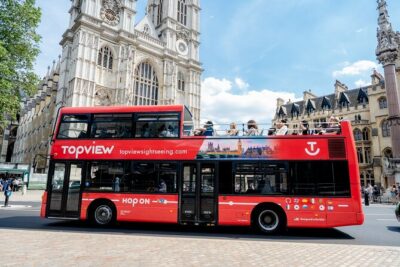
London’s must-see sights move at bus speed. This hop-on hop-off ride is a smart way to get your bearings fast while hearing clear commentary in 13 languages, and I also like that you can hop off at big names like Big Ben and Buckingham Palace without plotting every turn. One thing to consider: on busy days (or during road closures) you can face delays and longer waits between buses, so it’s best for flexible sightseeing, not tight timed entries.
A big plus here is the way the route stitches together classic zones: Westminster, the City, the Tower area, Hyde Park, and even down toward Harrods and Kensington. You’ll get headsets, a map, and Wi‑Fi on board, so you can keep up even if you’re not glued to the street-level details. If you want a Thames River cruise, the data says it’s included with the 24 and 48-hour ticket options—so pick your pass length with that in mind.
In This Review
- Key takeaways before you ride
- How the Double-Decker Hop-On Hop-Off Works (and Why It’s Still Worth It)
- Ticket Value: The Real Math Behind $57.59 and the 24/48-Hour Thames Cruise
- Logistics That Make or Break Your Day: Mobile Tickets, QR/Voucher, Headsets, and Wi‑Fi
- One practical tip: don’t wing your first stop
- Route Breakdown: Westminster, St Paul’s, and the City in One Ride
- Belvedere Road (behind the London Eye)
- Aldwych (One Aldwych Hotel)
- St Paul’s Cathedral (Ludgate Hill area)
- Cannon Street Station (Stop MB)
- London Bridge + Monument
- The Tower of London Area: Monument, Tooley Street, and Tower Hill
- Tooley Street
- Tower Hill (Tower of London)
- Big Ben, Westminster Pier, and the Thames Cruise Connection
- Victoria Embankment
- Big Ben area (Westminster Bridge side, in front of Westminster Pier)
- Horseferry Road
- Buckingham Palace and Hyde Park: Easy Stops for Icon Photos and Real Walking
- Buckingham Gate, Buckingham Palace Road
- Grosvenor Gardens
- Hyde Park (Queen Elizabeth Gate area)
- Marble Arch, Speakers’ Corner, Harrods, and the Museums Loop
- Marble Arch (Speakers Corner / Park Lane side)
- London Hilton on Park Lane (and Park Lane area)
- Harrods
- Victoria and Albert Museum (V&A)
- Gloucester Road, Kensington Road, and Kensington Palace
- Kensington Area Stops: From Palace Gardens Terrace to Lancaster Gate
- Back Toward the West: Padding Out the Day with British Museum Access
- Timing Reality Check: Road Closures, Changes, and Waiting Between Buses
- Who This Bus Tour Fits Best (and Who Might Skip It)
- Should You Book London City Sightseeing Hop-On Hop-Off?
- FAQ
- How long is the hop-on hop-off bus experience?
- Is it really hop-on hop-off, or do I stay on the bus?
- What language is the commentary available in?
- Does the tour include a Thames River cruise?
- Do I need to print my ticket?
- What’s included with the ride besides the bus?
- Where is the Big Ben stop relative to the river?
- Is Wi‑Fi available on the bus?
- Can I cancel for free?
Key takeaways before you ride
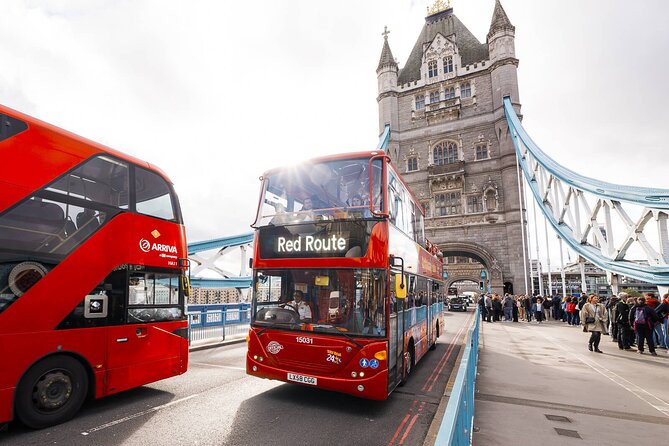
- Top-deck views all the way: ride upstairs for the best sightlines over the crowds and traffic.
- 13-language headset audio: headsets are provided so the narration stays clear.
- Hop on and off as often as you want: use it like a flexible sightseeing ticket.
- Thames cruise can be included: free cruise applies to 24 and 48-hour tickets.
- Stop finding matters: some stops feel a bit hidden, so double-check the stop list before your first board.
How the Double-Decker Hop-On Hop-Off Works (and Why It’s Still Worth It)
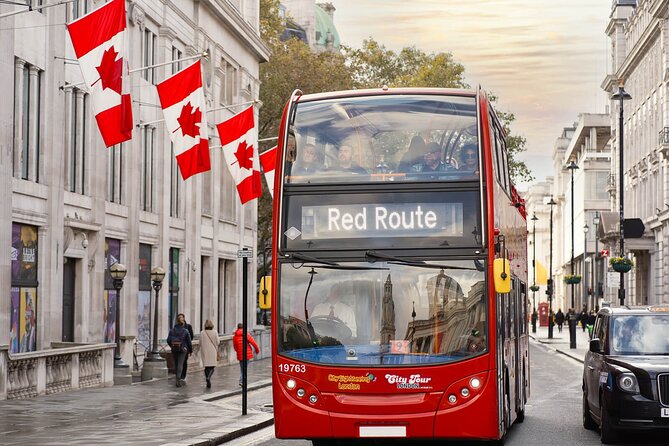
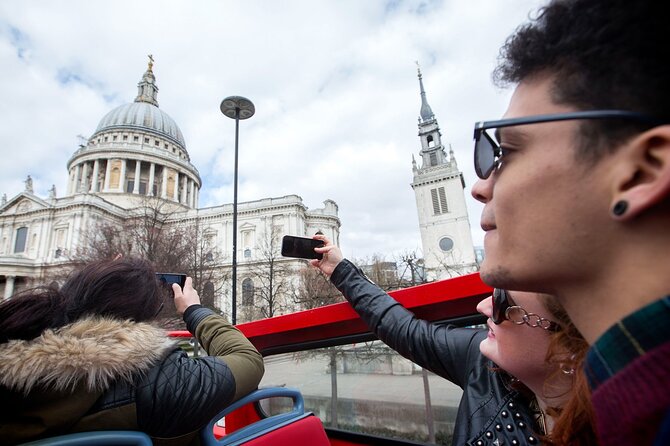
This kind of bus is designed for one job: letting you cover a lot of London in a short time without overthinking transit. You’ll be on a double-decker, and the view from the top is the whole point. From there, you can spot landmarks as you pass—then decide later if it’s worth hopping off to walk around.
I like this style for first-time visitors because it keeps the day from turning into a logistics puzzle. Even if you only get off at a few stops, you still get a useful “map in motion” that helps the rest of London clicks into place.
The one caution is timing. If you’re trying to hit a very specific entry window (like the Tower of London), a hop-on hop-off bus is rarely the fastest option. It’s a great overview tool—but not a guaranteed shortcut through city congestion.
Ticket Value: The Real Math Behind $57.59 and the 24/48-Hour Thames Cruise
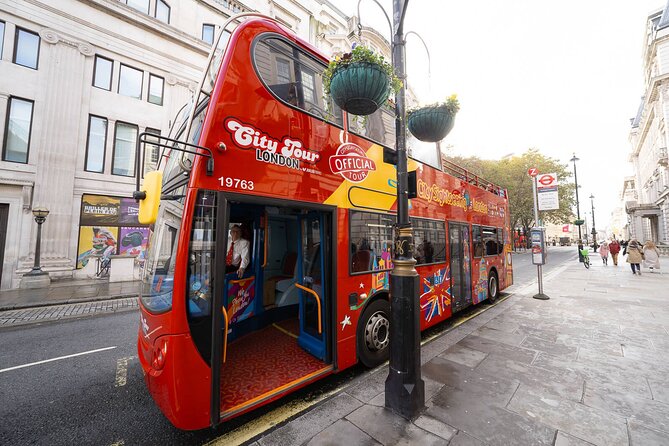
At $57.59 per person for an experience listed around 3 hours, the value comes from how many landmark stops you actually use. If you stay on the bus for most of the circuit and just soak in the sights, it’s a reasonable “one-shot overview” price. If you plan to hop on and hop off multiple times to combine short walks with longer drives, it can feel like better value fast.
Here’s where the ticket type matters: the information provided says the free River Thames cruise is included with the 24 and 48-hour options. So if the Thames cruise is on your London checklist (and it should be), you’ll want to compare whether spending a little more for a longer pass is worth it for you.
Also note the ride can take place over partial route changes due to events, celebrations, or official works. That’s not a deal-breaker, but it means your “best-laid plan” might need a tweak.
Logistics That Make or Break Your Day: Mobile Tickets, QR/Voucher, Headsets, and Wi‑Fi
This is an easy tour to use once you’re on board, but the start of the day needs focus.
You can use mobile tickets (and paper vouchers are also accepted). On your first ride, you’ll be given your ticket—keep it with you, since it’s your only valid travel document.
Headsets are part of the deal. The tour provides headphones so you can hear the commentary clearly, and there are 13 different languages. This is one of the most practical inclusions on any bus tour: if you’re hearing the narration without cranking your neck or guessing at what you’re seeing, the whole experience clicks.
Wi‑Fi is included on board too. That’s handy for quickly checking opening times, directions, or confirming where your next stop is.
One practical tip: don’t wing your first stop
The tour instructions say you go to the bus stops listed on the provider’s route page and show your voucher to staff (either at the bus stop or inside the bus). Some stops can be confusing on first arrival, and even with the map, it’s smart to double-check you’re at the correct stop before you commit to waiting.
Route Breakdown: Westminster, St Paul’s, and the City in One Ride
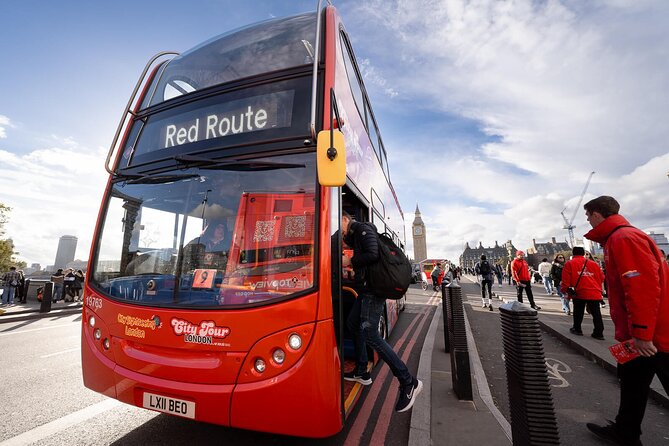
London’s best “wow” stretch for many people is Westminster into the City. This route does that without forcing you into constant walking.
Belvedere Road (behind the London Eye)
This is a good launching point if you want the London Eye area as part of your first-day orientation. You’ll be positioned near one of the river’s most famous landmarks, even if you don’t get off here for long.
Potential drawback: it’s a popular zone, so it can be busy and slow to move through on foot.
Aldwych (One Aldwych Hotel)
Aldwych is one of those London areas where the streets feel central and walkable. If you like quick photo stops, this is a reasonable pick.
St Paul’s Cathedral (Ludgate Hill area)
This is where the City and classic London meet. Getting off here is especially useful if you want to walk around the cathedral precinct and then return later without planning a full route.
Watch-out: roads can change due to closures or events, and once that happens, hop-on hop-off routes can shift.
Cannon Street Station (Stop MB)
This is a practical stop for the City edge. If you want to wander between riverside views and the business-district streets, the stop location helps you break up the day.
London Bridge + Monument
The bus hits this zone through stops like London Bridge, then Monument near London Bridge, and later continues toward Tooley Street.
From this section, you’ll get a feel for how London turns from “big monuments” into dense neighborhoods and working streets. It’s a good segment to stay on board for the views, then jump off if something grabs your interest.
The Tower of London Area: Monument, Tooley Street, and Tower Hill
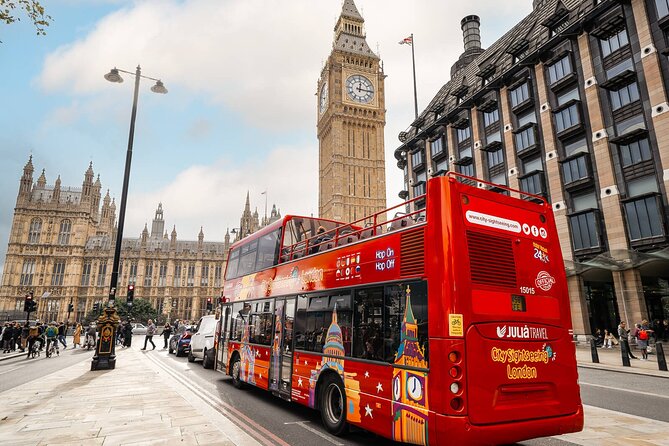
This part of the route is all about the historic core on the east side: the Tower zone.
Tooley Street
Tooley Street is a good marker for the transition toward the river-heavy, story-rich parts of south-east London. Even if you don’t hop off immediately, it helps you understand where the Thames bends around this area.
Tower Hill (Tower of London)
This is the headline stop in the east circuit. If Tower of London is on your list, you’ll want to get off here—then pair the walk with nearby areas so you don’t feel boxed into one attraction.
Real-world consideration: if your priority is making a specific entry time, build slack. A hop-on hop-off bus is convenient, but it isn’t always the fastest path when traffic is bad.
Big Ben, Westminster Pier, and the Thames Cruise Connection
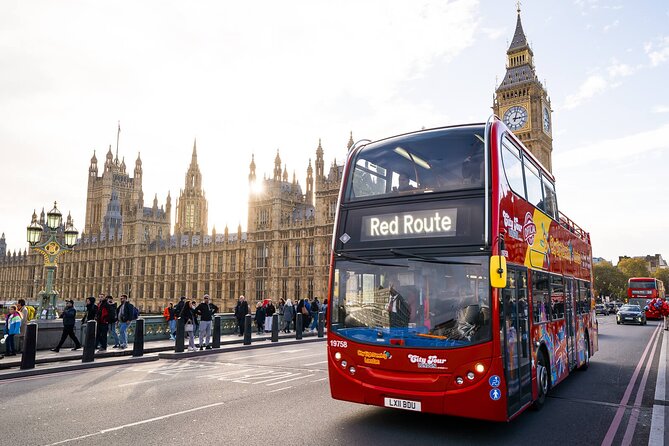
The route makes a clear play for Westminster highlights.
Victoria Embankment
This area is useful as a “frame” for seeing how the river and central London sit together. Staying on the upper deck through this stretch is often the easiest way to get those postcard angles without changing transportation.
Big Ben area (Westminster Bridge side, in front of Westminster Pier)
This stop is a big deal because it lines up with the river experience. The information says the free Thames cruise pick-up ties to the Westminster Pier area by Big Ben, so this is where you should pay attention if you’re planning the cruise.
Tip: if you’re doing both bus and cruise, time your bus hops so you’re not running from one side of the street to the other at the last second.
Horseferry Road
This works as a connector between major Westminster sights. If Big Ben is a “must,” Horseferry Road is a convenient place to break up the day before you move toward Buckingham Palace.
Buckingham Palace and Hyde Park: Easy Stops for Icon Photos and Real Walking
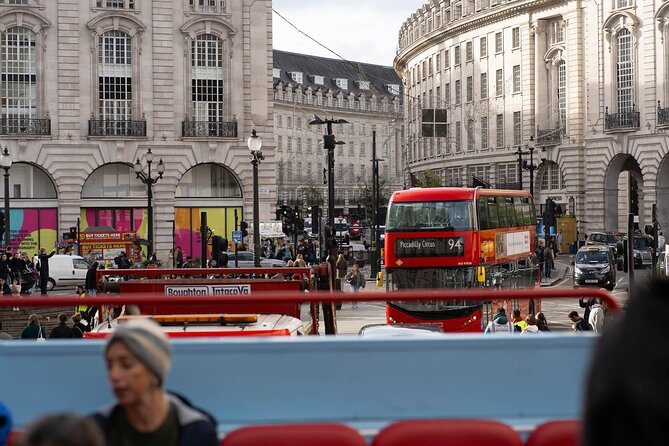
This section mixes royal landmarks with green space, which is a smart balance for a short London trip.
Buckingham Gate, Buckingham Palace Road
The bus makes multiple stops around Buckingham Palace—so you’re not forced to rely on one exact location. Stops include places like Buckingham Gate and a few different points on Buckingham Palace Road (including near hotels and specific stop letters in the route system).
Why that matters: London is full of fences, one-way streets, and footpath detours. Having multiple nearby stops increases your chance of landing close to where you want to walk.
Grosvenor Gardens
This is a quieter-feeling break compared to the immediate palace frontage. It can be a nice in-between stop if you want a rest moment and a less chaotic set of footpaths.
Hyde Park (Queen Elizabeth Gate area)
If you want your London day to include more than stone buildings, the Hyde Park stop is a logical swing point. You can hop off for a quick walk, then continue toward the next attractions on the route.
Marble Arch, Speakers’ Corner, Harrods, and the Museums Loop
If you want high-energy shopping streets plus famous museum names, this route segment is built for that.
Marble Arch (Speakers Corner / Park Lane side)
Speakers’ Corner is tied to the idea of public debate and open speech—so even if you just stop briefly, it gives you a different angle on London beyond the royal and historical stops.
London Hilton on Park Lane (and Park Lane area)
This stop is part of the Park Lane corridor—useful if you’re trying to move between central London and the west-side attractions without hopping into complicated transit planning.
Harrods
This is one of the easiest “just get off and wander” stops on the list. You may not be there to buy anything, but it’s a landmark in itself.
Victoria and Albert Museum (V&A)
This is a classic museum stop. Even if you don’t plan a full museum day, dropping off here lets you fit in a shorter visit or a browse session, then rejoin the bus later.
Gloucester Road, Kensington Road, and Kensington Palace
The route keeps rolling west: you’ll hit Gloucester Road, Kensington Road, and then Kensington Palace. Kensington Palace is great for people who prefer a slightly less “royal parade” vibe than central Westminster.
Kensington Area Stops: From Palace Gardens Terrace to Lancaster Gate
This stretch is more residential and walkable in feel, which can make it easier to string together short walks.
Stops like Palace Gardens Terrace, Saint Petersburgh Place, and Porchester Terrace help you move around Kensington with fewer steps. Then you reach areas such as Lancaster Gate and Lancaster Gate Station.
Practical drawback: like many London areas, footpaths can feel indirect. If you’re short on time, staying on the bus longer and hopping off only at the most central points can save energy.
Back Toward the West: Padding Out the Day with British Museum Access
The route also includes stops near the British Museum area, such as Great Russell Street (British Museum exterior).
This is good for pairing with your earlier day overview. If Westminster and the Tower zone feel heavy, adding the museum area can shift your day into “walk, read, and slow down” mode.
Timing Reality Check: Road Closures, Changes, and Waiting Between Buses
The tour information says the route may be partially altered due to events, celebrations, sporting events, official acts, or works. That’s common in London, and it affects hop-on hop-off buses like any other road-based transport.
In real life, this shows up as:
- stops moved or skipped temporarily
- extra walking to reach the next pick-up point
- longer gaps between buses than you’d hope for
If you have a hard deadline—like an entry time—you should treat the bus as a helpful lead-in, then verify your timing using the day-of plan you create on the spot.
Who This Bus Tour Fits Best (and Who Might Skip It)
This hop-on hop-off bus is a strong match if:
- you want major sights in one morning or afternoon
- you like audio-guided sightseeing and clear stop markers
- you want flexibility more than speed
- you’re combining bus rides with short walks
You might be better off using other transport if:
- you’re trying to move fast between far-apart attractions with strict timed tickets
- you hate waiting in lines or at stops
- you already know your exact route and don’t need the orientation loop
Should You Book London City Sightseeing Hop-On Hop-Off?
Book it if you want a low-effort way to hit London’s “headline” sights and you’re okay with the occasional delay that comes with city streets. The included headset audio in 13 languages and the top-deck sightlines make the experience feel guided, not chaotic.
Skip or consider alternatives if your day is built around non-negotiable entry times and you need maximum predictability. In that case, you can still use parts of the bus route as a backup plan—but I’d avoid relying on it as your only route.
FAQ
How long is the hop-on hop-off bus experience?
The experience is listed at about 3 hours.
Is it really hop-on hop-off, or do I stay on the bus?
You can get on and off as many times as you want as long as your ticket is valid.
What language is the commentary available in?
The commentary is available through headsets in 13 languages.
Does the tour include a Thames River cruise?
A free Thames River cruise is included with the 24 and 48-hour ticket options.
Do I need to print my ticket?
No. Mobile tickets are accepted, and paper vouchers are also accepted.
What’s included with the ride besides the bus?
You get headsets, a map, Wi‑Fi on board, and (depending on ticket length) a free Thames cruise.
Where is the Big Ben stop relative to the river?
The Big Ben stop is listed at Westminster Bridge side, in front of Westminster Pier.
Is Wi‑Fi available on the bus?
Yes, Wi‑Fi is included on board.
Can I cancel for free?
Yes. Free cancellation is available up to 24 hours in advance for a full refund.