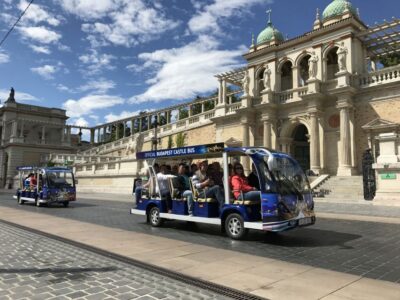
Two decks, one ticket, and you control the pace. This hop-on hop-off tour is a smart way to orient yourself fast, especially with open-top 360-degree views and on-board audio in 13 languages. The one drawback to plan around: when roads are disrupted by events, routes and stop timing can shift, and audio may feel a little off.
I also like the value angle here. For about the price of a couple of taxi rides, you can cover multiple areas over 24, 48, or 72 hours, then hop back on when you’re ready for the next site—Syntagma Square today, museums tomorrow, and the coast if you choose the right line. Just know entry fees aren’t included, so you’ll still buy museum/ancient-site tickets separately.
In This Review
- Key highlights I’d build a plan around
- Price and pass choices: where the value really comes from
- How the buses run: timing that affects your sightseeing day
- Athens Line stop-by-stop: Syntagma to Monastiraki and the museum circuit
- A quick way to use the Athens Line without wasting time
- Piraeus Route: the cruise-port side with beach-adjacent stops
- The Piraeus route’s best use
- Beach Riviera Line: from Niarchos to Glyfada, plus the lake at Vouliagmeni
- Beach-day strategy that works
- On-board audio, Wi‑Fi, and the small comfort wins
- The little extras
- Voucher reality check
- When Athens throws curveballs: marathons, protests, and traffic
- Should you book this Athens hop-on hop-off bus tour?
- FAQ
- How long is each route?
- How often do the buses run on the Athens Line?
- When do the Piraeus and Beach Riviera buses depart?
- Which routes operate year-round?
- What does the ticket include?
- Is admission to attractions included?
- Is hotel pickup or drop-off included?
- Do I need to redeem the voucher before boarding?
- Is free Wi‑Fi available on board?
- Is the Greek beer always available?
Key highlights I’d build a plan around

- Pick the perfect mix of lines: Athens for antiquities + museums, Piraeus for the cruise-port area, Riviera for beach towns
- Frequent city departures on the Athens Line (every 20–30 minutes) make it easy to time walks
- Audio guide works while you ride, plus free headphones for 13 languages
- Free Wi‑Fi and free local Greek beer (beer depends on venue; check on-site)
- Interchange at the Acropolis area lets you connect between Athens and Piraeus routes
Price and pass choices: where the value really comes from
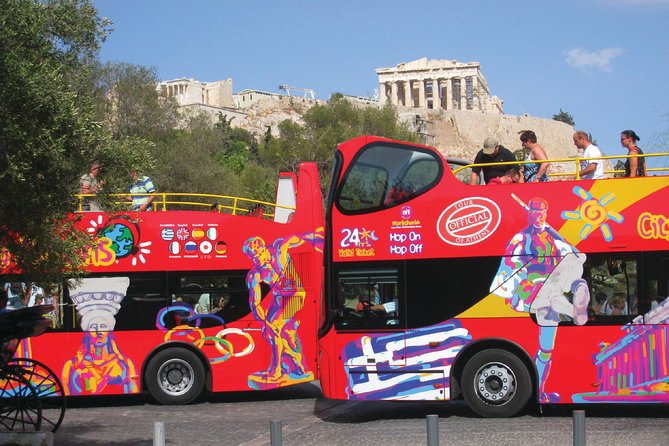
This tour costs $26.36 per person, and the big question isn’t just the headline price—it’s what you actually do with your time. The ticket is sold as a 24-, 48-, or 72-hour pass, and depending on which option you buy, it can cover up to 3 routes.
Here’s how you make it feel worth it:
- If it’s your first day and you want a smooth “get my bearings” loop, the Athens Line is the easiest win.
- If you’re coming from a cruise or want the port neighborhoods without hiring a car, look for a pass that includes the Piraeus route.
- If your itinerary includes beach time (or you want a relaxed coastal break), the Riviera/Beach Line is the one that does the work.
You’ll also want to match your pass length to your style. If you tend to linger—Plaka streets, museum staircases, and long café stops—48 or 72 hours tends to fit better than 24.
One more practical note: buses aren’t a replacement for attraction tickets. Entry to sites is not included, so factor in museum/ancient-site fees if you hop off to go inside.
How the buses run: timing that affects your sightseeing day
Understanding the schedule helps you avoid the most common disappointment: realizing you only have a small window to hop off and back on.
- Athens Line: First departure 8:30am, last departure 4:30pm, around 90 minutes for a full loop. Frequency is every 20–30 minutes.
- Piraeus Route: Departs from the Acropolis/Parthenon interchange area, with 11am and 3pm departures, and about 80 minutes total.
- Beach Riviera Route: Also departs from the Acropolis/Plaka area interchange, with departures 11am, 1pm, 3pm, and about 110 minutes total.
And yes, times can change. The tour operator notes that timetables, frequencies, and inclusions may change with little notice, so I’d check the on-destination information before you commit to a hop-off plan.
Athens Line stop-by-stop: Syntagma to Monastiraki and the museum circuit
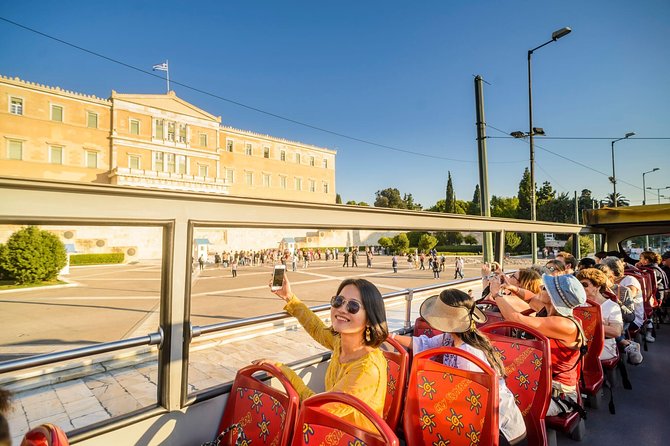
The Athens Line is the backbone. It’s built for first-timers who want to see the main sights without getting stuck in traffic every time they change plans. Expect a loop through central Athens, the Acropolis area, museums, and the classic neighborhood stops.
Below is what each stop is good for, plus what to watch out for.
Stop 1: Syntagma Square (Syntagma Square)
Start here if you want the easiest orientation point. This is where many people decide their first walking direction.
Stop 2: Melina Mercouri Monument (Acropolis / Plaka)
This is your first real “wow” stop. Great for planning a Plaka wander or deciding whether you want to go straight toward the Acropolis area.
Stop 3: Chatzichristou 6Α (Acropolis Museum)
Ideal if you’re museum-minded. If you’d rather understand the artifacts before you climb farther, hop here and build your timing around the museum.
Stop 4: Kiosk (The Acropolis & Parthenon; interchange with Piraeus Route)
This is the connection point. Even if you only ride the Athens loop once, this interchange matters if you want to add the Piraeus route later.
Stop 5: Melina Mercouri Monument (Temple of Zeus)
A good transfer point if you want to pair Temple of Zeus sights with nearby walking routes. The timing can feel rushed if you hop off without a plan.
Stop 6: Syntagma (Parliament / National Gardens)
Good for a break from heavy sightseeing. If you want a calmer pocket to recharge, this is one of the best spots on the route for it.
Stop 7: Leof. Vasilissis Sofias 642 (The Four Museums)
This is a “museum cluster” stop, so it’s worth it if you know at least one museum you want to see. If you don’t, you might enjoy it more by hopping off when you’re rested.
Stop 8: Leof. Vasileos Alexandrou 14 (The National Gallery)
Nice if you’d rather swap ancient sites for art. This stop can help you build a day with variety instead of only archaeology.
Stop 9: George Karaiskakis Statue (Ancient Olympic Stadium)
Even if you don’t buy a stadium ticket, the area is a good contrast to the Acropolis zone. You can use this as a leg-stretch stop.
Stop 10: Oμόνοια 118 (National Library)
Central Athens vibes here. Useful for positioning yourself for walks toward other neighborhoods.
Stop 11: 28is Oktovriou 53 (National Archaeological Museum)
This one is a big deal on the map. If you want the museum that puts more artifacts into your brain, aim to hop off here rather than trying to fit it in last-minute.
Stop 12: Pl. Omonias 3 (Omonia Square)
A practical city-center anchor. If you’re connecting to another neighborhood by foot or transit, this stop can act like a compass.
Stop 13: ATM Alpha Bank (Karaiskaki Square)
Not as famous as a headline landmark, but it’s helpful for navigating. When you’re doing hop-on hop-off, these mid-route stops often make the difference between “I saw everything” and “I only saw what was on my side of town.”
Stop 14: Ermou 137 (Monastiraki Square)
This is prime for browsing and people-watching. It’s a strong choice if your afternoon includes shopping or you want an easy dinner area.
Stop 15: Town Hall (Kotzia Square)
Good for extending your central-day loop without feeling like you’re doubling back. If you’re planning to walk toward Plaka from the metro/market area, this helps.
A quick way to use the Athens Line without wasting time
If you’re visiting for a short stay, I’d do this pattern: ride once for orientation, then hop off at 2–3 sites you really care about (not 8). It keeps you in control of the day, not at the mercy of bus timing.
Piraeus Route: the cruise-port side with beach-adjacent stops

The Piraeus route is for you if you want a break from central Athens—or if your day is shaped by cruise timing. It departs at 11am and 3pm and runs about 80 minutes, with the key interchange at the Acropolis/Parthenon area.
Here’s what you get at each Piraeus stop:
Stop 1: Isalos.net (Pantion University)
A suburban-ish landmark to mark the start of your port-side transition.
Stop 2: Lisikratous 1 (Niarchos Foundation)
This is a useful point if you’re mixing museums/modern architecture into your coast day.
Stop 3: Sotiros Dios 15 (Municipal Theatre)
Good for seeing the “everyday city” feel on the way to the harbor.
Stop 4: Telōneio (Cruise Terminals A & B)
This is the money stop for cruise passengers. It’s built for that arrival/departure rhythm.
Stop 5: Akti Miaouli 238 (Lions Gate)
A reminder that the route connects different eras and neighborhoods, not just waterfront scenery.
Stop 6: The Nelson Exhibition (Archaeological Museum of Piraeus)
If you want a museum moment in the port area, this is where to hop.
Stop 7: Akti Kountouriotou 13 (Votsalakia Beach)
A beach stop that feels like a local reset—especially handy after a cruise day where you want fresh air.
Stop 8: Leof. Al. Papanastasiou 68 (Mikrolimano Harbour)
Great for harbor views and atmosphere. This stop is often the payoff after you’ve worked your way from central sights.
Stop 9: Leof. Andrea Siggrou 387 (Planetarium – Marriott Hotel)
Worth using if you want a different kind of attraction or a convenient meeting point.
Stop 10: Aristotelous 1 (Grand Hyatt & Intercontinental)
A hotel-heavy area that can be convenient for timing and quick connections.
Stop 11: Kiosk (The Acropolis & Parthenon; interchange with Athens Line)
Your way back to the Athens-side loop and the main sightseeing hubs.
The Piraeus route’s best use
Don’t treat it like a casual “we’ll see everything” loop. Treat it like a coastal and port neighborhood sampler. If you hop off too often, you risk spending the day moving instead of sightseeing.
Beach Riviera Line: from Niarchos to Glyfada, plus the lake at Vouliagmeni
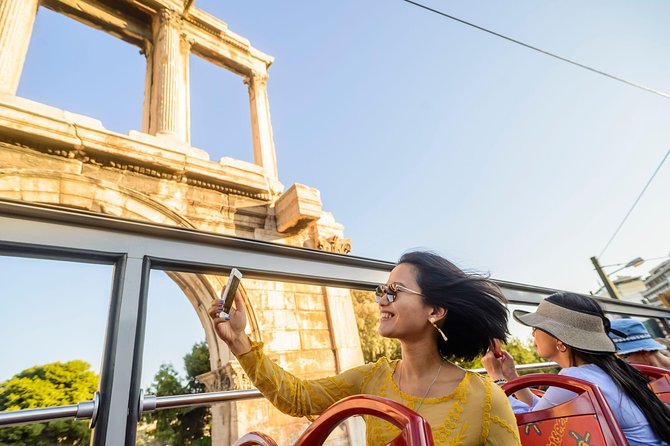
The Beach Riviera Line takes longer (about 110 minutes) and runs three times daily from the Acropolis/Plaka interchange (11am, 1pm, 3pm). It’s the best option for a seaside day without hiring a car for the whole stretch.
Also, this line operates April to October, so if you’re traveling outside that window, you’ll want to stick to the Athens Line or adjust plans.
Stops, and what each one is good for:
Stop 1: Melina Mercouri Monument (Acropolis / Plaka)
This is where your Riviera day often begins.
Stop 2: Isalos.net (Pantion University)
A transit marker as you head toward the coast.
Stop 3: Lisikratous 1 (Niarchos Foundation)
A strong place to re-check your timing if you plan to combine modern sights with beach time.
Stop 4: Trokantero (Faliro / Flisvos)
This area works well as a “coastal transition” point—good if you want a shorter hop rather than committing to the far end.
Stop 5: Edem (Edem)
A recognizable stop name that can help you orient once you’re out of central Athens.
Stop 6: 4η ΚΑΛΑΜΑΚΙΟΥ (Agios Kosmas Beach)
If beach is the goal, this is one of the natural hop-off targets.
Stop 7: Palace Hotel Glyfada (Bomo Palace)
This is more “resort zone” than landmark. Useful for grabbing food, relaxing, or meeting others.
Stop 8: Leof. Poseidonos 82 (Glyfada Beach)
One of the headline beach stops on the route. This is where your day turns from sightseeing into downtime.
Stop 9: Xanthou 1 (Asteria Beach)
Good if you want to spread your beach time instead of locking yourself into one location.
Stop 10: Αγ. Νικολαος (Divani Apollon)
A hotel-based stop that can simplify your day if you’re staying nearby.
Stop 11: Athens Astir Palace Beach Resort (Oceanis Beach / Astir Palace)
A big-name resort area. If you want “beach day energy,” this stop fits.
Stop 12: Limnē (Vouliagmeni Lake)
This is a standout stop because it’s not just sand-and-sea. It gives you a different coastal nature feel.
Stop 13: Leof. Kon/nou Karamanli 223 (Pigadakia)
Another beach/relaxation stop that’s useful if you want flexibility.
Stop 14: Pikpa (Blazer Suites)
Again, a resort/hotel stop. It’s convenient for timing even if it’s not a classic sightseeing landmark.
Stop 15: Πλ. Γλυφαδας (Glyfada Town)
Great for food, strolling, and simple logistics.
Stop 16: 2η ΓΛΥΦΑΔΑΣ (Golf)
If you’re interested in that side of town, it’s a helpful reference point.
Stop 17: 4η ΚΑΛΑΜΑΚΙΟΥ (Agios Kosmas)
A second pass through a nearby area can help you adjust mid-day.
Stop 18: Leof. Poseidonos 43 (Kalamaki)
A coastal neighborhood stop to keep your day moving without committing to one end of the route.
Stop 19: POSEIDON ATHENS HOTEL (Poseidon Hotel)
A hotel anchor for meeting points.
Stop 20: Leof. Andrea Siggrou 387 (Planetarium – Marriott Hotel)
Useful if you want to return toward a more central-style area later.
Stop 21: Aristotelous 1 (Grand Hyatt & Intercontinental)
Another major hotel cluster for convenience.
Stop 22: Melina Mercouri Monument (Temple of Zeus)
This helps you connect back toward the Athens-side “ancient sights” mindset.
Beach-day strategy that works
If you want maximum fun, pick one or two beach stops and commit. Use the bus to get you there and back, not to bounce between every stop.
On-board audio, Wi‑Fi, and the small comfort wins
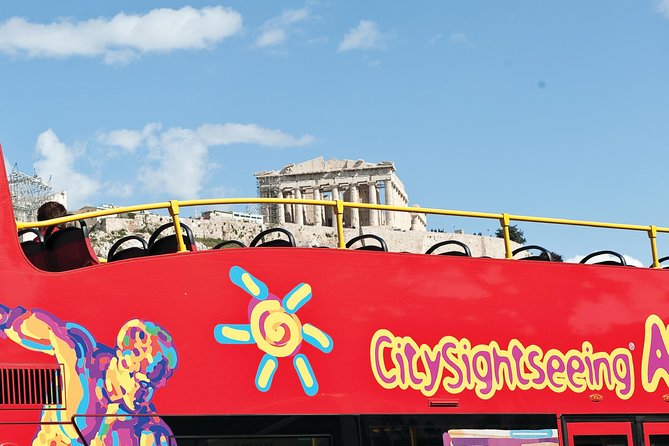
This tour has a lot going for it beyond the route map. You get free Wi‑Fi, and the audio guide comes in 13 languages with headphones. That combination matters because Athens traffic and sun can slow you down on foot, while the bus lets you keep your momentum.
A few comfort tips based on real-world issues I’d watch for:
- If your headphones act up, swap sides or ask at the stop if you see staff there. I’ve seen audio reliability called out—sometimes one ear is fine and the other isn’t.
- The audio doesn’t always line up perfectly with what you’re looking at if the bus is delayed by traffic or diversions. When that happens, use the stop names and street landmarks on the route as your primary guide.
- Open-top buses are great for views, but they’re also louder than people expect. If you hate bus noise, it’s worth using the audio even though you’ll still hear traffic underneath.
The little extras
- Free local Greek beer is included, but the venue can change. If beer is part of your plan, check on-site on the day you ride.
- Most of the route is accessible by public transportation to get you to the stops, but the buses themselves involve stairs. If mobility is a challenge, this is one place to be cautious and plan for extra effort getting up.
Voucher reality check
Your voucher isn’t automatically a usable ticket. You’ll need to redeem the mobile or paper voucher with an agent at the stop or on the bus before you board, then you’ll be handed a printed ticket you should keep for the whole ride period.
When Athens throws curveballs: marathons, protests, and traffic
Athens can be very event-driven, and the operator explicitly says schedules can change. That’s not a theoretical warning. During big events like marathons, you can end up with partial schedules, skipped stops, or longer travel times because roads close.
This is why I treat hop-on hop-off like flexible transport, not a strict itinerary:
- Build a plan with “must-sees” and “nice-to-sees.”
- If the bus seems to be skipping your target stop, don’t panic. Get off at the nearest stop it’s serving, then walk from there rather than waiting in frustration.
- Keep your expectations tied to the fact that you’re riding through a real city with traffic, not a theme park.
Should you book this Athens hop-on hop-off bus tour?
Yes—if you want an efficient way to see the main sights without locking yourself into a walking tour schedule. I think it’s especially worth booking if you’re doing a short first visit and you want quick orientation, then time to revisit the spots you care about most.
Book it if:
- You like the idea of hop-on flexibility and want to decide on the fly.
- You want one-day city coverage on the Athens Line, plus optional add-ons for Piraeus or the Riviera beaches.
- You’ll use the audio and actually enjoy relaxing while the scenery changes.
Skip or adjust your expectations if:
- You need tight timing for a specific museum ticket on a specific hour. (Delays happen, and stop timing can shift.)
- Accessibility is a major concern. The bus involves stairs, and some riders have found boarding difficult.
If you’re the type who likes to start with a big picture, then zoom in on 2–3 places, this pass fits your style.
FAQ
How long is each route?
The Athens Line takes about 90 minutes for the full loop. The Piraeus Route is about 80 minutes. The Beach Riviera Route is about 110 minutes.
How often do the buses run on the Athens Line?
The Athens Line runs every 20–30 minutes, with the first departure at 8:30am and the last at 4:30pm.
When do the Piraeus and Beach Riviera buses depart?
The Piraeus Route departs at 11am and 3pm. The Beach Riviera Route departs at 11am, 1pm, and 3pm.
Which routes operate year-round?
The Athens route operates all year round, except 17th November, 25th December, and 1st January. The Piraeus, Beach, and Riviera routes operate April–October only.
What does the ticket include?
Your ticket includes access to a 24-, 48-, or 72-hour hop-on hop-off pass (based on what you choose) and up to 3 bus routes. It also includes on-board audio commentary in 13 languages with headphones, free Wi‑Fi, and stops near major sights.
Is admission to attractions included?
No. Entry to attractions is not included.
Is hotel pickup or drop-off included?
No. Hotel pickup and drop-off are not included.
Do I need to redeem the voucher before boarding?
Yes. The electronic voucher is not a ticket. You must redeem it at a participating agent location at the stop or on the bus before you board.
Is free Wi‑Fi available on board?
Yes, free Wi‑Fi is included.
Is the Greek beer always available?
Beer is listed as included, but the venue may change, so it’s smart to confirm locally where and when it’s offered.