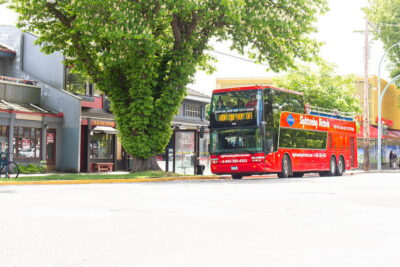
Two hours on the top deck changes everything. You get an easy, car-window-free way to see Barcelona’s big hits across both sides of the city without locking yourself into a rigid schedule. The pink and blue Bus Turístic loops run through major landmarks, and your pass lets you jump off, wander, then hop back on when you’re ready.
I love the freedom built into this tour: unlimited riding on both routes for 24 or 48 hours, with buses leaving regularly from each stop. I also really like the practical onboard extras, especially free Wi‑Fi and audio commentary in 16 languages with headphones—so you can learn as you go, not after you’ve already missed the view.
One drawback to plan for: Barcelona weather can be rude. The top deck is open-air, and if it’s windy or rainy, you’ll want real rain gear, not just hope.
In This Review
- Key things that make this tour worth your time
- How Barcelona’s two bus loops beat the subway plan
- First and last bus basics
- 24 hours vs 48 hours: picking the pass that actually fits your day
- Starting at Plaça de Catalunya without losing your mind
- The Montjuïc and waterfront side: what each stop helps you do
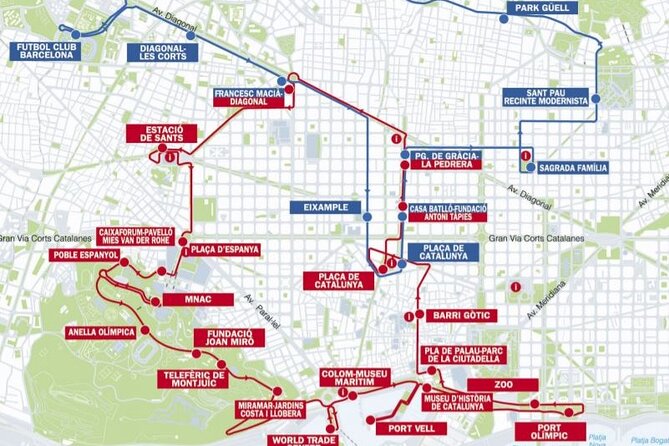
- Stop-by-stop highlights on the Montjuïc and waterfront loop
- What I think works best with this circuit
- The Park Güell and Tibidabo side: architecture and viewpoints you’ll want
- Stop-by-stop highlights on the Park Güell and Tibidabo loop
- What I think works best with this circuit
- Using the headphones and Wi‑Fi like a pro (so you don’t miss your stop)
- Hearing-aid caution (important if it applies to you)
- Coupon booklet value: how to turn discounts into real savings
- Practical tips for photos, rain, and not losing your ticket
- Weather and wind
- Photos
- Keep your pass safe
- Boarding speed
- Who should book this, and who might want a different style of tour
- Should you book City Sightseeing Barcelona?
- FAQ
- How long is the tour loop?
- Do I get to ride for 24 or 48 hours?
- What’s included on board?
- Does the ticket include entry to attractions?
- Where do the buses depart from?
- Can I use a mobile ticket?
Key things that make this tour worth your time

- Unlimited 24/48-hour riding across two route loops, so you can build your own day
- 360-degree views from an open-top bus, great for photos and orientation
- 16-language audio with headphones plus free onboard Wi‑Fi to keep you informed and moving
- Stops near major sights like Sagrada Família, Park Güell area, Montjuïc, beaches, and La Rambla
- Coupon booklet with 200+ euros in discounts to help offset the cost if you plan attractions
How Barcelona’s two bus loops beat the subway plan

This is a hop-on hop-off bus tour that’s built for one job: getting you oriented fast. Barcelona is big, and it’s spread out. Taking one of these routes gives you a moving “map” of the city—while you still have the option to get off and walk the moment something catches your eye.
Your pass covers both routes for the time you choose (24 or 48 hours). Buses depart from stops throughout the day, with a frequency listed as every 20 minutes. In high season, the service can run more often (as stated, up to every 5 minutes), which helps you avoid long waits at stops.
Timing matters because a full loop takes about 120 minutes if you stay on the bus. In real life, traffic lights and congestion can stretch things out. Still, the core value stays the same: you’re not stuck guessing which neighborhood connects best.
First and last bus basics
- First bus departs from Stop 1 (Plaça de Catalunya) at 9:00am
- Last bus departs from Stop 1 at 7:00pm
24 hours vs 48 hours: picking the pass that actually fits your day

The pricing is $39.54 per person, and the big question is not the dollar amount—it’s how many worthwhile stops you can hit without burning your energy on transit.
If you have one day, a 24-hour pass is usually enough for:
- A first look at the Eixample architecture stretch
- The “wow” factor stops like Sagrada Família and/or the Park Güell area (depending on which route you prioritize first)
- A sunset/walk moment at a waterfront or central area like La Rambla or the Olympic area
If you have two days, a 48-hour pass gives you breathing room. You can:
- Take the bus once to build a mental map
- Come back the next day to linger longer where you want to shop, eat, or sightsee on foot
The tour also includes a coupon booklet with over 200 euros in discounts at top attractions. That can tip the math in your favor if you plan to buy entry tickets anyway. In other words: if you’re the type who wants to do 2–3 paid sights during your trip, the pass often feels more like a bargain.
Starting at Plaça de Catalunya without losing your mind
Plaça de Catalunya is the main hub, and your first bus starts there (Stop 1). It’s central, but it can be confusing because you may see more than one bus operation around the square.
Here’s the practical way to handle it:
- Look specifically for the pink and blue buses named Bus Turístic
- If you’re unsure which side of the square you need, ask an attendant at the stop rather than wandering for 20 minutes in the wrong direction
- Keep your phone ticket ready. Mobile and printed vouchers are both accepted, and you can redeem at stops along the routes
Also: the tour runs through a lot of stops, so save yourself stress by checking the stop names in advance and having a short list of “must hop” locations. When you’re ready to get off, you’ll know what you’re aiming for instead of scrambling mid-route.
The Montjuïc and waterfront side: what each stop helps you do

This circuit is great when you want Barcelona’s “big picture” across the south, plus harbor and beach time. It’s a strong match for first-timers because it hits landmarks in a tight, walkable sequence.
Hop on and enjoy the ride, then use the stop list below like a choose-your-own-adventure menu.
Stop-by-stop highlights on the Montjuïc and waterfront loop
- Plaça de Catalunya (Stop 1): Your easiest jump-off point for orientation and transferring back later.
- Passeig de Gràcia / Casa Batlló area (Stop 2): Modernista architecture country—ideal if you want to walk a bit on the most famous design boulevard.
- Avinguda de Roma, 3 (Stop 3): A handy Eixample entry point—use it if you want to roam without committing to a single “anchor” attraction.
- Estació de Sants (Stop 4): Useful if you’re connecting from trains. It also helps you reset your route when you’re tired of hopping.
- Plaça d’Espanya (Stop 5): A major junction for reaching Montjuïc by foot or short rides.
- CaixaForum / Pavelló Mies van der Rohe (Stop 6): A smart stop if you like architecture and design.
- Poble Espanyol (Stop 7): A good place to hop off for a change of pace from straight landmark sightseeing.
- Museu Nacional d’Art de Catalunya (Stop 8): A classic Montjuïc museum viewpoint stop—plan on a slower walk and more photo time.
- Anella Olímpica (Stop 9): Perfect if you want the Olympic-era area vibe and the space around it.
- Fundació Joan Miró (Stop 10): A top pick if you want art plus a hill-and-city view mood.
- Telefèric de Montjuïc (Stop 11): If you want that cable-car experience, this stop is your doorway to it.
- Miramar / Jardins Costa i Llobera (Stop 12): Scenic gardens energy—good for a pause and a breath of air.
- World Trade Center (Stop 13): A practical reference point when you’re moving between downtown and the sea.
- Colom – La Rambla (Stop 14): A classic “walk the famous street” drop. Great for people-watching and grabbing a meal.
- Museu d’Historia de Catalunya (Stop 15): A culture stop if you want something more indoor during your walk breaks.
- Port Olímpic (Stop 16): Ideal if you want the harbor and marina atmosphere.
- Platja del Bogatell (Stop 17): A beach stop that works well for a mid-day reset.
- Platja Nova Mar Bella (Stop 18): Another beach hop, useful if you prefer a different stretch of sand and promenade.
- Forum (Stop 19): A way to connect to the Diagonal Mar area without long backtracking.
- Parc Diagonal Mar (Stop 20): Good for an easier walk break when you’re sick of constant stop-and-go.
- Poblenou (Stop 21): A different side of Barcelona—more local-feeling than the postcard core.
- Torre Glòries (Stop 22): A dramatic city skyline marker for photos and for planning where you’ll walk next.
- Plaça de la Sagrada Família (Stop 23): One of the must-see drops. This is your gateway to Gaudí’s world-famous basilica area.
- Barcelona Bus Station North / Arc de Triomf (Stop 24): A strong finish point if you want to keep walking after the ride.
What I think works best with this circuit
- Use it when you want Montjuïc + beaches + central sights in one day.
- Hop off for one “anchor” place (like Sagrada Família or Montjuïc), then use nearby stops to fill the gaps on foot.
- If your goal is shopping and architecture, mix in earlier Eixample stops (Casa Batlló area) before you get to the waterfront.
The Park Güell and Tibidabo side: architecture and viewpoints you’ll want
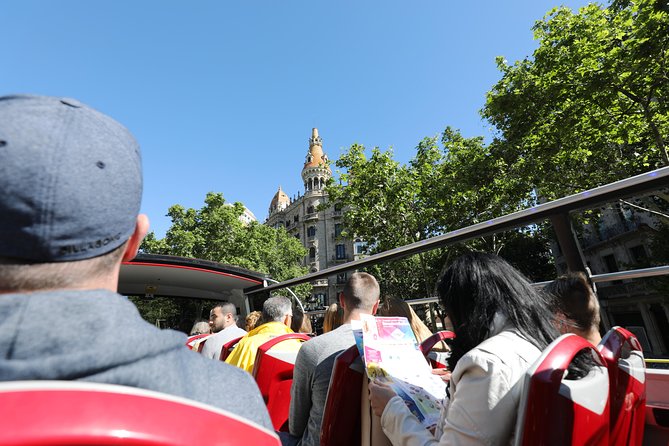
This route feels built for people who want Barcelona’s hillside charisma and iconic landmarks beyond the city grid. It’s also great if you want the “walkable wow” effect without paying for a private guide.
Stop-by-stop highlights on the Park Güell and Tibidabo loop
- Plaça de Catalunya (Start): Same hub, easy to transfer.
- Casa Batlló area (Stop 2): A high-demand photo and architecture start.
- Passeig de Gràcia to La Pedrera (Stop 3): Another Modernista must—great for seeing the street’s design details up close.
- Sant Pau Recinte Modernista (Stop 4): If you love Art Nouveau and intricate façades, this is a big reason to hop off.
- Park Güell (Stop 5): The viewpoint payoff. Plan time to walk the grounds and take breaks.
- Tramvia Blau – Tibidabo (Stop 6): A scenic, fun-feeling transit connection toward Tibidabo.
- Sarria (Stop 7): A neighborhood stop that can help you slow down and explore without committing to a single attraction.
- Monestir de Pedralbes (Stop 8): A calmer, quieter kind of sight stop—good if you want something less crowded.
- Palau Reial – Pavellons Guell (Stop 9): Gaudí-linked architecture vibes, plus a more local rhythm around the area.
- Futbol Club Barcelona (Stop 10): Even if you’re not attending a match, it’s a classic cultural stop in Barcelona.
- Diagonal – Les Corts (Stop 11): A useful reference along the main avenues.
- Francesc Macià – Diagonal (Stop 12): Another central help stop if you want to build walking segments.
- Eixample (Stop 13): A flexible entry into the central grid.
- Sant Antoni (Stop 14): A great ending point if you want a neighborhood feel after the big sights.
What I think works best with this circuit
- Start early if you want Park Güell area time without rushing.
- If you’re short on time, do this route first to decide what you’ll revisit from the other circuit.
- This is the route that gives you Barcelona’s “up there” viewpoints—so pack good walking shoes.
Using the headphones and Wi‑Fi like a pro (so you don’t miss your stop)
The bus provides audio commentary in 16 languages, with headphones included. The system is designed so you can learn while you ride instead of reading every sign at each location.
A couple practical notes:
- Treat the audio as a guide, not a guarantee. The bus makes multiple stops, and traffic can change timing.
- When you hear your next target coming up, put your phone down and get ready at the door. This is when you want to be alert, not scrolling.
Some people do wish the audio were more informative or more tailored to what you’ll see at each stop. Also, there’s no mention of live narration on board in the provided info—so if you specifically want a human guide explaining what’s coming up, you might prefer a walking tour for deep details after your bus ride.
Hearing-aid caution (important if it applies to you)
One accessibility issue shows up clearly in feedback: if you use CIC or ITE hearing aids, the standard headphones may not fit properly over your hearing aids. In those cases, some passengers reported they could not hear the narration. If hearing clarity is critical for you, it’s worth asking on-site whether over-the-ear options are available.
Coupon booklet value: how to turn discounts into real savings
The bus includes a coupon booklet with over 200 euros in discounts at top attractions. That’s not a guarantee you’ll save money. You still need to choose the attractions you actually want to do.
Here’s how I’d use it:
- Pick 2–3 paid attractions you’re already considering.
- Compare your ticket costs to the discount amounts in the booklet.
- Plan your hop-offs so you’re arriving when you want to be paying admission—not at random.
If you only plan to stroll and eat, the coupon booklet may feel like extra paper. If you plan actual ticketed stops, this is one of the best reasons to book this bus rather than paying for separate transportation every time you want to move neighborhoods.
Practical tips for photos, rain, and not losing your ticket
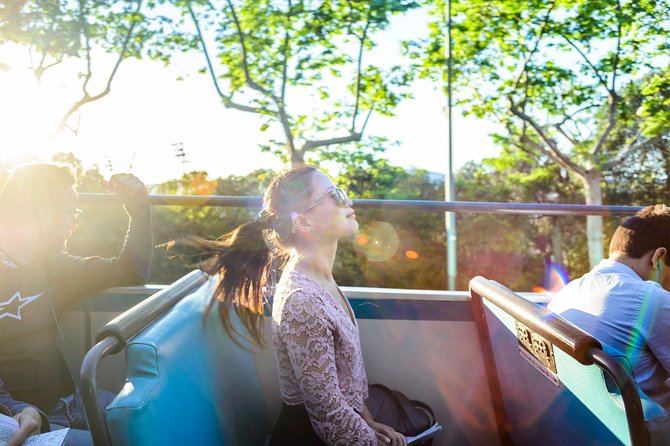
This tour is easy, but a few details can make or break your day.
Weather and wind
The bus is open-top, so you’ll get the views—but when it’s windy or rainy, you need real rain gear. Some passengers reported that rain and wind got through on the upper deck when it wasn’t fully sheltered on the sides. A poncho helps. A small umbrella might help less if the wind grabs it.
Photos
Open-top views are great, but windows can be dirty on some rides, which can ruin photos taken from inside. If you want clean shots, aim to photograph from open areas when possible and avoid relying on through-window shots when the glass looks smudged.
Keep your pass safe
One clear piece of advice from the experience: don’t lose your tickets. If you misplace your pass, you may be asked to purchase a new ticket.
Boarding speed
Buses can pull away quickly after boarding. When you get on, take a moment to get stable before moving toward a seat or the stairs. It’s the simplest way to avoid a “rush moment” and keep everyone calm.
Who should book this, and who might want a different style of tour
This hop-on hop-off bus is a solid fit if:
- You’re seeing Barcelona for the first time and want a fast big-sight overview
- You want to decide your route as you go, not follow a strict schedule
- You like the idea of hopping off for a walk, then using the bus as your reset button
It may be less ideal if:
- You want a deep, stop-by-stop guide from a live storyteller
- You’re sensitive to weather and don’t like wind exposure on an open-top deck
- You rely on specific headphone fit for hearing aids (ask questions before you board)
- You expect every bus to arrive exactly on time—traffic and city pacing can stretch things out
Should you book City Sightseeing Barcelona?
I’d book this if your main goal is orientation and flexibility. For the price, you’re buying a moving view platform plus a full-day or two-day freedom pass across key neighborhoods. The free Wi‑Fi, 16-language audio, and frequent departures help you keep the day flowing.
I’d hesitate if you need live narration, perfect accessibility accommodations for hearing devices, or you’re traveling with a very tight schedule where even traffic delays can derail plans.
If you do book: ride once early to get your bearings, then plan your “real time” on foot from the stops that match what you care about most—architecture, viewpoints, or beach-and-harbor breaks. That’s how this bus tour turns from transport into a smart Barcelona strategy.
FAQ
How long is the tour loop?
The tour duration is listed as about 120 minutes (approximately). A full circuit can take longer depending on traffic and stops.
Do I get to ride for 24 or 48 hours?
Yes. You can choose either a 24-hour or 48-hour hop-on hop-off pass, and you can ride the buses an unlimited number of times during your selected time window.
What’s included on board?
Included features are 360-degree panoramic views, free Wi‑Fi, and an audio guide commentary in 16 languages with headphones.
Does the ticket include entry to attractions?
No. Entry to attractions is not included, and you’ll need tickets for the sights you want to visit.
Where do the buses depart from?
Buses depart from multiple stops along the routes, with the first bus departing from Stop 1 at Plaça de Catalunya at 9:00am and the last bus departing from Stop 1 at 7:00pm.
Can I use a mobile ticket?
Yes. Both mobile and printed paper vouchers are accepted, and you can redeem them at the stops along the routes.