Darwin’s laid-back heat deserves an easy plan. This open-top double-decker hop-on hop-off bus is a smart way to get oriented fast, then jump out for big sights like Crocosaurus Cove and the Botanic Gardens. You get English audio so you’re not just sightseeing—you’re learning as you go.
What I like most is the flexibility: unlimited rides over 1 or 2 days means you can do the loop, then return to wherever you found interesting. I also like that the system is built around 12 well-placed stops, so you’re not bouncing around town by taxi just to see one location.
The main drawback to consider is practical: buses don’t run super often in the off-season, and you’ll need to plan around stop timing. Also, no luggage or large bags are allowed on board, so keep your daypack light.
In This Review
- Key Things To Know Before You Go
- Darwin in a Day: Why This Bus Works So Well
- Price and Ticket Value: Classic vs Premium vs Deluxe
- How the Hop-On Hop-Off Loop Plays in Real Life
- Tourist Information Center to Crocosaurus Cove: Your First Big Moment
- Doctor’s Gully and Aquascene Fish Feeding: A Quick Get-Off That Adds Variety
- Cullen Bay: Jetty Views, Heritage Precinct Feel, and a Natural Pause Point
- Casino, Mindil Beach Sunset Markets, and the Botanic Gardens
- Museum and Art Gallery of the Northern Territory: Where the Facts Click
- Military Museum and the Defence of Darwin Experience (90-Minute Tour)
- Parap and Parap Markets (Saturdays Only): A Great Reason to Build Your Day
- Stokes Hill Wharf and Waterfront Precinct: Perfect for a Slow Walk
- Fort Hill Wharf (Cruise Ship Terminal): Handy If You’re Connecting on Arrival or Departure
- Red Route to Fannie Bay, Plus East Point Reserve in the Afternoon
- Timing Tips: When Waiting for the Bus Can Be the Only Real Downside
- What to Bring and How to Make It Comfortable
- Who This Tour Suits Best (And Who Might Prefer Another Plan)
- Should You Book the Darwin Big Bus Hop-On Hop-Off?
- FAQ
- How long is the Big Bus Darwin hop-on hop-off tour?
- How many stops does the bus make in Darwin?
- What are some key places the bus stops for?
- Does the tour include an audio guide?
- What days does the tour operate?
- How often do buses run?
- What time can I board the bus?
- Can I bring luggage or a carry-on bag on the bus?
- What’s different about the Deluxe ticket?
Key Things To Know Before You Go
- 12 stop convenience: hop off for the big hits, then rejoin whenever the next bus arrives
- Open-top views: you’ll be higher up for photos and a better sense of Darwin’s layout
- English audio guide: pre-recorded commentary plays through onboard speakers
- Deluxe includes admissions: Crocosaurus Cove and RFDS Tourist Facility are part of the Deluxe option
- Mindil and markets are schedule-based: Mindil Sunset Markets operate in specific conditions, and Parap Markets are Saturday only
- Bring sun protection: sunglasses, hat, and sunscreen are strongly recommended
Darwin in a Day: Why This Bus Works So Well
Darwin can feel spread out, and that’s exactly why this tour makes sense. Instead of guessing which order to see places in, you get a simple route with frequent chances to get on and off. It’s a low-stress way to get your bearings fast—especially if it’s your first time in town.
The open-top design is a real advantage here. Even when you’re only standing still at a stop, you can look around the whole area, spot where you want to return, and take photos without needing to constantly reposition. One review highlighted how being up high made sightseeing and photos easier, and that matches what you’ll feel from the second deck.
The other win is the commentary. You’re not stuck reading signage, and the English audio guide helps you connect places to local geography and history as the bus moves. On top of that, drivers often add their own helpful context, including the kind of friendly, safety-first service that makes waiting at stops feel less frustrating.
Price and Ticket Value: Classic vs Premium vs Deluxe
The price is $34 per person, with ticket options that cover 1 to 2 days depending on what you choose. For most people, the value isn’t just the ride—it’s the unlimited access during your ticket’s validity. If you hop off twice and then rejoin later, the cost per activity drops quickly.
Here’s how the options typically change your day:
- Classic (1-day): best if you want one full sweep and a couple of extra stops
- Premium (2-day): best if you want time to come back to places you liked without feeling rushed
- Deluxe (2-day with inclusions): best if you’d rather pay once and have major admissions covered
Deluxe is the most “do it all” option because it includes Crocosaurus Cove and an RFDS Tourist Facility ticket. If Crocosaurus Cove is high on your list, Deluxe can feel like the most efficient way to handle it rather than buying separate entry tickets later.
How the Hop-On Hop-Off Loop Plays in Real Life
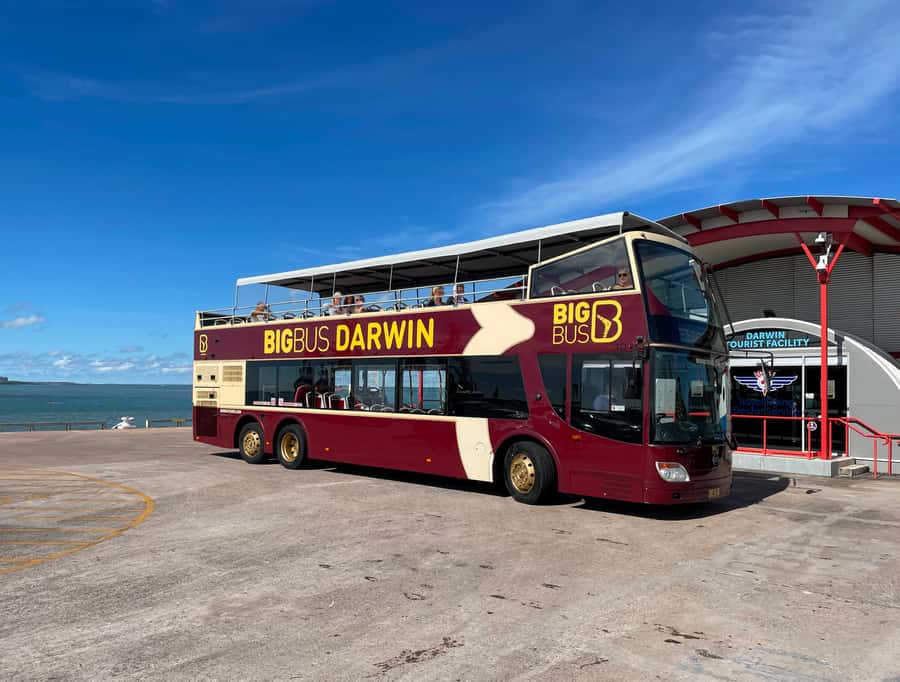
You’ll have 12 strategic stops, and the tour runs Monday to Saturday, with Sunday closed. Buses run every 35–45 minutes from April to September, and 60–90 minutes from September to April (traffic can affect timing). That means in cooler months you can move more freely, while the warmer months can feel more waiting-based—plan your stops with that rhythm in mind.
You can catch a bus any time between 09:00 and 17:45 from April to September, and 09:00 to 16:30 from September to April. Practically, that means you can start mid-morning, do a first loop, then switch to a slower “choose-your-own-adventure” approach for the afternoon.
One important operational point: you can hop off at any stop, but if you’re trying to time a specific attraction (like a museum tour window), it’s smart to give yourself a buffer. Darwin is hot, and the bus is open-top—so you’ll want time for sunscreen, water breaks, and photos.
Tourist Information Center to Crocosaurus Cove: Your First Big Moment
Start at the Tourist Information Center stop if you want a clean beginning. From there, the bus takes you to Crocosaurus Cove, one of Darwin’s signature attractions. This is where you get up close to saltwater crocodiles, and it’s the kind of experience that makes the whole day feel anchored.
Crocosaurus Cove is also a great “anchor stop” because it’s dramatic and easy to return to if you skip it the first time. If you do it early, you’ll often get a calmer feel to your day; if you do it later, you still get the payoff without missing the bus loop.
If Crocosaurus is your only must-see, Deluxe becomes tempting because it can include admissions. If you’re price-checking and you’re not sure you’ll do Crocosaurus for sure, Classic or Premium can still work well—just be ready to buy entry separately.
Doctor’s Gully and Aquascene Fish Feeding: A Quick Get-Off That Adds Variety
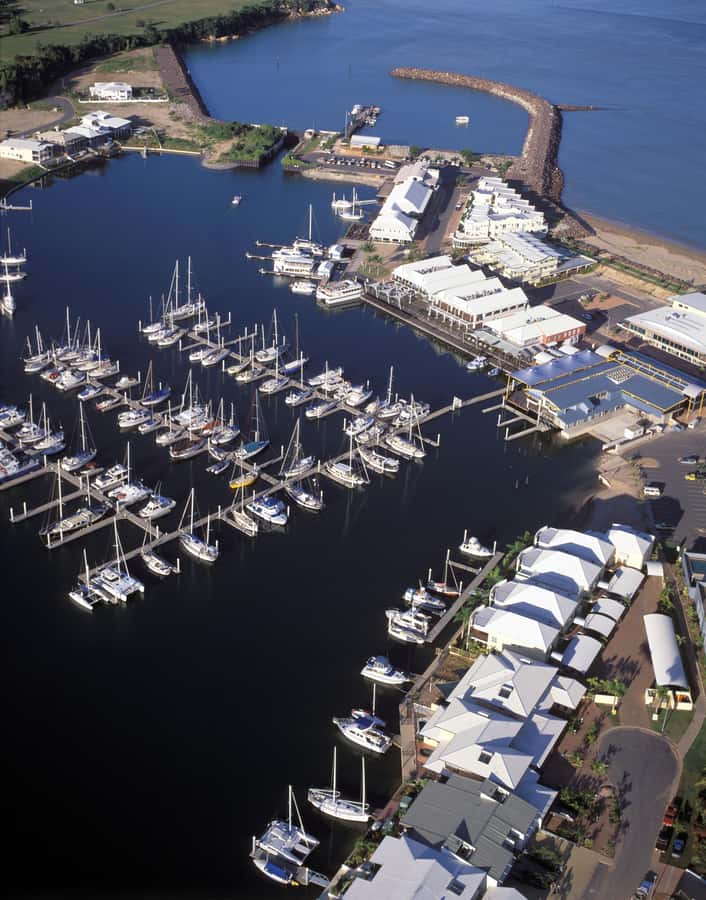
Next up is Doctor’s Gully, Aquascene Fish Feeding. Even if you don’t plan a long visit, this is a useful stop because it breaks up the day between heavier attractions. Aquascene fish feeding is specifically listed, so it’s a clear match if you like hands-on wildlife moments that don’t take hours.
This stop also helps with pacing. Darwin days can drag if everything is deep and time-heavy, so having something shorter gives you flexibility. You can hop off, check it out, and still keep your options open for the next bus if you’re not sure how long you want to spend.
Cullen Bay: Jetty Views, Heritage Precinct Feel, and a Natural Pause Point
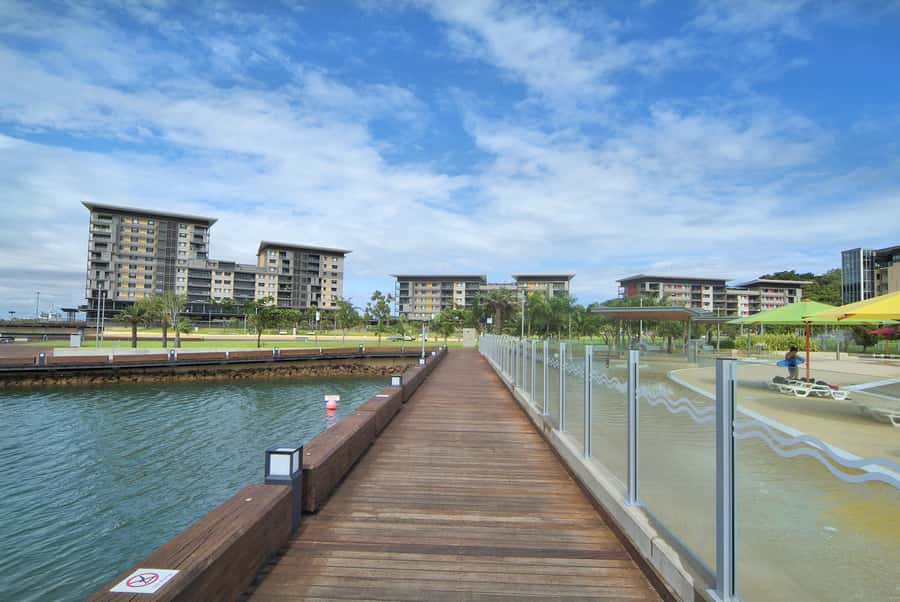
Two nearby stops—Cullen Bay Jetty and Cullen Bay Apartments / Myilly Point Heritage Precinct—are where the city’s coastal areas come into focus. These are good choices if you like a waterfront break, photos at a steadier pace, or just a chance to walk without committing to a ticketed attraction.
I like using stops like this as “reset points.” You can stretch your legs, grab a coffee or snack if you want, then rejoin the bus when you’re ready. Darwin is spread out enough that even a short break can change how the rest of your day feels.
Also, these stops are a solid way to break up a full loop. Instead of hopping off at every major attraction, you can mix a quick waterfront stop with bigger stops like Mindil Beach or museums later.
Casino, Mindil Beach Sunset Markets, and the Botanic Gardens

This cluster is where Darwin goes from sightseeing to experience. The bus stops at Casino, Mindil Beach Sunset Markets and Botanical Gardens, and you’ll see why this is often the favorite area for many people.
- Mindil Beach Sunset Markets are known for street food, and they’re a big part of why visitors love this side of town. The tour description points to exotic street food, and the timing matters for markets.
- The Botanical Gardens are described as a lush jungle experience, which makes them a perfect counterpoint to the beach-and-markets vibe.
Even if you don’t shop at the markets, you can still enjoy the atmosphere. And if markets aren’t running when you’re there, the Botanic Gardens still give you something meaningful to do that fits the Darwin climate well.
One reviewer pointed out Mindil Beach sunset markets as a favorite, with a note that they’re only on specific days (for that person, it was Thursday). Your best move: plan around the day you’re in town so you don’t build your day on a market that isn’t operating.
Museum and Art Gallery of the Northern Territory: Where the Facts Click
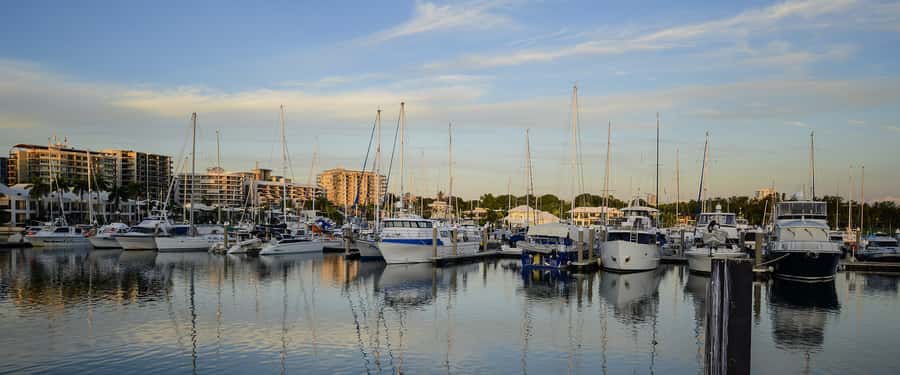
The Museum and Art Gallery of the Northern Territory stop is a smart use of your time. It’s listed as a stop, and one review emphasized that the museum is free and has great exhibits plus a café.
This is where the bus audio and Darwin’s local story start to connect. A sightseeing loop gives you places; a museum helps you understand why those places matter. If you only do one indoor break, this is a strong candidate—especially when the sun is doing the most.
If you’re the type who likes learning but doesn’t want a full-day museum schedule, you can keep it simple: spend enough time to see a couple of exhibits, then use the bus to stay flexible.
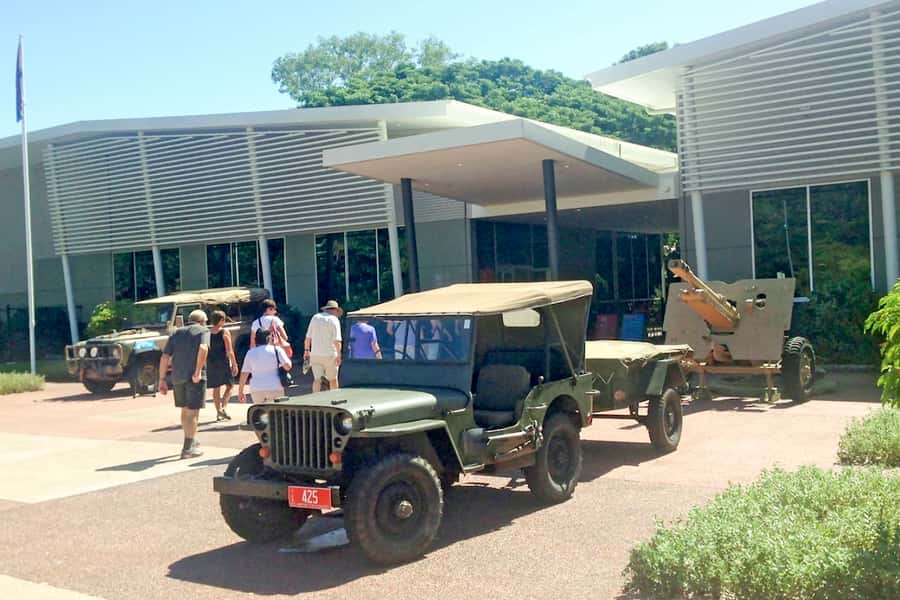
Military Museum and the Defence of Darwin Experience (90-Minute Tour)
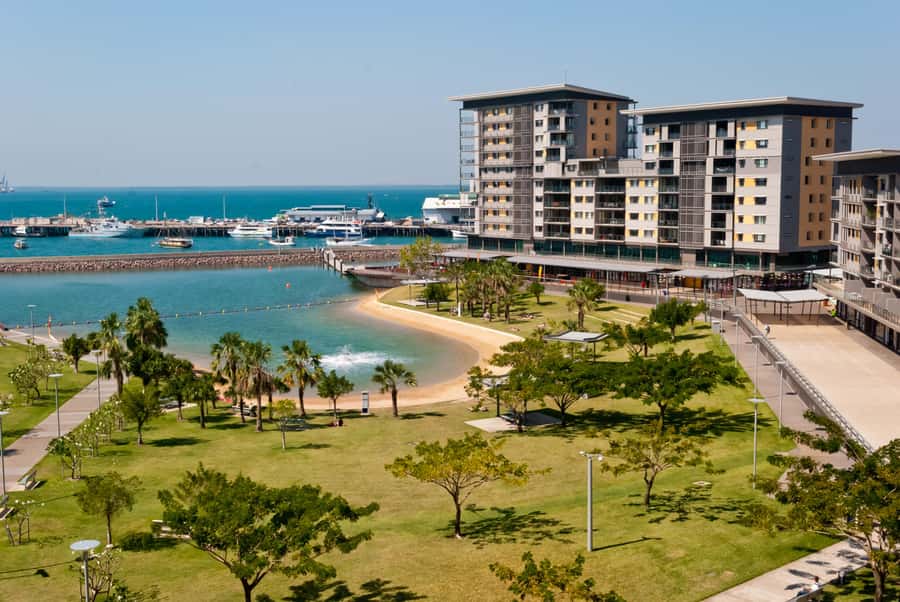
Don’t treat the Military Museum – Defence of Darwin Experience stop like a quick photo stop. This one comes with a specific note: it’s a 90-minute tour only option.
That matters for planning. If you want to do this, give yourself time before and after the tour so you’re not juggling your whole day around one departure. The Military Museum is one of the most direct ways to understand Darwin’s defense story, which is also why it’s a good pairing with the Museum and Art Gallery stop.
If you’re short on time and you’re choosing between museums, I’d decide based on your interests: if history and defense are your thing, prioritize Military Museum. If you want a lighter indoor option, start with the free museum and gallery.
Parap and Parap Markets (Saturdays Only): A Great Reason to Build Your Day
The bus includes a stop for Parap and Parap Markets, and it specifically notes that Parap Markets are held on Saturdays only. That’s a key scheduling detail, because it can completely change what you do with your time.
If you’re in Darwin on a Saturday, Parap Markets can be a natural follow-up after you’ve explored the central sights. If you’re there any other day, you can still use the Parap stop as a convenient waypoint—but don’t plan your whole itinerary around the market.
This stop is also useful for a simple strategy: do your main sights by mid-day, then spend the later window exploring markets and nearby streets at your own pace.
Stokes Hill Wharf and Waterfront Precinct: Perfect for a Slow Walk
Two stops that work well together are Stokes Hill Wharf and Waterfront Precinct. These are where the city’s waterfront energy comes through, and they’re ideal when you want a break from ticketed attractions.
I like these wharf-and-waterfront zones because they’re flexible. You can hop off just to look, take photos, or do a short walk, then rejoin without committing to a long museum visit. This is exactly the kind of payoff that hop-on hop-off tours are good at: you control how much time you spend where.
If you’re aiming for water views, this is also where you’ll feel like the route is doing more than dropping you off at random points. The bus is connecting clusters in a way that makes walking feel doable.
Fort Hill Wharf (Cruise Ship Terminal): Handy If You’re Connecting on Arrival or Departure
The last listed stop is Fort Hill Wharf (Cruise Ship Terminal). Even if you’re not on a cruise, it’s useful as a reference point for where the city’s travel and waterfront lines meet.
If your travel days include arrival or departure timing, a hop-on bus stop near a cruise terminal can help you avoid awkward taxi hops. At minimum, it gives you a clear route end-point so you can plan your return to other central stops.
Red Route to Fannie Bay, Plus East Point Reserve in the Afternoon
The tour notes that you’ll join the Red Route to see Darwin from the city through to Fannie Bay. It also says the afternoon tour extends further out to East Point Reserve.
This is where Premium (and often the longer-format experience) earns its place. Instead of cramming everything into one loop, you can use the second day—or the afternoon segment—to get out toward the areas you might not reach quickly on foot.
If you only have one day, I’d focus on the stops that match your interests most strongly (Crocosaurus, Botanic Gardens, markets, and one museum option). If you have two days, use one day for the central cluster and your second day (or afternoon) for the Red Route expansion.
Timing Tips: When Waiting for the Bus Can Be the Only Real Downside
The schedule is frequent enough to keep things easy for most people, but the off-season frequency is slower. From September to April, buses can be 60–90 minutes apart. That isn’t a problem if you plan, but it can be annoying if you treat every stop like it’s unlimited time.
My practical trick: decide in advance which stops you’ll treat as “long stops” and which are “quick check stops.” Long stops are Crocosaurus Cove, Military Museum (because it’s 90 minutes), and either Mindil or the Botanic Gardens. Quick stops are wharves and heritage areas, where 30–60 minutes can be enough.
Also, there’s a real-world note from an experience: one rider shared that they needed to send a copy of the electronic ticket to the bus company so a paper ticket could be printed. If you’re the kind of traveler who plans to get by on spotty internet, you’ll want to be ready for that step.
What to Bring and How to Make It Comfortable
This is Darwin. Heat and sun are part of the plan. Bring sunglasses, a sun hat, and sunscreen. Even if you’re only outside for short hops, open-top sightseeing means you’ll feel the sun more than you expect.
Keep your bag small. The tour explicitly says no luggage or large bags, including carry-on luggage, because there isn’t space and it’s a safety issue. It also notes third-party luggage storage is available close to major stops, so if you’re traveling with more than a daypack, plan storage near where you’ll start.
Finally, ride smart. Stand and look up top for orientation, then once you find a spot you want to spend time at, plan to get off and stick around rather than repeatedly shuffling between stop windows.
Who This Tour Suits Best (And Who Might Prefer Another Plan)
You’ll likely love this tour if you:
- Want an easy way to cover Darwin’s key sights without hiring separate transport for each one
- Like flexible itineraries where you can change your mind after you see the area
- Prefer learning with English audio while moving between stops
- Are balancing big-ticket attractions with free or low-cost sightseeing
It may not be ideal if:
- You’re traveling with lots of luggage and don’t want to deal with storage
- You’re very strict about tight timing windows and you don’t want to wait for a bus every 60–90 minutes in busier days
- You’re only in town on Sunday, since the tour runs Monday to Saturday and is closed Sunday
Should You Book the Darwin Big Bus Hop-On Hop-Off?
If you have 1–2 days in Darwin and want a simple, cost-effective way to see the highlights, I’d book it. The unlimited rides are what make it feel worth it, and the 12 stop layout lets you build a day that matches your interests instead of forcing one rigid itinerary. Add in the English audio and the easy on-and-off flow, and it’s one of the smoother “first time in town” choices.
If Crocosaurus Cove and the RFDS Tourist Facility are must-dos for you, the Deluxe option can be a strong way to cut decision-making time. But if you’re happy paying for admissions separately and you mainly want flexibility, Classic or Premium can still deliver a great Darwin sampler.
FAQ
How long is the Big Bus Darwin hop-on hop-off tour?
You can choose a ticket that covers 1 to 2 days, depending on the option you book.
How many stops does the bus make in Darwin?
The route includes 12 available stops around the city.
What are some key places the bus stops for?
Common highlights on the route include Crocosaurus Cove, the Botanic Gardens, Mindil Beach Sunset Markets area, the Military Museum, and several waterfront and wharf stops.
Does the tour include an audio guide?
Yes. There is pre-recorded English commentary played through onboard speakers.
What days does the tour operate?
It runs Monday to Saturday and is closed on Sunday.
How often do buses run?
From April to September buses run every 35–45 minutes. From September to April they run every 60–90 minutes, depending on local traffic.
What time can I board the bus?
You can catch a bus any time from 09:00 to 17:45 from April to September, and from 09:00 to 16:30 from September to April.
Can I bring luggage or a carry-on bag on the bus?
No. Luggage or large bags, including carry-on luggage, are not permitted due to space constraints. Luggage storage is available close to major stops.
What’s different about the Deluxe ticket?
The Deluxe option includes Crocosaurus Cove and an RFDS Tourist Facility ticket.