Dresden gets a lot easier with a ride. This 2-day hop-on hop-off bus covers key sights at 22 stops so you can move at your pace, not the driver’s. Two things I really like: the chance to ride an open-topped bus on sunny days and the included cultural stops like the Zwinger. One possible drawback: the audio/language setup can be a little fiddly, especially if you’re relying on English at every stop.
You start at Theatre Square near the Augustus Bridge area, with buses running roughly every 15 to 30 minutes. There’s also an uninterrupted 90-minute loop option if you’d rather sit back first, then hop off later. The rhythm matters here. Dresden isn’t huge, but the sights are scattered enough that walking nonstop gets old fast.
This pass is best for first-time Dresden visitors or anyone with limited time who still wants the “big picture” and a few wow moments up close. You’ll get baroque architecture highlights, exterior viewing and stories tied to the Frauenkirche, and entry to Pfunds Molkerei (yes, the famous pretty dairy). If you like planning less and deciding more in the moment, you’re in the right place.
In This Review
- Key things that make this Dresden pass worth your attention
- Dresden’s 2-day hop-on pass: why it works for a baroque city
- Boarding at Zwinger/Postplatz and finding your best first ride
- Using the ticket like a pro: what “every 15–30 minutes” really means
- Frauenkirche exterior stories: what you get and what you won’t
- The Zwinger Museums: the included baroque complex you should not rush
- Procession of Princes: the 23,000 Meissen porcelain tile spectacle
- Pfunds Molkerei: the entry stop that feels like a cheat code
- The Night Watchmen and Dresden after dark: when to switch gears
- Price and value: is $35 for 2 days actually a good deal?
- What to watch out for: audio language, headsets, and vouchers
- The smart add-ons: what you can pair with your bus day
- Who this Dresden bus pass is best for
- Should you book this Dresden hop-on hop-off bus ticket?
- FAQ
- How long is the Dresden hop-on hop-off ticket valid?
- How often do the buses arrive?
- Where do the tours start?
- What’s included with the ticket besides the bus ride?
- Is the Frauenkirche visit inside or outside?
- Does the ticket include the Procession of Princes porcelain-tile mural?
- Is there a wheelchair-accessible option?
- Are unaccompanied minors allowed?
- What’s the cancellation and payment flexibility?
Key things that make this Dresden pass worth your attention
- 22 stops over 2 days means you can repeat routes and refine your plan after you get your bearings
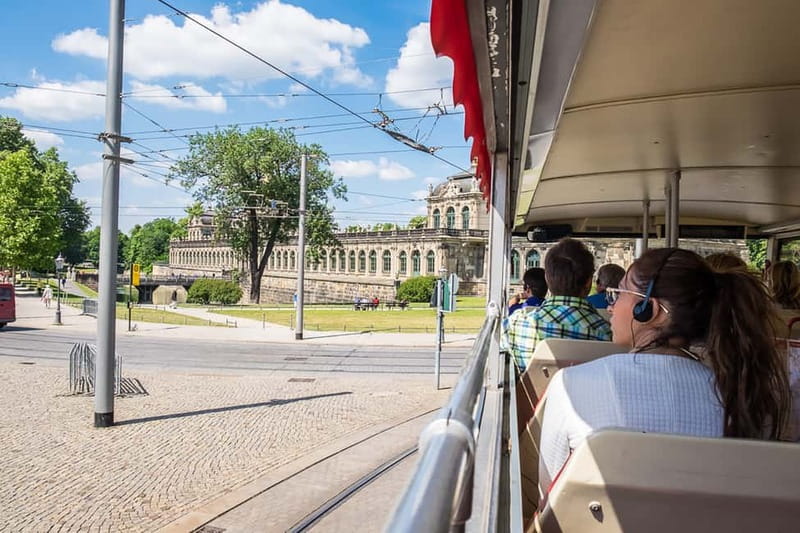
- Open-topped sightseeing on sunny days helps you photograph Dresden and the Elbe area comfortably
- Zwinger included, with a focus on the historic baroque complex that originally served as an orangery
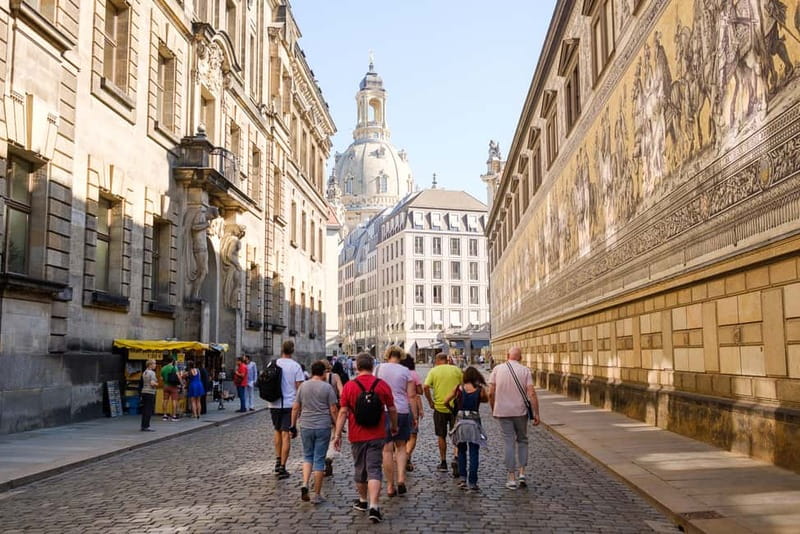
- Procession of Princes tour takes you to a mural made with around 23,000 Meissen porcelain tiles
- Pfunds Molkerei entry included, one of the most visually striking interiors you’ll see in Dresden
Dresden’s 2-day hop-on pass: why it works for a baroque city
Dresden is the kind of city where you want context before you start judging details. The bus handles that. You get a full route view of the historic core, then the freedom to get off for longer at the places that click.
The best part for me is the flexibility built into the ticket. You can do one long orientation ride, then come back on the next day for the moments that felt rushed. That’s especially useful if you’re mixing major sights with time for the river views and a slow coffee stop.
Also, the pace is realistic. With buses arriving about every 15 to 30 minutes, you’re not stuck waiting around. You can hop off, walk a loop, and still feel like you’re keeping time.
Boarding at Zwinger/Postplatz and finding your best first ride
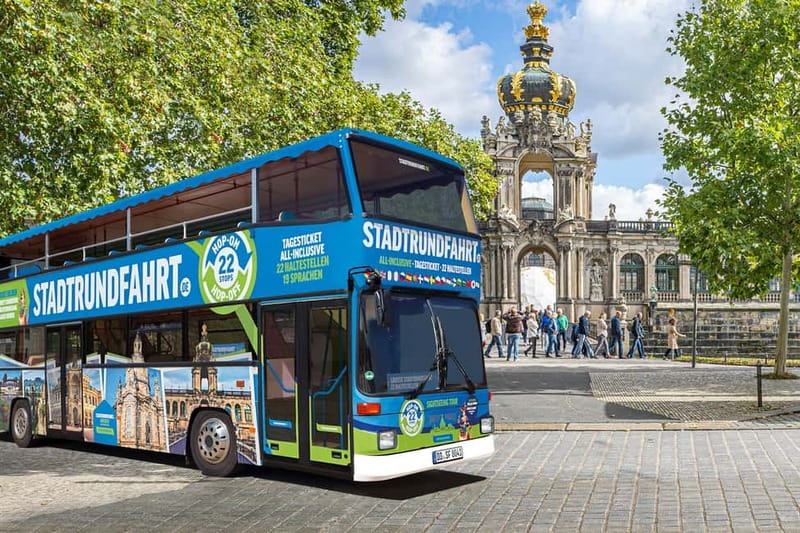
Your morning (or first stop) is set at Zwinger/Postplatz. That location is handy because it puts you right near Dresden’s biggest “baroque cluster” and makes it easier to connect to the included Zwinger experience.
There’s a smart choice to make early: do you ride the continuous 90-minute tour first, or start hop-off right away? If you’re new to Dresden, I’d do the uninterrupted loop first. It gives you the mental map—where the river is in relation to the center, where the key buildings sit, and which stops feel close enough that you can walk between them later.
On sunny days, you’ll likely benefit from open-air seating. That’s not just for comfort. It also makes the ride feel more like a sightseeing stroll with wheels, especially when you’re seeing the Elbe-area views from the upper deck.
Using the ticket like a pro: what “every 15–30 minutes” really means
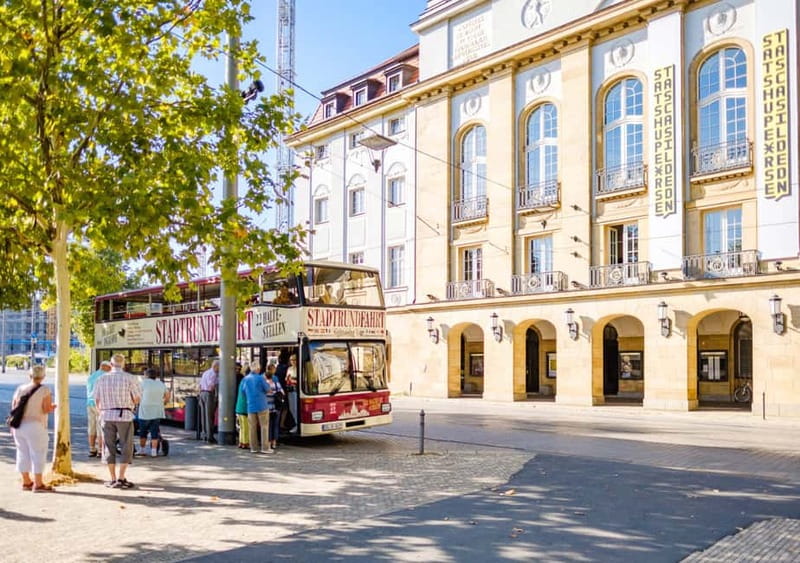
On paper, frequency sounds simple. In practice, it changes how confident you feel about sightseeing.
When buses run every 15 to 30 minutes, you can plan in loose blocks:
- hop off, spend 45 to 75 minutes at one anchor sight
- return to the stop when you’re ready
- repeat the loop the next day without stress
I like this system for Dresden because many highlights are worth a bit of time. If you treat it like a quick photo bus only, you’ll miss the best part: noticing how the buildings relate to each other. But if you treat it like a slow circuit that brings you to the right doors, you’ll feel like you used your time well.
Frauenkirche exterior stories: what you get and what you won’t
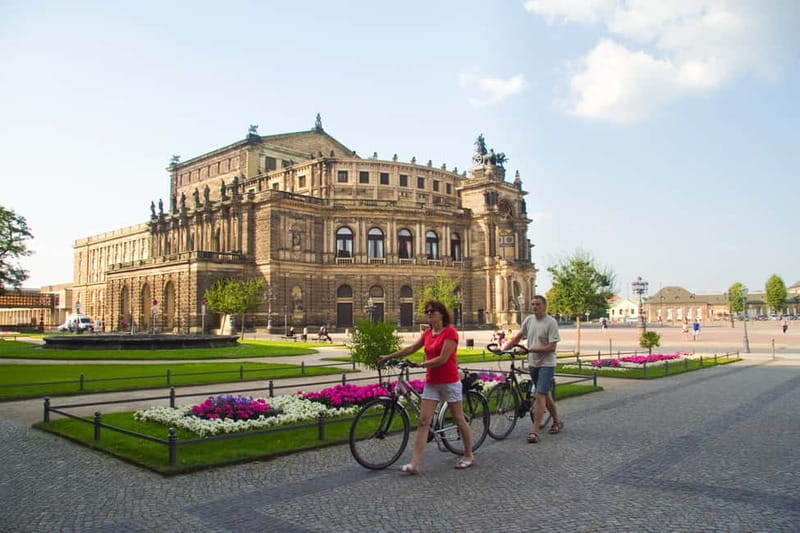
The ticket includes a Frauenkirche tour (exterior only). That’s an important detail. You’re not booking a full interior visit here; instead, you get the exterior views paired with stories as you pass and/or in the designated exterior tour format.
Why that’s still valuable: Dresden’s rebuilding story and the significance of the church are part of the city’s identity. Even if you’re only seeing the outside, the bus commentary and dedicated stop help you understand what you’re looking at instead of just taking a pretty-stone picture.
The key for you is expectations. If you’re the type who wants to go inside every big church, plan that separately. If you mostly want the architectural impact and context, this exterior-focused stop fits nicely into a bus-based itinerary.
The Zwinger Museums: the included baroque complex you should not rush
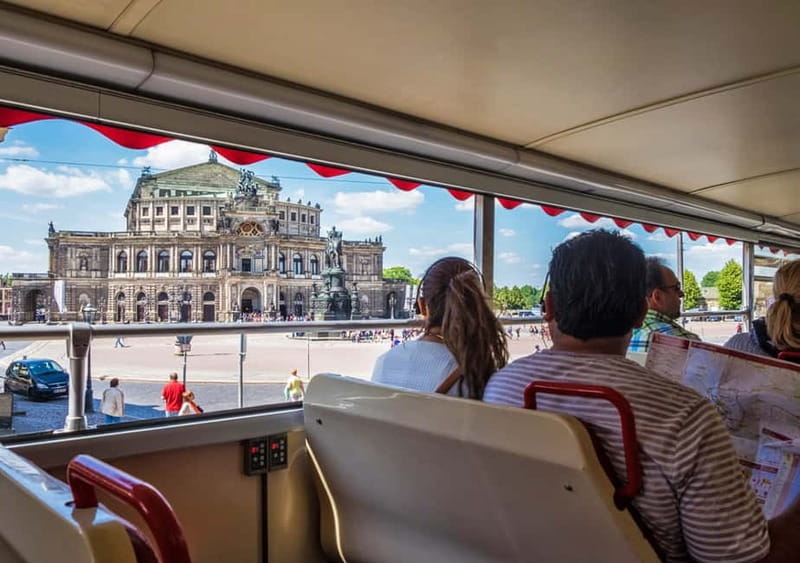
Your ticket includes a Zwinger tour, and it’s one of the strongest reasons to consider the pass.
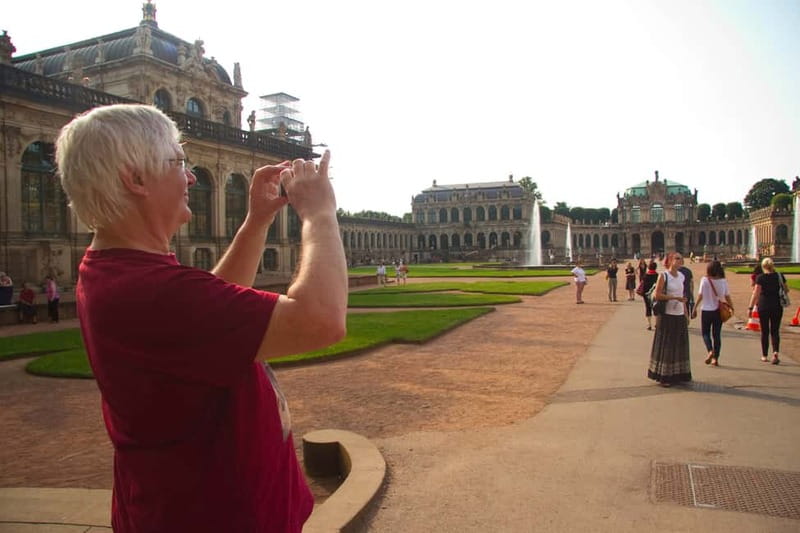
The Zwinger is more than a single building. It’s a range of important baroque structures, and it originally served as an orangery. That “function” detail helps the whole place make sense. You start seeing it less as random pretty facades and more as a designed space with a purpose.
In practical terms, this is the kind of stop that punishes rushing. The architecture rewards pause time—corners, courtyards, and the way buildings frame views. If you only hop off for five minutes, you’ll leave hungry.
So here’s the move: give the Zwinger enough time to do it in at least two steps. First ride to get your bearings. Then on your second stop, spend longer once you know what angle you prefer.
Procession of Princes: the 23,000 Meissen porcelain tile spectacle
One of the most specific, memorable inclusions is the Procession of Princes tour. It features a vast mural painted on around 23,000 Meissen porcelain tiles—the largest of its kind anywhere.
Even if you’re not normally a museum person, this works because it’s visually specific. It isn’t just a display; it’s a scene with scale that’s hard to grasp from a distance. The tile material also changes how you experience it. You notice details more when you can see the technique up close.
How to get the most out of it:
- slow down once you’re close enough to read the figures
- don’t try to take in everything from the first minute
- let your eyes adjust to the patterning
If you like art and craftsmanship, this is one of the tour stops that can turn a normal day into a “I’ll remember this” day.
Pfunds Molkerei: the entry stop that feels like a cheat code
Yes, Pfunds Molkerei is famous. And yes, it lives up to that reputation—because you’re getting entry included.
The big draw is how decorated it is. This is one of those interiors that can look like a postcard before you even take your first photo. And because the ticket includes admission, it’s a rare moment where you’re not negotiating extra costs once you’re already on the route.
Practical advice: don’t treat it like a quick “check that off” stop. Let yourself wander slowly and look at the details. That’s where it gets fun.
The Night Watchmen and Dresden after dark: when to switch gears
Dresden can feel different at night, and the pass includes the chance to accompany the Dresden Night Watchmen on their rounds.
This is the kind of experience that’s worth switching your brain into. Daytime sightseeing often becomes “facts and photos.” A night walk tends to be more about mood and storytelling—how the city feels under different light, and how history changes tone when the streets quiet down.
If you’re tempted to spend the whole day on buses, consider trading one hop-off window for the evening rounds instead. It breaks up the schedule and gives you something less standard than another baroque facade.
Price and value: is $35 for 2 days actually a good deal?
At about $35 per person for 2 days, the value depends on your sightseeing style.
This ticket works well when you:
- want to cover lots of sights without constantly re-planning
- prefer bundling several entries into one pass
- like the comfort of bus transport on days when you don’t want to walk far
It also stacks value because it isn’t just “ride around.” You’re getting included time and access at major destinations like:
- Zwinger
- Procession of Princes
- Frauenkirche exterior tour
- Pfunds Molkerei entry
If you planned to buy separate admissions and figure out transport between far-flung stops, this pass becomes easier to justify. If you’re the rare visitor who loves walking every bit of Dresden with no structure, you might not “need” it. But most people hit enough spread-out sights that a hop-on pass keeps the day smooth.
What to watch out for: audio language, headsets, and vouchers
Here’s the honest side that can matter to your comfort.
1) Language control on the bus
English audio can work well, but sometimes it’s not consistent on every segment or line. Some routes may broadcast in German at the same time, and that can interfere with what you hear through your headset. If you rely on English, go in knowing you may need to manage headset settings and listen carefully when languages shift.
2) Voucher format
I’d plan to bring a backup. One common issue is that a mobile voucher might not be accepted, so printing the voucher can save you from stress at the check-in moment.
Neither of these points ruins the experience. They just affect how prepared you should be so you can stay relaxed.
The smart add-ons: what you can pair with your bus day
The pass anchors you with the big essentials, but there are nearby extras you might want to line up.
On the ground, desks may offer discounted access to other nearby options such as Zwinger tickets, a VW Glass Manufaktur tour, and other experiences. You may also find night-oriented trips and countryside palace add-ons mentioned alongside the bus system.
The takeaway for you: use the bus first to map your interests, then check for add-on options where staff can help you choose what’s worth paying extra for.
And if you end up doing a walking component around the Zwinger area, I’ve heard good things about an English walking guide named Grit. One tour stood out because she shared personal background from growing up in Eastern Germany and had strong answers when people asked questions.
Who this Dresden bus pass is best for
I’d point this ticket at you if:
- you have one day plus time and want the overview (and a second day for follow-up)
- you prefer guiding yourself with stops instead of joining long, rigid walking tours
- you want guaranteed access to the “must-see” interiors/exhibitions tied to the Zwinger and Pfunds Molkerei
It also fits families when the ages work out. Just note the rule: unaccompanied minors aren’t allowed, and children under 14 ride for free as long as they’re accompanied by an adult.
If you’re a total minimalist who hates buses and only wants one tight walking circuit, you might not get full value. But for most people, the freedom is the point.
Should you book this Dresden hop-on hop-off bus ticket?
Book it if you want a practical 2-day structure with real cultural inclusions. The $35 price makes sense when you factor in the bundled entry stops like Zwinger, Procession of Princes, Frauenkirche exterior, and Pfunds Molkerei.
Skip it (or reconsider) if:
- you’re very sensitive to language/audio problems and need guaranteed English on every route moment
- you’re planning an all-walking itinerary where you won’t use the hop-on freedom
If you match the sweet spot—short time, lots to see, and you want to decide on the fly—this pass is one of the smoothest ways to experience Dresden.
FAQ
How long is the Dresden hop-on hop-off ticket valid?
It’s valid for 2 days, and you can use it for the sightseeing routes during that time window.
How often do the buses arrive?
Buses run about every 15 to 30 minutes.
Where do the tours start?
Tours start at Zwinger/Postplatz (near Theatre Square and the Augustus Bridge area).
What’s included with the ticket besides the bus ride?
The ticket includes a Zwinger tour, Procession of the Princes tour, Frauenkirche tour (exterior only), and Pfunds Molkerei entry.
Is the Frauenkirche visit inside or outside?
It’s exterior only.
Does the ticket include the Procession of Princes porcelain-tile mural?
Yes. The tour is part of what’s included, and the mural is described as being painted on around 23,000 Meissen porcelain tiles.
Is there a wheelchair-accessible option?
Yes. The experience is listed as wheelchair accessible.
Are unaccompanied minors allowed?
No. Unaccompanied minors are not allowed. Children under 14 ride for free, but must be accompanied by an adult.
What’s the cancellation and payment flexibility?
You can cancel up to 24 hours in advance for a full refund, and there’s an option to reserve now & pay later to keep plans flexible.