Sintra feels like another world—on a day trip. With round-trip train tickets from Lisbon and a hop-on hop-off bus pass, you can set your own pace without worrying about local transport schedules.
I also like the English audio guide, which helps you connect the dots at major sights such as Pena Palace and Quinta da Regaleira. One watch-out: Sintra’s bus options can thin out later, so you’ll want to plan your return timing.
In This Review
- Key Things I’d Prioritize
- Rossio Square to Sintra by Train: The Easiest Start
- Hop-on Hop-off in Sintra: How to Use the Bus Pass Like a Pro
- Pena Palace: Color, Turrets, and What to Watch For
- Quinta da Regaleira: Gardens, Tunnels, and Symbol-Spotting
- The English Audio Guide: Getting Value Without a Live Guide
- Getting Your 8 Hours to Work: A Timing-First Plan
- Price and Value at $34: What You Get, What You Still Pay
- Who This Day Trip Fits Best
- Small Rules That Matter During Your Ride
- Should You Book This Lisbon–Sintra Day Trip?
- FAQ
- Where is the meeting point?
- What time does the activity start?
- How long is the day trip?
- What’s included in the price?
- Are monument and palace entry tickets included?
- Is there a live guide during the visit?
- Do I need to exchange a voucher?
- Is this audio guide available in languages other than English?
- Is it accessible for people with mobility impairments?
- What are the rules on alcohol and smoking?
Key Things I’d Prioritize
- Rossio Square handoff: meet your host by the Dom Pedro IV statue, then swap your voucher for the real ticket.
- Train tickets included both ways: no second-guessing how you’ll get back to Lisbon.
- Hop-on hop-off flexibility: use the bus to build a route around your energy and how long you want at each stop.
- Audio guide does the heavy lifting: English narration keeps you moving even without a live guide.
- Budget for entries separately: palaces and monuments cost extra, so factor that in early.
Rossio Square to Sintra by Train: The Easiest Start

Starting in Lisbon is half the battle, and this trip keeps it simple. You begin at Rossio Square (Praça do Rossio / Praça Dom Pedro IV), specifically in front of the statue of Dom Pedro IV. That matters because it’s a clear landmark in a busy area. Once you meet your host, you exchange your GYG voucher for the actual tickets for the day.
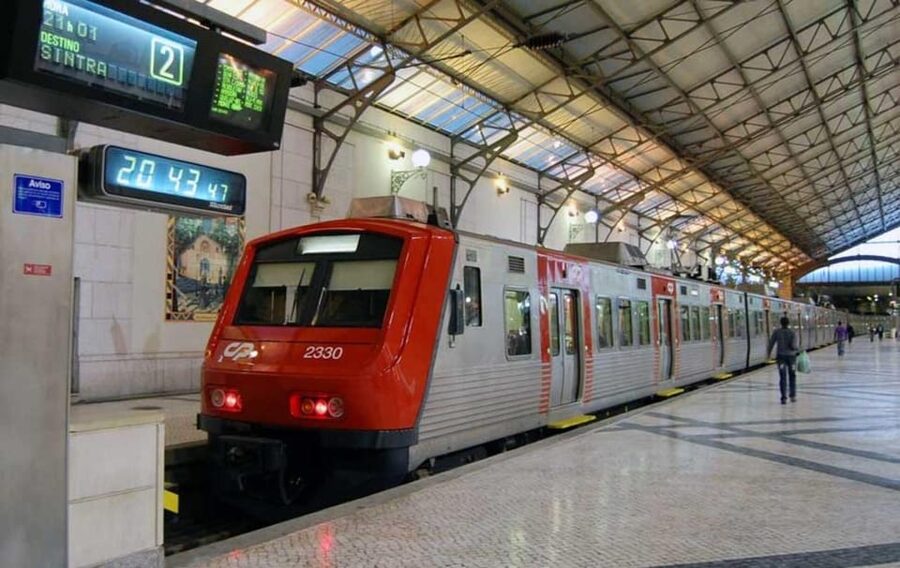
From there, you take the included train to Sintra and later the included train back to Lisbon. Having both legs bundled into the package is what makes this feel low-stress. You’re not trying to figure out timetables on the fly or worrying you’ll miss your last connection.
The practical move: arrive at your assigned time slot to meet the host. The trip is set up around that handoff, and once you have the tickets in hand, it’s much easier to build the rest of your day calmly.
Hop-on Hop-off in Sintra: How to Use the Bus Pass Like a Pro
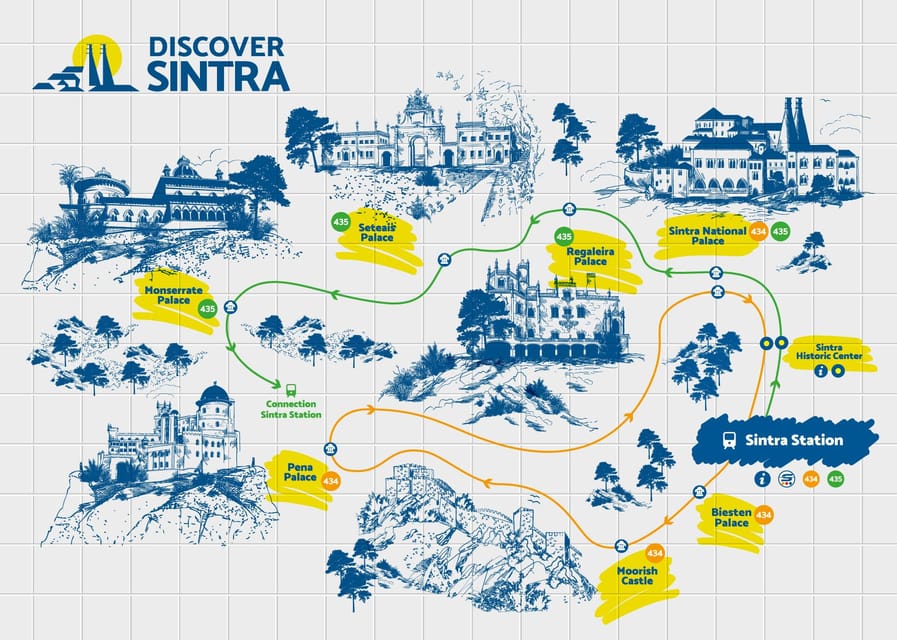
Sintra is spread out and hilly, so the bus pass is the real freedom of the day. The Sintra hop-on hop-off bus ticket lets you move between viewpoints and key areas without committing to one rigid order.
Here’s the strategy I’d use. First, pick which sites you care about most and decide roughly how long you want at each. Then treat the bus stops like your time slots: hop off, follow the audio guide for that stop, and only hop back on when you’re ready to reposition.
A note from experience with how these days often go: you can end up spending more time than you planned because the views and architecture pull you in. If you’re aiming to see both Pena Palace and Quinta da Regaleira, plan to visit one earlier and the other later, then build in a little buffer before your return to the train.
Also, keep an eye on how service works later in the day. Sintra bus connections in the afternoon can be limited, so if you wait too long between areas, you may struggle to line up a smooth route back to the station. I’d rather see you finish your last main stop earlier than gamble on a perfect late schedule.
Pena Palace: Color, Turrets, and What to Watch For

Pena Palace is the kind of place that looks like it’s been painted—bright colors, dramatic shapes, and serious presence. Even if you don’t know the story, it grabs your attention fast once you get close.
What I like about having an audio guide here is that you can look at the details without feeling lost. You’re not just walking through pretty rooms or snapping photos. The narration is there to connect architectural choices and symbolism to the wider story of Sintra’s royal past.
Practical tip: go in layers. Start with the big picture—how the palace sits on its hill and how the turrets frame the surroundings. Then slow down for the finer elements the audio mentions. If you only rush, you’ll miss the part that makes Pena feel more than a viewpoint.
And yes, you’ll likely find lots of information on-site too, so the audio guide might not feel essential all the time. Still, it’s useful as a second thread, especially when you want context while you’re moving between rooms and terraces.
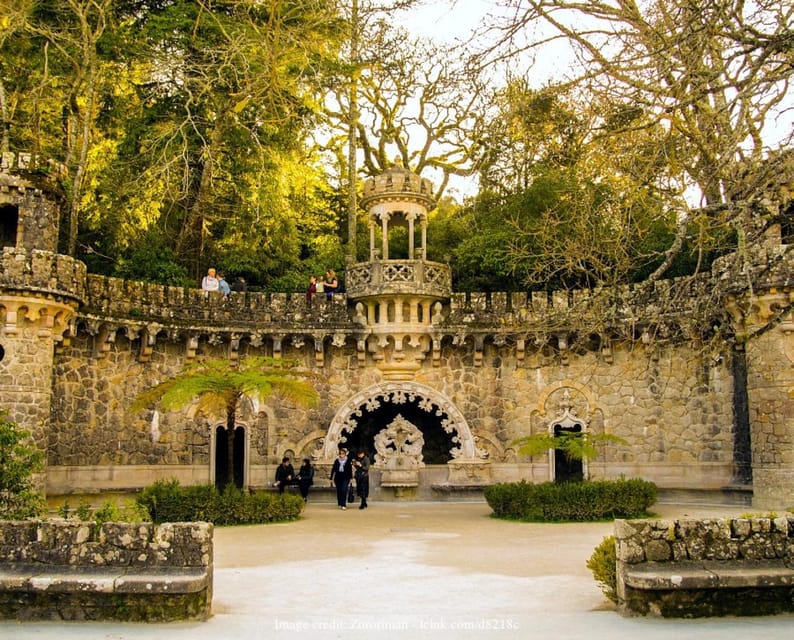
Quinta da Regaleira: Gardens, Tunnels, and Symbol-Spotting

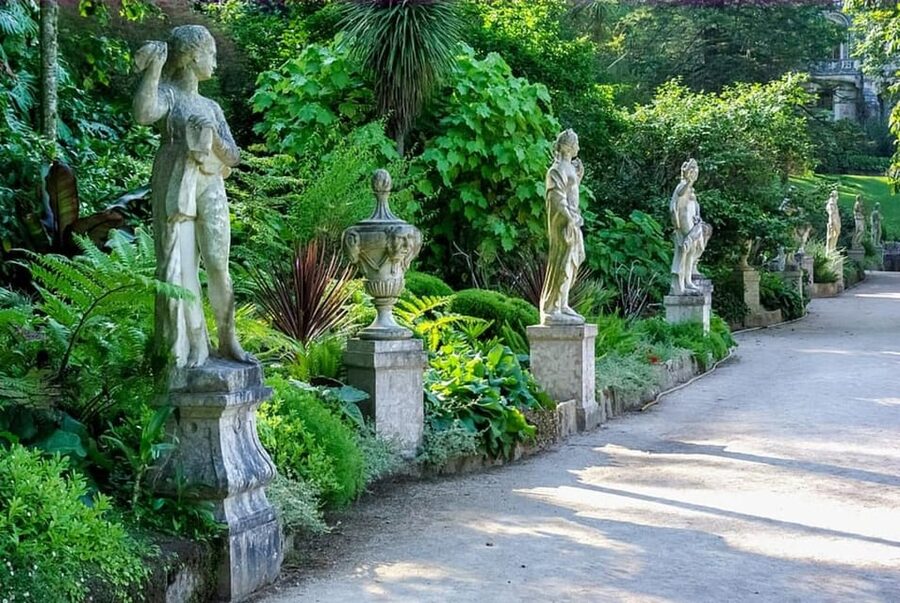
Quinta da Regaleira is a very different mood from Pena Palace. Instead of dramatic buildings, you get a full experience in gardens, paths, and odd little surprises that make you look twice.
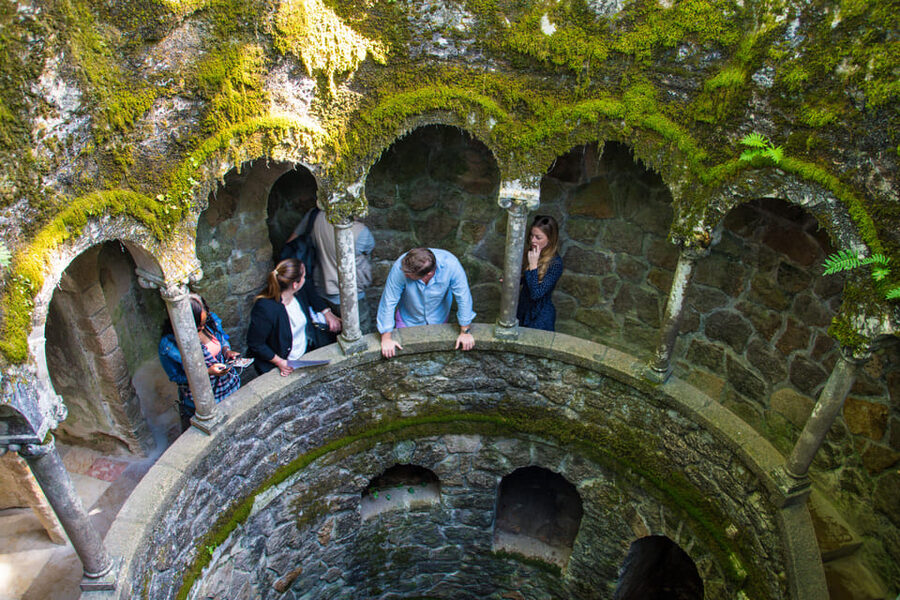
This is where the audio guide really earns its keep. It’s built to help you read the place. You’re not just wandering; you’re guided through the meaning behind features you might otherwise miss—like the hidden tunnel areas and the symbolic elements tied to the property’s reputation.
If you love when a site rewards attention, this stop is for you. You’ll probably want enough time to slow down, because the interest comes from exploring at your own pace and noticing what you find along the way.
One practical approach: take a calm circuit rather than chasing everything at once. If you’re pressed for time because bus timing is tight, focus on the key areas the narration calls out, then circle back if you still have energy.
The English Audio Guide: Getting Value Without a Live Guide
This trip includes a Sintra audio guide in English, but it does not include a live guide. That changes the whole vibe. You’re in charge of the pace, and the narration is your framework.
I like audio guides when they’re paired with hop-on-hop-off transport, because they let you avoid long waits for explanations. You can stop when you care, and you can move on when you don’t.
Two things to know so you don’t end up with a frustrating setup:
- Use the audio as a timing tool, not an afterthought. If you wait until you’re done walking around, it won’t help as much.
- At places like palaces, on-site information can be plentiful. Some people may find the audio less necessary at that point. If you prefer reading boards and signs, you can treat the audio as optional support rather than a requirement.
In other words, the audio guide is there to make the self-guided flow smarter, not to replace everything on-site.
Getting Your 8 Hours to Work: A Timing-First Plan
You’re looking at about 8 hours total, and the day is a sequence: Lisbon to Sintra by train, sightseeing using the bus pass, then back to Lisbon.
The day can feel full even when it’s self-paced, so I’d plan like this:
- Start early enough to get your first major stop done without stress.
- Don’t schedule your second big stop too close to the time you’ll need to head for the train.
- Leave room for photos, walking slow, and a restroom break. Those moments can stretch faster than you expect.
Here’s the main reason: bus frequency can shift later in the day. Since the return train is fixed by the included schedule, you want to make sure you’re not depending on a bus that comes at the wrong time.
If you’re the type who wants to linger at scenic terraces, you might love the flexibility of hop-on-hop-off even more. Just be aware that flexibility doesn’t erase physics. The distances and hills still mean you’ll need to manage time.
Also, the tour doesn’t include entry tickets. So before your day starts, decide how much you’re willing to spend on palace and monument access. Without those entries, you might be able to enjoy viewpoints from outside—but you won’t get the full inside experience.
Price and Value at $34: What You Get, What You Still Pay

At $34 per person, the value is mainly in the “covering basics” part. You get:
- Train tickets Lisbon to Sintra and Sintra to Lisbon
- Hop-on hop-off bus ticket
- English audio guide
That combo is what can save you time and stress. Buying transport separately while you’re trying to enjoy a day trip is the kind of friction that turns fun into errands.
But you still need to budget for key extras:
- Entry tickets to the monuments and museums (if you plan to use them)
- Entry tickets to the castles and palaces
So I’d frame this as a smart transport + orientation package. It helps you arrive, move around, and understand what you’re seeing. It doesn’t cover the admission fees that make the sights possible inside.
Who This Day Trip Fits Best
This is a good fit if you want structure without a strict group schedule. You’re not waiting on a live guide. You’re using included trains, hopping on buses when you want, and following audio prompts when it suits you.
It’s also a good match if you enjoy iconic Sintra sites like Pena Palace and the garden experience at Quinta da Regaleira, and you don’t want to build logistics from scratch.
A quick reality check: it’s not suitable for people with mobility impairments, based on how the experience is set up.
One more fit question: are you comfortable self-guiding? If yes, this can feel liberating. If you prefer hand-holding and a live person answering questions, you might find the audio format less satisfying.
Small Rules That Matter During Your Ride

These trips run smoothly until someone makes avoidable choices. The activity notes that smoking is not allowed in the vehicle and not allowed indoors, and alcohol and drugs are not allowed. It’s not complicated, but it’s worth knowing so the day stays calm for everyone.
Also, because there’s no live guide, you’re relying on the system being straightforward. The meeting point and the voucher swap are the critical steps—get those right, and the rest usually falls into place.
Should You Book This Lisbon–Sintra Day Trip?
I’d book it if you want an efficient day from Lisbon with the big pieces handled: round-trip trains, bus transportation in Sintra, and an English audio guide to give the sights context.
Skip the booking if your priority is fully guided interpretation with a person leading the group, because this one is self-guided and does not include a live guide. Also, if you’re sensitive to schedule tightness later in the day, plan your route so you’re not counting on frequent afternoon bus service.
If you’re aiming for a classic Sintra mix—palaces, gardens, and plenty of viewpoints—this is a solid value way to do it.
FAQ
Where is the meeting point?
You meet your host at Rossio Square (Praça do Rossio / Praça Dom Pedro IV), in front of the statue of Dom Pedro IV.
What time does the activity start?
You choose a time slot to meet the host. The exact starting times depend on availability.
How long is the day trip?
The duration is 8 hours.
What’s included in the price?
The price includes train tickets from Lisbon to Sintra and back, a Sintra hop-on hop-off bus ticket, and a Sintra audio guide in English.
Are monument and palace entry tickets included?
No. Entry tickets to monuments, museums, castles, and palaces are not included.
Is there a live guide during the visit?
No. This experience includes an audio guide, not a live guide.
Do I need to exchange a voucher?
Yes. Your chosen time slot is to meet the host and exchange the GYG Voucher for the actual ticket.
Is this audio guide available in languages other than English?
The audio guide included is listed as English.
Is it accessible for people with mobility impairments?
It is not suitable for people with mobility impairments.
What are the rules on alcohol and smoking?
Smoking is not allowed in the vehicle or indoors, and alcohol and drugs are not allowed.