Coast shrines beat Tokyo crowds for a day. This day trip lines up Tsurugaoka Hachimangu and the Enoshima seaside in a single, guided loop that makes Kamakura feel like more than a train stop. I like the mix of spiritual stops, snackable streets, and ocean viewpoints without you having to plan every connection yourself.
I also love how the big sights are handled with real time buffers: you get an easy entry into Kotoku-in’s Great Buddha and a proper temple visit at Hase-dera, not a rushed photo sprint. One thing to think about first: you’re signing up for a 9 to 10 hour day with a lot of walking and stairs, especially on Enoshima.
In This Review
- Key takeaways before you go
- A Kamakura and Enoshima day trip that actually fits
- Price and logistics: what $66.05 buys you
- Your pick-up, your end point, and the mobile ticket reality
- Enter Tsurugaoka Hachimangu and Komachi Street
- Kotoku-in Great Buddha: the open-sky moment
- Hase-dera and the eleven-headed Kannon statue
- Enoshima Island: views, shrines, and the stair test
- How the guide commentary changes everything
- Timing, walking, and lunch: where days can go sideways
- Who this tour suits best (and who should think twice)
- Should you book this Kamakura & Enoshima bus tour?
- FAQ
- How long is the Kamakura and Enoshima day trip?
- Where do I meet the tour, and where does it end?
- Are entrance fees included?
- Is lunch included?
- Does the tour include a guide, and what languages are offered?
- Is the ticket digital?
- What happens if the weather or traffic changes?
- What if the minimum group size isn’t reached?
- How much luggage can I bring?
Key takeaways before you go
- Tsurugaoka Hachimangu + Komachi Street gives you shrine calm plus shopping and food breaks right next to it
- Kotoku-in Great Buddha is included and timed well for a once-in-a-lifetime open-sky moment
- Hase-dera includes a focus stop: the eleven-headed statue of Kannon at a garden-temple pace
- Enoshima is view-heavy but stair-heavy, so shoes matter more than you think
- Guides can make or break the day, and many people rave about guides like Omar, Yuki, and Chen
A Kamakura and Enoshima day trip that actually fits
Kamakura is a perfect antidote to Tokyo’s nonstop energy. This tour is designed for people who want the highlight story—samurai-era heritage, temple and shrine atmosphere, and ocean views—without spending your day switching between trains and local buses. You’re also not locked into one slow stop; the day keeps moving in a logical order.
The value is partly in logistics. The tour includes roundtrip bus time from central Tokyo, and it bundles temple and shrine entrance fees where you’d otherwise be hunting ticket counters in transit crowds. At this price point, you’re paying for convenience and guidance as much as sightseeing.
The other value is pacing. You do four major stops plus shopping and free time windows, which is about as much variety as you can reasonably handle in one day from Tokyo.
Price and logistics: what $66.05 buys you
The stated price is about $66.05 per person, and the big question is whether it’s worth it versus doing everything independently.
Here’s how to think about the math:
- Entrance fees are included for Kōtoku-in and Hase-dera, and the tour also includes all fees and taxes.
- You’re paying for an air-conditioned bus plus a guide who handles timing, routes, and explanations.
- You’re also buying your way out of planning: pick-up, routing, and a fixed sequence of stops.
If you were going solo, you’d spend time figuring out trains, local connections, and ticket logistics. If you’re trying to do Kamakura plus Enoshima in one day, that planning load can quickly eat up your energy. This tour is basically a pay-to-skip-the-stress option.
Now the drawback side of the ledger. The return can run long because of road traffic near Tokyo. Also, schedules can shift if weather or traffic forces changes, and that can affect something simple like lunch timing.
Your pick-up, your end point, and the mobile ticket reality
This tour uses a mobile ticket, which makes the pre-day setup easier. You’ll also be assigned to a pickup location in central Tokyo, and your guide meets the group at that exact meeting point.
What matters for you: the tour doesn’t wait. Late arrivals or arriving at the wrong pickup spot can mean you miss the tour and don’t get a refund. So I’d treat the meeting point like an airplane gate—get there early and don’t wing it.
The end point is important too. The tour concludes at Shinjuku Post Office (west-side drop-off near Shinjuku Station), and the bus won’t return to Ikebukuro. If you’re staying elsewhere, plan your onward travel from Shinjuku.
Enter Tsurugaoka Hachimangu and Komachi Street
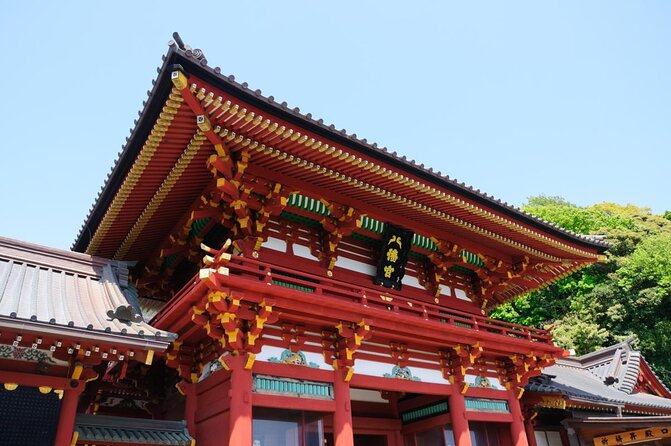
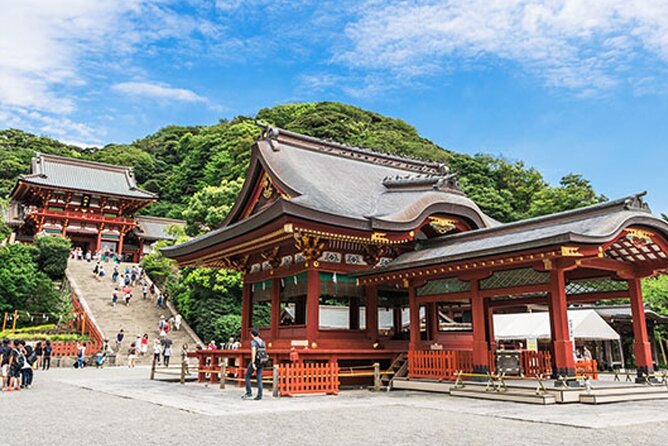
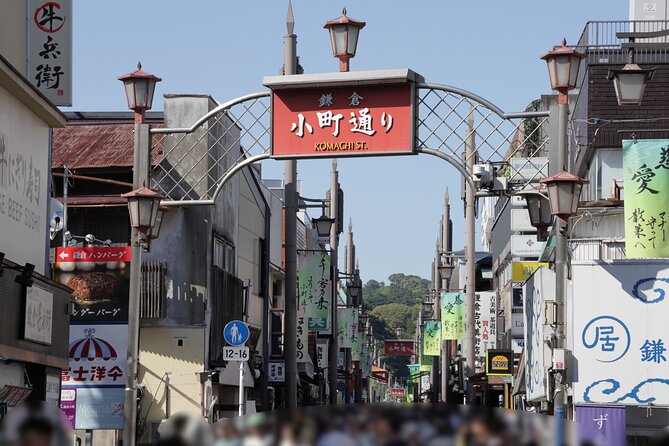
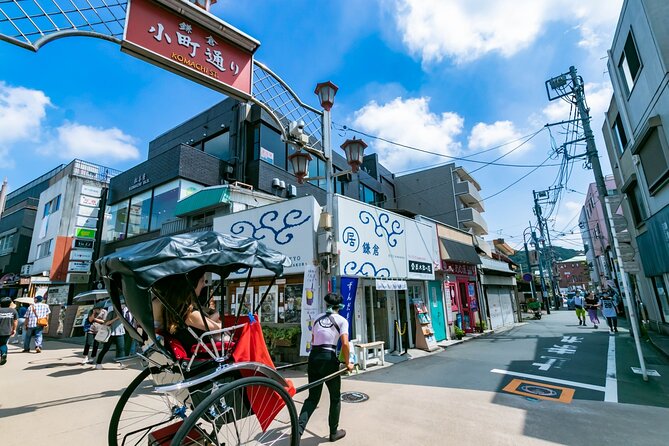
This is where the day feels distinctly Kamakura. Tsurugaoka Hachimangu Shrine is the spiritual heart of the area, and the approach through the grand gate sets a slower tone right away. From there, Komachi Street gives you an immediate, practical reward: snacks, Kamakura-style souvenirs, and small handmade crafts right near the shrine area.
What I like about this pairing is that it makes the stop flexible. If you want quiet shrine time, you can do that. If you want motion and snacks, Komachi Street handles it. You’re not choosing between culture and convenience.
Time-wise, this portion runs long enough to do both without feeling like you’re constantly checking your watch. You get about two hours at the start stop, which is plenty for a shrine wander and a “just one bite” loop down Komachi Street.
Kotoku-in Great Buddha: the open-sky moment
Next up is Kōtoku-in, home to the Great Buddha of Kamakura. This is one of those sights that doesn’t need explanation once you see it. The statue sits outdoors, and that changes the whole feel: you’re looking at history framed by the sky.
The tour gives you about 30 minutes here, and since admission is included, you can focus on walking and seeing. In real terms, 30 minutes can be perfect for a classic temple checklist plus a moment to just stare.
One practical note: it’s outdoors and exposed. If you’re visiting in winter, bring a layer. If you’re visiting in summer, bring water and something to keep the sun off your face.
Hase-dera and the eleven-headed Kannon statue
Hase-dera Temple is a garden-temple day stop with a major focal point: the temple’s famous eleven-headed statue of Kannon, the Goddess of Mercy. It’s the kind of detail that turns a “temple visit” into a specific story you remember later.
You’ll get around 50 minutes, and admission is included. That’s enough time to walk the grounds, spot the highlights, and still keep your pace human. The main drawback is that temple visits in Japan often involve stairs and uneven paths. If your body doesn’t love vertical walking, take it slow and use the time to rest when you need to.
I also appreciate that this stop adds variety after the Great Buddha. You go from an open-sky icon to a more intimate, nature-influenced space with its own rhythm.
Enoshima Island: views, shrines, and the stair test
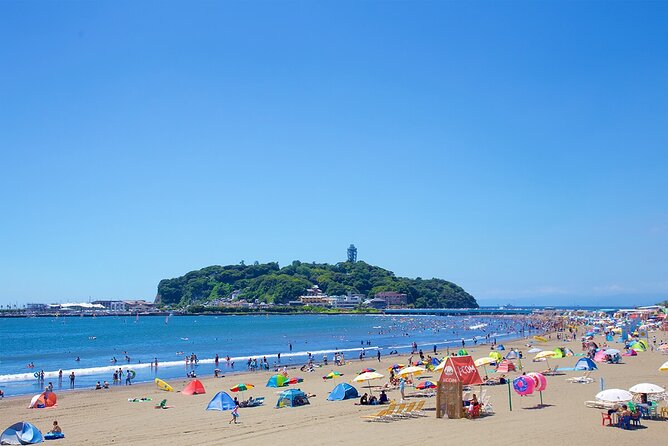
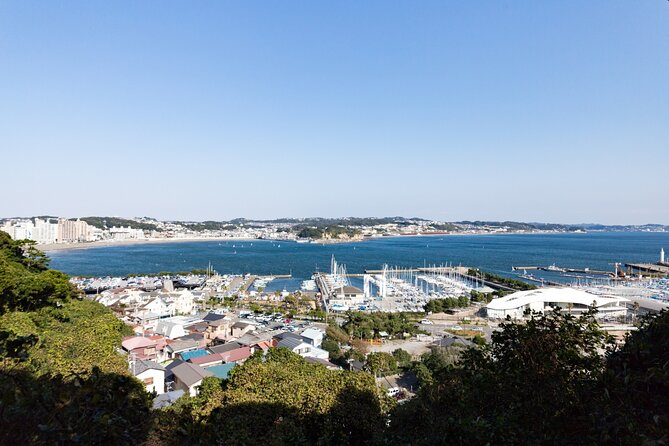
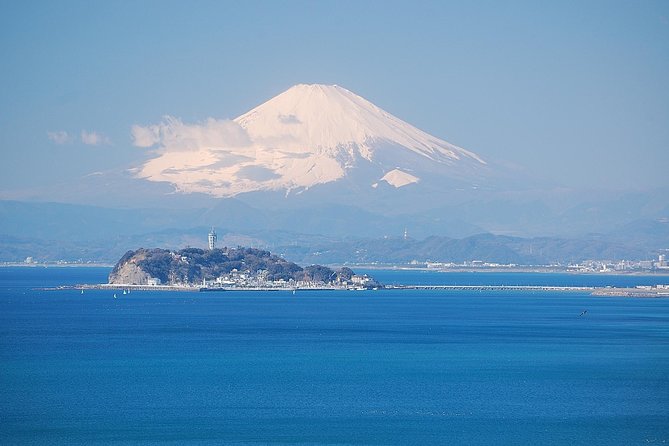
Enoshima is where the day turns coastal. This stop runs about two hours, and it’s the busiest “wander on your own” segment. The views can be great on clear days, with Mt. Fuji sometimes visible in the distance.
Enoshima also gives you religious variety in a compact area:
- A shrine complex dedicated to Benzaiten (music, wealth, and wisdom), with multiple shrines such as Hetsu-no-miya and Nakatsu-no-miya.
- Shirahata Shrine near Yanagihara Pond.
- Zeniarai Benten Shrine, where people wash money in a spring, because the practice is said to double it.
- Samuel Cocking Garden and the observatory lighthouse (listed height is about 59.8m, with the lighthouse structure reopened after renovations).
Here’s the key reality: Enoshima is not flat. Multiple reviews mention heavy stair climbing and navigation pressure, including one experience involving a lot of stairs and stress trying to get back to the bus. You can still have a great day, but plan for your body first.
What I recommend:
- Wear shoes you’d trust on wet stone.
- Build in a “turnaround point” in your head. If you get deep in the area, don’t plan to see every side street and still sprint back.
- If your goal is views, prioritize viewpoints and shrines over optional detours.
If it’s rainy, the free-time section can feel harder because it’s darker and you may be moving in low-contrast paths. Just don’t wait until the last 20 minutes to figure out your route back.
How the guide commentary changes everything
This is one of those tours where the guide is not a background feature. Many people specifically praise guides by name—Omar, Chen, Yuki, and Mitsuko come up as strong examples. The best guides don’t just say where to stand; they connect the dots between what you’re seeing and why it matters.
When you get a guide who explains context, it makes the same stops feel richer. You’ll hear the regional story—Kamakura as the home of the samurai—and details like how Minamoto no Yoritomo (1147–1199) ties into the area’s development. You’ll also get clearer instructions about where to go and how long to spend.
If you get a guide who focuses mostly on logistics, the tour can still be worthwhile because the sites are real. But you’ll feel the difference. So I’d choose this tour partly based on the expectation of guided value, not just transportation.
Timing, walking, and lunch: where days can go sideways
This tour is long by design, and that’s great when you want a full day. It can feel exhausting if you treat each stop like a museum with no breaks.
Two timing realities show up in actual experiences:
- Traffic can reshape the order or the lunch time, sometimes pushing lunch earlier in Enoshima.
- Enoshima’s free time can feel tight if you end up doing extra stairs or caves without planning your return.
Lunch is not included. That means you’re choosing on the fly, and on some schedules you may be eating at places with limited hours. I’d come prepared with a flexible mindset: eat when you find good options rather than chasing the perfect seafood meal at the perfect time.
Also remember: there’s no stored-luggage access between stops. You get about one manageable piece of luggage per person in the trunk, and valuables should stay with you.
Who this tour suits best (and who should think twice)
This fits best if you:
- Want a low-stress Kamakura day trip from Tokyo with guided structure
- Like religious sites but also enjoy casual shopping and snacks
- Prefer a fixed itinerary when time is limited
- Are physically fine with a long day and stairs
It might be less ideal if you:
- Have mobility limits and struggle with steep steps (Enoshima is the main challenge)
- Really want a self-paced day with lots of hidden stops and no group constraints
- Hate the idea of schedule changes from traffic or weather
For families, it can work well because the day is organized and the group stays together. For solo travelers who want companionship and clear directions, it’s also a good choice.
Should you book this Kamakura & Enoshima bus tour?
I’d book it if your goal is simple: see the key Kamakura shrines, stand in front of the Great Buddha, and spend real time on Enoshima for ocean views—without building a complex transit plan.
Skip or reconsider if you’re stair-shy or you want complete control over timing. Also, if you’re picky about the quality of lunch choices, expect that lunch timing can get squeezed by route changes.
The upside is strong: you’re getting a full slice of Kamakura and the Enoshima coast with included entrance fees, air-conditioned comfort, and a guide-driven day. In short, it’s a smart way to buy time and reduce friction while still seeing the places that make people fall for this region.
FAQ
How long is the Kamakura and Enoshima day trip?
The tour runs about 9 to 10 hours.
Where do I meet the tour, and where does it end?
The meeting point listed is Shinjuku Post Office 1-chōme-8-8 Nishishinjuku, and the tour ends at Shinjuku Post Office as well (a nearby drop-off near Shinjuku Station west side).
Are entrance fees included?
Yes. Entrance fees for Kōtoku-in and Hase-dera are included, and the tour includes all fees and taxes.
Is lunch included?
No. Lunch is not included.
Does the tour include a guide, and what languages are offered?
You’ll have an English/Chinese-speaking guide. Depending on the number of participants, commentary in both languages may be provided on the same bus.
Is the ticket digital?
Yes, you receive a mobile ticket.
What happens if the weather or traffic changes?
The tour schedule may change due to weather, road traffic, or unforeseen conditions. The bus departs regardless of weather or traffic unless you are notified otherwise by the local operator.
What if the minimum group size isn’t reached?
The tour requires a minimum group size of 10. If it’s canceled for that reason, you’ll be offered a different date/experience or a full refund.
How much luggage can I bring?
You can bring one piece of luggage per person during the excursion, and it should be manageable and fit in the vehicle trunk. Items stored in the trunk won’t be accessible between stops.