
One bus, 14 Hanoi stops. It’s a smart way to get oriented fast while you see the city’s mix of French colonial landmarks, major temples, and big revolutionary sites. I especially like the air-conditioned ride with onboard Wi‑Fi (helpful when Hanoi heat and traffic get loud).
I also like that you get several free-entry stops—including St. Joseph’s Cathedral and the One Pillar Pagoda—so your $20 ticket doesn’t feel like you’re paying for views you can’t actually use. The main drawback is timing: even with a schedule, route and stops can shift due to traffic or conditions, and some stops may require a short walk to reach the exact sights.
In This Review
- Key things I’d focus on
- How this hop-on hop-off route gets you oriented fast
- Price and value: what $20 really covers
- On-board comfort: the little things that save your day
- The route in real human terms: what each stop is good for
- Stop 1: Dong King Nghia Thuc Square (7 Dinh Tien Hoang)
- Stop 2: St. Joseph Cathedral
- Stop 3: Vietnam Military History Museum area / Flag Tower of Hanoi
- Stop 4: Ho Chi Minh’s Mausoleum (Ba Dinh Square)
- Stop 5: One Pillar Pagoda
- Stop 6: Tran Quoc Pagoda
- Stop 7: Cua Bac Church area (listed near Công viên Yên Sở)
- Stop 8: Quan Thanh Temple
- Stop 9: Imperial Citadel of Thang Long
- Stop 10: Temple of Literature (Van Mieu) and Imperial Academy
- Stop 11: Hoa Lo Prison (Hanoi Hilton gatehouse museum)
- Stop 12: Vietnamese Women’s Museum
- Stop 13: Hanoi Opera House (Grand Opera House)
- Stop 14: Hanoi Post Office (Post office by the lake)
- Practical tips so your day runs smoothly
- Who should book this hop-on hop-off bus?
- Should you book this Hanoi bus tour?
- FAQ
- How much does the Full-Day Hop On Hop Off Bus Tour in Hanoi cost?
- How long is the tour?
- Is the tour offered in English?
- What’s included with the ticket?
- Which major stops have no entrance fee?
- Do I need to bring my own bottle for water?
Key things I’d focus on

- Hop-on hop-off flexibility: you can stay on longer at the places you care about most.
- Free sights built into the loop like St. Joseph’s Cathedral and One Pillar Pagoda.
- Comfort and basic onboard help: air-con, Wi‑Fi, city map, bottled water, rain coat + conical hat.
- A day that mixes eras from French architecture to imperial-era Vietnam and modern museums.
- Plan for minor timing chaos due to traffic, holidays, and possible route changes.
How this hop-on hop-off route gets you oriented fast

Hanoi can feel like two different cities at once. There’s the Old Quarter energy, but the historic heart is also full of grand monuments, lakeside landmarks, pagodas, and French-era buildings. This tour gives you a practical spine through central areas, so your first day doesn’t turn into a guessing game with taxis and scattered tuk-tuk drops.
What makes the route work is the variety. You’re not only staring at one type of sight. You move between Catholic churches, Confucian learning, ancient pagodas, an imperial citadel, and major 20th-century history. That’s the kind of mix that helps you understand Hanoi instead of just collecting photos.
You also get a mobile ticket and an English audio experience, which matters more than it sounds. With onboard commentary, you can fill in the “why” behind what you’re looking at, even if you’re not doing deep reading at each stop.
Price and value: what $20 really covers
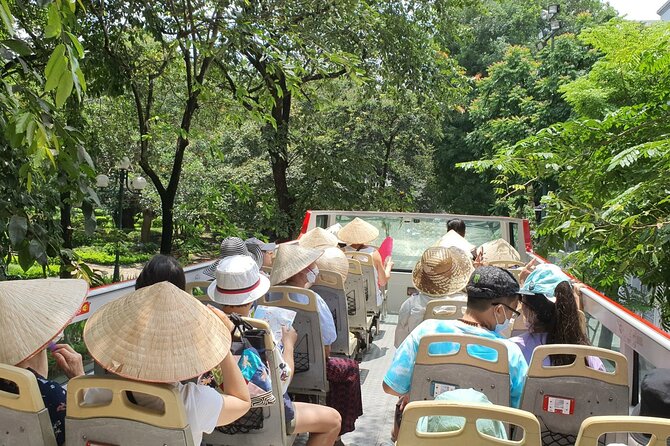
At $20 per person for an approximately 1-day hop-on hop-off experience, you’re paying for access to transportation, guided context, and the ability to cover a lot of ground without constant negotiating. That’s the value here: you buy time and reduce hassle.
The ticket includes several practical items: an air-conditioned vehicle, Wi‑Fi onboard, insurance for passengers on the bus, a city map, bottled water, and even a conical hat and rain coat. You’ll also have a sustainable water setup—there’s a large 20-liter water container onboard, and you’re encouraged to bring your own reusable bottle to refill (paper cups are provided).
Entrance fees are not included across the whole day. Some stops explicitly have no entrance fee (St. Joseph’s Cathedral and One Pillar Pagoda), while others list fees you’d pay at the attraction (for example: Ho Chi Minh’s Mausoleum, Thang Long Imperial Citadel, Temple of Literature, Hoa Lo Prison, and more). So the smart move is to use the hop-on system strategically:
- If you only plan to pay at a couple of ticketed sites, you’ll stretch value more.
- If you want to hit several paid museums and historic grounds, budget for those entrances during the day.
On-board comfort: the little things that save your day
Hanoi weather can change quickly. You’ll appreciate the included rain coat and conical hat when mist or drizzle shows up—without needing to buy anything last minute. The bus is air-conditioned, and the onboard Wi‑Fi can help if you’re mapping the next stop or translating signs.
The city map is also more useful than it sounds. A map helps you connect what you see from the bus to what you’ll walk toward. Since some locations aren’t right at the curb of the bus stop, that matters.
Two realistic notes. First, the audio guide can be helpful, but sometimes audio may not match the bus’s exact location perfectly. Second, the bus schedule and route can change due to traffic, holidays, weather, or unforeseen issues. In other words: keep some flexibility in your plans, especially if you’re trying to time a museum entry or a specific photo window.
The route in real human terms: what each stop is good for
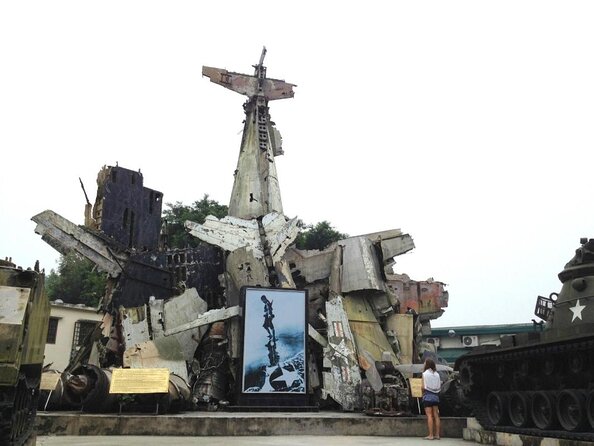
This is a loop with 14 major stops, and you can hop on and off as you like. Here’s how I’d think about the day, stop by stop, based on what you’ll see and what to watch for.
Stop 1: Dong King Nghia Thuc Square (7 Dinh Tien Hoang)
You start at Dong King Nghia Thuc Square, number 7 Dinh Tien Hoang. This matters because starting smoothly sets the tone. If you’re hungry, tired, or arriving on a tight schedule, grab the ticket and get on board quickly—then settle in. From here, the route builds outward through central historic sights.
If you’re the kind of traveler who likes to know where you stand, use this first bus ride to locate landmarks in your mind. By the time you’re hopping off later, you’ll feel less like you’re walking blind.
Stop 2: St. Joseph Cathedral
This is a standout for first-day orientation. St. Joseph’s Cathedral was built in 1884, opened in December 1886, and it’s described as the oldest church in Hanoi. The architecture is noted as resembling Notre Dame de Paris style.
Best part: there’s no entrance fee here. Even if you don’t do a long stop, a quick visit helps you spot the French colonial imprint on the city.
Stop 3: Vietnam Military History Museum area / Flag Tower of Hanoi
This stop centers on a very distinctive piece of the Hanoi Citadel story: the Flag Tower of Hanoi. It’s described as a rare architectural work that survived between 1894 and 1897, which makes the structure feel like a survivor of major political and colonial pressures.
Don’t expect this to be purely scenic. It’s more about context and atmosphere—seeing a physical marker of how Hanoi’s defenses and power symbols evolved.
Stop 4: Ho Chi Minh’s Mausoleum (Ba Dinh Square)
This is the heavyweight emotional stop on the loop. The mausoleum is located at Ba Dinh Square, where Ho Chi Minh read the Declaration of Independence on 2 September 1945. The site is a large, central landmark tied directly to Vietnam’s revolutionary narrative.
Note: the listing says there’s an entrance fee for this stop (25,000 VND). If you’re planning your day around paid sites, decide early whether this is one of your priorities.
Stop 5: One Pillar Pagoda
If you want one iconic pagoda image, this is it. The One Pillar Pagoda is described as a temple with a special structure—basically a building laid on one pillar. The original pagoda dates to 1049, with additions and perfection noted in 1105.
Good news for your budget: no entrance fee is listed for this stop. Even a short visit gives you a strong sense of why this temple is considered one of Vietnam’s two most iconic.
Stop 6: Tran Quoc Pagoda
Tran Quoc Pagoda is framed as Hanoi’s oldest pagoda. It began in the sixth century during Emperor Ly Nam De’s reign (544–548), putting its age at more than 1,500 years.
This is the stop I’d use for a calmer moment in the day. After museums and large political spaces, a centuries-old religious site helps your brain reset.
Stop 7: Cua Bac Church area (listed near Công viên Yên Sở)
The stop name includes Công viên Yên Sở, and the sight described is Cua Bac Church—a Roman Catholic church built in 1932 by the French administration of Indochina as part of Hanoi’s urban plan overseen by Ernest Hébrard.
If you care about how cities were planned, this is a meaningful contrast to the older imperial and religious structures. There’s an entire “French urban planning” layer to Hanoi that this church helps you visualize.
Stop 8: Quan Thanh Temple
Quan Thanh Temple is dedicated to Tran Vu, Deity of the North in Taoism. Symbols of power here are serpent and turtle. The temple is also described as one of the Four Sacred Temples built in four directions to protect the capital from malevolent spirits.
This is one of those stops where the story behind the architecture matters. Even if you don’t read everything on-site, it helps to know you’re looking at a protective “capital geography” idea, not just a random temple.
Stop 9: Imperial Citadel of Thang Long
This stop gives you the long view. The Thang Long Imperial Citadel is described as being built in the 11th century by the Ly Viet Dynasty, marking independence of Dai Viet. It was constructed on remains of a Chinese fortress from the 7th century on reclaimed drained land from the Red River Delta.
Entrance is listed as 30,000 VND. If you pay for only a few historical sites, this is worth considering because it ties together centuries—Chinese fortress foundations, reclaimed land, and Vietnamese dynastic independence.
Stop 10: Temple of Literature (Van Mieu) and Imperial Academy
Van Mieu is dedicated to Confucius and also hosts the Imperial Academy, described as Vietnam’s first national university. Built in 1070 during Emperor Ly Thanh Tong’s time, it’s part of a wider tradition of Confucius temples and learning spaces.
Entrance is listed as 30,000 VND. If you like history that explains systems—education, power, exams—this is your stop.
Stop 11: Hoa Lo Prison (Hanoi Hilton gatehouse museum)
This one hits hard. Hoa Lo Prison began as a French colonial prison for political prisoners. Later, North Vietnam used it for U.S. prisoners of war, and American POWs called it the Hanoi Hilton.
The listing says the prison was demolished during the 1990s, but the gatehouse remains as a museum. Entrance is listed as 30,000 VND.
If your goal is understanding Vietnam’s 20th-century story, this stop is essential. Just don’t treat it like a casual photo stop—go prepared for heavier themes.
Stop 12: Vietnamese Women’s Museum
This museum opened to the public in 1995 and is operated by the Vietnam Women’s Union. It holds a collection of more than 40,000 materials and artifacts related to Vietnamese women. It also runs thematic exhibits using an approach based on social anthropology.
Entrance is listed as 40,000 VND. It’s a great contrast to the more state-focused stops (mausoleum, citadel). This one reminds you how social life and identity shape a country’s history.
Stop 13: Hanoi Opera House (Grand Opera House)
Built by the French colonial administration between 1901 and 1911, the Hanoi Opera House is one of three opera houses the French built during their time in Indochina (the other two listed are Haiphong Opera House and a Municipal Theatre in Ho Chi Minh City).
This stop is less about a single story and more about architecture and colonial-era cultural ambitions. If you’re into buildings, take a careful look at the exterior details before you move on.
Stop 14: Hanoi Post Office (Post office by the lake)
Hanoi Post Office is described as more than 100 years old. Henri Vildieu designed and built it from 1894 to 1899, and it’s described as neoclassical. It’s also called Post office by the lake.
This is a strong closing stop because it gives you a different kind of Vietnam: daily civic life, not only monumental history. Even a quick pause here feels like Hanoi moving at human speed.
Practical tips so your day runs smoothly
The tour is set up for flexibility, but Hanoi traffic and route changes are real. Here’s how I’d handle it.
- Use the first loop to learn the pattern. If you’re unsure which stops are easiest to reach on foot, ride once before you commit to hopping off.
- Give yourself extra buffer time for the heavier sites like Ho Chi Minh’s Mausoleum area and museums. The schedule can change due to traffic, public holidays, or weather.
- Expect short walks from bus stops. The day’s listed locations can be a bit offset, so don’t assume you’ll park directly in front of every door.
- If audio matters to you, listen early and adjust. If the audio seems out of sync, rely on the signage and your own pace rather than waiting for perfect alignment.
- Bring a reusable bottle. The tour reduces plastic use by refilling from a 20-liter container, and you’ll be able to top up easily.
Who should book this hop-on hop-off bus?

This tour is a good match if you:
- Want a first-day overview that mixes many of Hanoi’s major sights in one manageable route.
- Prefer the comfort of air-conditioning and onboard Wi‑Fi over planning a tight self-guided itinerary.
- Like structure but still want control—hop off when something catches your eye, then hop back on when you’re ready.
It’s not ideal if you:
- Hate any uncertainty around timing.
- Want a perfectly timed museum day with zero walking and zero delays.
- Only want a few places and would rather spend time deep at one site instead of moving around.
Should you book this Hanoi bus tour?
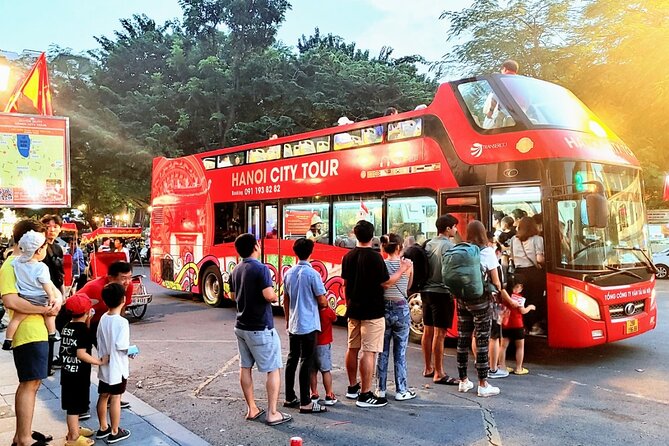
I’d book it if your top goal is clarity and coverage in a short time. For $20, it’s one of the easiest ways to connect French-era architecture, ancient temples, and modern history without building a full route yourself—plus you get practical extras like rain gear, a map, and Wi‑Fi.
I’d also book it with smart expectations: plan for possible schedule changes, allow time for a bit of walking, and decide in advance which paid stops are worth it for you. If you do that, this bus loop can turn your first day into something you actually feel good about—rather than a frantic hop from one taxi to the next.
FAQ
How much does the Full-Day Hop On Hop Off Bus Tour in Hanoi cost?
It costs $20.00 per person.
How long is the tour?
It lasts about 1 day (approx.).
Is the tour offered in English?
Yes, it’s offered in English.
What’s included with the ticket?
The ticket includes an air-conditioned vehicle, Wi‑Fi on board, all fees and taxes, a conical hat and rain coat, insurance for passengers on the bus, a city map, and bottled water.
Which major stops have no entrance fee?
St. Joseph Cathedral and One Pillar Pagoda are listed as having no entrance fee.
Do I need to bring my own bottle for water?
You’re encouraged to bring a reusable bottle. The operator supplies a 20-liter water container for refills, and paper cups are provided.