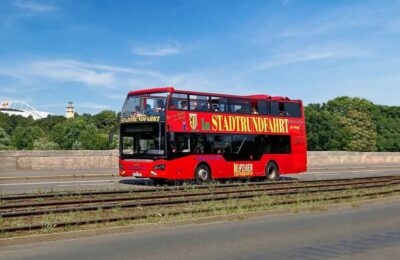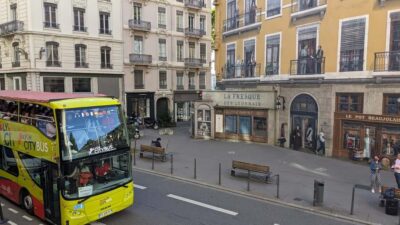
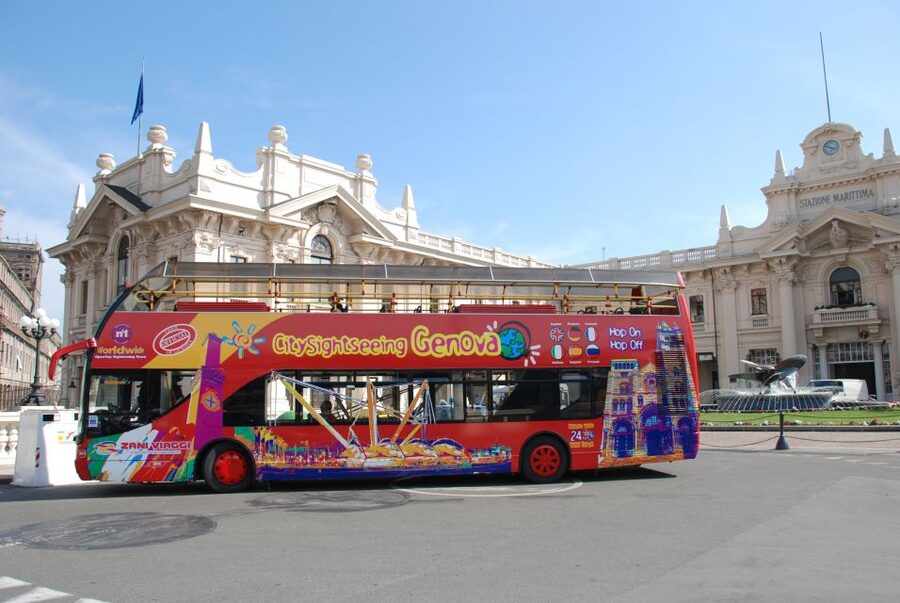
Genoa is best when you move at your own pace. This hop-on hop-off ticket gives you an easy 20–30 minute way to cover the UNESCO-listed center and the seafront, with an open-top ride plus recorded commentary in 8 languages. I especially like how the red and blue lines let you choose what to see without committing to one long guided loop, and how the app helps you plan your get-off points. One thing to consider: you’re relying on audio, not a live guide, so the experience depends on how clear the headphones and stop commentary work for you.
If you want to learn Genoa fast, the bus acts like a rolling orientation map. You’ll pass major sights tied to Strada Nuova (the 16th–17th century area that UNESCO protects), then angle toward Porto Antico and the harbor side, where family-friendly stops like the Aquarium fit naturally. The ticket is also built for repeat rides, so if one afternoon feels too hot or you miss a stop, you can try again the next day.
In This Review
- Key reasons this bus ticket works in Genoa
- Genoa in 24 to 48 hours: how this ticket fits real schedules
- The Red Line (Historical Route): Strada Nuova sights and the Castelletto viewpoint
- The Blue Line (Coastline Route): Boccadasse, the sea side, and harbor time
- San Lorenzo, Palazzo Ducale, and the Strada Nuova museums: what to aim for once you get off
- Aquarium and Porto Antico timing: where a harbor stop helps your whole day
- Audio guide and headphones: useful context, but not magic
- Using the app and onboard Wi‑Fi to cut waiting time
- Priority boarding (24-hour Priority Ticket): when it pays off
- Practical timing: how to plan your Red and Blue rides with the actual last departures
- Value check: does $26 make sense for Genoa?
- Who this tour suits best (and who might not love it)
- Should you book the Genoa hop-on hop-off bus?
- FAQ
- How long is the hop-on hop-off ticket valid?
- Which bus routes are included?
- Is there a walking tour included?
- Are audio guides included, and what languages are available?
- Is Wi‑Fi available on the bus?
- Does the ticket include admission to attractions?
- Where do I redeem the 24-hour priority wristband?
- What are the last departure times for each route?
Key reasons this bus ticket works in Genoa
- Two routes (Red and Blue): pick one as your main loop and use the other to patch gaps.
- 360° panorama from the second floor: great value if you’re short on time or want quick views without climbing too much.
- Audio guide in 8 languages + Wi‑Fi: you get more than transport; you get context while you ride.
- Free digital Walking Tour: a built-in way to stretch your sightseeing after you get off.
- Priority boarding option: useful when cruise ship crowds build pressure at popular stops.
- App with real-time bus info: helps you time your walking so you’re not standing around guessing.
Genoa in 24 to 48 hours: how this ticket fits real schedules
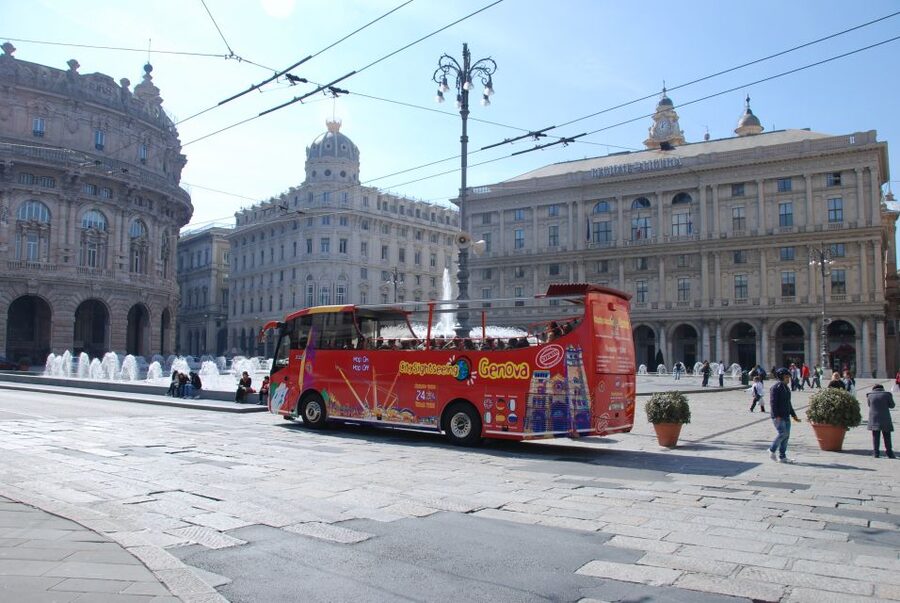
This is the kind of ticket that rewards smart pacing. With a 24- or 48-hour pass, you’re not forced to follow a strict, timed walking plan. You can do a full loop once for orientation, then spend the second pass doing the “real” sightseeing—cathedral area, museum buildings, viewpoints, or the seafront.
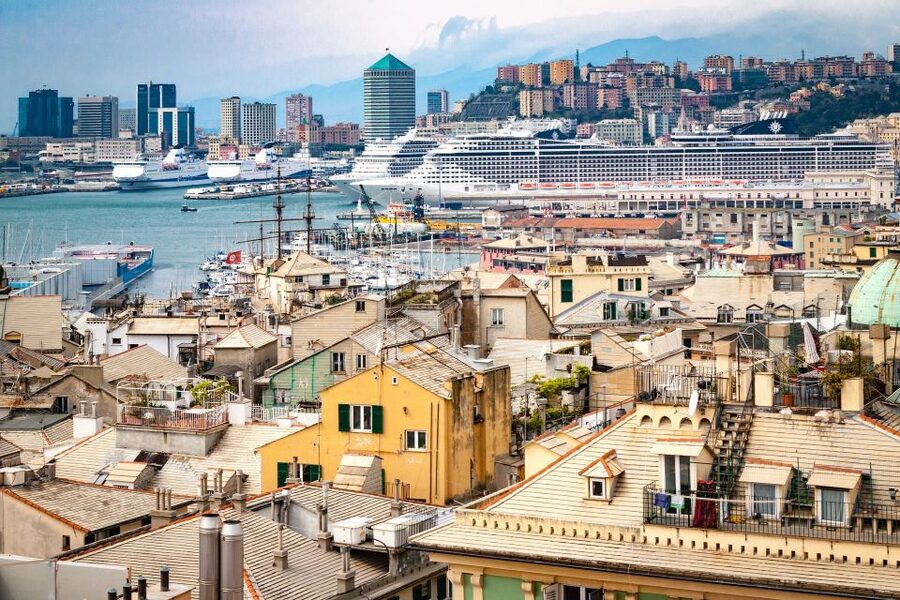
Genoa also has neighborhoods that are easier to reach by bus than by a long slog on foot. Even when the city is walkable, hills and distance can drain you faster than you expect. An open-top bus gives you a moving vantage point while you save energy for the parts that actually deserve a slower stroll.
One practical note: the timetable is not all-day equal. The Historical Route (Red) runs from 10:15 am and its last departure is 4:15 pm. The Coastline Route (Blue) starts at 10:00 am with a last departure at 4:30 pm. If you’re planning to ride late in the day, start earlier than you think.
The Red Line (Historical Route): Strada Nuova sights and the Castelletto viewpoint
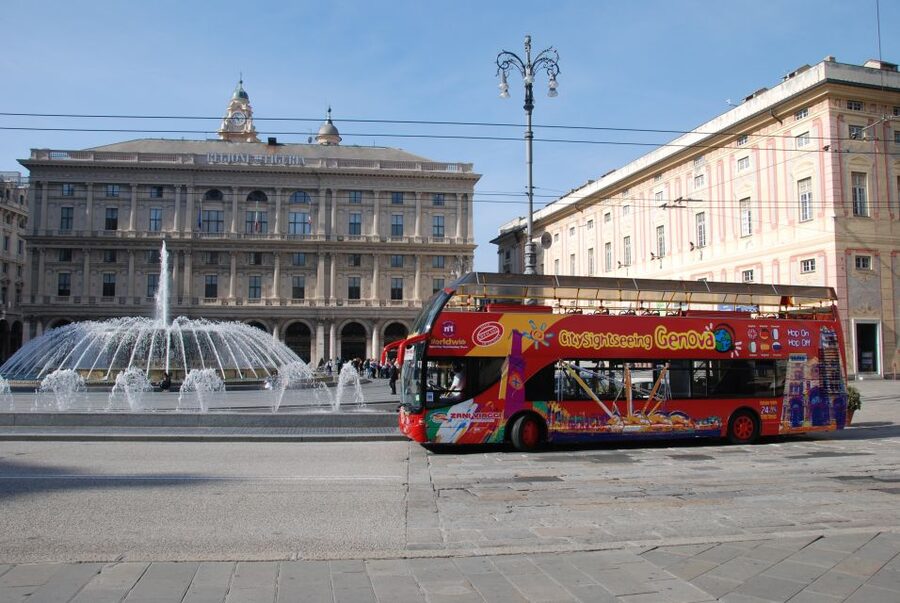
The Red Line is the one that feels most connected to the UNESCO core and the big “look up at the buildings” streets. Even if you don’t pick every stop, it strings together the areas you’ll likely want to return to.
Here’s how the Red Line stop order can help you plan your day:
- Acquario: a natural starting hub because it also connects to Porto Antico, where the Aquarium area sits.
- Garibaldi: a central-sounding stop that works well if you want to bounce between sightseeing zones and transport.
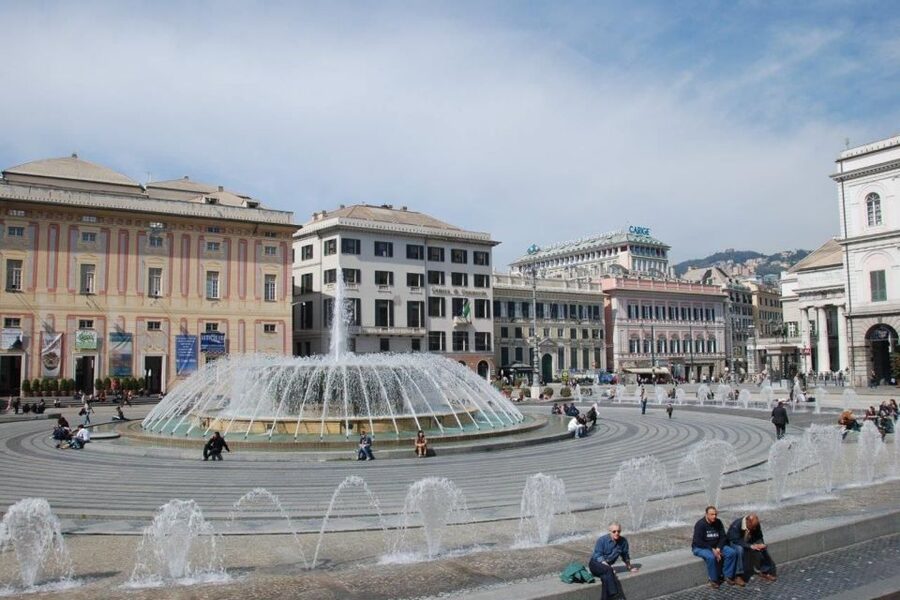
- De Ferrari: listed as a key stop, and it’s your clue that the route is aiming straight at Genoa’s center.
- Brignole Train Station: handy if you’re moving around by train or staying near this side of town.
- Via XX Settembre: a “connector” style stop—useful when you want to reposition yourself without guessing distances.
- Carignano: another positioning stop in the mix.
- Corvetto: again, helpful for access rather than as a landmark stop with details provided here.
- Portello – Spianata Castelletto: this is the viewpoint stop. The ticket lets you get to the lift area for a panoramic outlook from Spianata Castelletto, which is exactly the kind of payoff worth building your schedule around.
- Principe Train Station: useful for train access and for ending one day and starting another cleanly.
- Lighthouse: the route explicitly includes it, so if the harbor edges and symbols matter to your itinerary, this is the stop to watch for.
- Mei: the final Red Line listed stop, again best seen as a flexible drop-off.
What you’re really buying with the Red Line is access to the historic center vibe. The description highlights Strada Nuova with its 16th–17th century buildings, plus major sights you’ll recognize from your walking dreams: San Lorenzo Cathedral, Palazzo Ducale, and the Strada Nuova Museums. It also points to Rubens’ masterpieces in those museum buildings, plus refined shopping along Via Garibaldi.
So my advice is simple: treat the Red Line as your museum-and-monuments route. Ride it once early, then choose 2–4 stops to explore longer on foot.
The Blue Line (Coastline Route): Boccadasse, the sea side, and harbor time
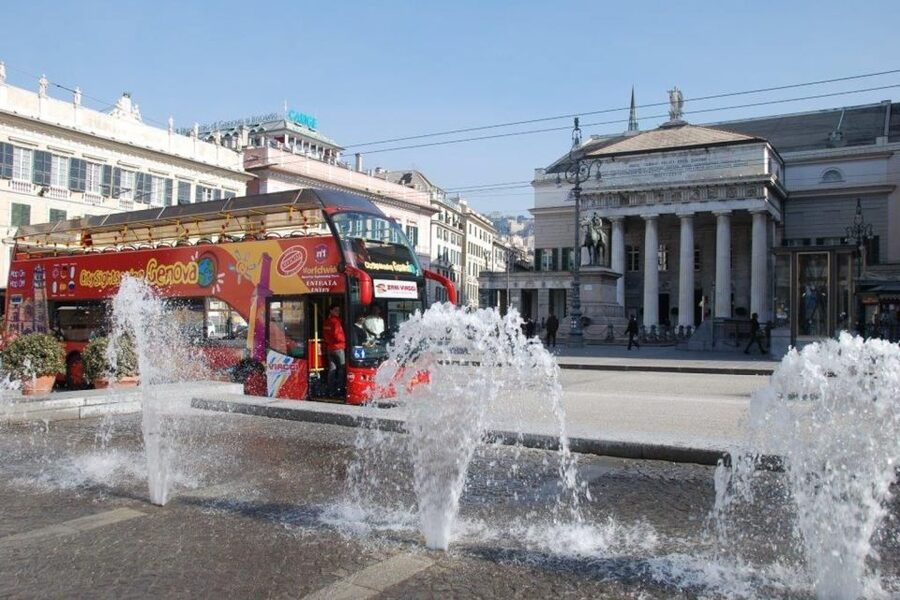
If the Red Line is your “monuments and museum buildings” day, the Blue Line is your “salt air and postcards” day—especially the seafront zone described as Corso Italia and the neighborhood of Boccadasse.
Blue Line stops:
- Acquario: same anchor point, and still a smart start if you want to pair bus time with Porto Antico.
- Garibaldi and De Ferrari: central stops that make it easy to hop into the city core.
- Piazza della Vittoria: a mid-route central stop that gives you another anchor point for walking.
- Boccadasse: the standout neighborhood name on the Blue list. This is where you’d plan for more time to wander.
- Levante Water Front (upon request): this one matters for timing. It’s listed as upon request, so expect it to work differently from regular fixed stops.
- Via XX Settembre: another repositioning point.
- Galleria Mazzini: helpful if you want to add shopping and pass-through access into your route.
- Portello – Spianata Castelletto: the viewpoint appears on both routes, so you can reach it no matter which line you prioritize.
- Principe Train Station: transport access.
- Cruise Terminal: crucial if you’re connecting back to the ship side.
The bus description also points to family-friendly harbor attractions, especially Porto Antico and the Aquarium, where you can watch the dolphin show. That’s a big practical win: if you’re traveling with kids (or you just like easy, guaranteed-interest attractions), the Blue Line gets you where you need to be without planning multiple transfers.
One fair warning from real-world experience: some people find overlap between the two routes. If you want maximum variety, don’t blindly do both lines at the same speed. Pick the line that best matches your day’s mood—historic and museum focus, or seafront and neighborhood wandering.
San Lorenzo, Palazzo Ducale, and the Strada Nuova museums: what to aim for once you get off
This ticket’s biggest value shows up when you stop thinking of it as a bus ride and start thinking of it as a gateway. The description ties the bus route directly to a cluster of major sights around Strada Nuova.
Here’s what those names mean for your planning:
- Cathedral of San Lorenzo: the ticket description highlights that it’s built in different styles, from Gothic to Renaissance. That’s exactly the kind of detail you’ll want to see up close, not only from the bus window.
- Palazzo Ducale: another headline monument mentioned as a key destination you can access by hopping off along the routes.
- Strada Nuova Museums: the description says there are three different buildings you can visit. That matters because museums in multiple sites can take time. If you’re choosing between quickly seeing a facade and actually experiencing interiors, give yourself enough hours for the building-to-building flow.
- Rubens’ masterpieces: one specific draw called out in the museum context. If you’re art-focused, this is the sight that makes the ticket feel like more than transport.
Then there’s Via Garibaldi. The ticket calls it elegant and lined with imposing buildings and refined shops. Even if you don’t plan major shopping, that’s your cue to slow down and do a proper walk.
My suggestion: use the first bus loop to decide which of these to prioritize. Get off at the cathedral and palace cluster if you want the “center of gravity” day. Or lean toward the museums if you prefer interiors over facades. Either approach works, because the ticket is designed to let you build your own route.
Aquarium and Porto Antico timing: where a harbor stop helps your whole day
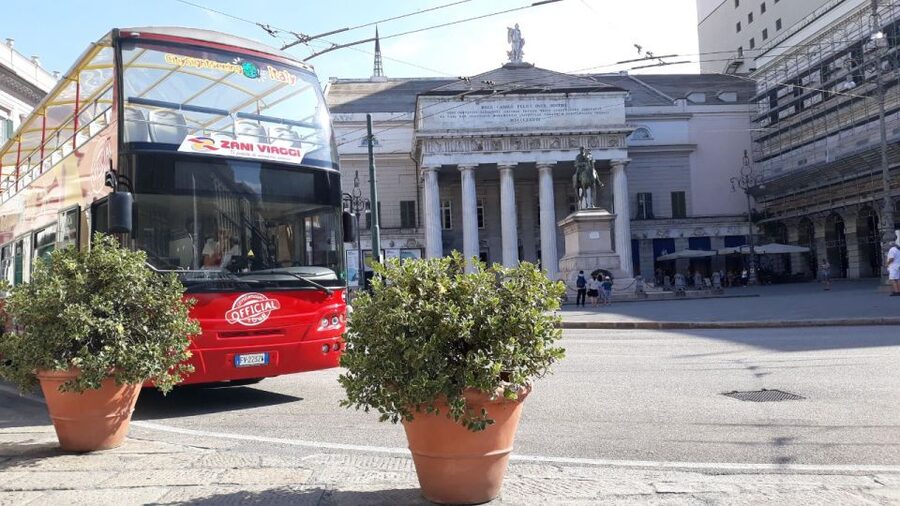
Porto Antico is one of the strongest anchors in this ticket’s description, and the stop list backs it up by including Acquario on both routes. If you have a tight schedule, pairing a bus loop with a set attraction here is a smart move.
Why it’s practical:
- The Aquarium area is called out as family-friendly and includes a dolphin show, so you’re not gambling on finding something that will work for everyone in your group.
- This area is also named in connection with a priority boarding redemption point (more on that soon), which can make your route timing smoother.
If you’re traveling on a hot day, a bus ride can be the cooling break between walks. One review notes the bus had an air-conditioned lower deck and a top deck that’s covered for sun relief. That matches how this experience tends to feel: you can ride to reset, then step out for 45–90 minutes of sightseeing, then ride again.
Audio guide and headphones: useful context, but not magic
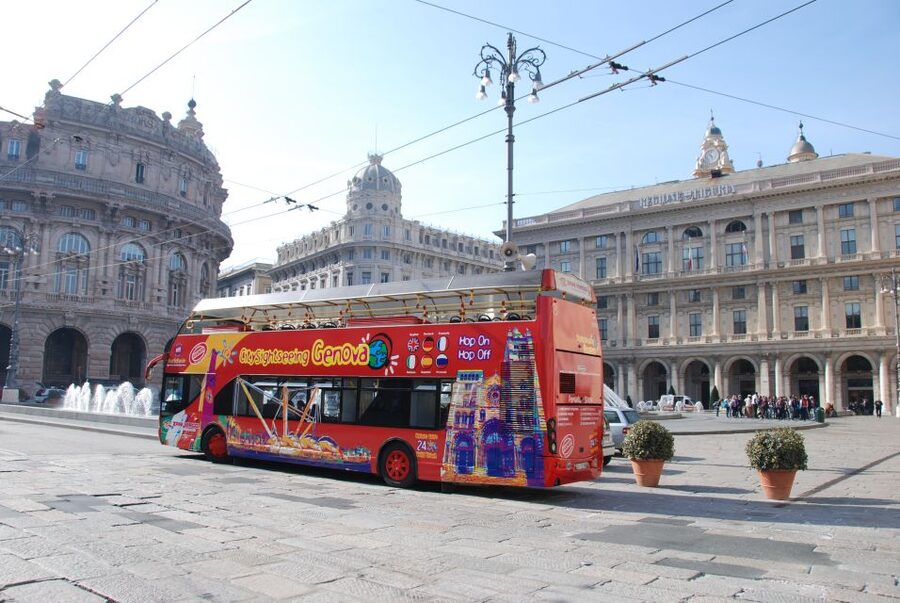
The ticket includes an audioguide with headphones and coverage in Italian, English, French, German, Russian, Chinese, Portuguese, and Spanish. That’s a lot of language options, and it’s exactly what you want when you’re passing a dense set of historic streets.
Still, treat the audio as “helpful background,” not as a replacement for reading or in-person explanations. Some reviews highlight that commentary can feel brief, and in some cases it might play music or not always focus on what you’re actively seeing. Others mention headphone issues like static or jacks that didn’t work.
A smart way to protect your experience:
- Download your route plan in advance so you aren’t dependent on unstable phone service.
- Keep an eye on the stop name visuals as you ride.
- If something feels unclear, don’t hesitate to use the map you board with. One review specifically suggests picking up a paper copy of the map for easier stop matching.
Also, it’s worth knowing the format. The experience is built around recorded audio rather than a live guide giving you a personalized talk at each stop.
Using the app and onboard Wi‑Fi to cut waiting time
This ticket’s tech piece is the free Sightseeing Experience app. It’s described as showing:
- an interactive map,
- the bus position in real time,
- waiting time at each stop,
- and your position so you can reach the nearest stop.
On top of that, you get free Wi‑Fi onboard. That’s handy for checking routes while you’re on the move.
In practice, it can still be hit or miss. Some reviews report that the live bus tracker wasn’t accurate at times, and others point out you really want the app ready before you start. So I’d treat the app as a guide, not a guarantee. If it’s raining or you don’t have data, download and test it before you step out.
Priority boarding (24-hour Priority Ticket): when it pays off
If you select the 24-hour Priority Ticket, you get priority access without waiting times in line on board the bus. That’s a big deal in Genoa because the schedule can get compressed when cruise ship passengers flood popular stops.
How it works:
- You must redeem the priority wristband at specific redemption points: Cruise Terminal stop – Via Fanti d’Italia or the City Sightseeing Visitor Centre near the Aquarium stop.
- Once you have the wristband on, you can board before other passengers at any stop for the duration of the ticket.
So when is it worth paying for priority?
- If you’re arriving during peak cruise hours.
- If you’re doing a tight day plan and you can’t afford missed departures.
- If you want the first bus out at your stop so you can get sightseeing time while the city is less crowded.
Reviews include praise for priority-like convenience and also frustration about crowds and line pressure. Buying priority is a way to avoid being stuck negotiating for your spot at the curb.
Practical timing: how to plan your Red and Blue rides with the actual last departures
The route hours are a major planning factor:
- Red Line (Historical): from 10:15 am, last departure 4:15 pm. Frequency is listed as about 30 minutes in the morning, then 60 minutes in the afternoon.
- Blue Line (Coastline): from 10 am, last departure 4:30 pm. Frequency is about 30 minutes.
That means you should start early if you want a full loop plus long get-off time at one or two major sights. If you wait until mid-afternoon, you may only catch a partial route, which can still be fine—especially if you already know what you want to see.
A simple approach I’d use:
- Day 1: do a full loop on your best-fit line (Red for monuments and museums; Blue for seafront and neighborhoods).
- Day 2 (if you bought 48 hours): repeat the line that matches your top interest, then add Spianata Castelletto if you missed it.
Also remember: buses run daily until late afternoon, and then the city shifts into evening life. The description even hints that later hours are a good time to discover nightlife, so don’t feel you must cram every stop into daylight if you’re enjoying the city vibe.
Value check: does $26 make sense for Genoa?
At about $26 per person for the ticket, this is priced like a convenience product, not like a budget bus pass. The reason it can still feel fair is that you’re not just paying for transport.
Included value that matters:
- 24 or 48-hour access so you can re-ride.
- Audio commentary in 8 languages.
- Free Wi‑Fi onboard.
- A free mobile app with real-time positioning.
- A free digital Walking Tour option.
And the big indirect value: it saves walking time while getting you oriented to areas like Strada Nuova and the seafront, so you don’t waste your energy later.
That said, it’s not perfect value for everyone. Some reviews mention the experience can feel expensive and that red and blue overlap more than expected. If you only care about one small area of Genoa, you may decide a hop-on hop-off ticket is more than you need. If you want flexible coverage, though, the package adds up.
Who this tour suits best (and who might not love it)
This works especially well if you:
- want an easy way to see a lot without a rigid schedule,
- are visiting for a short window and want orientation fast,
- like the idea of switching between bus and walking,
- or want a simple family plan that includes Porto Antico and the Aquarium.
You might not love it as much if you:
- strongly prefer a live, stop-by-stop human guide,
- get annoyed by audio that isn’t perfectly timed to every sight,
- or hate waiting and crowd pressure at peak boarding points.
If you’re the type who enjoys planning, this ticket rewards you. It’s flexible, but it’s not totally frictionless—especially when you’re trying to find the right stop quickly in a busy area.
Should you book the Genoa hop-on hop-off bus?
Yes, I’d book it if your priority is flexibility plus a quick first look at Genoa’s center and harbor. The combo of Red + Blue routes, the Spianata Castelletto viewpoint access, and the museum cluster around Strada Nuova makes it one of the most efficient ways to structure a 1–2 day visit.
If you do book, do it with a plan:
- Start early to protect the last departures.
- Choose one line as your main loop and treat the other as a supplement.
- Download the app before you go so you’re not stuck figuring things out on the move.
- Consider the 24-hour Priority Ticket if you’re dealing with cruise ship crowds.
FAQ
How long is the hop-on hop-off ticket valid?
You can choose a ticket valid for either 24 hours or 48 hours, so you can spread sightseeing across one or two days.
Which bus routes are included?
The ticket includes two routes: the Historical Route (Red Line) and the Coastline Route (Blue Line).
Is there a walking tour included?
Yes. A free digital Walking Tour is included in the experience, available through the mobile app.
Are audio guides included, and what languages are available?
Yes. The audio guide is included with headphones and covers Italian, English, French, German, Russian, Chinese, Portuguese, and Spanish.
Is Wi‑Fi available on the bus?
Yes. Free Wi‑Fi is available onboard.
Does the ticket include admission to attractions?
No. Attraction tickets are not included.
Where do I redeem the 24-hour priority wristband?
You can redeem the priority wristband at one of these: Cruise Terminal stop – Via Fanti d’Italia, or the City Sightseeing Visitor Centre near the Aquarium stop.
What are the last departure times for each route?
For the Historical Route (Red Line), the last departure is 4:15 pm. For the Coastline Route (Blue Line), the last departure is 4:30 pm.