Temple bells meet ocean air.
This Kamakura and Enoshima day trip strings together major shrine and temple sights with sea views in one efficient route, so you get both culture and coastline without wrestling train transfers all day. I especially like the included access to Hase-dera and Kōtoku-in, which makes the big-ticket moments feel easy instead of budget-nerdy. You also get a real sense of how Kamakura and the Shonan Coast live together—shrines, shopping streets, and quick bites are all part of the story.
What I love most is the combo: Tsurugaoka Hachimangu to set the samurai-era tone, then Enoshima for the coastal scenery that can include Mt. Fuji on a clear day. I also love that the day is guided in a practical way—groups move on schedule, but you still get enough free time to wander, snack, and take photos without feeling herded.
One drawback to consider: this is a highlights route, not a slow, deep temple crawl. Some stops are brief, so if you want long sittings, extra climbs, or to linger at one shrine for hours, you’ll probably want to come back on your own later.
In This Review
- Key things I’d circle before you book
- From Tokyo to Kamakura, with a guide who keeps the day moving
- Tsurugaoka Hachimangu and Komachi Street: the samurai-meets-snacks warm-up
- Hase-dera’s seasonal gardens and the Eleven-Headed Kannon statue
- Kōtoku-in and the Great Buddha: the National Treasure you can enter
- Enoshima’s sea views, shrine energy, and the Mt. Fuji question
- Sea Candle, Iwaya Caves, and Benzaiten street snacks
- How the timing feels in a 9-hour schedule
- Price and value: what $58 gets you for Kamakura and Enoshima
- Who should book this tour—and who should go at their own pace
- Should you book this Kamakura and Enoshima day trip?
- FAQ
- How long is the Kamakura and Enoshima day trip?
- Where do I meet for the tour?
- What time do I need to arrive at the meeting point?
- What’s included in the price?
- Which sites will I visit in Kamakura?
- Which sites will I visit on Enoshima?
- Can I see Mt. Fuji from Enoshima?
- What happens if the bus is delayed?
- Is the tour only in English?
- Where do I get dropped off at the end of the tour?
Key things I’d circle before you book
- Temple tickets included for Hase-dera and Kōtoku-in, so you skip ticket math and lines.
- Icon stop: Kōtoku-in’s Great Buddha, with time to see the bronze Amida Buddha up close and enter to view its structure.
- Komachi Street food and shopping, with roughly 250 shops stretching from Kamakura Station toward the shrine.
- Seasonal flowering at Hase-dera, where cherry blossoms, hydrangeas, peonies, and autumn leaves can shape your experience.
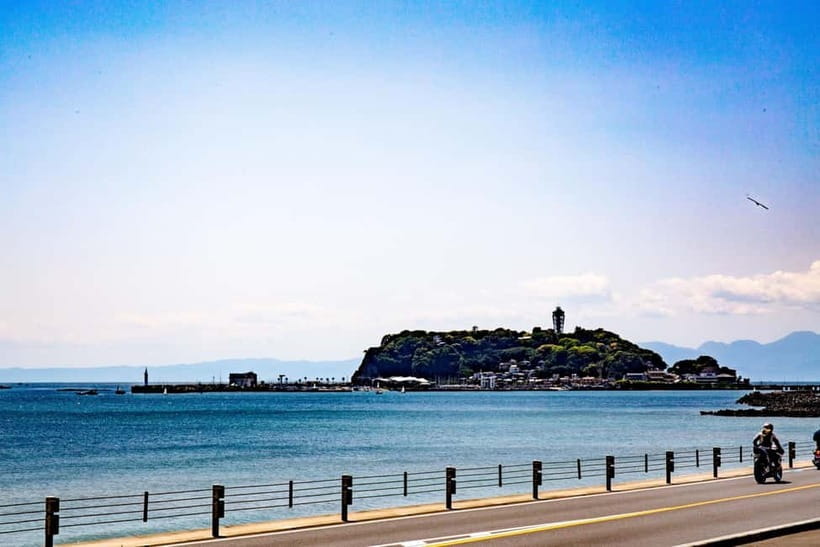
- Enoshima’s sea-and-shrine loop, including the Enoshima Shrine, Sea Candle observation area, and the Iwaya Caves.
- Mt. Fuji on clear days, which turns Enoshima’s viewpoints into a bigger payoff than just another seaside stop.
From Tokyo to Kamakura, with a guide who keeps the day moving
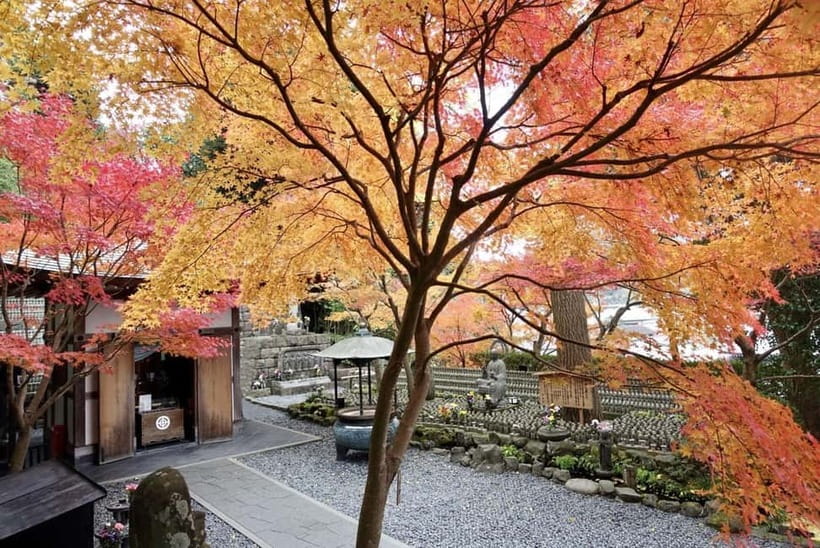
If you have limited time in Tokyo, this is a smart way to trade one busy city day for two smaller worlds: Kamakura’s shrine-and-temple lanes and Enoshima’s coastal views. The day runs about 9 hours total, using an air-conditioned vehicle to get you out of the city and between sites without timetable stress.
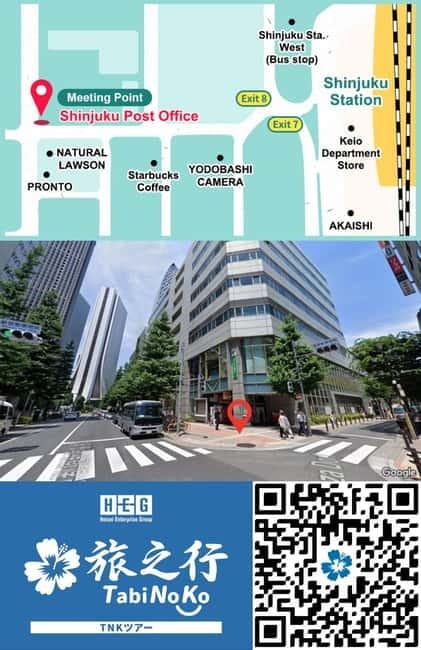
You start from either the Shinjuku Post Office or GLOBAL RING CAFÉ. The tour is run with an English/Chinese-speaking guide, and the vehicle size can vary based on the day’s group. You’ll ride in a straightforward rhythm: travel, photo stop, short guided context, then free time where you can move at your own pace.
I also like that the pace is designed around how real sightseeing works. If traffic slows the bus, the stop time at attractions can be adjusted, which matters because Kamakura and Enoshima can get crowded. And since there’s only one drop-off at the Shinjuku area, you won’t have to plan mid-day backtracking to your hotel.
Tsurugaoka Hachimangu and Komachi Street: the samurai-meets-snacks warm-up
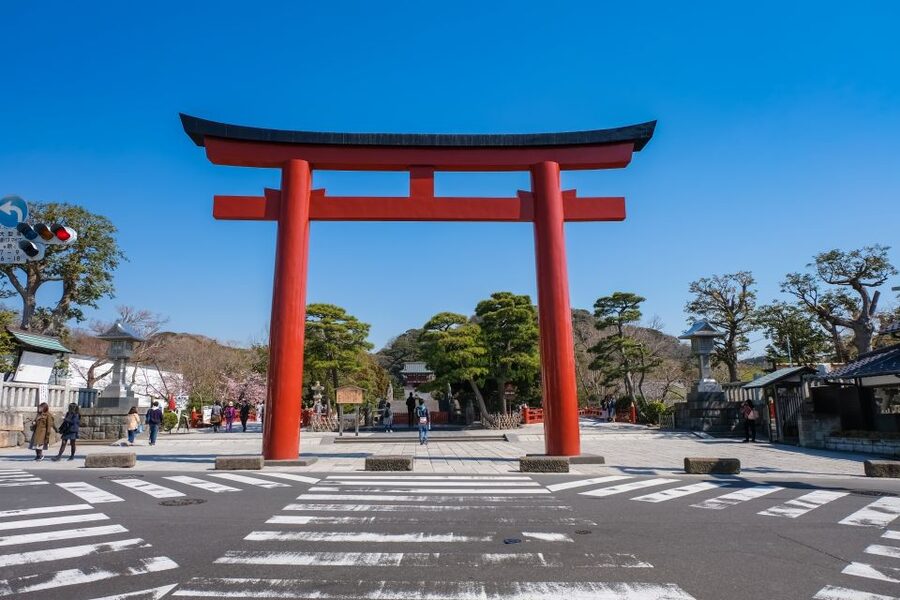
Your day typically begins at Tsurugaoka Hachimangu, one of Japan’s best-known shrines and a major magnet for visitors. It’s historically tied to the samurai era and has been a cultural anchor for centuries, which is exactly why the guide’s context matters here. Standing in the shrine grounds, you get a better sense of why this place keeps drawing people year after year—especially during hatsumode at New Year.
After the shrine visit, you move into Komachi Street, the shopping stretch that runs from near Kamakura Station toward the shrine area. It’s short enough to explore on foot without burning the day, but long enough to feel lively: roughly 360–600 meters lined with about 250 shops. This is where you can reset your legs and eat something practical without committing to a sit-down meal.
What makes Komachi Street worth your time isn’t just souvenirs. It’s also local food culture in motion—look for shirasu dishes (tiny white fish), dumplings, and croquettes. If you’re thinking about what to eat in Japan, this is a good place to try something easy and regional while keeping your schedule intact.
A small caution: Komachi Street gets busy around peak hours. If you’re serious about photos, try to step aside from the main foot traffic during photo stops, then come back later during free time when crowds thin slightly.
Hase-dera’s seasonal gardens and the Eleven-Headed Kannon statue
Next up is Hase-dera, one of Kamakura’s oldest temples, founded in 736. Even if you’re not deep into Buddhist art, this stop works because it mixes three things: major sculpture, garden views, and that “walk through history” feeling.
The highlight is the temple’s Eleven-Headed Kannon statue, listed as 9.18 meters tall. The scale helps you understand why this temple became a destination. It’s the kind of object that makes you stop talking for a second—because you can’t pretend it’s small.
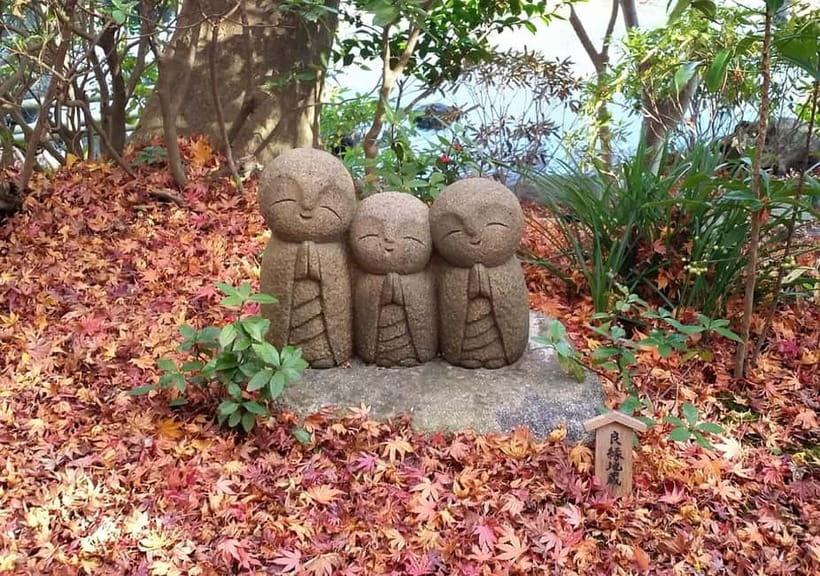
Then there’s the setting. Hase-dera is known for seasonal beauty—cherry blossoms, hydrangeas, peonies, and autumn leaves—and the grounds include Jizo statues, which are typically small, expressive, and great for slow looking. If you time your visit during a flowering season, your photos will look different in a good way, not like the same postcard shot every year.
The practical side: this is also an “easy walk” temple stop where you’ll want comfortable shoes. You’ll get some free time, so you can choose between a shorter route for sweeping views or more time among the statues and garden corners.
Kōtoku-in and the Great Buddha: the National Treasure you can enter
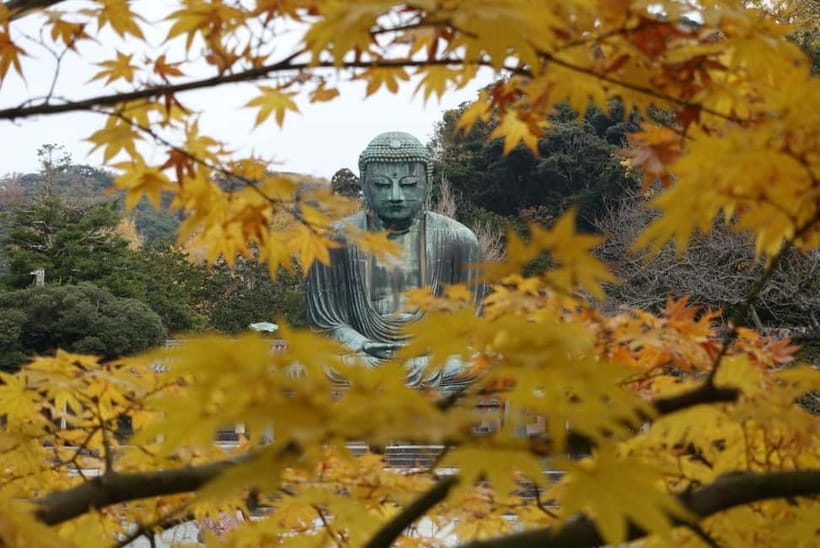
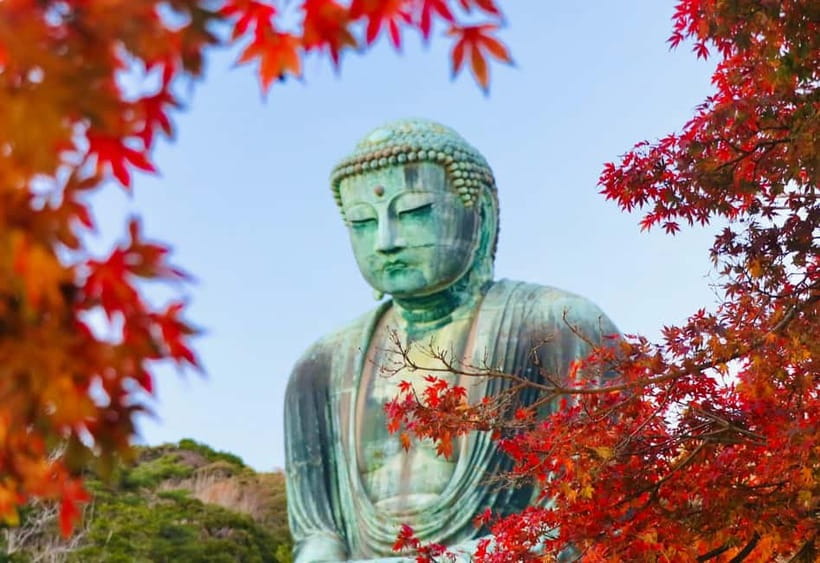
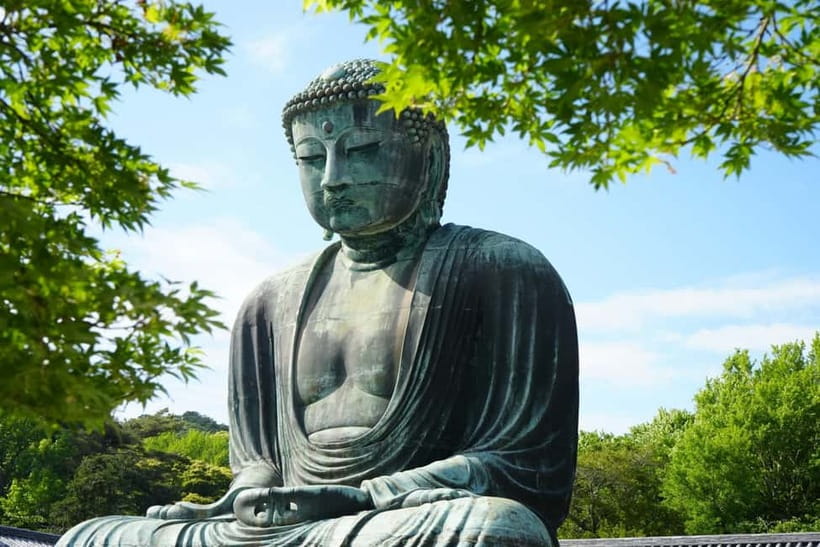
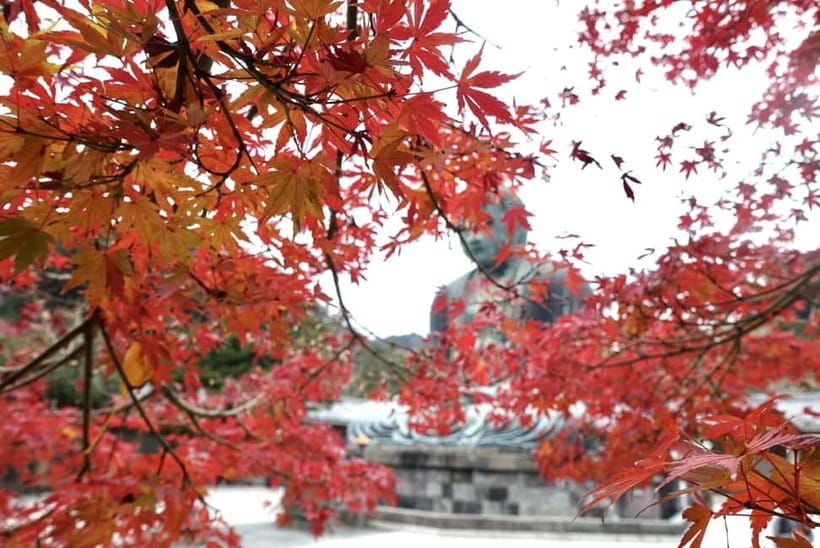
At Kōtoku-in, you’re in for the temple’s signature moment: the Great Buddha of Kamakura. This is a bronze Amida Buddha around 13.3 meters tall and weighing roughly 121 tons, and it’s designated a National Treasure. The scale is hard to overstate. Up close, it changes your sense of “big statue” entirely.
One of the best parts is that you’re not limited to looking from the outside. You can enter and view its internal structure, which turns a photo-stop into something more physical and memorable. It’s also where the ticket inclusion pays off: you’re not juggling extra admissions paperwork mid-day.
Around the Great Buddha, the atmosphere shifts back into quiet temple rhythm. You get seasonal beauty here too, with the same kind of spring and autumn payoff visitors plan around. If you want a calmer break between Enoshima’s busier seaside areas and Kamakura’s packed shrine streets, this is it.
Time here is still limited because it’s a highlights day. So my advice: prioritize the Great Buddha exterior first, then do the entry/inside viewing if it’s open and you’re not rushing. If you try to do everything at once, you’ll feel the schedule squeeze.
Enoshima’s sea views, shrine energy, and the Mt. Fuji question
Then the tour shifts from temple grounds to the island mood: Enoshima. This is where the day often turns into one of those “oh, that’s why people come here” moments, because the scenery has room to breathe.
Enoshima includes multiple stops that connect like a mini circuit: Enoshima Shrine (over 1,000 years old), the Enoshima Sea Candle observation area, and more. The island layout naturally encourages walking, and it feels different from Kamakura—more ocean air, more casual pace, more food choices.
Here’s the Fuji question: on a clear day, you can see Mt. Fuji from higher vantage points. That’s not guaranteed, but it’s the kind of “if it’s there, it’s huge” bonus that makes Enoshima worth putting on your list from Tokyo. Even if you don’t catch Fuji, the sea views themselves are a big reward, especially if your day started inland.
Enoshima also has a longer background feel than just beach tourism. The area includes the Enoshima Iwaya Caves and the Samuel Cocking Garden walking paths, which give you a different kind of scenic break from the shrine-and-shopping rhythm.
Sea Candle, Iwaya Caves, and Benzaiten street snacks
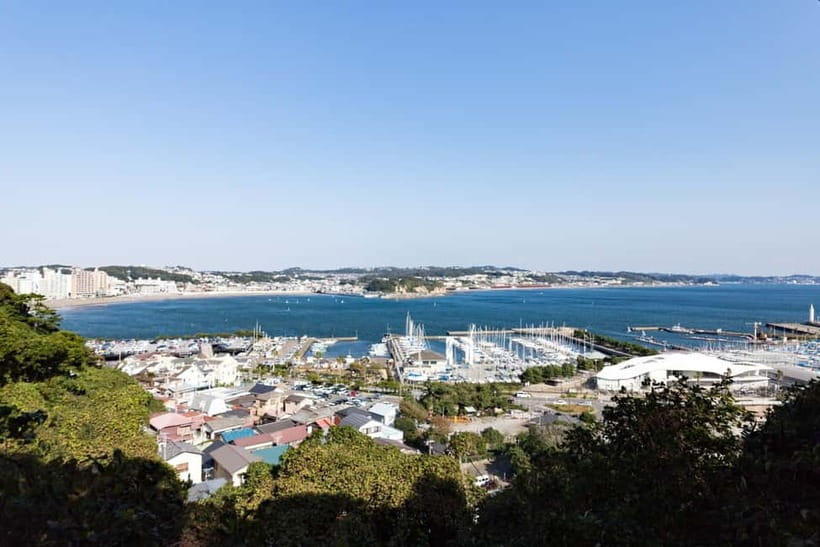
After the main Enoshima sightseeing stops, you’ll likely move through the island’s viewpoint and cave areas. The Enoshima Sea Candle is a key photo and viewpoint moment. Even when the weather isn’t perfect, the coast line and bay angles still give you that “coast day” payoff.
Then come the Iwaya Caves. This is an interesting contrast: you go from open sky views to enclosed, older-feeling spaces. Caves also come with practical timing—people tend to pair them with snacks and quick stops nearby.
One tip I like from real-world experience: if you plan to eat while you’re around the caves, grab from a vendor and keep the meal quick instead of sitting down. It saves time and keeps you from feeling rushed once the group moves.
Finally, there’s Enoshima’s Benzaiten shopping street, where you can continue with street food and browsing while you still have momentum. This is a good place to pick up small snacks or souvenirs without needing to make another separate “shopping trip.”
A heads-up: Enoshima has a lot to do in a short window. If you want to linger—especially if you’re the type who reads shrine details slowly—you may feel the time squeeze. This isn’t a fault of the tour so much as the reality of a packed day from Tokyo.
How the timing feels in a 9-hour schedule
This tour is built around “enough time to enjoy it, not enough time to forget it.” You’ll spend about an hour at Tsurugaoka Hachimangu, around an hour exploring Komachi Street, and then shorter focused visits at Hase-dera and Kōtoku-in (with those ticketed experiences). Enoshima gets a longer block, about 2 hours, plus additional time carved out for Sea Candle and the other island stops.
That structure works well for first-timers. It helps you see the big names—shrine, temple, Buddha, island—without spending the entire day in transit or stuck in a single location.
But there are tradeoffs. If you’re the kind of traveler who wants to photograph every step, read every plaque, or sit in quiet contemplation for a long stretch, you’ll have to pick priorities. The good news: the tour still provides free time at most stops, so you can speed up or slow down within reason.
Also pay attention to heat. One recurring theme from people who go is that starting conditions can feel warm on the bus. I’d bring water, wear breathable layers, and plan on using your free time wisely—especially if it’s a hot season day.
Price and value: what $58 gets you for Kamakura and Enoshima
At about $58 per person, this tour is priced for value because it bundles the expensive friction points: transport from Tokyo, a live guide, and—critically—admission/tickets included for Hase-dera and Kōtoku-in. That matters because major temples often add up, and buying tickets on the fly can eat time.
You’re also paying for coordination. Guides on this route (for example, the people associated with groups led by Eric, Mitsuko, Omar, Yuki, Koji, and others named in recent departures) tend to keep the day on track and make sure you know what to look for. You don’t need to memorize temple terms or figure out which doorway matters; you get context fast, then you’re free to explore.
What $58 doesn’t buy: unlimited time. Some stops are intentionally short in a one-day sampler. If you want a second pass at Enoshima or a longer, slower look at the Great Buddha area, this tour can feel like a great preview rather than a finish line.
Still, if your goal is to get out of Tokyo and see the key Kamakura-and-Enoshima landmarks with minimal stress, the pricing is hard to argue with.
Who should book this tour—and who should go at their own pace
I’d recommend this tour if you want:
- a day trip that covers major shrine and temple highlights without indecision
- an easy way to reach Enoshima and Kamakura from Tokyo
- English/Chinese guidance so you’re not stuck interpreting everything alone
- time to snack and browse, especially on Komachi Street
If you’re the type who loves one site so much you want to camp there for hours, this might feel like too many stops. In that case, you might prefer a lighter itinerary or to plan multiple visits—Kamakura on one day, Enoshima on another.
For families, first-timers, and visitors who like a calm-but-structured day, this fits well. A number of guides are described as patient and responsive to questions, and the group setup is designed so you don’t have to commit to staying attached at the hip all the time during free exploration.
Should you book this Kamakura and Enoshima day trip?
If you want a stress-free highlights day from Tokyo—with temple tickets handled and a route that makes sense for limited time—yes, I think it’s a smart booking. The tour’s biggest strengths are the practical ones: tickets included, clear guided context, and a route that gives you both Kamakura culture and Enoshima coast views.
My decision rule is simple: if you’re in Tokyo and you want to see these places once without spending half your day on logistics, book it. If you already know you want a slow, detailed re-visit to one temple or Enoshima’s coastline for hours, use this as your orientation day, then come back later on your own.
FAQ
How long is the Kamakura and Enoshima day trip?
The total duration is about 9 hours (570 minutes).
Where do I meet for the tour?
You choose one of two starting points: Shinjuku Post Office or GLOBAL RING CAFÉ. The meeting point may vary depending on the option booked.
What time do I need to arrive at the meeting point?
Please arrive about 10 minutes before the scheduled departure time.
What’s included in the price?
The tour includes an air-conditioned vehicle, an English/Chinese-speaking guide, and tickets for Hase-dera and Kōtoku-in.
Which sites will I visit in Kamakura?
You’ll visit Tsurugaoka Hachimangu, Komachi Street, Hase-dera, and Kōtoku-in (Great Buddha).
Which sites will I visit on Enoshima?
You’ll visit Enoshima, including the Enoshima Sea Candle, Enoshima Shrine, Enoshima Iwaya Caves, and Enoshima Benzaiten Shopping Street.
Can I see Mt. Fuji from Enoshima?
You can enjoy views of Mt. Fuji on a clear day from high vantage points.
What happens if the bus is delayed?
If the bus is delayed due to traffic or unexpected issues, the stop time at attractions may be adjusted.
Is the tour only in English?
No. The live guide is available in English and Chinese.
Where do I get dropped off at the end of the tour?
The only available drop-off location is the Shinjuku area.