Hamburg looks best from higher ground, and this hop-on hop-off ride puts you there fast. You’ll cruise the Alster Lakes and the historic center, then keep rolling past signature waterfront landmarks like the Elbphilharmonie and Hafencity—without needing to plan a tight route.
What I like most is how practical it feels for a first day in town: 15 stops mean you can get off, stretch your legs, and hop back on later. I also like that the bus tour covers both classic sights (like the Town Hall and St. Michael’s Church) and modern Hamburg (like Hafencity), so you get a real sense of how the city changed over time.
One thing to consider: on busy days or when the city throws a curveball, buses can get delayed or skip parts of the route. If you’re riding in cold weather, build in patience for waiting at a stop.
In This Review
- Key things to know before you go
- Hamburg Line C: How the double-decker loop really works
- Where you’ll get the best views: open-roof moments and height
- Alster Lakes and Jungfernstieg: the calm face of Hamburg
- Town Hall to Elbphilharmonie: historic center meets modern icons
- St. Michael’s Church and the Court of Justice district
- Hafencity: where you can choose to linger
- Fish Market and St. Pauli Piers: Hamburg by the waterline
- Reeperbahn and St. Georg: energy, streets, and variety
- Your multilingual audio guide: understand what you’re passing
- Family-friendly angles, plus mobility needs
- Price and value: does $24 make sense for a full day?
- Watch-outs: delays, demonstrations, and cold waiting
- Should you book this Hamburg Line C hop-on hop-off bus?
- FAQ
- How long is the Hamburg Line C hop-on hop-off bus tour?
- How many stops are on the route?
- Can I start at any stop?
- What’s included besides the bus ticket?
- Is the tour wheelchair accessible?
- Is there a family option?
- Final thought
Key things to know before you go
- 15 hop-on stops across the waterfront, historic center, and entertainment districts
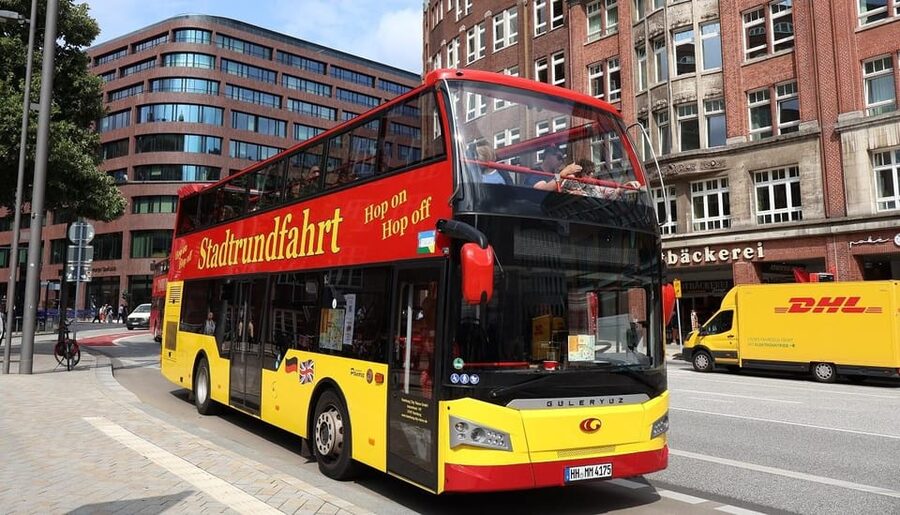
- Double-decker views with a roof that may open when weather allows
- Audio guide in multiple languages, so you can understand what you’re seeing while you ride
- All-day flexibility with a valid 1-day ticket at your chosen stop
- Stops include major anchors like Fish Market, St. Pauli Piers, St. Michael’s Church, and Hafencity
Hamburg Line C: How the double-decker loop really works
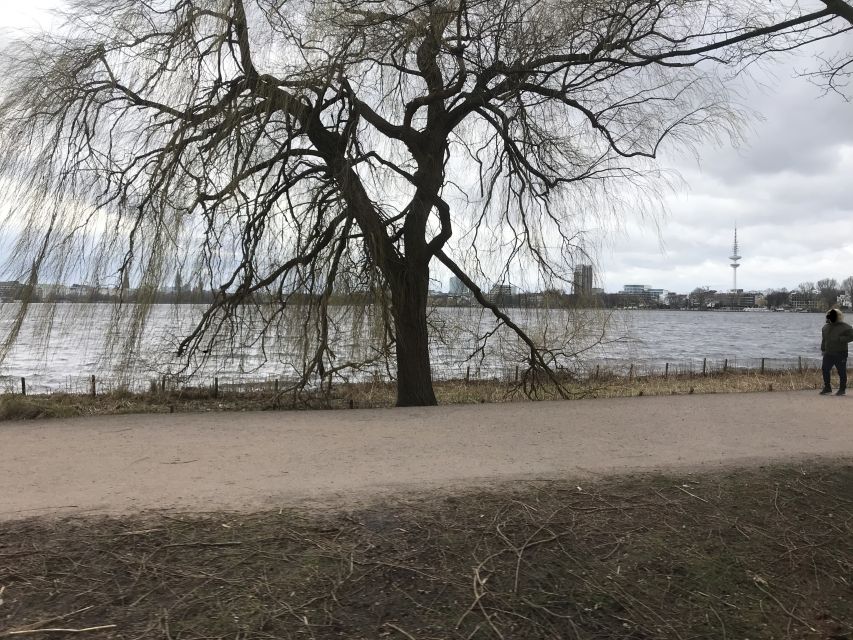
This is the kind of tour that helps you get your bearings fast. You have a 1-day hop-on hop-off ticket, and you can start at any of the 15 stops along the route. The actual driving/sightseeing time is listed as about 1.5 hours, but the value comes from being able to come back later using the same ticket.
Instead of a fixed guided walk where you have to stay together, you’re in control. You can do a quick ride first to learn the layout, then hop off for the parts you want to linger over—especially around the water, where Hamburg’s best scenes are scattered along several neighborhoods.
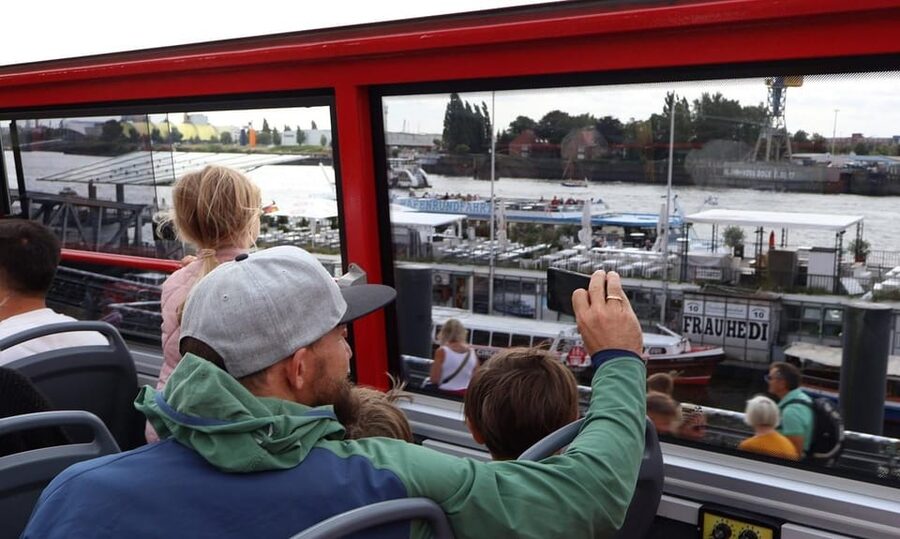
Also, this is a double-decker bus, so you’ll naturally be higher than street level. That matters in Hamburg, because many of the biggest sights—harbor views, waterfront architecture, and landmark silhouettes—are easier to appreciate when you’re not craning your neck at buildings close to the curb.
Where you’ll get the best views: open-roof moments and height
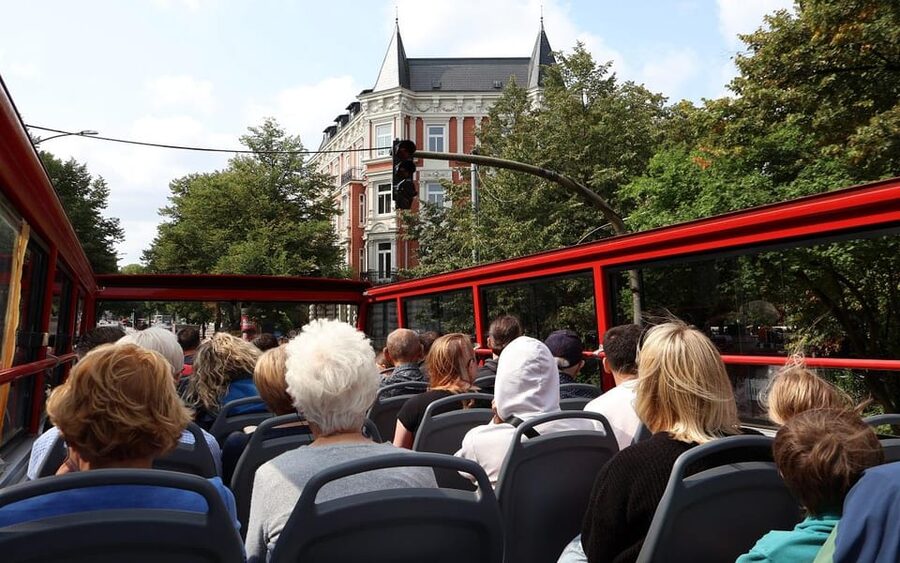
If weather permits, the roof can be opened, which makes this tour feel less like a ride and more like a moving viewpoint. Even when the roof is closed, the double-decker position gives you a cleaner line of sight across streets and waterways than you’d get from most buses.
For planning: if you can, try to ride at a time when the daylight is decent. Hamburg’s waterfront and modern waterfront districts tend to look best when you can actually see details in the skyline and along the harbor. If it’s windy or rainy, you’ll still get the sights—you just won’t get the full open-roof photo effect.
And yes, you’ll be looking at water a lot. That means your view quality depends partly on cloud cover and wind direction. When the light is right, the Alster and harbor areas can look almost like two different versions of Hamburg—soft and scenic around the lake, and more industrial/port-focused by the harbor.
Alster Lakes and Jungfernstieg: the calm face of Hamburg
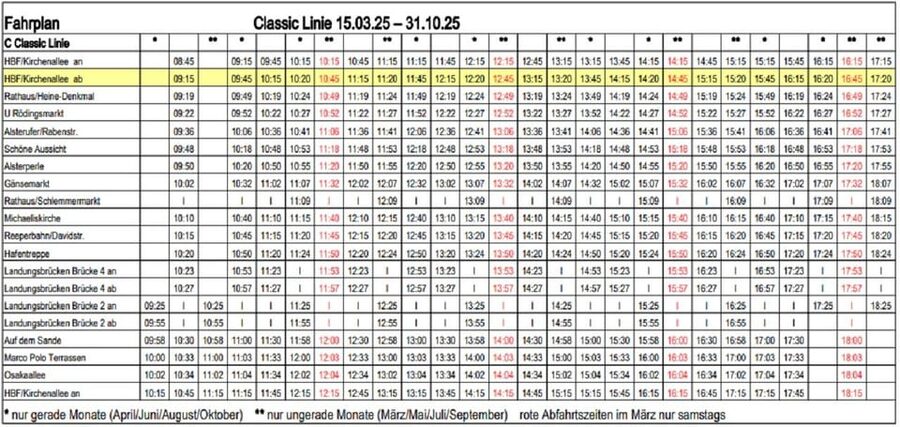
One of the first areas you’ll connect with is the Alster Lakes and the Jungfernstieg area. This is Hamburg showing its elegant side: long waterfront stretches, grand-looking buildings, and a skyline that feels organized rather than chaotic.
Why this stop region works on a bus tour: the Alster waterfront is spread out enough that walking the whole thing would take time. From the bus, you get the full shape of the lake and the feel of how the city wraps around it. Then, if you want to explore further, you can hop off at later stops when you’re ready.
The Jungfernstieg area is also a good way to orient yourself. From here, you can start mapping in your head where the historic core sits and how the city opens toward the harbor later on. If you’re visiting for a short time, this is the kind of early orientation that makes the rest of the day easier.
Town Hall to Elbphilharmonie: historic center meets modern icons
Hamburg’s Town Hall shows up on the route, and it’s a key anchor for understanding why the city matters. It’s not just a pretty building; it signals the “official” Hamburg—the civic center you’ll keep bumping into as you travel deeper into the route.
Then the bus moves you toward modern highlights like the Elbphilharmonie and the surrounding harbor districts. The contrast is the point. Hamburg doesn’t just preserve; it also repurposes and builds outward, and the Elbphilharmonie area is one of the clearest ways to see that shift from the bus window.
How to use this section: treat it as your skyline section. If you’re someone who likes to photograph big landmarks, stay on the bus for these segments and take in the wider views. If you prefer closer looks, hop off at the nearest waterfront stops and do a shorter walk from there—especially around the areas tied to the harbor.
St. Michael’s Church and the Court of Justice district
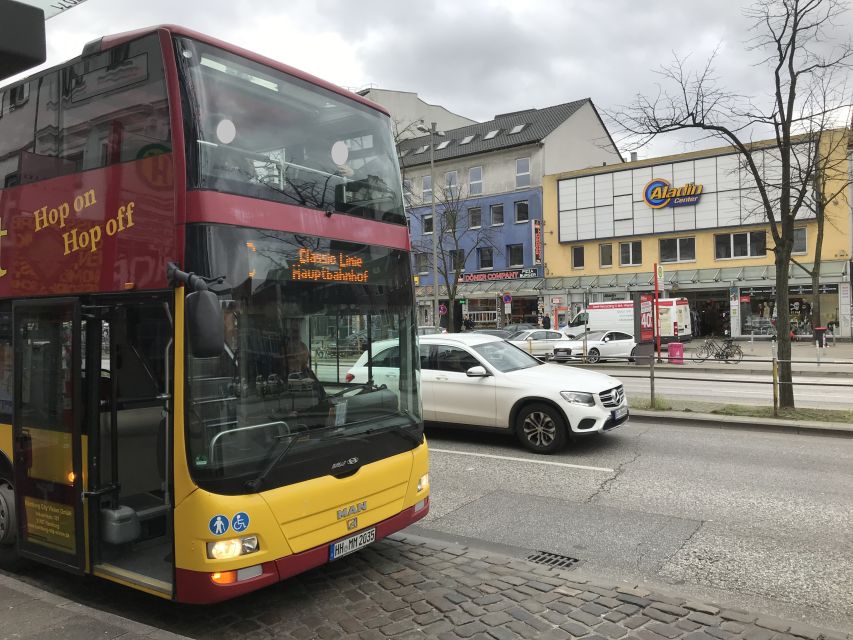
St. Michael’s Church (St. Michaelis) is included as a stop area, and it’s one of those sights that helps Hamburg feel distinctly itself. From the bus, you’ll get a sense of its scale and how it fits into the city fabric—something you may not notice if you only view it from one street.
The court of justice district (also part of your route) adds a different kind of context. It helps balance the tour so it isn’t only waterfront and entertainment. You see the city in layers: civic life, legal/administrative presence, and religious landmarks.
Practical tip: if you care about photos, St. Michaelis is the kind of place where timing and street angle matter. The bus view can be great, but if you hop off and walk a bit around the area, you’re more likely to find angles that show the church cleanly without traffic clutter.
Hafencity: where you can choose to linger
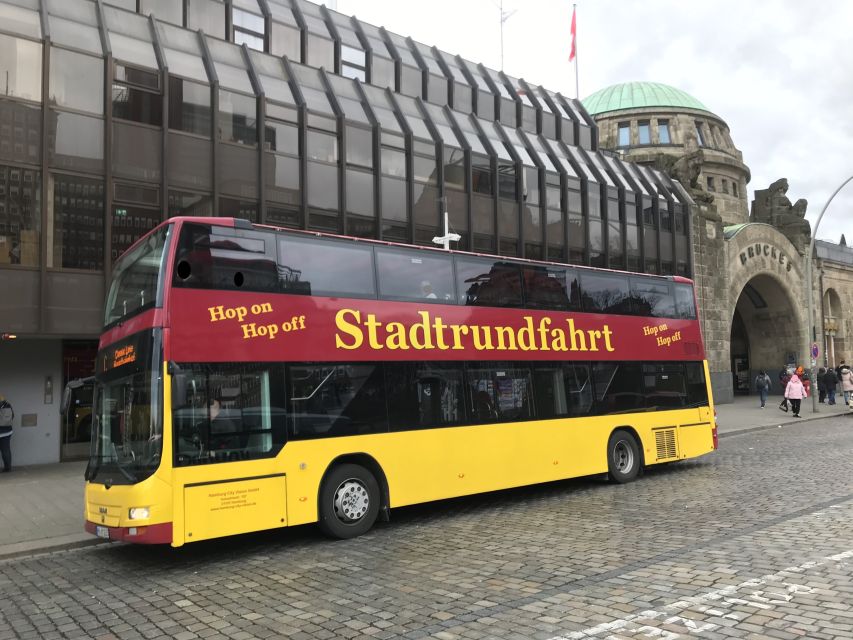
Hafencity is one of the big stops along the route, and it’s a strong reason to do a hop-on tour instead of a straight ride. This area sits in that “modern harbor” zone where architecture and open spaces can change block by block.
On a bus, you’ll understand the layout quickly—how the streets relate to the water and where major buildings sit. If you hop off, you can then walk at your own pace for views, photos, and a chance to see the harbor edges up close rather than only from the top deck.
This is also a good place to slow down if you’re the type who likes to observe details. Even without a long museum plan, Hafencity can feel like a walkable “chapter” of Hamburg, especially if you’re interested in how cities evolve around ports and redevelopment projects.
Fish Market and St. Pauli Piers: Hamburg by the waterline
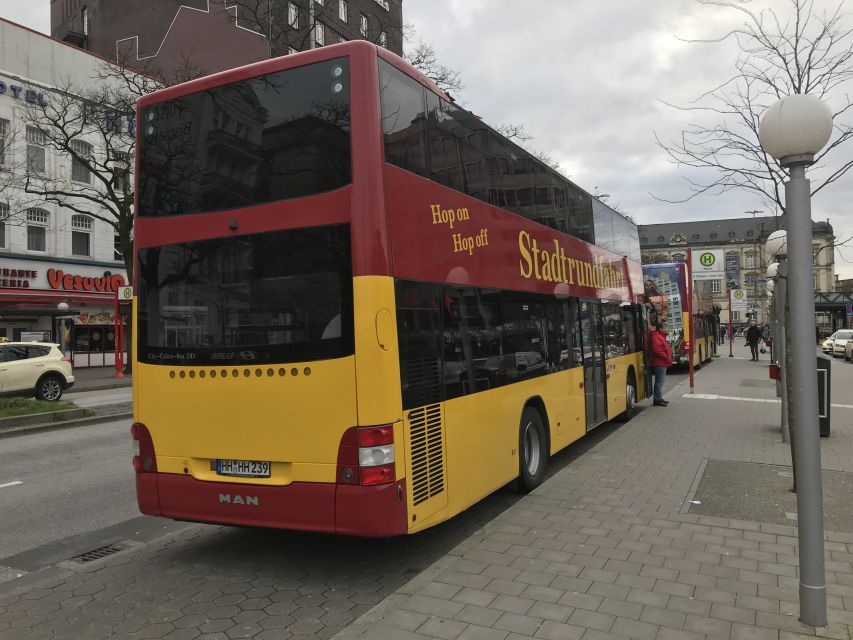
The route includes a visit area for the Fish Market and St. Pauli Piers. This is where the city shifts tone. Instead of classic views and civic buildings, you get a more working-waterfront vibe—maritime, direct, and tied to the day-to-day life of a port city.
What I’d do here: use the bus ride to find the right stop for your pace. If you want sea-air photos and a strong sense of place, stay a bit longer at the piers. If you’re trying to fit many stops into one day, you can do a shorter hop-off, get your bearings, and come back later.
Even if you don’t plan a long walk, these stops help your brain connect Hamburg to the sea. That connection makes later sights—like the entertainment streets nearby—feel less random and more like part of one geographic story.
Reeperbahn and St. Georg: energy, streets, and variety
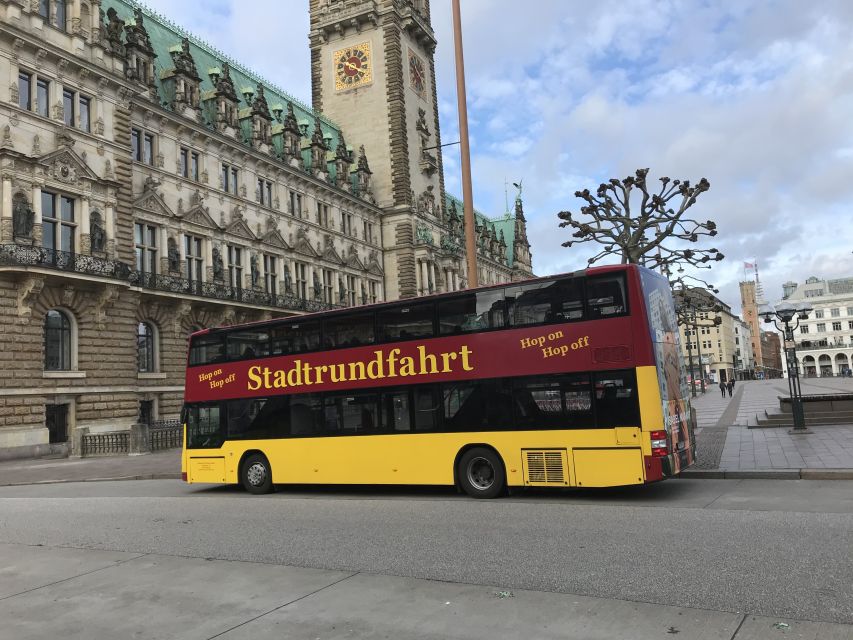
The highlights on this route include the Reeperbahn and the St. Georg district. This part of Hamburg is a reminder that the city is also a living, working, and entertainment-focused place—not just monuments and waterways.
From a bus, you’ll get a quick overview of how these districts sit near the harbor and how the city transitions from port zones to streets with a different tempo. If you’re curious about neighborhood feel, hop off near your preferred stop and do a short wander—just enough to experience the texture of the streets.
St. Georg, in particular, is valuable for showing a “between” side of Hamburg: not only the famous harbor/landmark areas, and not only the sleek modern zones either. It gives you a fuller impression of how diverse the city is within a small radius.
Your multilingual audio guide: understand what you’re passing
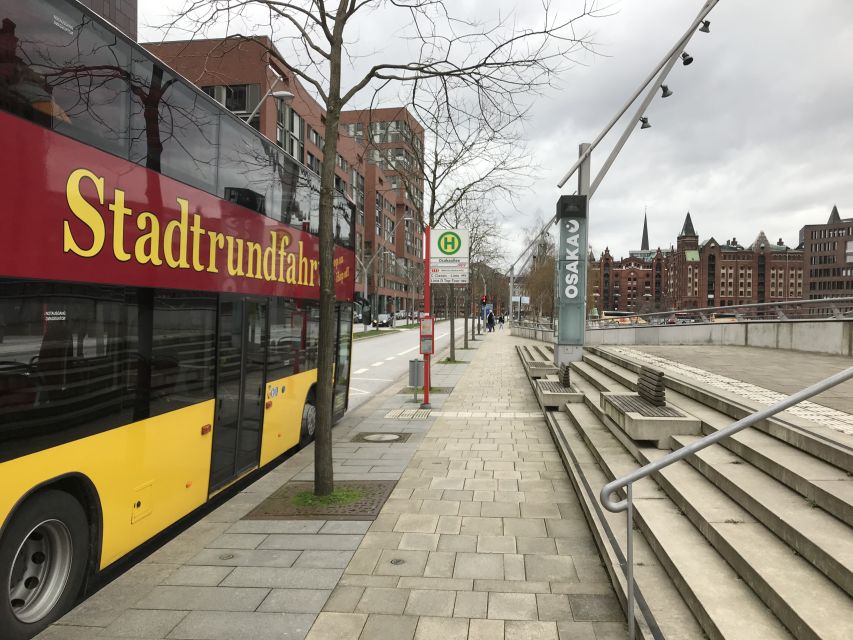
This tour includes an audio guide with languages listed as German, English, Russian, Spanish, French, Italian, and Danish. That’s a big deal because it helps you make sense of the sights without needing to pause for reading.
Why I like this format: when you’re on a double-decker, your attention is split between the street and the skyline. Audio keeps the context with you. You’re not relying on luck for which sign you can read or which landmark you can recognize.
You can also use the audio in a practical way. Listen as you approach a stop, then decide whether to hop off. If a landmark doesn’t grab your interest, you can stay on and keep moving—saving time for the places you actually care about.
Family-friendly angles, plus mobility needs
There’s a special family ticket offered on this platform, which is a good sign if you want a straightforward day plan without forcing kids into long walks. The hop-on model also helps families manage breaks: you can stay on when everyone’s settled, and get off when you need fresh air or snacks.
The tour is also wheelchair accessible, which matters because a bus tour can be a low-stress way to see a lot of Hamburg without navigating distance on your own.
Tip if you’re traveling with kids or mobility needs: choose one or two “anchor” areas for longer time on the ground, then treat the rest as photo-and-look moments from the bus. That keeps the day from turning into constant rushing.
Price and value: does $24 make sense for a full day?
At $24 per person, the big question is whether you’ll use the hop-on flexibility. If you’re the type who likes to jump off, walk around for 20–30 minutes, and then rejoin the route, this can be good value. You’re buying time-saving transport plus built-in context from the audio guide.
If you plan to do only a single continuous ride and never hop off, the price still buys a lot of landmarks—but you’ll likely feel like you didn’t fully cash in on the all-day design. This tour is best when you treat it like a menu: take what you want, return when you’re ready.
Where it shines for value is coverage. You connect major districts—Alster area, civic landmarks, modern waterfront, and the harbor/entertainment zones—within one flexible format. That kind of “city overview” is hard to replicate cheaply if you’re paying for multiple taxis or trying to stitch together long public transit routes while also sightseeing.
Watch-outs: delays, demonstrations, and cold waiting
This is where you should set expectations. On some days, city events can affect bus movement. If there’s a demonstration or street disruptions, the buses may run late or stop serving parts of the route.
You’ll also want to plan for the weather. In colder conditions, waiting at stops can feel uncomfortable, especially if you’re standing outside for longer than you expected. If you’re traveling in winter or shoulder season, dress for the wait and keep a warm layer handy.
My practical advice: build your day around flexibility. Start with a ride to learn the layout, then decide where to spend real time. If one section is delayed, you can shift your focus to nearby stops you can still reach.
Should you book this Hamburg Line C hop-on hop-off bus?
Book it if you want an efficient overview of Hamburg’s major highlights in one day: Alster Lakes, historic landmarks like Town Hall and St. Michael’s Church, modern waterfront zones like Hafencity and Elbphilharmonie, plus maritime stops like the Fish Market and St. Pauli Piers. It’s also a smart choice if you want to travel at your own pace while still getting context from a multilingual audio guide.
Skip it (or at least pair it with a focused plan) if you hate waiting at stops or you only want one short ride with no real exploring. And if you’re visiting on a day when demonstrations are more likely, keep a backup idea for indoor or flexible activities.
FAQ
How long is the Hamburg Line C hop-on hop-off bus tour?
The tour time is listed as 1.5 hours.
How many stops are on the route?
The route includes 15 stops.
Can I start at any stop?
Yes. You can start your tour at any of the 15 stations on the route.
What’s included besides the bus ticket?
An audio guide is included, with languages listed as German, English, Russian, Spanish, French, Italian, and Danish.
Is the tour wheelchair accessible?
Yes, the tour is wheelchair accessible.
Is there a family option?
A special family ticket is offered on this platform.
Final thought
This is a strong “first-day in Hamburg” style tour: hop on, get the big-picture geography, then hop off where the city speaks to you. If you use the all-day flexibility and plan for possible delays on busy days, you’ll likely feel like $24 bought you more than a ride—it buys you time and city context in one smooth package.