One day that hurts, then heals. This Hiroshima and Miyajima bus outing pairs an air-conditioned coach with a mobile ticket, so you start easy from Hiroshima Station and spend the day weaving between peace sites and the red gates of Itsukushima.
I especially like the Miyajima ferry segment, where you can take photos of the Great Torii from near the water route. The included Indian curry lunch is a real break, with a vegetable option available if you tell them about dietary needs ahead of time. One consideration: it’s a full day with walking, and it’s not recommended if you have trouble with long stretches on foot.
In This Review
- Key things to know before you go
- Getting Going From Hiroshima Station With a Smooth, Guided Day
- Ferry Time to Miyajimaguchi: The Great Torii Shot From the Water
- Itsukushima Shrine: Spending Real Time at the Floating-Red Icon
- Atomic Bomb Dome and the Gandhi Statue: Meaning in Plain Sight
- Hiroshima Peace Memorial Park and Museum: How to Visit Without Shutting Down
- Indian Curry Lunch on the Clock: Easy Food, Clear Rules
- Pacing a 6–8 Hour Day: What Fits Well (and What Doesn’t)
- Price and Value: What You Get for $117.27
- Who This Tour Fits Best (and Who Should Skip)
- FAQ
- How long is the Hiroshima and Miyajima bus tour?
- Where is the meeting point?
- What time does the tour start?
- Is lunch included, and can it be vegetarian?
- Does the tour include a ferry ride to Miyajima?
- Which Hiroshima sites are included?
- Are admission tickets included?
- Is the tour suitable for people with mobility limitations?
- What if I cancel, or if poor weather affects the tour?
- Should You Book This Hiroshima and Miyajima Tour?
Key things to know before you go
- Miyajima ferry ride to Miyajimaguchi, with close-up Torii photo opportunities from the water route
- Itsukushima Shrine (3 hours) for that classic red shrine-at-sea look and the shoreline paths around the inlet
- Atomic Bomb Dome time (about 1 hour) plus context right where it matters
- Hiroshima Peace Memorial Museum (1 hour) with admission included
- Indian curry lunch (vegetarian/vegetable change available in advance)
Getting Going From Hiroshima Station With a Smooth, Guided Day
This tour is built for an easy start: you meet at Hiroshima Station (1-2-37 Matsubarachō, Minami Ward). The departure time is 10:00am, and the day runs about 6 to 8 hours, so it’s long enough to feel like a full outing, but not so long you’ll be wrecked by late afternoon.
You ride in a comfortable air-conditioned bus and stay on a guided schedule. That matters in Hiroshima, because you’re not just bouncing between stops on your own time—you’re also dealing with ferry timing, brief walk segments, and the rhythm of structured sightseeing. The tour uses a mobile ticket, which cuts down on the little “where do I stand?” moments before you head out.
One more practical win: the group stays small, with a maximum of 20 people. In real terms, that usually means less waiting around at each stop and fewer bottlenecks when you want to step aside for a photo.
Ferry Time to Miyajimaguchi: The Great Torii Shot From the Water
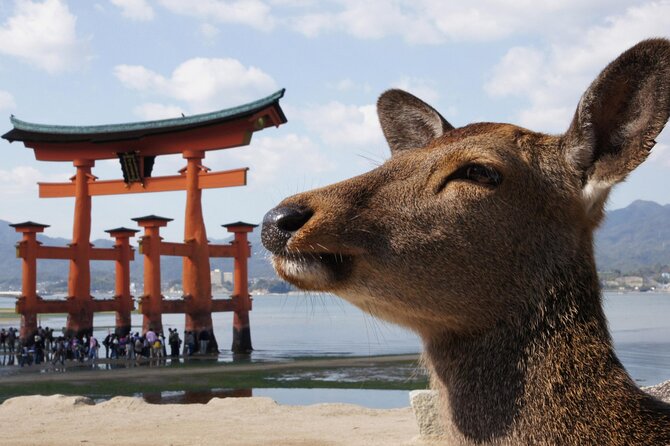
The day includes a special ferry route from Hiroshima to Miyajimaguchi—and that’s not a throwaway transfer. It’s part of the attraction.
From the ferry, you can take pictures of the Great Torii from the nearest location possible on the water route. If you’ve ever seen the Torii from postcards and wondered how close you can actually get, this is your answer. Even if the water is choppy or the light isn’t perfect, the viewpoint from the ferry is the kind of angle you just can’t replicate by wandering inland.
Tip: if photography is a priority, position yourself early on the ferry so you’re not stuck mid-departure. And keep your camera/phone strap ready—ferry decks have a way of making hands forget they’re holding gear.
Itsukushima Shrine: Spending Real Time at the Floating-Red Icon
Your Miyajima highlight is Itsukushima Shrine, scheduled for about 3 hours with admission included. The shrine sits in a small inlet, while the famous torii gate is set out in the Seto Inland Sea. The result is the iconic look—red buildings that feel like they’re floating, plus walking paths around the inlet where you’re always turning back to watch the water views change.
Three hours is a good chunk of time here. It gives you room to:
- walk the shoreline paths at a comfortable pace,
- pause for photos from different angles,
- and not feel like you’re doing a speed-run through one of Japan’s most photographed spots.
What to expect in practice: the experience is visual first—bright red shrine architecture, sea reflections, and that dramatic connection between land and water. But it’s also atmospheric. Even during busy periods, the shrine’s setting pulls your attention outward, away from the city and into the water-and-stone feeling Miyajima is known for.
Atomic Bomb Dome and the Gandhi Statue: Meaning in Plain Sight

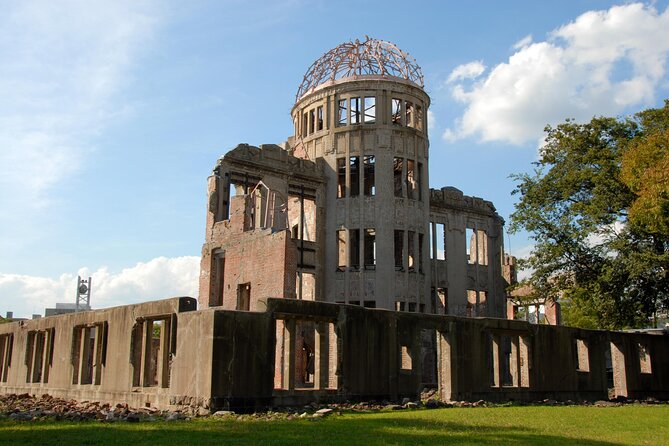
Back in Hiroshima, the tour stops at the Atomic Bomb Dome. Plan on about 1 hour, and the admission there is free.
This isn’t just a photo stop. The Dome is tied to a longer story of remembering and recognition. After Japan joined the UNESCO World Heritage Convention in 1992, survivors and supporters raised their voices for the A-bomb Dome to become a World Heritage Site. Standing there is like standing at the edge of a very specific historical timeline. Your job is not to understand everything in one hour—it’s to see the place and let it reset your sense of scale.
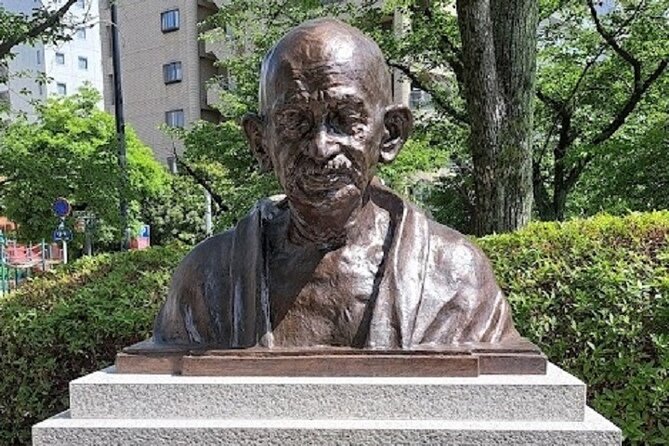
Right near this area, the tour includes a quick stop at the statue of Gandhi (about 10 minutes, also free). It’s a short segment, but it adds a strange and thoughtful counterpoint to the Dome. You go from nuclear devastation to a symbol of nonviolence in a single stretch of walking.
If you’re sensitive to heavy history, give yourself permission to move slower here. The day is emotional by design; rushing is the one thing that can make it harder than it needs to be.
Hiroshima Peace Memorial Park and Museum: How to Visit Without Shutting Down
The heart of the Hiroshima portion is Hiroshima Peace Memorial Museum for about 1 hour, with admission included. This stop sits inside the larger Hiroshima Peace Memorial Park area, which is designed around the concept of peace remembrance.
The museum is guided by purpose. In the aftermath of the atomic bombing, the Hiroshima Peace Memorial City Construction Law (enacted in 1949) directed that the Nakajima District be devoted to peace memorial facilities. That planning detail matters: this isn’t a random collection of exhibits. It’s built as a structured space for learning—and for confronting what happened.
Some people find it very moving. That’s not a warning sign; it’s part of what the stop is for. I like doing this kind of visit with a plan: don’t try to memorize everything. Instead, let the museum do its job of giving you grounding facts, then use the rest of the day to keep your brain from going numb.
Practical note: if the Peace Memorial Museum is closed, the tour may shift to another peace memorial facility. That means you’ll still get the overall theme, just not the exact building scheduled for that day.
Indian Curry Lunch on the Clock: Easy Food, Clear Rules
Lunch is Indian curry, and it can be arranged as vegetarian with a vegetable change. You need to make dietary needs clear when you book, because the tour operator notes they’re unable to accommodate menu changes on the day of the tour. If you have allergies, tell them in advance too.
Two other food rules worth knowing:
- they ask you not to bring your own food and drinks into the restaurant,
- and they want you to follow the prearranged lunch options.
In a day like this, that’s actually good news. It reduces decision fatigue. You don’t have to hunt for a place to eat while juggling the bus and ferry schedule.
A small mindset shift helps: treat lunch as a reset, not just a meal. After Hiroshima’s heavy stops, a familiar curry style (even if it’s new to you) gives your body a break without derailing the day’s flow.
Pacing a 6–8 Hour Day: What Fits Well (and What Doesn’t)
The tour is designed to hit key sights with defined time blocks:
- Atomic Bomb Dome: about 1 hour
- Peace Memorial Museum: about 1 hour
- Gandhi statue: about 10 minutes
- Itsukushima Shrine: about 3 hours
Add in transport by bus plus the ferry segment, and it makes sense why the total runs 6 to 8 hours. The schedule is structured, which is helpful when you want to see a lot without constantly checking directions.
The tradeoff is walking time and motion. The tour is not recommended for people who have difficulty walking for long periods. That doesn’t mean “wheelchair-only” or “no one with limits should go”—it means this is a pace you need to judge honestly. If you prefer slow, stop-and-start exploration, build extra time elsewhere in your trip rather than trying to force this one-day plan to do everything.
Price and Value: What You Get for $117.27

At $117.27 per person, you’re paying for more than a bus ride. Your value stack includes:
- an air-conditioned guided day out,
- a ferry route tied to Miyajima,
- admission included for the Hiroshima Peace Memorial Museum,
- admission included for Itsukushima Shrine,
- and an included Indian curry lunch with a vegetarian option (set in advance).
If you tried to stitch this together yourself, you’d still need planning time: ferry coordination, guided context, ticket timing, and the hassle of moving as a group through busy areas. What you’re buying here is reduced mental load plus a day itinerary that’s already stitched together.
Also, the reviews highlight strong guide performance, including professional, attentive guidance. On past departures, guides such as Masahiko Joguchi were specifically praised for being informative and professional, and Miyuki was praised for being attentive and close by when people needed help. While you can’t pick your guide in every case, the fact that multiple names stand out is a good signal about the experience quality.
Who This Tour Fits Best (and Who Should Skip)
This is a good fit if you want:
- a one-day way to cover both Hiroshima’s peace sites and Miyajima’s major landmark,
- guided context at the Dome and the museum,
- and a lunch plan that doesn’t waste time hunting.
It’s also a good choice if you prefer to travel with structure and you like having someone manage timing while you focus on seeing.
Skip or reconsider if:
- you don’t handle emotional history well (this day is directly shaped around atomic bombing remembrance),
- you have trouble with long walking periods,
- or you want complete freedom to roam outside a planned route.
FAQ
How long is the Hiroshima and Miyajima bus tour?
It runs about 6 to 8 hours.
Where is the meeting point?
You meet at Hiroshima Station (1-2-37 Matsubarachō, Minami Ward, Hiroshima 732-0822, Japan).
What time does the tour start?
The start time is 10:00am.
Is lunch included, and can it be vegetarian?
Yes. Lunch is Indian curry, and it can be changed to vegetable/vegetarian. You need to inform the operator in advance when booking.
Does the tour include a ferry ride to Miyajima?
Yes. There is a special ferry route from Hiroshima to Miyajimaguchi, and you can take pictures of the Great Torii from the ferry.
Which Hiroshima sites are included?
You visit the Atomic Bomb Dome, the Hiroshima Peace Memorial Museum, and a quick stop at the Gandhi statue near the Atomic Bomb Dome.
Are admission tickets included?
Admission for the Hiroshima Peace Memorial Museum is included. The Atomic Bomb Dome is listed as free. Itsukushima Shrine is listed as included.
Is the tour suitable for people with mobility limitations?
It is not recommended for those who have difficulty walking for long periods.
What if I cancel, or if poor weather affects the tour?
You can cancel for a full refund up to 24 hours before the start time. If the tour is canceled due to poor weather, you’ll be offered a different date or a full refund.
Should You Book This Hiroshima and Miyajima Tour?
If you want one packed day that delivers both beauty and hard history, this is a strong match. The ferry-to-Miyajima setup and the Itsukushima Shrine time are the kind of planning that makes photos and sightseeing feel efficient. And the Peace Memorial Museum stop gives you the context that a quick self-guided walk often misses.
Book it if you can handle emotional subject matter and you’re comfortable with walking. If you need slower pacing or lots of flexibility, consider combining separate, lighter-day visits instead.