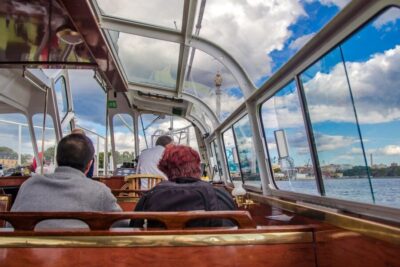
A trolley makes DC feel manageable. You get a flexible hop-on hop-off route with live guide narration, and it pushes farther than the usual loops with a stop at Arlington National Cemetery. The one real catch is timing and clarity: some stops can be hard to spot, and a few drivers are tough to understand if you’re stuck on busy or noisy sections.
This tour runs on a mobile ticket and keeps you moving with frequent trolley service (about every half hour). The Arlington portion is the part that demands the most prep: you’ll do a shuttle transfer from the Lincoln Memorial area, and Arlington requires a 100% ID check with no exceptions before you enter.
In This Review
- Key Things to Know Before You Go
- The Big Idea: 21 Stops, Live Narration, and a Route You Can Actually Use
- From the Welcome Center to the White House: Getting Your Bearings Fast
- National Archives to Union Station: Museum Time Without the Gridlock
- Capitol Hill to the Smithsonian Museums: Choosing Your Own Pace
- Washington Monument, the Holocaust Museum Area, and the Mall’s Big Decisions
- Memorial Chain from Jefferson to MLK: Why Timing Makes or Breaks This Day
- The African American History and Portrait Museums: Great Follow-On Stops
- Arlington National Cemetery: The ID-First, Walk-Some Portion You’ll Feel
- Timing, Stop-Finding, and How Not to Get Left Behind
- Price and Value: Why $59.45 Can Be a Smart Deal
- Should You Book This Trolley with Arlington?
Key Things to Know Before You Go

- 21 stops, real flexibility: hop off for photos, museums, and memorial time, then hop back on later.
- Live narration on-board: the guide calls out what you’re seeing as you pass major landmarks.
- Arlington included: you’re not just seeing it from afar; the itinerary includes major cemetery stops and viewpoints.
- Stop-hunting can be frustrating: signage is limited at some points, so you’ll need to watch for the trolley and follow driver cues.
- Expect walking at Arlington: even if the trolley helps you cover ground, cemetery highlights involve hills and steps.
- Plan for time buffers: trolley gaps and shuttle waits can affect whether you reach the last cemetery stops.
The Big Idea: 21 Stops, Live Narration, and a Route You Can Actually Use
Washington DC is a big museum city built for walkers, but your feet don’t need to do all the work on day one. This trolley tour gives you an easy structure: ride past the big-ticket sights, then decide on the fly where you want time.
What I like most is that it’s not just a drive-by bus. The live guide narration helps you connect names to places as you pass the White House, the National Mall, and the cluster of memorials you usually end up crisscrossing on your own. Guides can also bring personality to the ride; names like Rooster and Simone came up in feedback as people who made the trip more fun and informative.
The second big win is scope. Many hop-on tours stop short of the emotional centerpiece. Here, Arlington National Cemetery is built into the day, with transportation and cemetery-focused stops.
One consideration: the experience depends on how well you manage your hops. If you’re the type who wants museum time plus photos plus a sit-down meal without moving around, you’ll probably need extra time. Also, there isn’t a headsets-everywhere setup spelled out here—so if you rely on audio being perfectly clear, sit where you can hear the guide, and don’t assume every narration will land the same.
From the Welcome Center to the White House: Getting Your Bearings Fast
Your day begins at the Washington DC Welcome Center, with stops nearby that help you start with context rather than just signage. Right away, you’re in the Ford’s Theater and Peterson House area, which can be a useful warm-up because it anchors DC’s story beyond monuments.
From there, the trolley heads toward 1401 Pennsylvania Ave NW for the White House area, including the White House Visitor Center and the WWI Memorial. Even if you don’t go inside, this is where the city’s layout becomes obvious. You get that immediate scale of DC’s ceremonial core, and you can judge whether you want to return later for a closer walk.
How this helps you: if you’re arriving on a tight schedule, you’re not guessing where everything sits. You’re doing a moving orientation first—then you can build your day around what you care about.
Potential drawback: this part of the route is also where traffic and crowds can slow the trolleys. That matters because hop-on hop-off systems reward early movement and clear decisions. If you plan to jump off here and come right back, give yourself a little buffer. If you’re going to linger, be realistic about catching the next trolley.
Practical tip: when you hop off, note landmarks on your side of the street. The tour stops can be hard to identify, and you don’t want to lose 20 minutes searching while everyone else knows exactly where they’re waiting.
National Archives to Union Station: Museum Time Without the Gridlock
Next you roll into the National Archives area at 701 Constitution Ave NW (with stops near the National Archives plus the west/east gallery areas of the National Gallery of Art, and the Navy Memorial nearby). This is a good place to decide what kind of DC visitor you are. If you love iconic artifacts and government history, you’ll likely want more than a quick look.
Then you pass through 400 New Jersey Ave NW, which gives you a chance to connect the city to human stories through the Japanese American Memorial area and the surrounding hotel district. It’s one of the quieter stops in the sense that it doesn’t dominate your postcard brain the way the Capitol or Washington Monument does—but that can be a plus if you want variety.
At Union Station (stop 5), you get two different experiences in one radius: the station itself and the Smithsonian Postal Museum area. This is a very practical “break from walking” segment. Union Station is also a natural checkpoint where you can reset, grab snacks if you planned ahead, and decide what you want to prioritize next.
One of the best uses of a hop-on route is mental triage. After these stops, you’ll have a better sense of what to skip later and what to circle back for.
Trade-off: Union Station and the National Archives area can be crowded. That’s not a fault of the trolley—it’s the reality of DC. If you step off for a museum, plan to keep your return timing simple. If you try to do too much between trolleys, you’ll feel rushed fast.
Capitol Hill to the Smithsonian Museums: Choosing Your Own Pace
As you move to 1st Street Southwest, you reach the US Capitol vicinity, with access near the Botanic Gardens and other federal-area landmarks like the Supreme Court and the Library of Congress. Even if you don’t tour the buildings, this area teaches you how DC sits: power and pageantry in the same frame.
Then at 600 Independence Ave SW, you’re in the museum zone: Air and Space Museum, the Museum of the American Indian, and the Eisenhower Memorial. This segment is where the trolley payoff is strongest. You can hop off near the museums, then hop back on without fighting parking or trying to time multiple buses.
Stop 8 is listed as 114 Maine Ave SW. On a practical level, think of this as an additional boarding point that helps keep the route efficient between major attractions. It’s the kind of stop you might use if you’re nearby and want to reduce backtracking.
At International Spy Museum (stop 9), you have a different type of attraction—less ceremonial, more hands-on and fun. If you’re traveling with teens or you want a break from memorials and federal buildings, this is an easy add.
Why this matters: the route design lets you mix categories. You’re not stuck on one vibe all day. That balance helps if your group has different interests—someone wants museums, someone wants views, and someone wants photos with minimal walking.
Washington Monument, the Holocaust Museum Area, and the Mall’s Big Decisions
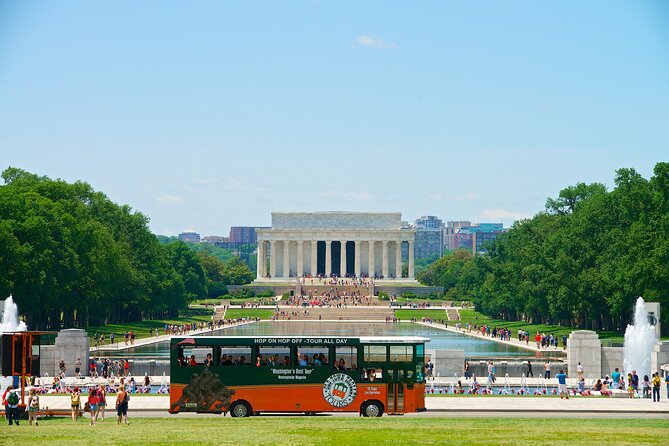
At 1398 Independence Ave SW, you’re back near Washington Monument and the major Smithsonian museum zone, plus the Smithsonian Castle area and the Holocaust area. This is a heavy-hitter stop, and it’s also the one where your planning pays off.
If you jump off here, decide quickly which museum you’re actually going to do. The trolley gives you freedom, but your day still has only so many hours. For many visitors, it’s better to pick one museum and enjoy it rather than trying to do three quick peeks.
The trolley rhythm helps, though. If you miss a window or you want to pause for rest, you can return later. That is one of the quiet benefits of a hop-on system: it reduces the stress of getting everything right on the first try.
One caution from real-world experience: some tools that map stop numbers can lag behind when routes shift. Double-check where you are when you follow stop numbers, and don’t assume the street you’re standing on matches the label perfectly.
Memorial Chain from Jefferson to MLK: Why Timing Makes or Breaks This Day

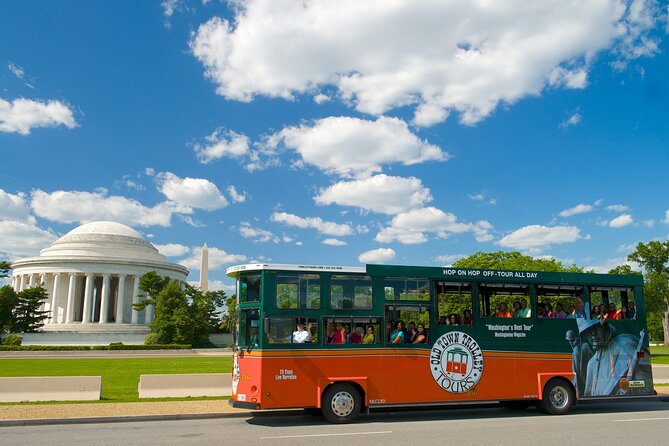
The route then moves into the memorial belt, which is where DC slows you down even when your feet want to keep going. At 16 E Basin Dr SW, you’re at the Jefferson Memorial and George Mason Memorial area. This is a great spot for photos because the views tend to open up, but it can also be windy and crowded.
Next, at 1964 Independence Ave SW, you reach the Franklin D. Roosevelt Memorial and the Martin Luther King Jr. Memorial. These are not quick glance memorials. Even if you only do a partial walk-through, you’ll likely need a few pauses to absorb what’s in front of you.
Then comes 2 Lincoln Memorial Cir NW for the Lincoln Memorial plus the Vietnam Veterans Memorial and the Korean War Veterans Memorial. This is also where your Arlington day connection matters: you’ll use the transfer to the Arlington shuttle tour.
If you’re trying to do the whole Lincoln-to-Arlington segment without losing time, your best strategy is simple: don’t wait until the last moment to figure out where your group meets for the shuttle. Follow driver instructions closely, because the pickup points and timing can be confusing if you assume it’s the same place as the earlier boarding.
After Arlington is in motion, you’ll likely miss nothing if you treat these memorial stops as either photo-and-walk stops or longer-content stops. Trying to do both fully can eat your day.
The African American History and Portrait Museums: Great Follow-On Stops
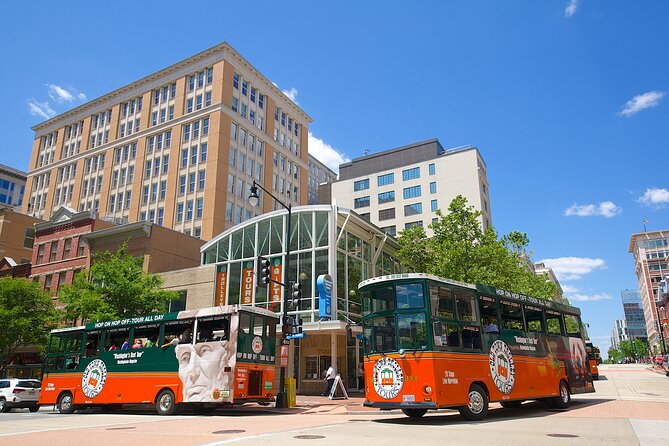
At 1400 Constitution Ave NW, you reach the National Museum of American History and the National Museum of African American History area. If you’re looking for museums that connect stories to everyday objects and documents, this is a strong pick. It’s also the kind of stop where you may choose to stay on the trolley longer if the lines or crowding feel heavy.
Then at 800 F St NW, you’re near the National Portrait Gallery and the American Art Museum. This is another good decision point. Museums can be more time-consuming than you expect, and portrait and art spaces tend to hold you longer if you’re the type who enjoys reading labels and looking slowly.
If you want maximum value, I’d plan one museum stop and one memorial stop in the same half-day block. Then let the trolley do the rest.
Arlington National Cemetery: The ID-First, Walk-Some Portion You’ll Feel
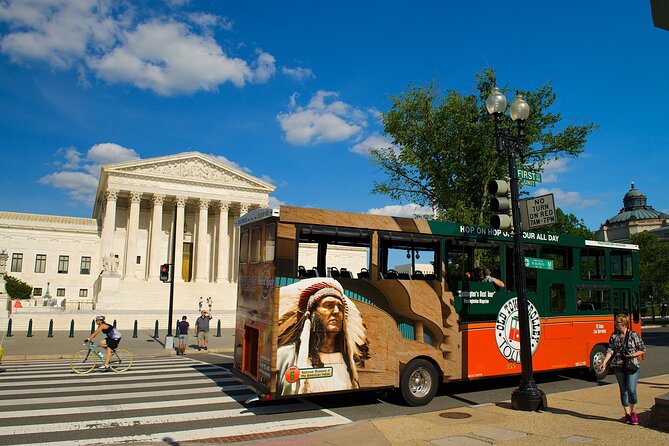
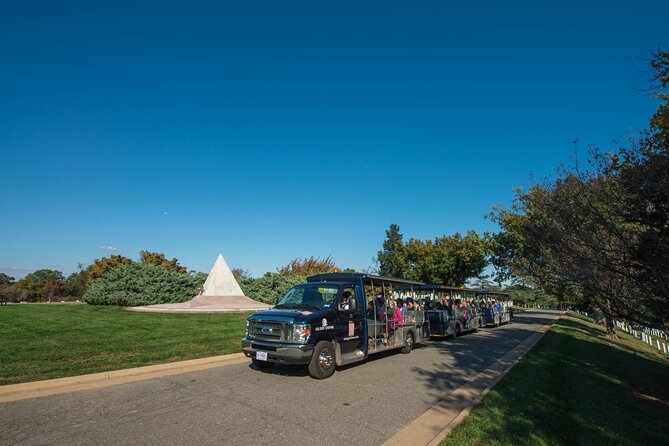
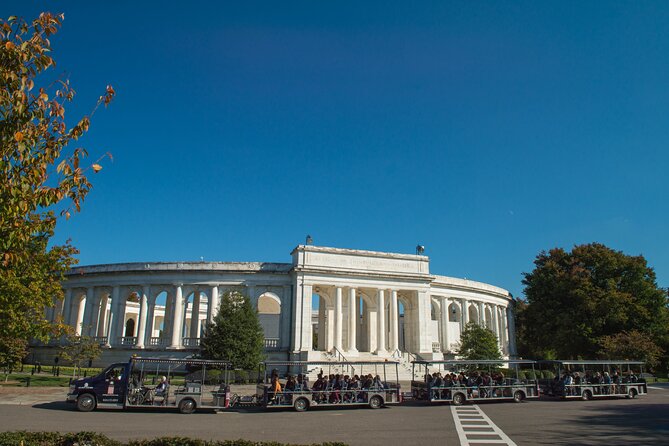
Arlington is the reason many people choose this specific version. The cemetery segment includes a stop at the Arlington Cemetery Welcome Center, then passes through key areas: the President John F. Kennedy memorial and gravesite area, stops tied to Supreme Court Justice Ruth Bader Ginsburg, the General John J Pershing gravesite area, the Tomb of the Unknown Soldier, Arlington House, and finally the Iwo Jima Memorial area outside the gate.
Here’s the no-drama reality: Arlington requires a 100% ID check with no exceptions. You’ll need a state or government issued picture ID for US guests, a passport for foreign guests. Visitors 16 and 17 may present a valid school ID. If your paperwork doesn’t match the rules, entry can fail. Plan this like you’re entering an airport, not a casual attraction.
What to expect once you’re inside: you’ll be able to see major points, but you’ll also do some walking. The Tomb of the Unknown Soldier and Kennedy’s gravesite area involve stairs and hills, so shoes matter. Even if you’ve relied on the trolley to reduce walking earlier, Arlington is still an outdoor, uneven terrain day.
Guides and timing help here. One person noted the Arlington section felt smooth, but also stressed that you need to walk between highlights. Another key note: if you arrive late, you might only catch the most scheduled portions like the Tomb changing ceremony and the JFK gravesite area. So give yourself enough time to not feel like you’re racing.
Also worth knowing: the shuttle transfer from the Lincoln Memorial area to Arlington can take time. That wait isn’t really under the tour’s control since the shuttle operation is tied to Arlington. Build that into your schedule so you don’t arrive stressed.
Timing, Stop-Finding, and How Not to Get Left Behind
Hop-on hop-off tours live or die by two skills: patience and stop awareness. The good news is you’re not stuck with one fixed schedule. The tough news is that you’ll sometimes be waiting where you don’t have obvious signage.
A few common friction points from practical experience:
- Trolleys come about every half hour, but real-world gaps happen.
- Some stops can be difficult to identify, and there may be limited directions where to wait.
- If your driver asks a question about your route (for example, whether you’re continuing to the cemetery), answer carefully and ask for confirmation if you’re unsure.
The best way to stay calm is to plan your hops around “anchor points.” If you’re near a big landmark, you’ll know what you’re aiming at when you return to the stop area. If you’re hopping off somewhere less obvious, take a second to orient yourself before you wander.
One more tip: map glitches can happen. Make sure you’re using the most current understanding of stop locations and not relying on a route display that might be outdated.
If you want a more relaxed day, avoid treating this as a checklist. Treat it as transportation plus guided context. Your schedule should allow for detours and short rests.
Price and Value: Why $59.45 Can Be a Smart Deal
At $59.45 per person, the price can look high until you compare it to the alternatives. This ticket bundles:
- a 21-stop hop-on hop-off trolley with live narration
- transportation to Arlington National Cemetery
- a route that covers many major sites without you paying for repeated rides, parking, or ride-hailing time
You also get a free perk for families: children 3 and under are free. That can matter more than people expect.
What’s not included: food and drinks, hotel pickup/drop-off, and parking fees. So you still need to plan meals or buy snacks while you’re out.
If you’re visiting DC for a first time and you want a guided overview that helps you decide what deserves deeper time later, the value is strong. If you already know exactly what you want and you’re comfortable navigating buses and trains on your own, you might save money by building a DIY itinerary. But if your priority is reducing stress and covering ground efficiently, this tour is one of the easiest “day one” choices.
Should You Book This Trolley with Arlington?
Book it if you want a guided overview, like the idea of choosing your own stops, and especially if Arlington National Cemetery is a must for you. It’s a strong fit for first-timers, families juggling different interests, and anyone who wants to avoid DC parking hassles.
Skip or adjust expectations if you’re the type who hates stop confusion, hates waiting, or needs very tight timing for a single-day plan. Arlington can be emotionally powerful, but it also takes time and involves walking. If you’re easily frustrated by shuttle delays or hard-to-spot pickup points, plan a more forgiving schedule, and don’t try to race the clock.
If you do book it, the winning move is simple: start early, wear good walking shoes, and treat the Arlington portion as the main event rather than an afterthought.