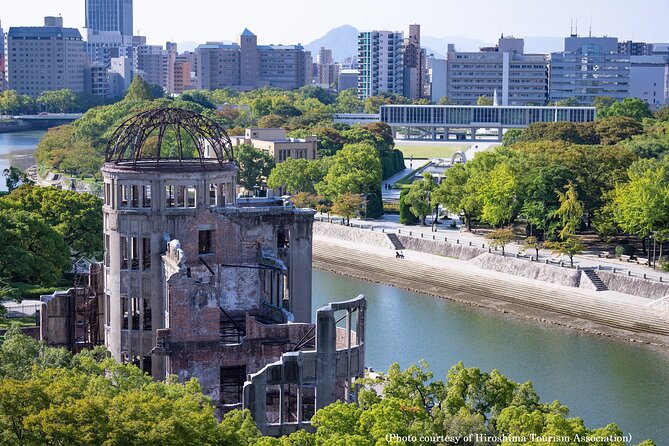
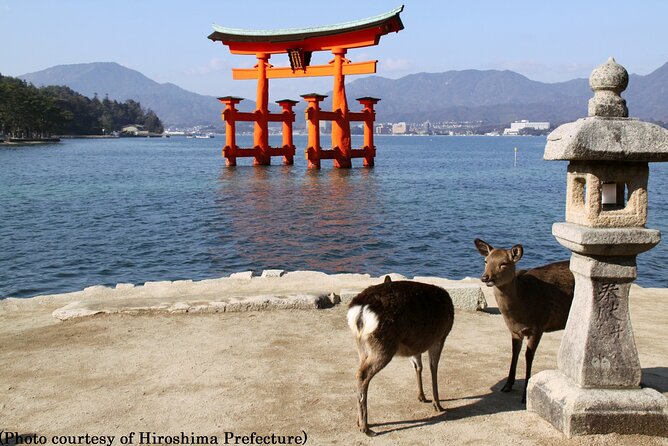
A red torii and a bomb-scarred dome, same day.
This full-day tour links two UNESCO stops—Itsukushima Shrine on Miyajima and Hiroshima’s Peace Memorial Park—so you can move between beauty and history without wrestling with schedules. You start in central Hiroshima, ride in an air-conditioned vehicle, take the ferry, and return to Hiroshima Station by early evening.
I love that the day is built around the big emotional hits plus the big sights: a walk through the shrine area and time at Hiroshima Peace Memorial Park. I also like the human touch—guides on this route tend to be clear, friendly, and willing to answer questions, with examples like Masako, Tomoko, Azusa, Akko Watanabe, and Hikari showing up in past groups.
One possible drawback: the tour moves as a coach group, so if you’re sitting far from the guide, hearing details can be harder (especially if it’s crowded or the day is hot and everyone is talking).
In This Review
- Key things to know before you go
- From Hotel Granvia to the Ferry: How the Day Flows
- Miyajima’s Itsukushima Shrine: The Red Torii and the Waterline Look
- Miyajima Free Time (1 Hour): Lunch Ideas and What You Can Do With It
- Atomic Bomb Dome (40 Minutes): Fast Access to a Slow Reality
- Hiroshima Peace Memorial Park + Museum (1 Hour): How to Get the Most Meaning in Time
- What the English Guide Changes (Names You Might Hear): Clarity, Photos, and Respect
- Transportation Comfort and Timing: Why It Feels Smooth (and When It Doesn’t)
- Price and Value: What You’re Paying For (and What You Aren’t)
- Best Fit: Who This Tour Is For
- Should You Book This Hiroshima and Miyajima Day Trip?
- FAQ
- How long is the Hiroshima and Miyajima bus tour?
- Where does the tour start and end?
- What time does the tour start?
- Is lunch included?
- What’s included in the price?
- Do I need to buy tickets for Itsukushima Shrine and the Peace Memorial Museum?
- Is there a mobile ticket?
- Is there a time slot for free time on Miyajima?
- Are there any child age details I should know?
- What is the cancellation policy?
- Is this tour limited in group size?
Key things to know before you go
- Two UNESCO worlds in one day: Miyajima’s shrine island feeling plus Hiroshima’s Peace Memorial Park
- Monuments with real weight: Atomic Bomb Dome stops you can actually stand in front of
- Short, focused timing: shrine time is 1 hour, Miyajima free time is 1 hour, then you pivot back to the mainland
- Lunch is on your own: you get a set window for food on Miyajima, but meals aren’t included
- You’ll likely get strong photo help: multiple guides are praised for guiding the best angles and moments
- Group size is capped (40): that helps you feel like a real group, not a crowd
From Hotel Granvia to the Ferry: How the Day Flows
The tour begins at Hotel Granvia Hiroshima (meeting is in the lobby) at 10:10am. You’ll board a comfortable, air-conditioned vehicle for the ride toward Miyajima, then the day runs like a relay: bus, ferry, shrine walk, ferry back, Hiroshima monuments, and museum time.
You’ll be back at Hiroshima Station around 6:00pm to 6:30pm, so plan your evening onward travel accordingly. This is the kind of itinerary where the logistics matter—if you’re late to the meeting time, you generally can’t join after the tour departs.
A couple practical notes that affect your experience: seats may not be designated, and the order/timing can shift a bit due to road conditions and congestion. With a max group size of 40, it’s still manageable, but it’s not a private tour feel.
If you’re traveling on a Japan Rail Pass from Kyoto or Shin-Osaka, you’ll want to make sure your Shinkansen arrives early enough to reach the Hotel Granvia Hiroshima lobby on time. Miss the meeting window and the day won’t wait for you.
Miyajima’s Itsukushima Shrine: The Red Torii and the Waterline Look
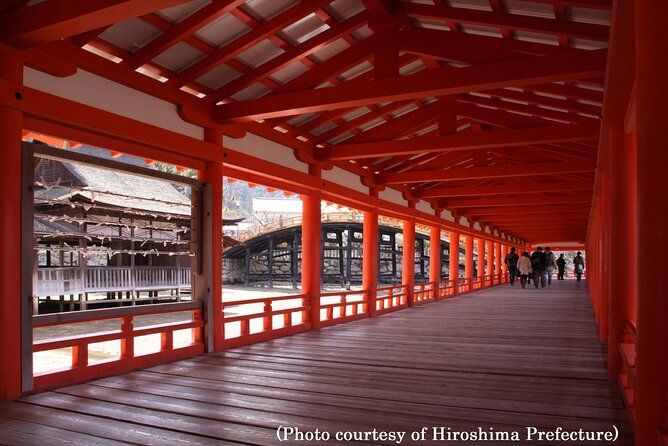
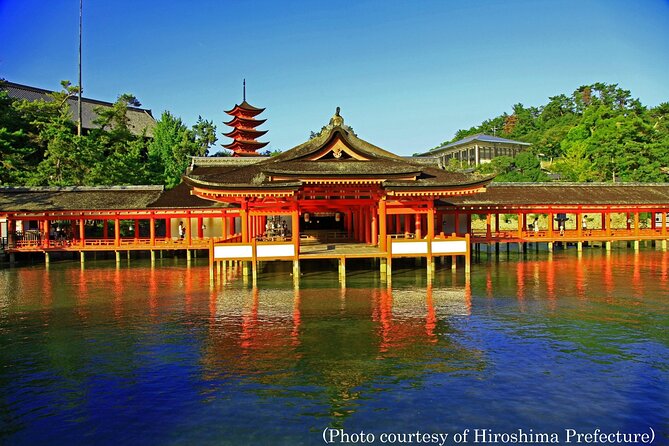
Miyajima is often described as “shrine island,” and the main reason people come is Itsukushima Shrine. This UNESCO site dates back to the 6th century, and you’ll see the shrine’s celebrated Shinden-zukuri style structures (the architecture style linked to historical noble residences).
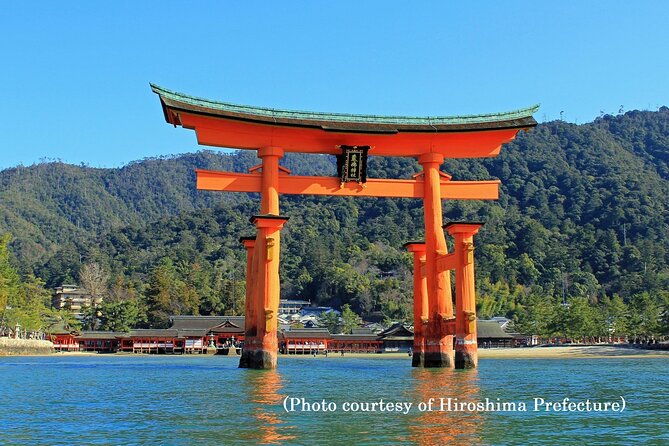
You get about 1 hour at the shrine area, and admission is included. The best part is the famous torii gate view that seems to sit right at the water’s edge—depending on tide, it can feel like the gate is floating. The guide also explains the historical context so you’re not just taking photos; you understand what you’re looking at.
There’s also a bit of nature theater on the approach. The tour includes a moment where you can spot playful monkeys and wild deer around the shrine area, which is great for quick wow-moments while you’re gathering yourself before the main sight.
Possible drawback: 1 hour is enough to see the key views, but not enough to do everything at a relaxed pace—especially if the area is busy (and it often is). If you’re hoping to add a longer hike or extra attractions on your own, this tour may feel tight.
Miyajima Free Time (1 Hour): Lunch Ideas and What You Can Do With It
After the shrine stop, you’ll have about 1 hour to spend on Miyajima. This is where the day shifts from guided moments to self-guided wandering, and it’s also your meal window.
Lunch isn’t included, but the tour makes it easy by giving you that dedicated time. Miyajima is known for foods like oysters, Hiroshima-style okonomiyaki, and conger eel rice bowl, and these show up at many shops on the island. If you want the simplest win, pick a place that has clear menus and eat right away, rather than spending your whole hour hunting the perfect seat.
What you can realistically do in an hour:
- Grab a meal and still get another look at the shrine surroundings
- Walk a few nearby streets and shop for small souvenirs
- Take photos at a couple key viewpoints without turning it into a full mission
What you may not fit: anything that requires long detours. One past guest noted that there wasn’t enough time to do the ropeway if you wanted to stay fully with the day’s schedule—so if that’s high on your list, treat it as a separate plan.
Atomic Bomb Dome (40 Minutes): Fast Access to a Slow Reality
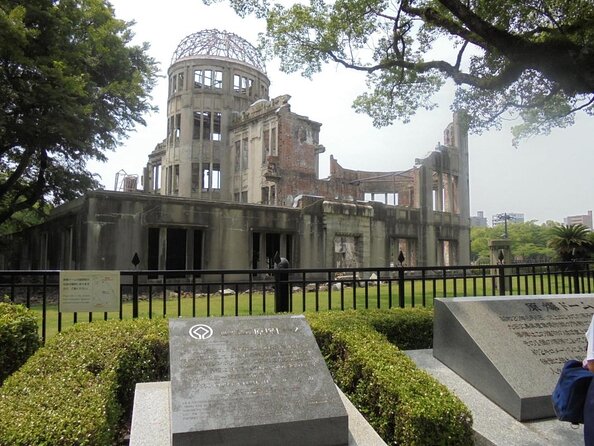
Then the tour moves from island charm to hard history in a hurry—in the best possible way, if you came to Hiroshima to understand what happened.
The Atomic Bomb Dome stop lasts about 40 minutes, and admission is free. The structure is preserved as it was, to promote peace and the elimination of atomic weapons. It’s also a reminder that this bombing used the first atomic bombs in human history.
This is one of those places where you don’t need extra words in your head. You stand there and let the scale hit you. I like that the tour gives you enough time to look around, read key parts, and regroup before moving on to the museum.
Practical tip: if it’s hot or rainy, you’ll feel it more here because you’re on foot and standing. Bring water if you can, and plan to move slowly. This isn’t a stop to race through.
Hiroshima Peace Memorial Park + Museum (1 Hour): How to Get the Most Meaning in Time
Your next major stop is Hiroshima Peace Memorial Park, built to commemorate the atomic bomb dropped over Hiroshima in 1945. The park is a verdant space filled with monuments meant to promote peace, and it includes the Peace Memorial Museum.
You’ll get around 1 hour for the museum, and the museum admission is included. The museum is also described as an Important Cultural Property of Japan, which gives you a sense that this isn’t just a collection of artifacts—it’s meant to be preserved carefully and presented clearly.
During your time there, you’re also guided through key memorials. The tour includes moments like:
- The Memorial Cenotaph for Atomic Bomb Victims, where you’ll read a long list of those lost
- The Cenotaph for Korean Victims
These are heavy stops. The best way to handle them is simple: pick one or two areas that really pull you in, and give them your full attention. You don’t need to try to absorb everything at once.
What I appreciate about this format is that you’re not left totally on your own to figure out what matters. The guide helps you know where to look and what to understand as you move from outdoor memorials into indoor exhibits.
Possible drawback: 1 hour in a major museum can feel short, especially if you want to read every panel. If you’re the type who likes to linger and take notes, consider pairing this tour with extra time in Hiroshima on another day.
What the English Guide Changes (Names You Might Hear): Clarity, Photos, and Respect
This tour’s biggest strength shows up again and again in guide performance. Past groups have mentioned guides such as Masako, Tomoko, Azusa, Akko Watanabe, Mitsui, Minnie, Nob, Taeko, Takeshi, Kyoko, Hikari, and Akagi San for being friendly, organized, and willing to answer questions.
Even when the content is the same, a good guide changes the whole experience by:
- Explaining history in a way you can follow without needing a textbook
- Helping you with customs and how to behave in memorial spaces
- Giving photo tips so you don’t just stand in the wrong spot
- Keeping the group moving respectfully without rushing the meaning out of it
You’ll also hear about guides using practical teaching methods. For example, one guide was praised for being clear with check-ins using visuals, and another was praised for enthusiasm that made the history feel understandable rather than distant.
Now for the balanced side: there are also complaints about hearing. On a full coach, a soft voice or speaking from the side can make details tough to catch, particularly on walking sections. If you want the guide’s narration to land, try to get a seat closer to where the guide will speak, and don’t be shy about asking them to repeat something when you stop.
Transportation Comfort and Timing: Why It Feels Smooth (and When It Doesn’t)
The itinerary is built to reduce decision fatigue. You don’t have to figure out ferry timing, where to meet again, or how to stitch together Miyajima and Hiroshima sites. You just follow the plan.
The ride is in an air-conditioned vehicle, and the day is paced with multiple short site stops rather than one giant cram session. Group size is limited to 40, which can make it feel more controlled than big-city tours.
Two things to watch:
- Seats may not be assigned, so your comfort can depend on luck and the time you get on
- Order of activities can change due to congestion, meaning your internal timetable might not match exactly
Also, because the day is long, it’s smart to come prepared. One past guest recommended snacks and a fan and umbrella for hot or rainy weather. That kind of real-world advice matters more than people think on a day that mixes ferry time with walking.
Price and Value: What You’re Paying For (and What You Aren’t)
At $152.54 per person, you’re not just paying for tickets. You’re paying for the friction-free part:
- pickup from a central Hiroshima hotel area
- air-conditioned transport
- ferry transport
- an English guide interpreter
- included admissions and visitor tax
- a guided route through Hiroshima’s memorial landscape
Included items you’ll care about:
- English licensed guide interpreter
- Miyajima visitor tax
- Shrine admission and museum admission
- Transportation costs and other listed fees
Not included:
- Lunch
So, does the price make sense? For a first trip, it often does, because you’re buying your time and your sanity. You’d likely spend extra time coordinating ferry and tickets if you went fully on your own, and you’d lose the context a good guide adds—especially for Hiroshima’s memorial sites, where the order and framing really matter.
If you’re traveling on a very tight budget or you already know the exact routes and are comfortable going self-guided, you could probably spend less. But if you want a single-day “see the icons and understand them” approach, the value is pretty strong.
Best Fit: Who This Tour Is For
This works especially well if:
- It’s your first time in Hiroshima and you want both Miyajima and the Peace Memorial Park highlights
- You’d rather be guided through the meaning behind monuments than just photo-stop and move on
- You want a structured day with minimal planning and meeting points handled for you
- You like clear explanations and a guide who can keep things organized
It may not be your best choice if:
- You want lots of free time on Miyajima beyond the shrine and one lunch hour
- You’re hoping for a super deep read-through in the museum (1 hour can fly by)
- You’re very sensitive to audio quality on a bus-coach format
Should You Book This Hiroshima and Miyajima Day Trip?
If your goal is a packed, high-impact day—Miyajima’s Itsukushima Shrine and Hiroshima’s Peace Memorial Park with the Atomic Bomb Dome—then yes, I’d book it. The structure is efficient, the included admissions remove hassle, and the guide experience is repeatedly praised for clarity and care.
Book it with one expectation set: the day is meaningful, but also fast. If you want slow travel and long lingering, you may want to add extra time in Hiroshima afterward. If you want the icons plus the context in a single day, this tour is a solid way to do it.
FAQ
How long is the Hiroshima and Miyajima bus tour?
It runs about 8 hours 20 minutes.
Where does the tour start and end?
It starts at Hotel Granvia Hiroshima and ends at Hiroshima Station (around 6:00pm to 6:30pm).
What time does the tour start?
The start time is 10:10am.
Is lunch included?
No. Lunch isn’t included, and you’ll eat on your own during the Miyajima free time.
What’s included in the price?
The tour includes an English guide interpreter, Miyajima visitor tax, and other admission fees and transportation costs listed for the sites on the route.
Do I need to buy tickets for Itsukushima Shrine and the Peace Memorial Museum?
No. Itsukushima Shrine admission and Peace Memorial Museum admission are included.
Is there a mobile ticket?
Yes. The tour provides a mobile ticket.
Is there a time slot for free time on Miyajima?
Yes. You’ll have about 1 hour on Miyajima for your own lunch and exploring.
Are there any child age details I should know?
Children up to 5 years old can join free of charge, but they won’t be provided with bus seats.
What is the cancellation policy?
You can cancel up to 24 hours in advance for a full refund.
Is this tour limited in group size?
Yes. It has a maximum of 40 travelers.