San Francisco feels big, fast, and hilly. This 2-day hop-on hop-off tour gives you a practical way to see the highlights without planning every turn. I like that it combines a double-decker bus with Wi-Fi and an English-speaking guide who helps connect the dots between neighborhoods.
What I like most is the freedom. You choose when to get off and when to hop back on, so your day can fit your energy instead of a rigid schedule. I also appreciate the built-in storytelling support—there’s an English tour guide on the bus plus an audio app in multiple languages (and yes, you’ll want your own headphones).
One thing to consider: the experience is time-bound. The operation runs daily from late morning into the afternoon, with the last bus departing at 4:00 pm, and the tour ends by 6:00 pm. Also, Pier 39 isn’t right at the curb—plan on a short walk from the nearby stop.
In This Review
- Key things I’d watch for
- How the 2-day hop-on hop-off plan really works (10am to 6pm)
- The route, in plain English: what you’re lining up to see
- Stop-by-stop: what each stop is good for (and where to watch your step)
- Union Square (shopping, theaters, cable-area energy)
- Chinatown (Pagoda Gates + food and shopping)
- Financial District
- North Beach
- Pier 35 (1914) and the historic waterfront vibe
- PIER 39 (sea lions area + tourist-friendly waterfront)
- Fisherman’s Wharf
- Ghirardelli Square (sweet stop and easy photos)
- Fort Mason (viewpoint energy off the main rush)
- Lombard Street (the crooked-street moment)
- Palace of Fine Arts (classic architecture + photo-friendly pause)
- Golden Gate Bridge Vista Point (the big view stop)
- Golden Gate Park and the Japanese Tea Garden
- Haight-Ashbury (neighborhood character)
- Alamo Square (the classic skyline-y neighborhood stop)
- Civic Center (downtown architecture and the formal side)
- Guide and audio app: what it changes while you’re riding
- Timing tips so you don’t feel rushed at the end
- Is the $65 price good value for 2 days?
- Who this tour fits best (and who should skip it)
- Should you book it?
- FAQ
- How much does the Hop-On Hop-Off Deluxe Bus Tour of San Francisco cost?
- How long is the tour?
- What time does the tour start and when does it end?
- Is the tour guide in English?
- Do I need to bring headphones?
- Does the bus stop directly at Pier 39?
- What is the cancellation policy?
Key things I’d watch for
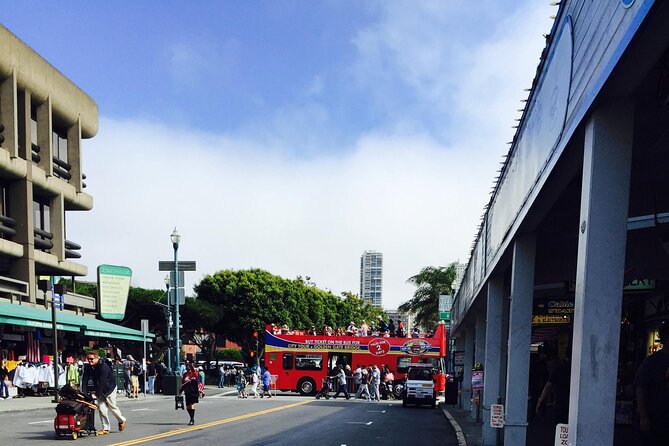
- 20 stops across 13 points of interest to build your own mini itinerary
- Wi-Fi onboard for quick maps, messages, and planning between stops
- English guide + multi-language audio app for context on the move
- Pier 39 walk-in detail: hop off one stop earlier and walk about 100 meters
- Different driver styles can affect how loud the experience feels
How the 2-day hop-on hop-off plan really works (10am to 6pm)
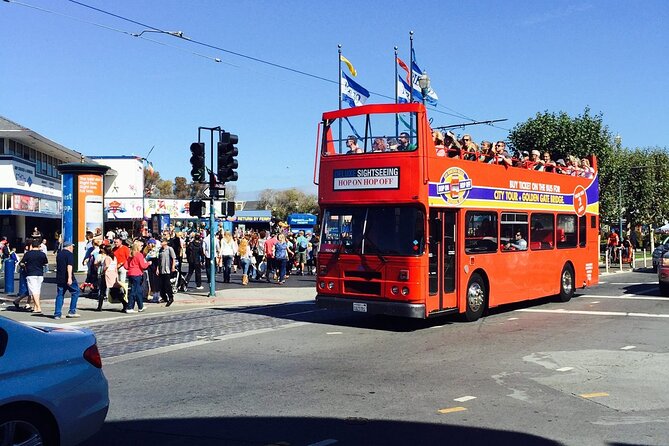
This tour is designed for flexibility. You buy in for two days, then you use the bus like a moving basecamp: ride to reset your bearings, get off to explore, then come back when you’re ready.
Operations run daily from 10:15 AM to 6:00 PM, and the last bus leaves at 4:00 PM. Practically, that means you can absolutely do a first full pass in one afternoon, then come back the next day for deeper stops—but you’ll want to avoid treating it like an all-day late-night sightseeing plan.
The good news is that the route aims at what most people actually want to see in San Francisco. You start downtown around shopping, theaters, and cable-car area vibes, then you work your way outward toward the waterfront and the Golden Gate Bridge view, and eventually you hit major neighborhoods and parks.
The route, in plain English: what you’re lining up to see
The stops cover a wide arc of the city—from Union Square and Chinatown to the waterfront, then out to the Golden Gate Bridge vista and into green space and neighborhoods like Golden Gate Park, Haight-Ashbury, and Alamo Square.
Here’s the big-picture thinking I recommend: treat the bus ride as your orientation tool. The views from the upper deck are great for understanding where everything sits relative to everything else. Then, when you hop off, you use that context to explore on foot.
A nice touch: the tour also includes Civic Center and the downtown-adjacent pieces, so it’s not only postcards. It gives you a fuller sense of how SF’s downtown and neighborhoods connect.
Stop-by-stop: what each stop is good for (and where to watch your step)

Below is what each stop sets you up for, plus a quick reality check so you’re not surprised once you’re there.
Union Square (shopping, theaters, cable-area energy)
This is where you can start with an easy win: people-watch, pick up essentials, and anchor your day in the most central tourist-friendly pocket. You’ll also be close enough to the cable-area atmosphere to connect SF’s famous hills and streets with the city’s classic streetscape vibe.
How to use it: do Union Square first so you can decide what you want more of later—downtown flavor, waterfront time, or the big-views sweep.
Chinatown (Pagoda Gates + food and shopping)
Chinatown is one of the best places to hop off for short, satisfying walks. You’ve got a lot of storefront browsing, plus the fun visual cue of the Pagoda Gates. It’s also a convenient transition point between downtown and North Beach-style streets.
Watch your step: plan a little extra walking time because Chinatown can turn into a wandering loop faster than you expect.
Financial District
If you want to see SF as a modern city—not just a tourist city—this stop helps. Think of it as your “where business happens” contrast to the more maze-like neighborhoods you’ll hit next.
How to use it: great for a quick look-and-photo stop, then move on if you’re more into streets and views than offices.
North Beach
North Beach is the neighborhood stop that usually feels more like wandering—streets, cafes, and that classic “old SF” energy. It’s a strong bridge from Chinatown toward the waterfront and Pier area.
How to use it: hop off, take a slow walk, and then time your return so you don’t miss the next big scenic section.
Pier 35 (1914) and the historic waterfront vibe
The waterfront stretch starts to feel more story-driven here. Pier 35 is labeled with 1914, and that helps you notice you’re in a place with an older maritime feel, not just a modern boardwalk.
Reality check: this is a strong photo and walk stop, but you’ll want comfy shoes because “pier stroll” adds up quickly.
PIER 39 (sea lions area + tourist-friendly waterfront)
Pier 39 is the stop most people picture when they imagine SF’s waterfront. But here’s the important detail: the buses do not stop right next to Pier 39. You should hop off at Stop 6 and walk about 100 meters from the Pier 35 side to reach Pier 39.
How to use it: if you want the highlights without stress, park yourself here for a set block of time, then use Pier 39 as your dinner and people-watching base.
Fisherman’s Wharf
This is the broader Wharf zone—touristy, yes, but also lively and easy to navigate. You’re in “walk and snack and look at boats” mode, which is exactly what you want at this stage of the tour.
Practical tip: if you’re also doing shopping or souvenirs, it’s easier to do it here before you head into more residential neighborhoods.
Ghirardelli Square (sweet stop and easy photos)
This is the payoff stop for people who want the waterfront + a recognizable name. It’s also a convenient place to regroup—grab a treat, take photos, and decide if you want another scenic hop next.
How to use it: keep expectations simple—this is for enjoying the setting, not for a long museum-style visit.
Fort Mason (viewpoint energy off the main rush)
Fort Mason gives you a more open, breezy feeling compared with the densest tourist blocks. It’s a nice breather before you start tackling famous street views and the big bridge lookout.
How to use it: if the day is warm, this is a good place to slow down and reset.
Lombard Street (the crooked-street moment)
This is one of those “if you’re here, you should see it” stops. Lombard Street is famous for a reason, and the bus put you in the right neighborhood to experience it on foot.
Reality check: expect crowds and give yourself extra time if you want photos without rushing.
Palace of Fine Arts (classic architecture + photo-friendly pause)
The Palace of Fine Arts is a satisfying stop because it’s beautiful and photogenic, and it makes a great “sit for a moment” pause in your day.
How to use it: even if you only do a short walk, it helps break up the more hustle-heavy blocks.
Golden Gate Bridge Vista Point (the big view stop)
This is your iconic moment. The bus brings you to a Golden Gate Bridge viewpoint, which is exactly what you want if you’re short on time but still crave the signature San Francisco skyline feel.
Practical advice: dress for wind. It can feel different by the water and higher overlooks than it does downtown.
Golden Gate Park and the Japanese Tea Garden
Golden Gate Park is a huge chunk of the city, and the tour doesn’t pretend you can do everything in one go. It’s here to give you access and a starting point—especially with the Japanese Tea Garden called out as the focused garden stop.
How to use it: if you’re more interested in calm garden time, spend your off-bus time here. If you want more park wandering, treat it as your base stop and walk out and back.
Haight-Ashbury (neighborhood character)
Haight-Ashbury is where you feel the SF neighborhood vibe more than the landmark vibe. It’s a good stop if you want to experience a different side of the city than downtown and the waterfront.
Watch your step: this is where you’ll naturally slow down, so keep an eye on the clock so you can return before the bus time window tightens.
Alamo Square (the classic skyline-y neighborhood stop)
Alamo Square is a strong choice if you want the neighborhood perspective and photo angles that look over the city in a different way than the bridge view does.
How to use it: good for a “quick photo + short stroll” plan, then hop back for the last city anchors.
Civic Center (downtown architecture and the formal side)
This stop rounds things out. Civic Center adds a more official, architectural SF element so your trip doesn’t feel like a checklist of only scenic neighborhoods.
How to use it: if you’re tired, treat this as a short get-off-and-look stop.
Guide and audio app: what it changes while you’re riding
This tour includes an English-speaking tour guide on the bus, plus an audio app login in multiple languages. That’s more useful than it sounds—SF is full of small clues in street layouts, neighborhood borders, and building styles. The bus narration helps you notice those details instead of only seeing them.
One thing I’d plan for: guide delivery can vary. Some drivers lean into personal comments and louder in-bus music, while others keep the narration more focused and clear. If you’re sensitive to sound, bring patience and consider using your own audio app when it’s available—just remember you’ll need your own headphones.
Onboard Wi-Fi is a nice bonus between stops. I like it because it helps you quickly re-check where the next stop is and what you want to do when you hop off.
Timing tips so you don’t feel rushed at the end
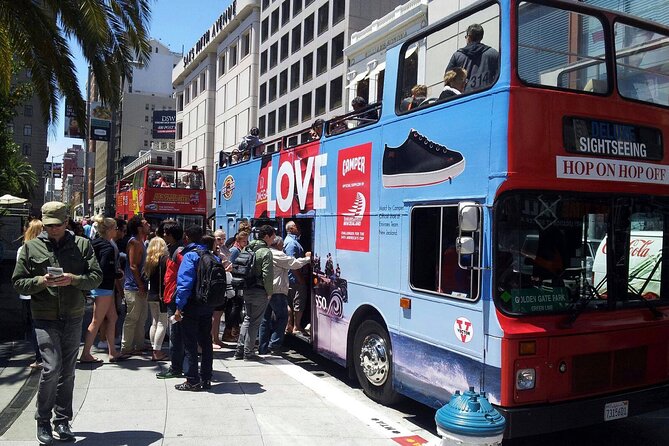
The tour ends at 6:00 PM, and the last bus departs at 4:00 PM. That’s the key timing constraint, so you should plan your day with the clock in mind.
My suggestion: use your first day for the loop sweep—get off at 2 to 4 main stops that match your priorities (for many people, that’s waterfront + one big-view spot). Then on day two, return for the one neighborhood you liked most.
Also, Pier-area logistics are a must-know. Since Pier 39 isn’t directly at the bus door, you’ll lose a few minutes walking (about 100 meters). Build that into your plan so you don’t feel like you missed the best moment.
Is the $65 price good value for 2 days?
For $65 per person you’re paying for convenience: a double-decker ride, onboard Wi-Fi, an English guide, and a hop-on hop-off format that lets you spread sightseeing across two days.
Here’s the value math I’d use: if you were planning multiple separate taxis or rides just to stitch together neighborhoods, this starts to look like a bargain. You’re also buying time efficiency. The route covers a lot of ground—Union Square, Chinatown, North Beach, Pier/Wharf, Golden Gate Bridge area, and then major park and neighborhood stops—so you’re not burning your day figuring out transit connections.
Where it might not be value is if you only want one or two stops and you’re already comfortable walking SF’s hills without help. In that case, you might save money by picking specific neighborhoods and spending more time there on foot.
Who this tour fits best (and who should skip it)
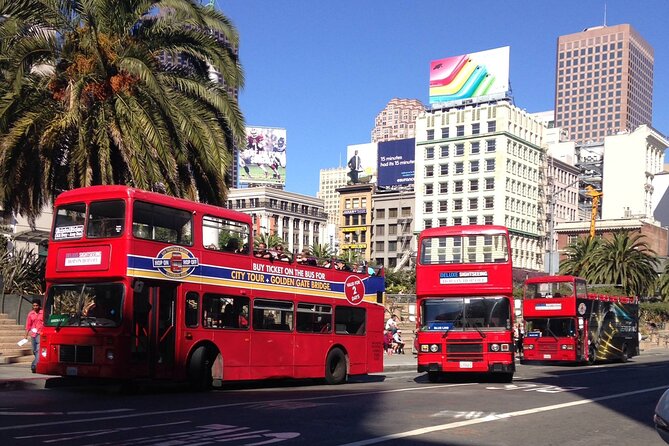
This tour is a strong match if:
- You want a first-pass orientation to SF and a flexible plan
- You’re balancing landmark time with neighborhood wandering
- You like the convenience of a bus that brings you close, with hop-off choice
It’s less ideal if:
- You prefer a tightly choreographed experience with no “come back when the bus arrives” feeling
- You hate waiting for transport during peak times
- You’re extremely noise-sensitive, because guide style can vary
Should you book it?
I’d book this if you’re arriving with a short list of must-sees and you want a simple way to build your own rhythm over two days. The combination of an English guide, the multi-language audio app (with your own headphones), and the Wi-Fi makes it easier to plan on the go.
I’d think twice if your schedule is very tight for late afternoon, since the tour winds down by 6:00 PM and the last bus is gone earlier. Also, if Pier 39 is your #1 obsession, remember that small walk from the nearby stop.
If you want a flexible SF sampler that helps you get your bearings fast, this one earns its place.
FAQ
How much does the Hop-On Hop-Off Deluxe Bus Tour of San Francisco cost?
It costs $65.00 per person.
How long is the tour?
It’s approximately 2 days.
What time does the tour start and when does it end?
The start time is 10:00 am. The daily service runs from 10:15 AM to 6:00 PM, and the tour ends at Fisherman’s Wharf by 6:00 PM.
Is the tour guide in English?
Yes, the tour guide on the bus provides English.
Do I need to bring headphones?
Yes. The audio guide app is included, but you need to bring your own headphones.
Does the bus stop directly at Pier 39?
No. The buses do not stop right next to Pier 39. You should hop off at Stop 6 and walk approximately 100 meters.
What is the cancellation policy?
Free cancellation is available up to 24 hours in advance for a full refund. If you cancel less than 24 hours before the experience starts, the amount paid is not refunded.