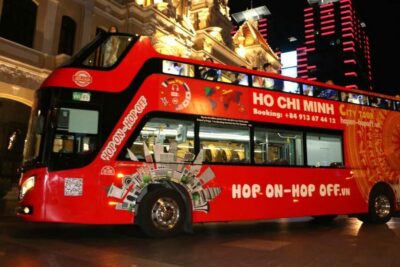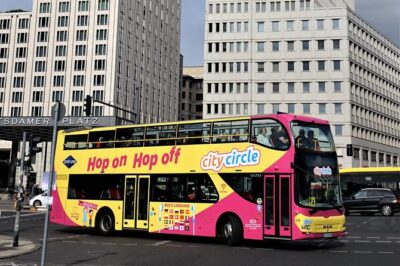
The quickest way to orient in Paris. This Big Bus hop-on hop-off loop gives you panoramic views from an open-top double-decker and 9-language audio as you roll past the city’s biggest landmarks. One thing to keep in mind: the optional Seine cruise add-on can mean long waits when crowds spike.
I like how flexible the format is. You can hop off where you want, explore at your own pace, then catch the next bus without having to plan every minute in advance. You’ll also appreciate practical perks like free headphones, onboard WiFi, and a mobile app for stop info and real-time bus tracking.
There is a possible drawback if you’re planning late-day sightseeing. The buses run during the day, so if you want night views, you’ll need to plan another option beyond this daytime route.
In This Review
- Key things to know before you ride
- Why this Big Bus route is a smart first trip to Paris
- Price and what you actually get for $46.85
- The Red Route stops: what to do at each Big Bus point
- Stop near the Louvre Museum (Louvre area)
- Pont des Arts (classic Seine bridge views)
- Notre Dame area (outside views, then wander)
- Musée d’Orsay (a strong mid-route sightseeing pivot)
- Champs-Élysées (big boulevard energy)
- Grand Palais area (major landmark stop)
- Place d’Iéna (for views toward the Eiffel zone)
- Eiffel Tower area (direct access stop)
- Champ de Mars (tower-view walking potential)
- Palais Garnier (Opéra Garnier area)
- Audio commentary, headphones, WiFi, and the app that helps
- Optional Seine cruise and Arc de Triomphe upgrades: when they’re worth it
- Getting on and off smoothly: timing, stop spacing, and cold weather
- Value check: who this bus pass fits best
- Should you book this Paris Big Bus hop-on hop-off tour?
Key things to know before you ride
- Red Route hits the big names: Louvre Museum, Notre Dame area, Musée d’Orsay, Champs-Élysées, Palais Garnier, and the Eiffel Tower zone.
- You control the pace: pick stops you want, then hop back on when you’re done exploring on foot.
- Audio is a main feature: commentary is available in 9 languages with free headphones.
- The app reduces guesswork: get route information and real-time bus tracking on your phone.
- Optional upgrades can add lines: the Seine cruise can be the most time-consuming part of the package.
- Plan for daytime hours: the bus service ends earlier than you might expect.
Why this Big Bus route is a smart first trip to Paris
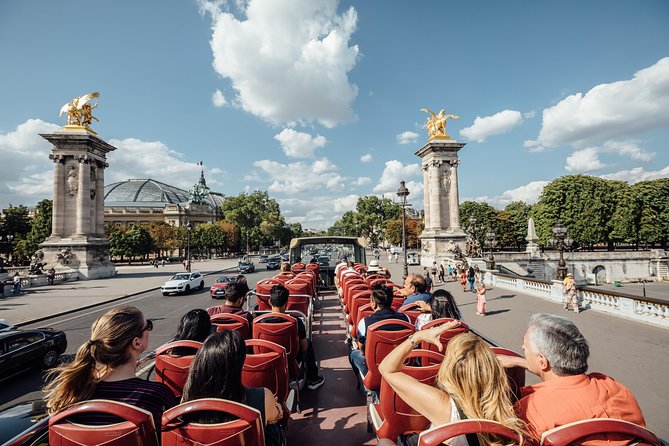
Paris can feel like a puzzle at first. Streets twist, neighborhoods blur together, and you end up walking more than you intended. This setup—an open-top double-decker hop-on hop-off bus with a clear Red Route—helps you get your bearings fast while still seeing the sights that matter most.
I also like that the experience is designed for flexibility, not pressure. If you only want the Eiffel Tower and Louvre on Day 1, you can do that. If you feel like stretching your day in the Latin Quarter area, you can hop off near Notre Dame and keep wandering.
The big win here is time control. Even if you later add museums or specific monuments with separate tickets, the bus gives you a coherent overview so your choices feel smarter.
Price and what you actually get for $46.85
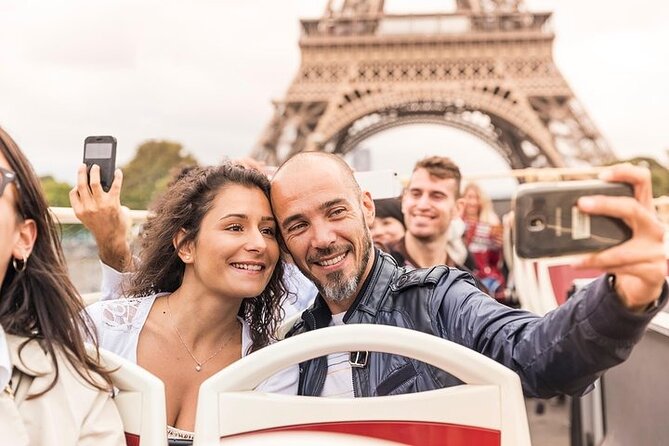
This costs $46.85 per person, and you’re buying more than a ride. Your ticket covers a 24- or 48-hour hop-on hop-off bus pass on the Red Route, plus audio commentary in 9 languages with free headphones.
You also get practical add-ons: onboard WiFi and a free app for route info and real-time tracking. That makes the experience easier than older-style bus tours where you’d basically have to guess.
Important value note: monument entrance tickets are not included with the basic bus pass. You’ll still pay separately if you want to enter places like the Louvre or Eiffel Tower. The one optional entrance ticket mentioned here is Arc de Triomphe, if you select that upgrade.
So yes, this can be good value—especially if you have limited time. But it’s best when you treat the bus as your transportation plus orientation, then layer in specific paid entrances based on your interests.
The Red Route stops: what to do at each Big Bus point
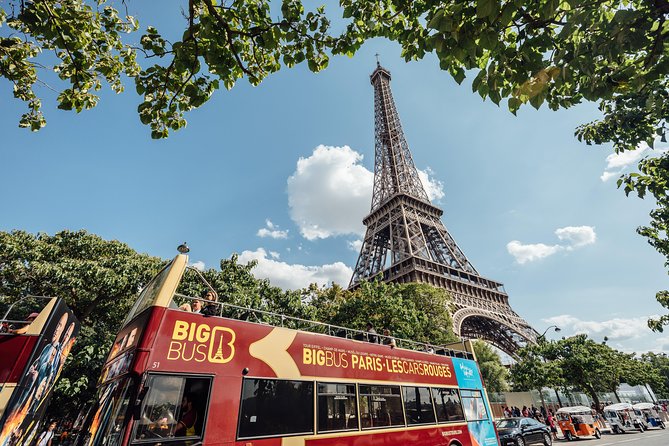
The Red Route is where your hop-on hop-off freedom shines. Your ticket is valid on this Red Route, which includes stops at major icons and several classic photo zones. The bus ride itself is about 2 hours 15 minutes for the full circuit, but your total day depends on how often you hop off.
Here’s how to think about each stop and what you can get from it.
Stop near the Louvre Museum (Louvre area)
Your tour starts for many people at the Louvre Museum area, with a stop at 11 avenue de l’Opéra. This is ideal if you want to time your day around the Louvre zone without committing to one exact entrance moment.
Since the bus stop is in the vicinity, you can use it in two ways: quick photo-and-stroll, or longer museum time. If you want to enter the museum, remember entrance tickets aren’t included.
Pont des Arts (classic Seine bridge views)
Next you reach Pont des Arts. This is a great “camera math” stop because it’s a shortcut to iconic Seine-and-bridge views without needing a separate transit plan.
You can keep it simple: hop off, take a walk for photos, and hop back on. This works best when you want a short break between heavier stops like Notre Dame or the Louvre.
Notre Dame area (outside views, then wander)
The Notre Dame stop is at 3 Rue Lagrange. This is a useful base if you want the atmosphere around the cathedral area without locking yourself into a strict timeline.
Even if you don’t plan to enter any specific monument, the neighborhood around here rewards slow walking. If you’re trying to maximize your day, treat this as a “wander window,” not a one-stop checklist.
Musée d’Orsay (a strong mid-route sightseeing pivot)
Then you roll to Musée d’Orsay, with a stop at 58 Place Henry de Montherlant. This is a solid switch point because it often feels like a different side of central Paris once you get off.
If you want museum time, this stop gives you an easy way to swap bus riding for exploring. If museums aren’t your focus, it still works as a good planning point: you’ll know how this part of town connects to your later stops.
Champs-Élysées (big boulevard energy)
You also get a stop at Champs-Élysées, at 156 avenue des Champs-Élysées. This is the “walk it or just look” boulevard. You’ll see how wide and central the avenue feels, which helps you understand where other sights sit in relation to it.
If shopping and people-watching are your thing, you’ll probably want extra time here. If not, hop off briefly for photos and move on quickly.
Grand Palais area (major landmark stop)
The route includes Grand Palais, at Avenue Winston Churchill. Think of this as a major landmark transit point—useful for orienting yourself and getting the scale right in photos.
It’s also handy if you want to break up your day so you’re not always hopping off at the same “super famous” sites.
Place d’Iéna (for views toward the Eiffel zone)
Next is Place d’Iéna, specifically noted as facing hôtel Shangri-La Paris. This stop can feel like a “setup” before the Eiffel Tower zone, because it gives you a viewpoint connection to that area.
If you’re the type who likes to understand how sights relate, this stop helps you visualize the geography instead of treating each landmark as a random dot on a map.
Eiffel Tower area (direct access stop)
The Eiffel Tower stop is at Tour Eiffel, Quai Branly, Entrée 2 Tour Eiffel. This is one of the main reasons many people book this tour: it places you in the right zone without wrestling with multiple transit transfers.
Entrance tickets are not included, so if you plan to go up, you’ll need a separate ticket. But even if you don’t, this stop is still a great way to structure your time around the tower area.
Champ de Mars (tower-view walking potential)
The route also includes Champ de Mars at Avenue Joseph Bouvard. This is a useful companion stop to the Eiffel area because it gives you another angle of approach.
If you’re hopping off for photos or a longer pause near the tower, using both the Eiffel Tower stop and Champ de Mars can help you spread your exploring.
Palais Garnier (Opéra Garnier area)
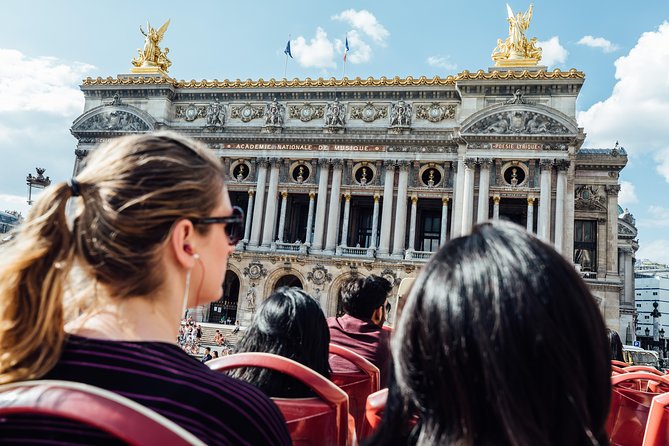
Finally, you reach Palais Garnier at 15 bis Rue Scribe. This rounds out the route with a classical landmark vibe that contrasts nicely with the modern-feeling parts of the itinerary.
It’s a good stop for anyone who likes Paris architecture details and wants an easy “end cap” after the Eiffel and Seine-side zones.
Audio commentary, headphones, WiFi, and the app that helps
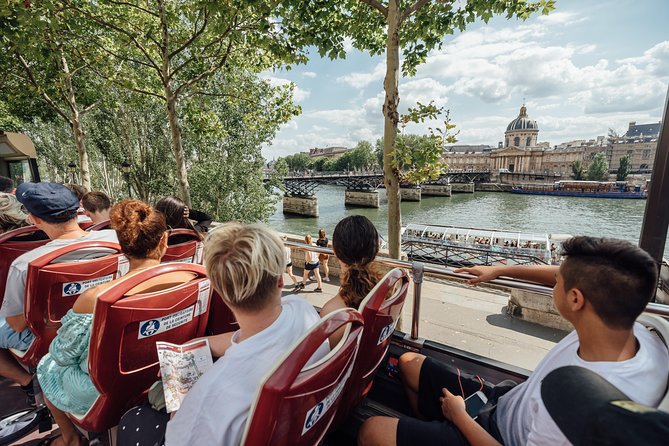
The audio experience is a big part of what you’re paying for. The commentary is available in nine languages, and the tour includes free headphones, so you can follow along without your phone volume competing with street noise.
I found this especially useful on a first visit. When you’re walking around later, you’ll recognize what you saw from the bus route. The commentary turns the route from a bunch of stops into a storyline you can remember.
Onboard WiFi is also helpful. You might use it to check timing, refresh directions, or quickly look up what you want to do next while the bus is moving.
Then there’s the Big Bus app. It provides route information and real-time bus tracking. When you’re hopping on and off, knowing when a bus is actually arriving makes the difference between “easy and relaxed” and “standing around, guessing.”
One practical note: sound quality can vary depending on how the headphones fit and how busy the bus is. If you’re picky about audio, it’s smart to be ready with your preferred listening setup.
Optional Seine cruise and Arc de Triomphe upgrades: when they’re worth it
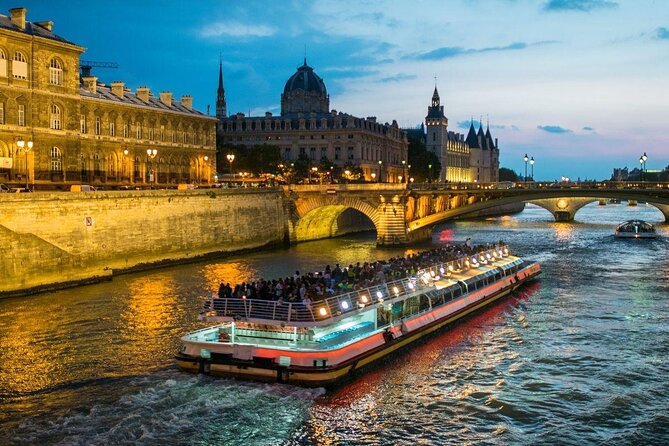
You can upgrade this sightseeing plan by adding a Seine River cruise and/or Arc de Triomphe tickets.
The cruise is listed as a 1-hour Seine experience. That’s a nice length because it isn’t so long you lose half a day. It’s also a classic match for seeing the city from the water after you’ve already done street-level landmarks.
But here’s the catch: there can be serious waiting time. Some people faced 2–3 hour lines for the river cruise. The ticketing setup also shows only one time slot for the day, based on the first boat leaving, rather than multiple departure times.
My advice: if you hate queues and tight timing, consider skipping the cruise upgrade and using that time for a museum or a long walk instead. If you’re happy to plan around crowds and you really want the water perspective, it can be a highlight.
Arc de Triomphe is only mentioned as an optional entrance ticket. Since monument entrances aren’t included in the base tour, adding Arc can be a useful way to avoid a separate purchase later—assuming it fits your day.
Getting on and off smoothly: timing, stop spacing, and cold weather
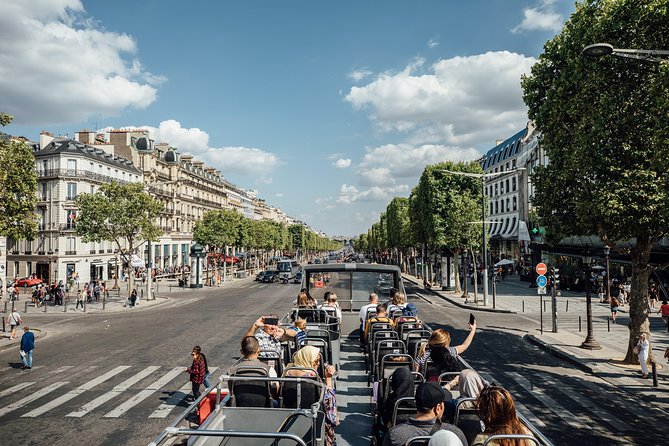
Hop-on hop-off tours only work well if the transfer moments feel smooth. There are three things that matter here: bus frequency, stop location clarity, and how you handle the weather.
Bus frequency is described as running every 7–11 minutes. That’s good. It means if you miss a bus or one is crowded, you usually won’t wait long.
Still, stop locations can require walking. Some people noted stops being spread out, with about a 20-minute walk from their hotel. The upside is that walking in Paris often beats waiting. The downside is you need comfortable shoes and a willingness to move a bit between the bus and nearby streets.
The open-top, double-decker design also means you’ll feel the weather. In rain or cold, staying warm might become a bigger priority than you expected. If you’re visiting in cooler months, layer up and plan for wind.
Then there’s the daytime schedule. One note from the tour’s operating window: buses run roughly 9:45 AM to 6:00 PM. If you start your 24-hour pass late in the afternoon, you may discover you hit the last bus before your pass ends. With a 24-hour ticket, validity is counted starting from when you first use it, not from midnight or calendar day.
If you want the most out of it, start earlier in the day than you think you need. That single move can save you from the “we barely used it” feeling.
Value check: who this bus pass fits best
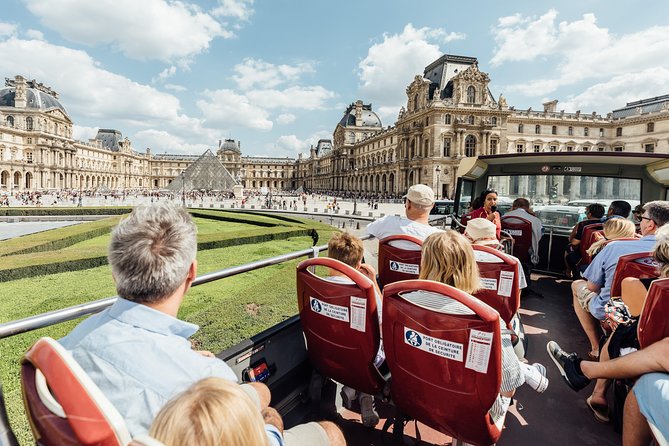
This is strongest for people who want structure without a rigid schedule. If it’s your first time in Paris, you’ll use the bus to map the city quickly, then return later for deeper visits.
It also fits well if you’re traveling with a mix of interests—someone wants big icons, someone else wants to wander neighborhoods. The hop-on format lets you split the difference: you can pause where you care most and still cover the key sights on the same loop.
Where it may feel less ideal is if you’re hoping to treat this like your only transportation all day. The stops are spread out, and several attractions take time on their own. For point-to-point travel between far-flung areas, you’ll probably still use metro or walking.
Think of the bus pass as your backbone. Use it to set your rhythm, not as your sole plan.
Should you book this Paris Big Bus hop-on hop-off tour?
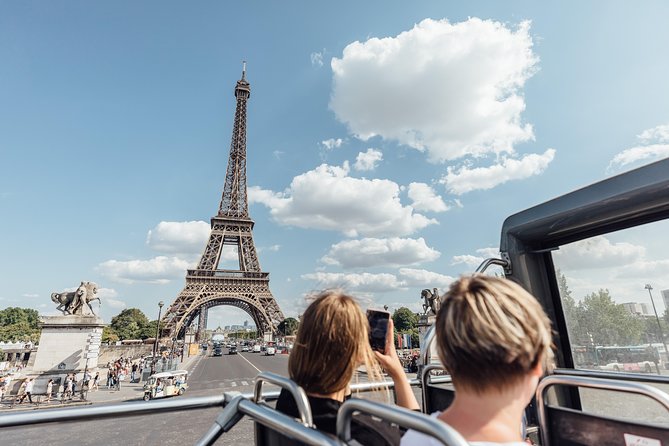
Book it if you want an easy way to see the main sights—Louvre, Notre Dame area, Musée d’Orsay, Champs-Élysées, Palais Garnier, and the Eiffel Tower zone—with 9-language audio, free headphones, and an app that tells you where the bus is.
Consider skipping or carefully timing the optional Seine cruise if you don’t enjoy lines or you’re on a tight schedule. The cruise can be the most time-sensitive part of the add-on, based on what people reported.
If your goal is a calm, flexible sightseeing day that helps you plan your future walks, this is a solid pick. Just start early, dress for the weather, and use the app so you’re not guessing at stop arrivals.