Philly clicks fast from the top deck. This hop-on hop-off double-decker bus tour strings together major sights with live English commentary, so you get context as the skyline rolls past. It runs about 1 hour 30 minutes end-to-end, but the real win is that you can hop off, explore, and hop back on at your pace.
I especially love the stop plan, with food-and-stroll time at Reading Terminal Market and big-photo landmarks like the Rocky Steps area. I also enjoyed the energy of guides such as John (dry humor and sharp facts), Ernest and Shirley (fun, friendly narration), and Uncle Bruce/Brucie (welcoming, helpful guidance).
The main drawback is timing and navigation. Depending on the day and season, waits between buses can stretch, and it can be a little tricky at first to figure out where the right bus is loading without wasting time.
In This Review
- Key highlights to know before you ride
- How the hop-on hop-off loop really helps you see Philadelphia fast
- Market Street start: the Independence-area launch point that sets the tone
- From Constitution Center to Chinatown: getting context before you walk farther
- Reading Terminal Market and City Hall: the best single stop for food and orientation
- Cathedral Basilica, Barnes and Rodin: “choose your lane” museum touring
- Eastern State Penitentiary and the art museum corridor: where the bus does the guiding
- Zoo and Please Touch: a kid-friendly route that doesn’t feel like a chore
- Rocky Steps and the Museum of Art entrances: the photo moment that’s worth planning for
- Franklin Institute to One Liberty Observation Deck: skyline views and smart timing
- Rittenhouse Square to Broad Street: the downtown-to-neighborhood feel shift
- Penn’s Landing and Spruce Street Harbor Park: the waterfront stop that can cap the day
- Guide quality, mic volume, and what to do if narration feels off
- Group size, comfort, and why early riding pays off
- So, should you book this Philadelphia double-decker hop-on hop-off tour?
- FAQ
- How long is the Philadelphia hop-on hop-off bus tour?
- What language is the onboard commentary?
- How many stops are on the route?
- Can I hop on and hop off at different stops?
- Where does the tour start?
- Is hotel pickup and drop-off included?
- What’s the maximum group size?
- What should I expect about bus schedules in different seasons?
- Does the tour run in poor weather?
- Can I cancel for free?
- Final call: who this tour fits best
Key highlights to know before you ride
- Open-air top-deck views: see Philly without the window reflections
- 27 stops across classic neighborhoods: Old City, museums, South Street, and the waterfront
- Live narration that keeps you moving smart: from landmark context to small practical tips (like ducking under low branches)
- Hop on, hop off flexibility: get off for photos, museums, or a quick bite and rejoin later
- Guides vary by shift: most are engaging, but the mic setup and style can change the experience
How the hop-on hop-off loop really helps you see Philadelphia fast
This tour works best when you treat it like a moving checklist. You start in downtown and ride past the places you would normally circle with multiple Ubers or a stressed-out map app. From the open-air upper deck, you get a constant sense of where you are—so even if you hop off for a while, you can reorient quickly when you board again.
You’ll also be in good shape for a short Philly stay. The full route is about 1.5 hours, but the hop-on hop-off format means your total day can stretch naturally. Think: ride first to get oriented, then choose 2–4 stops to go deeper on foot.
One more practical note: on busy days, upper-deck seats can feel tight. The ride is comfortable, but you’re sharing the bus with other people who also want those top views. If you’re traveling with kids, this is still very workable, as long as you’re ready for crowd moments.
Market Street start: the Independence-area launch point that sets the tone
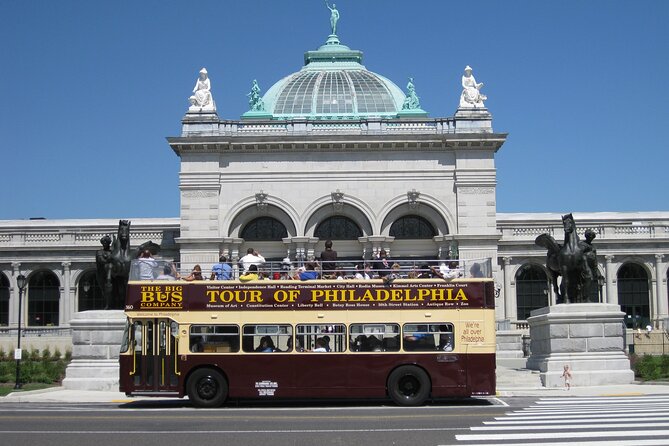
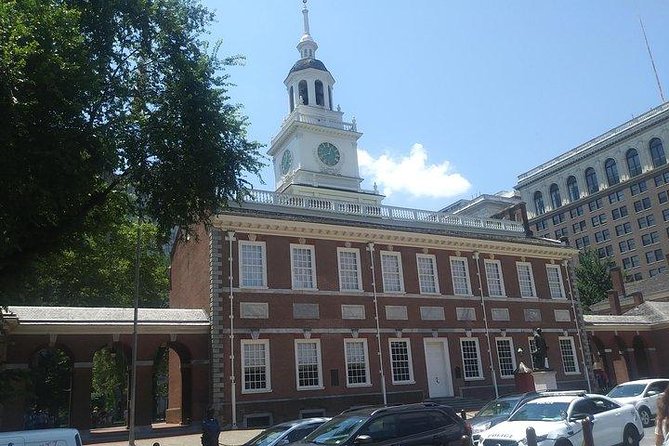
The tour begins at Market St & 6th St, near the Independence Visitor Center. Starting here matters because it drops you right into Philly’s “core” geography. Within the first part of the loop, you’re already moving along streets that define the city’s identity—so the rest of the route makes more sense.
From there, you pass the Betsy Ross House area (a quick visual hit that connects to Revolutionary-era Philly) and move toward the U.S. Mint / Ben Franklin’s Grave stop area. Even if you don’t go inside anywhere, the narration typically helps you place who’s who and why these locations are still talked about.
If you’re the kind of traveler who likes order, this is a good start point. It’s also a relief for first-timers: you’re not hunting around far-off neighborhoods just to begin.
From Constitution Center to Chinatown: getting context before you walk farther
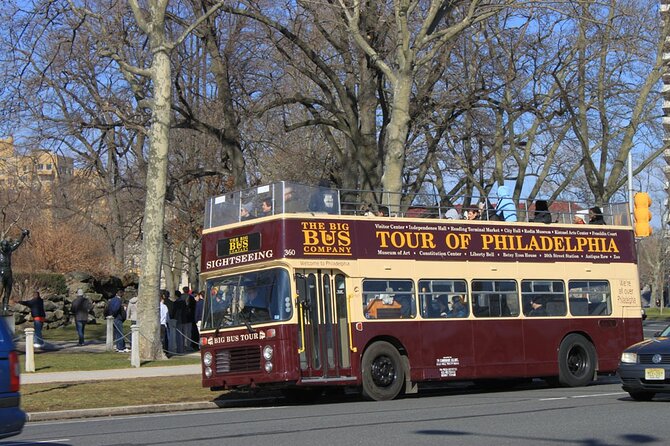
As the bus heads toward the National Constitution Center area, you get a clean “why Philly matters” thread running through the trip. This isn’t just photo stops. The live commentary is designed to connect the dots between the city’s major themes and the physical sites you’re seeing.
Then comes Chinatown / Fashion District. This segment is a nice shift in vibe—less “monument loop” and more real neighborhood feel. You’ll get a chance to look at streetscape, storefronts, and the general energy of that part of town. It’s a good moment to decide if you want to hop off later for more time.
A small reality check: narration style can change by guide. Some guides lean funny and brisk; others are more straight-laced. Either way, being on the bus keeps you from losing the thread, since you’re listening while you move.
Reading Terminal Market and City Hall: the best single stop for food and orientation
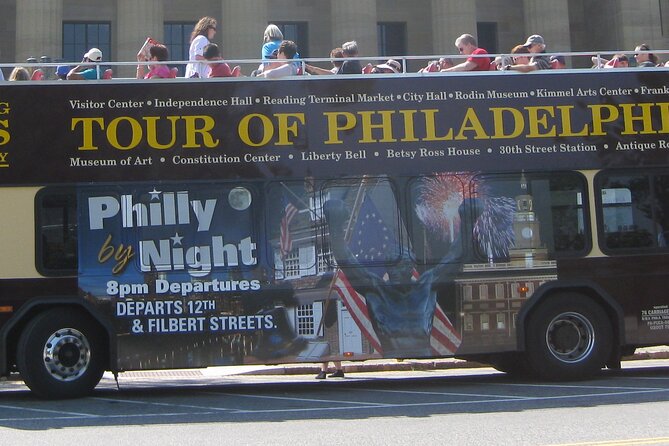
If you only hop off once, I’d aim at Reading Terminal Market / Convention Center Marriott / Macy’s. This is one of the most useful stops on the whole route because it’s both practical and memorable. You can grab lunch, snack your way through, and still keep your momentum for the afternoon.
Right after that, you roll past City Hall / Love Park. This is where the architecture and scale show up clearly. Even a quick look helps you understand why downtown Philly feels the way it does—wide streets, big civic spaces, and a layout that rewards walking.
In my view, pairing a market stop with a central landmark like Love Park is smart. It breaks the day up so you’re not stuck in museum-mode the entire time.
Cathedral Basilica, Barnes and Rodin: “choose your lane” museum touring
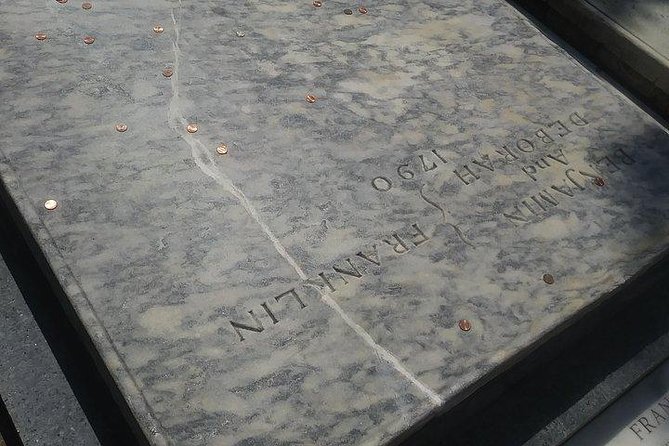
Next you pass the Cathedral Basilica of Saints Peter and Paul / Sister Cities area. This is a classic Philly sight—big, historic, and visually loud in the best way. It also gives you a smoother transition from downtown civic spaces into the city’s museum zone.
Then you reach Barnes Foundation and the Rodin Museum areas. These are strong choices if you like art and want to spend time without guessing. From the bus, you’ll get a sense of how these institutions are clustered—and you can hop off for as long as you want, then rejoin.
Here’s how I’d play it: if you’re short on time, do a quick walk outside for photos and atmosphere, then decide whether you’re actually going in. If you’re staying longer, this is where you can slow down and spend actual hours. The hop-on hop-off setup makes both options realistic.
Eastern State Penitentiary and the art museum corridor: where the bus does the guiding
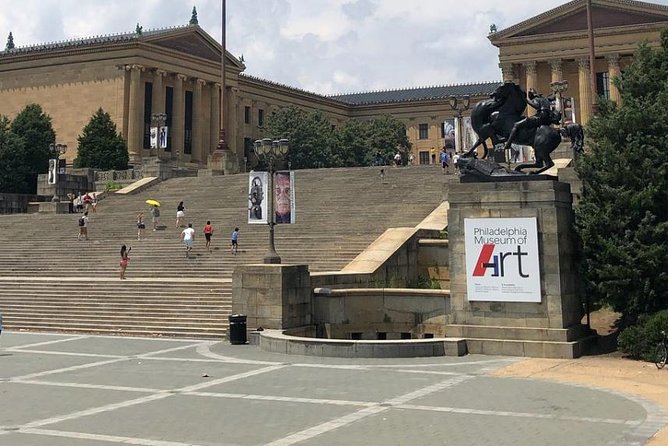
The bus then goes through the Eastern State Penitentiary area. Even if you only view it from the curb, it’s one of those stops that feels immediately meaningful. The live commentary helps you understand why this site is such a big deal in Philadelphia’s story.
From there, you move toward the Perelman Building of the Philadelphia Art Museum area. This part of the route sets up the museum cluster that many visitors come to see. The tour’s structure helps because you don’t get dumped into the area with zero context.
One of the best “value” elements here is you’re not paying extra to move between these places. You’re already riding, and every time you cross into a new zone, you’re getting narration that explains what you’re looking at.
Zoo and Please Touch: a kid-friendly route that doesn’t feel like a chore
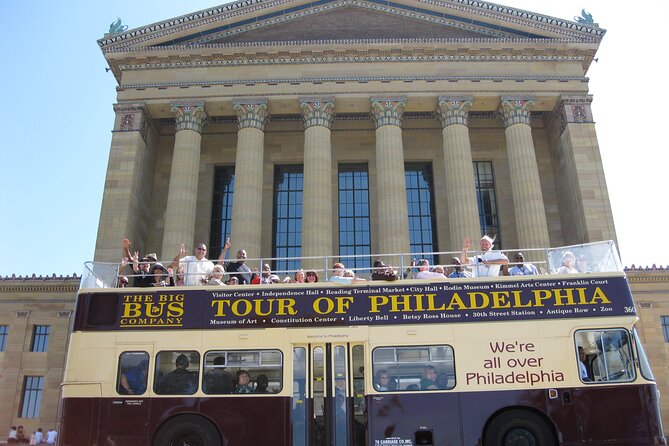
If you’re traveling with families, two stops deserve special attention: The Philadelphia Zoo and Please Touch Museum / Memorial Hall / Fairmount Park. Even if you don’t go inside, the locations themselves help you plan a fun day.
The Philadelphia Zoo is ideal for travelers who want animals and outdoor breaks. Please Touch Museum is great for younger kids who need interactive time. And the Memorial Hall / Fairmount Park area gives a taste of Philly’s bigger green-spaces direction.
The upside of this bus tour for families is pacing. You’re not forcing kids through a single museum marathon. You can ride, hop off for an hour or two, then take the bus to the next stop when energy drops.
Rocky Steps and the Museum of Art entrances: the photo moment that’s worth planning for
Then comes the Philly Museum of Art area, including the East Entrance at the Rocky Steps area and the West Entrance stop. This is where the tour delivers on the iconic Philly experience that many people come for.
The Rocky Steps stop is especially handy because you can gauge the crowd and conditions from the bus, then decide when to hop off. If you’re there for photos, plan to move quickly once you get off. Photo spots can take time, and you don’t want to miss your next bus window if you’re juggling stops.
Also, this is one of the places where you’ll be glad for the top-deck height earlier. By the time you arrive at the museum zone, you have a sense of direction. That makes walking feel less like guesswork.
Franklin Institute to One Liberty Observation Deck: skyline views and smart timing
The route passes Franklin Institute / Logan Circle, then heads toward One Liberty Observation Deck, Philly From the Top. Even if you don’t enter the deck, the bus view helps you understand where Philly’s skyline punches hardest.
This segment is a smart time to think about your schedule. If you want the skyline view at its best, you’ll need to plan around light and crowds once you hop off. The tour itself doesn’t control that—but it gives you the access.
One useful tip that shows up with some guides: stay alert for low overhangs and branches when you’re moving around in certain areas. If a guide reminds you to duck, do it. It’s the kind of small safety habit that saves your day.
Rittenhouse Square to Broad Street: the downtown-to-neighborhood feel shift
Next up: The Bellevue Hotel / Rittenhouse Square and then Academy of Music / Broad Street. This is an easy area to recognize in Philly—beautiful streets, a “more refined” downtown edge, and big-city energy. From the bus, you can see how quickly the city changes as you move a few blocks.
Pine Street and then South Street / Head House Square are on the route as well. These stops are where Philly starts to feel more like a lived-in place than a museum corridor. You’ll get a sense of how locals and visitors move around—more storefront energy, more street-level scenes, and more places to grab food or browse.
Then you hit the Vietnam Veterans Memorial area. That’s a moment where the narration tends to matter. The bus keeps it from becoming a random pass-by, and you’re able to decide whether you want to pause.
Penn’s Landing and Spruce Street Harbor Park: the waterfront stop that can cap the day
The loop heads toward the Hilton Philadelphia at Penn’s Landing / Columbus Boulevard / Spruce Street Harbor Park area. Even if you just take in the riverfront mood from the street, it changes the whole feeling of the day. It’s a natural “wind down” choice after you’ve done civic buildings and museum zones.
After that, you’ll pass Penn’s Landing / Waterfront. This is where you can look out and feel the city’s geography in a way you can’t from inland streets.
Then the bus continues toward Old City / Christ Church and the Faith and Liberty Discovery Center stop. This is the final “connector” stretch back into the historic core. If you started in the Independence area, this later return gives you a full-circle feeling.
Guide quality, mic volume, and what to do if narration feels off
The biggest quality variable on this type of tour is the guide and the audio setup. The good news: many guides bring humor and keep the group engaged—one guide’s dry humor and ability to stay crisp was a common win. Drivers also tend to be friendly and helpful with stop guidance, and that matters because it reduces the stress of hopping off and back on.
The mixed part: narration volume can be inconsistent, especially when wind interferes. If you can, sit in a spot where you can hear clearly. Also, if you’re relying on translation audio, note that there can be technical hiccups, so don’t wait until the tour is well underway to address it—bring it to staff attention early.
Finally, keep your expectations realistic about hop-on timing. Some days the buses can feel frequent. Other days, you may wait longer at certain stops. If you’re planning a museum entry with tight hours, hop off with cushion time and be ready to adjust.
Group size, comfort, and why early riding pays off
This tour runs with a maximum of 65 travelers. That’s not huge for a city bus tour, and it generally helps with the onboard experience. You’ll still feel the space limits on crowded departures, especially at busy stops, but it usually stays manageable.
In terms of comfort, people often highlight that the ride is smooth and the buses feel reasonably comfortable. If you want the best views, grab upper deck seats early. If you’re sensitive to crowds, you might prefer hopping on at a quieter stop rather than starting right at the busiest loading area.
And I’d strongly suggest doing this earlier in your trip if you can. You’ll learn how Philly is laid out, which stops cluster together, and what areas you want to revisit on foot.
So, should you book this Philadelphia double-decker hop-on hop-off tour?
Yes, I’d book it if you want a low-effort way to see a lot of Philadelphia’s top sights in a short window. The value comes from the combination of 27 stops, open-air top-deck views, and live guided narration that helps you understand what you’re looking at—especially if you plan to hop off at key anchors like Reading Terminal Market, the museum zone, and the waterfront.
I’d think twice if you hate waiting around. Hop-on hop-off touring can mean longer gaps at some stops, and you may need to pay extra attention to where your bus is loading and where staff are directing you.
If you’re flexible, this tour is a solid way to get your bearings fast and build a day around your interests.
FAQ
How long is the Philadelphia hop-on hop-off bus tour?
The tour runs for about 1 hour 30 minutes, approximately.
What language is the onboard commentary?
The live commentary is offered in English.
How many stops are on the route?
There are 27 stops along the loop.
Can I hop on and hop off at different stops?
Yes. You can get on or off at any stop on the route.
Where does the tour start?
The tour starts at Market St & 6th St, Philadelphia, PA 19106.
Is hotel pickup and drop-off included?
Hotel pickup and drop-off are included.
What’s the maximum group size?
The maximum is 65 travelers.
What should I expect about bus schedules in different seasons?
Operating hours vary by season. During the winter months, buses run approximately every 45–60 minutes.
Does the tour run in poor weather?
This experience requires good weather. If it’s canceled due to poor weather, you’ll be offered a different date or a full refund.
Can I cancel for free?
Yes. You can cancel for free up to 24 hours in advance for a full refund. If you cancel less than 24 hours before the start time, the amount paid is not refunded.
Final call: who this tour fits best
Book this if you want a practical, high-sight-per-hour way to cover downtown, museums, South Street, and the waterfront with live narration and hop-on freedom. Skip it if you’re planning tightly scheduled entries with zero waiting tolerance, or if you prefer fully guided walking tours instead of a bus-based hop-on route.