East Jeju packs a lot into one calm day. You get a Seogwipo departure, a licensed English guide, and a route that strings together traditional village life, UNESCO coastal scenery at Seongsan Ilchulbong, and real haenyeo culture in one long but not hurried day. I especially like the small-group feel, where you can actually ask questions and move at a human pace. I also love how the haenyeo story isn’t treated like a side show, but explained as culture you can understand.
The main drawback is weather and effort: Jeju is windy, the Sunrise Peak walk has stairs, and the haenyeo in-water performance near the top can be weather-dependent. Also, lunch is on your own.
In This Review
- Key takeaways before you go
- From Seogwipo: East Jeju without the Jeju City logistics
- Seongeup Folk Village: traditional Jeju you can walk through
- Seongsan Ilchulbong and Gwangchigi Beach: UNESCO views with a windproof plan
- The haenyeo Museum and spotting women along Jongdal-ri
- Woljeong-ri Beach: a short break with sea-color payoff
- Manjanggul Cave versus Hamdeok-area alternatives (and what that means for your day)
- Driving days run longer than you think: pace, vehicles, and group size
- Wind, steps, and what to pack for a comfortable day
- Price and value: is $88 worth a 9.5-hour East Jeju day?
- Should you book this East Jeju tour?
- FAQ
- Where does the tour pick up in Seogwipo?
- How long is the tour?
- What group size is this tour?
- What languages are the guide services offered in?
- What is included in the price?
- Is lunch included?
- Is Manjanggul Cave guaranteed?
- Can you always watch the haenyeo in-water performance at Seongsan Ilchulbong?
Key takeaways before you go
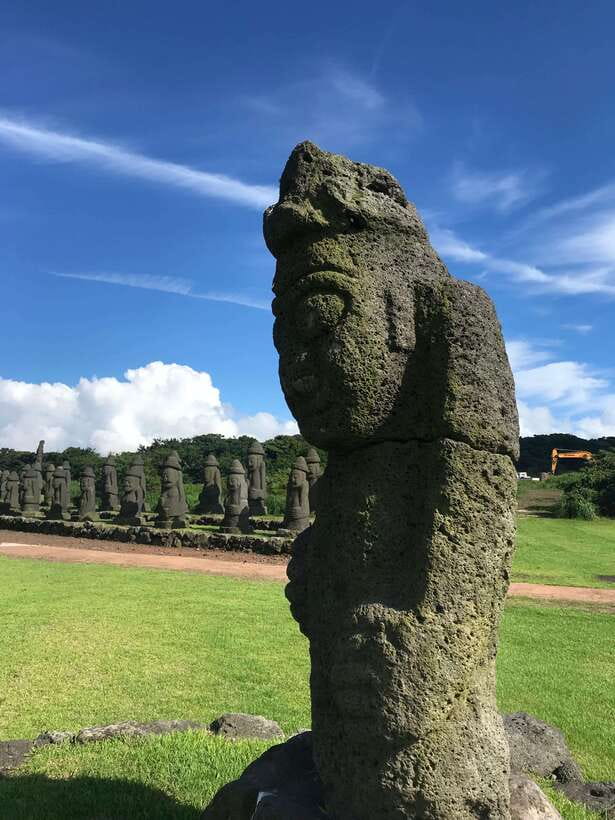
- Seogwipo pickup convenience: Free hotel pickup in Seogwipo’s Old Town, plus Casaloma Hotel serving as a pickup point for outside-center stays
- UNESCO day highlights: Seongeup Folk Village, then UNESCO Seongsan Ilchulbong for the crater-and-coast views
- Haenyeo culture explained: You’ll visit the Haenyeo Museum to understand the island’s intangible heritage
- Weather-sensitive timing: The in-water performance near the Sunrise Peak is not guaranteed
- Manjanggul cave replacement plan: If Manjanggul Cave isn’t accessible (it’s temporarily closed until Mar 2026), you’ll pivot to Hamdeok-area alternatives
From Seogwipo: East Jeju without the Jeju City logistics
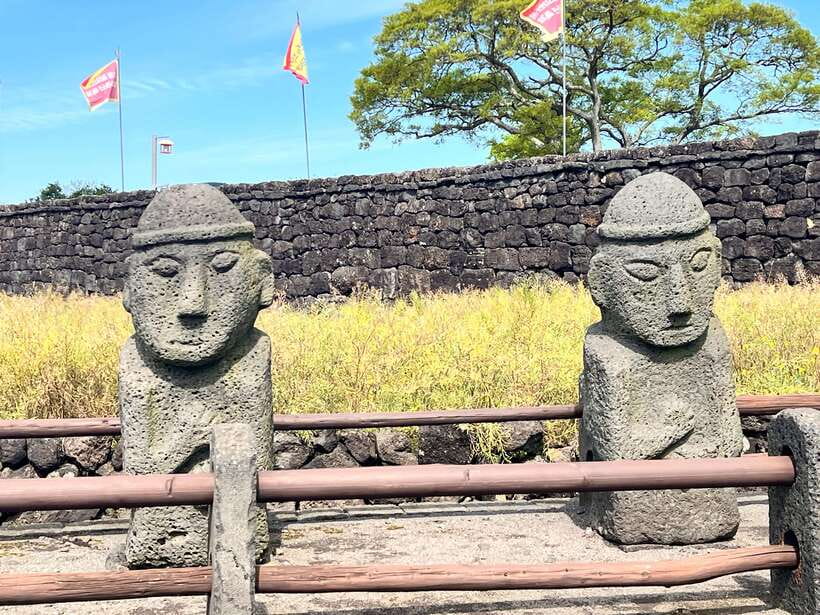
If your base is Seogwipo (or you’re staying near Jungmun), this style of tour makes life easier. You start in the south of Jeju instead of trekking up to Jeju City, and you end back at your hotel in Seogwipo.
You’ll also notice the difference in how the day feels. This is built for a smaller group, so you’re not stuck behind a parade of people at each ticket gate or viewpoint. It’s still a full day, but it won’t feel like a fast conveyor belt.
One more practical win: you get a guide who can explain what you’re seeing, plus a driver who handles the turns and parking. On Jeju, that matters because coastal roads can be slow, and weather can change quickly.
Seongeup Folk Village: traditional Jeju you can walk through
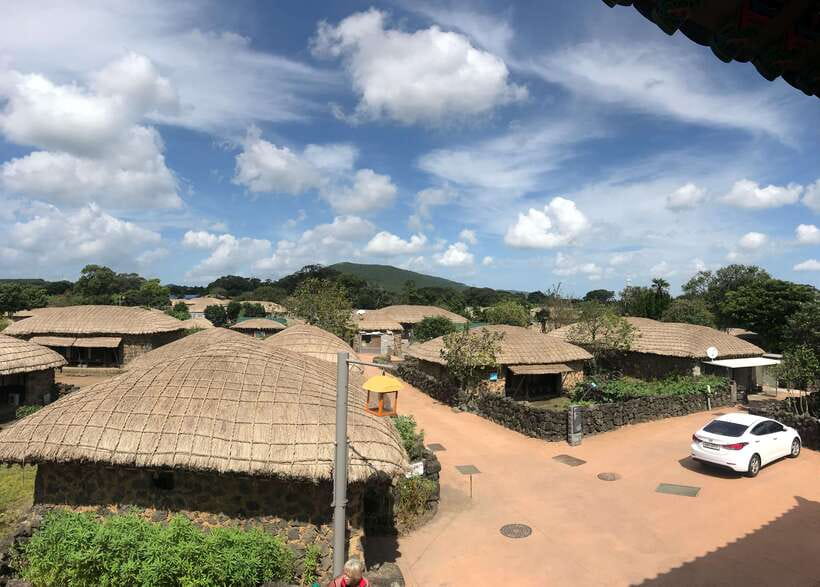
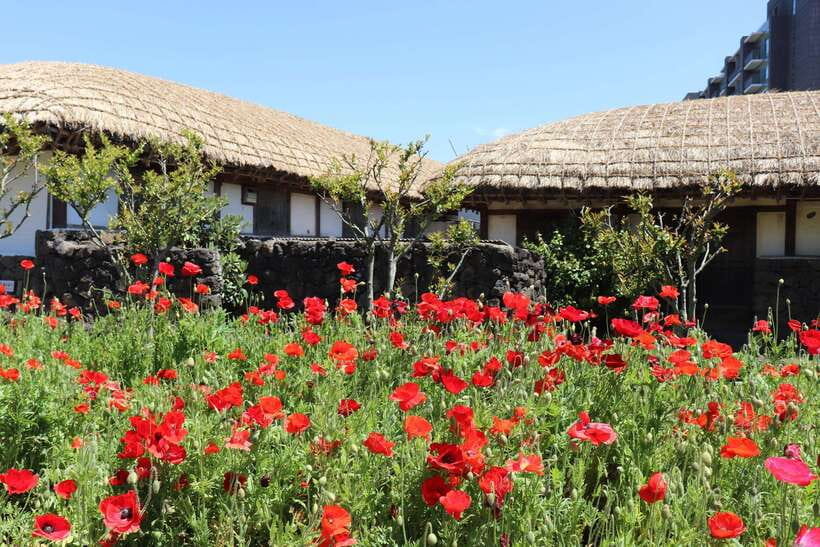
The day begins with Seongeup Folk Village, about 50 minutes from Seogwipo. It’s a guided stop (around 40 minutes), so you’re not just wandering around looking at buildings—you’re getting context for what you’re seeing.
What I like about this start is that it sets the cultural baseline. Jeju isn’t only about scenery; it’s also about how people lived in this island environment, using local materials and adapting to life near the coast and countryside. In the village, you get that sense that the place is lived-in, not staged.
The main thing to watch for is simple comfort. This is a walking stop, and on windy days you’ll appreciate a layer that blocks wind. If you’re someone who doesn’t like lots of outdoor time early, you’ll still be fine, but plan to wear comfortable shoes.
Seongsan Ilchulbong and Gwangchigi Beach: UNESCO views with a windproof plan
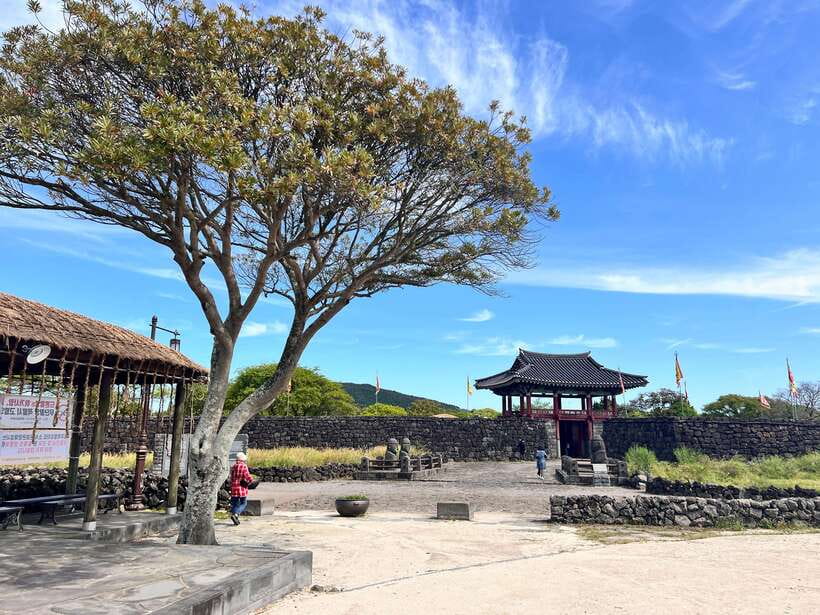
After Seongeup, you drive along the coast toward Seongsan Ilchulbong, stopping for an explanation at Gwangchigi Beach before you reach the main area. It’s a smart setup. You get the story first—what makes this UNESCO site special—then you’re ready for the walking and the crater views.
Seongsan Ilchulbong is a tuff cone-shaped peak, and the experience is all about scale and texture. You walk through a coastal scene that looks carved by wind and water, and the views from up top are the payoff: ocean, horizon, and that unmistakable feeling that Jeju is both rugged and theatrical.
At the end of the Sunrise Peak trail, there’s a chance to watch haenyeo women in action near the top. The big word here is chance. The performance can be held depending on weather, so I treat the museum visit later as the reliable cultural anchor.
Pack for the wind. Jeju is windy, and this is the kind of place where wind makes even a short walk feel longer. Bring a wind jacket and expect gusts near the open volcanic edges.
The haenyeo Museum and spotting women along Jongdal-ri
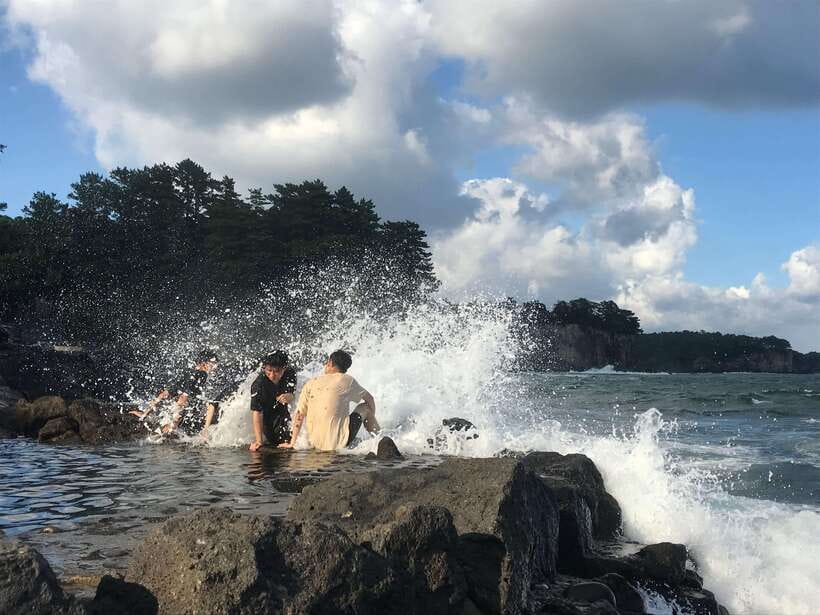
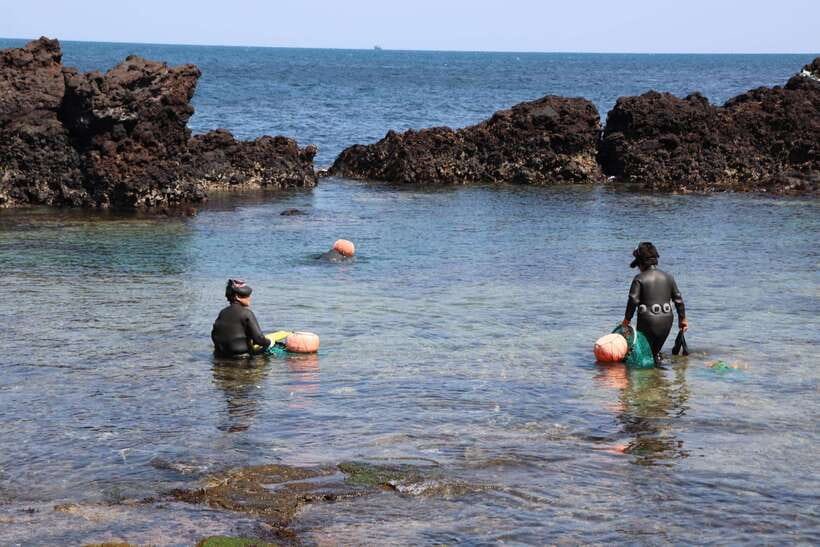
From Seongsan, the route continues with coastal driving along Jongdal-ri. This is part sightseeing, part hoping you’ll see haenyeo women out on the sea. When they’re spotted, you may get a brief moment to look up close and understand how the culture shows itself in real time.
Then you go to the Haenyeo Museum for a guided visit (about 50 minutes). This stop is valuable because it turns the day from spectacle into understanding. You learn about haenyeo as an intangible cultural heritage of humanity—why it exists, how it connects to Jeju life, and how it has shaped local identity.
If the in-water performance near Seongsan doesn’t happen on your day, the museum still gives you the context you came for. And if you do catch the performance, the museum helps you read what you’re seeing instead of just reacting to the moment.
This is also where you’ll get the best use out of an English guide. The explanations connect the islands’ volcanic geography and the sea-based lifestyle to the people who make their living here.
Woljeong-ri Beach: a short break with sea-color payoff
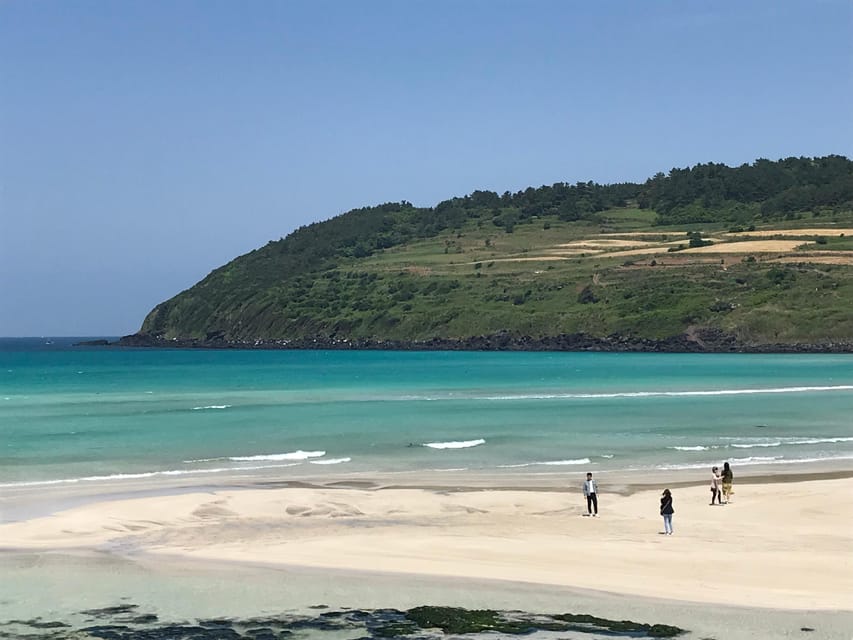
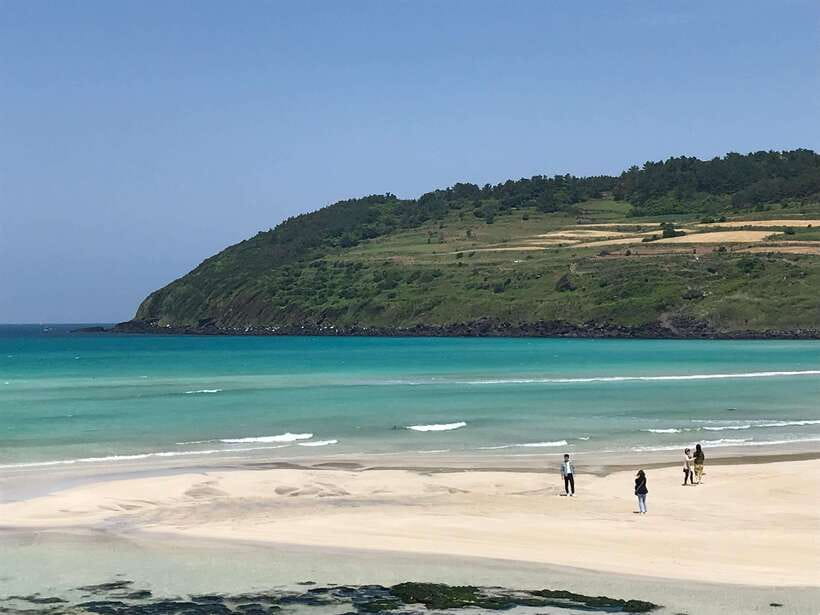
After the inland-and-peak parts of the day, you get a breather at Woljeong-ri Beach with free time (around 30 minutes). The beach is described as small, but it has that Jeju look: clear water color and a laid-back coastal charm.
I like this kind of scheduled downtime because it stops the day from feeling relentless. You can step away from guided moments, reset your legs, and take photos without the pressure of constantly following a group.
The drawback is timing. Since this day is long, you’ll want to manage energy. Use this break wisely: water, quick snack if you brought one, and then take in the view before you head back into the next guided stop.
Manjanggul Cave versus Hamdeok-area alternatives (and what that means for your day)
Here’s the practical twist: Manjanggul Cave has been temporarily closed until Mar 2026 due to falling rocks. On your tour day, you’ll either go to Manjanggul Cave (about a 1-hour guided visit) or you’ll pivot to Hamdeok-area options.
The replacement depends on conditions, but the plan includes Hamdeok Seowoobong beach as the alternative location. If you can’t do Manjanggul Cave because of weather or other issues, you’ll get break time at Hamdeok Beach. It’s described as the largest and one of the most beautiful beaches in Jeju, so it’s not a consolation prize in spirit—it’s a different kind of coast-time.
There’s also an option to trail Seoubong Peak for sunset views. If you love golden-hour scenes and you don’t mind extra walking, it’s a great way to end on a visual high.
One important detail: the tour visits only one of these major options—Manjanggul Cave or Hamdeok Beach & Seopjikoji. So if cave is your priority, don’t assume you’ll see it every day. Build your expectations around the coastal experience either way.
Driving days run longer than you think: pace, vehicles, and group size
The total duration is 570 minutes, which is about 9.5 hours. It’s a long day, but the way it’s built helps. You get guided time at the main cultural and natural stops, then you get enough transit between them to settle in.
Transport is handled with care. The vehicle depends on group size: you might ride in a family-size van (max 5), a small bus-size van (max 12), a mini bus (max 17), or a bus (max 40). In every version, the goal is comfort and smooth logistics, especially for a day that includes uphill walking at the peak area.
The tour is limited to small group size (up to 12 participants), which is one of the biggest reasons people recommend it. With fewer people, the guide can manage timing better and you’re less likely to feel trapped at the back.
Also, expect help with real-life logistics. On the way back, there’s a stop designed for guests going toward Jeju Airport or downtown Jeju City. And at the end, you return to your departure hotel in Seogwipo and the Casaloma Hotel.
Wind, steps, and what to pack for a comfortable day
Jeju’s weather is not a suggestion. It’s a factor. This tour explicitly warns that Jeju is windy, so plan for it.
Here’s what I’d pack based on the route:
- Wind jacket (this is the difference between enjoying the views and just enduring them)
- Comfortable walking shoes for uneven paths and stairs near Seongsan Ilchulbong
- In summer: raincoat and flip-flops (as recommended)
- Sunglasses and a simple umbrella can help on sunny days where glare is strong
Also think about stamina. Even if you’re not doing a major hike, the Sunrise Peak area involves stairs and a climb. It’s doable for many people, but you’ll want to arrive rested.
If you’re very elderly, note that the tour isn’t suitable for people over 95 years. That’s not just about walking speed; it’s about managing stairs and weather in outdoor areas.
Price and value: is $88 worth a 9.5-hour East Jeju day?
At $88 per person, this isn’t a cheap activity, but it also isn’t overpriced if you compare what’s wrapped into the price.
You’re paying for:
- Transport all day (with gasoline and parking covered)
- A licensed English-speaking guide (English and Korean are listed)
- Admission fees for all parks
- Driver and guide meal included
What you’re not paying for is lunch, plus your own insurance, flights, and hotels. So yes, you’ll still spend on a meal.
The value is strongest if:
- You’re staying in Seogwipo and you don’t want to self-drive across the island
- You prefer a guided explanation over trying to piece together the island by yourself
- You’re traveling solo or as a small group and want pickup and drop-off without renting a car
If you have your own car and you’re the type who enjoys driving and stopping wherever, the cost can feel higher. But on a windy island with timed natural sights, a guided small-group format helps you make the day work.
Should you book this East Jeju tour?
I think you should book this tour if you want an East Jeju highlight day that includes both nature and culture, starting from Seogwipo. It’s also a good fit if you like structure but still want pauses—Seongeup starts you with context, Seongsan delivers the iconic UNESCO views, and the haenyeo Museum gives meaning behind the in-water moments.
Skip it (or choose a different option) if you strongly need Manjanggul Cave specifically, because it’s temporarily closed until Mar 2026 and your day will shift to Hamdeok alternatives. Also choose carefully if you dislike stairs or you know you struggle with windy outdoor walking.
If your goal is a smooth, guided way to see a lot of East Jeju without juggling transit, this is one of the more practical day tours from Seogwipo.
FAQ
Where does the tour pick up in Seogwipo?
Pickup is available from hotels in Seogwipo’s Old Town, and you’ll be notified of availability the day before. The pickup location is also listed as Seogwipo Maeil Olle Market, and Casaloma Hotel is used for travelers staying outside the city center.
How long is the tour?
The duration is 570 minutes (about 9.5 hours).
What group size is this tour?
It’s listed as a small group with a limit of 12 participants.
What languages are the guide services offered in?
The live tour guide is listed as English and Korean.
What is included in the price?
Included items are transport, a licensed English-speaking guide, driver, gasoline, parking fees, admission fees for all parks, plus guide and driver meals.
Is lunch included?
No. Lunch is not included.
Is Manjanggul Cave guaranteed?
No. Manjanggul Cave is temporarily closed until Mar 2026 due to falling rocks. If you can’t go there, the tour visits Hamdeok-area alternatives, and the tour will only do one of Manjanggul Cave or Hamdeok Beach & Seopjikoji.
Can you always watch the haenyeo in-water performance at Seongsan Ilchulbong?
No. It depends on weather, so it’s not guaranteed. The tour also includes the Haenyeo Museum so you still learn the culture even if the in-water performance can’t be held.