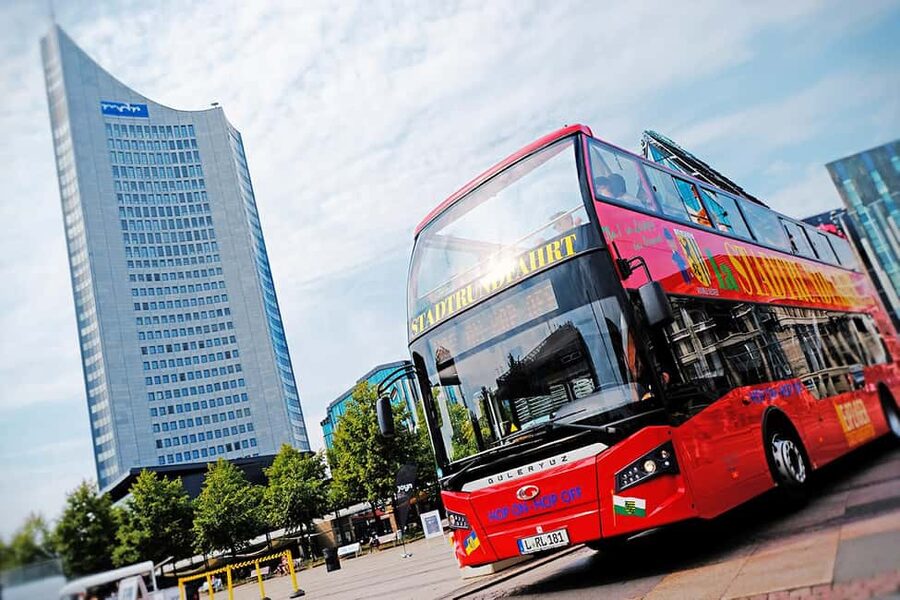
Leipzig makes sense fast from a bus seat. This red double-decker city tour gives you a guided loop of the main sights, with German live guides onboard and even a free 45-minute walking tour included when you book a ticket. The one catch is simple: the commentary is live in German, and the accent can be tough if you’re not used to Saxon-style pronunciation.
What I like most is the convenience and the pacing. You start at Richard-Wagner-Straße 2, right by Leipzig Central Station’s East Hall, and the route is built to fit a real day of sightseeing (including about 20 minutes at the Battle of the Nations Monument). If you’re hoping to catch a lot without scheduling pressure, this tour is a practical way to do it.
In This Review
- Key points to know before you get on the bus
- Starting at Leipzig Central Station: the easiest place to begin
- The red double-decker ride: what you’ll actually see in 100 minutes
- Your stops in order (and what they’re good for)
- The free 45-minute walking tour: how it works and what to expect
- German commentary reality check: the main thing to plan around
- How the 20-minute monument stop can shape your whole day
- Price and value: $16 worth it for what you’re really buying
- Who this tour suits best (and who should pick something else)
- Should you book Leipzig’s bus-and-walking tour?
- FAQ
- How long is the Leipzig bus tour?
- What’s included besides the bus ride?
- When does the walking tour run?
- Where do I meet the tour?
- Is there live commentary during the bus tour?
- Is written tour information available in other languages?
- How often do the buses run?
- Does the tour end back at the same place?
- Is the tour wheelchair accessible?
Key points to know before you get on the bus
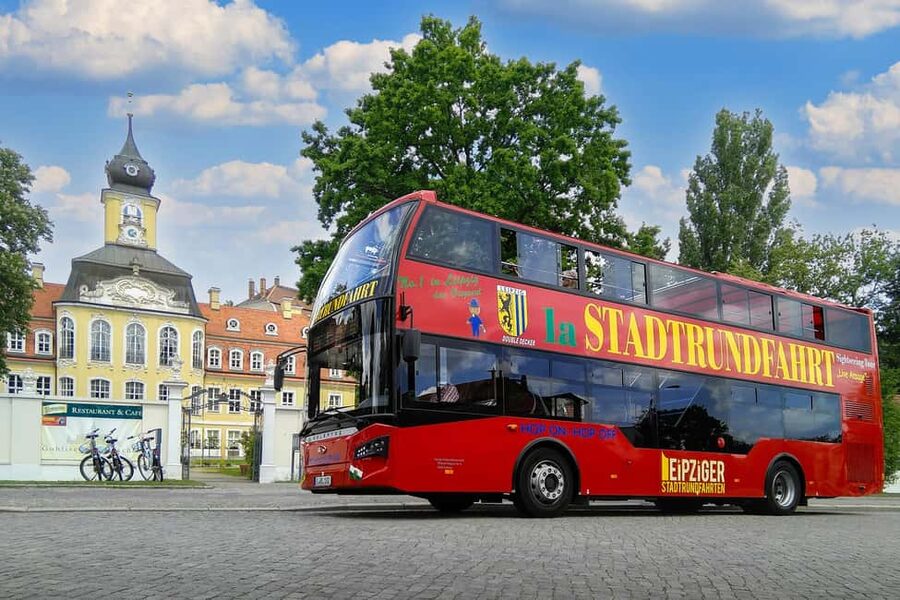
- Red double-deckers with the Messemännchen mascot make the tour easy to spot at the start
- 100 minutes of bus touring covers 13 stops focused on the city’s major landmarks
- A free 45-minute walking tour can be added with your ticket (seasonal from March to the start of the Christmas Markets)
- German live commentary on all buses plus written tour info in other languages
- About 20 minutes at the Battle of the Nations Monument gives you time to get oriented and take photos
- Buses run regularly and you return back to the same main meeting point
Starting at Leipzig Central Station: the easiest place to begin
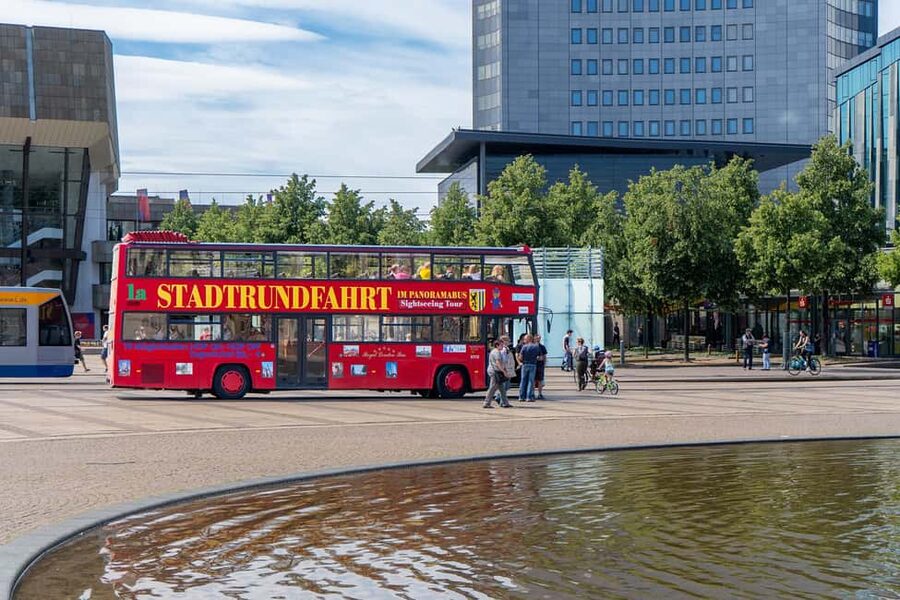
The logistics are friendly here. The main meeting point is Richard-Wagner-Straße 2, across from Leipzig Central Station / the East Hall. That matters because it means you’re not wrestling with Leipzig geography on your first day. If you’re arriving by train, you can often jump straight into sightseeing.
Your ticket is valid for one tour, and the activity ends back at the starting point. That keeps the plan simple: you don’t have to figure out a new “drop-off location” trick unless you’re advised otherwise for a specific departure.
Also note that the first stop is described as having two starting location options tied to the operator area. In practice, you’ll just want to confirm which spot is being used for your departure time so you don’t waste time walking around.
The red double-decker ride: what you’ll actually see in 100 minutes
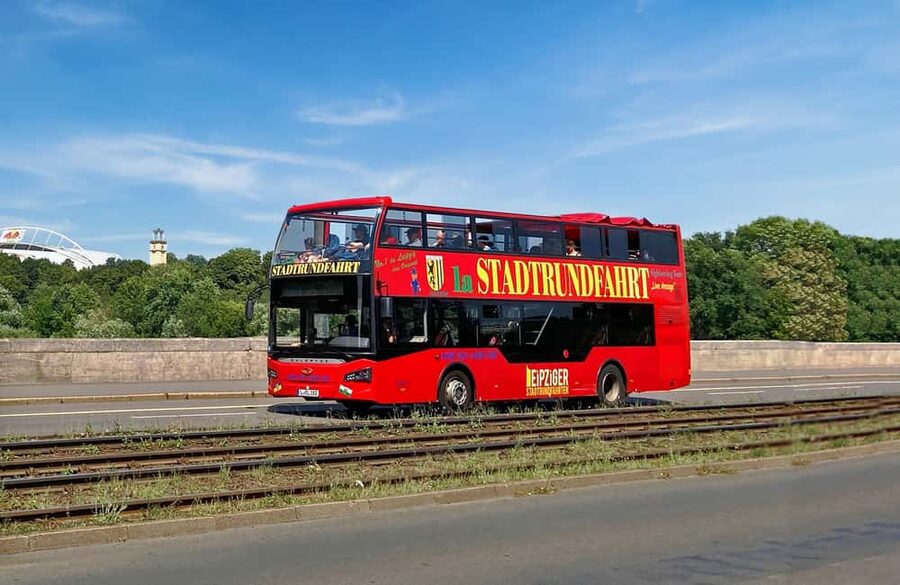
This is a classic city “big picture” route. You’ll be on a double-decker bus with commentary as you pass key areas of Leipzig. The bus tour portion is listed as about 100 minutes, with 13 stops along the way.
You also get live narration in German, delivered by guides onboard the buses. If you read German only casually, don’t stress, but do plan to rely on the visual tour and the written info (available in other languages). On the plus side, live guides can add personality and quick context, and the route is paced for looking—not sprinting.
Buses run at regular intervals. One practical detail from rider feedback is that departures are often around every 30 minutes, which helps if you’re waiting for the walking tour to start, or if you want to match the tour to your day’s plans.
Your stops in order (and what they’re good for)
I’ll walk you through the route as it’s laid out, with the “why this stop matters” angle—mostly so you know when to look up, when to prep for photos, and when to just enjoy the view from street level.
Leipzig Central Station (Pass by)
This is your orientation point. Even though you don’t linger, it anchors the day’s logic: the tour is built from the station outward.
Leipzig Zoological Garden / Gondwanaland (Pass by)
If you like animals, family sights, or you just want a sense of the city’s major recreation areas, this is one of the first cues that Leipzig is more than monuments and old streets.
Gohliser Castle (Stop 5 / listed as Gohliser Castle area)
Castles in cities like Leipzig often signal older districts and their architectural style. Even without getting off, you’ll get a quick “map moment” for the direction the tour is taking.
Schiller House Leipzig, Menckestraße 42 (Stop 6, then again)
This is one of the repeated anchor points, which usually means it’s a big landmark on the route. The schedule shows it more than once, so it’s worth paying attention when it appears.
Waldstraßen Quarter / Rosental (Stop 7)
This area is tied to the Waldstraßen Quarter plus the Rosental with a zoo display window and a nearby Sport Forum (as listed). It’s one of those stops where you’re not just watching buildings—you’re getting a sense of district life: leisure spaces, facilities, and residential streets.
City Harbour Leipzig, Schreberstraße 20 (Stop 8)
A city harbor stop is a strong “Leipzig is not just landlocked city streets” signal. This is your moment to look for how waterways connect into urban planning.
Capa-Haus / Exhibition War is over: Robert Capa in Leipzig (Stop 9)
If you care about photography and modern European art themes, this is the stop you’ll circle in your mind. The tour explicitly flags the exhibition, so you can decide whether this is a “look from the outside” moment or a “build a return plan later” moment.
Federal Administrative Court + library Albertina (Stop 10)
This one is more civic and institutional. It gives you a snapshot of Leipzig’s public and legal presence, with the library named directly (Albertina).
Leipzig Panometer (Stop 11)
A named cultural stop like this signals a major venue area. Even if you don’t enter, it’s a good way to learn where a major attraction sits in relation to other sights.
Monument to the Battle of the Nations + Southern Cemetery + Old Market (Stop 12)
This is the big featured pause. The format highlights a 20-minute stop at the monument, and the route places it alongside the Southern Cemetery and Old Market. This is where you’ll want to take your time, because it’s the clearest “Leipzig landmark” moment on the circuit.
Deutsche Bücherei (Stop 13)
This is Leipzig’s library stop on the list. If you like cultural institutions, it’s your clue that the city has major hubs beyond museums and churches.
Bavarian Station / Old Train Station (Restaurant) (Stop 14)
This is one of those stops that helps you understand how Leipzig’s railway legacy still shapes today’s city blocks. The tour notes it as an Old Train Station with a restaurant, so it’s likely relevant to both history and present-day street life.
Augustusplatz (Concert Hall, Panorama Tower, University Campus, Leipzig Opera; Stop 15)
This is your “central cultural campus” stop. You’ll pass or see multiple major anchors here in one area: the Concert Hall, Panorama Tower, University Campus, and the Leipzig Opera. It’s also listed as giving access to the pedestrian zone, so it’s a good pivot point if you want to continue exploring on foot after the bus segment.
The free 45-minute walking tour: how it works and what to expect
If your date falls within the season, you get a big extra value: the option to receive a free 45-minute guided walking tour along with the city bus tour. The walking component runs from March until the beginning of the Christmas Markets.
The big practical win is that you don’t need to book it as a separate step or send notice ahead of time. You simply go to the meeting point at Richard-Wagner-Straße (the tour description places it opposite the Central Train Station / East Hall). Then you join your guide and pick up the walking tour with the group.
You’ll meet professional tour guides who introduce Leipzig’s sights in an entertaining way, and this part of the experience is designed for context. Bus tours are great for coverage; walking time is where you can better connect street-level details to what you just saw from above-street viewpoints.
One key limitation: outside that March-to-Christmas-Markets window, you shouldn’t count on the walking tour happening. If your trip is in winter after the markets start, plan on relying on the bus loop only.
German commentary reality check: the main thing to plan around
Let’s be straight: the live narration is in German. The bus has German live guides, and there’s also written tour information available in other languages, which helps if you want to follow along visually while reading a translation.
If you don’t speak German well, here’s what you can do to make the most of it:
- Use your eyes first, not your ears: the route is built on major sights, so you’ll recognize a lot even without language.
- Bring patience for accent shifts: one rider feedback highlights that a Saxon dialect/accent can make parts harder to catch even when you understand some German.
- Pair it with the written material: it’s there for a reason.
This is also why this tour is often a strong fit for travelers who like structure over deep lecture. You’re buying orientation and landmarks, not a multi-hour language-driven museum tour.
How the 20-minute monument stop can shape your whole day
The itinerary lists a specific pause at the Battle of the Nations Monument with a 20-minute stop. That’s not long enough to do everything possible around a major site, but it’s long enough to do the essentials: regroup, step closer for scale, and take photos without feeling rushed.
This stop is tied to the nearby Southern Cemetery and the Old Market in the route description, so it’s a bundled “area moment.” If you want to photograph the monument properly, arrive ready with your phone/camera charged and your questions ready for the guide, then use that time box.
Also, keep your schedule flexible. One practical consideration from rider feedback is that later departures can be limited; for example, the last tour beginning around 14:00 may not leave you with much time before hotel check-in in the mid-afternoon. So if you’re traveling with bags to drop off later, choose your departure time with that in mind.
Price and value: $16 worth it for what you’re really buying
At about $16 per person, this is priced like a value-focused city overview rather than an all-day deep-dive. You’re paying for three things:
- a 100-minute bus tour with live onboard guiding in German
- a route that hits a lot of Leipzig’s major landmarks in a single circuit
- the potential bonus of a free 45-minute walking tour (seasonal)
That bonus is what can make the math click. If you’re traveling in March through the start of the Christmas Markets, the walking tour adds a second format of guiding for free—bus context plus street-level context.
If you’re not there during the walking-tour season, you still get a simple, structured way to see a lot without planning routes between distant neighborhoods. It’s especially useful if your day is packed with arrivals, museum reservations, or evening plans.
Who this tour suits best (and who should pick something else)
This tour fits you best if you want:
- an easy one-day overview of Leipzig’s most important sights
- a predictable route with stops where you can take breaks and photos
- a city experience that starts right at the main station area
- a plan that works even if your German is limited, thanks to written materials
It’s less ideal if your top priority is:
- non-stop commentary detail in your language
- long stays at a few locations instead of quick context across many
- a quiet ride without distractions (one rider feedback noted an unpleasant moment involving smoking on the bus; if that kind of issue matters to you, consider it)
Should you book Leipzig’s bus-and-walking tour?
I’d book it if you’re the type of traveler who wants Leipzig to make sense quickly. The starting point by Leipzig Central Station is the standout convenience, and the pairing of a bus loop + (seasonal) free walking tour makes this more than just a drive-by.
Skip it or look for alternatives if you need guided commentary in a language you’re fluent in, or if you strongly dislike hearing announcements in German only. In those cases, you might feel like you’re mostly sightseeing with your eyes, not learning with your ears.
If you’re visiting in the walking-tour season and you’re okay using written info as backup, this is a smart, low-pressure way to get oriented and feel confident exploring on your own afterward.
FAQ
How long is the Leipzig bus tour?
The city bus tour is listed as about 100 minutes, and it runs as a one-day activity.
What’s included besides the bus ride?
If you choose a ticket, you receive a free 45-minute guided walking tour in addition to the 100-minute city tour.
When does the walking tour run?
The walking tour is only offered from March until the beginning of the Christmas Markets.
Where do I meet the tour?
The main meeting point is Richard-Wagner-Straße 2, across from Leipzig Central Station/East Hall.
Is there live commentary during the bus tour?
Yes. There is live commentary in German on all buses.
Is written tour information available in other languages?
Yes. Written tour information is available in other languages.
How often do the buses run?
Buses ride in regular intervals, and rider feedback indicates departures can be about every half an hour.
Does the tour end back at the same place?
Yes. The activity ends back at the main meeting point.
Is the tour wheelchair accessible?
Yes. The activity is wheelchair accessible.