Malaga in one smooth loop of viewpoints. I like how close the stops feel to the cruise port area and how easy the hop-on hop-off setup makes it to build your own timing. I also like the mix of city sights plus cultural stops via onboard English audio and included museum entries. One caution: on busy days the buses and boarding can get crowded, and if audio cuts in late or you hesitate to get off, you can miss the moment at a key stop.
If your ship docks and you need a smart plan fast, this is a good “get your bearings” tool. The pass is valid for 24 hours from first use, with buses running frequently on the Red Route and more limited service on the other loops. Still, the Green Route uses a minibus with no audio commentary, so you’ll want to have your plan ready before you ride.
In This Review
- Key highlights
- Price and value: why this ticket can make sense
- From the cruise terminal to the bus: getting there without losing time
- How the routes work: Red, Green, and Blue in plain terms
- The Red Route (most practical for first-timers)
- The Green Route (best if you’re going for the gardens)
- The Blue Route (shorter and more museum-oriented)
- Red Route stop-by-stop: where you should get off (and what each area is good for)
- Stop 1: Vialia (Vialia–Renfe)
- Stop 2: CAC Málaga (Centro de Arte Contemporáneo)
- Stop 3: Port area (Estación Marítima / Puerto stop)
- Stop 4: Paseo del Parque – Plaza de la Marina
- Stop 5: Parque (Paseo del Parque)
- Stop 6: Centre Pompidou Málaga zone
- Stop 7: La Farola / IGY Málaga Marina
- Stop 8: Playa de la Malagueta
- Stop 9: Palacio de Miramar – Plaza de Toros area
- Stop 10: Camino de Gibralfaro – Castillo de Gibralfaro
- Stop 11: Fernando el Católico – Basilica de Santa María de la Victoria
- Stop 12: Plaza de la Merced – Casa de Picasso zone
- Stop 13: Museo Carmen Thyssen – Cathedral (La Manquita)
- Stop 14: Avda. de Andalucía
- Museum time: what’s included (and how to choose what to use)
- Walking tour add-on: Plaza de la Marina to Picasso and Roman sights
- Green Route and the Botanical Gardens: when “no audio” is still okay
- Blue Route: short loop, tight timing, museum-adjacent choices
- Practical tips: how to avoid the most common headaches
- Boarding lines and crowded buses
- Audio working properly
- Hot weather math
- Should you book City Sightseeing Malaga?
- FAQ
- What is the duration of the hop-on hop-off tour?
- How long is the pass valid once I start using it?
- What time does the Red Route operate?
- Which stop is closest to the cruise port?
- Is the narration available in English?
- Does the Green Route have audio commentary?
- What museums are included with the ticket?
- When and where does the guided walking tour meet?
Key highlights
- 24-hour hop-on hop-off pass starting from your first boarding, so you can shape the day around your energy (and your ship’s schedule).
- English audio commentary on the main open-top loops, built for sightseeing without constant map-reading.
- Cruise-port convenience: the closest stop is La Farola (Stop 7), and you can join at multiple points along the route.
- Built-in culture value: included entry to the Museo Interactivo de la Música and the Museo Carmen Thyssen.
- Fortress views: the route climbs toward Castillo de Gibralfaro, a favorite for sweeping city-and-sea panoramas.
- Optional guided walking tour in English or Spanish, led by an expert guide (a guide name that comes up in feedback is Paco).
Price and value: why this ticket can make sense
At about $32.44 per person, this isn’t just a bus ticket. You’re paying for time-saving transportation plus extras you might otherwise pay for separately: included admission to the Museo Interactivo de la Música and the Museo Carmen Thyssen, plus a guided walking tour that focuses on major sights.
So the value math is simple. If you’re only using the bus for one loop and skipping the museums, you might feel like you overpaid. If you’re trying to do a mix—short rides between districts, one or two longer breaks at standout stops, and at least one museum—this tends to come out ahead.
Also, for cruise days, “value” often means stress reduction. You can hop off, see what matters, then return before you’re forced into a panic sprint back to the ship.
From the cruise terminal to the bus: getting there without losing time
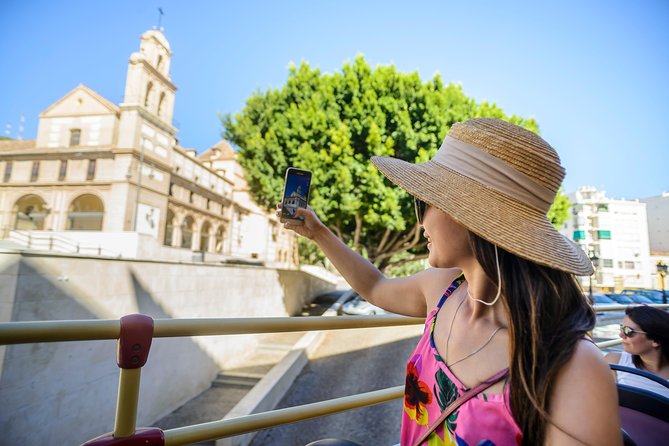
Your ship docks at the Malaga cruise terminal, and the hop-on hop-off stops are about a 10-minute walk from there. The tour specifically flags Stop 7 – La Farola as the closest option to the port, though you can board at any stop along the route.
Here’s the practical trick I’d use: on a cruise day, assume you’ll be a little slower than normal. Grab water, take a quick photo of the stop area (so you can find it again quickly), then board at the closest stop to reduce walking. Malaga can be sunny, and “saving steps” becomes real savings.
If you arrive and see a long line, don’t automatically assume you’re stuck. The service has staff at stops, and you can often shift to another nearby stop for boarding.
How the routes work: Red, Green, and Blue in plain terms
You get three different routes with different loops and different service frequency. The key to enjoying this is matching your “must-see list” to the loop that reaches it.
The Red Route (most practical for first-timers)
- Full loop: about 80 minutes
- Runs about every 30 minutes
- First departure from Stop 1: 10:00 AM
- Last departure from Stop 1: 6:00 PM
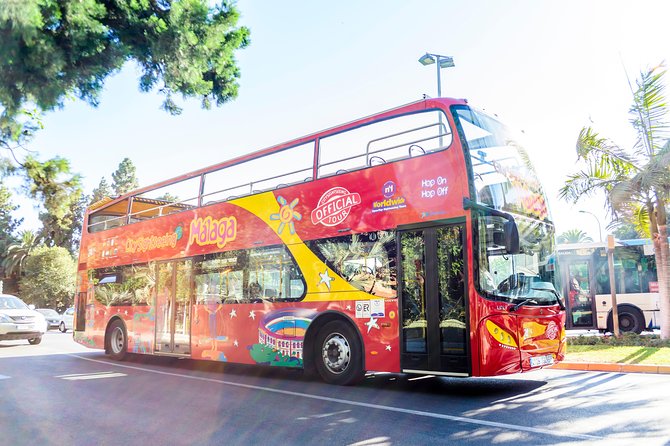
- Open-top style with recorded audio commentary (English).
If you’re short on time, the Red Route is the backbone. It connects the port/central areas to beach views and up toward Gibralfaro Castle, then continues through zones tied to Picasso and major historic buildings.
The Green Route (best if you’re going for the gardens)
- Full loop: about 60 minutes
- Runs about every 75 minutes
- First departure: 11:15 AM
- Last departure: 5:00 PM (and on Saturdays, Sundays, and holidays it can extend to 7:10 PM)
- Important note: the Green Route is served by a minibus without audio commentary, operating on a public line.
So you’re using Green for access, not for guided narration. If you like the idea of Botanical Gardens time (and you’re okay with fewer prompts), it can be worth it. If you prefer your sightseeing to come with built-in explanations, you may find Green less satisfying.
The Blue Route (shorter and more museum-oriented)
- Full loop: about 60 minutes
- Runs about every 50 minutes
- First departure: 11:50 AM
- Last departure: 2:00 PM
- Also tied to the open-top style with audio on the main service days (the Green Route is the one called out as no-audio).
The Blue Route is useful if you want a quick link between central shopping streets and specific museum clusters without committing to the full Red loop.
Red Route stop-by-stop: where you should get off (and what each area is good for)
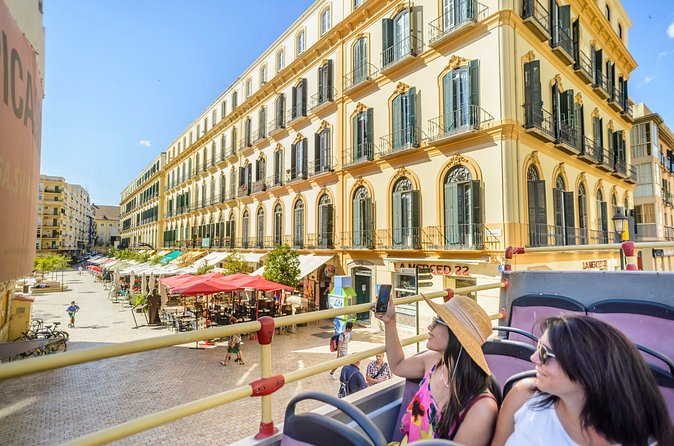
Think of the Red Route as your “big hits + viewpoints” line. Here’s how the stops translate into real sightseeing moments.
Stop 1: Vialia (Vialia–Renfe)
This is a major transport hub area. It’s handy if you start there, but for cruise passengers it’s usually more about being a node that connects you to the rest of the route.
Stop 2: CAC Málaga (Centro de Arte Contemporáneo)
CAC Málaga is a contemporary art stop. If you’re museum-minded, this can work well as an off-bus break.
Stop 3: Port area (Estación Marítima / Puerto stop)
This is the “you’re near the water” anchor. It’s also the meeting-area type zone for the walking tour (details later). If you’re doing a walking tour day, this is where you’ll want to keep your timing sharp.
Stop 4: Paseo del Parque – Plaza de la Marina
This is a classic central-stroll location. It’s a good place to decide whether you want a quick wander, a photo break, or to time your next hop toward museums and landmarks.
Stop 5: Parque (Paseo del Parque)
A park-adjacent stop. Perfect when the sun is doing its strongest performance. You can step off, cool down, and reset.
Stop 6: Centre Pompidou Málaga zone
You’ll pass through the area for Centre Pompidou Málaga. Even if you don’t go inside, this is the kind of stop that helps you connect architecture and culture around town.
Stop 7: La Farola / IGY Málaga Marina
This is the cruise-friendly stop. It’s also a scenic area because it ties the city’s waterfront energy to the Marina viewpoint.
If you want an easy route back to your ship, treat Stop 7 as your safety landing spot.
Stop 8: Playa de la Malagueta
This is your beach moment. You’re not going to “do a long beach day” on a cruise timeline, but you can absolutely use this for a short walk, a photo, and a quick sea breeze.
Stop 9: Palacio de Miramar – Plaza de Toros area
Miramar is a photogenic palace-zone area. Nearby, the Plaza de Toros adds an old-school landmark feel. This stop is good for people who want “pretty and historic” rather than just another viewpoint.
Stop 10: Camino de Gibralfaro – Castillo de Gibralfaro
Now you’re at the fortress climb area. The reward is big views from above. It can also mean longer lines on popular days, including weekends. If you’re arriving at a busy time, I’d aim to get off early so you can move before the crowd locks in.
Stop 11: Fernando el Católico – Basilica de Santa María de la Victoria
This stop gives you a church-and-city landmark vibe. Basilica areas are a nice match for shorter stop-and-look breaks when you don’t want to commit to a full museum visit.
Stop 12: Plaza de la Merced – Casa de Picasso zone
This is the Picasso corridor area. If you’re a fan, this is one of the key zones to focus on.
And if you’re not a Picasso superfan, the area still works because it’s tied to central historic street-life.
Stop 13: Museo Carmen Thyssen – Cathedral (La Manquita)
This stop is built for the “wow, that’s impressive” moment: Carmen Thyssen and the Cathedral area known for the nickname La Manquita (the one-armed lady). Even if you don’t go inside, walking the cathedral zone gives you a sense of Malaga’s historic weight.
Stop 14: Avda. de Andalucía
This is a broader connection point back through the urban area. It’s useful when you’re repositioning rather than making a single sightseeing stop.
Museum time: what’s included (and how to choose what to use)
Two museums are included in the ticket price:
- Museo Interactivo de la Música
- Museo Carmen Thyssen
How you choose comes down to your travel style.
If you want hands-on and family-friendly energy, the Museo Interactivo de la Música fits that better. If you want art and a more traditional museum feel, Carmen Thyssen is the natural pick.
Either way, the included entry can help you avoid the “we spent money on the bus and now pay more to do anything” frustration.
I’d also keep in mind your cruise-day timing. The hop-on hop-off pass is flexible across 24 hours from first use, so if you don’t finish the museum inside a cruise day window, you still have time later.
Walking tour add-on: Plaza de la Marina to Picasso and Roman sights
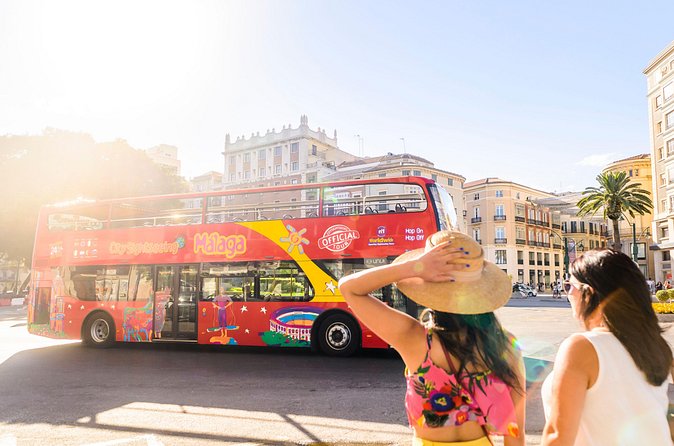
This is the bonus that turns a bus loop into a real orientation day.
You’ll get a guided walking tour in English or Spanish. The meeting point is Stop 3 on the Red Route (Puerto). The departure time is something you check locally with uniformed staff.
The sights listed for the walk include:
- Plaza de la Marina
- Calle Marqués de Larios
- C/ Salinas
- Plaza del Obispo
- The north façade of the Cathedral
- The Museo Picasso Málaga
- Bodega El Pimpi
- Teatro Romano
- Alcazaba
- Plaza de la Aduana
- The university Rectorado de la Universidad de Málaga
- Banco de España
That’s a strong mix. You get central street rhythm (Larios), major landmark faces (Cathedral zone), then you hop over to the ancient layers (Teatro Romano and Alcazaba).
Also, one practical benefit: walking tours teach you what to notice later from the bus windows. After you learn the key geography, it’s easier to pick the best bus stop for photos.
Green Route and the Botanical Gardens: when “no audio” is still okay
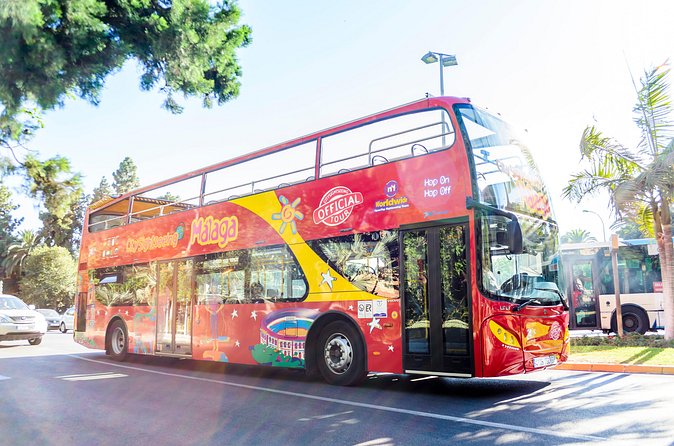
The Green Route is the one called out clearly as using a minibus without audio commentary. It’s also run less frequently (about every 75 minutes).
Here’s how I’d handle it:
- Use it only if you truly want time at the Jardín Botánico area, since the stop list includes the botanical garden access points.
- Have your bearings before you get on, because you won’t get the same spoken cues.
- Build buffer time. With longer gaps between buses, you don’t want to wander too far and then realize you’re cutting it close.
If you’re the type who enjoys quiet garden strolling, Green can be a calm counterpoint to the hotter, busier central stops.
Blue Route: short loop, tight timing, museum-adjacent choices

The Blue Route runs fewer hours and earlier in the day window:
- First departure: 11:50 AM
- Last departure: 2:00 PM
- About 60 minutes for a full loop
- About every 50 minutes
It includes a stop near the Russian and Automobile Museums area and also connects to central points like Calle Larios and the Centre Pompidou zone.
This route is for a specific strategy: you use it when you’re already out and about mid-day and want an efficient connector without committing to the full Red loop.
Practical tips: how to avoid the most common headaches
This tour is designed for convenience, but your comfort will depend on timing and heat management.
Boarding lines and crowded buses
Some feedback points to long waits during peak times, and buses can run full. So if you’re boarding during the busiest cruise arrival window, expect a slower start.
My move: board early when possible, and if you see chaos at one stop, walk to the next closest stop along the route. You’re not locked into the first place you arrive.
Audio working properly
The onboard commentary is a big part of why this works for first-timers. One concern raised is audio/headset issues. If you notice sound problems, tell staff immediately rather than waiting. Also, if you have your own headphones, keep them handy in case headsets are limited.
Hot weather math
Even when you’re not spending hours standing in lines, the combination of sun + waiting + hop-on hop-off can feel intense. Plan short breaks at shaded parks and use the beach zone only for quick reset time.
A simple rule: treat every stop as a chance to cool down, not just a chance to rush through sights.
Should you book City Sightseeing Malaga?
Book it if:
- You want an easy first-day orientation without needing to plan every step.
- You’ll use at least one or two key off-bus stops like La Malagueta, Gibralfaro Castle, and the Cathedral / La Manquita area.
- You’d actually go into one of the included museums (Museo Interactivo de la Música or Museo Carmen Thyssen).
- You like having English audio to keep the city story flowing while you move.
Skip it (or consider a taxi plan for part of the day) if:
- You hate waiting in lines and you’re traveling during a peak cruise crowd window.
- You’re trying to do everything on a tight schedule and you can’t handle the chance of crowded boarding.
- You’re relying heavily on the Green Route, since it has no audio commentary and runs less often.
If your cruise day is short, I’d treat this as a smart backbone. Get on, get oriented, pick your best three or four stops, and build the rest around how your time and energy behave.
FAQ
What is the duration of the hop-on hop-off tour?
The tour runs about 1 hour 20 minutes on average.
How long is the pass valid once I start using it?
Your hop-on hop-off bus pass is valid for 24 hours from the first time you use it.
What time does the Red Route operate?
The Red Route first departure from Stop 1 is at 10:00 AM and the last departure is at 6:00 PM.
Which stop is closest to the cruise port?
Stop 7 (La Farola) is the closest bus stop to the port, though you can join the tour at any stop along the route.
Is the narration available in English?
Yes. The tour is offered in English, with onboard recorded audio commentary.
Does the Green Route have audio commentary?
No. The Green Route is served by a minibus without audio commentary.
What museums are included with the ticket?
The ticket includes entry to the Museo Interactivo de la Música and the Museo Carmen Thyssen.
When and where does the guided walking tour meet?
The guided walking tour meets at Stop 3 on the Red Route (Puerto). The departure time should be checked locally with uniformed staff, and the tour is available in English and Spanish.