Manchester is easier to read from the top deck. This hop-on hop-off bus gives you an open-top view of the city’s industrial past, then swings over to Salford Quays for modern media culture.
I like the pair of practical perks: recorded commentary in English that explains why Manchester matters, and a route with 15 stops so you can actually use the time instead of just watching it pass. The free Wi‑Fi also helps if you want to look up tickets or plan your next stop on the fly.
One thing to plan for: it’s an open-top ride, so cold weather can be annoying, and the audio volume can feel inconsistent depending on where you sit.
In This Review
- Key things to know before you ride
- Why a Manchester open-top bus works so well in a tight schedule
- Getting on at Bridgewater Hall without wasting time
- What the recorded audio tells you (and how to use it)
- The 1.5-hour loop: what you’ll actually see
- Bridgewater Hall to Manchester Town Hall: the civic core comes first
- Piccadilly Gardens: a quick pulse-check on central Manchester
- National Football Museum and Manchester Cathedral: two big identities
- Hop-off at Salford Quays: where the tour rewards your time
- MediaCity: BBC and ITV studios on the way to bigger landmarks
- Old Trafford and Imperial War Museum North: two major pulls, one route
- Science and Industry Museum area: the industrial story gets hands-on nearby
- How to make the open-top ride comfortable (and actually enjoyable)
- Price and value: what $18.18 buys you in Manchester terms
- The ticket flexibility that makes this tour more than a one-off
- Who should book this tour (and who might not love it)
- Should you book this Manchester Sightseeing Bus Tour?
- FAQ
- How long is the Manchester sightseeing bus tour?
- Where do I start and where does it end?
- What time do the tours run?
- Does the ticket include museum or attraction entry fees?
- Is the audio commentary available only in English?
- How long is my ticket valid for?
Key things to know before you ride
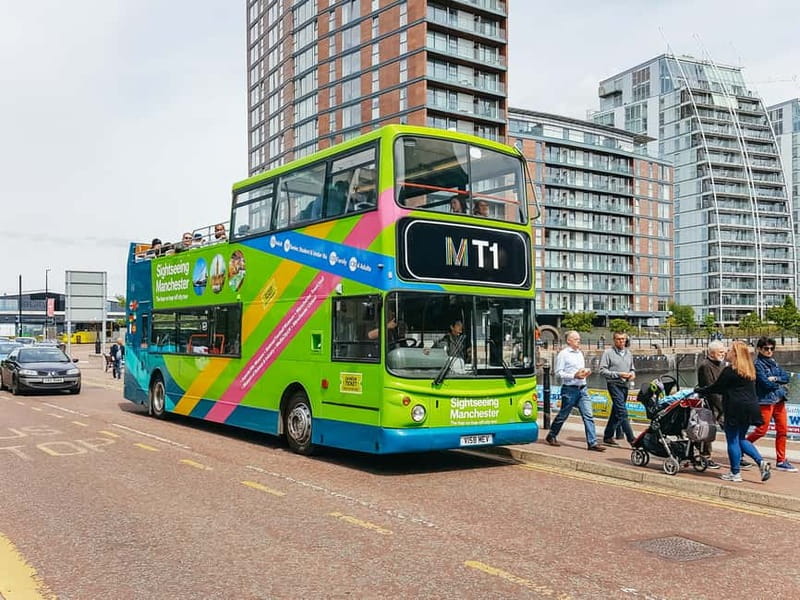
- Bridgewater Hall is the hub: Find the start stop on Lower Mosely Street, close to Manchester Central Convention Centre and St Peters Square Metrolink.
- Salford Quays is the main hop-off zone: You can get out for the Lowry and Imperial War Museum North.
- MediaCityUK sits on your route: BBC and ITV studios are part of what you’ll see as you go.
- Free Wi‑Fi is included: Easy to stay connected during the loop.
- You’re paying for transport plus narration: Entry fees are not included, so plan museums separately.
- Your ticket works for two calendar days: Spread it out if you want more than one pass or a second round.
Why a Manchester open-top bus works so well in a tight schedule
Manchester is the kind of city where a lot of history is built into the streets: factories, clubs, stadiums, universities, and the institutions that grew around them. This tour keeps things simple by packaging that story into a short, loop-style ride. You get a moving overview that helps you spot what you want to explore later without guessing.
The route also balances old and new. You’re not stuck staring at one neighborhood. You’ll see the historic center, then head toward Salford’s waterside area, where modern media and major museums show Manchester’s next chapter.
If you have just a few hours, this kind of bus tour is one of the fastest ways to get your bearings fast—and if you’re staying longer, the two-day ticket makes it easier to return without rushing.
Getting on at Bridgewater Hall without wasting time
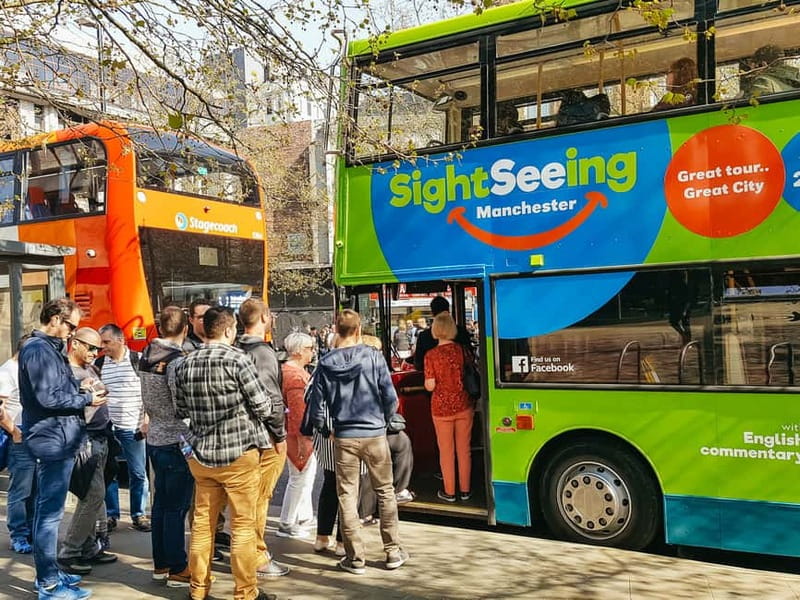
The meeting point is outside Bridgewater Hall on Lower Mosely Street, M2 3WS, and the tour returns there at the end. I like this for one big reason: it’s a clear landmark, and it’s close to major transit. You’ll also be near Manchester Central Convention Centre, the Midland Hotel, and St Peters Square Metrolink, so you can arrive from different directions without doing mental gymnastics.
Timing helps, too. Tours run at 10:30 AM, 12:00 PM, and 2:00 PM on the Pink Timetable all year, with extra tours in summer months. If your day is busy, choosing one of the scheduled departures keeps the plan sane.
Also, the bus is wheelchair accessible, which is a real advantage in a city center where navigating some stops can be a hassle.
What the recorded audio tells you (and how to use it)
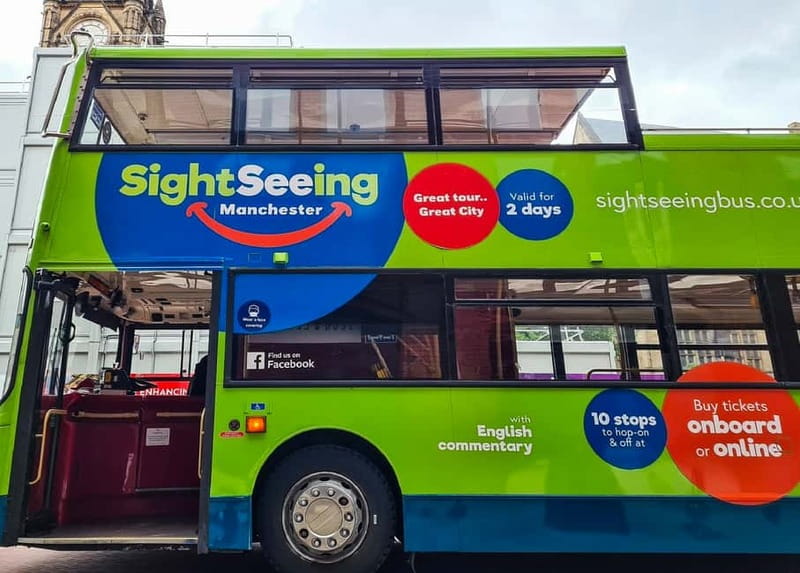
The tour uses a recorded commentary in English, and other languages are available if you download the provider app. This matters because it’s not just sightseeing; the narration is the product. It’s designed to connect Manchester’s industrial roots to ideas that spread into science, politics, music, arts, and sport—so you come away with more than photos.
A practical way to get more from the audio: pick a theme for your ride. For example, if you’re into sports, listen especially around the National Football Museum and the Old Trafford area. If you like art and architecture, focus when you reach Salford Quays and the buildings tied to major institutions.
Sound can be a little tricky on top decks because you’re exposed to weather and open air. If you know you struggle with audio on buses, try to choose a seat where you’ll hear the speakers clearly, not just the wind.
The 1.5-hour loop: what you’ll actually see
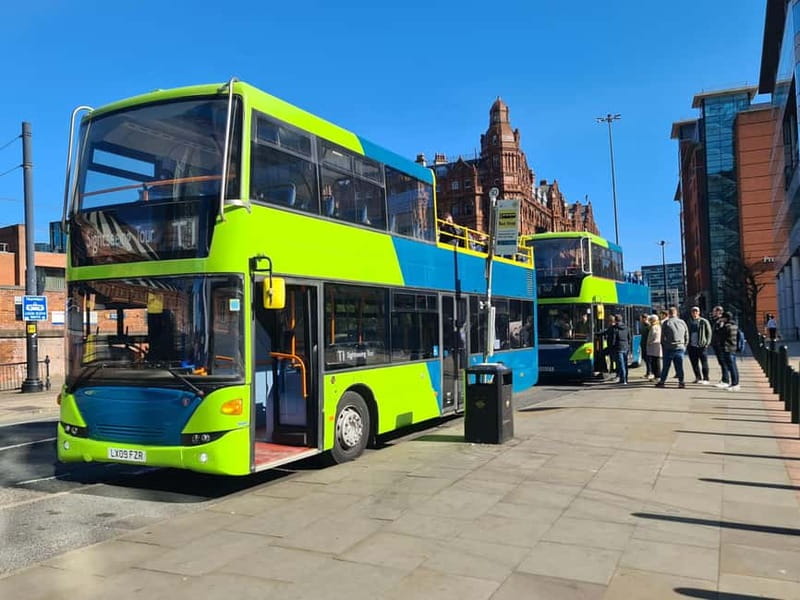
This is a 1.5-hour tour with hop-on, hop-off access at any of the route’s 15 stops. That short duration is part of the value. You’re not committing to a full day, and you still get a solid sweep through the core sights.
Here’s how the ride plays out in the order you’ll encounter it.
Bridgewater Hall to Manchester Town Hall: the civic core comes first
You start at The Bridgewater Hall, which is a good opener because it anchors the city center. From there, you pass by Manchester Town Hall. It’s a classic reminder that Manchester has always been about more than factories; it’s also been about governance and public life.
This opening stretch works well for orientation. Once you see the civic buildings and learn where they sit, the rest of the route stops feeling like random points on a map.
Piccadilly Gardens: a quick pulse-check on central Manchester
Next you pass Piccadilly Gardens. This is one of those places that helps you understand the day-to-day Manchester vibe—people moving through the center, and the city feeling lived-in rather than museum-like.
Even if you don’t hop off, the sight of this area makes the rest of the tour easier to place. It’s like setting the base layer for your mental map.
National Football Museum and Manchester Cathedral: two big identities
You then pass the National Football Museum. Manchester’s football identity is everywhere, and even a pass-by view can cue you into why so much of the city’s culture revolves around clubs and community.
After that, you pass Manchester Cathedral. That shift—from modern sport culture to older religious architecture—helps the narration land. The industrial story isn’t just about machines; it’s also about how communities organized themselves over time.
Hop-off at Salford Quays: where the tour rewards your time
Salford Quays is where you’ll want to plan. You have a chance to hop off here to visit places that are very worth your attention. The tour is structured so that this is the main moment to step off and do something on your own time.
At Salford Quays, you can visit the Lowry art gallery and the Imperial War Museum North, housed in a striking building by Daniel Libeskind. If you care about design, you’ll probably remember this one more than you expect—because the museum building itself is part of the experience.
There’s also the practical bonus of choice. You can spend time along the canal-side shops and restaurants, which makes the hop-off feel less like a rushed pause and more like a workable mini stop inside your day.
MediaCity: BBC and ITV studios on the way to bigger landmarks
As you move through MediaCity, you’ll see the area tied to major broadcasters, including the BBC and ITV TV studios. This is a key contrast to the industrial framing of the tour.
I like that this part of the narration doesn’t treat the city as frozen in time. Manchester’s story is shown as evolving—from industrial engines to information engines.
Old Trafford and Imperial War Museum North: two major pulls, one route
You pass Old Trafford, which gives you a sense of scale even if you’re not going inside. The stadium is one of those landmarks people recognize fast, and it helps anchor the music-and-sport part of Manchester’s wider reputation.
Then you come back toward Imperial War Museum North. Even if you don’t go in, it’s a meaningful visual stop because it connects the narration to tangible architecture and the way public institutions shape how a city remembers conflict and change.
One extra tip: if you’re museum-hopping, the tour gives you a convenient way to pair this with the Science and Industry Museum next, since they fit well with the industrial theme.
Science and Industry Museum area: the industrial story gets hands-on nearby
You pass the Science and Industry Museum. This part of the route is a natural fit for the tour’s industrial focus, because the area is exactly what you’d expect from a city that helped drive the industrial revolution.
If you want your day to feel practical rather than purely scenic, this is the kind of stop where you can turn narration into action—especially if you like learning through exhibits instead of just reading about history later.
How to make the open-top ride comfortable (and actually enjoyable)
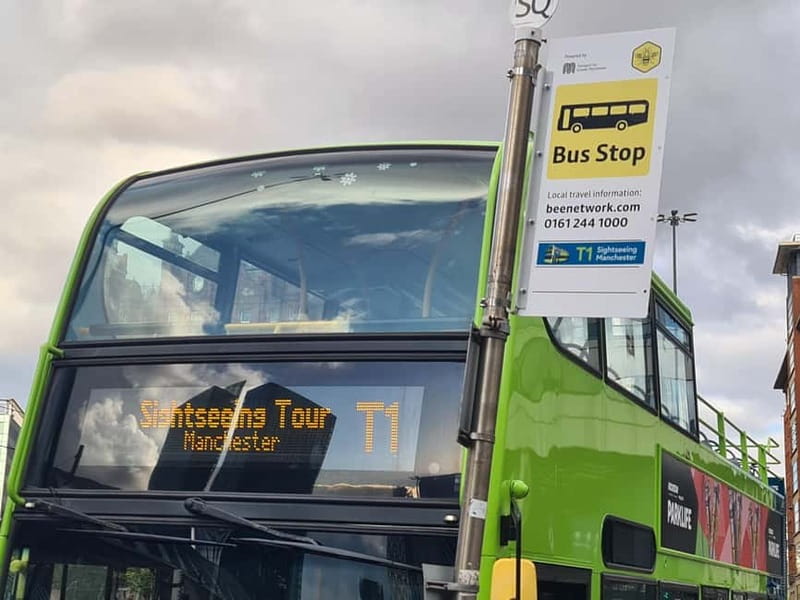
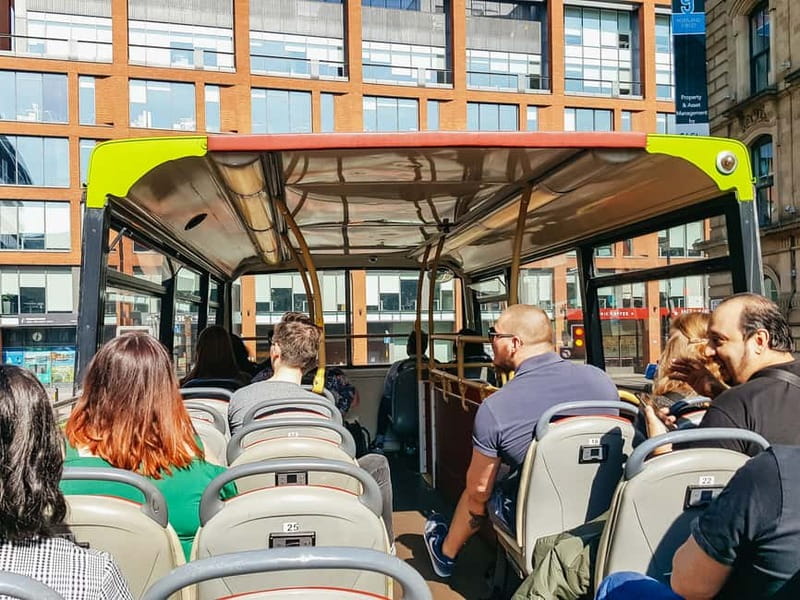
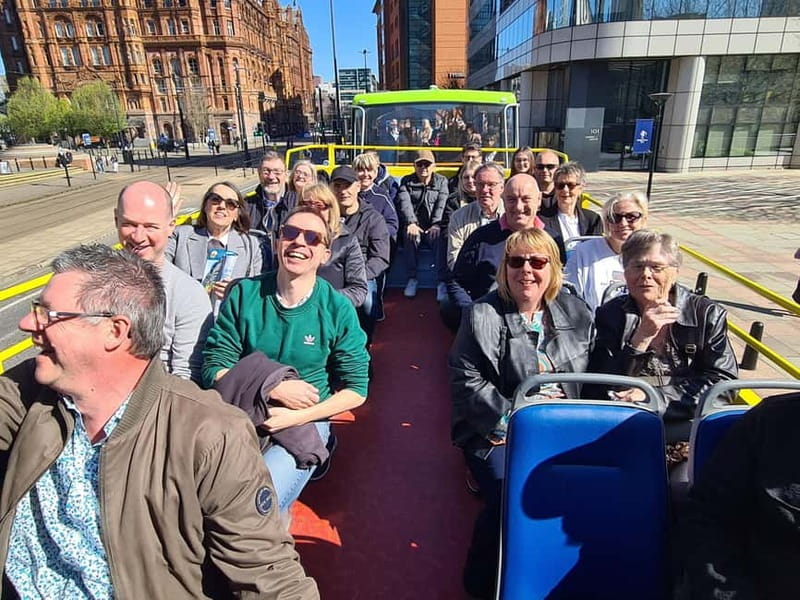
This is an open-top sightseeing bus, so your comfort matters. Bring layers, even in fair weather, because city winds can make it feel colder than you expect on the top deck.
Audio is the other comfort issue. The tour is designed so you can hear the recorded commentary clearly, but if you sit in a spot where sound doesn’t carry well, you’ll lose the whole point of the narration. If you’re sensitive to sound or you’re usually one of those people who can’t hear speech over noise, pick your seat with care and be ready to adjust.
Small real-world move: if you plan to hop off at Salford Quays, you may want to arrive at that stop with enough energy to walk around the quayside. The bus gets you there, but you still have to enjoy the on-foot part.
Price and value: what $18.18 buys you in Manchester terms
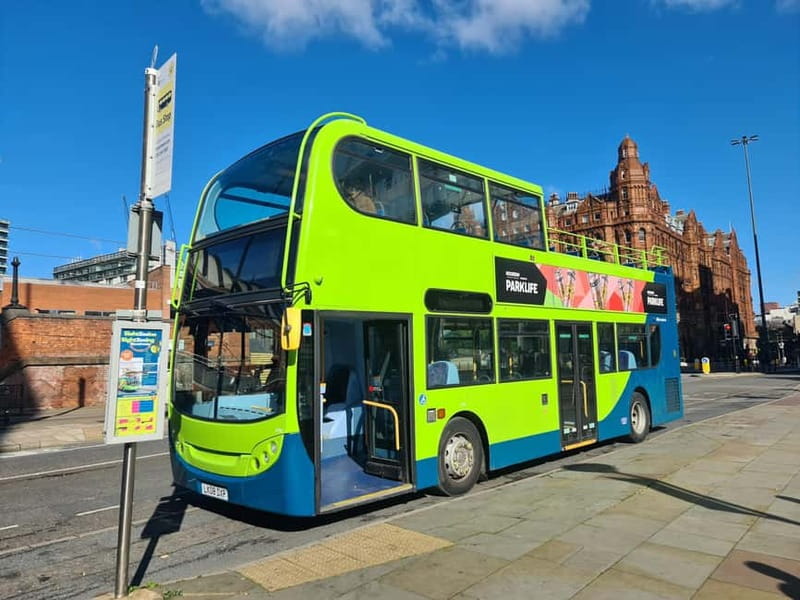
At $18.18 per person, this tour is priced like an orientation product: transportation plus narrated context, with a hop-on hop-off structure that lets you decide how much to do. Entry fees are not included, so you’ll still pay for any attractions you want to go inside.
That said, the value gets better in two ways:
- You get a ticket valid for 2 calendar days from the date shown. If your schedule changes, you’re not stuck with one single shot.
- The included free Wi‑Fi and recorded commentary mean you’re not paying extra just to keep your day organized and informed.
If you’re building a budget day, pair the bus with at least one museum that matches your interests. For example, Imperial War Museum options are often popular partly because the museum itself can be a lower-cost way to spend time once you hop off at Salford Quays.
Also, this is a smart move if you like photography. Getting a moving, elevated view of Manchester’s mix of architecture is a fast way to collect a sense of where things are before you commit to longer walks.
The ticket flexibility that makes this tour more than a one-off
The most underrated part is the two-day validity. You can use it like a planning tool. Ride once to learn the geography, then return on your second day to hop off at whatever you didn’t have time to see.
There’s also a practical backup: if the bus isn’t operating on one of your valid days, you can use the ticket on the next available day. And the route is year-round under the Pink Timetable, with extra tours in summer, so you’re less likely to feel trapped by weather or timing.
Who should book this tour (and who might not love it)
This works best for:
- First-time visitors who want a fast sense of Manchester’s main landmarks
- Travelers who want context while they move, not just sightseeing photos
- People who like structure but still want control (hop on, hop off at multiple stops)
- Anyone planning to pair a quayside museum visit with central Manchester sights
You might skip it if:
- You already know Manchester well and only need a specific destination
- You’re mostly into long, deep walking routes and don’t care about orientation or audio narration
- You plan to spend the entire day inside ticketed attractions (since entry fees aren’t included)
Should you book this Manchester Sightseeing Bus Tour?
I’d book it if you’re trying to make your time count. For $18.18, you get a short, easy ride with English audio, free Wi‑Fi, and the option to hop off in Salford Quays for major stops like the Lowry and Imperial War Museum North in the Libeskind building. It’s especially helpful if you want an overview first and then decide where to spend real time later.
If you hate cold open-top rides or you know you struggle hearing audio over bus conditions, plan your seating and dress for the weather. Do that, and this becomes one of the most straightforward ways to understand Manchester in a limited window.
FAQ
How long is the Manchester sightseeing bus tour?
The tour lasts about 1.5 hours.
Where do I start and where does it end?
It starts outside Bridgewater Hall on Lower Mosely Street, Manchester (M2 3WS) and ends back at the same meeting point.
What time do the tours run?
Tours start at 10:30 AM, 12:00 PM, and 2:00 PM on the Pink Timetable. Extra tours run during the summer months.
Does the ticket include museum or attraction entry fees?
No. Entry fees are not included.
Is the audio commentary available only in English?
The recorded commentary is in English, and other languages are available if you download the provider’s app.
How long is my ticket valid for?
Your ticket is valid for 2 calendar days from the date shown. If the bus isn’t operating on one of those days, you may use the ticket on the next available day.