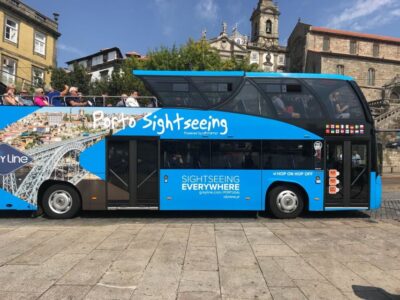
Milan moves fast; this bus keeps up. This hop-on hop-off setup is an easy way to see a lot of the city without wrestling with traffic or parking, and the ride comes with a multilingual audio guide so you’re not staring at landmarks like they’re TV screens.
What I like most is the freedom to start from multiple stops and get off to explore at your own speed. I also love the onboard comforts—Wi‑Fi, USB sockets, and disposable earphones—so the journey itself feels useful, not just “transport.”
One thing to keep in mind: the audio can occasionally cut out or miss some points, and the experience can feel slower in bad weather because of waiting and fogged-up windows.
In This Review
- Key Points That Matter
- Why Milan Traffic Makes This Bus Feel Like a Shortcut
- The Two Routes: Choose Your Milan Mood
- Milan Highlights Route: Classic Milan First
- Fashion, Design & Leisure Route: Modern, Museums, and Canals
- Duomo Piazza to Scala: Your Orientation Power Pair
- Cenacolo and Sant’Ambrogio: The Two Big “Hop Off” Reasons
- Cenacolo (Last Supper): Art That Changes Your Day
- Basilica of Sant’Ambrogio: A Different Side of Milan
- Brera, Castello, and Litta: Art Neighborhoods Without the Guesswork
- Brera: Easy Access to an Artsy Stretch
- Castello: Big Landmark Area, Flexible Walking
- Litta: Another Museum-leaning Stop
- Navigli, Triennale, and the Sempione Edge: Where Milan Starts Feeling Fun
- Navigli: Canals, Atmosphere, and a Natural Evening Plan
- Triennale: Design Culture on Your Route
- Arco della Pace and Sempione-area Views
- Modern Milan on the Route: Gae Aulenti, City Life, and Monumentale
- Gae Aulenti and City Life: Big-Skyline Milan
- Monumentale: A Landmark Stop With Local Meaning
- On Board: Audio, Wi‑Fi, USB Ports, and the Kid Commentary
- Getting Your Best Experience: Timing, Heat, and Rain Reality
- How Much Time You Really Need (1 to 3 Days)
- If You Have 1 Day
- If You Have 2 Days
- If You Have 3 Days
- Price and Value: Is $29 Worth It?
- Should You Book It?
- FAQ
- How long is the hop-on hop-off ticket valid?
- Can I start the tour from any bus stop?
- Is an audio guide included, and in which languages?
- Does the bus tour run in rainy weather?
- What amenities are included on board?
- Is it wheelchair accessible and pet friendly?
Key Points That Matter
- Start from many stops: you can board at the stops you actually pass, not just one fixed meeting point
- Rain or shine touring: the bus keeps you moving even when Milan weather turns
- Audio + earphones included: commentary comes through individual earphones in many languages
- Wi‑Fi and USB ports onboard: you can recharge and stay connected between big sights
- Two route styles: one leans classic center sights, the other reaches design, modern districts, and waterways
- Practical seating tip: if you care about side views, pick your side early (some sights line up better one way)
Why Milan Traffic Makes This Bus Feel Like a Shortcut
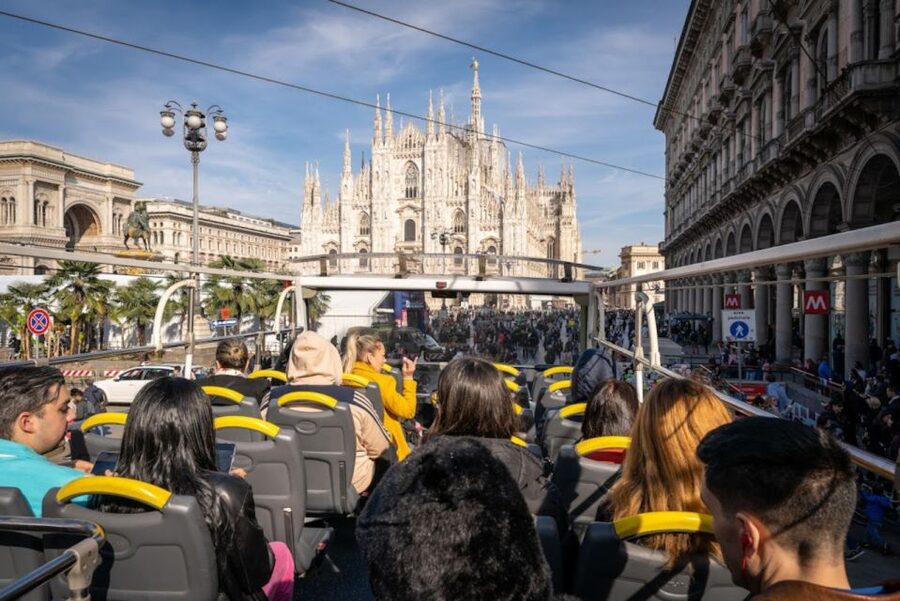
Milan is stylish, efficient, and also busy. Streets can feel tight, detours happen, and the simple act of crossing town can eat half a day. This hop-on hop-off bus turns that chaos into a low-effort sightseeing lane.
You’re not locked into one long guided walk. You ride, you hop off where something grabs you—churches, museums, canals—and you hop back on when you’re done. That rhythm is ideal when you want structure, but not a rigid schedule.
The audio guide is the other big win. As you roll past major landmarks like Duomo, Scala, Sforza Castle-area sights, and Cenacolo, you get the “what am I looking at” layer fast. It’s the difference between seeing Milan and understanding it enough to plan the rest of your day.
The Two Routes: Choose Your Milan Mood

This experience is offered in a way that lets you cover a lot of ground in 1 to 3 days. The key is understanding the vibe of the two route themes, then using them like tools.
Milan Highlights Route: Classic Milan First
This route is built for the early hits. You pass by Duomo, Teatro alla Scala (Scala), and then move toward the heart of central Milan neighborhoods like Brera. You also reach Castello for the Sforza Castle area, and you get to Cenacolo for Leonardo’s Last Supper venue.
If you only have a day and want the “greatest hits,” this is the route that makes sense. It’s also a strong way to orient yourself before you go deeper on foot.
Fashion, Design & Leisure Route: Modern, Museums, and Canals
This one spreads wider, reaching business-modern zones and cultural stops. You’ll see areas around Stazione Centrale, then head toward modern landmarks like Gae Aulenti and the City Life district. It also taps into family-friendly and museum-friendly stops such as Science & Technology Museum and the Acquario area.
And yes, it includes Navigli, Milan’s canal zone where the city feels livelier after dark. If your Milan plan includes museums, neighborhoods beyond the center, and a less “postcard-only” day, this route is a better fit.
Duomo Piazza to Scala: Your Orientation Power Pair
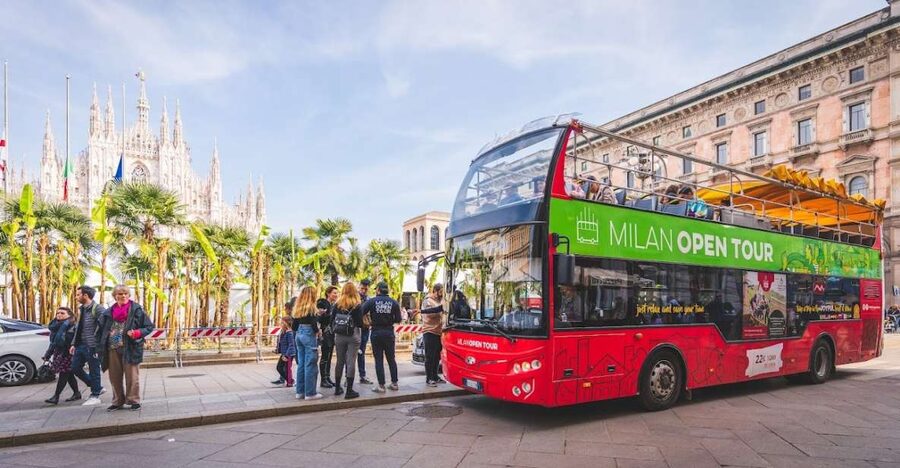
Starting at Piazza Duomo is smart because it puts you in the center of the center. This is where you’ll naturally want to return—whether it’s to watch the square wake up, grab a quick coffee, or orient yourself for walks that branch off in every direction.
From there, the ride brings you toward Teatro alla Scala on Via Manzoni. Even if you don’t go inside, it’s a strong landmark to tie Milan’s grand architecture to its cultural identity. The bus makes this easy because you’re not searching for parking or tracing routes with uncertain timing.
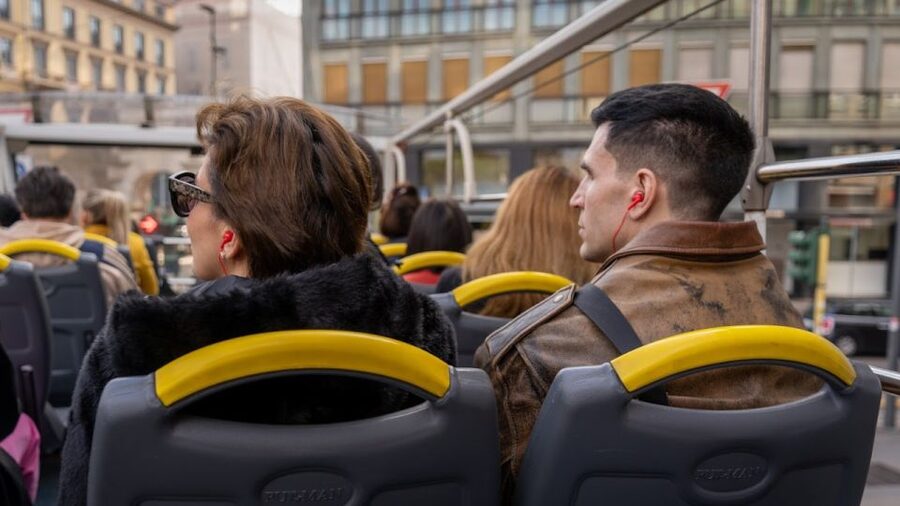
A practical tip: sit where you can see the side of the street the audio is describing best. One review mentioned choosing the right side for more useful views, and that tracks with how many cities’ main landmarks line up along specific road edges.
Cenacolo and Sant’Ambrogio: The Two Big “Hop Off” Reasons
Two stops tend to become your main targets: Cenacolo and Sant’Ambrogio.
Cenacolo (Last Supper): Art That Changes Your Day
Cenacolo is the must-do stop on many Milan lists. When the bus reaches it, you have the freedom to hop off and take your time on the visit. The audio helps you get context before you arrive, which makes the experience land harder than if you show up with zero background.
Consider this your “anchor” stop. I’d build your day around it, especially if you plan to enter the site rather than just view the area.
Basilica of Sant’Ambrogio: A Different Side of Milan
Sant’Ambrogio is one of those stops that slows you down in a good way. The bus puts you right where you can spend a chunk of time exploring the basilica area and the surrounding neighborhood. It’s a contrast to the more high-drama center sights, and that balance is exactly why a bus route like this works.
If your feet get tired, you can hop back on quickly and keep moving. If you’re fresh, you can linger and let the area sink in.
Brera, Castello, and Litta: Art Neighborhoods Without the Guesswork
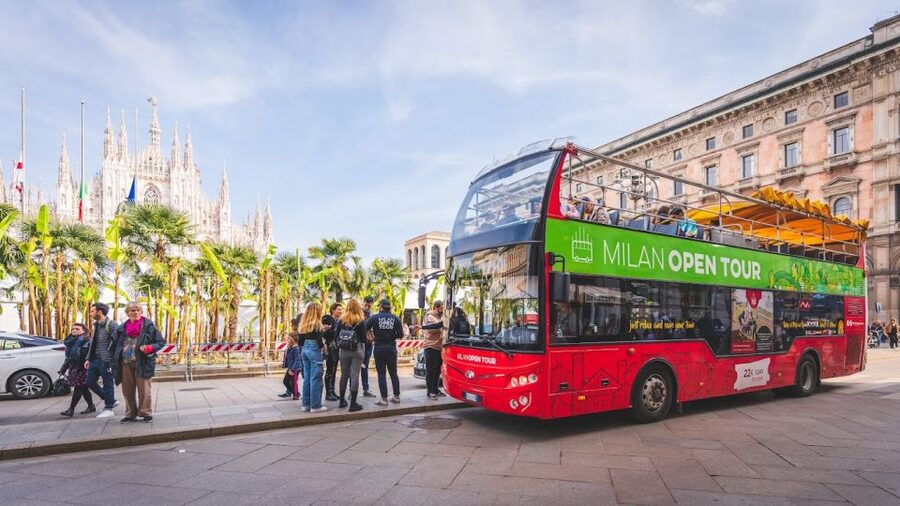
Milan on foot can be a lot. The sidewalks are busy, and you can end up walking more than you planned. The bus helps you connect the key art and culture zones with far less friction.
Brera: Easy Access to an Artsy Stretch
When you get to Brera, you’re in one of Milan’s most walkable, “slow down” neighborhoods. It’s the kind of area where you can spend time browsing, stepping into side streets, and finding small squares. Getting off here is a simple way to trade “seat time” for neighborhood time.
Castello: Big Landmark Area, Flexible Walking
The Castello stop drops you near the Sforza Castle area. Even if you don’t book any ticketed entry, the grounds and surrounding views can be worth it. This is also a handy spot for a longer break because you can walk around and return to the bus without feeling like you’re trapped.
Litta: Another Museum-leaning Stop
Litta (near Corso Magenta) is the kind of stop that suits a museum-minded day. If your plan includes indoor time, it’s a good option because it’s central enough to pair with other stops rather than requiring a full-on day trip.
Navigli, Triennale, and the Sempione Edge: Where Milan Starts Feeling Fun
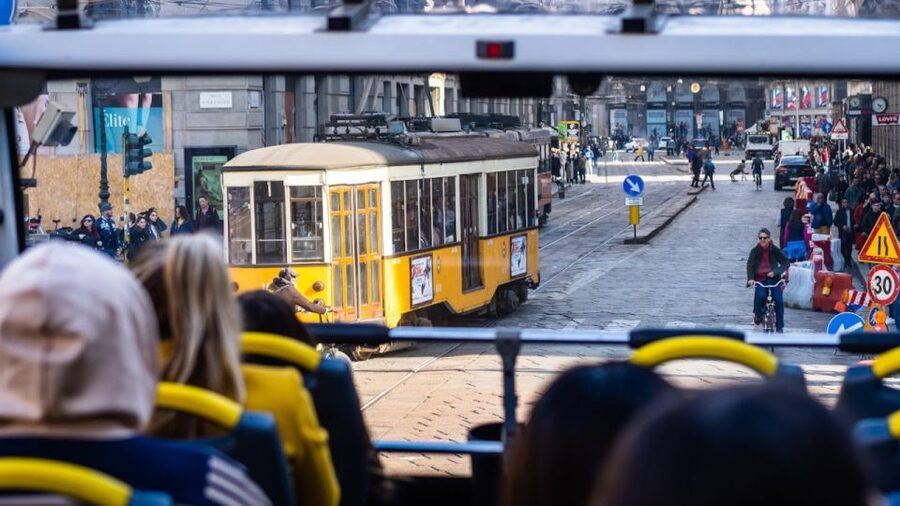
If you want Milan to feel less like monuments and more like a living city, build in time for the canals and parks.
Navigli: Canals, Atmosphere, and a Natural Evening Plan
Navigli is the stop I’d treat as your late-afternoon or evening move. The canals make the city feel more relaxed, and the area tends to pull you into wandering. With hop-on hop-off freedom, you’re not forced to commit to one fixed time window. You can get off early, then decide how long you want to stay.
Triennale: Design Culture on Your Route
The Triennale stop points you toward Milan’s design and culture side. If you like modern creativity, you’ll probably appreciate having a dedicated museum/design area in the route.
Arco della Pace and Sempione-area Views
Stops around the Arco della Pace and the Sempione edge are built for that “wow, this is why cities plan big monuments” feeling. Even if you only walk for 30–60 minutes, it’s a good way to stretch your legs between heavier sights.
Modern Milan on the Route: Gae Aulenti, City Life, and Monumentale
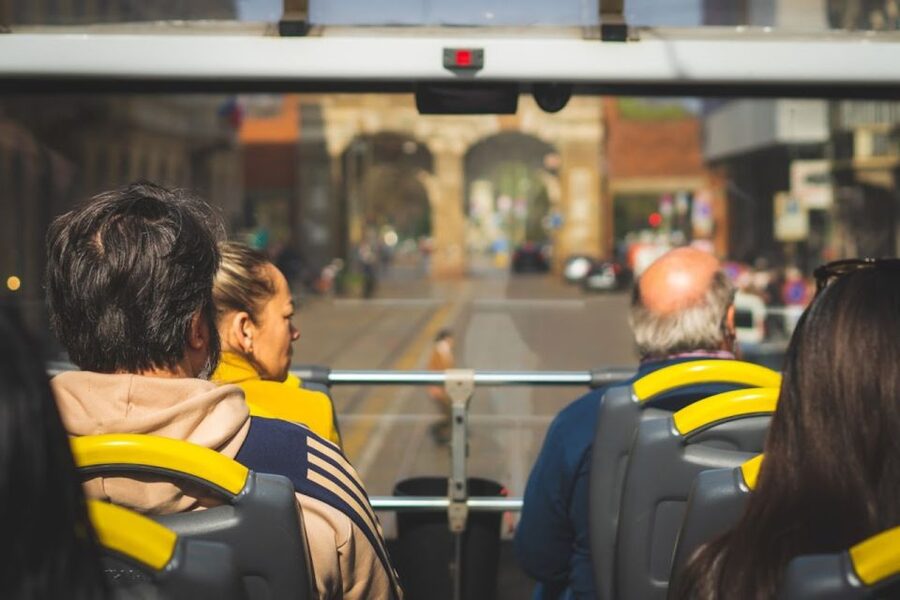
One reason these loops work so well is that Milan isn’t only old stone and famous art. It has a very modern side, and the bus helps you see it without extra planning.
Gae Aulenti and City Life: Big-Skyline Milan
Stops like Gae Aulenti and City Life put you in the modern skyline zone. If you’re used to cities where modern architecture hides in business parks, this feels more public and visually bold.
This is also a good “break” from churches and museums. Pop off, walk around for a bit, and then return for more classic center sights.
Monumentale: A Landmark Stop With Local Meaning
The Monumentale stop is useful if you want to explore a major area on Milan’s outskirts of the central core. It’s another example of how the routes act like a map you can ride.
If your interest is broader than the usual highlights, these modern and neighborhood stops can make your Milan feel more personal.
On Board: Audio, Wi‑Fi, USB Ports, and the Kid Commentary
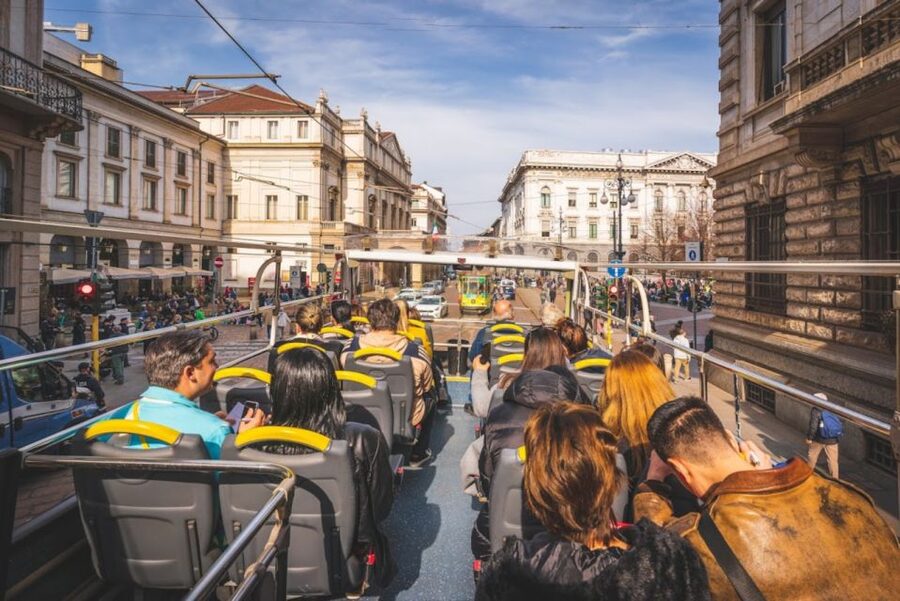
This bus isn’t just an open-top ride with a printed map. You get a lot of the “small tech” that makes the experience smoother.
Included onboard:
- Disposable individual earphones for the audio guide
- Wi‑Fi on board
- USB sockets
- A dedicated hostess during the tour
- Kid commentary in English, Italian, and Spanish
The multilingual audio list is extensive, with options including Spanish, English, German, Italian, French, and others. In practice, that means you can match your comfort level without waiting for a human guide to catch up to your language.
One caution from real-world usage: audio can occasionally cut out near certain stops, and windows can get foggy in rain. If the sound drops, don’t panic. Look at the stop name, use the paper map, and check around when you arrive—often you’ll still figure out what’s right in front of you.
Getting Your Best Experience: Timing, Heat, and Rain Reality
You’re riding in an open-air environment, even if parts are covered. That matters.
If it’s warm, upstairs can feel hot. A practical approach is to switch decks depending on sun and comfort. One review suggested sitting under cover when it gets hot, and that advice is hard to argue with.
In rainy weather, the bus is still a win. The big advantage is you keep moving while others are stuck inside or scrambling for taxis. Just expect condensation on windows. If you’re sensitive to that, dress for it and plan to wipe glasses or wear something you can manage with damp air.
Also, don’t assume every stop has perfect signage for bus timing. If you’re trying to connect two hop-off plans back-to-back, build in a little buffer for waiting.
How Much Time You Really Need (1 to 3 Days)
This is where hop-on hop-off freedom pays off, because it lets you match your schedule.
If You Have 1 Day
I’d do this as your orientation day. Choose the Milan Highlights style route if you want the center classics fast, then use hop-offs for a short art stop and one longer “anchor” visit like Cenacolo or Sant’Ambrogio. End with a flexible wander—Navigli is a great choice if you still have energy.
If You Have 2 Days
Mix routes. Day one: center hits (Duomo, Scala, Brera/Castello). Day two: wider Milan (modern districts, museums like Science & Technology, and Navigli for atmosphere). This prevents your second day from feeling like a repeat.
If You Have 3 Days
Use the bus as your “reset button.” You can revisit areas on foot and connect neighborhoods without losing time. In other words: ride one loop, explore, then ride again later for the next cluster of sights.
Price and Value: Is $29 Worth It?
At $29 per person, this can be a strong value if you use it the way it’s meant to be used: as both transport and interpretation.
What makes it feel like value:
- You’re not only riding—you’re getting audio commentary and a paper map
- You can turn sightseeing into smaller visits instead of one exhausting marathon
- The route coverage helps you avoid “wasted commuting” across Milan
- You get onboard perks like Wi‑Fi and USB sockets, which is surprisingly helpful on long travel days
When it’s less of a value:
- If you plan to take it once, then only sit through a single loop with no hop-offs, you might feel like you paid for transit rather than planning help
- If you’re expecting live narration at every stop, note that the experience is primarily audio-driven
So my rule is simple: if you’ll hop off at least a few times, it usually feels worth it.
Should You Book It?
I think this is a solid booking when you want an easy way to structure a Milan visit without turning it into a tight guided schedule. It’s especially good if you value flexibility, you’re short on time, or the weather might not cooperate.
Book it if:
- you want a fast “what matters most” route with audio in multiple languages
- you want to reach both classic sights and wider neighborhoods like modern City Life and the Navigli canal area
- you appreciate comfort add-ons like Wi‑Fi and USB sockets
Skip it or plan differently if:
- you’re the type who prefers to research deeply first and build a perfect walking itinerary from scratch
- you hate any chance of audio glitches and don’t want to rely on stop names and maps if narration fails
If you’re on the fence, I’d treat this as your day-one backbone. Then build the rest of Milan from there.
FAQ
How long is the hop-on hop-off ticket valid?
Your ticket is valid for 1 to 3 days, depending on the option you choose and availability for your dates.
Can I start the tour from any bus stop?
Yes. Your tickets allow you to start the tour from all bus stops used for the service, and you can get on and off at any stops.
Is an audio guide included, and in which languages?
Yes. An audio guide is included with commentary available in many languages (including Spanish, English, Italian, German, and others).
Does the bus tour run in rainy weather?
Yes. The tour takes place rain or shine.
What amenities are included on board?
The ticket includes an audio guide with disposable individual earphones, plus Wi‑Fi on board and USB sockets. A dedicated hostess is also provided during the tour.
Is it wheelchair accessible and pet friendly?
Yes. The tour is wheelchair accessible, and it is also listed as pet friendly.