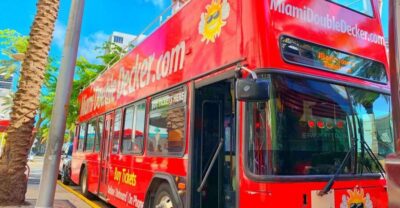
Milan is a big city with big monuments, and this bus tour is a fast, low-stress way to connect them. I like that you can move at your own pace with 24-, 48-, or 72-hour tickets and get on and off at dozens of stops across town. It’s especially handy for first-time visits because the routes cover the usual headline sights without forcing you into one rigid walking plan. One thing to plan for: finding the right stop and getting clear audio can be hit or miss depending on where you’re sitting and how busy the bus is.
My second big win is the overall coverage. You get four connected routes (over 30 stops combined) plus an app to see bus locations in real time, and there’s free Wi‑Fi on board. If you’re in Milan on a weekend in June to September, the 72-hour weekend ticket also includes a Milan night tour, which adds a different side of the city after dark.
In This Review
- Key Points to Know Before You Ride
- What You Get for $27.01: Tickets, Time, and Real Value
- The Stop System: How to Ride Without Wasting Time
- Red Line (A): Duomo, Sforzesco, and La Scala at Transit Speed
- Blue Line (B): Palazzo Lombardia, Porta Venezia, and the Last Supper Zone
- Green Line (C): San Siro Stadium, Monumental Cemetery, and Via Montenapoleone Area
- Yellow Line (D): Navigli Canals, Piazza XXIV Maggio, Brera, and Duomo Connections
- Timing Tricks: When to Start and What Changes at Night
- Audio, Wi‑Fi, and the App: Useful Tools, Watch-Outs
- Comfort and Practicalities: Open-Air Views, No Food, Plan for Stops
- Best Uses: Who This Hop-On Hop-Off Tour Fits
- Should You Book This Milan Hop-On Hop-Off Bus Tour?
- FAQ
- What time does the Milan hop-on hop-off bus tour start?
- How long is the tour?
- What ticket options are available?
- What major attractions are on the four bus lines?
- Is the tour available in English?
- What’s included with the ticket?
- What isn’t included in the price?
- When is the Milan Night Tour included?
Key Points to Know Before You Ride
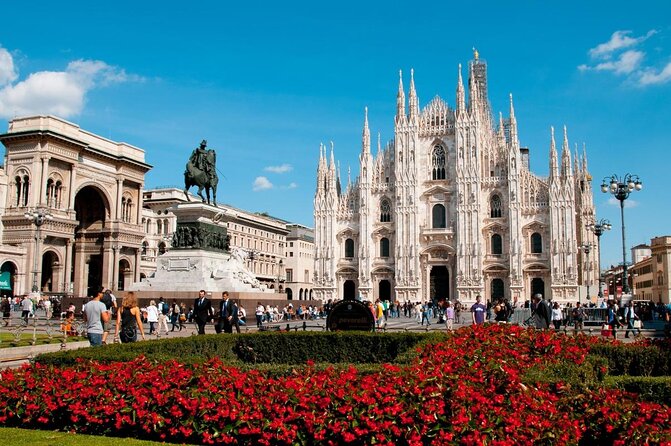
- Four connected routes: Build your day around Duomo, La Scala, Navigli, San Siro, and more.
- Self-guided timing: A stop-anytime format beats rushing through short time windows.
- Real-time bus map: Use the Sightseeing Experience app to track where the bus is.
- Free Wi‑Fi + audio: Handy for navigation and background context, in multiple languages.
- Good for a first pass: It’s a practical way to get your bearings before deeper visits.
What You Get for $27.01: Tickets, Time, and Real Value
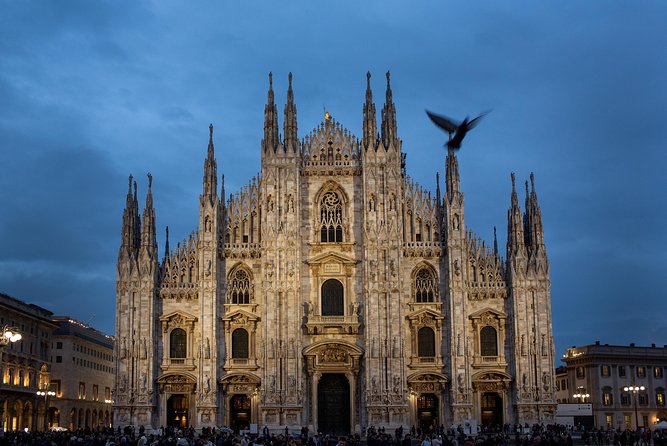
This tour is priced at $27.01 per person and runs for about 1 hour 20 minutes as a typical ride segment. The real value isn’t that you’ll see everything in one loop. It’s that you can keep using the bus for 24, 48, or 72 hours, hopping off to explore, then returning to the same network later.
So think of it like city transport that also acts as a moving orientation desk. When you’re in Milan for a short stay, that matters. Milan can be tricky to navigate if you’re juggling museum timing, meal breaks, and getting from one neighborhood to the next.
The included extras help justify the price too: free Wi‑Fi onboard, a mobile app that shows bus locations in real time, and an audio guide available in 10 languages (and the experience is offered in English). You’re also using a mobile ticket, which can save time compared with paper-only tickets.
The Stop System: How to Ride Without Wasting Time
The tour uses hop-on hop-off rules, so you choose when to get on, when to get off, and when to continue. In practice, that only works well if you can quickly spot the correct bus and stop.
Here’s how I’d do it to keep frustration low:
- Start at/near the main meeting point area around 10:00 am.
- Use the Sightseeing Experience app to track the bus locations on your screen.
- When you get off, take a quick moment to confirm the nearest stop name again before you wander off.
Milan’s stop signage and the number of lines can make things confusing if you’re not paying attention. I’d treat the first 30–60 minutes as your “figure it out” window, then after that you’ll move much faster.
Also, don’t assume perfect timing. You might find buses can feel infrequent at certain stretches of the day, so it’s smart to plan small walks between stops rather than banking on the bus showing up instantly.
Red Line (A): Duomo, Sforzesco, and La Scala at Transit Speed
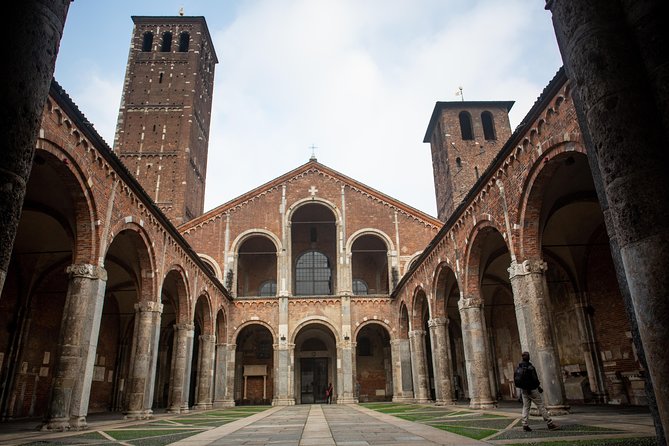
The red route is the classic “big Milan” loop. It’s built to connect three of the city’s top icons: Milan Duomo, Castello Sforzesco, and La Scala.
What makes this line useful is that these sights sit in different parts of the old-and-central core, and the bus gives you quick access without constant repositioning. The entire loop of Line A takes about 90 minutes, so you can do it as a first pass to understand how the center is laid out.
Where you’ll likely hop most:
- Duomo (P.za del Duomo, 38): This is the anchor stop for the cathedral area.
- Castello Sforzesco area (Foro Buonaparte, 10): A strong option when you want the castle grounds but don’t want to walk from the Duomo area.
- Monte Napoleone shopping district (Via Alessandro Manzoni, 16): Great if you want to pair historic Milan with upscale streets.
One practical note: the bus is open-air and double-decker. Views from the upper deck can be great, but the ride can also feel bumpy on Milan roads, so grab a seat with a stable grip if you’re sensitive to motion.
Blue Line (B): Palazzo Lombardia, Porta Venezia, and the Last Supper Zone
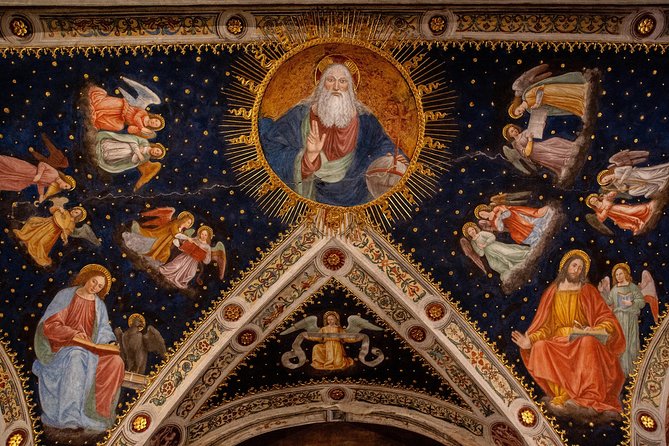
If the red line is about the icons you picture on postcards, the blue line is about the Milan contrast. You’ll connect the modern skyline side with old neighborhoods—and it also serves the area where you can see Leonardo da Vinci’s The Last Supper at Santa Maria delle Grazie.
This line’s smart because it stitches together places that are hard to plan in a single foot route. You can hop off, do your viewing, then roll straight to another neighborhood without thinking too hard about transit.
Key stops to aim for:
- Palazzo Lombardia (Regional Central Purchasing Company): Useful for the modern skyline and the business district vibe.
- Porta Venezia (via the 50&Più stop): A historic city-gate area that’s a helpful pivot point for lunch and wandering.
- Cenacolo / Last Supper stop (Via Caradosso, 6): This is the one that brings you to the Santa Maria delle Grazie area.
The hop-off strategy here is simple: do the big attraction, then use nearby stops to reset before the next walk. The bus helps you avoid “all day, all walking” burnout.
Green Line (C): San Siro Stadium, Monumental Cemetery, and Via Montenapoleone Area
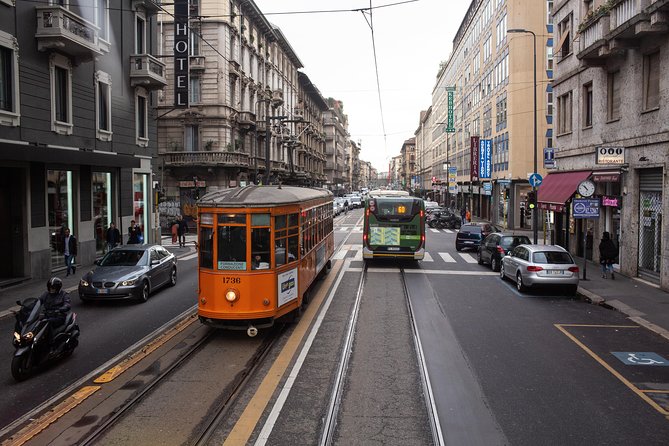
The green line is for sports energy, large-scale city infrastructure, and a different kind of Milan.
It includes San Siro stadium, the Monumental Cemetery, and a stop near the shopping quarter around Via Montenapoleone. That mix is a big reason this line works: you can go from major stadium views to a quieter, more reflective stop and then back toward shopping.
Stops to watch for:
- San Siro Stadium (Stadio San Siro – Gate 8): Your direct route for the stadium area.
- Pagano (Pagano M1): A useful pivot if you want to connect to metro lines later.
- Lotto / Monte Bianco and Lotto / Monterosa area: Helpful if you’re planning more walking around the western side.
If you’re a soccer fan, this line is a must. If you’re not, it still has value because San Siro is a landmark that helps you understand how wide Milan’s footprint is.
Yellow Line (D): Navigli Canals, Piazza XXIV Maggio, Brera, and Duomo Connections
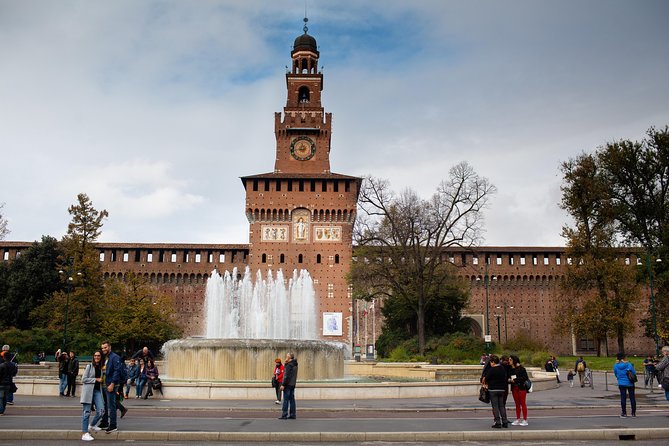
The yellow route is the one that often feels like a change of pace. It follows the canals of Navigli, passes Piazza XXIV Maggio, and works its way past the Duomo area toward more fashionable streets like Montenapoleone and into Brera.
Why it’s worth your time: Navigli is one of the places where Milan feels less like a museum circuit and more like a lived-in city you can wander through slowly. A bus line that actually reaches that canal zone makes planning easier.
Look for these stop anchors:
- Navigli area (Via Vigevano): For the canal walk idea.
- Piazza XXIV Maggio (Piazza Ventiquattro Maggio): Convenient if you want a central meeting point for wandering.
- Brera (Via Fatebenefratelli, 5): A good launchpad for artsy streets and local café time.
- Duomo and Montenapoleone connections: Useful if you want to switch between old center and swank shopping on the same day.
If you’re trying to avoid over-planning, this is the line I’d treat as your “wander and snack” route. Get off, stroll, then come back when you feel like it.
Timing Tricks: When to Start and What Changes at Night
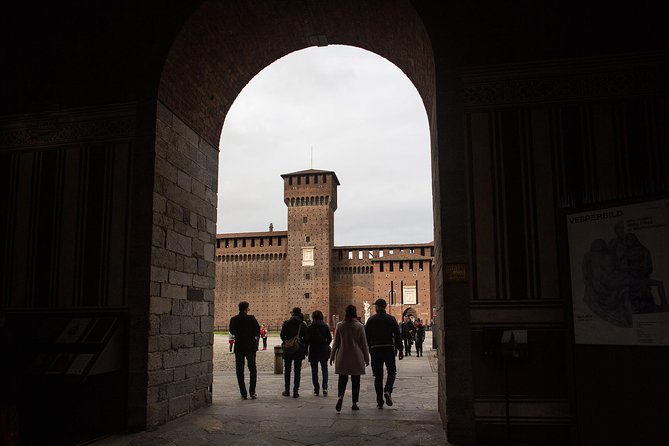
The tour’s listed start time is 10:00 am. For a city tour like this, starting around then is smart because you’ll have daylight for walking and photos.
Here’s the practical reality: Milan doesn’t always give you late-day bus abundance. You may find the service tapers off after the afternoon and doesn’t run heavily in the evening, unless you’ve got the separate night option included in your ticket.
That’s where the 72-hour weekend add-on matters. If you buy the 72-hour rate valid for the weekend (Saturday and Sunday) in the period from June to September, your ticket includes a Milan Night Tour. It’s a nice way to see the city after dark without turning your evening into pure logistics.
Audio, Wi‑Fi, and the App: Useful Tools, Watch-Outs
The included tech stack is a real plus:
- Free Wi‑Fi onboard
- Mobile app called Sightseeing Experience to see bus locations
- Audio guide in 10 languages (English is available)
In theory, that makes it easy to get context while you ride. In practice, you’ll get the best experience when you’re ready to troubleshoot.
A few things to keep in mind:
- Audio can be harder to hear if you’re farther from the sound source or if the bus is crowded.
- If audio devices or jacks don’t work in your seat, it may be worth moving to another spot before you give up on the commentary.
- Some recordings may feel like they jump timing relative to your actual stop, so watch the signage and stop names closely rather than trusting only the audio.
The app helps a lot with the “are we going the right way” feeling, especially when you’re hopping between lines.
Comfort and Practicalities: Open-Air Views, No Food, Plan for Stops
This is an open-air double-decker bus. That’s a win for views and photo angles, but it also means you’re exposed to weather. Milan can move from bright to chilly fast, so pack for comfort.
Also plan around what isn’t included:
- No hotel pickup or drop off
- No food or drinks on board
One practical heads-up: if you need a toilet during the day, you may have trouble finding one right at the stops. The buses don’t provide public washrooms, and you shouldn’t count on facilities being available at the main visitor center either. Build bathroom breaks into your plan while you’re off the bus.
And yes, riding high on a double-decker can mean the bus feels a bit bumpy. If you’re traveling with someone who gets motion sick, pick a seat that faces forward if possible and keep your eyes on the horizon.
Best Uses: Who This Hop-On Hop-Off Tour Fits
This tour fits best when you want:
- A fast way to connect major sights across Milan
- A plan-light day where you can pause for photos, gelato, or a museum without rushing
- A first-time orientation of neighborhoods like the Duomo area, Brera, Navigli, and the stadium zone
It’s also a solid option if you don’t want to think too hard about metro lines all day. You can treat the bus like a moving spine, then do focused walking around the stops you care about most.
I’d be more cautious if you’re expecting a highly polished, perfectly timed narrative. The audio is helpful, but it can’t replace a great guide who adapts to what you’re seeing right at that moment. If you want deep storytelling, pair this with one paid walking tour in the neighborhood you love most.
Should You Book This Milan Hop-On Hop-Off Bus Tour?
I’d book it if you’re visiting Milan for a short stretch and want to reduce stress while still covering the big names. The combination of four connected routes, free Wi‑Fi, and an app that shows bus locations makes it a practical choice. It’s also hard to beat the convenience of getting to areas like Duomo, La Scala, Navigli/Brera, and San Siro without building a complicated transit map.
Skip it or reconsider if:
- You hate figuring out stop locations and schedules
- You’re picky about audio timing and headphone hardware
- You plan to stay out late every night without the weekend night option
If plans change, there’s free cancellation as long as you cancel at least 24 hours before the start time.
FAQ
What time does the Milan hop-on hop-off bus tour start?
The start time is 10:00 am.
How long is the tour?
The duration is listed as about 1 hour 20 minutes.
What ticket options are available?
You can choose tickets valid for 24, 48, or 72 hours, and you can hop on and off at any stop during that time.
What major attractions are on the four bus lines?
Line A covers sights like Duomo, Castello Sforzesco, and La Scala. Line B includes Palazzo Lombardia, Porta Venezia, and the Santa Maria delle Grazie area for The Last Supper. Line C focuses on San Siro, the Monumental Cemetery, and access toward Via Montenapoleone. Line D follows the Navigli canals, includes Piazza XXIV Maggio, and connects toward Duomo/Montenapoleone and Brera.
Is the tour available in English?
Yes. The experience is offered in English, and the audio guide is available in 10 languages.
What’s included with the ticket?
You get a mobile ticket, free Wi‑Fi onboard, and an audio guide on the bus in 10 languages. There’s also a free app called Sightseeing Experience that helps you see bus locations in real time.
What isn’t included in the price?
Hotel pickup and drop off are not included, and food and drinks are not included.
When is the Milan Night Tour included?
The 72-hour weekend ticket includes the Milan Night Tour for Saturday and Sunday in the period June to September.