A one-day Mt Fuji fix is real. This Mt. Fuji + Hakone 1-Day Bus Tour Return by Bullet Train strings together the big hitters with a guided day that starts early in Tokyo and ends back at Tokyo Station. The plan is built around big views, short-but-satisfying stops, and a smooth back half on the Shinkansen.
What I especially like is the combo of Mt. Fuji’s 5th Station plus Hakone’s Ropeway and Lake Ashi cruise, so you’re not hopping trains all day. I also like that you get a professional English-speaking guide and multilingual audio, which helps when you’re squeezed for time and want the story, not just the scenery. One drawback to plan for: this is a long day (~11 hours) and parts of the itinerary can be swapped or cancelled if weather (especially wind or snow) gets harsh.
In This Review
- Key Things That Make This Tour Worth Your Attention
- The Big Idea: One Scheduled Day, Two World-Famous Regions
- Morning Start and the Real Timing Behind an ~11-Hour Day
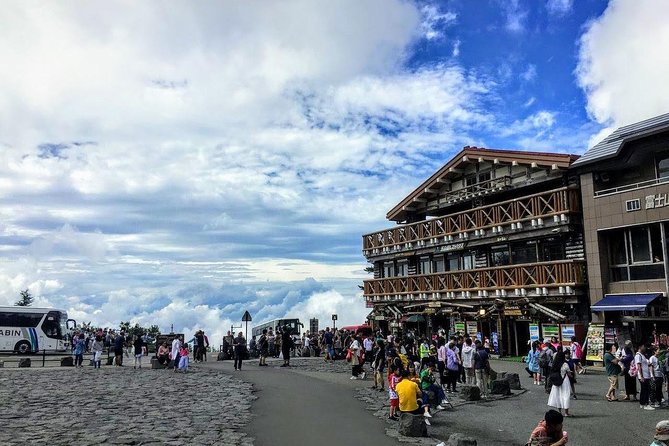
- Mt. Fuji 5th Station: The Closest You’ll Likely Get in One Day
- Lunch at the Base: Included Fuel, but Know What You’re Selecting
- Hakone Ropeway: When Volcanic Views Are the Main Event
- Lake Ashi Cruise: Caldera Water, Short Time, Big Payoff
- Getting Back: Odawara Switch + Shinkansen Finish at Tokyo Station
- Price and Value: What You’re Paying For (and What You’re Not)
- Weather and “Plan B” Reality Check
- Who This Tour Suits Best (and Who Should Think Twice)
- Final Call: Should You Book This One-Day Fuji and Hakone Tour?
- FAQ
- How long is the tour?
- Where do I meet the group in Tokyo?
- Is the lunch included?
- What’s included on the Hakone part of the day?
- Can I request a vegetarian or Muslim-friendly meal?
- Is there an actual halal or vegan-certified meal option?
- Do you return to Tokyo by Shinkansen?
Key Things That Make This Tour Worth Your Attention
- Fuji 5th Station first, with a solid chance at close-up views when the weather cooperates
- Hakone Ropeway + Lake Ashi cruise as the fun, scenic payoff after the bus ride
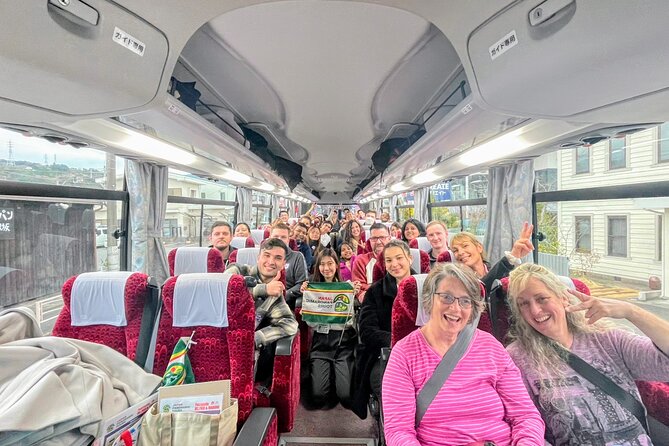
- Free Wi‑Fi on the coach and multilingual audio for a low-stress ride
- Shinkansen return to Tokyo Station, so you avoid the end-of-day transit scramble
- Small-ish group size (max 43), which usually means easier instructions and timing
The Big Idea: One Scheduled Day, Two World-Famous Regions
This tour is basically a logistics machine with a very clear goal: get you from Tokyo to Mt. Fuji and then into Hakone, all in one day. You’re not drifting through town on your own. You’re moving as a group, at a pace set by the schedule and—honestly—by weather.
If you’re visiting Japan for a short stretch and you really want both Mt. Fuji and Hakone without eating up multiple days, this is a practical way to do it. You’ll also get a guide who’s there to explain what you’re seeing, not just move you from stop to stop.
The tradeoff is simple: because it’s packed, you don’t get lingering time. You’re getting experiences in bite-size chunks.
Morning Start and the Real Timing Behind an ~11-Hour Day
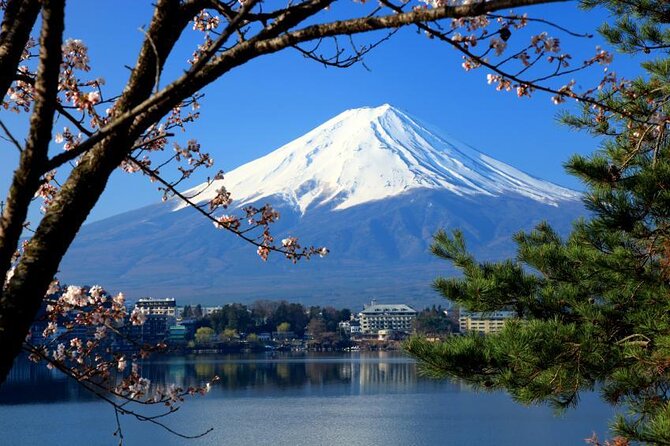
The day begins early. Pickup is listed at Matsuya Ginza (7:20am) or LOVE Shinjuku (7:50am), and the tour is designed around reaching Mt. Fuji area early enough to make the 5th Station stop count.
Even with an early start, you should expect a lot of bus time. The full day runs about 11 hours, and the schedule builds in short blocks: about 30 minutes at Mt. Fuji 5th Station, 40 minutes for lunch at the base area, and then 30 minutes each for the Hakone Ropeway and the Lake Ashi cruise. The day ends around 18:10 at Tokyo Station.
Two practical tips for this kind of day:
- Bring layers. You’ll move between warm-on-the-bus and colder in open-air viewpoints.
- Pack snacks if you’re the type who gets hungry between fixed stops. The schedule is tight, and the bus ride can be long.
Mt. Fuji 5th Station: The Closest You’ll Likely Get in One Day
Mt. Fuji’s 5th Station is where this trip feels most different from a normal day tour. It’s the early highlight with a sacred feel and a big change in scenery as you climb toward the mountain’s altitude.
You’ll have about 30 minutes here, and the tour emphasizes a few specific things:
- Breathing in the air at the station with views around you
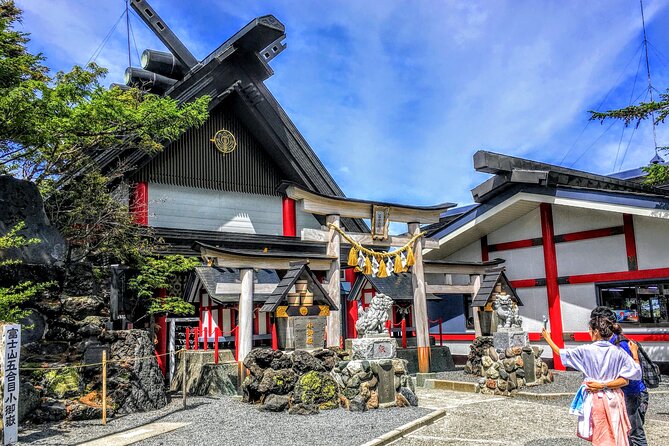
- Visiting a Shinto shrine on-site
Do note the “what if” part. Access can change with road rules and conditions. The tour info explicitly notes that you may not be able to go beyond the 4th station in some situations, and on some dates they switch the plan due to traffic regulation. You might also end up visiting an alternate Fuji-related site (like Oshino Hakkai or an equivalent alternative) if 5th Station access isn’t possible.
This matters because your best Mt. Fuji photos depend heavily on visibility. When the day is clear, 5th Station can feel like you’re suddenly closer than you expected. When the weather closes in, you’ll still get the experience, but it won’t look the same.
Lunch at the Base: Included Fuel, but Know What You’re Selecting
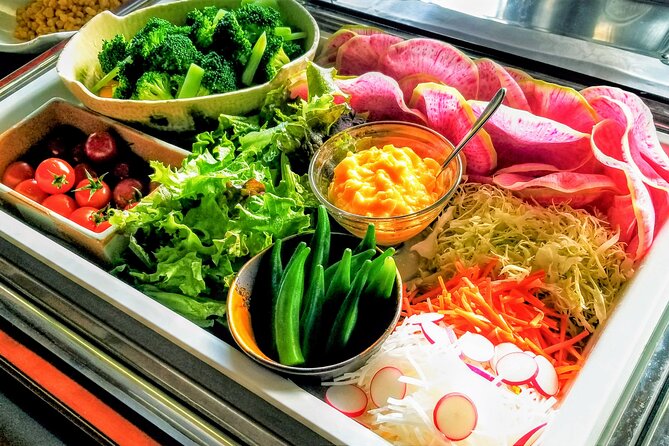
Lunch is included only if you choose the lunch option, and it’s a Japanese buffet with local ingredients at the bottom of Mt. Fuji. You’ll have about 40 minutes to eat.
The food setup is pretty straightforward: buffet style, and the tour can handle vegetarian and Muslim-friendly meals if you request in advance. There’s also an important caution: halal and vegan options aren’t treated as fully separate kitchens. The info states that halal items aren’t halal-certified, and vegan meals aren’t truly vegan due to the shared kitchen setup with dairy or egg.
So here’s the practical way to think about it:
- If you eat dairy/egg and just need vegetarian or non-pork choices, it’s likely to work well.
- If you need strict dietary separation, the tour advises you to book without lunch and bring your own.
I also think it’s worth managing expectations about buffet lunch. A buffet can be tasty and filling, but it’s not the same as ordering a carefully planned set menu at one standout restaurant. On a day tour, buffet lunch is mainly there to keep you moving.
Hakone Ropeway: When Volcanic Views Are the Main Event
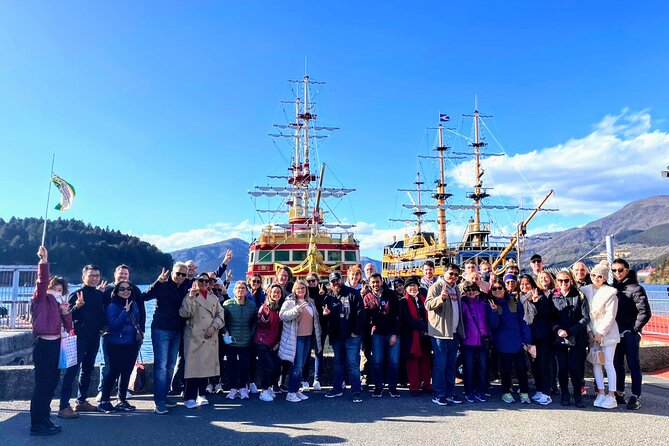
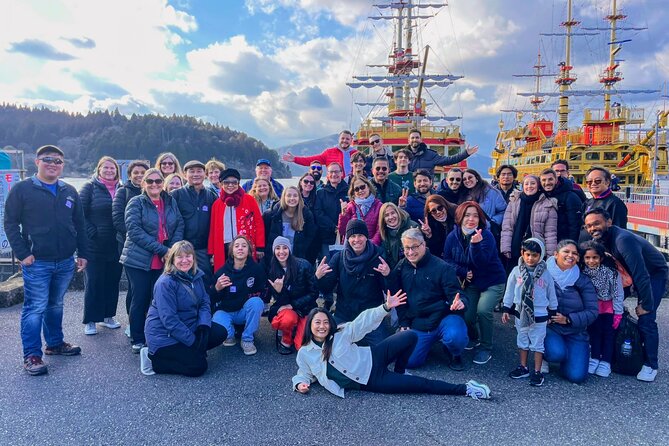
After lunch, the day pivots into Hakone’s dramatic scenery. The tour includes the Hakone Ropeway (a.k.a. cable car style ride) with about 30 minutes on-site.
This is one of those experiences that’s fun even if you’re not a “view person.” You’re elevated, the air feels different, and the ride is designed for photos. The tour also points out a viewing angle over volcanic activity, which is a big part of why Hakone feels like Japan’s “geology theme park,” in the best way.
The main drawback is not the ride itself—it’s the weather. The tour info warns that strong weather conditions can cause the Ropeway to stop running, and the itinerary can be altered. In the real world, that means you may lose time there and end up with an alternate stop instead (from a list that can include other Hakone or Fuji-area sites).
If your trip dates include stormy days or very windy forecasts, this is the part most likely to get changed.
Lake Ashi Cruise: Caldera Water, Short Time, Big Payoff
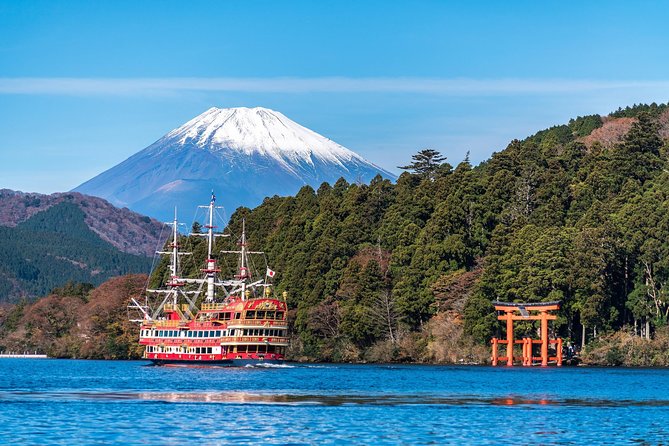
Next comes Lake Ashinoko (Lake Ashi) with a cruise included. You get about 30 minutes on the water.
Lake Ashi is a caldera lake, and the cruise is the relaxing counterweight to the earlier climbing and cable car ride. On a clear day, you’ll likely see dramatic mountain-and-water views. On a gray or windy day, the cruise is still part of the Hakone experience, but the visuals can be less cinematic.
Again, weather is the swing factor. The tour info explicitly says strong conditions can cancel the boat cruise, and a substitute plan may kick in without a refund. If a cruise is the reason you booked Hakone, you should accept that Mother Nature can play interrupting games.
Getting Back: Odawara Switch + Shinkansen Finish at Tokyo Station
One of the cleanest parts of this tour is the return method. After finishing in the Hakone/Odawara side, you go to Odawara Station and then take the bullet train back to Tokyo Station.
There’s a short stop at an information center area (listed as about 5 minutes at Odawara Station Tourist Information Center). Then your final stretch runs until the tour ends at Tokyo Station around 18:10.
Two practical logistics notes:
- The tour info warns you can’t bring a large luggage piece exceeding 160cm total dimensions onto non-reserved Shinkansen cars (example given is 80cm x 50cm x 30cm). If you’re traveling with a big suitcase, plan for reserved seating or keep luggage within limits.
- Once you’re on the Shinkansen, your day is basically over. That makes it a lot less stressful than trying to connect buses and trains at dusk.
Price and Value: What You’re Paying For (and What You’re Not)
At $163.26 per person, this isn’t a budget day trip. But it’s also not just a driver and a timetable.
You’re paying for a full package that includes:
- Professional English-speaking guide
- Air-conditioned bus with free Wi‑Fi
- Hakone Ropeway fee and Lake Ashi cruise fee
- Optional lunch buffet with advance dietary handling
- Shinkansen ticket back to Tokyo Station
- Multilingual audio guidance (English plus several other languages)
The value logic is simple: you’re buying convenience plus access to paid transit experiences without having to plan them yourself. In a one-day window, that can be worth real money.
What’s not included:
- Food and drinks unless you select the lunch option
- Any tips (not obligatory)
- Most personal transit beyond what’s in the schedule
- Hotel pickup/drop-off as a service (there’s only a set pickup point)
If you’re comparing alternatives, keep in mind that building this day yourself usually costs time and stress. A good chunk of the price is paying for the route being handled.
Weather and “Plan B” Reality Check
This tour is very clear that good weather matters. That isn’t a marketing line—it’s operational. The tour info lays out that strong winds, road closures, or closures of specific attractions can force changes.
When that happens, the itinerary may swap to alternate locations such as:
- Oshino Hakkai
- Hakone Shrine
- Fujisan World Heritage Center
- Hakone Sekisho
- Other Fuji/Hakone-area alternatives
They also note they might offer a small compensation or a gift depending on the situation, but refunds are not given for changes. So your best strategy is to book with flexibility in your head: you’re here for the experience of region and views, not one guaranteed exact sequence.
If you have asthma, the tour notes it’s not recommended.
Who This Tour Suits Best (and Who Should Think Twice)
This works best for you if:
- You want Mt. Fuji + Hakone in one day from Tokyo
- You value a guide and explanations, not just moving around independently
- You want a Shinkansen return without figuring out end-of-day transport
It’s less ideal if:
- You hate long days and want lots of free time
- You need guaranteed access to every specific ride and cruise, no exceptions
- You’re traveling with mobility limitations (the tour info says some surfaces may be uneven or unpaved, and it’s not recommended for wheelchair users)
Also, this is a small group max of 43, which is a sweet spot for instructions, but it still means you’re part of a schedule.
Final Call: Should You Book This One-Day Fuji and Hakone Tour?
Yes, if you’re aiming to maximize one Tokyo day with the biggest regional highlights and you’re okay with weather-based changes. The tour’s biggest strength is that it compresses a lot of paid experiences—Fuji’s 5th Station, Ropeway, Lake Ashi cruise, plus the Shinkansen return—into a single organized day.
I would book this when:
- Your dates look likely to have decent visibility
- You want structure, not DIY planning
- You’re happy to trade a little extra time at each stop for seeing more overall
I’d think twice if:
- You’re chasing one specific attraction for one specific photo and you’d be upset if winds shut it down
- You’re bringing large luggage and don’t want to think about Shinkansen restrictions
FAQ
How long is the tour?
The tour is listed as about 11 hours.
Where do I meet the group in Tokyo?
Pickup is listed at Matsuya Ginza (7:20am) or LOVE Shinjuku (7:50am). The itinerary also lists Tokyo Station Marounouchi as the start and end location.
Is the lunch included?
Lunch is included only if you select the lunch option. If you have severe dietary restrictions, the tour suggests booking without lunch and bringing your own.
What’s included on the Hakone part of the day?
Hakone Ropeway and the Lake Ashi cruise are included, plus the tour guide and audio guidance.
Can I request a vegetarian or Muslim-friendly meal?
Yes, vegetarian and Muslim-friendly lunch options are available if you request when booking.
Is there an actual halal or vegan-certified meal option?
The tour information says halal items are not halal-certified, and vegan meals aren’t available due to the same kitchen setup containing dairy or egg.
Do you return to Tokyo by Shinkansen?
Yes. After the Odawara stop, you take the bullet train from Odawara Station to Tokyo Station.