
A shortcut through DC’s most important landmarks. I like how this tour strings together National Mall icons fast, then adds real context with an expert guide who explains what you’re seeing. The trade-off is simple: the schedule is tight, so if traffic, crowds, or lines slow things down, one quick stop can get shortened.
If you want value, the math is pretty clear at $59 per person: most of what you’re doing is free memorial time and photo stops, while you’re paying for transportation, timing, and guided storytelling. With a max group size of 40 and a morning start built for crowd control, it’s an efficient way to get your bearings fast.
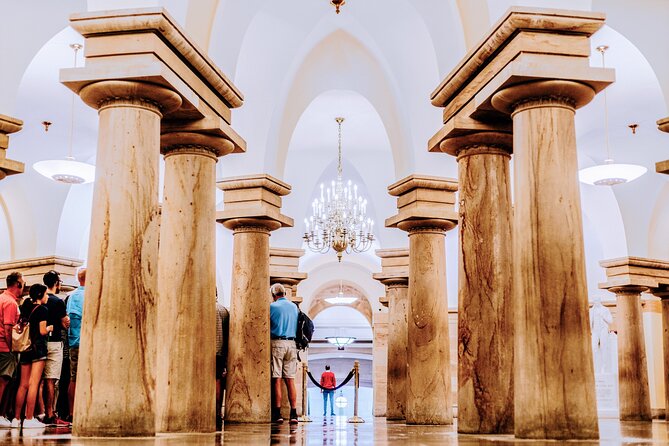
You can also build in paid-time highlights via upgrades, like a Washington Monument visit, National Air and Space Museum entry, and the U.S. Capitol walking tour. There’s even an add-on for Tidal Basin cherry blossoms, depending on what you choose.
In This Review
- Key reasons this tour works well
- Price and logistics: what $59 buys (and what it doesn’t)
- Meeting point and how the tour flows on the ground
- Lincoln Memorial and White House: the fastest way to get your bearings
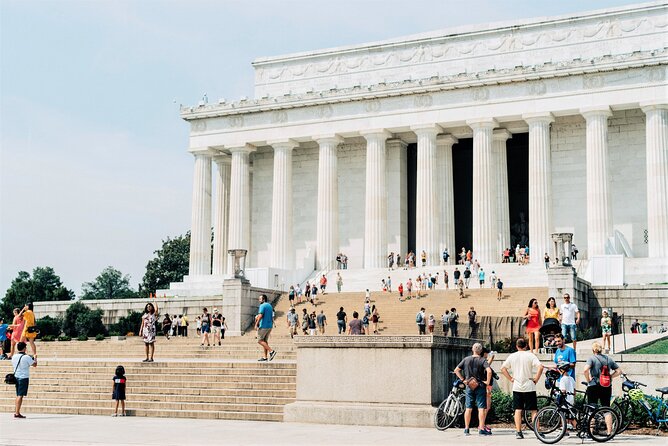
- Lincoln Memorial stop
- White House stop with a guide walk
- MLK, FDR, WWII, and Vietnam: the memorials that actually stick
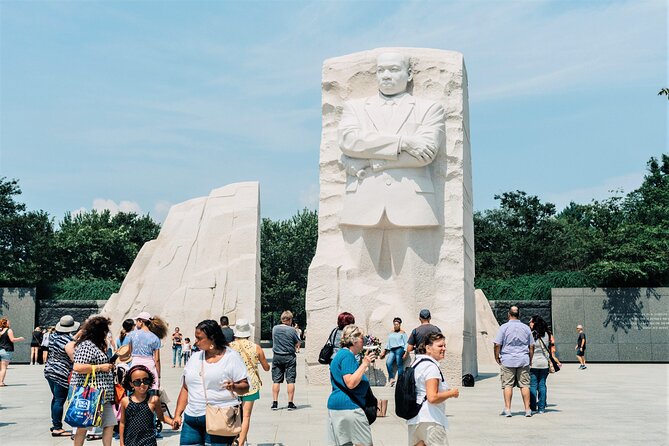
- Martin Luther King Jr. Memorial
- Korean War Veterans Memorial
- Franklin Delano Roosevelt Memorial
- National World War II Memorial
- Vietnam Veterans Memorial (the Wall)
- Washington Monument, Air and Space, and the optional upgrades that change your day
- Upgrade: Washington Monument
- Upgrade: National Air and Space Museum
- Upgrade: U.S. Capitol guided walking tour
- Upgrade: Tidal Basin cherry blossoms
- Upgrade: National Museum of African American History and Culture
- When tight timing and lines can affect your morning
- What the best guides do with these stops
- Who this tour suits best (and who should pick something else)
- Should you book this National Mall tour?
- FAQ
- How much does the National Mall Tour cost?
- How long is the tour?
- Where do I meet, and where does it end?
- Is the tour in English?
- What’s included in the base tour?
- Do I need to buy separate tickets for museums or the Capitol?
- Is the White House visit included?
- Is hotel pickup available?
- Can I choose not to walk at the stops?
- What happens if the weather is bad?
Key reasons this tour works well
- 10+ landmark stops in one morning without fighting parking or rerouting yourself
- Guide-led walking moments (especially along the White House area) so you don’t miss what matters
- Memorials with emotional punch like MLK, FDR, WWII, and the Vietnam Veterans Wall
- Optional paid entries for Washington Monument, Air and Space, the African American museum, and Capitol interior
- Small-group feel with a max of 40 people and a pro team staying with you
Price and logistics: what $59 buys (and what it doesn’t)
At $59 per person for a morning loop (about 3 to 6 hours), you’re not buying a bundle of paid attractions. You’re buying structure: a bus route that hits the big sights, time management, and a guide who ties the stops together so you understand why each place exists.
Most memorials on this route are free to enter. That’s a win for value. Your money also goes toward the practical stuff—coach transport through a traffic-heavy city, and a guide who stays with you and walks you through key areas.
A couple of logistics points matter before you commit:
- There’s no hotel pickup or drop-off. You meet at 790 Pennsylvania Ave NW and end near the National Archives building area.
- You’ll do some walking. It’s not a long trek, but there are short walks at stops, including the White House area.
One thing to keep in mind: there are optional add-ons with their own schedules. If you’re planning around museum entry times, keep your day flexible. Even well-run tours can lose minutes to real-world delays.
Meeting point and how the tour flows on the ground
This tour starts at 790 Pennsylvania Ave NW. Your end point is listed as the National Archives building area, which is convenient because it keeps you near more of the city’s core.
You’ll likely feel the benefits immediately if you’ve ever tried to do DC monuments without a plan. Parking is a puzzle, traffic can be stop-and-go, and the distances between major sites add up. By putting you on a bus route with commentary, this tour saves you from the worst of the guessing.
Group size is limited to 40 people. That tends to make the experience feel more controlled than the huge hop-on bus chaos. Also, service animals are allowed, and it’s described as workable for most people—plus there’s a nice reality-based option: if you don’t feel comfortable walking at a stop, you can remain on the bus.
If you’re the type who likes to arrive early, show up a bit before the meeting time. That small habit helps avoid last-minute scrambling with your photo setup.
Lincoln Memorial and White House: the fastest way to get your bearings
The day begins with a “photo + quick look” energy, which is exactly what you want on a first DC morning. A quick pass by historic sites sets the tone, then you land at the Lincoln Memorial.
Lincoln Memorial stop
You get about 20 minutes here, with free access. This is your iconic starting point and a chance to orient yourself to the shape of the National Mall—open space, sightlines, and the way monuments line up.
If you want photos, this is a good time to hustle just a little. After that, you’ll be moving again.
White House stop with a guide walk
Next is the White House area, roughly 25 minutes total. Admission isn’t included here, so it’s mainly about the viewing and the guided walk.
The walk is described as a two-block long stroll along the North Side and Lafayette Square Park with the guide. In that time, you’ll see the U.S. Treasury, the White House, the West Wing, the Eisenhower Executive Building, and the Blair House.
What makes this stop especially useful is the narration. The guide’s job is to turn what looks like a dramatic building and a famous lawn into a living piece of political design—who occupies which offices, how the complex is laid out, and what you’re likely looking at from your angle.
If you’re traveling with kids, this is also a solid stretch because the guide can point out details that feel like a treasure map instead of a textbook.
MLK, FDR, WWII, and Vietnam: the memorials that actually stick
This is where the tour earns its keep. DC monuments can feel like photo backdrops until someone explains what’s being honored and why the layout is built the way it is. This route hits several of the memorials that hit hardest—fast, but with guidance.
Martin Luther King Jr. Memorial
You’ll spend about 30 minutes combined with the nearby flow of the area. The stop highlights the memorial’s open-space design, statuary, and quotes, with landscaping on the Tidal Basin.
The key value here is context. When you know what quotes and symbols refer to, you stop treating it like scenery and start reading it like a message.
Korean War Veterans Memorial
This stop is usually shorter (around 15 minutes) but it’s distinctive. The guide walks you through an arresting design: a field of soldiers, a serenity pool, and a granite wall with photographs etched into it.
Even in a brief visit, the visual design makes it memorable. It’s not just another statue—it’s an attempt to preserve faces and service in a very deliberate way.
Franklin Delano Roosevelt Memorial
You get another about 30 minutes combined experience that ties into the same Tidal Basin area. This memorial is described as a 7.5 acre site, and it covers America during the Great Depression and World War II.
On this tour, FDR isn’t just a name. You’ll see the memorial as a timeline—part hardship, part recovery, part the long road through wartime—without needing to pre-study.
National World War II Memorial
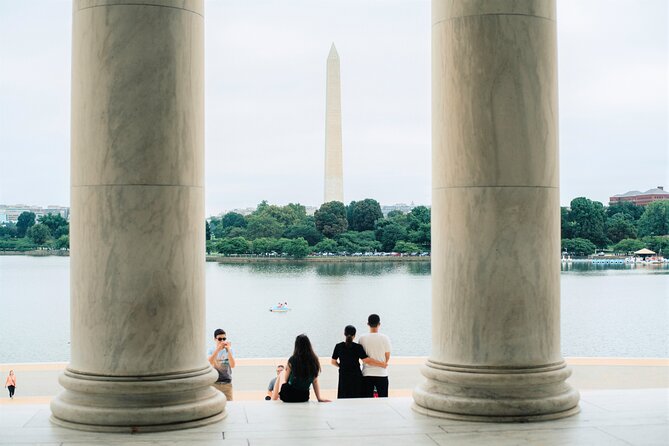
This one is a crowd favorite because the views are dramatic and the story is massive. The stop includes panoramic views with the Washington Monument and Lincoln Memorial/area in the background. The memorial is described as honoring 16 million Americans who served and over 400,000 who died.
One practical caution: this memorial can be the one that gets cut short if the route gets delayed. I’ve seen this happen when traffic gets ugly because of protests, with time constraints forcing the tour to skip or shorten the WWII stop. If WWII history matters to you personally, plan to keep expectations flexible and consider adding extra time in the city on your own day.
Vietnam Veterans Memorial (the Wall)
This is one of the most moving stops, even on a short schedule. You’ll see the Maya Lin-designed Wall, and the design detail that people remember is the scale: 58,479 names carved into it.
The time here is about 15 minutes, so it won’t feel like a long meditation. But it’s enough time to take in the Wall’s impact—especially when the guide frames it as a place of remembrance, not just a striking artwork.
If you’re sensitive to emotional sites, give yourself a moment before photos. It’s the kind of place where rushing can feel wrong.
Washington Monument, Air and Space, and the optional upgrades that change your day

This tour is built around a strong morning core, but the options can extend your day or adjust the ending.
Upgrade: Washington Monument
If you upgrade at checkout, you get a Washington Monument admission ticket for self-guided entry. The tour description says the monument visit happens post-tour, and your route ends where that self-guided visit fits.
This is one of the easier upgrades to understand because it’s a single ticket with clear payoff: you get to go up, at your pace.
Upgrade: National Air and Space Museum
Another optional upgrade adds a ticket for the National Air and Space Museum with self-guided entry.
This works best if you know your group has a real interest in aviation and space. The museum is big, and without a guide, you’ll want to focus your priorities so you don’t wander for hours.
Upgrade: U.S. Capitol guided walking tour
The U.S. Capitol option is the most structured upgrade. It includes a 2-hour guided walking tour inside the Capitol with admission.
It’s also scheduled as a separate day block, described as beginning at 8am for this option. During the Capitol tour, you also pass by the Supreme Court, Senate offices, House of Representatives, the Peace Memorial, and more.
If Capitol interior time is on your must-do list, this upgrade is the closest thing to a “don’t miss it” add-on—because the interior isn’t something you can recreate in a quick exterior photo stop.
Upgrade: Tidal Basin cherry blossoms
There’s an upgrade for a Tidal Basin walk to see cherry blossoms. If you’re visiting in bloom season, this is one of those additions that turns the memorial route from impressive to unforgettable.
If you’re outside peak bloom dates, you might still enjoy the walk, but the wow factor depends on the season.
Upgrade: National Museum of African American History and Culture
Another optional upgrade includes self-guided entry to the National Museum of African American History and Culture.
This museum deserves more time than most tours can realistically provide. The upside is simple: you’re not arriving cold and guessing what to do first. You’ve still got the freedom to follow what interests you most once inside.
When tight timing and lines can affect your morning
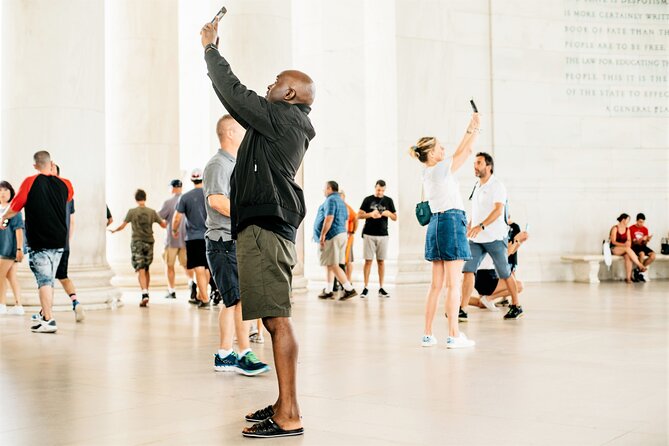
The tour is designed to beat crowds by running in the morning, and the bus routing helps you avoid a lot of wasted time. But DC has two stubborn facts: traffic and lines.
Here’s what you can do to reduce frustration:
- Keep your day realistic. This isn’t a slow “linger at each monument” plan.
- Bring layers. Even on clear mornings, the open-air stops can feel cold or windy.
- If you add upgrades (Capitol, Air and Space, museum entry), verify the order you’ll be dropped for your self-guided time. On at least one occasion, expectations around what would be included during a day-of schedule didn’t match the experience, mostly due to route changes and timing pressure.
A practical tip: if your top priority is one specific stop (like WWII memorial), treat that as your “time buffer” item. Don’t schedule another hard appointment right after the tour ends.
What the best guides do with these stops

The reason this tour works for many first-timers is that the guide isn’t just naming monuments. Strong guides add storytelling that helps you connect the dots between places.
In the recent wave of guide names, Tyrone has been praised for making history come alive, with detailed commentary tied to what you’re seeing. Other guides named in positive feedback include Vernon and James, with people also mentioning a funny, engaging style that keeps the group moving.
Drivers also matter in DC. Chris and Zuma are mentioned for skilled driving and smooth navigation around city obstacles. In hot weather, it’s not rare to hear praise for staying comfortable.
You don’t control who you get, of course, but the pattern is clear: the tour experience rises fast when the guide is lively and precise.
Who this tour suits best (and who should pick something else)

This tour is a great match for you if:
- It’s your first DC visit and you want the “big picture” fast
- You like memorials but don’t want to spend a day planning a route
- You prefer guided context over reading signs alone
- Your group needs a workable plan with minimal hassle
It might be less ideal if:
- You want long, unhurried time at each monument
- You’re deeply focused on one site and would be upset if it got shortened
- You dislike any walking at all, even short walks like the White House area
Should you book this National Mall tour?
Yes—if your goal is getting a smart overview with real narration and minimal effort, this is one of the better ways to do it in a limited window. The value case is strongest when you treat the base tour as your guided pass through free memorials and photo stops, then add only the paid upgrades you truly care about (Washington Monument, Air and Space, Capitol interior, or the African American museum).
Book it if you want your DC trip to start with direction. The memorials are intense, the sightlines are iconic, and the bus route saves you from the worst parts of DC logistics.
Skip or supplement it if you need maximum time at fewer places. In that case, add this tour for orientation, then return on another day for the sites that pulled you in.
FAQ
How much does the National Mall Tour cost?
It costs $59.00 per person.
How long is the tour?
The tour runs about 3 to 6 hours (approximately).
Where do I meet, and where does it end?
The meeting point is 790 Pennsylvania Ave NW, Washington, DC 20001. The tour ends at the National Archives building area.
Is the tour in English?
Yes, it’s offered in English.
What’s included in the base tour?
The base includes a National Mall bus tour with stops at 10+ attractions, including major areas like the Lincoln Memorial, White House area, Martin Luther King Jr. Memorial, Vietnam Veterans Memorial, and more. The tour also includes guide commentary and driving/pass-by time for sites like the Smithsonian museums and Washington Monument.
Do I need to buy separate tickets for museums or the Capitol?
Paid entries are not included in the base. Optional upgrades can add admission for the Washington Monument, the National Air and Space Museum, the National Museum of African American History and Culture, and a guided Capitol interior walking tour.
Is the White House visit included?
The White House stop has a short guided walk, but admission is listed as not included.
Is hotel pickup available?
No. Hotel pick-up and drop-off are not included.
Can I choose not to walk at the stops?
Yes. If you don’t feel comfortable walking at stops, you can modify the tour or remain on the bus at your discretion.
What happens if the weather is bad?
This experience requires good weather. If it’s canceled due to poor weather, you’ll be offered a different date or a full refund.