Oslo gets around fast with one ticket. This Gray Line hop-on hop-off sightseeing bus is a practical way to see the big landmarks without wrestling maps, taxis, or timing. It works because the route targets the city’s most popular sights, and the buses are frequent enough to keep your day moving.
What I like most is the built-in flexibility: you choose when to get off, then hop back on again as often as you want within 24 or 48 hours. Second, I love that you get multilingual audio with a free set of headphones, plus onboard staff who can help with directions and museum suggestions.
The one thing to watch is that you’ll want to time your museum stops. The Viking Ship Museum is currently under renovation and is temporarily closed for a long stretch (until 2025 or 2026), so plan your day with that in mind.
In This Review
- Quick hits
- How the Hop-On Hop-Off loop works in Oslo
- Redeeming at Karl Johans gate, plus the Opera House option
- Karl Johans gate and the city-center landmarks you’ll see from the bus
- Frogner Park and Vigeland Sculpture Park: Oslo at its most memorable
- Cultural History and the museum belt: where discounts can matter
- Viking Ship Museum note (important)
- Kon-Tiki, Fram, and Maritime: three museums that pair well
- Akershus Fortress and the Oslo Opera House: finish with big-city drama
- Akershus Fortress
- Oslo Opera House
- Discounts and food perks: how to use them without over-planning
- Audio guide, headsets, and onboard Wi‑Fi: the practical details
- Using 24 hours vs 48 hours without burning time
- The 24-hour plan
- The 48-hour plan
- Who this Oslo hop-on hop-off bus fits best
- Should you book this Gray Line Oslo Hop-On Hop-Off bus?
- FAQ
- How long is the Oslo hop-on hop-off ticket valid?
- Where can I redeem my ticket to start riding?
- What sights are on the route?
- Is an audio guide included, and what languages are available?
- Are headsets provided?
- Does the ticket include Wi‑Fi?
- What museum discounts come with the ticket?
Quick hits
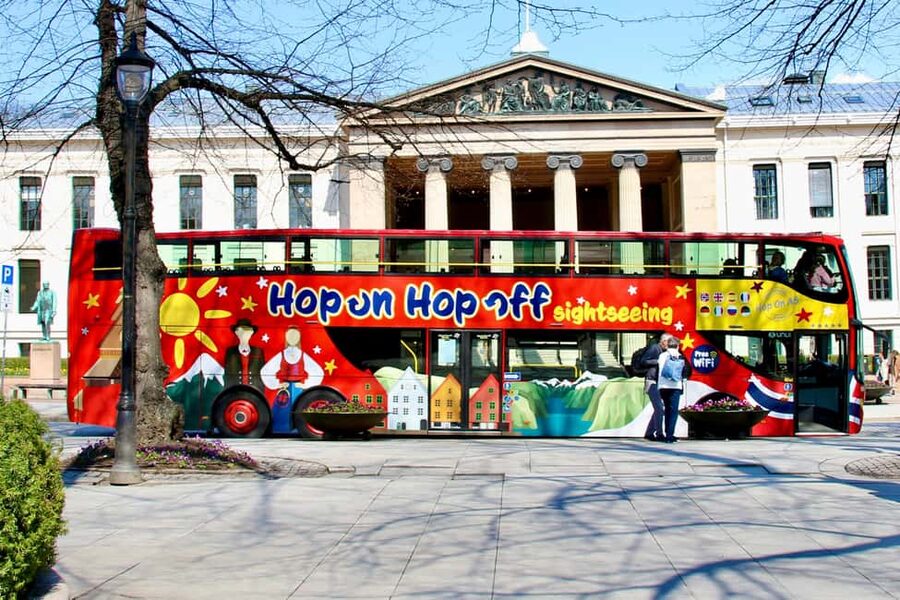
- Unlimited hop-on hop-off with a 24h or 48h ticket, so you can do a full loop then return for the stops you care about
- Hop off right at the sights thanks to a route with many stops, including Karl Johans gate and the Oslo Opera House
- Clear audio in many languages plus free headsets, so the ride actually teaches you something
- Museum discounts included (10% off several major museums, plus food perks at Louise and Rorbua)
- Extra cruise-day access: Stop 8 at Filipstad Cruise Terminal is only on cruise arrival days
- Onboard Wi‑Fi to check opening times and organize your next move
How the Hop-On Hop-Off loop works in Oslo
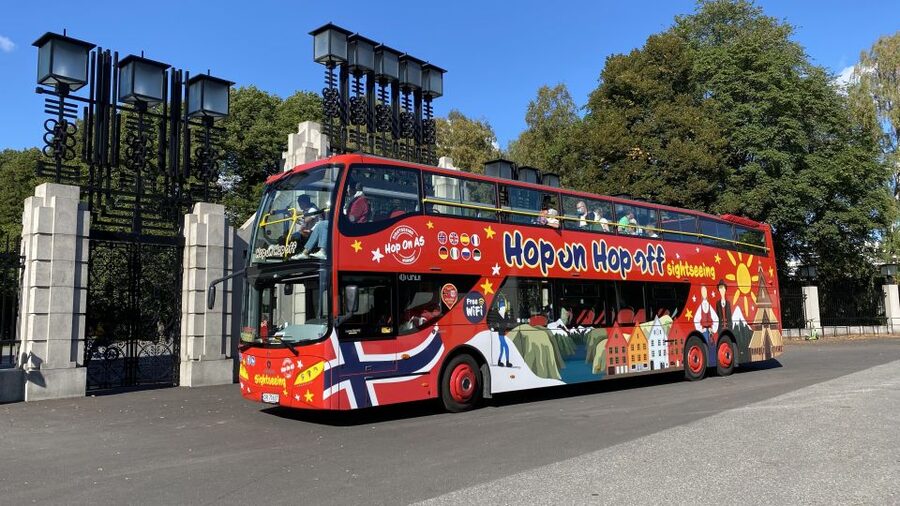
This tour is designed to remove the biggest stress of arriving in Oslo: figuring out where everything is, then getting from one place to the next. Once you redeem your ticket, you can hop on and hop off along the route as many times as you like during your ticket window.
Buses run about every 30 minutes during the season, and the company provides a map and timetable. That combo matters because Oslo is not a tiny village where you can casually stumble between top sights—distances add up, especially when you mix museums with waterfront walks.
You also get Wi‑Fi on board, which is handy when you want to confirm what’s open and when (especially important in shoulder seasons). And while the ride is simple, the audio commentary turns it into more than just transport.
Redeeming at Karl Johans gate, plus the Opera House option
Your ticket redemption starts at major stops, which makes the first step painless. You can redeem at either:
- Stop 1 – Karl Johan (in front of the National Theatre)
- Stop 11 – Oslo Opera House
The tour also mentions a second starting location option on Karl Johans gate 47, and an option tied to Gunnar Sønsteby Statue (Karl Johans gate 47 / Gunnar Sønsteby Statue). The key idea: you’ll want to start where it’s easiest for you to arrive that day.
One useful detail for cruise passengers: Stop 8 – Filipstad Cruise Terminal is only available on cruise arrival days. If you’re not on a cruise, you’ll be using the more standard central stops.
After redemption, you can drop off at Karl Johans gate 47 or Gunnar Sønsteby Statue. In practice, that means you’re not locked into one neighborhood; you can build your day around museum timing and meal breaks.
Karl Johans gate and the city-center landmarks you’ll see from the bus
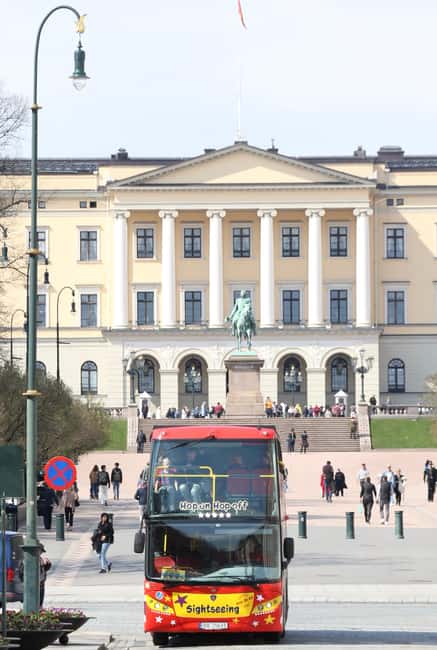
The route begins right where many first-timers naturally want to be: Karl Johans gate near the National Theatre area. Even if you don’t get off right away, you’ll get the big-picture sense of Oslo’s layout: the grand city center, then the westward swing toward parks and museum areas.
As the bus passes through the center, you’ll see well-known civic sights such as:
- the Royal Palace area (viewed from the bus)
- the Norwegian National Theatre
- Karl Johans gate itself, which acts like a spine for the city’s walking routes
A bus ride is often slower than walking for short distances, but here it’s the right choice. These are the places that help you orient yourself fast, so later you can confidently choose what to walk back to.
If you’re the type who likes photos, aim for the times when you’re moving through the center. It’s easier to frame buildings and streets from the bus than it is to relocate between stops on your own.
Frogner Park and Vigeland Sculpture Park: Oslo at its most memorable
One of the strongest parts of this route is the approach to the Frogner Park and Vigeland Sculpture Park area. If you only have a day, this stop is a great use of your hop-on time because the park is a full experience on its own, not just a quick viewpoint.
You’ll pass through Frogner Park, then reach Vigeland Sculpture Park. This is the kind of place where the audio guide can help you understand what you’re seeing, but the main value is that it gives you time. You can get off, wander at your own pace, then decide whether to continue immediately or come back later within your ticket window.
A practical tip: plan for more time than you think you need. Sculpture parks can be deceptively absorbing, and you’ll likely want more than one walk-through angle.
Cultural History and the museum belt: where discounts can matter
From Vigeland, the bus heads toward Oslo’s museum zone. This is where your hop-on ticket starts paying off in a very direct way: you’re positioned to do multiple museums without changing transportation plans.
You can ride past or get off at major stops such as:
- Norwegian Museum of Cultural History
- Viking Ship Museum (noting renovation closure)
- Kon-Tiki Museum
- Fram Museum
- Norwegian Maritime Museum
The key practical advantage is simple: you can stack museums efficiently. Instead of spending your limited time figuring out transit between them, you follow the loop.
Viking Ship Museum note (important)
The tour info flags that the Viking Ship Museum is temporarily closed due to renovation, starting September 2021 and continuing until 2025 or 2026. That doesn’t break the trip, but it does change how you should plan your museum day.
If your priority is Viking history, you might need to shift your schedule toward the other museum stops on the route—especially the Kon-Tiki and Fram areas, which are still on the loop.
Kon-Tiki, Fram, and Maritime: three museums that pair well
The Kon-Tiki, Fram, and Maritime museums are clustered along the route, which is exactly what you want on a hop-on hop-off day. If you’re choosing only a couple museums, these three are strong candidates because they’re spaced well enough that you can do them without rushing the whole itinerary.
You’ll have the flexibility to:
- hop off for a focused visit,
- then keep going on the next bus without losing your place in the city.
And since the tour includes 10% off entrance to the Kon-Tiki Museum, the Fram Museum, and the Norwegian Maritime Museum, the discount becomes more than a nice-to-have. If you’re planning to pay for at least two museum tickets anyway, these cuts help shift the math in your favor.
The big picture for your day is that the bus gives you “museum mobility.” You’re not stuck with one museum choice early and one later—you can rebalance as you go.
Akershus Fortress and the Oslo Opera House: finish with big-city drama
As the route comes toward the harbor-side sights, you’ll reach Akershus Fortress and later the Oslo Opera House. These are excellent end-of-day targets because they reward you even if you’re tired. Fortresses and opera house architecture give you a sense of place without needing museum tickets.
Akershus Fortress
Akershus Fortress is a stop where you can build in time for just walking around outside, taking photos, and soaking up the waterfront atmosphere. Even if you don’t go deep into exhibits, the setting does part of the work for you.
Oslo Opera House
The bus includes Oslo Opera House as a major stop (Stop 11 for redemption). That alone is useful: it’s a convenient anchor if you want your last hop to be near a highly walkable landmark.
For many first-timers, this stop is where the day feels complete. You’ve covered parks, museums, and civic center streets, and now you’re in a modern Oslo moment.
Discounts and food perks: how to use them without over-planning
The included discounts are specific, and it’s worth using them because they apply right when you’re likely to be spending money anyway. Your ticket lists:
- 10% off entrance to the Kon-Tiki Museum
- 10% off entrance to the Norwegian Museum of Cultural History
- 10% off entrance to the Fram Museum
- 10% off entrance to the Maritime Museum
- 20% off your meal at Louise
- Free dessert with your meal at Rorbua
Here’s the smart way to think about it: if you plan to do one museum, the discount is a small win. If you plan to do two or three, it starts to feel like real value. If you also plan to eat at Louise or Rorbua, then the food perks can help stretch your budget without you changing your itinerary.
Also, since the buses run on a loop, you can match your meal to how your museum time goes. If you find you’re faster than expected, you can ride further or get back for food sooner.
Audio guide, headsets, and onboard Wi‑Fi: the practical details
This tour includes an audio guide with headsets and multilingual commentary. The listed audio languages include:
Dutch, English, French, German, Italian, Norwegian, Russian, Spanish, Arabic.
And there’s also a host or greeter available with English, German, Italian, Dutch, French, Spanish, Norwegian. In other words, you can get help in several major languages if something isn’t clear.
I like this setup because it keeps your attention on the sights. You’re not forced to constantly read signs or use your phone to figure out what you’re seeing.
One practical caution: audio tech can be finicky in any system like this. If you’re the kind of person who depends on the narration for context, keep an eye on volume and headset comfort, and be ready to turn to a nearby stop sign if a segment feels out of sync.
The onboard Wi‑Fi helps too. You can quickly check museum hours, then decide whether to stay longer at the next stop or move on.
Using 24 hours vs 48 hours without burning time
Both ticket lengths work, but they serve different travel styles.
The 24-hour plan
A 24-hour ticket is perfect for:
- one full loop plus a couple targeted museum stops,
- or one side of the city center done well, then the museum belt.
If you only do a partial loop on day one, you can use the next day to finish your top priorities with less rushing.
The 48-hour plan
A 48-hour ticket is better if you enjoy museums or you want to avoid the hurry factor. You can:
- spend more time at one or two big stops like Vigeland Sculpture Park,
- then return for museums that fit your mood (especially with the Viking Ship Museum closure in mind).
Either way, the key is to treat the bus like a tool. The “hop-on hop-off” part means your itinerary should flex as you learn what you actually enjoy.
Who this Oslo hop-on hop-off bus fits best
This Gray Line hop-on hop-off bus is a strong match if:
- you want a first-day orientation fast,
- you’re splitting time between city-center streets and museum areas,
- you like having a plan, but still want control.
It also fits couples and families because the route lets you take breaks without committing to one long walk. Solo travelers often like it too, because you can choose your pace without feeling stuck in a group schedule.
Who might not love it as much: if you already know Oslo well and have a very tight, walking-only museum plan, you may feel the bus is an extra step. Also, if Viking history is your single must-see, you’ll need to adjust because the Viking Ship Museum is temporarily closed for renovation through 2025 or 2026.
Should you book this Gray Line Oslo Hop-On Hop-Off bus?
If you’re spending limited time in Oslo, this is the kind of ticket that pays you back with less stress and better timing. The combo of frequent hop-on transport, multilingual audio with free headsets, and multiple museum discounts is what makes it feel like real value at $44 per person.
I’d book it if:
- you want an easy way to cover the core sights like Karl Johans gate, Vigeland Sculpture Park, the museum cluster, Akershus Fortress, and the Oslo Opera House,
- you plan to visit at least two museums,
- you like the freedom to choose how long you stay at each stop.
I’d think twice if you want a deeply guided, museum-by-museum experience or if the Viking Ship Museum is the centerpiece of your trip. In that case, you can still use the route, but your day may need a rethink around the closure.
FAQ
How long is the Oslo hop-on hop-off ticket valid?
Your ticket is valid for 1–2 days, and you can choose a 24-hour or 48-hour option.
Where can I redeem my ticket to start riding?
You can redeem at Stop 1 – Karl Johan (in front of the National Theatre), Stop 11 – Oslo Opera House, and Stop 8 – Filipstad Cruise Terminal on cruise arrival days.
What sights are on the route?
The route includes major stops such as Vigeland Sculpture Park, Norwegian Museum of Cultural History, Viking Ship Museum (currently closed for renovation), Kon-Tiki Museum, Fram Museum, Norwegian Maritime Museum, Akershus Fortress, and the Oslo Opera House.
Is an audio guide included, and what languages are available?
Yes. The tour includes an audio guide with available languages listed as Dutch, English, French, German, Italian, Norwegian, Russian, Spanish, and Arabic.
Are headsets provided?
Yes. You receive a free set of headphones to hear the commentary.
Does the ticket include Wi‑Fi?
Yes. Wi‑Fi is available on board.
What museum discounts come with the ticket?
The ticket includes 10% off entrance to Kon-Tiki Museum, Norwegian Museum of Cultural History, Fram Museum, and the Maritime Museum, plus 20% off your meal at Louise and a free dessert with a meal at Rorbua.