Nine hours, three icons, zero guesswork. This small-group coach tour strings together Tiananmen Gate Square, the Forbidden City, and the Temple of Heaven—then lands you at the Summer Palace. I especially like the hotel pickup and the fact that lunch and entrance fees are folded into the price. One watch-out: there are cultural add-ons that can feel a bit like shopping (pearls and traditional medicine), and the schedule can feel tight if you want lots of wandering.
Forbidden City tickets can be tight, and this matters. The plan is built around that reality, including a practical backup option that still lets you understand the layout of the complex.
In This Review
- The 7:00 AM Pickup Grind (and Why It’s Actually a Plus)
- Tiananmen Gate Square: Get Your Bearings Fast
- Entering the Forbidden City with a Smart 1.5-Hour Plan (Plus the Jingshan Backup)
- Temple of Heaven: A Worship-Site Visit That Explains the Why
- Lunch at an Authentic Chinese Restaurant: One Good Thing Built In
- Traditional Medicine Stop and the Pearl Gallery: Cultural Learning, With Shopping Energy
- Summer Palace (Yiheyuan): Where Gardens Do the Talking
- Transportation, Group Size, and What That Means for Your Day
- Price and Value: Is $173 Worth It for Beijing’s Big Three?
- Who This Beijing Tour Fits Best
- Should You Book This Beijing City Highlights Tour?
- FAQ
- Is hotel pickup included?
- What’s included in the ticket price?
- How long is the tour?
- What happens if the Forbidden City tickets are not available?
- Are there shopping-related stops?
- Do I need to bring passport details?
The 7:00 AM Pickup Grind (and Why It’s Actually a Plus)
Beijing starts early, and this tour leans into it. The guide meets you around 7:00 am at a centrally located Beijing hotel lobby within the second ring road. If you’re staying near the center, that’s convenient; if you’re farther out, you may need a different plan (the pickup is limited to selected hotels).
You’ll get on an air-conditioned coach with an English-speaking guide, and that’s a big part of the value. In one day you’re stacking three major sights that can eat up a lot of time when you’re figuring out routes, tickets, and transport.
A practical note: the itinerary also runs in all weather conditions. So you’ll want comfortable shoes and weather-appropriate clothes. Beijing can throw wind or heat at you, and when you’re doing big stone-and-courtyard sites, you feel it fast.
Key points I liked right away:
- You’re not staring at a map all morning.
- The timing is designed for real sightseeing time, not just driving.
Tiananmen Gate Square: Get Your Bearings Fast
The first stop is Tiananmen Gate Square, named after the Gate of Heavenly Peace. It’s a huge open space—one of those places that looks different depending on how you stand and where you point your eyes.
What you’re really doing here is orientation. By the time you move toward the Forbidden City, you’ll start to understand the “south-to-north” way Beijing’s grand axis is laid out. It’s less about one single photo and more about helping the rest of the day click into place.
You’ll spend some time looking around, then head to the Forbidden City. This is a smart setup for first-time visitors because the Forbidden City can feel overwhelming without a little context.
Entering the Forbidden City with a Smart 1.5-Hour Plan (Plus the Jingshan Backup)
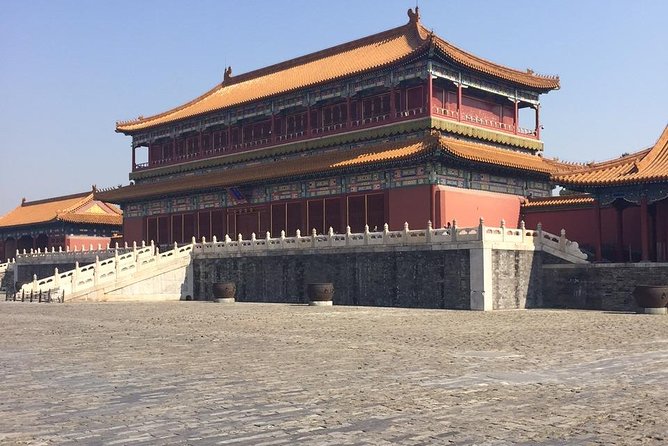
The Forbidden City—also called the Palace Museum—is the star. The tour gives you about 1.5 hours to explore along the central axis from south to north. That time window is a compromise, but it’s an intentional one: it’s long enough to see the big layout and major spaces, without turning the whole day into a stamina test.
Here’s why the central-axis focus matters. The Forbidden City isn’t just a collection of buildings; it’s a system. The main route helps you grasp the hierarchy of spaces and why the layout feels so formal. Even if you don’t catch every detail, you’ll come away with a clearer mental picture than if you wandered randomly.
Now, the practical part you’ll care about: tickets.
The Forbidden City has tight ticket availability, and if the tour can’t book tickets, you won’t be left with nothing. Instead, you visit Jingshan Park near the Forbidden City, standing on the hilltop for views that let you see the overall layout and architecture.
That backup plan is genuinely useful. Even from a different vantage point, you can still connect the dots—where structures sit in relation to each other and how the space is organized.
Time pacing reality check: you’ll follow the group. If you’re someone who loves slow, solo drifting through halls, the fixed time may feel rushed. And if anything delays the flow—say, the guide has to manage a tricky moment for another guest—your personal exploring time can shrink. The good news: the route is set up so you still hit the key section of the complex.
Temple of Heaven: A Worship-Site Visit That Explains the Why
Next you go to the Temple of Heaven, where emperors prayed for good harvests. This isn’t just a pretty park stop. The scale and layout are tied to beliefs about order, the seasons, and harmony between heaven and earth.
You’ll have about 1 hour here, and the tour frames it as an imperial worship architecture group. That wording is helpful because it nudges you to look beyond the stone and into the purpose: why the buildings and open spaces are arranged the way they are.
What you’ll likely enjoy most is the sense of symmetry and design. It’s one of those places where the details are tied to the bigger idea. Even in an hour, you can pick up how the site functioned as a ritual setting.
Lunch at an Authentic Chinese Restaurant: One Good Thing Built In
After the morning sightseeing, you’ll stop for lunch at an authentic Chinese restaurant. Lunch is included, and that’s one of the easiest “value wins” on a day tour like this.
Why it matters: if lunch isn’t included, you often burn time searching for something that works for your schedule and tastes, then you lose half the afternoon to logistics. Here, the meal is part of the run, which keeps the day moving.
The only drawback to plan for: you won’t have unlimited flexibility. You’ll be eating within the tour’s timing, so if you have strong dietary needs, you’ll want to check options in advance. The tour data confirms lunch is included, but it doesn’t list dietary adjustments.
Traditional Medicine Stop and the Pearl Gallery: Cultural Learning, With Shopping Energy
This is where the tour gets polarizing, and it’s important to know upfront.
After Forbidden City, you’ll visit a local health center to learn about traditional Chinese medicine culture. Later, you’ll stop at a pearl gallery to learn about pearl culture and history. These are described as educational stops, and there’s likely real cultural context in what you’ll see. But the environment can also feel sales-adjacent, especially for anyone hoping for a pure sightseeing day.
If you love learning about how people think—medicine traditions, materials, craft stories—this can be interesting. If your goal is strictly monuments, you may feel that time could have gone to one more neighborhood walk or one more temple courtyard.
My advice: go in with a mindset of short attention. Treat these stops like quick cultural side quests. If shopping pushes your buttons, be ready to spend less time inside and regroup with the group.
Summer Palace (Yiheyuan): Where Gardens Do the Talking
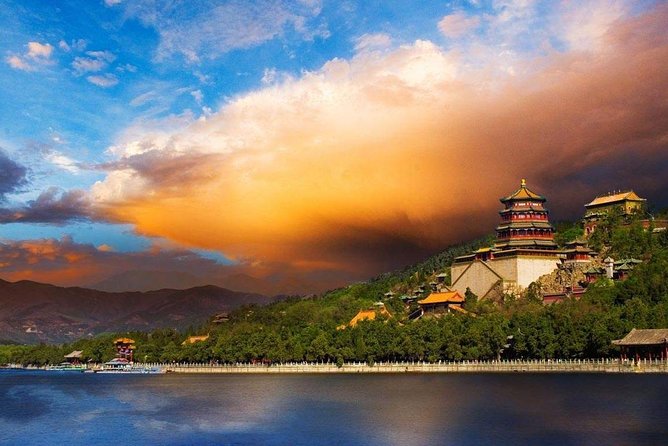
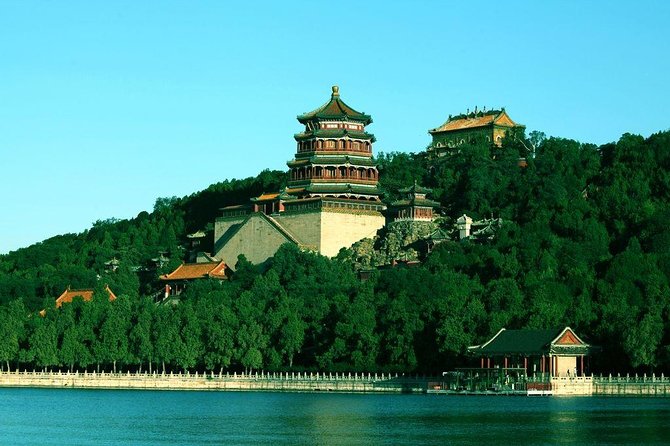
The final major stop is the Summer Palace, about 30 minutes away by coach. This is one of the best-known imperial garden sites in China, and the tour positions it as a museum of gardens.
In practical terms, that means you should expect views that come in layers: water, bridges, pavilions, and designed sightlines. It’s not just “walk around pretty place.” It’s a curated outdoor space with planned movement and viewpoints.
You’ll have around 1 hour here. That’s not enough for full lingering at every corner, but it’s enough to understand why people rate the Summer Palace so highly. You’ll also get a sense of how imperial leisure was built into landscape design.
If you’re the type who takes photos constantly, you’ll probably love this stop. If you hate rushing through gardens, you may feel the time pressure. Either way, finishing here is a smart emotional ending: you end with softer scenery after stone-heavy sights.
Transportation, Group Size, and What That Means for Your Day
This is a small-group tour, with a maximum of 20 travelers. That number matters because it affects how easy it is to hear the guide, how smoothly you move, and whether you’re constantly squeezed into tight gaps.
You also get hotel pickup and drop-off (selected hotels within the second ring road only). That means you’re not doing the hardest part of Beijing logistics—getting from point to point—while also trying to read signs.
The day runs about 8 to 9 hours, and you can expect it to feel full. You’re moving between big sites and making a few structured stops. If you like your travel days organized, this will feel efficient. If you crave free wandering time, keep your expectations realistic.
One more practical note: entrance fees are included for the sites, and you’ll have a mobile ticket. That reduces stress. You show up, scan or present your ticket, and get moving.
Price and Value: Is $173 Worth It for Beijing’s Big Three?
At $173 per person, this tour is priced like a convenience product: guide + coach + entrance fees + lunch + pickup/drop-off.
Here’s the value math in plain terms:
- Without this setup, you’d still pay for major attraction tickets.
- You’d also pay for time (and possibly transport) to connect the Forbidden City, Temple of Heaven, and Summer Palace in one day.
- Lunch can be a hidden expense on self-guided days, especially if you end up in a touristy spot near attractions.
Where value can drop for you:
- If you strongly dislike shopping-style stops, you might feel the schedule spent your time instead of adding sight depth.
- If you’re the kind of traveler who wants longer time inside the Forbidden City, 1.5 hours on the central axis may feel short.
So I think this tour makes sense if you want an organized day and you’re okay with guided pacing. It’s less ideal if you’re a monument purist who wants zero sales energy and maximum time in each venue.
Who This Beijing Tour Fits Best
You’ll probably enjoy this most if you:
- Are visiting Beijing for the first time and want the big highlights in one shot.
- Prefer a guided structure over building a route from scratch.
- Appreciate having entrance fees and lunch included.
You may want to reconsider if you:
- Want long, slow exploration with lots of solo wandering.
- Get annoyed by short stops that can feel retail-forward (pearls and traditional medicine).
- Have strict timing needs that don’t mesh with a fixed 7:00 am start.
Should You Book This Beijing City Highlights Tour?
Book it if you want a practical “greatest hits” day with pickup, tickets handled, and a guide to help you make sense of what you’re seeing. The Forbidden City time plan plus the Jingshan backup are especially reassuring when ticket availability is an issue.
Skip or think twice if shopping-adjacent stops will ruin your day, or if you expect plenty of unscripted exploration time. With this tour, you’re trading freedom for efficiency—and for many people, that trade feels worth it in Beijing.
FAQ
Is hotel pickup included?
Yes. Hotel pickup and drop-off are included for selected hotels within the second ring road of Beijing.
What’s included in the ticket price?
The tour includes an English-speaking guide, air-conditioned coach transportation, entrance fees for the included sites, a Chinese lunch, and hotel pickup/drop-off (for selected hotels).
How long is the tour?
It runs about 8 to 9 hours.
What happens if the Forbidden City tickets are not available?
If tickets to the Forbidden City can’t be booked, the tour visits Jingshan Park near the Forbidden City. From the hilltop in Jingshan Park, you can still see the overall layout and architecture.
Are there shopping-related stops?
The itinerary includes a visit to a pearl gallery and a local health center related to traditional Chinese medicine culture, so you should be prepared for stops that may feel sales-like.
Do I need to bring passport details?
Yes. Passport names, passport numbers, date of birth, and country are required at booking for travel insurance and entrance tickets to tourism attractions.