
Oslo is easy when you have your route figured out. This hop-on hop-off bus ticket links the city’s biggest landmarks in one simple loop, with every 30 minutes departures and an included audio guide so you can go at your own pace.
Two things I really like: you get a no-stress way to move between far-flung highlights, and the onboard commentary helps you understand what you’re seeing as you pass it.
One consideration: the audio experience depends on the headphones working properly, and there can be some confusion if you’re near look-alike buses from nearby operators. It’s still a strong deal if you plan your day with a museum-first mindset.
In This Review
- Key things to know before you ride
- Why Oslo’s hop-on hop-off loop is such an easy win
- Timing it right: 24 vs 48 hours (and how to plan)
- Starting points: Gunnar Sønsteby Statue vs Karl Johans gate 47
- Karl Johans gate, Royal Palace, and the National Theatre stretch
- Frogner Park to Vigeland Sculpture Park: Oslo’s sculpture calling card
- Museum day: Cultural History, the Viking Ship Museum closure, and Kon-Tiki
- Norwegian Museum of Cultural History
- Viking Ship Museum (watch the closure)
- Kon-Tiki Museum
- Fram Museum, Maritime Museum, and the Akershus Fortress viewpoint
- Fram Museum
- Maritime Museum
- Akershus Fortress and Castle
- Oslo Opera House: the modern Oslo payoff
- Audio guide, Wi‑Fi, and headphones: the onboard experience in real life
- Discounts that matter: where you actually save money
- Practical tips for a smoother ride (especially if the city is busy)
- Who this ticket suits best
- Should you book this Oslo hop-on hop-off bus?
- FAQ
- How long is the Oslo hop-on hop-off bus ticket valid?
- How often does the bus depart from each stop?
- Which major sights are included on the route?
- Are there museum discounts included with the ticket?
- Is the Viking Ship Museum open?
- What’s included with the audio guide?
Key things to know before you ride
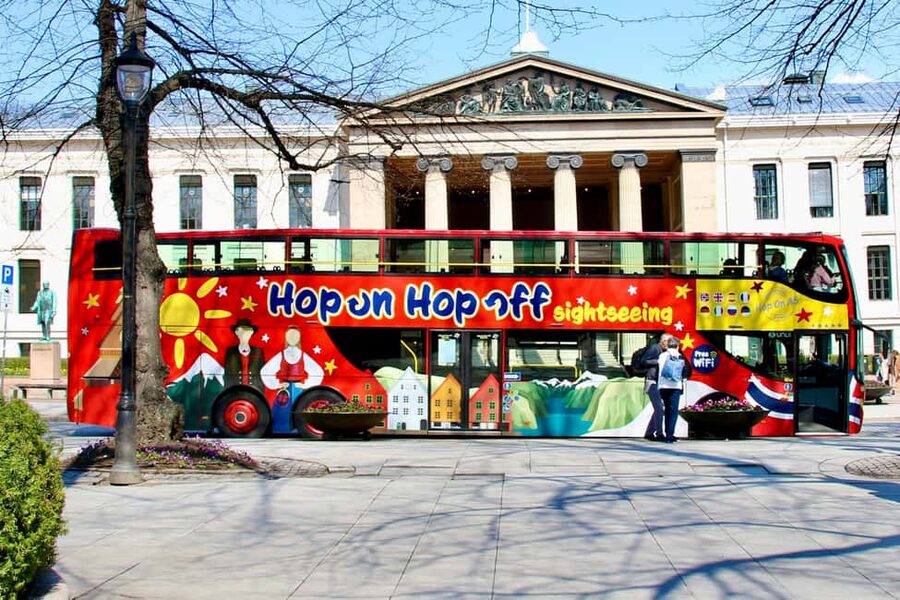
- Hop-on hop-off freedom across Oslo’s top sights without rerouting or second-guessing transit.
- Frequent departures every 30 minutes from each stop, which makes a flexible itinerary actually work.
- Free headphones + audio guide in many languages, so the ride stays useful, not just scenic.
- Museum discounts built in, including 10% off several major institutions (and food perks too).
- A 24 or 48-hour ticket lets you match the pace to how long you really spend at each stop.
- Plan around the Viking Ship Museum, which is temporarily closed for renovation during the period listed.
Why Oslo’s hop-on hop-off loop is such an easy win
Oslo can feel spread out in a good way. You get waterside views, leafy parks, and big museum names that aren’t all right next to each other. This bus ticket is built to solve that problem with a straightforward promise: you ride, you hop off, you come back when you’re ready.
The practical magic is how the route is designed for a day that won’t follow your timetable perfectly. You can start with landmarks, then switch to museums once you feel like it. And because the bus runs often (departures every 30 minutes from each stop), you don’t end up hostage to a single schedule.
I also like that it’s not just “transport.” The audio guide gives context as you move through town, so places like Vigeland and the opera area make more sense. It turns the ride into a moving orientation for the whole city.
Timing it right: 24 vs 48 hours (and how to plan)
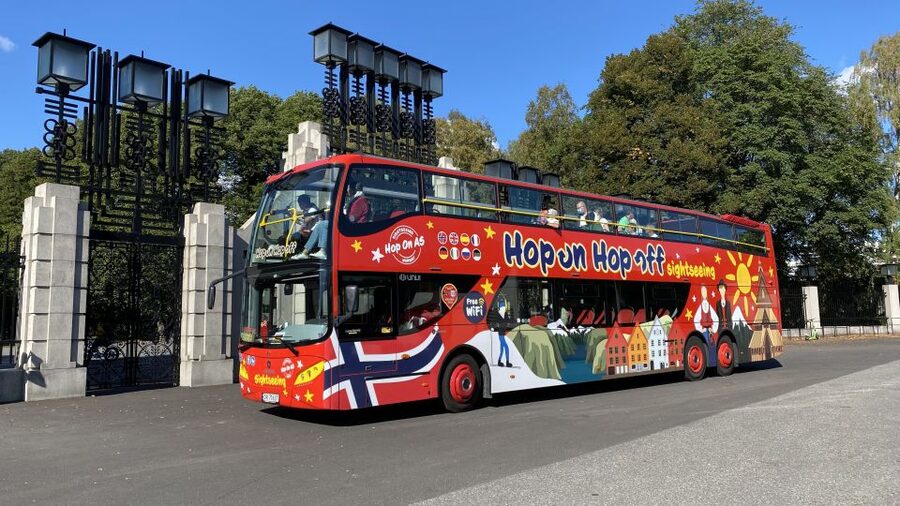
You choose a 24 or 48-hour ticket, valid for 1 to 2 days, and the start times vary by availability. That matters because you’ll want to begin on a day when museums are open and the light is decent for photos.
Here’s the planning approach I recommend:
- If you pick 24 hours, do the full loop once and hop off at your top 1–2 priorities for deeper time.
- If you pick 48 hours, treat Day 1 as your route-and-overview day, then use Day 2 to return for the museums you didn’t have time to linger on.
This city rewards that strategy. Oslo’s main attractions aren’t just quick stops; once you’re there, it’s easy to lose time inside. Having a second day with the bus ready to whisk you between areas makes the whole trip feel calmer.
Starting points: Gunnar Sønsteby Statue vs Karl Johans gate 47
Your first stop depends on which starting location you book:
- Gunnar Sønsteby Statue, Karl Johans gate 47 (listed as one option)
- Another option is also listed under “2 starting location options,” tied to Karl Johans gate 47 versus the Gunnar Sønsteby Statue area (meeting point can vary by option)
Either way, the location is central enough that you can build your plan around it. Karl Johans gate is a great base for wandering too, so even if you spend some time before your first ride, you’re not far from where the bus begins.
Also note: the activity ends back at the meeting point. That’s helpful when you want a clean ending without figuring out how to get “back to the start.”
Karl Johans gate, Royal Palace, and the National Theatre stretch
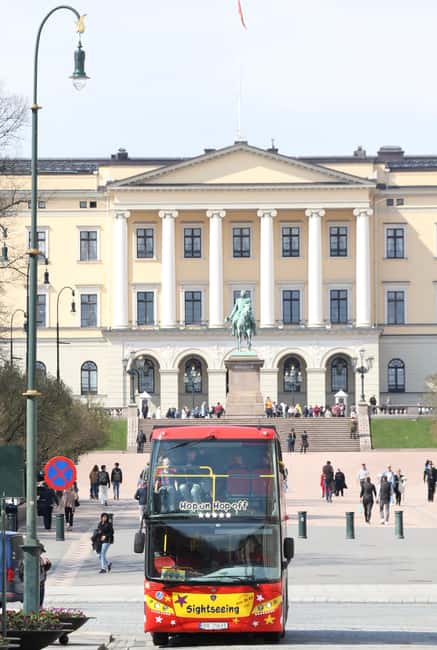
Early on, the route connects you to Oslo’s civic center. You pass the Norwegian National Theatre and the Royal Palace, then you glide along Karl Johans gate, one of the city’s best-known main streets.
What I like about this part of the loop is how it sets the tone. Oslo isn’t just a museum town; it’s a living capital. Seeing the theatre and palace zones from the road gives you a fast sense of where the city’s public life sits, before you move into the parks and waterfront-heavy zones.
If you’re the kind of person who likes your first day to feel organized, this segment is a win. It’s a clean introduction before you commit to hopping off at bigger stops.
Frogner Park to Vigeland Sculpture Park: Oslo’s sculpture calling card
Next comes the green, the walking paths, and the reason many first-timers put Oslo on their list. The bus passes Frogner Park and then reaches Vigeland Sculpture Park.
Vigeland is one of those places where photos don’t capture scale well. Once you’re there, you can wander for way longer than you planned. If you care about art that’s direct and human—figures, emotion, crowd scenes—this is the stop you’ll remember.
Practical note: use your bus hop-off time to structure your wandering. I’d plan to get off, walk a loop through the park, then return to the bus when your legs start arguing with your curiosity. That rhythm keeps the day from turning into one long, sunless march.
Museum day: Cultural History, the Viking Ship Museum closure, and Kon-Tiki
Now the route shifts into full museum territory. You pass the Norwegian Museum of Cultural History, then go to the Viking Ship Museum, and continue to Kon-Tiki Museum.
Norwegian Museum of Cultural History
This is where Oslo’s museum identity starts to feel broader than just one theme. If you want the “how people lived” side of Norway—culture, everyday life, and change over time—this stop helps you understand the bigger story behind the postcard sights.
Viking Ship Museum (watch the closure)
The Viking Ship Museum is listed as temporarily closed for renovation from September 2021 until 2025 or 2026. That means you should treat this as a “maybe-hop-off” stop depending on your dates.
If your trip lands during the closure period, you’ll still likely get the value of the bus route because the surrounding areas are worth seeing. But plan your museum time around the places that are open: Kon-Tiki, Fram, and Maritime are the safer bets.
Kon-Tiki Museum
Kon-Tiki is a classic Oslo choice for a reason. It’s built around exploration stories, and it tends to work for a wide range of interests. I like this stop because it’s not only about artifacts—it connects to adventure and big questions about how far people tried to go.
Fram Museum, Maritime Museum, and the Akershus Fortress viewpoint
After Kon-Tiki, you move to the Fram Museum, the Norwegian Maritime Museum, and then on to Akershus Fortress and Castle.
Fram Museum
The Fram Museum fits perfectly with the Nordic mood: shipbuilding, polar exploration, and the idea of pushing into harsh conditions with serious engineering. If you’re into science-meets-storytelling, you’ll probably lose time here.
Maritime Museum
Then comes the Maritime Museum. Oslo’s waterfront isn’t just scenery—it’s the reason a lot of this country’s history unfolded the way it did. This is the stop where the city’s geography starts to feel personal.
Akershus Fortress and Castle
Akershus is a different kind of attraction: less “museum collection” and more “stand here and absorb the fortress atmosphere.” This is one of those locations where you’ll naturally pause for photos, even if you intended to just “walk through quickly.”
If you want a break between indoor exhibits, Akershus is a great reset. It gives you a viewpoint and a sense of place before you head to Oslo’s modern skyline highlight.
Oslo Opera House: the modern Oslo payoff
The route ends at Oslo Opera House and then finishes back at the meeting point. The opera area is one of the clearest signs that Oslo is a modern city with real energy, not just a place to queue for museums.
Even if you don’t attend a show, the building and the surrounding public space make for a memorable finale. I like ending around here because it’s visually different from the fortress and museum vibe, so the whole trip feels balanced.
For timing, consider using the bus to arrive when the light feels good. If you’re photo-focused, you’ll get more from an opera-house walk when the sky cooperates.
Audio guide, Wi‑Fi, and headphones: the onboard experience in real life
This ticket includes an audio guide and headsets. You also get Wi‑Fi on board, which is handy if you want to look up museum hours or just keep your maps app updated.
The audio guide languages listed include Arabic, English, French, German, Italian, Norwegian, Russian, Spanish, and Dutch. The staff (host or greeter) is also listed as speaking English, German, Italian, Dutch, Spanish, Norwegian, and French.
Now for the part to manage: there are signs that headphone performance can vary. The safest move is simple—check your headset as soon as you’re on the bus and make sure you can hear the commentary clearly. If a connection seems off, ask staff right away rather than waiting until later in the route.
Also remember: audio is best used when you sit where you can hear reliably. If you’re near doors or noisy areas, you might need to adjust your seat for cleaner sound.
Discounts that matter: where you actually save money
This ticket isn’t only about sightseeing. It also includes discounts that can help you offset the cost, especially if you plan to visit multiple museums.
Here are the listed perks:
- 10% off Kon-Tiki Museum entrance
- 10% off Norwegian Museum of Cultural History entrance
- 10% off Fram Museum entrance
- 10% off Maritime Museum entrance
- 20% off meals at Louise restaurant
- Free dessert with your meal at Rorbua
The value idea is straightforward: if you’re going to visit even two or three of these museum stops, the discounts start to soften the overall price. And food perks matter more than people think. Norway can be pricey at meal time, so a restaurant discount and a dessert add-on can make a meaningful dent.
One more planning note: since the Viking Ship Museum is listed as closed for renovation during the stated period, don’t rely on that as part of your discount math. Build your museum lineup around the ones confirmed as usable during your dates.
Practical tips for a smoother ride (especially if the city is busy)
I think this bus works best when you treat it like a tool, not a babysitter. Keep a few habits, and the day runs smoothly.
- Use the 30-minute cadence to your advantage. If you’re hopping off for a museum, time your return so you’re not sprinting back to the stop.
- Watch for look-alike buses. The route can get confusing if different operators use similar-looking vehicles. If you’re unsure, ask staff on the stop which bus is the right one for your ticket.
- Don’t assume every headphone works perfectly. If you notice weak audio or a missing channel, fix it early.
- Build in a little slack time. Even with scheduled frequency, real life includes weather, traffic, and crowds. A small buffer keeps the stress level low.
- If you’re traveling in winter, bundle up. One practical quibble that came up is that the buses might not feel as warm as you want in colder months. Layers help.
The upside here is real: when everything’s running smoothly, you get an easy overview of Oslo that’s hard to replicate with only point-to-point transit.
Who this ticket suits best
This is the kind of ticket that fits different traveler styles.
You’ll probably love it if:
- You have limited time and want a quick overview of Oslo’s top areas
- You prefer control over pace (hop off, linger, hop back)
- You want an audio layer that helps you understand what you’re seeing
- You plan to visit at least a couple of the included museum stops
You might want a different plan if:
- You only want one museum and nothing else (you could spend less using regular transport)
- You’re the type who hates any kind of system where you have to re-board and watch schedules
For most first-time Oslo visitors, though, this bus hits the sweet spot: convenience without turning the trip into a checklist.
Should you book this Oslo hop-on hop-off bus?
Book it if you want maximum convenience with minimal planning overhead, and you’re willing to use hop-on hop-off time as part of your itinerary. At $41 per person, the ticket makes more sense when you’ll actually visit several of the main stops and take advantage of the museum discounts plus the food perks at Louise and Rorbua.
Skip it (or consider a smaller plan) if your trip is tight and you only care about one single museum stop. Otherwise, this bus is a smart way to get your bearings fast and then spend your energy where it counts—inside Vigeland, inside the big museums, and around the opera area.
FAQ
How long is the Oslo hop-on hop-off bus ticket valid?
You can choose a 24 or 48-hour ticket. It’s valid for 1 to 2 days, depending on the option you select (check availability for starting times).
How often does the bus depart from each stop?
Departures are listed as every 30 minutes from each stop.
Which major sights are included on the route?
The route covers major highlights such as Vigeland Sculpture Park, the Norwegian Museum of Cultural History, the Viking Ship Museum, Kon-Tiki Museum, the Fram Museum, the Norwegian Maritime Museum, Akershus Fortress and Castle, and the Oslo Opera House.
Are there museum discounts included with the ticket?
Yes. The ticket includes 10% off Kon-Tiki Museum, the Norwegian Museum of Cultural History, the Fram Museum, and the Maritime Museum, plus food discounts at Louise and a free dessert offer at Rorbua.
Is the Viking Ship Museum open?
The Viking Ship Museum is listed as under renovation and temporarily closed from September 2021 until 2025 or 2026.
What’s included with the audio guide?
You get an audio guide and headsets to hear the commentary, plus Wi‑Fi on board.