A ride along the Seine keeps Paris simple. This 24-hour Batobus plan lets you cruise, listen, and hop off at major sights without building a complicated route in your head. I especially like the wide-angle views from a panoramic, heated boat and the self-guided audio tour that tells you what you’re seeing as you go.
The best part is the flexibility: you can start at any of the nine ports near places like Musée d’Orsay and the Eiffel Tower zone, then build your day hop-by-hop. The drawback to plan for is logistics: your entry depends on downloading the QR-linked ticket/audio in advance, and you’ll want a little patience if your phone doesn’t cooperate.
In This Review
- Key highlights worth knowing
- Why Batobus is a smart way to get your bearings
- How the 24-hour loop turns into real sightseeing time
- Boarding points along the Seine: nine stops that map to your day
- Eiffel Tower (Port de la Bourdonnais)
- Musée d’Orsay (Quai de Solférino)
- Saint-Germain-des-Prés area (Quai Malaquais)
- Notre Dame (Quai de Montebello)
- Les Invalides / Invalides (Port des Invalides)
- Jardin des Plantes (Quai Saint-Bernard)
- Hôtel de Ville (Quai de l’Hôtel de ville)
- Louvre (Quai du Louvre)
- Champs-Élysées (Port des Champs-Élysées)
- The audio guide: what you get and what you must bring
- Comfort and boat rules that can affect your day
- Price and value: is $32.41 a good deal?
- Booking and ticket download: the part to handle early
- Who this works best for
- Should you book this Batobus audio cruise?
- FAQ
- How long is the Batobus cruise?
- Can I board at any station?
- How often do the boats run?
- What’s included with the ticket?
- Do I need headphones?
- How many landmarks does the audio cover?
- How do I get the e-ticket and audio?
- Are tickets valid only for Batobus cruises?
- Is there free cancellation?
Key highlights worth knowing
- 24-hour, hop-on hop-off access starting from your first use
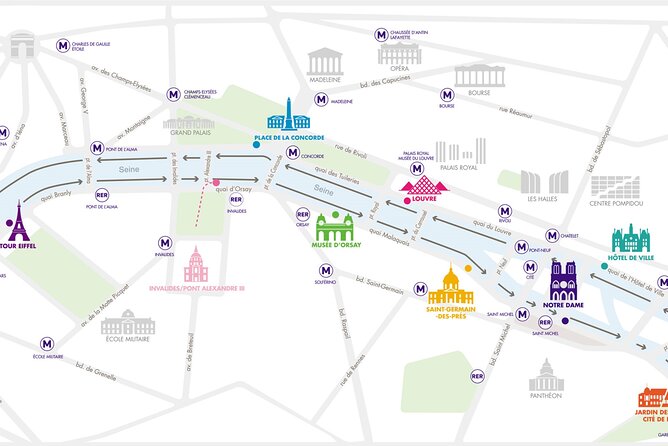
- 9 boarding stations along the central Seine corridor
- Heated, panoramic boats with summer roof and bike storage
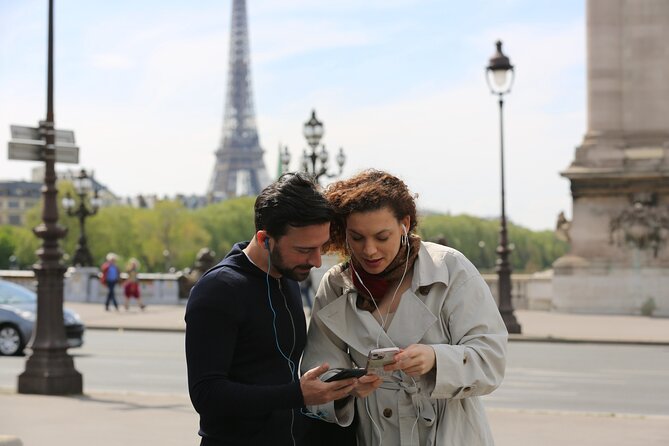
- Audio guide app with a map and 24 points of interest
- Multilingual commentary in English, French, Italian, Spanish, and German
- Boats run often, roughly every 15 minutes
Why Batobus is a smart way to get your bearings
Paris can feel like a crossword puzzle when you’re trying to line up landmarks, metro stops, and walking distances. A Seine cruise solves that fast. You get a moving viewpoint that connects a lot of the city’s headline sites in one route.
This one is especially practical because you’re not locked into a single guided session. With a 24-hour ticket, you can repeat the cruise or use it like a shuttle between neighborhoods. That matters when you want photos now, but you also want time on foot later.
I also like that the boat experience is designed for comfort. The boats are heated and built for panoramic viewing, so even if the day starts cool, you’re not stuck shivering for the views.
How the 24-hour loop turns into real sightseeing time
The trip time is about 2 hours per cruise, but the value comes from the full 24-hour window after your first boarding. Boats pass about every 15 minutes, which keeps you from feeling trapped at any one port.
Think of it like this: you can do one full circuit for the big-picture story, then hop off where you want a longer wander. Or you can treat it as your transport throughout the day and only stop for the sites that genuinely catch your eye.
A key timing note: the cruise season runs daily in April to October 2025, with boats operating 10:00 AM to 7:00 PM. The listed ticket counter hours are 10:00 AM to 5:00 PM for a wider date range, so I’d plan to use the boat during the daytime window when possible.
Boarding points along the Seine: nine stops that map to your day

You can board at any of the nine Batobus stations, and the stops line up with some of the most photo-friendly areas of central Paris. Here’s how I’d use each one, plus the small gotchas that come with being on a moving boat.
Eiffel Tower (Port de la Bourdonnais)
This is the classic “you’re in Paris” moment. If you want that Eiffel Tower framing from the water, this is your best starting point.
Possible consideration: the Eiffel Tower area has a lot going on visually, so your photos will vary depending on where the boat docks and how much bridge structure you have in frame.
Musée d’Orsay (Quai de Solférino)
If you care about riverfront architecture and elegant museum surroundings, this stop is a great anchor. It’s also handy for building a walkable day on the Left Bank after you cruise past.
Possible consideration: you’ll be doing a mix of water-to-walk transitions. If you plan to hop off here, give yourself enough time to stroll, not just step off and sprint back.
Saint-Germain-des-Prés area (Quai Malaquais)
This stop is your doorway to a more “neighborhood Paris” feel. It works well if you want to get away from the heaviest tourist clusters and drift through streets on your own timing.
Possible consideration: like many Seine areas, the best views happen while you’re moving or immediately at arrival. If you stay docked too long, you might miss the prime glide-by angles.
Notre Dame (Quai de Montebello)
This is one of the most meaningful sights along the route. From the water, the cathedral’s position in relation to the river gives you a different sense of scale than street-level photos.
Possible consideration: bridge and river traffic can affect lines of sight. You may need to time your camera shots between docks, not just when you’re standing still.
Les Invalides / Invalides (Port des Invalides)
This stop is convenient for pairing the river cruise with a major monuments day. If you’re the kind of traveler who likes seeing one big complex and then walking around it for a while, this fits.
Possible consideration: the area is not “instant gratification” only. If you hop off, plan for a real walk and museum-view time, not just a quick photo stop.
Jardin des Plantes (Quai Saint-Bernard)
This is a nice choice if you want a green break after museum-heavy areas. It’s also a sensible way to shift from big landmark viewing to a calmer pace.
Possible consideration: you’ll want comfy shoes. River cruises give you views, but hop-offs still mean a fair bit of walking.
Hôtel de Ville (Quai de l’Hôtel de ville)
This port is central and practical. It’s a good mid-route stop if you want to reach city-center neighborhoods without guessing metro lines.
Possible consideration: you can end up with a lot of “stuff happening” around the station area. Give yourself buffer time between boarding and getting on foot.
Louvre (Quai du Louvre)
This is a headline stop for people who want the Louvre zone without doing the hardest part first. It’s also a strong choice for afternoon pacing, when you can cruise in light and then step into the museum area.
Possible consideration: the Louvre area is busy. Plan your photo timing either right as you pass or right after you arrive, then expect crowds if you linger too long.
Champs-Élysées (Port des Champs-Élysées)
This stop turns the cruise into a bridge to the city’s most famous shopping boulevard area. It’s a good ending point if your day is moving toward evening.
Possible consideration: this part of Paris can be loud and crowded. If you’re using it to “finish and wander,” go early in the time window so you have breathing room.
The audio guide: what you get and what you must bring
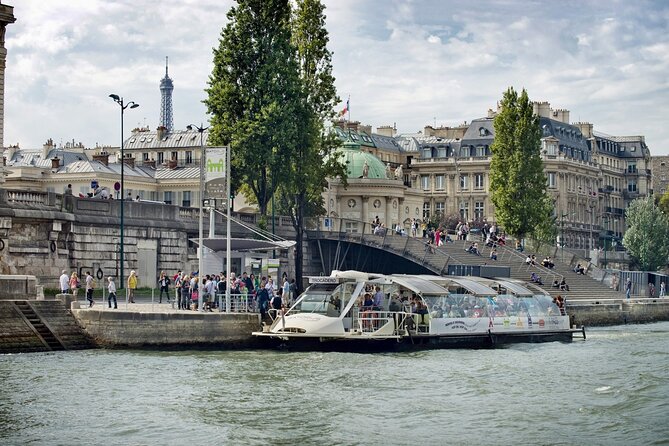
The cruise is supported by a sightseeing app with a self-guided audio tour and map. It includes multilingual commentary in English, French, Italian, Spanish, and German, and it covers 24 points of interest across major landmarks like the Eiffel Tower, Louvre, and Notre Dame.
One important thing: the audio experience depends on your phone and headphones. Headset and mobile device are not included, so bring your own headphones and make sure your device has battery.
Before you arrive, you’ll be told to scan the QR code to download the audio guide. Also, your e-ticket is provided as an e-ticket for download and is sent via WhatsApp within 24 hours of your travel date. That’s a big clue: do a quick download test before you’re standing at the port with limited time.
Comfort and boat rules that can affect your day
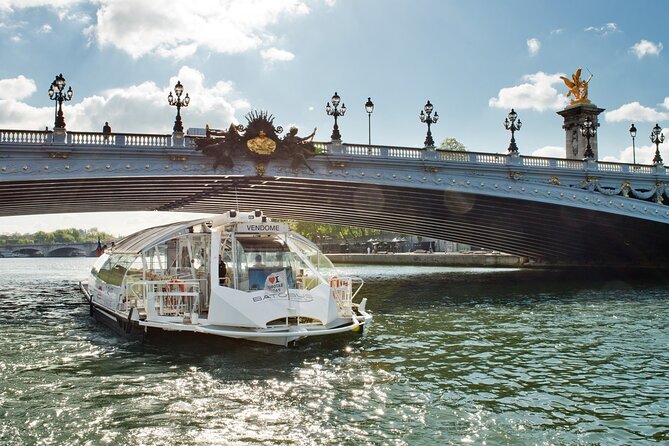
The boat setup is designed for sightseeing comfort. You’ll have panoramic views, a summer roof, and heated seating. There’s also bike storage, which is useful if you’re combining river time with cycling.
For luggage, keep it simple. Large bags and non-foldable items aren’t permitted on board, while compact luggage and foldable strollers are permitted depending on space. If you’re traveling with bulky gear, plan for an extra check at the station.
A practical tip: if you want the best views, think about where you’ll stand or sit. Heated doesn’t mean “no need for layering.” Paris in shoulder seasons can still bite, especially when you’re on the water.
Price and value: is $32.41 a good deal?
At $32.41 per person, you’re paying for two things at once: transportation along a key sightseeing corridor, plus an audio story system that covers 24 points of interest.
This can be great value if you’ll actually use the full 24-hour ticket. If you’re the type who wants to stop, walk, and come back for another cruise, you’ll spread the cost across a day of river views and multiple neighborhood hops.
It’s less of a bargain if your plan is to do only one short cruise and then immediately leave. In that case, you might spend just as much time and money walking or taking transit directly—without the extra cruising time.
I also like the frequency. Boats every 15 minutes means you’re less likely to waste time waiting, and that matters more than people think when your schedule is tight.
Booking and ticket download: the part to handle early
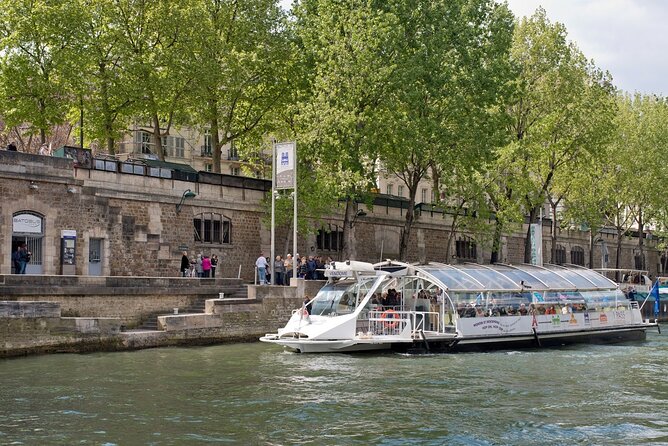
Here’s the reality check that will save you stress: boarding depends on your e-ticket and QR code. Your voucher gets you to an official download interface, and tickets are also sent via WhatsApp within 24 hours of your date.
Do this, and you’ll feel confident:
- Save the ticket info in your phone before you reach the port.
- Download the audio guide through the QR prompt before you board.
- If you’re traveling with multiple people, confirm everyone’s ticket/audio works before you stand in line.
If your ticket doesn’t show up on your phone when you arrive, you may end up losing time while staff direct you to another fix. That’s not a fun way to start a Seine day.
Who this works best for

This is a strong fit for:
- First-timers who want a fast overview of central Paris by water
- Travelers who like self-paced sightseeing
- People who want a comfy break between walking days
- Anyone planning to see multiple landmarks in one stretch, like Eiffel Tower + Notre Dame + Louvre zones
It’s also a good choice if you like photos. River angles give you a different look at familiar buildings, and the route lines up with major photo requests.
If you’re the kind of traveler who hates boats and prefers to spend the whole day on foot, you might find this too “in-between.” But if you’re building a balanced day, it’s an efficient piece of the puzzle.
Should you book this Batobus audio cruise?
Book it if you want a simple way to see a lot of Paris landmarks without overthinking routes. The combination of a heated panoramic boat, 24-hour hop-on hop-off access, and a multilingual audio map makes it one of those Paris experiences that stays useful even after the photos are done.
Skip it or reconsider if you’re likely to arrive with your phone low on battery, or you dislike any plan that depends on QR downloads. The sightseeing itself is straightforward; the only real risk is ticket/audio setup.
If you’re organized, you’ll get a relaxed day and a smart overview of Paris from the Seine—then you can go back on foot and explore what you actually loved.
FAQ
How long is the Batobus cruise?
The cruise duration is listed as about 2 hours, but your ticket gives you 24-hour hop-on hop-off access from first use.
Can I board at any station?
Yes. You can redeem your cruise ticket and board at any of the nine Batobus stations along the route.
How often do the boats run?
Boats pass approximately every 15 minutes.
What’s included with the ticket?
Included is a 24-hour Batobus hop-on hop-off ticket, plus a sightseeing app with a self-guided audio tour, and multilingual audio commentary in English, French, Italian, Spanish, and German. The boat is heated with panoramic views, a summer roof, and bike storage.
Do I need headphones?
Yes. Headset and a mobile device are not included, so you’ll need your own headphones and phone for the audio.
How many landmarks does the audio cover?
The audio guide includes 24 points of interest.
How do I get the e-ticket and audio?
Your e-ticket is available for download and is sent via WhatsApp within 24 hours of your travel date. You’re also instructed to scan a QR code to download the audio guide before arrival.
Are tickets valid only for Batobus cruises?
Yes. Tickets are valid on Batobus cruises for 24 hours from first use and are not accepted on other cruise or boat operators.
Is there free cancellation?
Yes. You can cancel for a full refund up to 24 hours in advance of the experience’s start time.