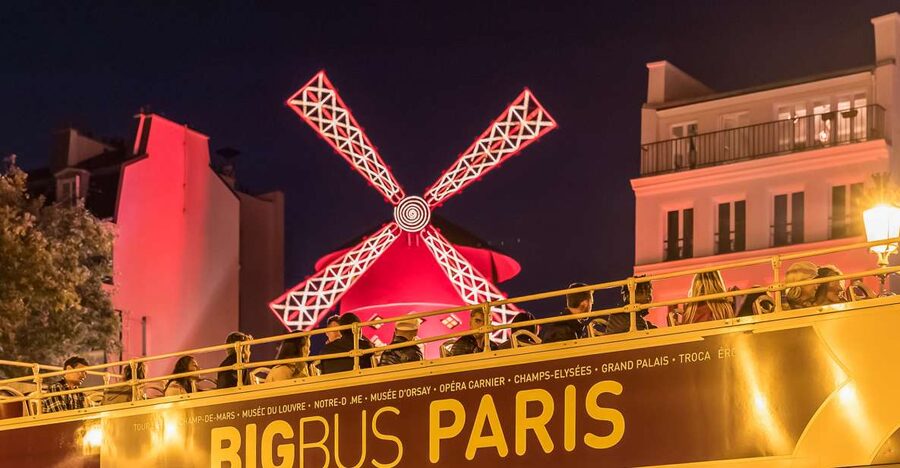
Paris glows from a moving rooftop. That’s the magic of the Big Bus Paris Night Tour: you get 360-degree views of famous sights without trekking in the dark, plus digital audio that puts landmarks into context as you roll past them. And yes, the Eiffel Tower sparkle is the moment you’ll remember when the city lights take over.
I also like the practical setup: you’re up high on an open-top (or covered if weather turns), and the ride moves at a sightseeing pace that makes photos and skyline watching easy. One consideration before you book: this is a single-loop experience with no hop-on, hop-off stops, so you’ll stay on board for the full circuit.
In This Review
- Key Points at a Glance
- Why the Big Bus Night Tour Works in Paris
- Finding the Start: 156 Avenue des Champs-Élysées Without the Headache
- The Full 2-Hour Route: What You See and How to Watch It
- Champs-Élysées: The Long, Lit Boulevard Moment
- Arc de Triomphe: The Monument That Reads Best at a Distance
- Place de la Concorde: Statues and Wide-Space Feel
- Madeleine and Opera Area Highlights: Glamour in the Glow
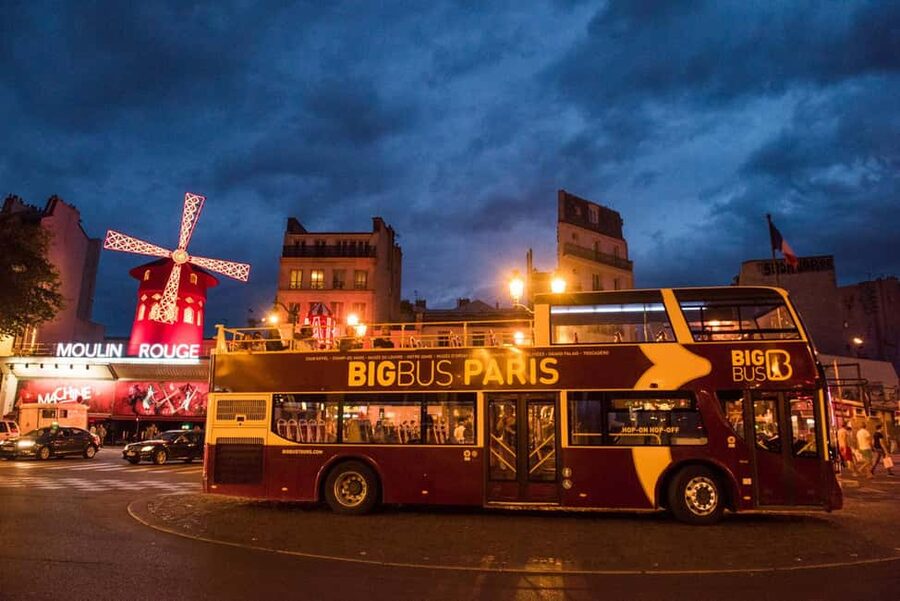
- Moulin Rouge and Galeries Lafayette: Color, Drama, and Rooftop Energy
- Carrousel du Louvre and Pont des Arts: The River-Bridge Flow
- Île de la Cité and Notre Dame: The Spires in the Dark
- Place Saint-Michel and Musée d’Orsay: The Left-Bank Shift
- Place du Trocadéro: The Pre-Eiffel Setup
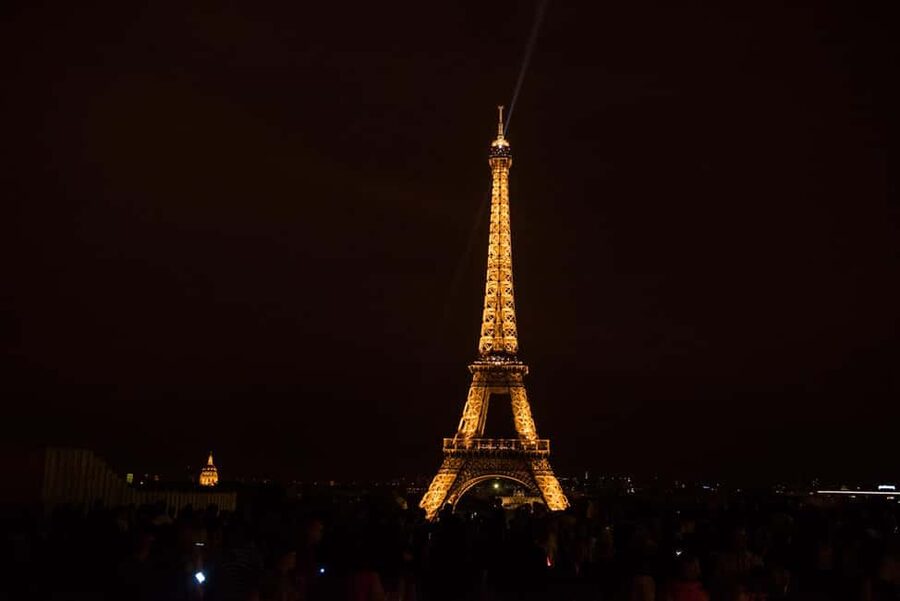
- Eiffel Tower and Parc du Champs de Mars: The Sparkle Payoff
- Audio Commentary and Earbuds: Great Value, When They Work
- What’s Included (and How You’ll Actually Use It)
- Weather Reality: Open Air vs Closed Top
- Comfort, Pace, and the Photo Timing Trade-Off
- Who This Tour Fits Best (and Who Might Prefer Something Else)
- Price and Value: Is $35 Worth It?
- Should You Book This Paris Night Bus Tour?
Key Points at a Glance
- 360-degree night views from an upper deck that turns traffic into a moving viewpoint
- Digital audio commentary in many languages with souvenir earbuds
- Timed Eiffel Tower moment, often planned so you catch the twinkle and lights
- Comfort and warmth options if the roof is closed during poor weather
- A well-paced loop that hits big icons and classic bridges without walking between areas
Why the Big Bus Night Tour Works in Paris
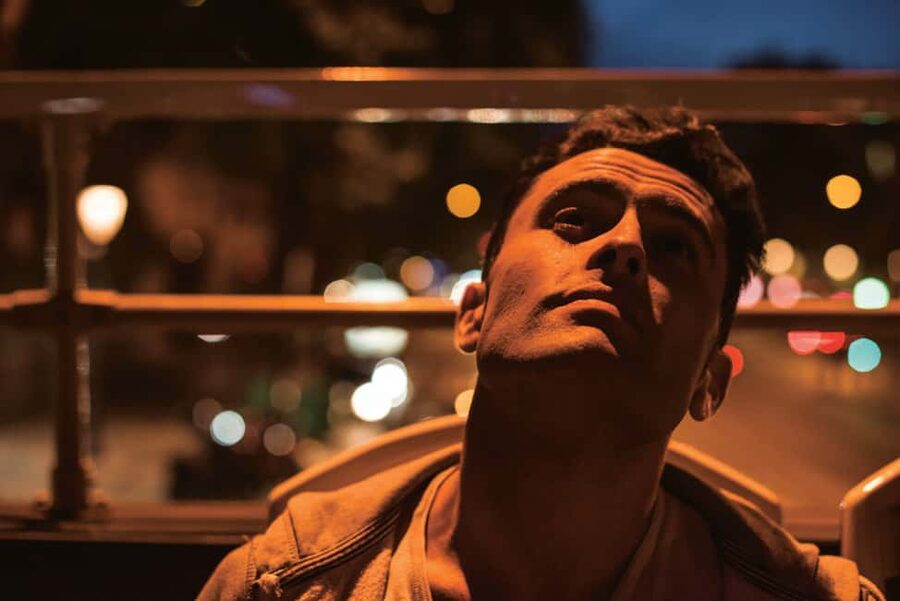
Paris night scenes are best seen at speed. If you try to do the big sights on foot after dark, you end up stuck with short bursts of seeing and lots of transit on foot between them. From the top deck, you get a long look at the lighting and silhouettes, and the whole city feels closer together.
This tour is built for that effect. You pass the places you’ve already pictured in daylight—Arc de Triomphe, the Louvre area, Notre Dame area, and the Eiffel Tower—so you’re not doing a random drive through Paris. You’re doing the greatest hits, in a mostly straight-line flow, with narration synced to what you’re seeing.
Two details make it more than just a scenic ride. First, the audio guide is part of the experience (digital, multiple languages, and you get souvenir earbuds). Second, the timing at the end is often set up around the Eiffel Tower lights, which is the payoff most people come for.
One small reality check: you can’t hop off when you decide you want to linger. So if you know you need to walk around for every stop, plan a daytime walk afterward too.
Finding the Start: 156 Avenue des Champs-Élysées Without the Headache
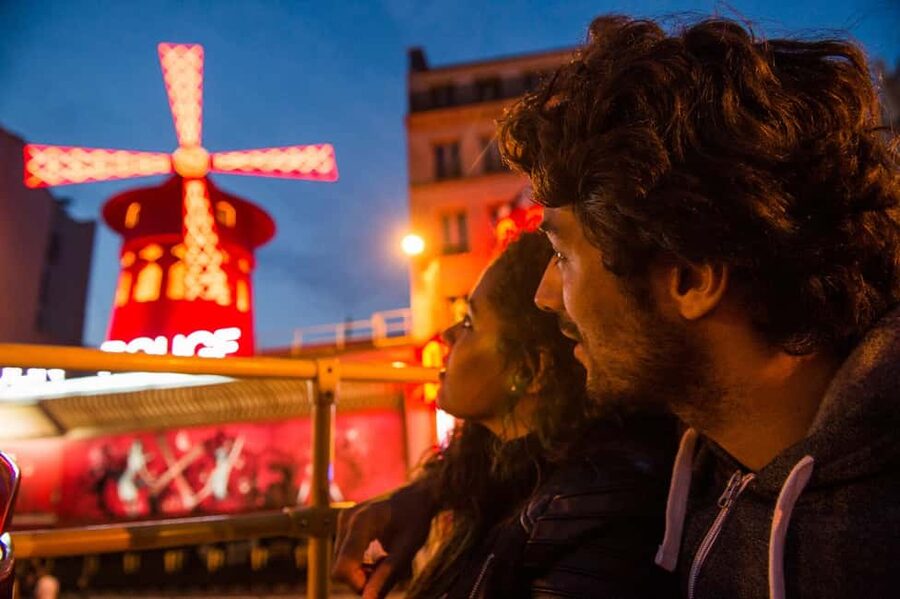
Your meeting point is straightforward, but you still want to treat it like a “arrive early” situation. Look for 156 Avenue des Champs-Élysées, at the corner opposite the Arc de Triomphe. A Big Bus representative helps you check in and board.
Here’s the practical part: this is a popular route, and the upper deck fills quickly when it’s clear enough to enjoy open-air views. If you want the best chance at prime sight lines, give yourself extra time to locate the stop and get seated before the bus fills up.
Also, keep an eye on the weather. The tour can run with a closed top in poor weather conditions, which is still comfortable, but it changes how much sky and rooftop view you’ll get.
The Full 2-Hour Route: What You See and How to Watch It
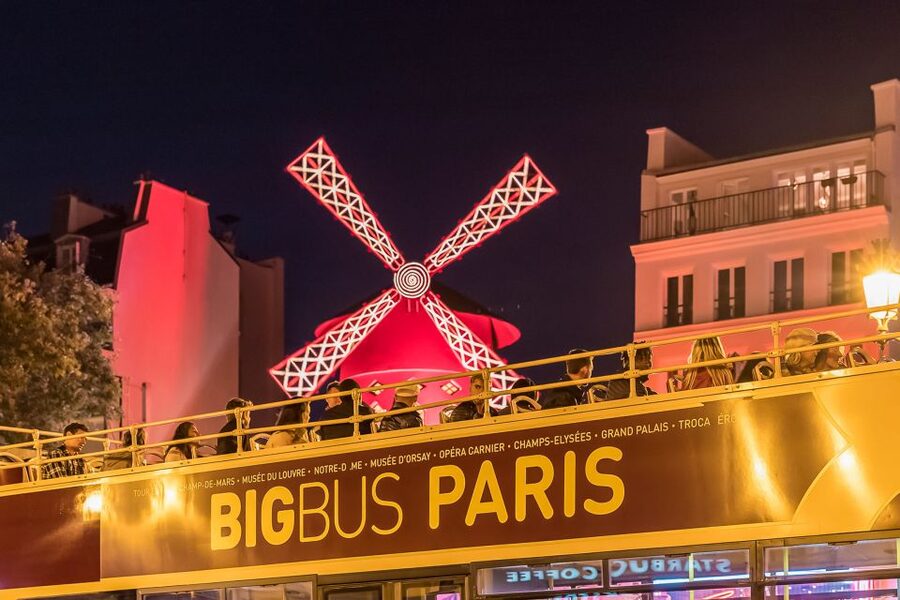
This is a single-loop night route that covers a big slice of central Paris. The bus goes past (not into) many major landmarks, so your superpower here is timing: look when the bus aligns, not when you wish it had.
Below is the route in the order you’ll experience it, with what to notice and any “watch for this” bits.
Champs-Élysées: The Long, Lit Boulevard Moment
You start on the Champs-Élysées, and it’s a strong way to open. In the dark, the avenue turns into a bright corridor with shopfront glow and street reflections that look different from daytime.
Tip: when the bus is settled and you can get both sides of the boulevard in view, use that moment to record a short video sweep. You won’t recreate this later without going back to this exact stretch.
Arc de Triomphe: The Monument That Reads Best at a Distance
Next up is the Arc de Triomphe. At night, it’s all about contrast: the monument’s edges pop against the bright road network around it.
Watch for this: the bus traffic flow can limit how long you get to stare. Don’t wait for a perfect photo—get one clean angle when you have it, then move on to the next scene.
Place de la Concorde: Statues and Wide-Space Feel
You’ll pass Place de la Concorde, a big open square that makes Paris feel grand and airy even at night.
Why it matters: this kind of open space gives your eyes a break between denser landmark clusters. It’s also a nice place to spot how street lighting frames architecture.
Madeleine and Opera Area Highlights: Glamour in the Glow
You’ll roll past Madeleine, then into the Palais Garnier area and onward through the Avenue de l’Opera corridor. At night, this part of town looks designed for evening—ornate facades, theater-style grandeur, and lights that make details easier to see.
The downside is simple: this area can feel visually busy. If you want less sensory overload, focus on one “feature view” per pass—like the facade of Palais Garnier—rather than trying to photograph everything.
Moulin Rouge and Galeries Lafayette: Color, Drama, and Rooftop Energy
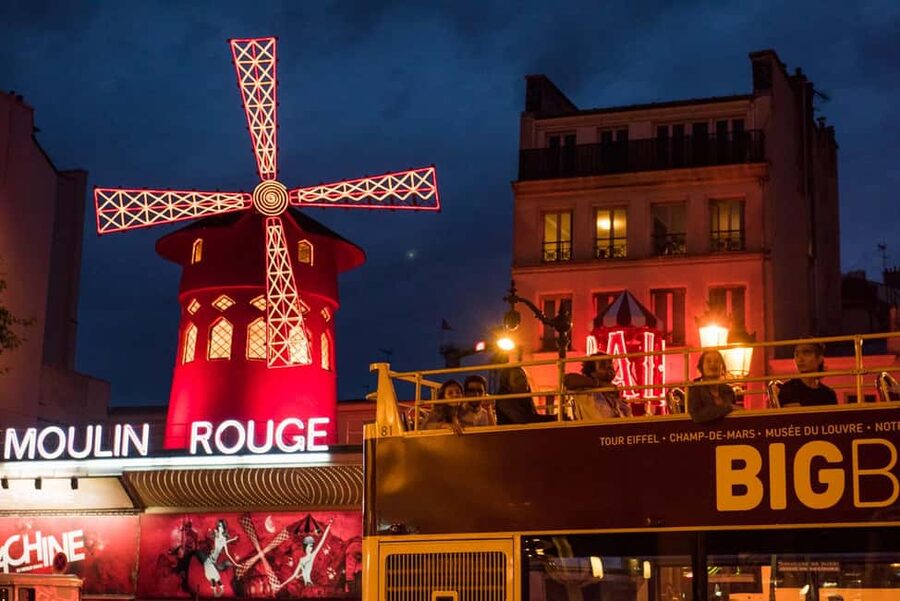
You’ll pass Moulin Rouge, then the area near Galeries Lafayette. The difference at night is that these spots don’t just look pretty—they look theatrical.
Practical move: take a few quick shots rather than one long attempt. Night lighting can make screens on phones harder to see, so short bursts often work better.
Carrousel du Louvre and Pont des Arts: The River-Bridge Flow
As you approach the Louvre Carrousel area, the route transitions into views that feel “museum-adjacent,” even from the street level.
Then you hit Pont des Arts, where the Seine becomes the star. The bridge views are classic because the water catches reflections, and you get an easy sense of how the city’s layout lines up with its monuments.
If you’re aiming for photos: keep your camera steady when the bridge is centered in frame. The reflections are pretty forgiving, but blur is unforgiving.
Île de la Cité and Notre Dame: The Spires in the Dark
You’ll pass Île de la Cité, then see Notre Dame Cathedral up close in the sense that you’ll be near the area and within its night “halo” of lighting.
This is one of those moments where it’s worth turning off the urge to multitask. Look first, then photograph second. From a moving bus, the best shots often come when you pause mentally for 10 seconds and just let your eyes settle.
Place Saint-Michel and Musée d’Orsay: The Left-Bank Shift
You’ll continue past Place Saint-Michel and then Musée d’Orsay. This stretch gives you that left-bank feel, with a slightly different lighting tone and a calmer rhythm than the most crowded central avenues.
Why I like this part: it helps you understand where the Seine separates neighborhoods and how monuments relate to river crossings.
Place du Trocadéro: The Pre-Eiffel Setup
Then comes Place du Trocadéro, often the key lead-in to the Eiffel Tower view. Even before you see the tower fully, this area cues you to slow down—because the next scene will be the big one.
Tactic: if you’re holding a phone for photos, switch to a mode that won’t overthink exposure. At night, phones can get confused by bright highlights. A simple tap-and-shoot is usually better than fighting settings.
Eiffel Tower and Parc du Champs de Mars: The Sparkle Payoff
Finally: Eiffel Tower, then Parc du Champs de Mars, before you circle back to the start point.
This is the moment you’ll care about most. Multiple experiences emphasize that the ride is timed so you’re there for the sparkle, and in at least some departures the bus lingers in the area for a close look.
If you want the best “sparkle” view: pick a side of the bus early when you can still see the tower clearly, then stay with that side’s framing. Don’t chase both sides late in the loop.
After the lights, you’ll head back toward 156 Avenue des Champs-Élysées to end the circuit.
Audio Commentary and Earbuds: Great Value, When They Work
The tour includes digital audio commentary in several languages (Spanish, Chinese, English, French, German, Italian, Portuguese, Russian, Korean). You also get souvenir earbuds, which is a nice touch because you’re not hunting for your own accessory.
In most cases, that narration turns “I’m seeing buildings” into “I’m understanding why these places matter.” You’ll get little historical and cultural context timed to what you’re watching from the bus windows.
Now for the fair part. A few experiences noted audio trouble—things like cutouts or limited speaker performance. If you’re the kind of person who relies on audio for enjoyment, bring patience. If something goes wrong, you’ll still have the visuals doing the heavy lifting.
What’s Included (and How You’ll Actually Use It)
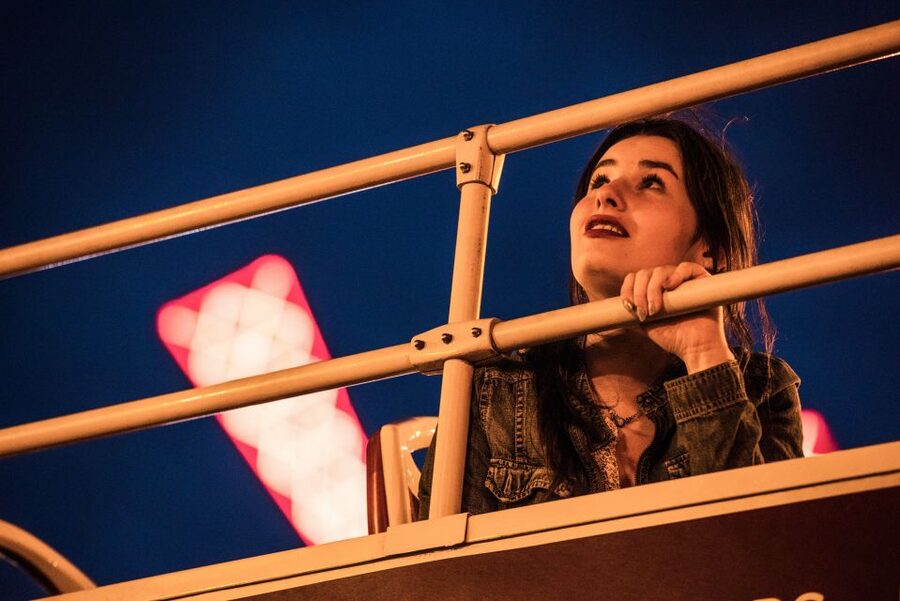
For the price, I think the smart value is the combination of comfort + guided storytelling.
Included items you’ll likely use:
- Open-top double-decker panoramic night tour (with closed top in poor weather)
- Digital audio commentary in multiple languages
- Souvenir earbuds
- Wi-Fi onboard
That Wi-Fi matters more than you’d think on a night ride. You can quickly look up context for what you just saw or check photos without draining your phone completely before the day is over.
Also, the tour is wheelchair accessible, and there’s a host or greeter in English and French at check-in.
Weather Reality: Open Air vs Closed Top
In fair conditions, the upper deck experience is the whole point: you feel like you’re watching Paris unfold above the streets. But if weather shifts, the tour can run with a closed top.
Here’s what that means for you: you’ll still get the route and the landmarks, but the feel changes. Photos may also be a bit more reflective through glass or wind-sheltered panels, depending on how the top is configured at that moment.
If it’s chilly, plan for it. Even in winter, the upper deck can be cold, while the lower deck is often a more comfortable spot to warm up.
Comfort, Pace, and the Photo Timing Trade-Off
This is a 2-hour sightseeing loop. That duration is good because it matches what most people need for “Paris after dark” without turning the night into exhaustion. You cover a lot of geography and landmark variety in a single window.
It’s also not a slow sightseeing crawl where you’ll stop at every icon. Since it’s not hop-on, hop-off, the pacing is designed to keep the route flowing. The trade-off is that you’ll rely on the bus alignment and the occasional best viewing moments rather than extended time at each place.
Practical photo advice:
- Try to sit where you can see your main targets with fewer window reflections.
- Take quick checks of your framing as the bus approaches each landmark, not after it passes.
- For the Eiffel Tower sparkle, plan to stay put in your seat rather than moving around.
Who This Tour Fits Best (and Who Might Prefer Something Else)
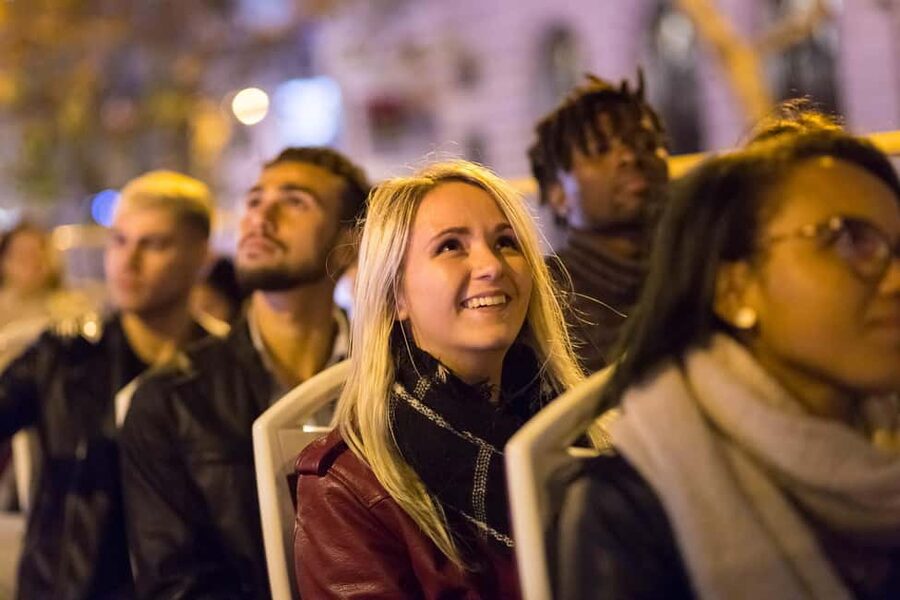
I recommend this night bus tour if you want a first-weekend overview of Paris that doesn’t require guesswork. It’s especially good for:
- First-time visitors who need fast orientation
- People who don’t want to do long night walks
- Families needing a “see a lot without thinking too hard” option
- Anyone who wants a safe, comfy way to enjoy iconic sights after dark
I’d suggest skipping it (or pairing it differently) if you:
- Hate fixed itineraries and prefer to linger on your own schedule
- Want a hands-on experience at monuments (this isn’t that kind of tour)
- Expect lots of time to explore on foot at multiple stops (it’s a loop)
Price and Value: Is $35 Worth It?
At about $35 per person, the key value isn’t that it’s cheap. It’s that you’re buying convenience plus guided framing.
For this price, you get:
- A curated night circuit through central landmarks
- Audio in many languages, so you’re not just watching lights
- Upper-deck views that are hard to recreate without planning
If your alternative is paying for multiple rides and spending time figuring out transit at night, the bus route starts to look like a smart shortcut. If you’re already planning a careful nighttime walk focused on a few areas, you might decide you only need that and skip this.
My middle-ground advice: book it early in your trip. Get your orientation, then use that knowledge to choose which neighborhoods deserve longer visits.
Should You Book This Paris Night Bus Tour?
If you want Paris at night with minimal planning, I’d book it. This tour is built for big views, iconic landmarks, and an Eiffel Tower moment timed for the sparkle. The included audio makes the experience feel guided instead of random, and the “stay seated, look out” format is perfect when you’re tired of walking.
Just go in with the right mindset: it’s a single-loop ride, not a hop-off exploration. If you accept that, you’ll get exactly what you paid for—an easy, high-impact night tour of Paris’s most famous sights.