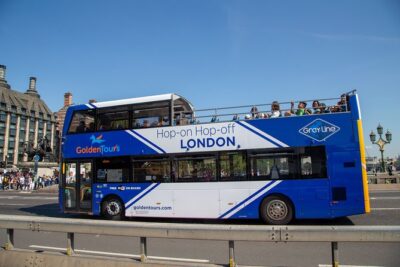
Paris is easier from the top deck. This hop-on hop-off loop makes a short Paris trip feel workable, letting you choose when to get off and when to rest. I like the clean, spacious buses with seatbelts and the fact that your ticket keeps working for 24, 48, or 72 hours from the moment you first validate it.
I also love the audio commentary in 10 languages (with a kids channel) and the free app with real-time tracking plus self-guided walking tours like Emily and Fashion. The main thing to plan for is comfort: the top deck is great for photos, but winter wind can be a lot, and one rider specifically wished the lower deck had more heat.
In This Review
- Key things to know before you ride
- How a hop-on hop-off bus makes Paris feel doable
- Price and ticket value: what $43 really buys you
- Getting on board: stops, frequency, and where to start
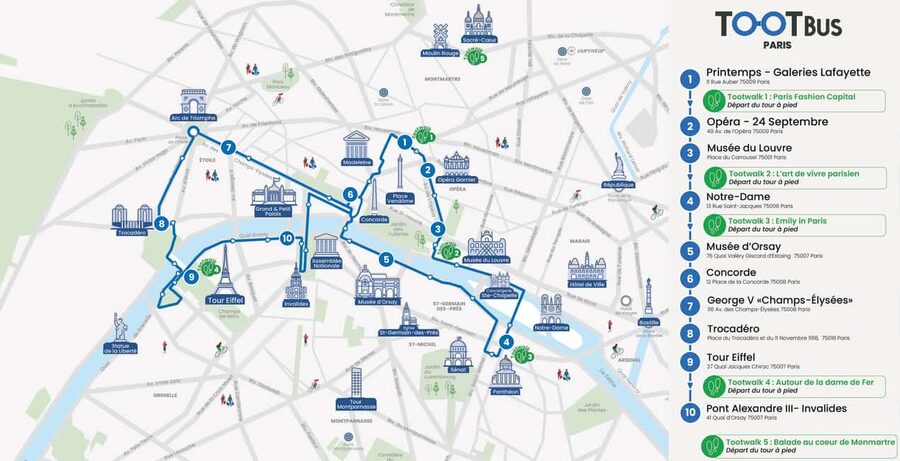
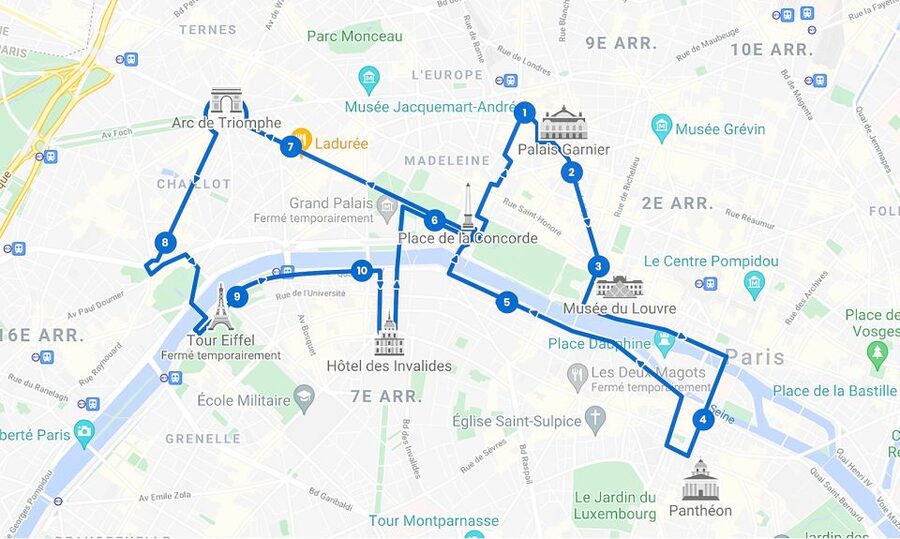
- Blue Line route: what each stop is best for
- Opera – Grands Magasins (23 Bd des Capucines)
- Musée du Louvre (Place du Carrousel) / relocation to Comédie-Française (3 Avenue de l’Opera)
- Notre-Dame (13 Rue Saint-Jacques)
- Panthéon – Luxembourg (2 Place Edmond Rostand)
- Musée d’Orsay (76 Quai Valéry Giscard d’Estaing)
- Concorde (12 Place de la Concorde)
- Arc – Champs-Élysées (135 Avenue des Champs-Elysées)
- Trocadéro (1 Place du Trocadéro)
- Tour Eiffel (69 Quai Jacques Chirac)
- Pont Alexandre III – Invalides (41 Quai d’Orsay)
- Optional Seine River cruise: 1 hour from Port de Suffren
- Audio guide and Wi‑Fi: how to make the bus more than a ride
- Turning stops into walking days with the free themed tours
- A smart way to plan 1, 2, or 3 days
- If you only have 1 day
- If you have 2 days
- If you have 3 days
- Comfort, access, and limits (read this before you pack)
- Should you book Tootbus Hop-on Hop-off with or without the cruise?
- FAQ
- How long is the ticket valid?
- Can I hop on and off as many times as I want?
- What’s included with the hop-on hop-off portion?
- Is the Seine River cruise included?
- Where do I meet for the Seine cruise?
- How long is the Seine cruise?
- How often do the buses run?
- What languages are available for the audio guide?
- Is this tour wheelchair accessible?
- Are pets allowed?
- What are the bus service hours?
Key things to know before you ride

- Open-top views with 10–15 minute bus frequency so you don’t waste your day waiting
- Audio guide in 10 languages plus kids audio, delivered via headphones and the app
- Hop on and off at 10 major stops tied to top sights like Louvre, Notre-Dame, Orsay, and Eiffel
- Optional 1-hour Seine cruise from Port de Suffren (Vedettes de Paris)
- Free themed walking tours (Emily, Fashion, Eiffel tower, Montmartre, and more) that turn stops into mini itineraries
How a hop-on hop-off bus makes Paris feel doable

Paris can knock the energy out of you fast. Museums, long walks, queues, and busy sidewalks add up. This kind of hop-on hop-off plan is valuable because it gives you a moving “overview” route while you still control the pace.
You’ll ride a blue line around the city’s biggest magnets—Louvre, Notre-Dame, Orsay, Arc de Triomphe/Champs-Élysées, Trocadéro, and the Eiffel Tower area—then get off when a stop matches your mood. Want a quick photo and back on the bus? Do it. Want time to wander a neighborhood like the Latin Quarter / Marais / Île Saint-Louis? Get off and go.
One practical bonus: these buses run frequently enough that you can treat it like public transit with a built-in tour. In heavy traffic, you might feel slowed down, but at least you’re sitting with onboard info and an easy route rhythm.
Tootbus versus Big Bus is Paris’s standing hop-on rivalry, and route maps decide it more than price: the Big Bus loop with the optional cruise add-on is reviewed with the stop list laid out, and RATP remains the cheap tie-breaker when both loops miss your hotel.
Price and ticket value: what $43 really buys you

The price shown is $43 per person, and your ticket can be valid for 1, 2, or 3 days after first validation. For most people, the value isn’t just the bus ride—it’s what you unlock when you’re not forced into a fixed schedule.
Here’s what you’re paying for beyond “getting from A to B”:
- Hop-on hop-off flexibility during your validity window (no “tour group timing” pressure)
- Audio commentary for adults in 10 languages plus a kids audio channel
- Free mobile app with real-time bus tracking and an M-ticket wallet
- Wi‑Fi onboard
- Clean-energy vehicle and headphones provided (with a note encouraging you to bring your own to reduce waste)
- Free themed walking tours inside the app, including Emily and Fashion, plus Eiffel Tower and Montmartre-type walks
If your Paris trip includes at least two of the big sights on this route, the pass usually feels worth it fast. If you only want one landmark and you’re happy relying on walking and metro, you might find you don’t use enough rides to justify it. But with 1–3 days to play with, it’s a strong “use it like a tool” option.
Getting on board: stops, frequency, and where to start

You can start your tour at designated bus stops—and once you validate on the bus, your time window starts. The biggest practical move: don’t overthink where you begin. Pick the stop that’s easiest for your day’s plan, then let the route do the heavy lifting.
Bus frequency is about every 10 to 15 minutes, which is the difference between a fun plan and a stressful one. It helps you keep momentum even if you want to linger at a photo spot or step into a shop.
Service hours shift by season, so check the current schedule in the app. The provided approximate hours are:
- 27 Oct 2025 to 29 Mar 2026: first departure 9:30 AM, last departure 5:00 PM (stop 1)
- 30 Mar 2026 to 28 Jun 2026: first departure 9:30 AM, last departure 6:30 PM (from stop 1)
If you’re doing this in winter, plan for daylight. Even if you’re still riding, you’ll want enough light for those classic views from the upper deck.
Blue Line route: what each stop is best for
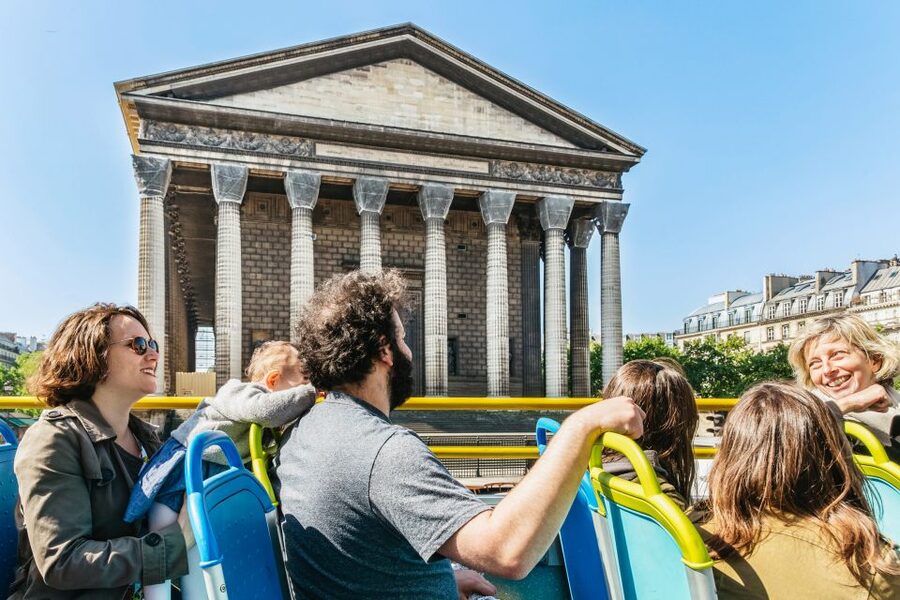
The Blue Line is built around major landmarks, so each stop has a clear payoff. Still, your best move is to decide your stop style: quick photo, longer break, or museum mode.
Opera – Grands Magasins (23 Bd des Capucines)
This is a smart starting area if you want to begin in the central shopping-and-theatre zone. It’s also a useful first stop for getting oriented, because you’ll quickly see how the route threads through the city.
Possible drawback: since it’s a central district, the area can feel busy when you hop off.
Musée du Louvre (Place du Carrousel) / relocation to Comédie-Française (3 Avenue de l’Opera)
This stop is set up for the Louvre. One important wrinkle: the Louvre stop is listed as relocated to Comédie‑Française at 3 Avenue de l’Opera until further notice. This is exactly the kind of change that can trip you up if you’re relying only on old screenshots.
Tip: use the app and double-check where the bus is stopping on your date. That small habit prevents a wasted walk.
Notre-Dame (13 Rue Saint-Jacques)
This stop puts you in reach of the Notre-Dame area. If your goal is the cathedral exterior and the surrounding views, this is the cleanest bus-to-stroll connection.
Possible drawback: this is a classic photo destination, so you might spend more time weaving through people than you’d like.
Panthéon – Luxembourg (2 Place Edmond Rostand)
This stop connects you to the Panthéon and the Luxembourg area. It’s a good choice when you want a break from pure monument-hopping and prefer a more “neighborhood plus landmark” feel.
Possible drawback: you may prefer to plan your timing here, because you’ll likely want a little wandering time once you get off.
Musée d’Orsay (76 Quai Valéry Giscard d’Estaing)
If the Louvre is your big museum target, Orsay is the other “high-value” museum stop on this line. Getting off here can make the day feel less like a checklist and more like a museum-and-walk loop.
Possible drawback: museums can swallow time fast, so if you’re using a 1-day ticket, consider whether you want one big museum moment or multiple short breaks.
Concorde (12 Place de la Concorde)
Concorde is one of those spots that helps you understand Paris’ grand geometry. You’re not far from major cross-city routes, and it’s a convenient stop if you want a scenic break without committing to a full museum plan.
Possible drawback: it can be less “romantic landmark” and more “big urban square,” depending on what you came for.
Arc – Champs-Élysées (135 Avenue des Champs-Elysées)
This is a high-impact area. You’re positioned to connect to the Arc de Triomphe region and the famous Champs-Élysées strip.
If shopping is on your list, this stop is the easiest way to “arrive with options.” Want to shop a bit, then go for views later? Easy.
Possible drawback: Champs-Élysées is a magnet for crowds and tourists in general, so you might feel packed in peak periods.
Trocadéro (1 Place du Trocadéro)
This stop is the best kind of bus stop: a dedicated photo vantage point. It’s a common pick for getting the Eiffel Tower view without committing to the tower itself.
Possible drawback: it’s all about photos here, so if you want “quiet time,” you may need to time your visit.
Tour Eiffel (69 Quai Jacques Chirac)
This stop is the direct connection to the Eiffel Tower area. If you want to go up, stroll the perimeter, or just lock in the iconic views, this is your stop.
Possible drawback: it’s the busiest kind of destination. You can still use it well—just expect that the area comes with people.
Pont Alexandre III – Invalides (41 Quai d’Orsay)
This stop links you to the river area and the Invalides zone. It’s a great choice if you want an on-the-water stroll feel and prefer mixing views with architecture.
Possible drawback: if you’re tired, crossing around the Seine might feel like extra walking, so plan for breaks.
Optional Seine River cruise: 1 hour from Port de Suffren
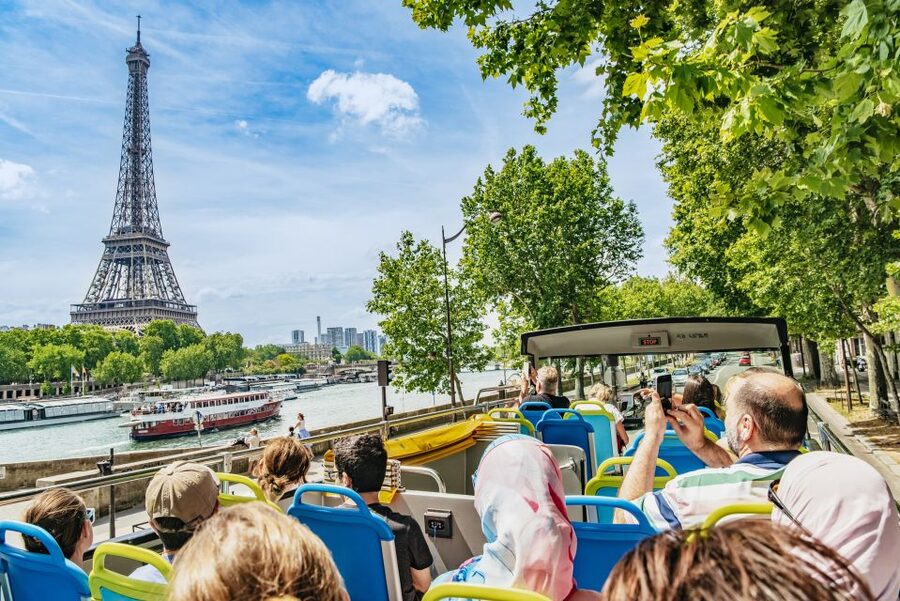
If you add the cruise option, you’ll get a 1-hour Seine River cruise included with that dedicated ticket option. It’s operated by Vedettes de Paris.
Meeting point is Port de Suffren (75007 Paris), at the foot of the Eiffel Tower. That makes it easy to pair with your bus ride. You don’t need to “solve” logistics first; you just switch modes.
Two date notes you should keep in your pocket:
- No cruise from January 12 to January 15 (inclusive)
- December 24 (Christmas Eve): last departure 5:45 PM
A good practical move: confirm the cruise time window printed on your ticket or provided to you for your booking. One of the submitted experiences flagged that some cruise entry depends on the scheduled time, so don’t assume any departure time will work with your pass.
Audio guide and Wi‑Fi: how to make the bus more than a ride
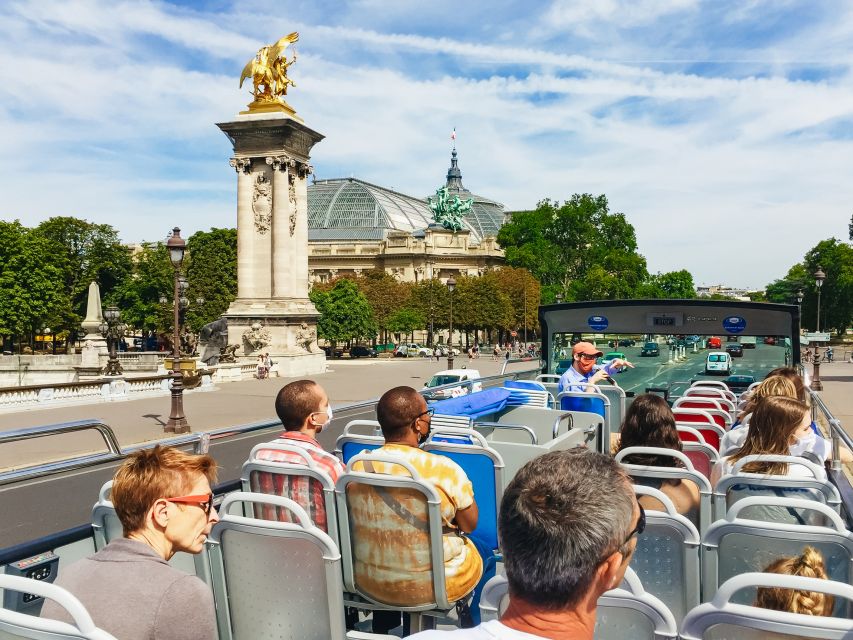
The audio experience is one of the strongest reasons this tour works. You’ll hear commentary through headphones and you can also access audio via the app. Coverage includes adults in French, English, Spanish, Italian, German, Russian, Japanese, Chinese, Arabic, and Portuguese, plus a kids audio guide.
Two small details that matter in real life:
- The commentary helps you place what you’re seeing fast, which is huge when Paris feels like five cities at once.
- The app’s real-time bus tracking helps you avoid aimless wandering at stops. You’re not guessing where the next bus is.
One winter comfort note: the top deck is open-air, so you’ll feel weather. If it’s cold, you may spend more time on the lower level even if the view is better above.
Turning stops into walking days with the free themed tours

A lot of sightseeing buses stop at landmarks. This one adds something useful: free themed walking tours inside the app, including Emily, Fashion, and options tied to the Eiffel Tower and Montmartre.
These walks help because they give structure once you hop off. Instead of wandering without context, you get a route idea. That’s especially helpful for visitors who want photos but also want their photos to mean something.
Use the strategy like this:
- Ride to a stop connected to the theme you want
- Hop off for the walking tour portion
- Use the bus later to recover or connect to the next area
A smart way to plan 1, 2, or 3 days
You don’t need to “do everything.” You need a pattern you can repeat without burning out.
If you only have 1 day
Use the bus for your overview and pick two or three stops to go deeper. Louvre and one river-view area like Trocadéro/Eiffel are a classic combo. Keep your museum expectations flexible, because time can disappear quickly.
If you have 2 days
Day 1: do the “icons” loop, with short breaks at Opera, Notre-Dame, and Champs-Élysées/Arc area.
Day 2: focus on museums (Louvre/Orsay, depending on your tastes) and finish with the Seine experience—either on foot or with the optional cruise.
If you have 3 days
Day 1: set your bearings and grab the iconic views.
Day 2: museum day (or one museum + one neighborhood walk).
Day 3: use the extra time to revisit your favorite area and add one themed walk from the app.
This is the main advantage of a 1–3 day pass: you can build a plan that matches your energy.
Comfort, access, and limits (read this before you pack)
This operation is designed for easy day touring:
- Wheelchair accessible
- Clean-energy vehicle
- Wi‑Fi onboard
- Headphones are provided, and you’re encouraged to bring your own to reduce waste
You should also know what’s not allowed:
- Oversize luggage
- Pets
If you’re traveling with kids or strollers, you’ll probably appreciate the ability to wait and hop back on quickly. And because buses run every 10–15 minutes, you’re less likely to feel stuck.
Should you book Tootbus Hop-on Hop-off with or without the cruise?
Book it if:
- You’re doing Paris on limited time and want an easy way to hit the big landmarks
- You like having control—hop off for photos or walks, then hop back on when you’re tired
- You want audio in 10 languages and a kids channel without extra effort
- You’d like an option to add a Seine cruise from the Eiffel area
Skip it (or at least think hard) if:
- You already have a tight museum-and-neighborhood plan and won’t use multiple stops
- You dislike open-air bus rides in cold weather and know you won’t enjoy the top deck views
The optional Seine cruise is worth considering if you want Paris from the water and you like the idea of pairing it with Eiffel-area timing. It’s also helpful as a change of pace when you don’t want to keep walking every hour.
If you’re the type who likes to see “the famous stuff” first, then go deeper later, this pass is a practical way to get your footing fast.
FAQ
How long is the ticket valid?
Your ticket is valid for 24, 48, or 72 hours after your first validation onboard the bus.
Can I hop on and off as many times as I want?
Yes. You can hop on and off repeatedly within the validity period.
What’s included with the hop-on hop-off portion?
It includes a 1, 2, or 3-day hop-on hop-off sightseeing tour, headphones, audio commentary via bus and app in 10 languages, the kids’ audio guide, a free mobile app with real-time tracking, and Wi‑Fi onboard.
Is the Seine River cruise included?
The cruise is optional. It’s included only if you booked the dedicated cruise option.
Where do I meet for the Seine cruise?
The cruise meeting point is Port de Suffren, 75007 Paris, at the foot of the Eiffel Tower.
How long is the Seine cruise?
It’s a 1-hour Seine River cruise.
How often do the buses run?
Frequency is approximately every 10 to 15 minutes.
What languages are available for the audio guide?
Audio commentary is available in French, English, Spanish, Italian, German, Russian, Japanese, Chinese, Arabic, and Portuguese, plus a kids channel.
Is this tour wheelchair accessible?
Yes. It is listed as wheelchair accessible.
Are pets allowed?
No, pets are not allowed.
What are the bus service hours?
Approximate service hours vary by season. For 27 Oct 2025 to 29 Mar 2026, first departure is 9:30 AM and last departure is 5:00 PM (stop 1). For 30 Mar 2026 to 28 Jun 2026, first departure is 9:30 AM and last departure is 6:30 PM (from stop 1). Bus hours can change, so use the app for current updates.