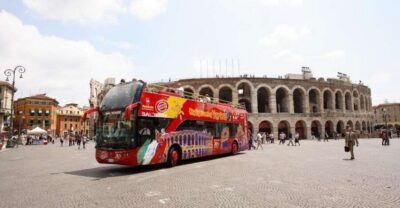
Rome can overwhelm fast, but this bus helps. The open-top, double-decker loop glides past Rome’s biggest landmarks, with onboard audio commentary in 8 languages to keep you oriented as you go. One thing to plan around: special events can change the route, and some stops may not be guaranteed.
I like how flexible the ticket options are, so you can do a quick loop or spread the sightseeing over a day or more. You also get the Jubilee Line, included with the City Sightseeing ticket, which can be a useful add-on when you want to limit long walks.
In This Review
- Key highlights to know before you ride
- A 100-minute Rome loop with audioguide and hop-on freedom
- Price and value: why this $15 ticket can work (if you use the time right)
- Picking the right ticket: 1 Loop vs 24, 48, 72 hours
- Where to start: Via Marsala 7 and City Sightseeing Line A stops
- Using the audioguide without losing the view
- Route walk-through: major Roman stops and what each is best for
- Santa Maria Maggiore: start with one of Rome’s biggest church moments
- San Giovanni in Laterano: a power stop for understanding early Rome
- Colosseum: the photo target, plus the one stop to plan carefully
- Circus Maximus: a wide-open sight that helps you picture the city’s old scale
- Piazza Venezia and Largo di Torre Argentina: central Rome with lots to interpret
- Piazza Navona: street life and a perfect pause point
- Vatican City side: using the bus as your approach, not your only plan
- Villa Borghese, Piazza di Spagna area, and Piazza Barberini: finishing with Rome’s stylish lanes
- Practical logistics: bus frequency, bus colors, and how to time your hops
- Who this Rome hop-on hop-off bus is best for
- Should you book the City Sightseeing Rome hop-on hop-off bus?
- FAQ
- How long does the full loop take?
- How long is the ticket valid?
- Where do I start the tour?
- What’s included with the ticket?
- What is not included?
- What languages are available for the audio guide?
- Are the stops guaranteed?
Key highlights to know before you ride
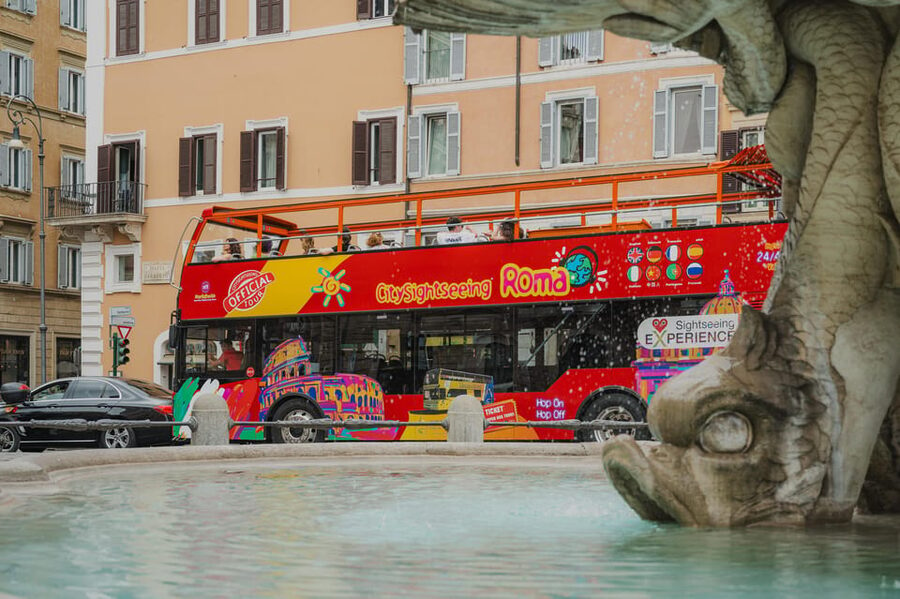
- Open-top double-decker views for photos and skyline spotting while you stay seated
- 8-language audioguide plus a sightseeing app to help you follow the story of each stop
- 24, 48, or 72-hour flexibility so you can hop off, wander, then hop back on
- A full loop timing of about 100 minutes, making it easy to fit into a busy day
- Jubilee Line included, operated by Vatican & Rome Open, tied to your ticket
- Frequent buses and clearly different buses, so you’re not stuck waiting
A 100-minute Rome loop with audioguide and hop-on freedom

This is a classic Rome first-timer move: you ride, you look, you learn. The hop-on hop-off setup means you don’t have to commit to one long walk from stop to stop, and you can spend more time where you actually care.
The onboard audio is one of the best parts of the experience. It’s available in Spanish, Chinese, English, French, German, Italian, Russian, and Portuguese, and the commentary helps you connect what you’re seeing to what it used to mean. Even if you’ve read up a bit before arriving, having the voice narration as you pass landmarks keeps the city from feeling like random scenery.
Just remember: you’re riding a loop service. If you buy the wrong product version, you might end up doing only a single run rather than hopping around all day.
Price and value: why this $15 ticket can work (if you use the time right)

At around $15 per person, the value is strongest when you treat the bus as your moving base. You’re not paying for entrance tickets, but you are paying for transport between major sights plus audio guidance and a sightseeing app.
Here’s the practical angle: Rome is huge, and the “walk everywhere” plan can eat up your energy fast. If you can use the bus to reduce transit time and then walk only the stretches you choose, this kind of ticket often pays off quickly. If you only plan to do one stop and call it a day, it may feel less efficient.
You’ll also want to budget separately for attraction entry fees and food, since those are not included. Still, the ticket can be a smart way to get your bearings before you decide what’s worth an actual timed visit.
Picking the right ticket: 1 Loop vs 24, 48, 72 hours
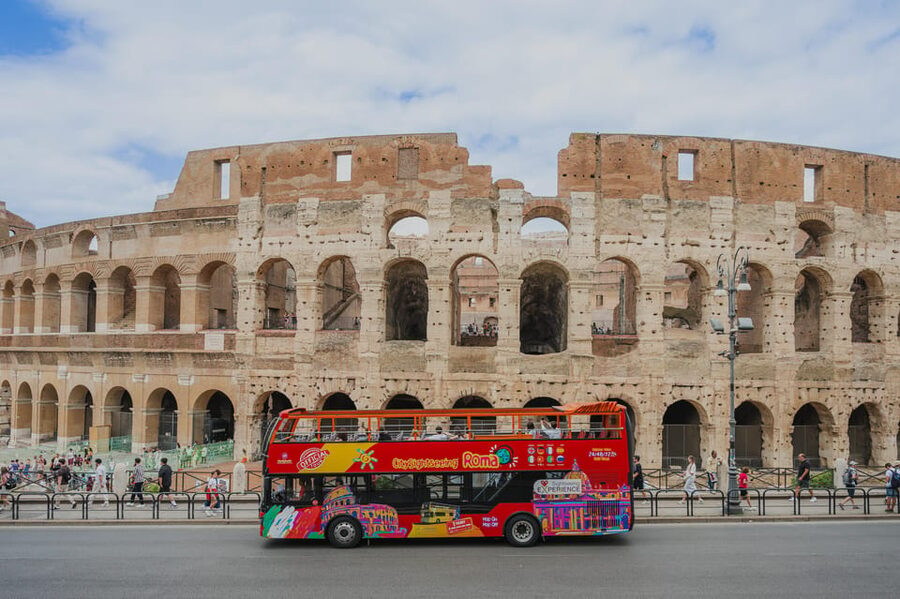
The product naming can be confusing, so it’s worth sorting this out early. The info you’re given includes options like 1 Loop and longer passes such as 1 Day / 24 / 48 / 72 hours.
Here’s the key line to keep in mind: One Loop Tour is not a Hop On Hop Off tour. So if your plan is to hop off for a few hours, you’ll want a ticket version that clearly gives you the hop-on hop-off flexibility over that time window.
If you’re on a tight schedule, the shorter timeframe can be enough. If you want to slow down for Vatican-area mornings, a Colosseum-side evening, or a café break in the city center, the longer pass is usually the better fit.
Where to start: Via Marsala 7 and City Sightseeing Line A stops
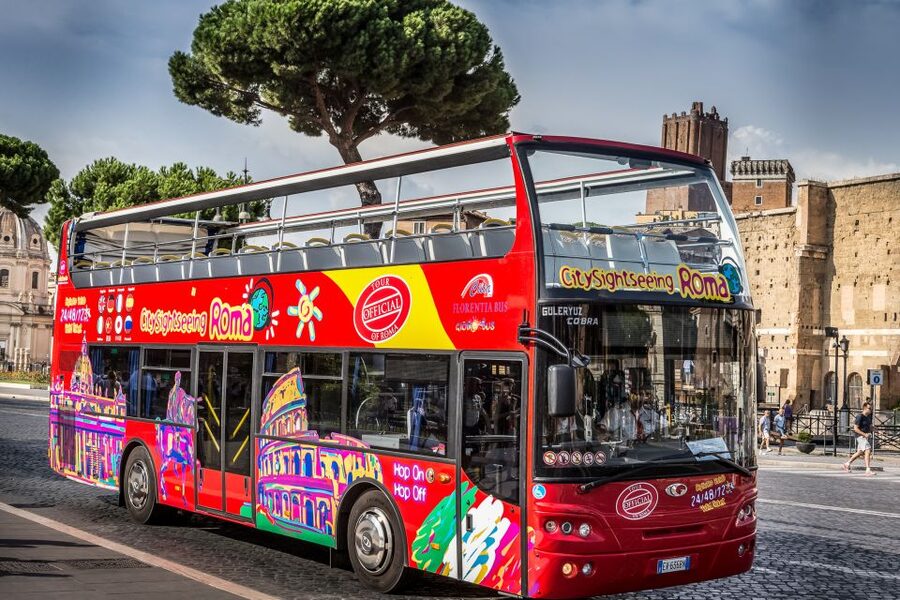
You’ll start at Via Marsala, 7. In plain terms, it’s also convenient because the route loops back to the same area, and it connects well with the broader central part of Rome.
The meeting point guidance also says you can start at any stop of City Sightseeing Rome Line A. So if you’re already near another Line A stop, you likely don’t need to backtrack to Via Marsala—just look for your line and board at the posted stop.
Tip: when you arrive, take 30 seconds to check the sign and bus color so you don’t waste time waiting for the wrong line.
Using the audioguide without losing the view
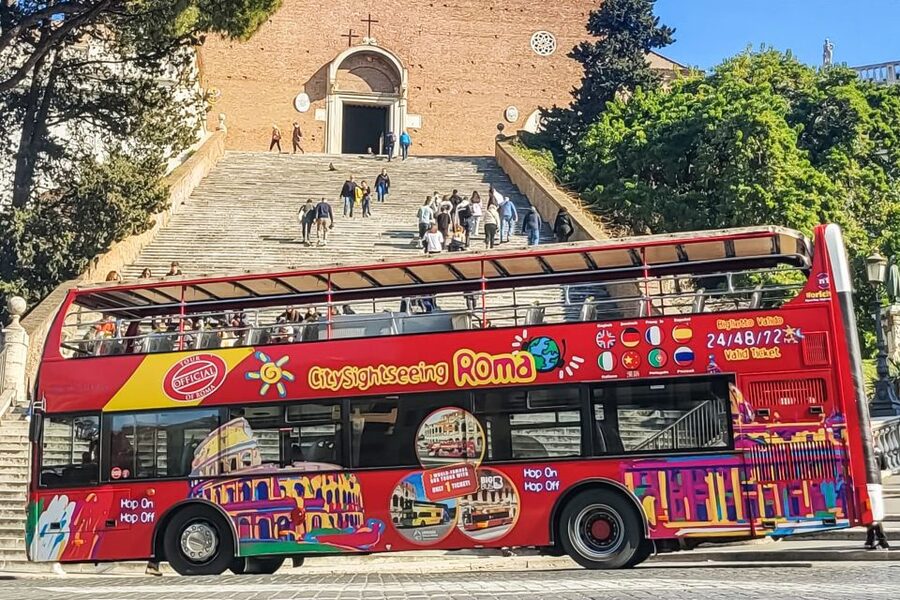
The audio setup is a win for independent sightseeing. You’ll get headphones on the open bus, plus Wi-Fi on the open bus (helpful if you’re also using the sightseeing app).
In real life, the biggest challenge with audioguides is timing. You might look up right as the narration starts to get specific, or you might miss a section while boarding or getting off. If you’re trying to time your photos, keep this simple rhythm:
- listen while the bus is moving or stopped at a distance
- listen again after you get settled at your next hop-off point
One caution from the experience details: the commentary can be interrupted and may not always run uninterrupted. So if certain moments matter to you, plan to use the audio as a guide, not as your only source of meaning.
Route walk-through: major Roman stops and what each is best for
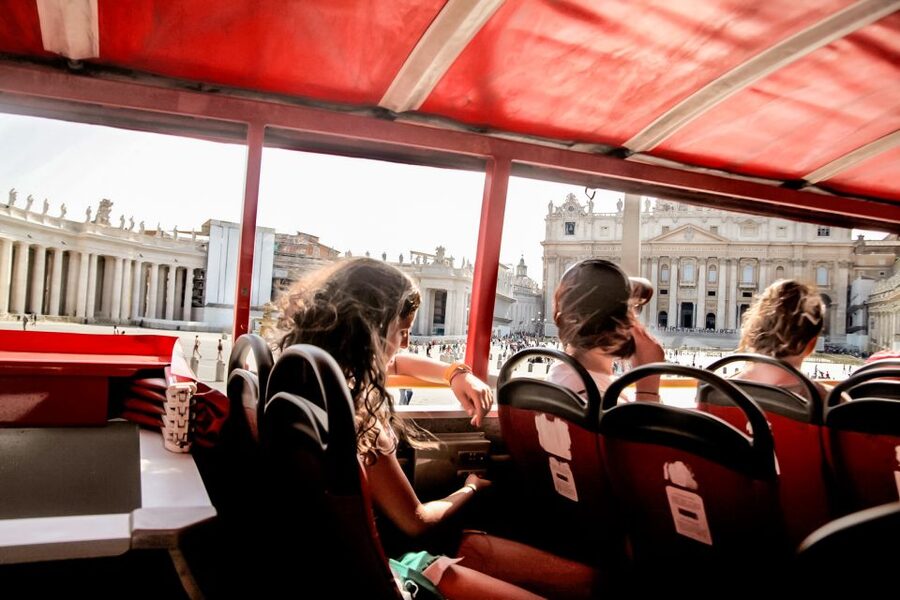
Below is how the loop plays out, in a way that helps you choose where to hop and what to prioritize on your day.
Santa Maria Maggiore: start with one of Rome’s biggest church moments
Your route passes Basilica Papale di Santa Maria Maggiore early. Even if you don’t go inside, this stop helps you remember the scale of Rome’s sacred architecture right away.
If you’re deciding whether you want indoor time later, this is a good “warm-up” basilica view. Rome’s churches can feel overwhelming. Getting one big one early helps you pace your expectations for the rest of the day.
San Giovanni in Laterano: a power stop for understanding early Rome
Next you’ll pass Basilica di San Giovanni in Laterano. This is the kind of place that rewards a little attention, even from the street view. The bus makes it easier to get oriented so you don’t arrive at later monuments feeling lost.
If you’re hopping off, try to keep your stop short unless you’re ready to commit. Churches are often calmest earlier in the day, but you’ll want to avoid spending so long here that you miss your Colosseum or Vatican time.
Colosseum: the photo target, plus the one stop to plan carefully
The Colosseum is the headline. Even when you don’t go inside, it’s the kind of sight that makes Rome click into place. Your route includes the Colosseum-area stop, so it’s a natural place to hop off for pictures and a quick look around.
One important consideration: stops may not be guaranteed during special events, and the route can change. In practice, that means you should not treat the Colosseum hop-off as 100% guaranteed for timing. If seeing it up close matters most, build your day so you still get value even if access is limited.
Circus Maximus: a wide-open sight that helps you picture the city’s old scale
You’ll pass Circus Maximus. This is where Rome’s “big space” feeling shows up. Compared with the tight streets near many monuments, this stretch helps you imagine how the city used to host massive public events.
Even if you’re not going to linger, it’s a useful mental reset. The bus moves you through the contrast: intense ancient icons, then broader views and different street rhythms.
Piazza Venezia and Largo di Torre Argentina: central Rome with lots to interpret
Next up are two classic central-city anchors: Piazza Venezia and Largo di Torre Argentina.
- Piazza Venezia gives you a strong sense of where you are in Rome’s core.
- Largo di Torre Argentina is a different vibe: it’s known for its archaeological atmosphere, and it helps you connect the bus route to the deeper layers under the streets.
If you’re using the bus to decide what you want to walk to next, these stops are valuable because they’re both in the thick of the action.
Piazza Navona: street life and a perfect pause point
You’ll pass Piazza Navona. This is one of the easiest places to turn your bus ride into a real break: people-watching, quick photos, and a café stop if you want one.
The bus stop placement also makes it practical. You can hop off, get a feel for the square, then hop back on without complicated navigation.
Vatican City side: using the bus as your approach, not your only plan
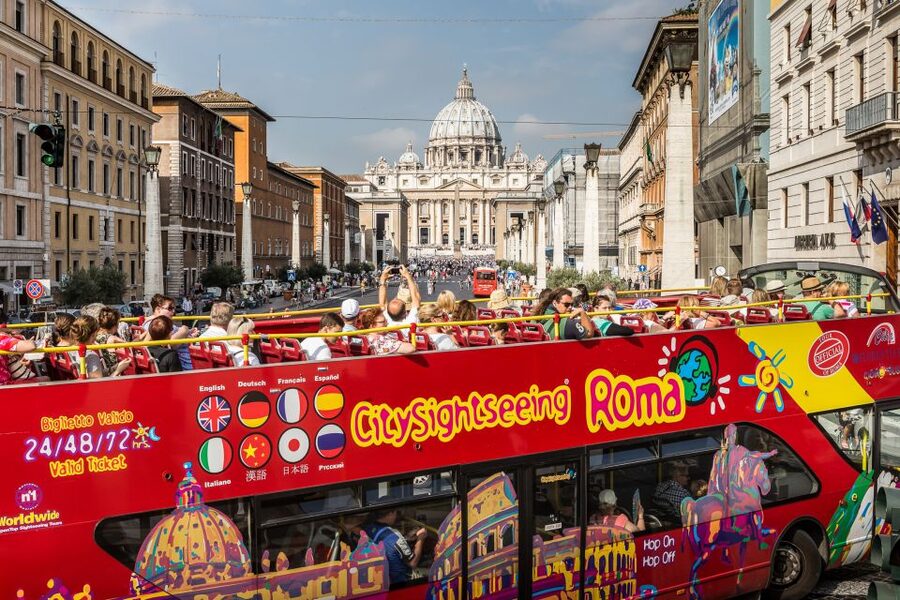
Your route includes the Vatican area (listed as Castel Sant’Angelo / Vaticano). This is where the bus becomes more than a sightseeing ride—it becomes a simple way to handle Rome’s distance.
You also get the Jubilee Line included with your ticket (operated by Vatican & Rome Open). The practical value is reducing uncertainty and walking time when you’re heading toward the Vatican side of town. Even if you don’t use the line, it’s nice to know it’s part of what you paid for.
One more practical note: when crowds are heavy, routes and stop access can shift. So if the Vatican is a must-do for you, aim to be flexible with your timing and don’t gamble your whole plan on a single hop-off moment.
Villa Borghese, Piazza di Spagna area, and Piazza Barberini: finishing with Rome’s stylish lanes
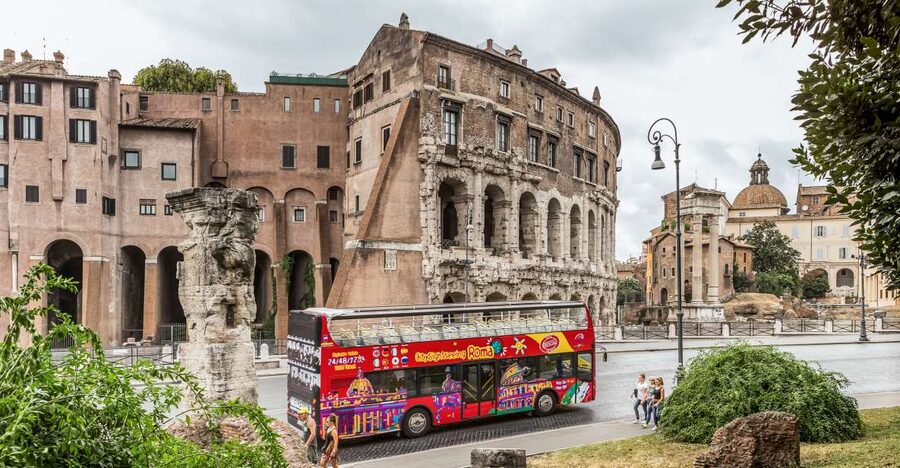
Later in the loop, you’ll pass Villa Borghese, then Piazza di Spagna (Fontana di Trevi) as listed, and Piazza Barberini.
Why this ending section matters:
- It gives you a calmer, more “walk around and browse” feeling than some of the densest ancient-core spots.
- It helps you close your sightseeing day with streets that are easy to explore on foot.
If you’re deciding where to spend your final free time, the end of the loop is usually where I suggest placing a little extra effort. You’ll have more energy after seeing the major monuments, and you’ll be able to linger where the city feels livable.
Practical logistics: bus frequency, bus colors, and how to time your hops
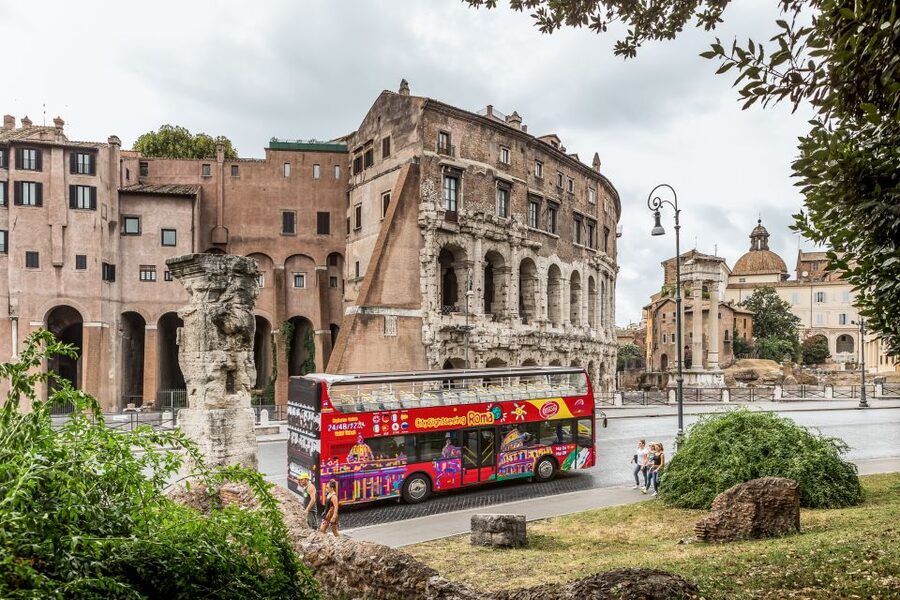
The reviews emphasize something you’ll feel immediately: the service is set up for real hopping. In particular, you should expect frequent buses, and the experience notes that you may see different coloured buses.
That helps a lot when you’re trying to coordinate a plan. If you hop off at one stop, you don’t have to obsess over the exact minutes. You can also mix sightseeing with errands—like buying water, grabbing a snack, or sitting down briefly—then continue.
Timing tip: if you’re short on time, try this approach. Do the full loop once to gather what’s where. Then, on a second pass the next day (if you have 48 or 72 hours), hop only to the stops you want to explore further.
Who this Rome hop-on hop-off bus is best for
This experience is a strong match if you:
- want a fast overview of Rome’s top sights without constant map work
- prefer self-guided time at the monuments, with audio narration handling the basics
- need flexibility across 24 to 72 hours
- are traveling solo or with mixed ages and interests and want an easy shared itinerary
It may be less ideal if you’re the kind of planner who needs one exact, guaranteed stop at one exact time. The route can change and some stops may not be guaranteed during special events.
Should you book the City Sightseeing Rome hop-on hop-off bus?
I’d book it if you want an easy Rome structure and you’ll actually use the hop-on part. For the money, the mix of open-top sightseeing, 8-language audio, and the included Jubilee Line gives you a lot of practical mobility.
Skip or be cautious if your entire day depends on one very specific access point and you can’t handle the possibility of route changes. In that case, consider building your plan around “Plan B” walking and photos, not just one hop-off moment.
If you’re arriving for the first time and want to get oriented quickly, this is one of the simplest ways to do it.
FAQ
How long does the full loop take?
The full loop takes about 100 minutes.
How long is the ticket valid?
The ticket can be valid for 1 to 3 days, depending on the option you choose (such as 1 Day, 24, 48, or 72 hours).
Where do I start the tour?
You start at Via Marsala, 7. You can also start at any stop of City Sightseeing Rome Line A.
What’s included with the ticket?
Included items are headphones (open bus only), Wi-Fi (open bus), onboard audio in 8 languages, a sightseeing app, the hop-on hop-off ticket for City Sightseeing Rome, and the Jubilee Line operated by Vatican & Rome Open.
What is not included?
Attraction tickets, food and drinks, and hotel pickup/drop-off are not included.
What languages are available for the audio guide?
The audio guide is available in Spanish, Chinese, English, French, German, Italian, Russian, and Portuguese.
Are the stops guaranteed?
The route may change, and some stops may not be guaranteed due to special events.