Canberra can feel spread out, so smart planning matters. This private hop-on ride with John starts at CMAG and lets you choose what to see (and in what order), without the chaos of big bus groups. You’re not stuck on a fixed “tour script,” and you get real guidance as you go.
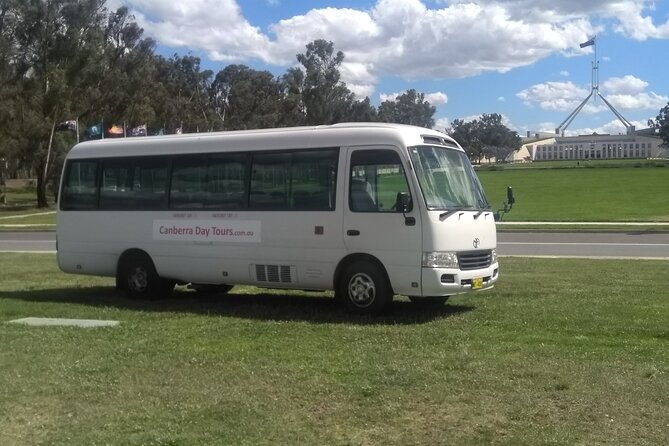
I especially like the private vehicle feel. Even though you’ll use an Explorer Loop-style bus, it’s still quieter and more personal, which makes it easier to ask questions and move at your pace. John also shares practical local recommendations while you work through a timetable.
One small drawback to keep in mind: the bus doesn’t start with an orientation loop first. That means you’ll want to think a bit ahead (or rely on John’s ordering plan), because time can vanish fast once you start ticking off major sights.
In This Review
- Key highlights worth your attention
- Canberra sightseeing with John: a private day that actually feels personal
- Where you start matters: CMAG as your base
- How the Explorer Loop departs and how long you’re really on it
- The big idea: John builds your stop order so you don’t waste time
- Choosing your stops: how to plan a day that feels good
- Stop-by-stop: what each major Canberra attraction adds to your day
- Australian War Memorial: the site you should treat as a priority
- Canberra and Region Visitors Centre: a quick reset with a view
- National Capital Exhibition at CMAG: history without extra cost
- National Library of Australia: hands-on with one of Canberra’s key artifacts
- Questacon: science you can use right away
- National Gallery of Australia: art with a simple entry advantage
- National Portrait Gallery: people, power, and perspective
- High Court of Australia: architecture plus civic meaning
- Old Parliament House: preserved and preserved on purpose
- Parliament House: the working centre of government
- National Museum of Australia: Australian stories over two centuries
- National Film and Sound Archive of Australia (NFSA): available on request
- What you gain with this private, hop-on approach
- Downsides and friction points to plan around
- Who should book this Canberra private tour with John
- Should you book Private Sightseeing in Canberra with John?
- FAQ
- What is the meeting point for this tour?
- How much does this private tour cost?
- How long is the experience?
- Do I choose which attractions to visit?
- Is the bus heated and air-conditioned?
- Does the bus run every day?
- Is it suitable for people with service animals?
Key highlights worth your attention
- John’s timetable first: you set your stop order for best value before you roll.
- Private-pacing, hop-on flexibility: stay longer where you care most, skip what doesn’t fit.
- Heated and air-conditioned bus: comfortable even when Canberra weather shifts.
- Most major sights have no entry fee: you can spend more time on seeing, less on tickets.
- Built for picking 2–3 targets: you’ll get more from a focused day than an all-out marathon.
- You return to CMAG: easy reset at the end, and it’s a convenient launch point.
Canberra sightseeing with John: a private day that actually feels personal
This is the kind of tour that fits real travel life. You arrive in Canberra, you want highlights, but you don’t want to waste the whole day herding with strangers. With John, you get a guided plan, then you’re free to choose how long you stay at each stop.
The best part is the tone: helpful, not pushy. John is right there with you while you map your day using a timetable, and that helps when you’re deciding between big-ticket icons like the Australian War Memorial and the Parliament precinct.
If you like learning while you move, you’ll appreciate how the driving time turns into useful context. You’re not just transported—you’re oriented to what you’re about to see and what to notice when you step out.
Where you start matters: CMAG as your base
Your day begins at the Canberra Museum & Gallery (CMAG), 176 London Circuit, in the city centre. It’s a logical starting point because you’re launching from a venue that also connects with a lot of the city’s main sights.
Your trip ends back at the meeting point, which keeps your planning simple. You don’t have to worry about negotiating your way from one far-flung spot to another at the end of the day.
The tour uses a mobile ticket, and you’ll receive confirmation at booking. The bus also runs on a loop concept, but you’re not “locked in” the way you are on classic big bus hop-on hop-off lines.
How the Explorer Loop departs and how long you’re really on it
The experience runs on selected departures through the day. The schedule you’ll see can include slots around 9:30am, 10:30am, 11:30am, and then later afternoon departures such as 12:30pm/1:30pm/2:30pm/3:30pm or 1:00pm/2:00pm/3:00pm/4:00pm, depending on the day.
Plan for flexibility: the operator can substitute a smaller bus depending on demand, and the bus may not run every day. If you’re traveling at the margins of the week, it’s worth calling 0418 455 099 to confirm it’s running.
In terms of time, it’s about 1 to 6 hours. The route is described as either an all-day loop (stay on the bus through the day) or a one-hour loop (if you want a shorter taste and then finish your day elsewhere).
The big idea: John builds your stop order so you don’t waste time
Here’s how this tour avoids the usual hop-on hop-off problem: you’re not just handed a route map. John goes through the timetable with you first and suggests which attractions to stop at for the best overall value.
That matters because Canberra’s top sites are spread out enough that timing errors cost you real hours. A well-ordered plan helps you avoid the classic mistake of bouncing between distant stops and then having to rush through the ones you actually care about.
Also note the pacing reality. There’s no orientation loop right away, so you’ll be starting with chosen stops instead of a “sit down and watch scenery” warm-up. John’s guidance helps, but you’ll still get the best experience if you show up with at least a couple of must-sees in mind.
Choosing your stops: how to plan a day that feels good
The biggest lesson from the way this runs is simple: you can’t do everything without stress. One of the most consistent pieces of practical advice is to choose no more than two stops if you want a leisurely full experience, or two to three if you’re more efficient but still want time to look closely.
Think of it like this: Canberra’s best sights reward attention. The Australian War Memorial alone can swallow a chunk of your day if you slow down. Parliament House and Old Parliament House are similarly worth lingering around, especially if you care about architecture or governance.
If you try to stack too many “big icons” back-to-back, you’ll spend more time on and off the bus than inside the places. This tour works best when you treat it like a guided prioritizing tool, not a checklist race.
Stop-by-stop: what each major Canberra attraction adds to your day
Australian War Memorial: the site you should treat as a priority
This is listed as the most visited attraction in Australia, and for good reason. It’s described as one of the world’s greatest military museums, and entry is no entry fee.
If you care about national stories, it’s hard to imagine a better first stop. Even if you don’t plan an ultra-long visit, you’ll appreciate how central it is to understanding Canberra’s identity.
A practical note: because there’s no entry fee, it’s easy to feel like you can “fit it in anywhere.” That’s the trap. If it’s on your list, give it real time.
Canberra and Region Visitors Centre: a quick reset with a view
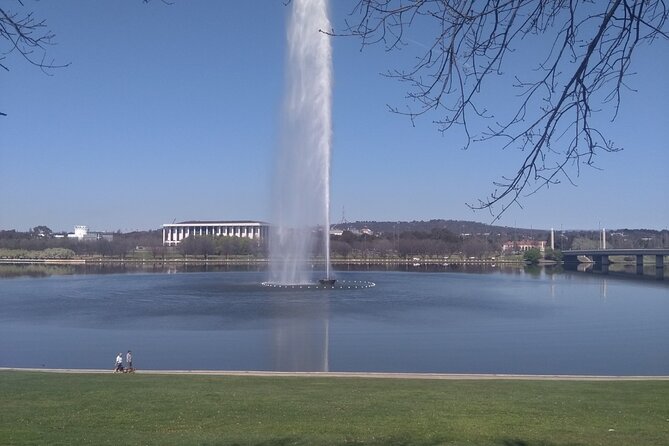
The Visitors Centre sits on Lake Burley Griffin alongside the Captain Cook Memorial Water Jet, and it’s described as having a 100-metre rising structure. It’s also a place for tourist information, so it’s useful if you want to confirm where you’ll go next.
This is one of the best “between big stops” choices because you’re not committing to a museum marathon. Use it as a reset point, especially if you’re deciding mid-day what still fits.
National Capital Exhibition at CMAG: history without extra cost
The National Capital Exhibition is described as telling the story of Canberra and how it came to be, with no entry fee. There’s also a cafe here, which makes it a convenient option when you want a break without changing locations.
This stop can be a strong early move if you want context before you start visiting the political and memorial sites. If you’ve already read up, it can still help you connect the dots once you’re standing near the Parliament precinct.
National Library of Australia: hands-on with one of Canberra’s key artifacts
The National Library of Australia is called out for Captain Cook’s handwritten log on display, plus other exhibits. It’s also no entry fee.
Even if you’re not a “library person,” this is the kind of stop that adds texture to Canberra. It gives you a different angle than the outdoor memorials and government buildings.
Questacon: science you can use right away
Questacon is described as the National Science and Technology Centre, with hands-on physics experiences that are mainly for kids. Entry fee isn’t listed here, so it’s best to treat it as a flexible stop depending on who’s in your group.
If you’re traveling with family, this is often the kind of place where kids stop fighting time. If you’re traveling as adults only, you might still find it fun, but you’ll want to check your own energy level before choosing it as a major stop.
National Gallery of Australia: art with a simple entry advantage
The National Gallery of Australia is listed as having important works of art, with no entry fee. If you like art museums, this is a strong choice because you can focus on quality without worrying about ticket costs.
The practical value here is flexibility. You can treat it as a “stay as long as you want” stop, since it isn’t framed like a paid-time commitment.
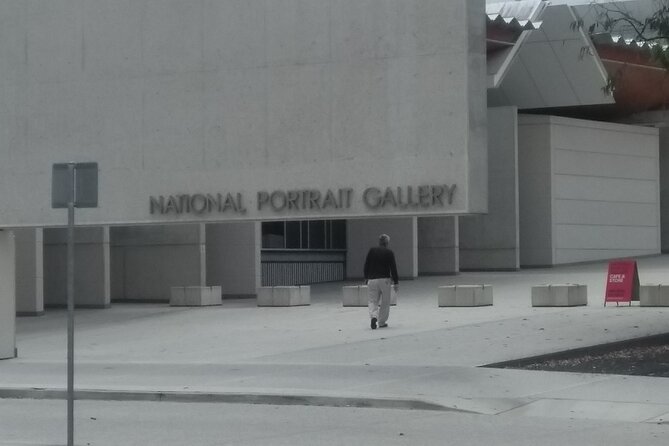
National Portrait Gallery: people, power, and perspective
The National Portrait Gallery is included as a renowned portrait gallery. Entry fee isn’t specified in the info you’re given, so plan on it being a normal ticketed attraction in practice unless your day plan indicates otherwise.
What makes it appealing is the theme. Portraits help you connect the faces and ideas behind the institutions you’ll see later at Parliament and the High Court.
High Court of Australia: architecture plus civic meaning
The High Court is described as Australia’s highest court of appeal, in a ten-story building with three court rooms. No entry fee is noted here, which makes it a good pick if you want civic architecture without extra cost.
This stop also pairs well with the Parliament Houses. Together, they help you see Canberra as something more than memorials and monuments—it’s an operating system.
Old Parliament House: preserved and preserved on purpose
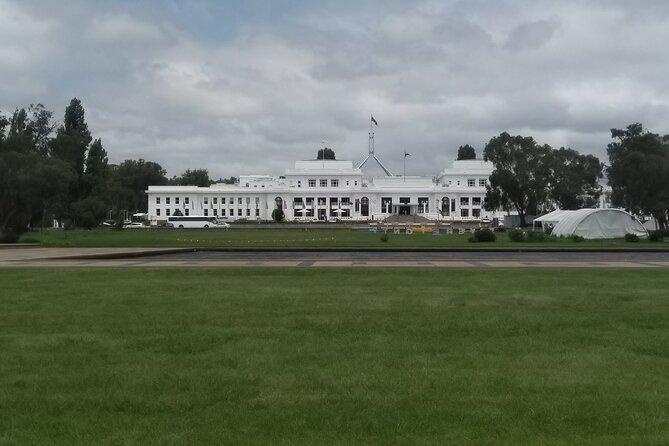
Old Parliament House is described as Australia’s most important building, now the Museum of Australian Democracy. Everything has been preserved from when the Hawke Government moved to the current Parliament House, and no entry fee is noted.
There’s also a cafe here, which is great if you’re stacking this with another longer stop. This is often the kind of location where you’ll enjoy slowing down because the building itself tells a story.
Parliament House: the working centre of government
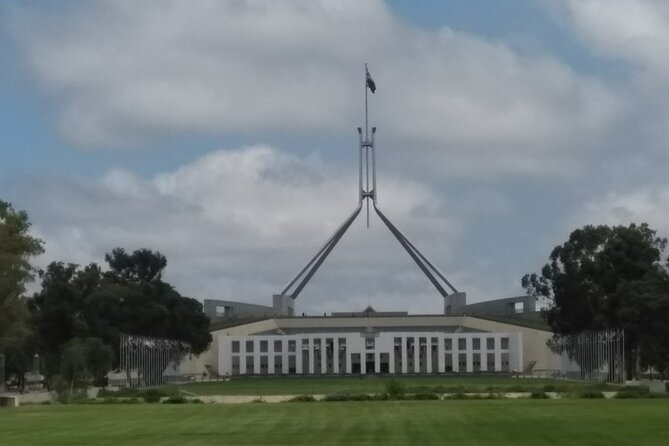
Parliament House is described as home of Australia’s Parliament and one of the great buildings of the world, chosen through a world-wide competition. The info you’re given also notes an original Magna Carta dated 1297 on display.
Because it’s a centerpiece institution, it tends to feel like the “main event” even if you only spend a moderate amount of time. If you like big national symbols, this is the stop to prioritize.
National Museum of Australia: Australian stories over two centuries
The National Museum of Australia is described as covering Australiana over the last two hundred years. It’s specifically called out for items like Phar Lap’s heart and the original prototype for the Holden Motor Car, plus a Pompeii Exhibition.
This stop gives you a break from purely political themes. If you’ve spent your morning at memorials or courts, it can reset your brain with broader cultural context.
National Film and Sound Archive of Australia (NFSA): available on request
The NFSA is included as a place for the history of film, sound, and radio, and no entry fee is mentioned. It’s noted as available on request only, which means John can help you decide whether it fits your day.
This is a nice option if you like media history. The “on request” part also means it’s not always a guaranteed add-on, so keep it flexible.
What you gain with this private, hop-on approach
A classic tour bus can feel like a schedule you have to survive. This one tries to flip that: you follow a plan, then you adjust it using real-time guidance from John.
That’s why people rate this experience so highly for pacing and organization. John is described as punctual and friendly, and the tour structure encourages you to match your stops to what you actually want to see.
You’ll also appreciate the practical details. In one example, John took a group back to a missed stop, and in another situation he made a detour to help someone see an Egypt exhibition at the National Museum and then pointed out where to catch the bus back. That’s the difference between “transport plus a checklist” and “a guide who solves problems.”
Downsides and friction points to plan around
Even when the day goes smoothly, there are a couple of things you should watch for.
First, the tour is organized around selected stops and timing, so the day can move quickly. If you’re the type who likes to browse slowly, choose fewer attractions and give each one air.
Second, there’s a note about audio. One comment said the speaker wasn’t loud enough at the beginning of the journey. If you’re sensitive to hearing commentary on moving vehicles, it’s worth positioning yourself where you can hear well once John starts.
Finally, the bus may not run every day depending on demand. If you’re visiting during a quieter period, confirm ahead so you don’t lose your day.
Who should book this Canberra private tour with John
This works best if you’re:
- Visiting Canberra for the first time and want high-value highlights without getting overwhelmed
- Traveling with a mixed group where different people want different priorities
- Wanting a day that feels guided but still flexible
- Bringing kids who might enjoy hands-on science at Questacon
It might be less ideal if you want a full orientation loop first before you decide anything. Since the tour starts with planning and chosen stops, you’ll get better results if you arrive with a few targets already in mind.
Should you book Private Sightseeing in Canberra with John?
I’d book it if your goal is a smooth, highlights-focused Canberra day with smart stop planning. At $43.03 per person, you’re paying for more than just seats—you’re getting John’s help to choose an order that saves time and reduces the stress of figuring Canberra out on your own.
Choose it confidently if you want the private feel and you like the idea of picking your own pace. If you want to see a short list well, this is a strong match.
Skip it or pair your expectations differently if you’re trying to cram in every major attraction. This tour will reward focus, not speed, and the best days come from picking a couple of places and giving them space to land.
FAQ
What is the meeting point for this tour?
The tour departs from the Canberra Museum and Gallery (CMAG), 176 London Circuit, Canberra City Centre, and it ends back at the meeting point.
How much does this private tour cost?
The price is $43.03 per person.
How long is the experience?
The duration is listed as approximately 1 to 6 hours, depending on which loop you do and how long you stay at stops.
Do I choose which attractions to visit?
Yes. You’ll get a timetable and John will help suggest which attractions to stop at, so you can focus on areas you care about most.
Is the bus heated and air-conditioned?
Yes, the bus is heated and air-conditioned.
Does the bus run every day?
The bus may not run every day depending on demand. The provider advises you to call 0418 455 099 to confirm.
Is it suitable for people with service animals?
Service animals are allowed, and most travelers can participate.