Quebec City clicks into focus fast. This hop-on hop-off loop uses red, London-style double-decker buses to move you between top sights while the onboard audio tells the story in 10 languages, with easy access to UNESCO World Heritage areas.
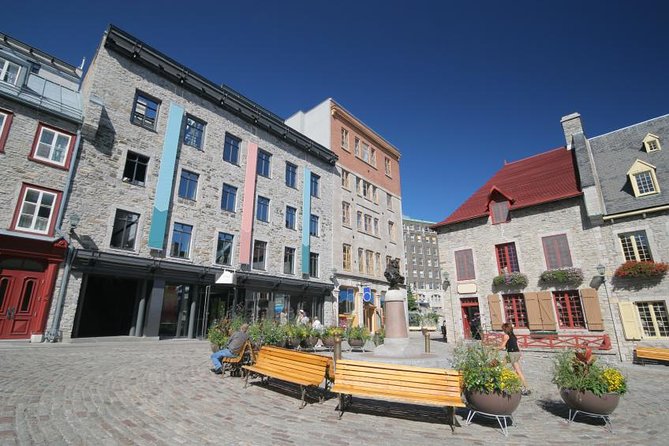
I love the unobstructed views from the open-top upper deck, especially over Place Royale and the fortified skyline, and I love how the route links both Old Québec and the Citadelle/Plains area so you can make a smart plan without jumping between taxis.
One thing to consider: on crowded days, you may face long waits and full buses, and because the narration is delivered through headphones/audio, you’ll want your device fully charged and ready to go if your audio acts up.
In This Review
- Key things you’ll notice right away
- Price and what you’re really buying
- Entering the red bus: route logic, timing, and boarding reality
- What the audio tour does well (and when it can frustrate)
- Stop-by-stop: from Place d’Armes to City Hall (what each area gives you)
- Stop 1 area: Place d’Armes and the Fort Museum zone
- Stop 2 area: Quartier St-Roch for shops and snacks
- Stop 3 area: Musée de la civilisation and the riverfront walk
- Stop 4 area: Place Royale, Notre-Dame des Victoires, and classic Old Québec sights
- Stop 5 area: Vieux-Port and Old Port Market
- Stop 6: Place Québec parking area (mostly a transit connector)
- Stop 7 area: Observatoire de la Capitale and Parliament Hill views
- Stop 8 area: Plains of Abraham and Musée des plaines d’Abraham
- Stops 9 and 10 area: Citadelle of Québec and the ramparts stretch
- Stop 11 area: Museum of Fine Arts and Plains-adjacent space
- Stop 12 area: Cinéma Cartier, shopping, and Avenue Cartier
- Stop 13 area: Saint-Jean-Baptiste church neighborhood
- Stop 14 area: Palais Montcalm, Le Capitole, and Parc Canada
- Stop 15 area: City Hall / Hôtel de Ville
- How to use a 1-day vs 2-day pass without wasting time
- Getting good seats and staying comfortable on the open top
- Crowds, cruise ship days, and why your plan needs a Plan B
- Handy extras: onboard Wi‑Fi and mobile ticket prep
- So, should you book it?
- FAQ
- FAQ
- How long is the Quebec City Hop-On Hop-Off tour?
- What ticket options are available?
- Is the tour offered in English?
- Is there an audio guide on the bus?
- Is onboard Wi-Fi included?
- Do you get hotel pickup or drop-off?
- Where are the bus stops located?
- Is the tour near public transportation?
- Is the tour dependent on weather?
- What is the cancellation policy?
- Who operates this experience?
Key things you’ll notice right away
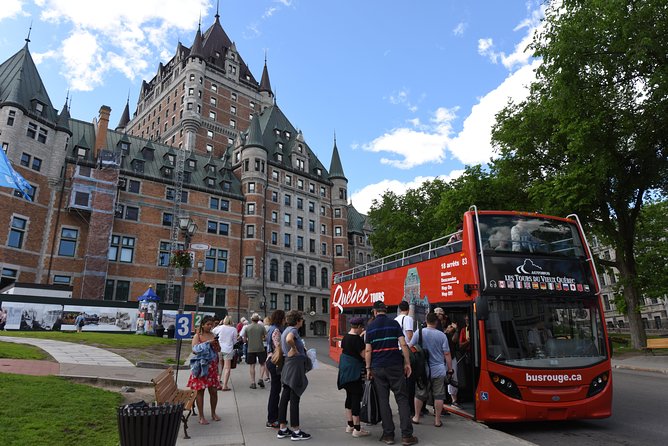
- Open-top, double-decker views for photos that don’t feel trapped behind glass
- Audio in 10 languages with earphones and clear stop-by-stop explanations
- Stops that connect Old Québec to the Citadelle and Parliament Hill area
- 1- or 2-day tickets so you can ride the loop once, then return to what you liked
- On busy days, crowding can break the hop-on rhythm (especially during cruise-ship arrivals)
- Mobile ticketing and onboard Wi‑Fi help, but you should still show up with your ticket ready
Price and what you’re really buying
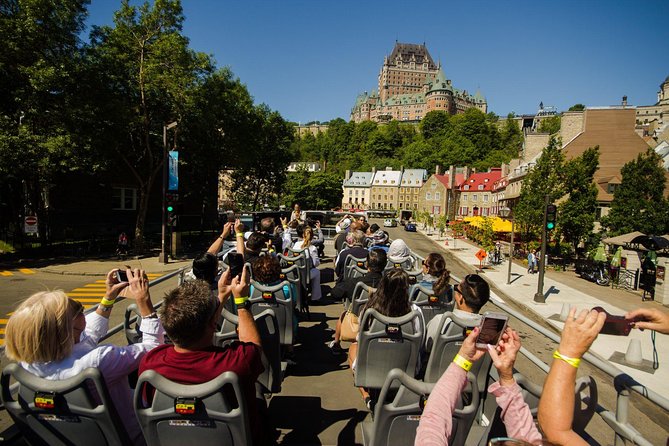
At about $46.93 per person, this is priced like a “value transportation + sights class” deal. You’re not just paying for a bus ride. You’re buying a simple way to see a lot of Quebec City with less planning stress.
The ride itself is roughly 2 hours per loop (so think of it as a structured circuit). Then your 1- or 2-day pass lets you replay sections and hop off for longer looks, meals, or photos. If you’re the type who likes to explore at your own pace, that flexibility is where the money starts to make sense.
Entering the red bus: route logic, timing, and boarding reality
This is a classic hop-on hop-off setup. You can hop on at designated stops, ride through the downtown corridor, then hop off to explore. When you’re ready, you hop back on at the next stop that fits your timing.
Here’s the practical part: the route is popular. That means waiting time can vary a lot depending on the day. Multiple experiences point to the same theme—on peak days, buses can arrive full, and you might spend time standing outside in cold weather, not riding.
My advice is simple:
- Go early if you can. The first buses tend to be easier.
- If you’re on a cruise-ship day or during a major festival, plan for crowd pressure.
- If you get stuck at one stop, don’t panic—sometimes walking a short distance and trying another stop is faster.
Also, this tour runs in good weather. If it’s canceled due to poor weather, you’ll be offered another date or a full refund.
What the audio tour does well (and when it can frustrate)
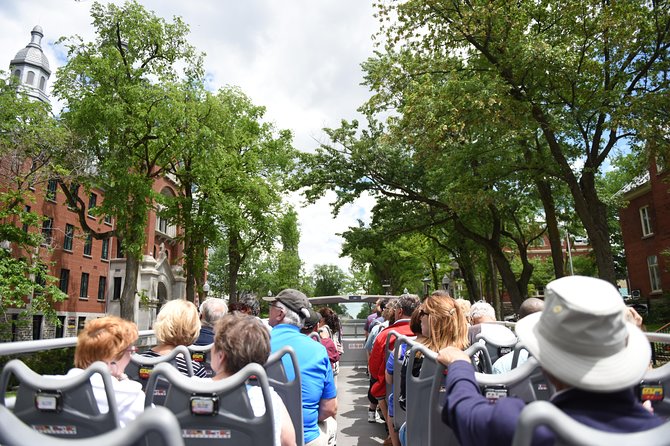
The onboard audio runs in 10 languages and the tour is offered in English. You get earphones, and the narration is designed to cover the past, present, and future of Quebec City as you move between key areas.
I like audio tours when they do two things:
1) Give you enough context to understand what you’re seeing
2) Keep the pace moving so you don’t feel stuck reading signs in the cold
This one does that pretty well, and you’ll hear stories tied to the areas you’re actually riding past. A couple of practical notes though. Some people report that the experience can lean more on recorded commentary than a live guide at certain times, and a small number of riders ran into audio glitches. So have a backup plan: if your audio fails, still ride the loop for views, then rely on signage and your own reading when you hop off.
Stop-by-stop: from Place d’Armes to City Hall (what each area gives you)
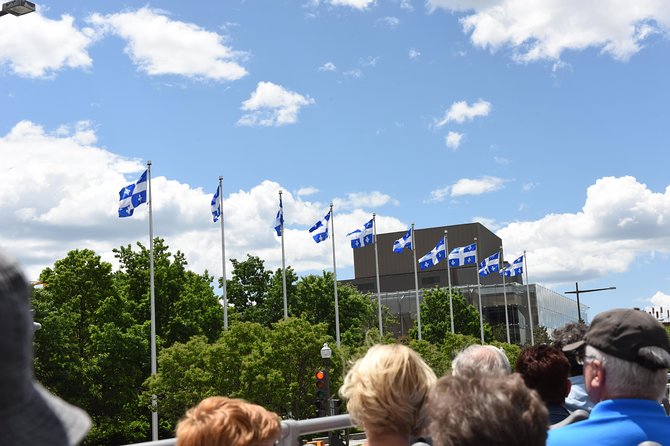
Below is how the route works in real life. I’ll group stops by theme so you can decide where to get off first.
Stop 1 area: Place d’Armes and the Fort Museum zone
You start around Place d’Armes, with access to Musée du Fort and the Musée de l’Amérique francophone. This is a great early choice because it anchors you in Quebec’s identity. If you plan to visit any museum inside Old Québec, this is the start that sets you up for understanding what you’ll see later on the ramparts and forts.
This area is also a good “first photos” moment. You’re in the right mood for Quebec City as soon as you step off.
Stop 2 area: Quartier St-Roch for shops and snacks
Next you reach Quartier St-Roch, often labeled by its shopping and trendy restaurant energy. This stop is less about big monuments and more about atmosphere—an easy place to stretch your legs, pop into a shop, or grab something to eat before you head back toward the older fortified core.
If you’re planning a low-stress day, St-Roch can be a handy break from the tourist density of Old Québec.
Stop 3 area: Musée de la civilisation and the riverfront walk
At the Musée de la civilisation area, you’re also near Place de la FAO and the promenade sur les quais (the waterfront promenade). The waterfront is where Quebec City looks especially photogenic—wide views, river air, and a slower pace than some of the narrow Old Québec streets.
If you want a “walkable segment” that feels like you left the bus but didn’t lose your day, this is it.
Stop 4 area: Place Royale, Notre-Dame des Victoires, and classic Old Québec sights
This is one of the most memorable stretches: you’re in the Place Royale orbit with Centre d’interprétation de la Place Royale, Notre-Dame-des-Victoires, and nearby Old Québec landmarks. You’ll also pass by spots like Maison Chevalier and you’ll get that fortified, storybook feel Quebec City does so well.
This is also where I’d tell you to slow down if the weather’s good. Hop off, walk a few blocks, then return when you’re ready. The bus helps you jump between viewpoints, but Old Québec still rewards walking.
Stop 5 area: Vieux-Port and Old Port Market
The route brings you to the Vieux-Port promenade and the Old Port Market area, plus restaurant density nearby. This is the “I need food or souvenirs” zone, but it’s also genuinely scenic because the port area has open space and views you don’t get in the tightest streets.
If you’re deciding where to spend the longest hop-off time, set your marker here. You’ll likely want time to browse and not rush.
Stop 6: Place Québec parking area (mostly a transit connector)
The Stationnement Indigo Québec – Place Québec stop can feel more like a connector than a destination. If you’re not getting off for a specific reason, you can treat it as a reference point for keeping your day moving.
Stop 7 area: Observatoire de la Capitale and Parliament Hill views
Now you climb into a different kind of view: Observatoire de la Capitale and the Colline Parlementaire area. You’re also near Hôtel du Parlement, the Fontaine de Tourny, and the Promenade des Premiers ministres.
This is where the bus helps most. You can reach viewpoint territory without needing a plan for transit. Even if you don’t go into every building, the area is made for looking around.
Stop 8 area: Plains of Abraham and Musée des plaines d’Abraham
You’ll reach the Plains of Abraham zone along with restaurants and access to Musée des plaines d’Abraham. This is big open space tied to major events in Quebec’s story. If you like outdoor walking and wide-angle photos, this segment is a strong choice.
I also like it because you can adjust your time. Want a quick look? Get off and roam. Want more reading? Stay longer and let the museum add detail.
Stops 9 and 10 area: Citadelle of Québec and the ramparts stretch
You’ll pass by the Monument Confucius, then reach the Citadelle area and return again to the Plains/Parliament area. Another nearby stop connects you around Citadelle and the Vestiges du Blockhaus, with access to the Promenade des Gouverneurs.
This is the fortified-core portion where Quebec City really shows its defensive architecture and hilltop layout. Even if you don’t pay for an extra tour inside the Citadelle, the walkways and viewpoints help you understand why the city was built this way.
Stop 11 area: Museum of Fine Arts and Plains-adjacent space
At the Museum of Fine Arts area on Grande Allée O, you’re also near the Plains zone. This stop is for art-lovers and for anyone who wants to break up the heavy fortress focus with a museum stop (when you’re in the mood).
Stop 12 area: Cinéma Cartier, shopping, and Avenue Cartier
You’re back into “city day” mode with Cinéma Cartier, shopping, and Avenue Cartier. This is a flexible hop-off if you want a shopping break, a coffee, or a meal away from the oldest streets.
Stop 13 area: Saint-Jean-Baptiste church neighborhood
You’ll reach Saint-Jean-Baptiste Church and shopping around Rue Saint-Jean. This is another neighborhood vibe stop. If you want to see more of daily city life, this section helps you drift beyond only the landmark bubbles.
Stop 14 area: Palais Montcalm, Le Capitole, and Parc Canada
This part of the route includes Palais Montcalm, Le Capitole, and Parc Canada, plus a restaurant option. You’re also close to the Faubourg St-Jean Baptiste area, which helps you connect the older core to the wider city.
Stop 15 area: City Hall / Hôtel de Ville
Finally, the route reaches City Hall / Hôtel de Ville. This is a good “wrap your day” location. It’s central enough that you can head back to wherever you’re staying without feeling like you took the long way around.
How to use a 1-day vs 2-day pass without wasting time
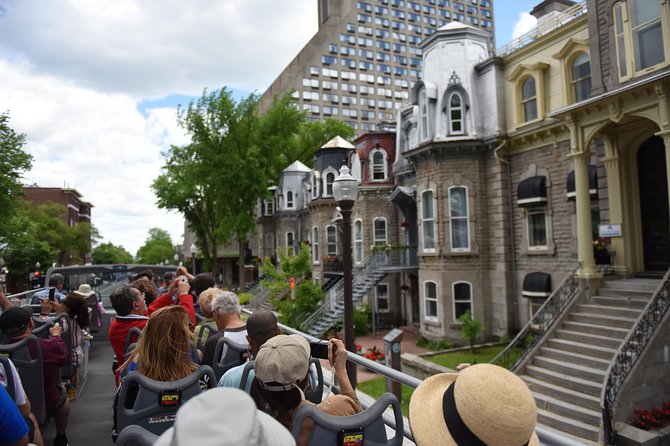
If you only have a 1-day pass, your best strategy is simple: ride the full loop once and pick just two hop-off zones for deeper exploring. For Quebec City, that usually means one “Old Québec” stop (Place Royale and/or Vieux-Port) and one “views + open space” stop (Parliament Hill and/or the Plains).
If you have a 2-day pass, you can do something smarter: ride the full loop on day one to learn the geography, then return day two to the spots you actually cared about. This matters because Quebec City is hilly and compact—once you get your bearings, you’ll naturally spend time where you keep wanting to go back.
If the bus is crowded on day one, day two tends to be easier if you change your start time and avoid the peak arrival windows.
Getting good seats and staying comfortable on the open top
The bus is open-top on the upper level, which sounds great until the wind decides to pay you a visit. Some riders call out cold weather as a factor, so pack layers even in shoulder season.
Also, seat space can be tight. If you’re tall, be aware that legroom may not feel generous, and sharing a seat can be awkward depending on your height and the seat layout.
My tip: prioritize the upper deck when the weather is decent for views, but don’t treat it as a must. On cold or rainy days, the ride is still useful from a lower deck if it’s available in that moment.
Crowds, cruise ship days, and why your plan needs a Plan B
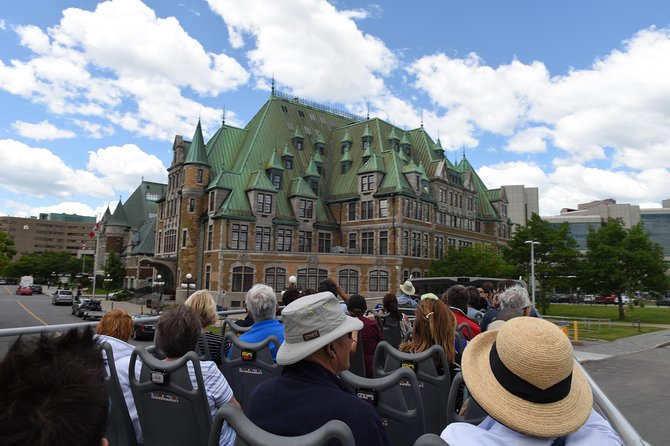
This tour is popular, and Quebec City has days when crowds pile up fast. Several experiences highlight trouble on cruise-ship days: long queues, buses arriving full, and a ripple effect that delays the hop-on rhythm.
Here’s what to do with that information:
- Don’t build your entire day around perfect timing.
- If you’re on a cruise ship day, consider using the bus for the first “orientation loop,” then switch to walking or short local moves once you’ve seen the layout.
- If you’re hopping off for a must-see moment, give yourself extra time to get back on.
And if a bus seems delayed at one stop, it can be quicker to try another boarding point rather than standing in the same line for a long time.
Handy extras: onboard Wi‑Fi and mobile ticket prep
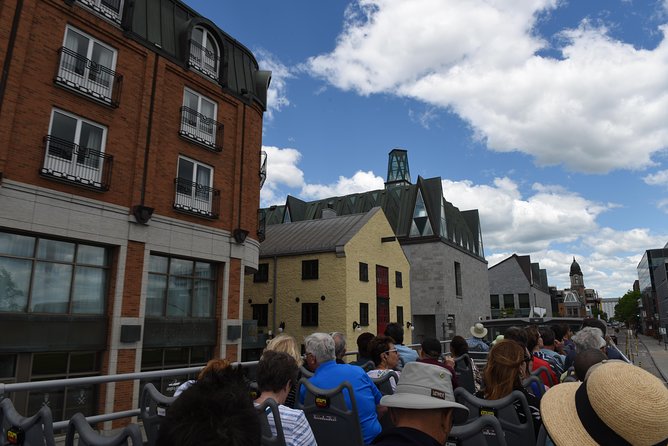
This tour includes onboard Wi‑Fi, which is useful for quick mapping checks, translating, or just keeping everyone calm while you wait.
The tour uses a mobile ticket, and that’s generally convenient. But make sure your ticket is accessible before you reach the bus so you’re not fighting your phone in cold weather. If you’re traveling as a group and only one ticket is easy to access, plan how you’ll split passes in advance—some riders had to go to an information location at the first stop to sort out printed tickets.
So, should you book it?
If you want an easy way to learn Quebec City’s layout—Old Québec, the fortifications area, and the Plains/Citadelle views—this bus is a smart choice. The combo of open-top sightlines and 10-language audio gives you a fast, low-stress overview.
I’d book it especially if:
- You’re visiting for the first time and want to get your bearings fast
- You like hop-on flexibility for photos, snacks, and short walks
- You’re okay with the possibility of crowds on peak days
I’d think twice if:
- Your schedule is tight on a cruise-ship arrival day
- You hate waiting in lines for any reason
- You’re planning to rely on the bus as your only transportation between distant stops
FAQ
FAQ
How long is the Quebec City Hop-On Hop-Off tour?
The loop duration is listed as about 2 hours.
What ticket options are available?
You can choose between 1-day and 2-day hop-on hop-off pass options.
Is the tour offered in English?
Yes, the tour is offered in English.
Is there an audio guide on the bus?
Yes. There’s an onboard audio tour available in 10 languages, and it’s delivered through earphones.
Is onboard Wi-Fi included?
Yes. Onboard Wi-Fi is included.
Do you get hotel pickup or drop-off?
No. Hotel pickup and drop-off are not included.
Where are the bus stops located?
Stops include areas like Musée du Fort (Place d’Armes), Musée de la civilisation, Place Royale, Vieux-Port/Old Port Market, Observatoire de la Capitale, the Plains of Abraham, the Citadelle, Musée national des beaux-arts du Québec (MNBAQ), and City Hall (Hôtel de Ville).
Is the tour near public transportation?
Yes. It’s listed as being near public transportation.
Is the tour dependent on weather?
Yes. The experience requires good weather. If it’s canceled due to poor weather, you’ll be offered a different date or a full refund.
What is the cancellation policy?
You can cancel for free up to 24 hours in advance for a full refund. If you cancel less than 24 hours before the start time, the amount paid won’t be refunded.
Who operates this experience?
The provider is Unitours.