
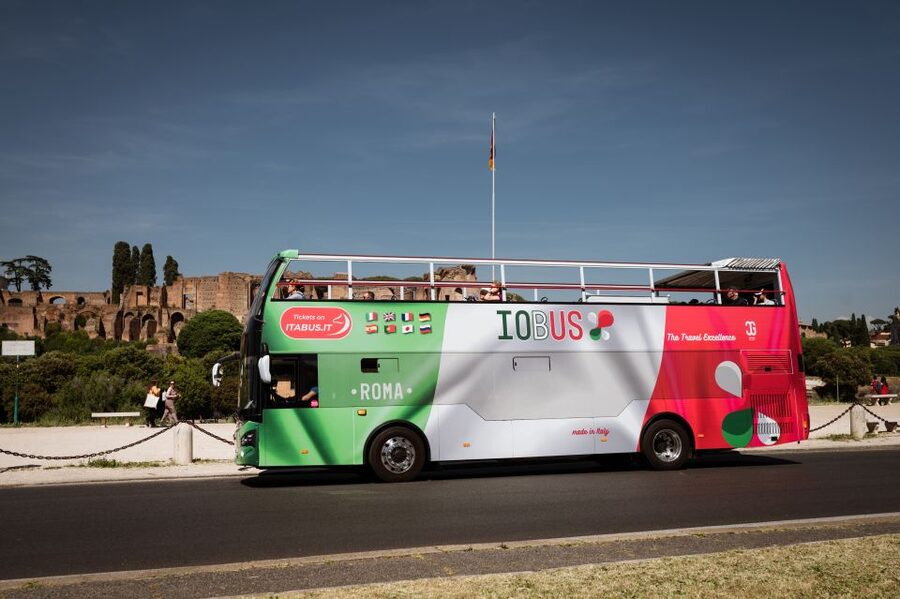
Rome is a city where time gets eaten fast. This hop-on hop-off open-top bus helps you see a lot without sprinting. I like that the audio guide plays on your phone in 8 languages, so you get context as you pass landmarks.
I also love the freedom of riding at your own pace. You can get on and off at the stops along the route for the full validity of your 1–3 day ticket, and use the app’s walking ideas to turn bus stops into short walks.
One real downside to plan for: stop-finding can be confusing at first, especially the meeting point and where exactly your stop is on the ground.
In This Review
- Key things I’d watch for before you board
- Why this Rome hop-on hop-off bus is such a practical choice
- Price and time: is $34 good value?
- Meeting at Open Bus Roma – Io Bus and how to find your stop fast
- The ride experience: audio guide on your phone + free Wi‑Fi
- Buses run often: schedule basics you can plan around
- Stop-by-stop: what each location is good for (and what to expect)
- Terminal via Marsala (Termini) / Io Bus area
- Largo di Villa Peretti (listed but cancelled for jubilee work)
- Basilica Papale di Santa Maria Maggiore (pass by)
- Colosseum (get on/off)
- Circus Maximus (get on/off)
- Piazza Venezia / Venice Square (pass by)
- Vatican City (get on/off)
- Spanish Steps (get on/off)
- Barberini / Trevi Fountain area (get on/off)
- Practical comfort tips: top-deck views, earphones, and rules onboard
- Who should book this Rome bus tour (and who might skip it)
- Should you book Rome: Hop-On Hop-Off Open-Top Bus City Tour?
- FAQ
- How long is the ticket valid?
- What time do the buses run?
- Can I get on and off at any stop?
- Is the audio guide included, and what languages are available?
- Do I need entrance tickets for the attractions?
- Is Wi‑Fi available onboard?
- What are the main stops on the route?
- What should I bring, and what’s not allowed?
- Is the tour wheelchair accessible?
Key things I’d watch for before you board
- 8-language audio on your phone: Listen while you ride and keep it moving at your pace
- Hop on and off for 1–3 days: Use it like a flexible sightseeing pass, not a single ride
- Free Wi‑Fi and real-time bus tracking: Helps with navigation and timing when you’re between stops
- Close-but-not-exact stops: Many sights are walkable from the drop-off, even if you don’t step off directly at the entrance
- Top-deck head room: You may need to duck on the open-top level
- A stop is flagged as cancelled: Largo di Villa Peretti is listed but may be closed due to jubilee work
Why this Rome hop-on hop-off bus is such a practical choice
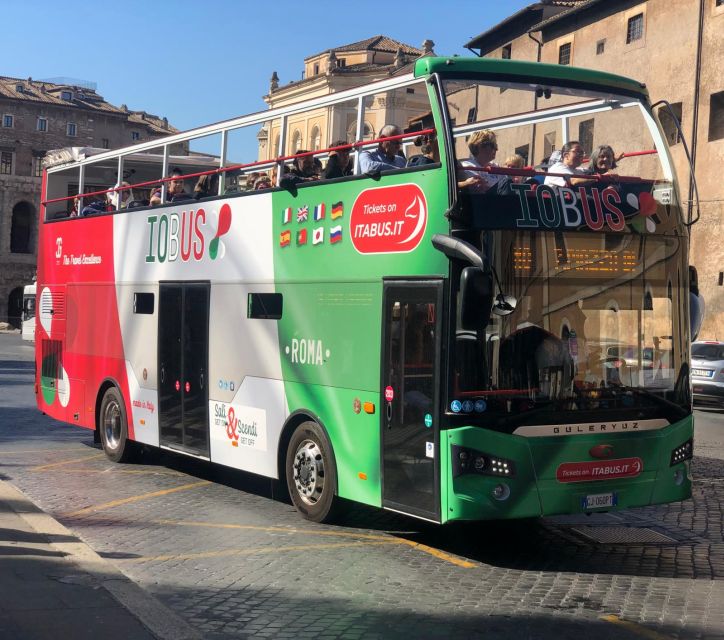
Rome is big, and the sights are spread out. This tour works because it turns Rome into a loop you can use all day. Instead of planning one tight route and praying you don’t get stuck in crowds, you can hop off when something grabs your attention—and hop back on when you’re ready.
The open-top format is also more than a gimmick. From the upper deck, you get broad sightlines for monuments and skyline views. It’s not a guided walking tour where you stand in one spot forever. It’s more like a moving orientation map of the city, with audio history layered over what you’re seeing.
If it’s your first time in Rome, this is one of the easiest ways to connect the dots between ancient, medieval, and Baroque Rome in a single day.
Price and time: is $34 good value?
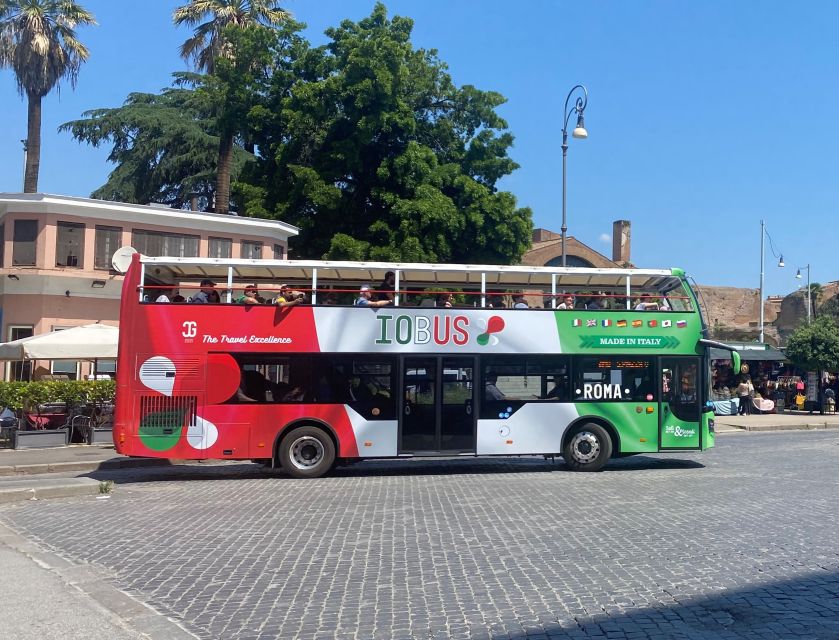
At about $34 per person, this ticket can be a solid value when you consider what you’re getting: hop-on hop-off access, an audio guide on your phone, and onboard extras like free Wi‑Fi and real-time bus monitoring.
What you need to know up front is what the ticket does not include. There are no entrance tickets for attractions. So if you want to go inside the Colosseum, Vatican sites, or other timed-entry places, you’ll still be paying separately. The bus is for seeing, orienting, and getting close enough to walk.
The other value factor is flexibility. Your ticket is valid for 1 to 3 days (check availability to match your start times), and buses run often enough that you’re not stuck waiting forever. If you’re in Rome for a short visit, it can also keep you from wasting time figuring out transit with a complicated city layout.
Meeting at Open Bus Roma – Io Bus and how to find your stop fast
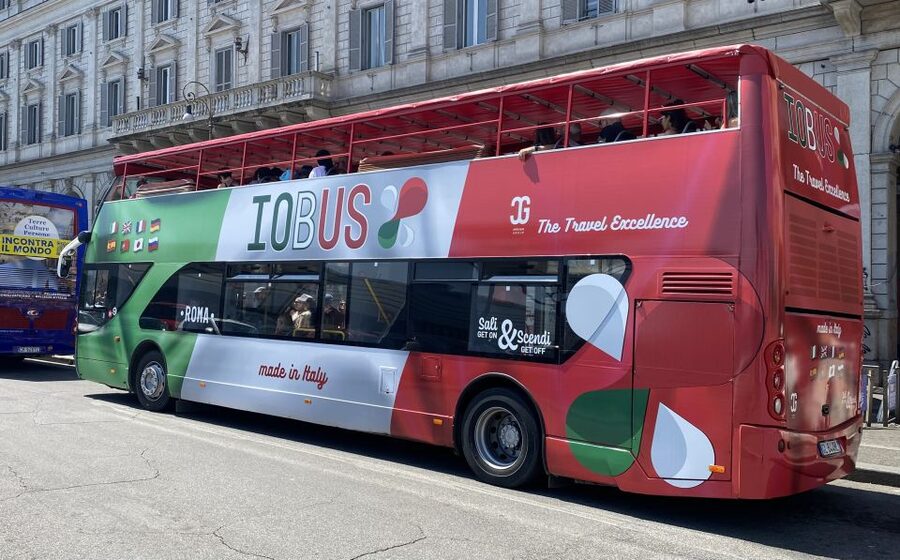
You start at the Open Bus Roma – Io Bus meeting point, but the good news is you’re not locked into one boarding location. You can board at any stop across the route by showing your voucher to the hostess when you arrive.
Still, be ready for a bit of ground-level confusion. The tour includes multiple stops by name, and meeting points in Rome can be tricky in practice. The Colosseum stop is typically easier to spot because it’s set up with numbered bays near the landmark area, but early on you should give yourself a few extra minutes.
Also note the route includes a stop listed as Via Giolitti 34 – Largo di Villa Peretti, but it’s flagged as cancelled for jubilee work. If your plan depended on that exact stop, build in a backup by choosing a nearby active stop and using the audio and walking help in the app.
Tip: when you’re hopping on, seats are based on availability when the bus arrives. So if you want a top-deck seat, arrive a little ahead of when you think the bus will roll in.
The ride experience: audio guide on your phone + free Wi‑Fi
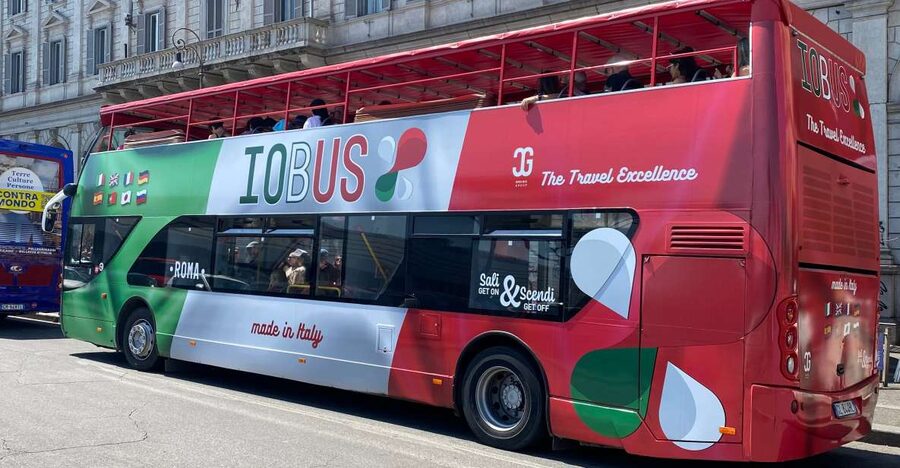
This tour is built around your phone. You’ll listen to the history through an audio guide available in 8 languages: English, French, German, Spanish, Portuguese, Japanese, Russian, and Italian.
Earphones are included, which matters. In a loud open-top street setting, audio sounds much better when you can listen clearly without competing with traffic and street noise.
Two onboard features also make the tour feel easier to manage day-to-day:
- Free Wi‑Fi so you can check opening hours, map directions, or message people
- Real-time monitoring so you can see where buses are rather than guessing
There’s also a walking guide in the app, including special walking tours designed for you. In practice, that means you can use the bus to get close, then switch to walking plans instead of trying to cram everything into the bus ride itself.
Buses run often: schedule basics you can plan around
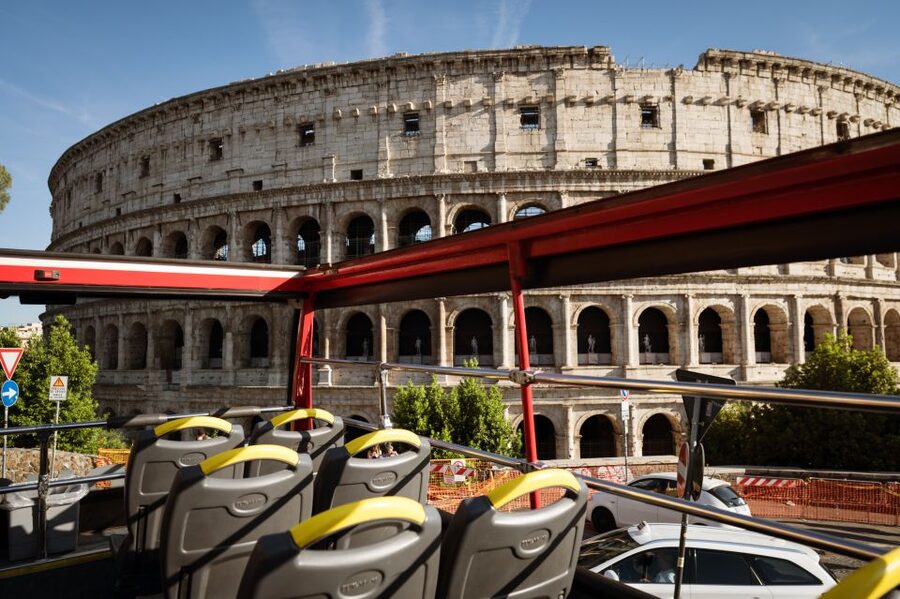
Buses depart every 20 minutes from 9:00 AM to 5:50 PM. That frequency is a big deal in Rome, because traffic and crowds can change your day fast.
The route can also shift. Street restrictions and traffic delays can cause delays or route changes. When that happens, don’t panic—real-time tracking and the hop-on hop-off flexibility are there to keep you moving rather than waiting in one place.
Stop-by-stop: what each location is good for (and what to expect)
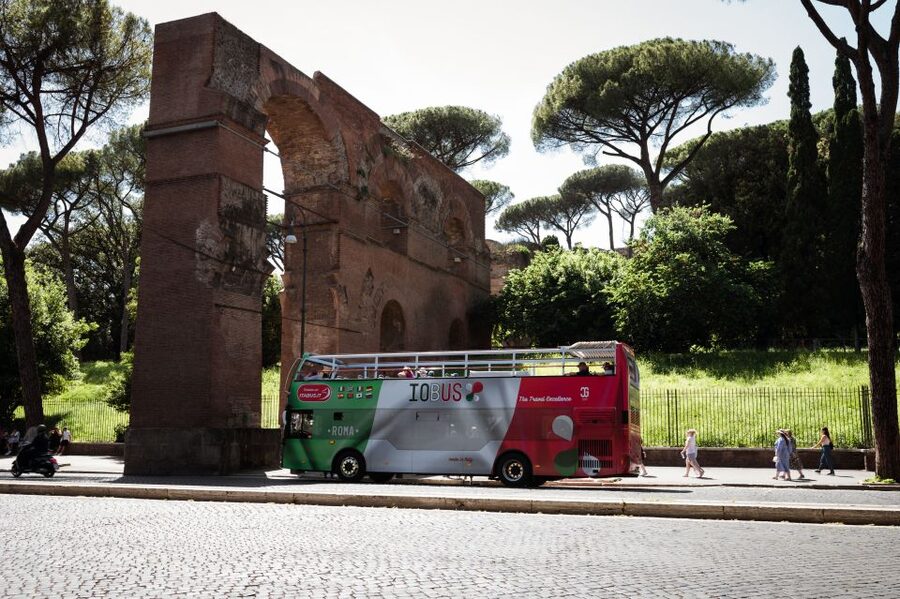
This route mixes close-up views with walkable “nearby” drops. Some stops put you right where you want to start walking. Others are more about getting a good look and then using your feet to finish the job.
Terminal via Marsala (Termini) / Io Bus area
Starting here makes the tour convenient for people arriving by train or staying near central Rome. Termini is a busy hub, but it’s a practical place to begin because you’re already in the middle of the action.
If you’re jet-lagged or arriving mid-day, starting at the bus line near Termini helps you get a city “map in motion” without sorting out more transport.
Largo di Villa Peretti (listed but cancelled for jubilee work)
This stop is on the route list, but it’s flagged as cancelled for jubilee street work. If you see it on a map, double-check before you rely on it. Your best move is to pick a nearby stop that you’re confident is operating and keep your walking route flexible.
Basilica Papale di Santa Maria Maggiore (pass by)
This is one of the recognizable historic stops that helps you connect parts of the city beyond just the headline ruins. Even when you’re passing rather than stepping off, the audio guide context can make a quick sight feel more meaningful.
Colosseum (get on/off)
This is the stop most people care about. Even if you don’t enter right away, getting off here gives you the classic Rome moment: the Colosseum’s scale and the surrounding historic area.
Look for the Colosseum-area stop setup with numbered bays so you don’t waste time hunting around. Once you find your pickup location, the rest of the day tends to feel easier.
What to expect: you’re close, but you may still need a short walk to reach the exact entrance you want.
Circus Maximus (get on/off)
This stop is great for seeing the breadth of ancient Rome’s entertainment spaces. The area is often less about “one perfect photo” and more about understanding how big the venue was.
If you like history that feels physical—wide fields, long lines, and space you can imagine filling with crowds—this one lands well.
Piazza Venezia / Venice Square (pass by)
This area is a strong point for orientation. You’ll pass through views that help you place the Forum and monumental Rome in your mental map.
If you’re tired, this can also be a good time to stay on the bus rather than adding another walk.
Vatican City (get on/off)
The Vatican stop lets you plan your day around one of Rome’s biggest priorities. Even if you’re not entering everything, it’s useful for deciding when to go and how much time to schedule.
Your main watch-out: bus stops can be close but not always perfectly at every exact entrance, so treat it as a drop-off for walking, not a guaranteed front door.
Spanish Steps (get on/off)
This is a prime “Rome postcard” stop. It’s also a nice change of pace from ancient ruins because the area feels more like classic city Rome: shopping streets, cafés, and strolling.
Because the bus is hop-on hop-off, you can use this stop like a timer. Get off when you want a break, then hop back later when you’re ready to move on.
Barberini / Trevi Fountain area (get on/off)
Trevi is the big one, but the practical reality is that you might not always see the fountain directly from the road depending on where the bus is in traffic and how the route lines up.
So think of this stop as the best access point to the area. Use the drop-off to get within walking distance and finish the experience on foot.
Practical comfort tips: top-deck views, earphones, and rules onboard
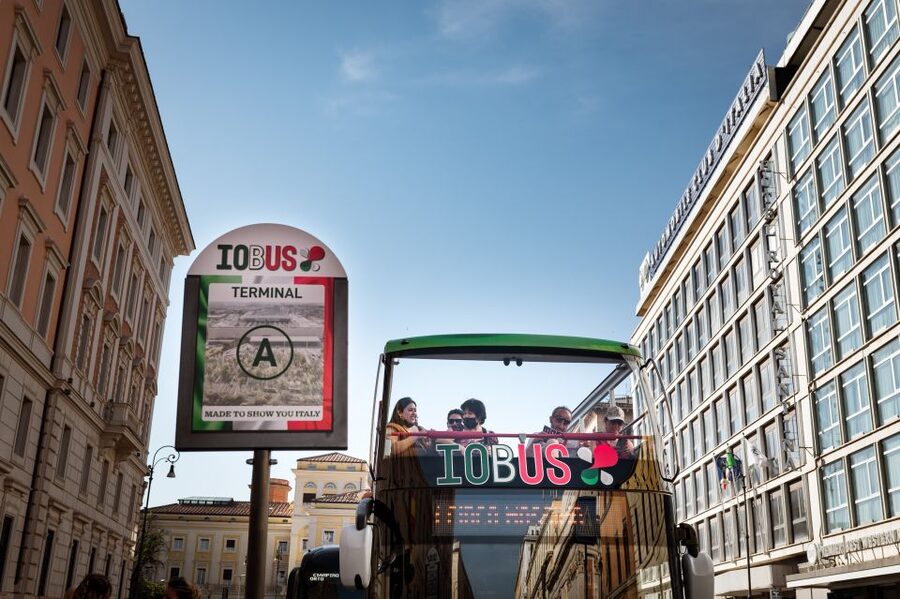
Open-top buses are fun, but they come with a few real-world limits. On the upper deck, keep in mind that head room can be tight if you’re taller. If you need to duck to stay comfortable, do it. It’s better than trying to stretch for photos and smacking your head.
Included onboard items make the ride simpler:
- Earphones
- Hand sanitizer
- Free Wi‑Fi
- Audio for children (so families can keep listening without separate devices)
Rules are straightforward:
- No smoking
- No food in the vehicle
- No alcohol and drugs
- No explosive substances
- No nudity
- No food and drinks in the vehicle
What to bring: a medical mask.
Accessibility note is important. The tour is listed as wheelchair accessible, but it’s also flagged as not suitable for people with mobility impairments. If mobility needs apply to you, check directly with the operator before you go so you’re not surprised by how boarding works on a specific day.
Who should book this Rome bus tour (and who might skip it)
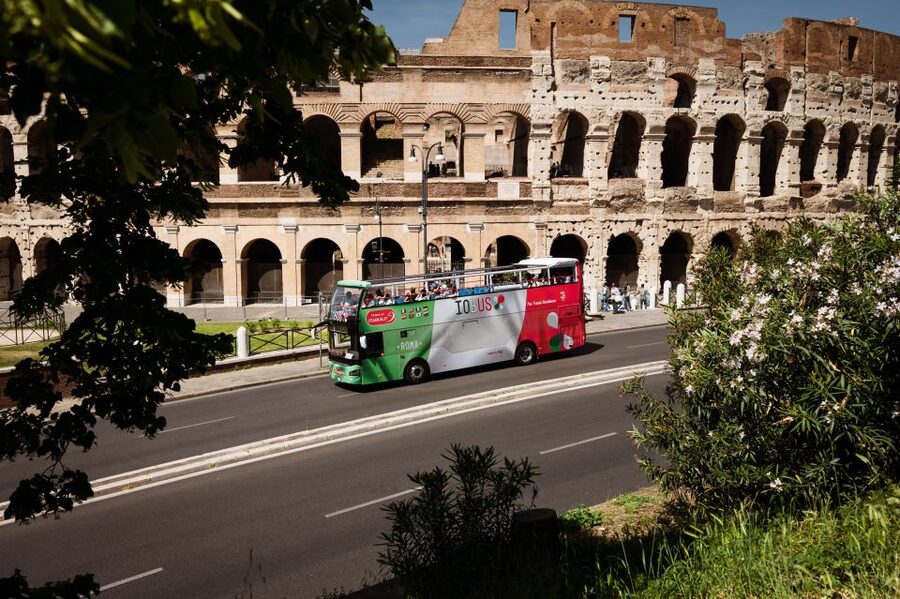
This tour is a strong fit if you want:
- A flexible sightseeing base with hop-on hop-off stops
- A way to hear Rome’s story via an 8-language audio guide
- Efficient access to major sights like the Colosseum, Circus Maximus, and Vatican area
- Onboard tools like free Wi‑Fi and real-time bus tracking
It may not be the best choice if:
- You’re focused on paid entry experiences only. You’ll need separate tickets for attractions.
- You dislike walking even a little, since stops can be close but not always right at each entrance.
- You need guaranteed step-free access depending on your mobility situation. With the mixed accessibility notes, it’s worth confirming details first.
Should you book Rome: Hop-On Hop-Off Open-Top Bus City Tour?

If you want a simple way to cover a lot of Rome in a limited time window, I think this is worth booking. The combination of hop-on hop-off flexibility, an audio guide in 8 languages, and easy stops near top sights makes it one of the more practical choices for first-timers.
Book it especially if you like a plan with room to breathe—ride now, decide later. If you’re the type who wants to jump from one ticketed attraction to the next with minimal street walking, then you might still use the bus, but plan on pairing it with separate entrances and a walking route you’re comfortable with.
FAQ
How long is the ticket valid?
The hop-on hop-off ticket is valid for 1 to 3 days. You’ll want to check availability to match your starting times.
What time do the buses run?
Buses depart every 20 minutes from 9:00 AM to 5:50 PM.
Can I get on and off at any stop?
Yes. You can board at any of the stops across the route by showing your voucher. You can also hop off and then back on during the validity of your ticket.
Is the audio guide included, and what languages are available?
Yes. The tour includes an audio guide in 8 languages: English, French, German, Spanish, Portuguese, Japanese, Russian, and Italian. There’s also an audio guide for children.
Do I need entrance tickets for the attractions?
No. Entrance tickets are not included, so you’ll need to buy those separately for any monuments or attractions you want to enter.
Is Wi‑Fi available onboard?
Yes. There is free Wi‑Fi on board.
What are the main stops on the route?
Stops include Terminal via Marsala (Termini station), Santa Maria Maggiore, Colosseum, Circus Maximus, Piazza Venezia, Vatican, Spanish Steps, and Barberini/Trevi Fountain (Trevi Fountain). A stop at Largo di Villa Peretti is listed but is flagged as cancelled for jubilee work.
What should I bring, and what’s not allowed?
Bring a medical mask. The tour does not allow smoking, food, alcohol/drugs, or explosive substances, and you should also avoid food and drinks in the vehicle and nudity.
Is the tour wheelchair accessible?
It’s listed as wheelchair accessible, but it’s also flagged as not suitable for people with mobility impairments. If this affects you, check details with the operator before booking.