Salt Lake City clicks fast with a local guide. This 2.5-hour loop helps you see the big SLC icons—especially Temple Square and the Olympics—without figuring out parking or routes. You get live onboard narration in English, plus short step-offs so you can actually look, photograph, and orient yourself.
I like how the tour builds in quick, practical time at key stops so you’re not stuck staring out a window the whole way. And I love the ending payoff: a Tabernacle organ recital, which tours guides like Ann and Todd can frame with extra context so the music lands harder.
One thing to consider: on some departures the ride uses a smaller vehicle, and that can affect sightlines from certain seats. If you care about seeing details up close, aim for a window seat early.
In This Review
- Key reasons this bus tour is worth your time
- The best use of a half-day in Salt Lake City
- Temple Square and the Tabernacle organ recital (the emotional center)
- Capitol Hill stops and civic buildings you’ll want to revisit
- Conference Center, Cathedral of the Madeleine, and LDS headquarters nearby
- Mormon pioneer markers: This Is the Place to the Meridian Marker
- Beehive House, Eagle Gate, and the small landmarks that explain the city
- Olympics landmarks: from the Cauldron to Rice-Eccles Stadium
- Downtown modern Utah: City Creek Center and the Gateway
- Arts, sports, and “where the city gathers” stops
- Fort Douglas and the complicated edge of settlement history
- FamilySearch Library and Center: records as a travel compass
- Price and what $69 buys you in practical value
- Should you book the Salt Lake City guided bus tour?
- FAQ
- What does the tour cost?
- How long is the tour?
- Is the tour offered in English?
- Where do I meet for the tour?
- Does the tour end back at the meeting point?
- Is there a Tabernacle organ recital included?
- Are admissions required for the stops?
- Can I visit the inside of the Salt Lake Temple?
- Is there a limit on group size?
- Can I cancel for free?
Key reasons this bus tour is worth your time
- Live narration throughout the ride so you learn while you travel, not only at stops
- Temple Square + Tabernacle music as a major anchor of the whole experience
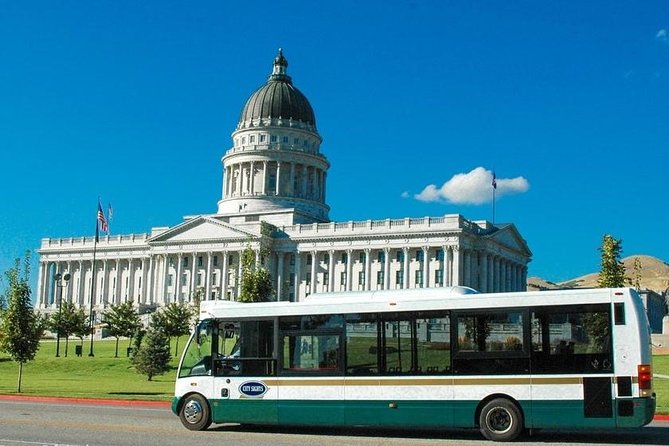
- Short step-offs for photos at landmarks like the Utah State Capitol and Pioneer sites
- A tight downtown-focused loop that works well if you only have half a day
- Olympics-to-modern-day stops like the Olympic Cauldron and Delta Center
The best use of a half-day in Salt Lake City
This tour is designed for one job: get your bearings fast. In about 2 hours 30 minutes, you’ll hit the downtown core plus major landmarks tied to the Mormon pioneer story and the 2002 Winter Olympics.
You don’t have to drive, you don’t have to plan a route, and you don’t have to decide on the fly what’s worth your time. That matters in Salt Lake City, where several of the most important sights are clustered near each other—but they’re also spread across different “themes” (faith, civic life, Olympics, and early settlement), and it helps to have a guide stitch it together.
The group stays small, with a maximum of 29 people. In practice, that usually means the experience feels more conversational than many big-bus tours.
Temple Square and the Tabernacle organ recital (the emotional center)
If you do only one themed section of SLC, make it this one. You start by looking at the Salt Lake Utah Temple (admission free) from Temple Square, including the six spires and the big symbolism that’s part of the skyline.
Then you get time at Temple Square (10 acres) to walk the gardens and take in the Tabernacle area. The historic sites here are visually powerful even from outside, and the guide’s stories help you notice things you’d likely miss if you just browsed on your own.
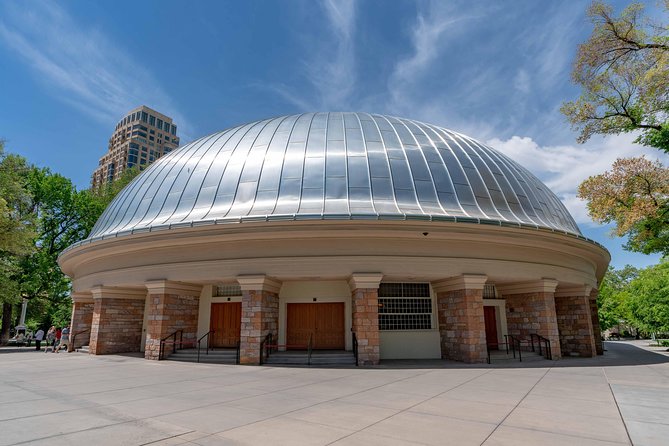
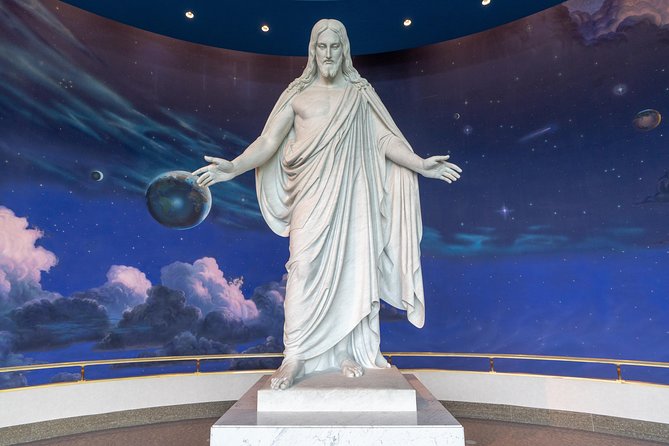
Next comes the highlight that many people remember most: an organ recital in the Tabernacle. The Tabernacle was completed in 1867 and is famous for its sound. You also step into the Salt Lake Tabernacle itself, where you’ll see why the design works so well—no interior pillars, a huge dome, and a massive pipe organ with thousands of pipes.
A nice added touch: the tour also includes other Temple Square-adjacent landmarks that help round out the picture, like the Assembly Hall and the Temple Square South Visitors Center. These stops are short, but they give you more layers than just one landmark photo.
Capitol Hill stops and civic buildings you’ll want to revisit
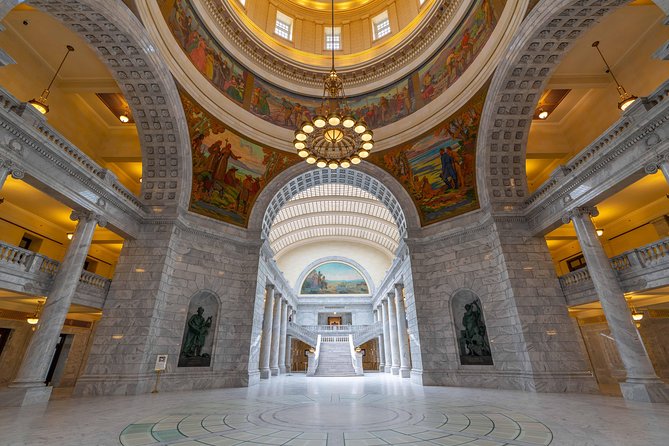
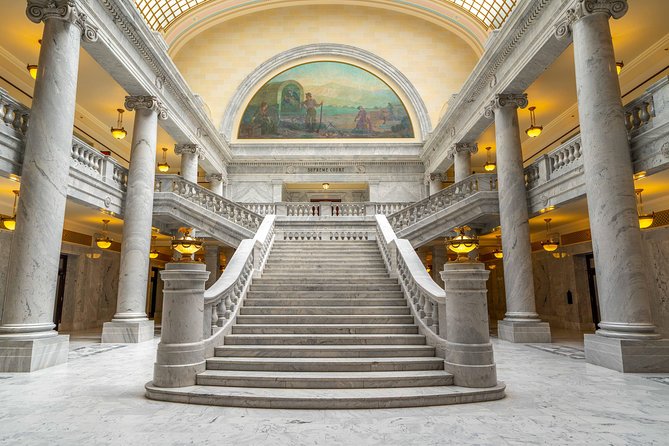
After Temple Square, the tour shifts into civic Salt Lake. You’ll visit the Utah State Capitol on Capitol Hill, with time to look around and grab panoramic photos. The copper dome and the big rotunda are part of the building’s identity, and the stories from the guide connect Utah’s government and architecture in a way that makes the place feel more than just a postcard.
You’ll also see several landmarks that explain how Salt Lake formed its civic personality:
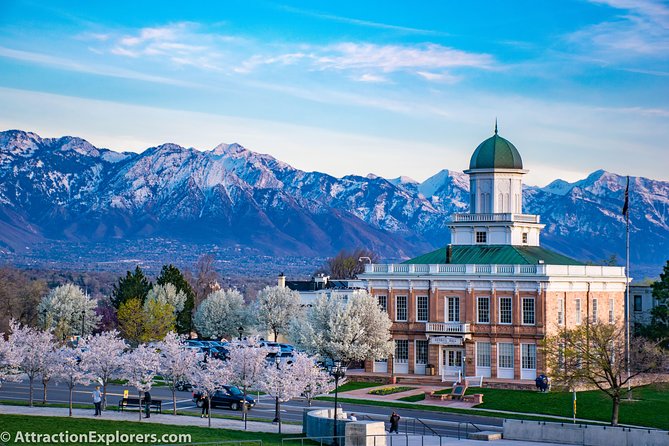
- The City and County Building (Romanesque Revival, completed in 1894)
- Council Hall (the former territorial capitol, moved brick-by-brick to its current hill location)
- Washington Square, topped by the City and County Building and historically used for public gatherings
There’s even a modern contrast built into the loop: the Salt Lake City Public Library, designed by Moshe Safdie. It’s a glass-and-curves kind of structure, and that design choice becomes clearer when you’ve just spent time with the older civic stone around it.
If you like architecture, this section is where you start seeing Salt Lake as a timeline: pioneer roots, territorial politics, and then a 20th-century push toward landmark public buildings.
Conference Center, Cathedral of the Madeleine, and LDS headquarters nearby
This tour doesn’t keep everything strictly inside one faith tradition. It broadens your view of the city’s religious architecture and community institutions.
You’ll see the LDS Conference Center (completed in 2000). Even if you’re only viewing it from outside, it’s a striking example of modern religious design, with the kind of scale that’s hard to grasp until you stand near it.
Then you’ll glance at the Cathedral of the Madeleine, the only Catholic cathedral in Utah. It’s Gothic Revival, completed in 1909, and its stained glass is a big reason it’s considered a standout building in a city dominated by LDS landmark architecture.
The tour also includes a view of the Church Office Building, completed in 1972, rising next to the older Temple complex. It’s a reminder that Utah’s world-famous landmark identity isn’t just about old stone and pioneer-era stories; it’s also about how the church operates on an international level.
Mormon pioneer markers: This Is the Place to the Meridian Marker
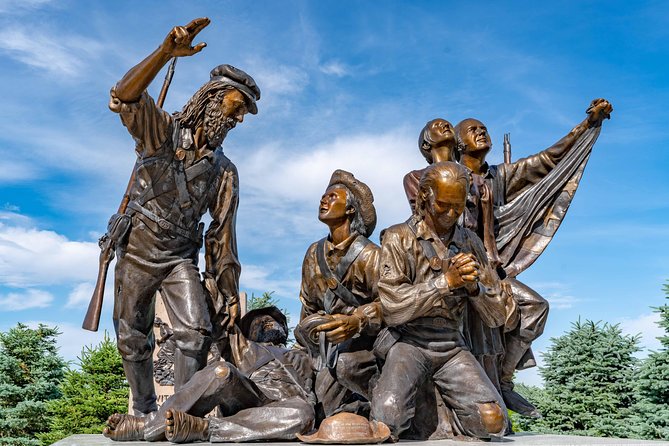
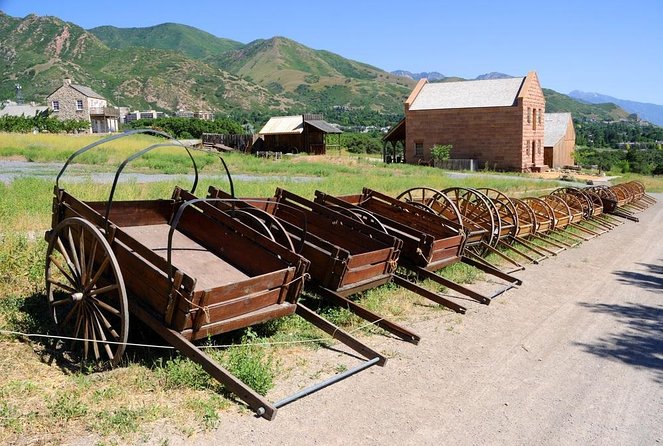
If you want the pioneer story with clear anchors, the tour gives you several. You’ll visit This is the Place Heritage Park, the site tied to Brigham Young’s declaration in 1847. There’s a tall monument here and a strong viewpoint over the valley—enough to help you picture what those early arrivals saw.
You’ll also see a section of the Mormon Pioneer National Historic Trail, a 1,300-mile route linked to the migration of tens of thousands of Latter-day Saint pioneers. The guide’s narration focuses on faith-driven travel and the hard realities of weather, terrain, and limited supplies.
From there, the tour connects the journey to the actual layout of the city. Stops like the Brigham Young Monument and Meridian Marker help you understand how survey points and planning turned a distant settlement into a defined capital.
And if you want one of the most emotionally grounded stops on the whole route, don’t skip the Deuel Pioneer Log Home. It’s a small structure built in 1847, preserved so you can feel the contrast between “first shelter” and the later buildings that dominate today’s skyline.
Beehive House, Eagle Gate, and the small landmarks that explain the city
Some of the best context in Salt Lake City comes from details you’d otherwise walk right past. The tour works that into the loop.
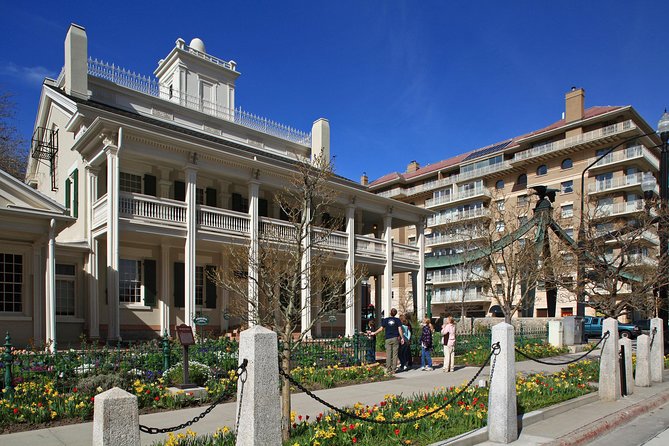
You’ll view the Beehive House, Brigham Young’s official residence from the mid-1800s. Even from outside, the beehive symbol tells a story about labor and community values that shaped the territory.
You’ll also pass beneath Eagle Gate, one of the city’s early landmarks. It’s tied to the Brigham Young property and the road leading toward his farm, and the bronze eagle atop it makes the gateway feel like more than just a boundary—it’s a visible link from settlement life to the land around the city.
These are short stops, but they’re exactly the kinds of landmarks that make a city feel readable instead of random. With live narration, you know what you’re looking at.
Olympics landmarks: from the Cauldron to Rice-Eccles Stadium
Salt Lake City is known for mountains and ski culture, but the Olympics shaped the downtown too. You’ll see several 2002-era icons.
Start with the Olympic Cauldron Park, a 72-foot glass-and-steel monument that still anchors the city’s Olympic memory. Then you’ll get views related to other venues, including the Delta Center, home of the Utah Jazz, where sports and entertainment history overlap with Olympic-era spotlighting.
The tour also takes you to Rice-Eccles Stadium, tied directly to university life but also famous for Olympic Opening and Closing Ceremonies. That blend matters: Salt Lake didn’t build Olympic venues in a vacuum. It used existing community institutions and then upgraded them.
If you want to understand why 2002 still shows up in everyday Salt Lake, these stops do the job. They connect the moment to the long-term identity of the city.
Downtown modern Utah: City Creek Center and the Gateway
The tour includes a couple of “how Salt Lake grew up” stops that help the city feel current, not just historical.
City Creek Center (opened in 2012) is a big one. It’s a three-block mix of shopping, dining, and outdoor space, built with design features like a retractable glass roof and the restored City Creek waterway running through it. Even if you’re not shopping, it’s useful to see because it explains how downtown became a destination again after being more industrial-adjacent for much of its history.
Then there’s The Gateway, an open-air district built as the gathering place for the Olympics. It’s where you can see how rail yards and industrial space were transformed into something more people-centered, with art and public energy instead of cargo movement.
Arts, sports, and “where the city gathers” stops
Salt Lake loves its performance spaces and venues. You’ll spot several on this loop, and while you usually won’t go inside, the buildings still tell a story.
Abravanel Hall (opened in 1979) is a major concert venue linked to the Utah Symphony. Kingsbury Hall (opened in 1930) is another performing arts landmark connected to the University of Utah. Seeing both in one tour makes the city’s arts investment feel real.
You’ll also view Rice-Eccles Stadium again by context through the Olympics lens, plus other “civic pride” areas like Trolley Square. Trolley Square is a preserved streetcar hub area, with brick barns and old-school design bones turned into shops and dining now. It’s a reminder that Salt Lake knows how to reuse history without turning it into a theme park.
Other architecture sightings include McCune Mansion and the Salt Lake Masonic Temple. These stops are brief, but they round out the city picture: faith, civic government, community arts, and private power all leave marks.
Fort Douglas and the complicated edge of settlement history
Not all of the story here is only about pioneers building a new home. Fort Douglas adds the military and federal presence angle.
You’ll glance across the parade grounds area at Fort Douglas Military Museum and Fort Douglas Post Theatre. The fort traces to 1862, built to secure overland mail routes and assert federal presence in the Utah Territory. The narration focuses on the “watch over the Saints” theme, and how nearby mining discoveries shaped the region’s economy.
This is a short viewing stop, but it changes the tone. The tour doesn’t treat history like one straight line of triumph; it shows the overlapping pressures that early Utah faced.
FamilySearch Library and Center: records as a travel compass
If your curiosity goes beyond monuments, this is where Salt Lake gets especially personal.
You’ll see the FamilySearch Library and FamilySearch Center tied to genealogical research. The tour frames Utah as a global hub for family history, with billions of records and a mission around connecting people across time.
Even without a long deep visit, the impact is clear: Salt Lake’s legacy isn’t only measured in buildings and parks. It’s also stored in documents, memory, and identity.
Price and what $69 buys you in practical value
At $69 per person for about 2.5 hours, you’re paying for three things: transportation, a guided story in English, and a loop that prevents backtracking.
If you tried to recreate this on your own, you’d spend time driving, finding parking, and deciding what to skip. You’d also likely miss the connective tissue that makes landmarks make sense—especially for Temple Square, the Tabernacle design, and the pioneer migration markers.
The value improves because many stops on the route are marked as free admission with your tour. In other words, you’re not stacking paid entry fees on top of the ticket just to see the essentials.
It also helps that the tour has strong proof points: a 4.7 rating from 1,355 ratings and a 94% recommendation rate.
Should you book the Salt Lake City guided bus tour?
Book it if you want an efficient, story-driven first look at Salt Lake City. It’s especially smart when you have limited time, want orientation, and don’t want to plan a route day-by-day.
Pass or consider alternatives if you hate short stops or you’re picky about viewing angles. On smaller vehicles, seating can matter for what you can clearly see. If that’s you, arrive early, request a window seat, and focus your expectations on photos and narration rather than long museum-style wandering.
If you’re trying to understand Salt Lake in one half-day—faith landmarks, pioneer markers, civic buildings, and Olympics—this bus loop is one of the easiest ways to get there.
FAQ
What does the tour cost?
It costs $69.00 per person.
How long is the tour?
It runs about 2 hours 30 minutes.
Is the tour offered in English?
Yes, the tour is offered in English.
Where do I meet for the tour?
You meet at the Radisson Hotel Salt Lake City Downtown, 215 W S Temple St, Salt Lake City, UT 84101.
Does the tour end back at the meeting point?
It ends back at the meeting point.
Is there a Tabernacle organ recital included?
Yes. The tour includes organ recitals in the Tabernacle.
Are admissions required for the stops?
Most listed stops are marked as admission ticket free.
Can I visit the inside of the Salt Lake Temple?
The Temple interior is reserved exclusively for Church members. The tour focuses on what you can see from outside and the stories behind the landmark.
Is there a limit on group size?
Yes. The maximum number of travelers is 29.
Can I cancel for free?
Yes. You can cancel for a full refund up to 24 hours in advance.