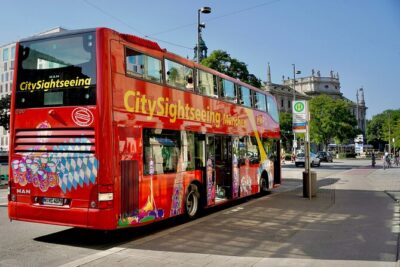
If palaces feel spread out, this fixes that fast. This hop-on hop-off bus course is built for a single-day palace sprint, using on-board audio and a route that stops at major sites like Changdeokgung, Deoksugung, and Gwangwhamun. You get a mobile ticket and real freedom to ride, hop off, and hop back on at your pace.
What I like most is the mix of convenience and context. The bus cuts down on time spent navigating Seoul’s maze of streets and transit exits, and the audio guide is available in many languages, including English, Korean, Chinese, Japanese, Russian, German, French, Spanish, Thai, Vietnamese, Indonesian, and Malaysian. One drawback to think about: the bus stop locations and audio setup can be tricky, so you need to plan a little and double-check where you’re getting on.
In This Review
- Key highlights at a glance
- Why a Hop-On Bus Is the Fastest Way to Hit Seoul Palaces
- Price and Value: When $38 Makes Sense
- Finding the Seoul Tiger Bus Stop Before the 9:30 Launch
- The Circuit Timing: How the 1.5 Hours Really Helps
- The On-Board Audio Guide: What You’ll Hear and How You’ll Use It
- Palace Stops: What You Can Do at Changdeokgung, Deoksugung, and Gwanghwamun
- Changdeokgung stop: best for your “slow down” hour
- Deoksugung stop: great for pairing with a walk
- Gwangwhamun stop: ideal for ending your day with momentum
- Getting Back On: Common Snags and How to Avoid Them
- 1) Bus stops aren’t always obvious
- 2) Buses may take time to arrive
- 3) Audio can be hard to hear in English
- 4) Ticket date and value
- Who This Tour Suits Best (and Who Might Skip It)
- Should You Book This Downtown Palace Course?
- FAQ
- What palaces are included on the Downtown Palace Course?
- How long is the hop-on hop-off circuit?
- What time does the tour start?
- What languages are available for the audio guide?
- Are entrance fees to the palaces included?
- Do buses run frequently?
- Are food and drinks allowed on the bus?
- Can I cancel and get a refund?
Key highlights at a glance
- Multi-language audio guide on board, from English to many more options
- Hop-on hop-off flexibility so you can linger at each palace you care about
- Stops at major palaces including Changdeokgung, Deoksugung, and Gwangwhamun
- Mobile ticket with confirmation at booking
- Short circuit timing with a loop that takes about 1.5 hours
- Entrance fees not included, so you’ll still need tickets for the sites
Why a Hop-On Bus Is the Fastest Way to Hit Seoul Palaces
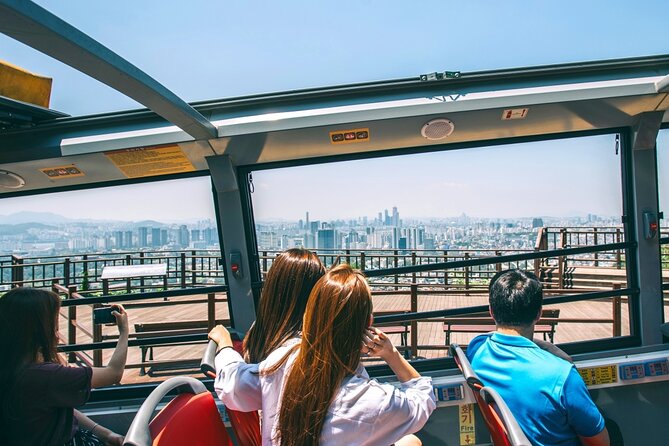
Seoul’s royal palaces are spread out. That’s part of the charm, but it can also turn a simple day into a lot of walking and timetable guessing. This course is designed to solve that problem with a hop-on hop-off bus that connects several key palaces without you having to stitch together multiple transfers.
The big win for you is pacing. You can treat the ride as your moving base, then spend your time where you actually want to stop—no rushing, no worrying about which station exit lands you closest. And because the bus route is meant for palace-hopping, it feels purpose-built rather than like a random sightseeing loop.
The other practical win is the audio guide. Even if you’re not the type to read plaques, it helps to have the story running while you ride between sites. That way, when you hop off, you already have the basics in your head.
Price and Value: When $38 Makes Sense
At about $38 for a 1.5-hour circuit, this is best viewed as a convenience purchase, not a museum ticket. Entrance fees to palaces and museums are not included, so you should budget separately for site admission.
So when does it feel like good value?
- When you want to cover multiple palace areas in one day without stressing over transit navigation.
- When you’d rather spend your energy walking through palaces than finding the right bus stop or subway exit.
- When you like the idea of an audio guide that gives you context during the ride.
When it might feel less worth it:
- If you only want one palace, you could be paying for transport you won’t fully use.
- If you’re the kind of traveler who enjoys DIY navigation and already knows the exact transit routes, you may find the bus adds cost without enough payoff.
Bottom line: if your plan is a “palaces, not routes” day, the price can make sense. If your plan is just one quick stop, consider whether you’d rather go point-to-point.
Finding the Seoul Tiger Bus Stop Before the 9:30 Launch
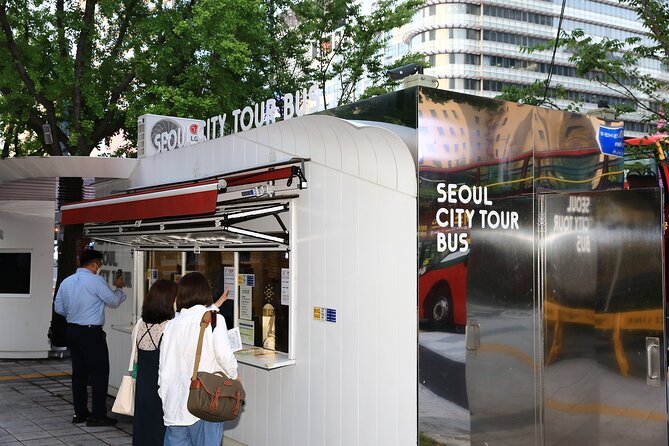
This tour starts at 서울 타이거버스 정류장. That sounds simple until you’re standing in the real world with streets moving fast and directions that only make sense if you’ve been there before.
Here’s what I’d do to avoid the most common frustration: take a screenshot of your confirmation details and the exact stop name. Don’t rely on memory or a vague idea of the area. Some people report that the pickup spot is hard to spot and that the stop is on the far side of the street from what they expected.
Also, build in a small buffer. The start time is listed as 9:30 am, and the whole plan works best when you’re not sprinting to catch the first bus.
Practical tip: once you reach the stop area, look for the bus stop signage and then confirm you’re in the correct direction of travel. The hop-on hop-off concept only works if you can actually find the hop-on point.
The Circuit Timing: How the 1.5 Hours Really Helps
The circulation time is around 1.5 hours, and buses run frequently—listed as every 30 minutes in the additional info. Elsewhere, you may see a different interval stated, and you might also notice real-world variance depending on the day and traffic.
What matters for you is the loop logic. You can ride the circuit to get oriented, then hop off at one of the palace stops. If you want extra time at a site, you’re not forced to follow a strict schedule. That’s the difference between this and a standard guided tour.
If you’re trying to fit multiple palaces, think like this:
- Ride once early for orientation.
- Hop off, explore, then aim to rejoin on a later bus rather than racing against the clock.
One more note: the bus interval affects how annoying it feels when you miss one. So if you’re hopping off for photos or waiting for your group, keep a little time cushion.
The On-Board Audio Guide: What You’ll Hear and How You’ll Use It
The bus includes an audio guide in a wide set of languages: English, Korean, Chinese, Japanese, Russian, German, French, Spanish, Thai, Vietnam, Indonesia, and Malaysia. That’s a strong point for international visitors and makes the ride feel less like dead time.
However, there’s a real-world catch: some departures may have loud Korean audio from speakers that can overpower your preferred language through earphones. In other words, the recording you want may not be as easy to hear as it should be.
How to handle this:
- Come ready to focus on the audio when the bus is moving, not when you’re standing at the curb.
- If you rely heavily on English commentary, consider setting expectations that the sound mix might not be perfect.
- Bring your own strategy: if you can follow the audio while riding, great. If not, you can still enjoy the ride for the transport and use your phone later for site context.
Also, remember this is audio support, not a substitute for site interpretation. You’re still going to want to walk around and read what’s in front of you at the palaces.
Palace Stops: What You Can Do at Changdeokgung, Deoksugung, and Gwanghwamun
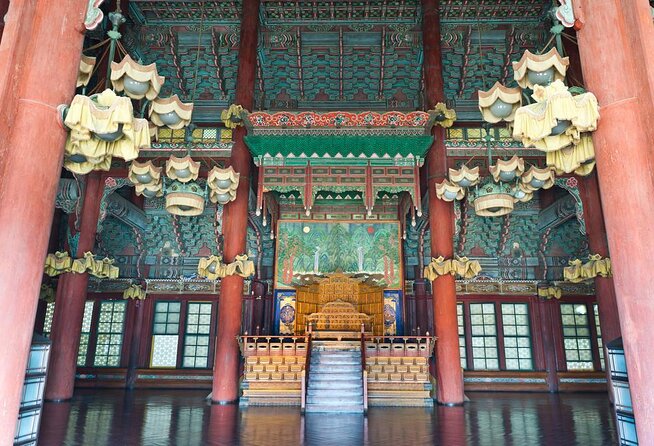
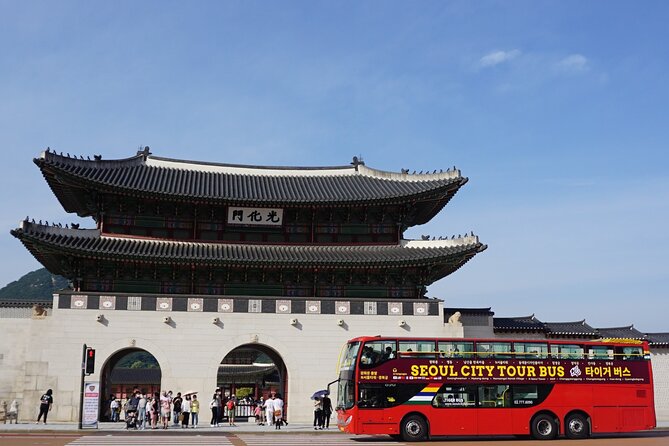
The course is built around grand palace stops including Changdeokgung, Deoksugung, and Gwangwhamun. The key value isn’t just that they’re famous names—it’s that the bus connects them so you can visit multiple palace areas in comfort.
Here’s the best way to use these stops on your day:
- Choose which palaces match your interests.
- Plan your exploration time realistically. You don’t want to hop off, take ten photos, and then regret it.
- Factor in admission timing, because entrances are not included in the ticket.
One helpful practice I recommend based on what people experienced: if you want a smoother day, secure palace entry tickets ahead of time (either before your visit day or at the gate). That reduces stress when you’re deciding whether to spend more time on-site or wait around for entry.
Changdeokgung stop: best for your “slow down” hour
Changdeokgung is one of the major stops on this route. If you like your sightseeing less like a checklist and more like an unhurried wander, this is typically where you’ll spend your longest stretch. The hop-on hop-off setup lets you do that without worrying about the next transfer.
Deoksugung stop: great for pairing with a walk
Deoksugung is another key stop. It’s a smart choice if you want to do your exploring on foot nearby after you hop off, instead of returning immediately to the bus. Just remember entrance fees are separate, so decide quickly when you arrive whether you’re committing to the full visit.
Gwangwhamun stop: ideal for ending your day with momentum
Gwangwhamun is on the route too, and it can work well as a later stop when you want to keep the day moving while still getting major palace time. The practical win is that you can hop on again if you’re not finished, or if you want one more loop ride for a broader sense of the area.
No matter which palace you choose, press the bus stop button when you want to get off. Some people found that missing this small step makes it harder to get where they planned.
Getting Back On: Common Snags and How to Avoid Them
This experience can be excellent—when the logistics click. The trouble spots are mostly predictable, and you can plan around them.
1) Bus stops aren’t always obvious
Some people report that stops are hard to find and that maps and stop markings may not be clear enough. If you’re traveling with limited time, that’s the kind of problem that can turn into wasted waiting.
Your fix:
- Save the stop name in Korean exactly as shown for your starting point.
- Screenshot the route/stop info if it’s in your confirmation.
- If you hop off, immediately re-check the bus stop name before you walk away.
2) Buses may take time to arrive
The frequency is listed as every 30 minutes and also described in other places as around 40 minutes, which suggests real-world variation. So if you’re timing your return tightly, treat hop-on hop-off like a helpful rhythm, not an exact meter.
3) Audio can be hard to hear in English
Again, the issue is loud Korean broadcast through speakers. You can still use the audio guide, but don’t assume you’ll catch every word cleanly the whole ride. If you care a lot about narration, keep your expectations flexible.
4) Ticket date and value
One caution you should take seriously: some tickets may be issued for a specific date, meaning you can’t always shift it to another day if your plan changes. Before you buy, make sure you understand whether it’s fixed to a date or can flex with your schedule.
Who This Tour Suits Best (and Who Might Skip It)
This palace course fits best if you:
- Want to see multiple major palaces without complicated transit routes.
- Like having audio commentary while you ride.
- Prefer control over timing, since you can stay at each palace for as long as you like.
- Are not eager to park-hop and transfer between subway lines with lots of exit choices.
It may not be the best fit if you:
- Only want a single palace.
- Hate anything involving finding a specific bus stop in a busy area.
- Need guaranteed, perfectly mixed English narration from start to finish.
If you’re a DIY traveler who doesn’t mind a little planning, it can be a very practical way to get your bearings fast.
Should You Book This Downtown Palace Course?
I’d book it if your goal is a smooth, flexible day hopping among Seoul’s major palaces with less navigation stress. The value is strongest when you plan to use more than one stop, and when you can use the bus to reduce walking between palace areas.
I’d think twice if you know you’ll struggle with locating the exact pickup and reboarding points, or if you depend on clear English audio above all else. In that case, it might still work, but you’ll want a careful plan—screenshots of stop info, buffer time, and a willingness to treat the ride as transport first and narration second.
If you want a palace day that’s simple on your feet and easy on your schedule, this bus course is a strong option to consider.
FAQ
What palaces are included on the Downtown Palace Course?
The route includes stops for palaces such as Changdeokgung, Deoksugung, and Gwangwhamun.
How long is the hop-on hop-off circuit?
The circulation time is around 1.5 hours.
What time does the tour start?
The start time is listed as 9:30 am.
What languages are available for the audio guide?
The audio guide is available in English, Korean, Chinese, Japanese, Russian, German, French, Spanish, Thai, Vietnam, Indonesia, and Malaysia.
Are entrance fees to the palaces included?
No. Entrance fees to sites or museums are not included.
Do buses run frequently?
Buses run often, with schedules listed as every 30 minutes (and other interval details may vary).
Are food and drinks allowed on the bus?
No food or drinks are allowed on the vehicle.
Can I cancel and get a refund?
Yes. You can cancel up to 24 hours in advance for a full refund. Within 24 hours, no refund is offered.