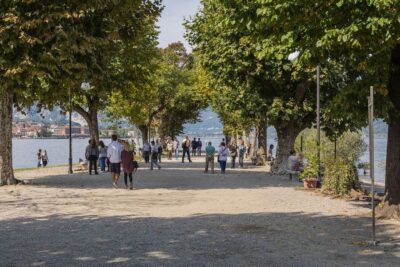
Shanghai can feel huge at first. This hop-on, hop-off bus is a fast way to get your bearings and line up Shanghai’s biggest highlights without overthinking transit. I like that the ticket is valid for 24 or 48 hours from your first ride, so you can split sightseeing across the day or two. I also like that the audio is available in multiple languages, so you’re not stuck guessing what you’re passing.
My other favorite part is how the bus strings together very different neighborhoods in one practical pass. You’ll pass through major museum areas, the riverfront, and classic shopping streets like Nanjing Road Pedestrian Street, with stops that make sense for breaks and photo stops. One consideration: the experience depends on having your QR voucher ready and getting through the designated ticket-exchange step smoothly, since reissues aren’t offered.
If you’re the kind of traveler who likes flexibility (not a fixed itinerary), this bus fits well. But if you prefer everything to be fully prepaid and frictionless, double-check your QR access before you head to the boarding point.
In This Review
- Key Takeaways Before You Ride
- The Best Reason to Use a Hop-On Bus in Shanghai
- Tickets, Validity, and Route Coverage (What You Actually Get)
- A quick note on what’s covered
- Using the Bus Stops Like a Pro: Museum Day vs Riverfront Day
- Stop cluster: Shanghai’s museum and planning zone
- Stop cluster: Skyline and ferries paired with the Bund
- The Bund + Custom House Area: Why This Ride Part Works
- Nanjing Road and Huaihai Road: Shopping Streets With a Transport Shortcut
- When Skyline Stops Matter: Oriental Pearl and Jin Mao
- Historical Stops You Might Not Expect on a Bus Tour
- Comfort and Audio: How to Make the Ride Work for You
- Price Check: Is $17.68 Good Value?
- Small Snags to Watch: QR Vouchers and Boarding
- Who This Hop-On Pass Fits Best (And Who It Doesn’t)
- Should You Book This Shanghai City Sightseeing Bus?
- FAQ
- How long is the Shanghai City Sightseeing Bus hop-on hop-off ride?
- Is the ticket valid for one day or two?
- Are admission tickets to the attractions included?
- What languages are the audio guides available in?
- Where do I board the bus and how do I use the ticket?
- What are the rules for children under 130 cm?
Key Takeaways Before You Ride
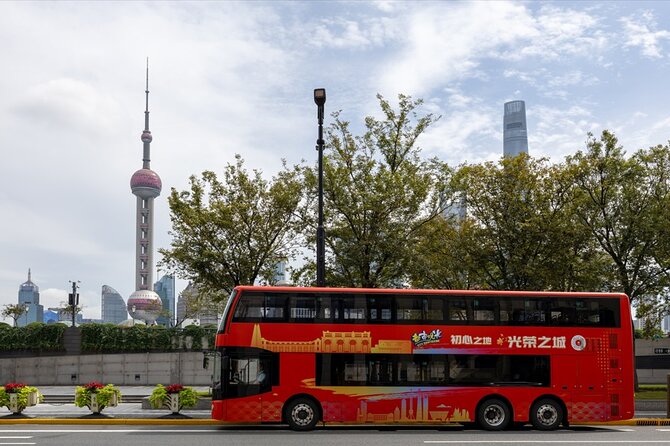
- 24/48-hour validity means you can spread your sightseeing across one or two days
- Five unique routes help you cover more ground than walking and random metro transfers
- Multilingual audio guides run while you ride, so you learn while you move
- Air-conditioned bus comfort makes it easier in Shanghai’s heat
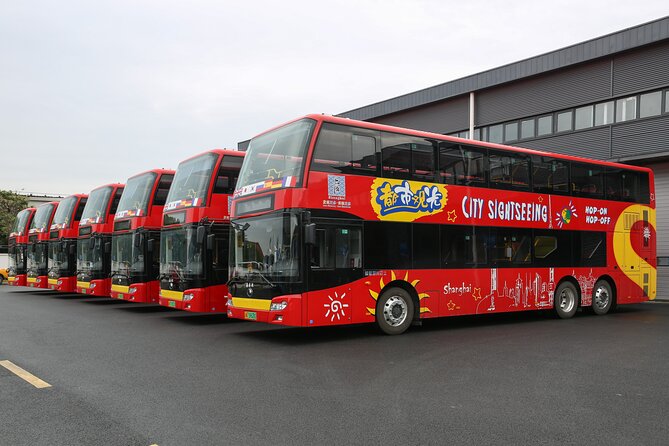
- Keep your QR voucher accessible, and confirm the bus logo before boarding
The Best Reason to Use a Hop-On Bus in Shanghai
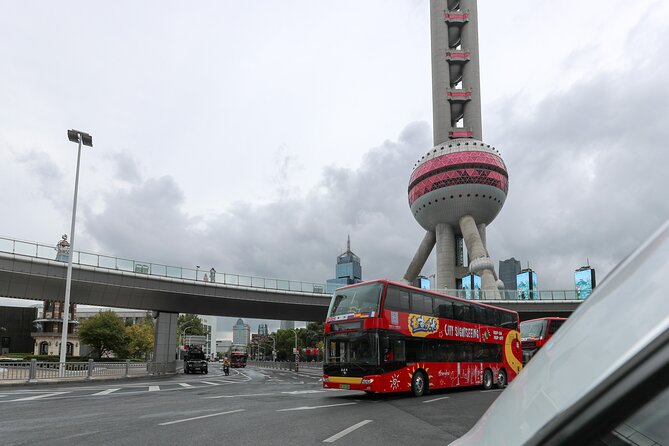
Shanghai is one of those cities where the distance between famous sights can quietly wreck your pace. You’ll often do a great day… right up until you spend half your time hopping between metro stations, exits, and street crossings. This hop-on, hop-off bus is useful because it puts a simple “spine” through the city, letting you focus on landmarks instead of navigation.
In my view, the smart move is to treat each bus loop as a guided corridor, then plan a few longer stops off the bus. For example, if you’re doing Shanghai Museum areas one day and the Bund and old-town lanes the next, the bus helps you avoid backtracking.
The other big win is flexibility. The ride itself is listed at about 1 hour (approx.), but because you can hop on and off along the way, your real sightseeing time becomes your choice, not the bus schedule.
Tickets, Validity, and Route Coverage (What You Actually Get)
You choose a 24-hour or 48-hour ticket. The clock starts from your first ride, not from the moment you book. That small detail matters. If your first ride is late in the afternoon, you still keep the full window for the next day.
The pass includes five unique Shanghai sightseeing routes. That’s the practical value: you’re not locked into one narrow line. You can board at any stop along the routes, and you can also switch routes if you’re at a stop that connects areas you care about.
A quick note on what’s covered
Across those routes, the tour is designed around Shanghai’s top sights, including big-name areas like People’s Square, Shanghai Art Museum, Nanjing Road, The Bund, and East Rim Tower (plus other stops). The exact stops you’ll see on your chosen routes include places like:
- Shanghai Museum and Shanghai Urban Planning Exhibition Center
- Shanghai Historical Museum
- The Bund (including the Garden Bridge area)
- Custom House, Shanghai
- Huangpu River sightseeing dock stops
- Yu Garden and nearby old-town areas
- Skyline stops like Oriental Pearl Radio & TV Tower and Jin Mao Tower
- Commercial streets like Huaihai Road
Using the Bus Stops Like a Pro: Museum Day vs Riverfront Day
Instead of thinking of this as one straight tour, think of it as a set of linkable sightseeing segments. The stop list you’ll encounter is heavy on “stay-in-the-area” attractions: museums, preserved sites, and riverfront views. That’s ideal for hop-on routing because you can get off, wander, then hop back later.
Stop cluster: Shanghai’s museum and planning zone
One of the route sequences focuses on major museum stops and city context. You’ll ride through:
- Shanghai Museum
- Shanghai Urban Planning Exhibition Center
- Shanghai Historical Museum
- 五卅运动纪念碑 (a monument stop)
- Nanjing Road Pedestrian Street
- Century Square Parking Lot
- The Bund (Garden Bridge area)
- Custom House, Shanghai
- 黄浦江游览码头 (Huangpu River sightseeing dock area)
- Yuyuan Garden Residential District
- 大韩民国临时政府旧址 (historical site stop)
- Site of the First National Congress of the Chinese Communist Party
- Huaihai Road Commercial Street
- Back toward Shanghai Museum and nearby segment stops
What I like about this layout is how it teaches the city in layers. You start with museum-grade context, then you move outward to commercial streets and eventually to the riverfront. Even if you don’t go inside every building (admission tickets are not included), you still get a sense of why these places matter.
A practical drawback: several stops are museums or historical sites where you might want 1–2 hours each. Since the bus loop is about an hour, you’ll want to pick a “main” stop or two per hop, not try to do everything in one pass.
Stop cluster: Skyline and ferries paired with the Bund
Another route pattern adds skyline icons and ferry stops. You’ll see sequences that include:
- 五卅运动纪念碑
- Oriental Pearl Radio & TV Tower
- Jin Mao Tower
- Dongchang Road Ferry
- Shanghai Baiyulan Plaza
- Then back through The Bund (again around Garden Bridge)
- Custom House, Shanghai
- Jinling East Road Ferry
- Yu Garden
- Plus additional repeats of 五卅运动纪念碑, 黄浦江游览码头, and Bund-area stops
This is a good combination because it naturally alternates between “top of the city” (towers and views) and “old money / old shoreline” (the Bund). If you care about photos, this kind of route reduces the need for taxi rides.
Tip for timing: do the Bund-side segment at a time when you can still enjoy daytime light, but you might also catch the shift toward evening. The bus makes it easy to reposition without committing to one long stretch on foot.
The Bund + Custom House Area: Why This Ride Part Works
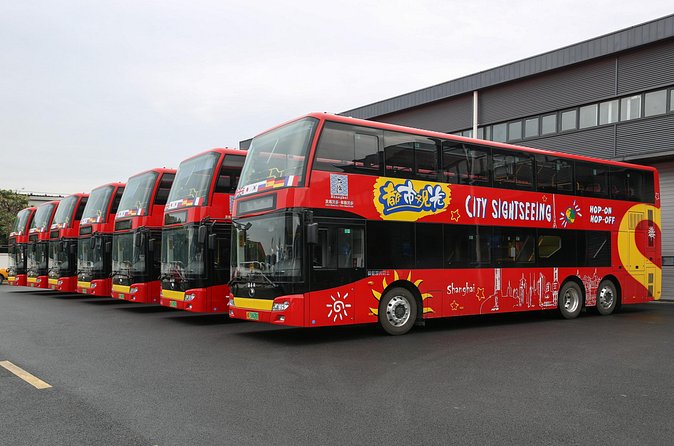
The Bund stops are repeated across routes, and for good reason. The Bund area is exactly the sort of place where being able to step off and rejoin matters. If you’re walking the waterfront, you’ll want to pause for angles, take photos, and check out the surroundings at your own speed.
From the stops listed, you’ll have access points around:
- The Bund (Garden Bridge area)
- Custom House, Shanghai
- 黄浦江游览码头 (Huangpu River sightseeing dock area)
- 外滩金融广场 (a Bund financial plaza stop)
This section is also where the audio guides can be most useful. You’re passing landmark architecture and waterfront history context, so having multilingual commentary while you ride helps you connect what you see to what you’re learning.
One caution: The bus doesn’t replace entry fees. Admission tickets to attractions are not included, so budget time to decide what you’ll actually enter versus what you’ll enjoy from the street and waterfront.
Nanjing Road and Huaihai Road: Shopping Streets With a Transport Shortcut
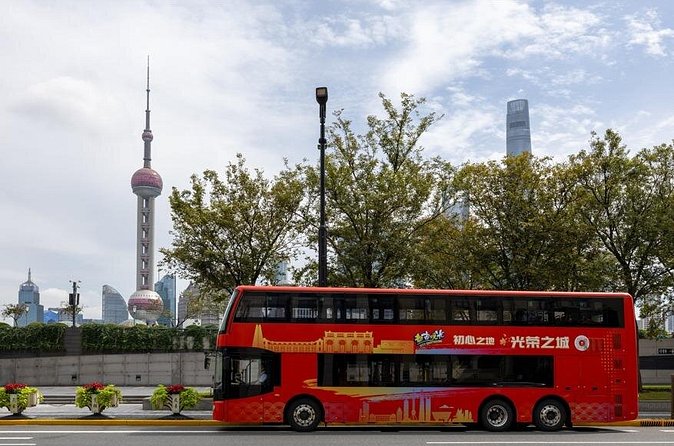
If you want the classic Shanghai shopping and people-watching vibe, this bus helps you get there with minimal stress. The route list includes:
- Nanjing Road Pedestrian Street
- Huaihai Road Commercial Street
These are perfect “get off and roam” stops. You can hop off, walk a loop, then hop back on when you’re ready. Because the bus connects these areas to the Bund and museum zones, you can also use them as a divider between days: shopping one day, towers and riverfront another.
The only drawback is that pedestrian streets can be crowded. If you’re prone to getting slowed down by crowds, plan for shorter roaming windows and prioritize getting back to a bus stop to keep your pacing.
When Skyline Stops Matter: Oriental Pearl and Jin Mao
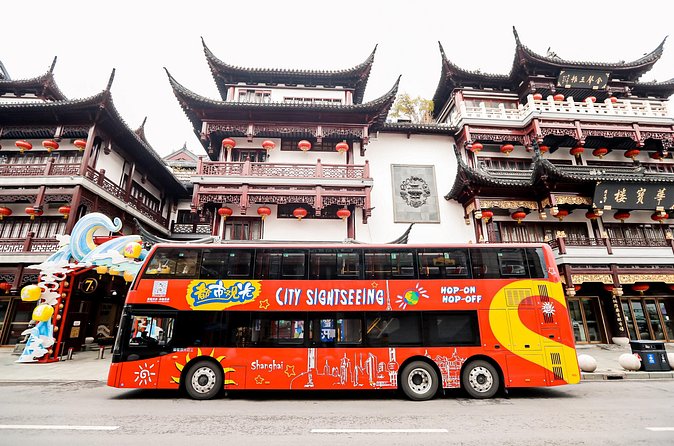
The skyline portion of the routes includes two major names:
- Oriental Pearl Radio & TV Tower
- Jin Mao Tower
Even if you don’t go up to view decks (admissions aren’t included), just riding by and using the stop for perspective is useful. These towers are visual anchors. They also help you understand Shanghai’s “then and now” contrast when you’re pairing them with Bund-side streets and older buildings.
If your goal is skyline photos, pick one tower as your focus for the day. Hitting both in one short stop can leave you disappointed because time for photos, entry, and lines (if you choose to enter) all take more than you expect.
Historical Stops You Might Not Expect on a Bus Tour
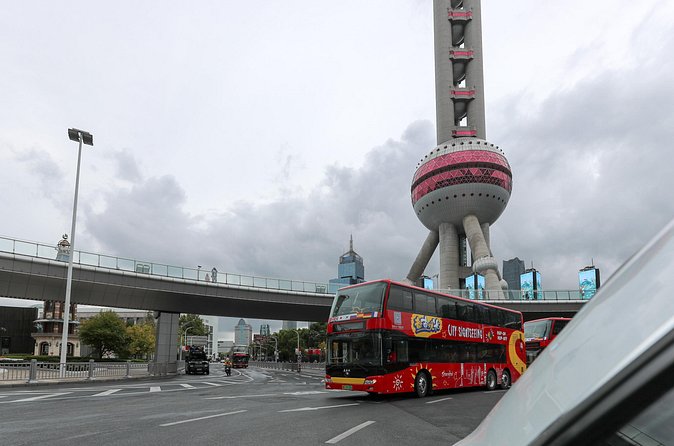
A big plus here is that the routes don’t only chase postcard landmarks. They also pass major historical sites and monuments. From the listed stops, you’ll encounter places like:
- 五卅运动纪念碑
- Site of the First National Congress of the Chinese Communist Party
- 大韩民国临时政府旧址
- Shanghai Mao Zedong Former Residence
- Shanghai General Postal Office
- 中共四大纪念馆
- Zhonggong San Dahou Zhongyang Bureau History Memorial Hall
- 古城公园南门
- Shiliupu Marina
- Astor House Hotel
Some of these are the kind of stops you might skim from the bus unless you decide to get off. If you like context, this is where the multilingual audio can help you choose which stops deserve your feet.
And if you prefer quick sightseeing only, you can still use these as orientation points. Even seeing the locations can make the rest of your trip feel more grounded.
Comfort and Audio: How to Make the Ride Work for You
The bus runs with multilingual audio guides in Chinese, Japanese, Korean, English, German, French, Russian, and Spanish. That’s a lot of coverage, and it’s genuinely helpful. You can listen while you ride and avoid the frustration of trying to read signage at traffic speed.
One practical habit I recommend: before you ride, skim which stops you care about most. Then, when you’re on the bus, listen to the audio for those areas. Otherwise, you’ll spend the whole day learning random facts about places you never visit.
Comfort-wise, one review specifically notes the bus is clean and air-conditioned, which is exactly what you want for Shanghai’s summer heat or a chilly evening.
Price Check: Is $17.68 Good Value?
At $17.68 per person, this bus can be good value if you treat it as transport plus orientation.
Here’s the math in plain terms:
- You’re buying access to multiple routes instead of a single line.
- You’re buying time flexibility through the 24/48-hour window.
- You’re getting multilingual audio included.
- You’re not paying for attractions (admissions are separate), but you are paying to move efficiently between major areas.
If you’re the type who might otherwise spend money on taxis just to save time, the hop-on approach usually pays off quickly. Even if you use it only for two “big connectors” (say, museum zone to Bund, then Bund to skyline), it can beat paying for multiple rides.
Where it might not be value: if you plan a fully focused “one neighborhood only” trip with minimal hopping, you may not use enough of the route coverage to justify the pass.
Small Snags to Watch: QR Vouchers and Boarding
This is where you should pay attention before you blame the bus.
The experience includes ticket exchange at a designated location, and staff scan the QR code on the voucher sent when you book. The validity starts from your first ride, but your ability to ride depends on having the voucher ready.
There’s also a specific instruction to check the vehicle logo 都市观光 before boarding.
Here’s my practical advice:
- Take a screenshot of your booking voucher QR code or keep it easy to access offline.
- Don’t arrive at the exchange point guessing where to tap.
- If you’re using a third-party booking link, verify that the QR code is accessible before you show up. One bad QR moment can cost you a lot of time.
Also, since the QR voucher can’t be reissued, don’t count on a quick fix at the curb.
Who This Hop-On Pass Fits Best (And Who It Doesn’t)
This is a strong fit if:
- You’re visiting Shanghai for the first time and want a simple way to cover the obvious highlights.
- You like choosing your pace instead of following a tight schedule.
- You want an easy connector between museums, shopping streets, the Bund, and skyline towers.
- You care about comfort and want air-conditioned transportation.
You might skip it if:
- You prefer private guides or fully curated walking routes.
- You plan to stay in one small area all day.
- You don’t want to deal with QR-based ticket exchange.
One more useful detail from the route recommendations: the pass suggests Line 1 and Line 2 as routes that cover the key sights. If you only have time for one day, prioritize those lines and build your plan around the stops they hit.
Should You Book This Shanghai City Sightseeing Bus?
I think this bus is worth booking if you want an efficient, flexible way to see Shanghai’s biggest “clusters” without turning your trip into a transit project. The 24/48-hour window plus five routes makes it easier to recover if you lose time to crowds, weather, or just getting sidetracked on the street.
Book it if you’ll ride more than once. If you’re planning only one short outing, consider whether a simpler plan in one neighborhood would better match your pace.
If you do book, do one thing right: make sure your QR voucher is accessible and confirm you’re boarding the 都市观光 bus.
FAQ
How long is the Shanghai City Sightseeing Bus hop-on hop-off ride?
The duration is listed at about 1 hour (approx.) for the bus tour. Since it’s hop-on hop-off, you can spend more time by getting off at stops and returning later.
Is the ticket valid for one day or two?
You can choose between a 24-hour or 48-hour ticket. It’s valid for that period starting from your first ride.
Are admission tickets to the attractions included?
No. The bus pass includes the sightseeing bus rides and audio guides, but admission tickets to attractions are not included.
What languages are the audio guides available in?
Multilingual audio guides are provided in Chinese, Japanese, Korean, English, German, French, Russian, and Spanish.
Where do I board the bus and how do I use the ticket?
You can board from bus stops along the route, and you’ll exchange your ticket at a designated location first. Bus staff scan the QR code from your voucher. Before boarding, confirm the vehicle logo 都市观光.
What are the rules for children under 130 cm?
Children under 130 cm can ride for free if they sit on a parent or guardian’s lap. If they need a seat, a ticket is required.