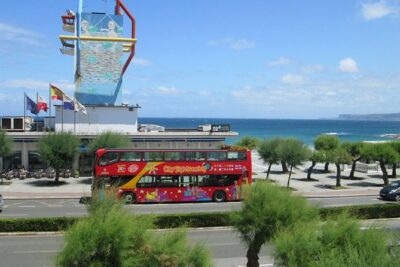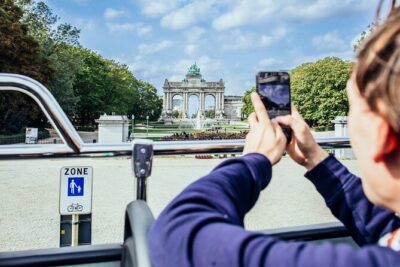
St. Augustine gets easier when the trolley rolls. This hop-on hop-off ride turns the city’s top sights into a simple, low-stress circuit, with live commentary so you know what you’re looking at while you go. You can stay on for the full loop or hop off for the places that match your mood that day.
Two big wins: you get St. Augustine History Museum admission included, and the narration from guides like Kevin and Pepper (and later Summer, James, and Davy Jones) gives context that you won’t get from looking at a map alone. One possible snag: hearing can vary by trolley and where you sit, so if the audio sounds too fast or too quiet, switch to the next trolley rather than suffering through it.
In This Review
- Key things I’d plan around
- First, decide how you’ll use the pass: full loop or pick-and-choose
- Price ($38.47) and value: why it can pencil out
- Getting around the route: how the trolley schedule changes your day
- Stop-by-stop: what to do (and what to watch for) along the 22 stops
- Old Jail Museum, Civic Center, and Visitor Information: set your bearings fast
- City Gate Spirits and Pirate & Treasure: switch from history to atmosphere
- Best Western/Bay Views and the church stretch: architecture and a quick look at the water
- Villa Zorayda (passed twice), Lightner Museum: choose your museum tempo
- Lincolnville Museum & Cultural Center, Distillery, Winery: local culture with options
- Plaza de la Constitución and the marina: take a breath
- The Oldest House and Castillo access: two big anchors close together
- Ripley’s, the Welcome Center: quick detours that keep you flexible
- Mission Nombre de Dios and the Old Senator Tree: the spiritual-and-symbolic stops
- Fountain of Youth at 11 Magnolia Ave: end where the legends begin
- Timing, crowds, and comfort: how to make the ride feel easy
- If the guide style changes, don’t panic: use it to your advantage
- Should you book the St. Augustine trolley?
Key things I’d plan around
- 22 named stops means you can tailor the day instead of feeling locked into one route
- Live guide stories connect the street-level sights to bigger city moments
- History Museum ticket is included, so you’re not paying extra for one of the most “worth it” indoor breaks
- Trolleys run about every 15–20 minutes, which helps you hop off and back on without stress
- Multiple guides rotate, so the style and pace can change during the same day
- Comfort and hearing depend on seating, so pick a spot where you can follow the narration
First, decide how you’ll use the pass: full loop or pick-and-choose
This is a hop-on hop-off trolley built for flexibility. You can take the fast path—stay onboard and ride through the whole circuit—or you can treat it like a free “preview” of St. Augustine, then come back on foot to linger where you care most.
The ride is about 1 hour 30 minutes if you’re doing the loop at a comfortable pace with time in mind. One full rotation is listed at around 80 minutes, and in real life you’ll often land closer to the longer end if you’re watching details, pausing for photos, or getting on and off a couple of times. Either way, it’s a strong use of a limited day.
If you’re trying to see a lot without a car, this is also a practical option. Parking is available at the Old Jail Complex (167 San Marco Avenue), but you won’t need to worry about navigating narrow streets or finding a spot once you’re parked.
Price ($38.47) and value: why it can pencil out
At $38.47 per person, the trolley isn’t “cheap,” but it’s often good value if you use it like a time-saver, not like a novelty ride. The main value lever is that admission to the St. Augustine History Museum comes with your pass. That turns at least one pricey museum stop into part of the trolley plan.
You’re also paying for something harder to price: guided storytelling. The difference between reading a plaque and having a guide connect dots as you roll past places like the Old Jail and the Castillo de San Marcos is real. Guides you might hear include Kevin and Pepper, and later Summer, James, Kendall, Davy Jones, and Denny—each with their own delivery style.
One more value point: because trolleys come frequently (about every 15–20 minutes), you can hop off for a short visit and still get back into the loop. That reduces the risk of wasting your time if you’re not sure which attraction will be best.
Getting around the route: how the trolley schedule changes your day
The basic rhythm is simple: trolleys roll by every 15 to 20 minutes, though traffic can shift timing. That frequency is what makes hop-on hop-off work. If you’re in a popular spot during a busy time, you’re not stuck waiting half an hour with a phone at 2% battery.
Here’s how I’d plan the day:
- Start early if you want the most comfortable back-and-forth of short visits.
- Ride the full loop once before deciding what to repeat. You’ll pick up patterns fast—where the waterfront energy is, where the quieter museum stops sit, and where the biggest anchors are.
- If you’re sensitive to sound, aim for a seat where you can hear the guide clearly. One common issue is that the pace or volume can vary from trolley to trolley, so swapping vehicles can fix it without wasting your entire day.
Stop-by-stop: what to do (and what to watch for) along the 22 stops
Think of the route as three layers: orientation, big anchors, and a handful of fun detours. Here’s how to use the stops so you get the most out of the time on the trolley.
Old Jail Museum, Civic Center, and Visitor Information: set your bearings fast
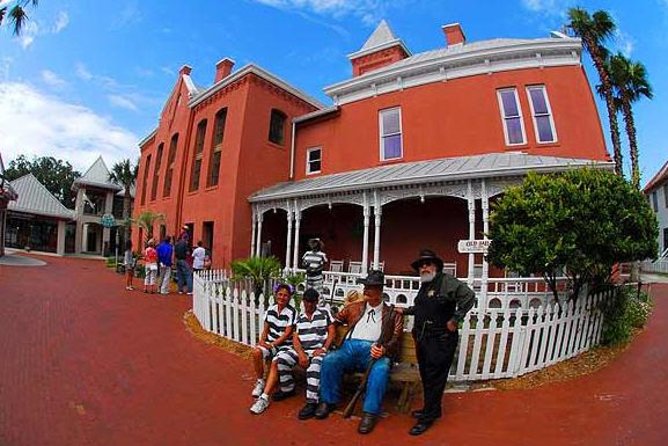
Old Jail Museum (Stop 1) is a smart first stop because it immediately frames St. Augustine as a place with serious stakes—law, punishment, and people’s real lives. Even if you’re not a “jail history” person, the Old Jail gives you a baseline for understanding how the city evolved.
Next comes the St. Augustine Civic Center / Visitor Information Center (Stop 2). This is where you can sanity-check your plan. If you’re heading to the museum, the Castillo, or the Fountain of Youth, this is a good mental moment to decide what order you’ll do things in.
Then you roll to Potter’s Wax Museum (Stop 3). This is your lighter, photo-friendly break. It also helps you pace the day—after heavier history, it’s nice to switch gears for something silly and visual.
City Gate Spirits and Pirate & Treasure: switch from history to atmosphere
City Gate Spirits (Stop 4) is one of those stops that fits well if you want a quick taste or just enjoy the idea of a spirits-themed stop. The trolley doesn’t include food or drinks, so think of it as a convenient location where you can choose your own level of indulgence.
At St. Augustine Pirate & Treasure Museum (Stop 5), you get a clear entertainment theme. The big practical bonus here: Castillo de San Marcos is accessed from this stop, which can save you walking later if you’re aiming to hit the fort.
Best Western/Bay Views and the church stretch: architecture and a quick look at the water
6 Avenida Menendez (Best Western/Bay Views) (Stop 6) is helpful for anyone who wants at least one quick waterfront perspective without leaving the trolley. It’s not just pretty—it also helps you understand how St. Augustine’s streets and sights relate to the water.
38 Sevilla St (Flagler Memorial Presbyterian Church & other churches) (Stop 7) gives you a change of pace. Churches and historic religious buildings can be quick “wow” stops, especially if you like architecture and want to see how different communities marked the city over time.
Villa Zorayda (passed twice), Lightner Museum: choose your museum tempo
You’ll see Villa Zorayda Museum (Stops 8 and 9) listed twice, which likely means your route passes it in more than one segment. Translation for you: you have flexibility to hop off there and try it, or just admire the location if you’re museum’d out.
Lightner Museum (Stop 10) is another major museum stop. If you’re only doing one indoor attraction besides the History Museum, Lightner can be a strong contender depending on what you enjoy.
Lincolnville Museum & Cultural Center, Distillery, Winery: local culture with options
Lincolnville Museum & Cultural Center (Stop 11) is one of the best stops to add if you want the city story beyond just the postcard highlights. It helps balance the day by adding cultural context in a way that feels grounded.
Then you head to St Augustine Distillery (Stop 12) and San Sebastian Winery (Stop 13). These stops are ideal if you’re the type who likes to add one “local” purchase, tasting, or souvenir, without getting locked into a long sit-down meal. And yes, it’s also a nice change from pure walking in heat.
Plaza de la Constitución and the marina: take a breath
Plaza de la Constitución (Stop 14) is the kind of square where you’ll likely slow down. If you want a break from moving, this is a good spot to reposition yourself and plan your next hop.
Next is St Augustine Municipal Marina (COSA Marina) (Stop 15). If you care about water views, you’ll appreciate this stop as a natural contrast to the inland historic streets. It’s also handy if you’re timing a later stop like the Oldest House.
The Oldest House and Castillo access: two big anchors close together
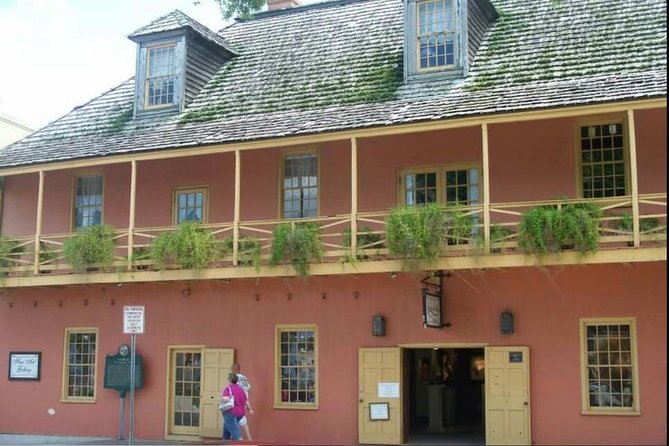
The Oldest House (Fernandez Llambias House, 22 St Francis St.) (Stop 16) is a standout because it’s exactly what the name promises: the kind of place that makes the city feel real. If you love early architecture and want one “I’m standing somewhere old” moment, this is one to prioritize.
Then comes Castillo de San Marcos National Monument (Stop 17). This is the anchor for many people, and rightfully so. If you only have time for one major fort stop, make it the Castillo. It’s also one of the easiest places to pair with the Pirate museum stop since the fort is accessed from there.
Ripley’s, the Welcome Center: quick detours that keep you flexible
Ripley’s Believe It or Not! (Stop 18) is your quirky option. It’s not a “must” for everyone, but it’s a good choice if you want something short that breaks up the heavier parts of the day.
Old Town Trolley Tours St Augustine / Old Town Trolley Welcome Center (Stop 19) is practical. Even if you’re already moving along the circuit, the Welcome Center stop is a helpful checkpoint if you want to refocus or grab info.
Mission Nombre de Dios and the Old Senator Tree: the spiritual-and-symbolic stops
At Mission Nombre de Dios Museum (Stop 20), you’re back into the mission-era story. If your St. Augustine taste runs toward early religion and settlement history, this stop likely feels important rather than optional.
Then you reach The Old Senator Tree / Howard Johnson’s (Stop 21). This is the sort of landmark people use for photos and quick orientation. It’s also a reminder that St. Augustine isn’t only about ancient buildings; it has modern-era stories layered over the same streets.
Fountain of Youth at 11 Magnolia Ave: end where the legends begin
Finally, 11 Magnolia Ave (The Fountain of Youth) (Stop 22). Ending here works well because it gives your day a sense of closure. If the rest of the tour felt like careful history and architecture, this last stop adds the legend side—an easy way to end before you head back to dinner.
Timing, crowds, and comfort: how to make the ride feel easy
The trolley is designed to reduce walking, but your experience still depends on comfort and your tolerance for getting on and off. Some people may find boarding and exiting a bit of a chore—especially if you have mobility limits. If that’s you, plan to prioritize accessible trolleys and ask about where they depart.
Seats can feel firm, and the air conditioning (or lack of it) can change your comfort level depending on the day. Your best move: treat this as a short-to-medium ride with breaks, not as a “sit for two hours straight” experience.
Also, sound matters. If you’re seated in a spot where the guide’s voice is hard to follow, you’re not trapped. You can get off and wait for the next trolley, then choose a spot where the commentary comes through clearly.
If the guide style changes, don’t panic: use it to your advantage
One of the best things about this tour is how much the guides can vary in energy and humor. You might hear a lively driver like Kevin and Pepper, then later get a different tone with Summer or Davy Jones. That range is fun, but it also means pace can change.
If a guide’s delivery is hard to catch, you can simply switch trolleys and keep going. Because the service comes frequently, this is usually a quick fix rather than a full stop to your day.
Should you book the St. Augustine trolley?

Yes—if you want an easy, structured way to see St. Augustine’s main sights without driving. I’d especially recommend it if you plan to visit at least one major indoor site, because the St. Augustine History Museum admission is included and it gives you a ready-made option when the sun turns harsh or the lines get longer.
I’d think twice if you’re very sensitive to comfort or hearing the narration from your seat. In that case, plan to be proactive—choose your spot, and don’t hesitate to swap trolleys if the audio isn’t working for you.
Either way, this is one of the smartest first-day moves in St. Augustine: ride the loop to get your bearings, then return on foot to the stops that match your interests.