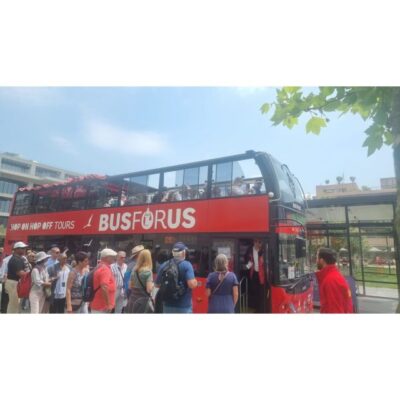
A day in Stavanger can feel busy fast, so this hop-on hop-off pass is a smart reset button. You get double-decker bus views, plus a fully narrated audio guide in 7 languages, letting you hop off to explore when something catches your eye. I also like that it ties the main stops together without forcing you into a strict schedule. One thing to consider: at this price, some people feel the route is best for the highlights near the harbor and want even more time in fewer areas.
If you want to see the city efficiently, this pass is built for that. You’ll pass big-name sights like Stavanger Cathedral and learn about places such as the Petroleum Museum area and Gamle Stavanger, with the narration doing the heavy lifting while you sit back. The onboard Wi-Fi and included headsets make it easier to settle in and stay oriented while you travel. A possible drawback is that a 24-hour loop can still feel like a lot of stops if you hop off at every single one.
The good news: you control the pace. If you plan your off-bus time, you’ll likely love how simple it is to stitch together architecture, museums, and viewpoints without overthinking logistics.
In This Review
- Key highlights to plan around
- Stavanger by hop-on hop-off: why this format clicks
- Ticket value: what you pay for and why it can still be worth it
- Getting started at Strandkaien 40 (and why it matters)
- Stop-by-stop: what you’ll likely want to do at each area
- Strandkaien 40: your easy home base
- Cruise Terminal and Byterminalen: harbor views with quick context
- Skansekaien: a good “watch the city move” stop
- St Petri kirke: when you want architecture and a sense of place
- Museum of Archaeology (University of Stavanger): a solid museum anchor
- Stavanger City Museum: choose your depth
- Sverd i fjell: a quick hit for those who like local stories
- Iron Age Farm: good if you like hands-on time
- Stavanger Art Museum: for a cultural reset
- Breidablikk museum: a longer pause if you want variety
- Back to Strandkaien 40: end with zero stress
- Audio guide in 7 languages: how to use it without zoning out
- How long should you spend off the bus?
- The harbor highlight issue: who this route may or may not suit
- Quick logistics you’ll care about (without making it complicated)
- Should you book the Stavanger 24-Hour Hop-On Hop-Off Pass?
- FAQ
- How long is the Stavanger hop-on hop-off bus pass valid?
- Where do I board the bus?
- Can I hop on and off as many times as I want?
- What languages are available for the audio guide?
- Is Wi-Fi included on the bus?
- Is food included with the ticket?
- Is the bus wheelchair accessible?
Key highlights to plan around

- 24 hours from first activation gives you real flexibility if your timing gets shuffled
- Audio in 7 languages (English, German, Dutch, Spanish, French, Italian, Norwegian) keeps you from tuning out
- Strandkaien 40 is the start/finish area, so you always know where to return
- Double-decker views make it easier to spot what’s worth walking to
- Headsets + onboard narration help you move through the route with less guesswork
- Wheelchair access includes ramps and designated spaces with audio connection
Stavanger by hop-on hop-off: why this format clicks

Stavanger rewards slow looking. Even if you only have a day, you’ll feel better if you can pause whenever you spot something you want to photograph or walk toward. That’s exactly what a hop-on hop-off pass does well: it turns a city day into a choose-your-own route.
I also like that it is not just sightseeing from a window. The audio is meant to give you names, context, and storylines as the bus passes key areas. It helps you go from seeing buildings to understanding why they matter. And because you can hop off and back on as many times as you want over the 24 hours, you can build your day around what you actually enjoy.
The main trade-off is time. A hop-on hop-off route is fast by nature. If you expect museum-level wandering at every stop, you’ll have to be selective. Some feedback points to the harbor stretch feeling like the best part, which makes sense because water-adjacent views can be immediate and visually rewarding.
Ticket value: what you pay for and why it can still be worth it

At $44 per person for a 1-day pass, the value depends on how you use it. If your plan is to stay on the bus most of the time and hop off for only one or two key areas, you might wonder where the money went. If your plan is to do a mix of bus time and walking—cathedral area, Old Stavanger time, and at least one museum—that price starts to feel more reasonable.
Here’s what makes this ticket more than just transportation:
- You get the hop-on hop-off bus ticket for the day.
- Headsets are included so the audio guide actually works well while you’re seated above street level.
- The audio guide covers history, culture, and main highlights in 7 languages.
- There’s Wi-Fi on board, which is handy for mapping your next walk.
- You also get various discounts in the city (you’ll want to ask staff for the details provided with your map or info).
Food isn’t included. So you’ll still need to plan a meal the normal way. That’s not a deal-breaker; it just means you should budget for lunch and snacks as you would for any full day out.
Getting started at Strandkaien 40 (and why it matters)

Your day begins at Strandkaien 40, right by the Stavanger cruise area. The boarding point is in front of the Maritime Museum, where you can also find staff to provide you with a map and tour information. That small detail matters more than you might think. A good map can help you decide which stops are walkable, which are best for photos, and which ones you might treat like a “drop-off then return” situation.
You can also hop on at the other stops listed along the route. In practice, that means you don’t have to do the whole loop in one go. If you want to start later, or you’re already exploring nearby, you’re not locked into the first departure from Strandkaien.
One more practical point: the pass is designed for self-paced use. So your best strategy is not to race to every stop. It’s to ride until something looks worth your feet, then hop off with enough time to actually enjoy it.
Stop-by-stop: what you’ll likely want to do at each area
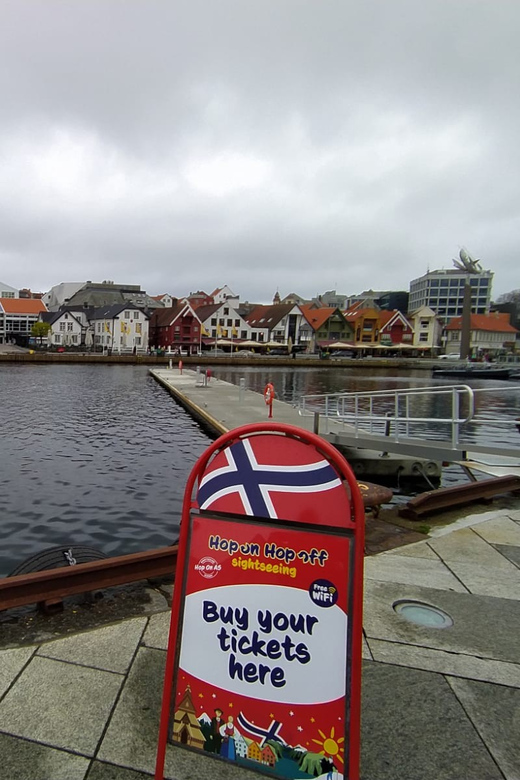
Below is the route rhythm you’ll follow over your 24 hours. The big idea is simple: treat the bus as your connector, and use off-bus time for the places you care about most.
Strandkaien 40: your easy home base
Starting and ending at Strandkaien 40 is a gift. It keeps your day simple. You’ll spend less time worrying about where the bus returns and more time moving through the city.
Before you go anywhere, take a minute to look around the harbor area and decide what kind of day you want: museum-heavy, architecture-focused, or a balanced mix. Then let the bus help you shape the route.
Cruise Terminal and Byterminalen: harbor views with quick context
After you board, the early stops lean toward the waterfront side. The cruise terminal area and Byterminalen give you a chance to orient yourself with views of the working harbor and nearby sights.
If you’re the type who likes photos and atmosphere, this is where your day can start strong. And if you’re not, it can still be useful because you’ll get your bearings before the route moves inland toward churches and museums.
Skansekaien: a good “watch the city move” stop
Skansekaien continues that waterfront feel. You can hop off for fresh air and a slower look, then hop right back on when you’re ready.
This is also a good area for planning. Once you’ve seen the harbor stretches from street level, you can decide whether you want to spend more time near the water or shift your focus.
St Petri kirke: when you want architecture and a sense of place
Moving along the route, St Petri kirke is a clear signal that the day is shifting from views to landmarks. Churches and historic buildings often work best with bus context because the narration can help you understand what you’re looking at before you start walking.
If you’re short on time, you might choose to hop off here, take in the immediate area, and then continue toward museums where you’ll have more structured time.
Museum of Archaeology (University of Stavanger): a solid museum anchor
The Museum of Archaeology is one of the stops that feels built for a proper visit. If you like history that you can read and walk through, this is the kind of stop where you can actually spend a chunk of time rather than just passing through.
Also, the bus audio is designed to support this type of visit. You’ll be hearing city stories as you ride, then stepping into a museum stop where that context can make the displays feel more connected.
Stavanger City Museum: choose your depth
Stavanger City Museum is another option for a deeper pause. Because your pass allows repeated boarding over 24 hours, you don’t have to commit to a full museum day immediately.
A practical approach: if you’re unsure how much you’ll enjoy museum time, treat this as a test stop. Hop off, see if it fits your pace, and if you need a break, you can ride onward and come back later within your day.
Sverd i fjell: a quick hit for those who like local stories
Sverd i fjell (sword in the rock) is a stop that can feel like a moment of meaning rather than a long visit. If you like monuments and public memorials, this is the kind of stop that can make your walk feel personal.
Because it may not take hours, it’s also a good placement for a short stop between larger attractions.
Iron Age Farm: good if you like hands-on time
Iron Age Farm is one of those stops that can turn your day from “watching” into “experiencing.” If you enjoy interactive or educational sites, this is the sort of location that often rewards slow visiting.
Just remember the trade-off: the more you hop off at sites like this, the fewer stops you can realistically cover deeply. Choose one or two “time sinks” and let the rest be quick looks.
Stavanger Art Museum: for a cultural reset
Art museums can be a perfect counterbalance to churches and historic sites. Stavanger Art Museum gives you a chance to slow down and focus on indoor time if the weather shifts.
Since your audio guide is already framing the city’s culture and landmarks, this stop can feel like the narration has a second layer. You’ll get visual and storytelling value in the same day.
Breidablikk museum: a longer pause if you want variety
Breidablikk museum is the kind of stop that fits best when you want variety. If your earlier stops felt mostly architectural, this can break up the pace and add another style of learning and looking.
If you’re trying to see everything, this is where you’ll likely feel time pressure. So if Breidablikk museum is on your priority list, plan to return to it once you’ve decided which earlier museum stop you can skip.
Back to Strandkaien 40: end with zero stress
Finishing at Strandkaien 40 keeps the day tidy. You don’t need to figure out remote exits or complicated return routes. If you want to make the last hour a harbor stroll, you can do it right at the finish area.
Audio guide in 7 languages: how to use it without zoning out
The audio guide is one of the most useful parts of this pass. With commentary available in English, German, Dutch, Spanish, French, Italian, and Norwegian, it’s not just about translation—it’s about keeping the day cohesive even when you’re jumping between stops.
Headsets are included, which makes a big difference. You won’t be hunting for phone audio or dealing with poor playback. And since you’ll be on a double-decker bus, the audio helps you match names to views you’d otherwise pass too quickly.
My practical tip: don’t listen like a lecture. Listen like a street-smart companion. Catch the key names, then when you hop off, use the audio to decide what you want to photograph or walk toward.
How long should you spend off the bus?
With a 24-hour pass, you can afford to be flexible, but you still need a plan. Here’s a simple pacing rule that fits this route:
- Spend bus time between clusters of stops.
- Spend off-bus time at only a few major destinations.
- Use short stops for landmarks you can appreciate quickly.
For example, you might treat one of the museum stops—like the Museum of Archaeology, Stavanger City Museum, or Iron Age Farm—as your main “walk around” block. Then choose one more stop that’s more monument or atmosphere oriented, such as St Petri kirke or Sverd i fjell. That way, you’re not exhausted by the end of the day, and the bus still feels like the smart connector it’s meant to be.
Also, because boarding and reboarding is allowed as many times as you want within the day, you can adjust if something takes longer than planned.
The harbor highlight issue: who this route may or may not suit

This pass is built around the idea that you want to see the city’s main sights without committing to one long walking route. That works well for first-time visitors, cruise-day travelers, and anyone who likes planning but hates being stuck to a schedule.
But the overall rating is 3.7 out of 5 with 146 reviews, and one recurring theme in feedback is that the harbor area is often considered the best part. Translation: if your personal priorities are deep museum time or a very dense city-walk itinerary, you might feel like you’re spending a lot of time in transit between attractions.
So, who is it best for?
- You want a quick overview plus a few solid stops.
- You like audio-guided city context.
- You prefer double-decker viewpoints for orientation.
Who should be more cautious?
- You want nonstop walking and a tightly packed itinerary with lots of time at every stop.
- You’re expecting the route to feel like a guided tour where the bus drops you right into the same highlight repeatedly.
Quick logistics you’ll care about (without making it complicated)

You’ll board at Strandkaien 40 near the Maritime Museum, where staff provide a map and tour info. You’ll have headsets for narration and access to onboard Wi-Fi.
If you’re using mobility support, this bus is wheelchair accessible, with ramps and designated spaces that include an audio connection. That’s a practical win if you need comfort and audio clarity while riding.
Should you book the Stavanger 24-Hour Hop-On Hop-Off Pass?

Yes, if your goal is a self-paced Stavanger day with clear highlights, easy reboarding, and an audio guide that keeps you oriented. The included headsets, multiple language options, and double-decker format are the kind of details that make a city pass feel usable instead of gimmicky.
I’d skip or rethink if you already know exactly which two neighborhoods you want to focus on and you prefer a walkable plan with fewer transport hops. At $44, it’s most rewarding when you actually use the flexibility—hop off for a few key stops, then ride again when you want to reset.
If you book, do it with a “choose your priorities” mindset. Pick one main museum or interactive stop, add one or two landmark pauses, and let the bus do what it does best: get you from place to place while you learn along the way.
FAQ
How long is the Stavanger hop-on hop-off bus pass valid?
It’s valid for 1 day, starting from your first activation.
Where do I board the bus?
You board at Strandkaien 40, in front of the Maritime Museum, with staff there to provide a map and tour information. You can also hop on at other listed stops.
Can I hop on and off as many times as I want?
Yes. You can hop on and off at the stops along the route and reboard as many times as you like within the 24-hour validity.
What languages are available for the audio guide?
The audio guide is available in 7 languages: English, German, Dutch, Spanish, French, Italian, and Norwegian.
Is Wi-Fi included on the bus?
Yes, there is Wi-Fi on board.
Is food included with the ticket?
No. Food and drinks are not included.
Is the bus wheelchair accessible?
Yes. Buses have wheelchair ramps and designated spaces with an audio guide connection.