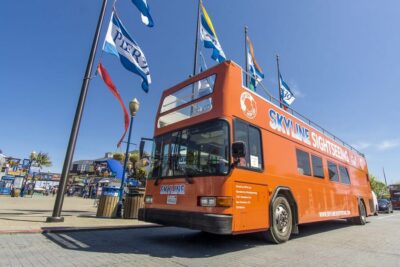
Salt Lake City has a sound you can’t fake. This tour pairs a Tabernacle Choir performance with an air-conditioned bus tour that gives you quick, solid context for the city’s most important places.
Two things I really like: first, the choir moment is genuinely unforgettable—whether you catch Music and the Spoken Word on Sunday or an intimate rehearsal on Thursday. Second, the guide narration helps you connect dots fast, from pioneer history at Temple Square to modern downtown sights.
The main thing to weigh is pacing. This is built as a “see-and-understand” highlights loop, so a lot of stops are short, and if you want lingering time everywhere, you may feel a bit rushed.
In This Review
- Key highlights at a glance
- Why this tour works: choir first, city second
- Thursday rehearsal vs Sunday broadcast: pick your kind of magic
- The venue may change by season
- The bus loop: how Salt Lake City becomes understandable fast
- The Utah State Capitol sets the tone
- Pioneer migration stops: where the city’s origin story clicks
- Temple Square: the heart of everything
- Other faith and architecture stops add real perspective
- Olympic-era Salt Lake shows up in the middle
- The stop-by-stop feel: what you’ll notice at each one
- Temple Square Visitors’ Center and Assembly Hall
- City Hall and Capitol Hill
- Downtown transitions: City Creek Center and The Gateway
- University and arts stops
- Pacing and comfort: avoiding the rush feeling
- Choir rehearsal timing can feel flexible
- Value check: is $89 for 3.5 hours a smart buy?
- Who should book this tour?
- A note on guides: the tour’s personality matters
- Should you book the Tabernacle Choir + Salt Lake City guided bus tour?
- FAQ
- How long is the Tabernacle Choir + Salt Lake City guided bus tour?
- What is included in the tour price?
- Is the choir experience different on Thursday vs Sunday?
- Where does the tour start and end?
- Where does the choir performance take place?
- Can I see the inside of the Salt Lake Temple?
- Are there limits on group size?
- Is the tour offered in English?
- What about kids under age 8 on Sunday?
- FAQ
- How long is the Tabernacle Choir + Salt Lake City guided bus tour?
- What is included in the tour price?
- Is the choir experience different on Thursday vs Sunday?
- Where does the tour start and end?
- Where does the choir performance take place?
- Can I see the inside of the Salt Lake Temple?
- Are there limits on group size?
- Is the tour offered in English?
- What about kids under age 8 on Sunday?
Key highlights at a glance
- Choir access choices: Thursday rehearsal or Sunday live broadcast/concert format
- Big-name venues and true acoustics: the Tabernacle and the LDS Conference Center are famous for sound
- A guided first-time orientation: Utah State Capitol views, Temple Square, and more in one outing
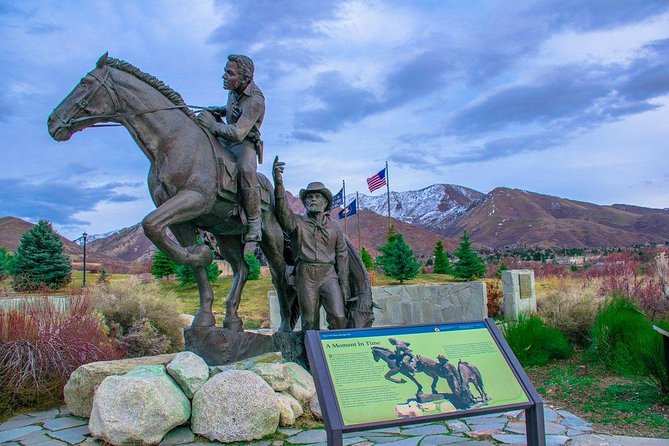
- Pioneer landmarks you can actually place on a map: This is the Place, Heritage Park, and trail history
- A short-list of “see it from outside” architecture stops: cathedrals, downtown buildings, and Olympic sites
- Small group size: max 30 people on board
Why this tour works: choir first, city second
This is the kind of tour that saves you from the usual Salt Lake problem: you arrive, you see beautiful buildings, but you’re not sure what connects them. Here, the day is structured like a story. You start with the choir, then the bus tour gives you the places—pioneer sites, government buildings, faith landmarks, and Olympic-era modern Salt Lake—that explain why the music matters.
I also like that you’re not stuck guessing your own route. The bus loop is designed to get you oriented quickly, so you can plan the rest of your trip with confidence. And since the choir is the anchor, you’re not filling your best energy with “busy work.”
Thursday rehearsal vs Sunday broadcast: pick your kind of magic
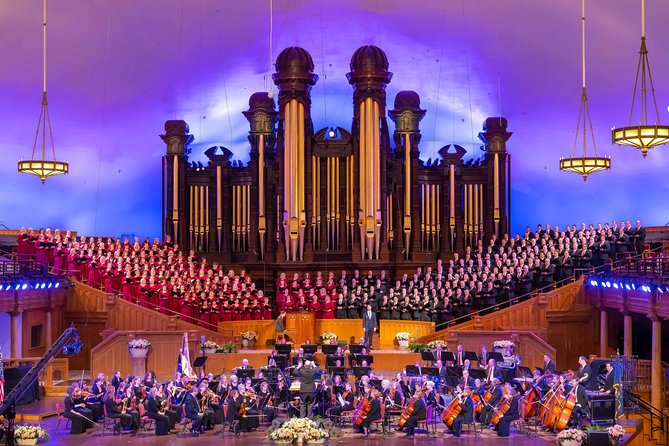
Your choir experience depends on the day you book:
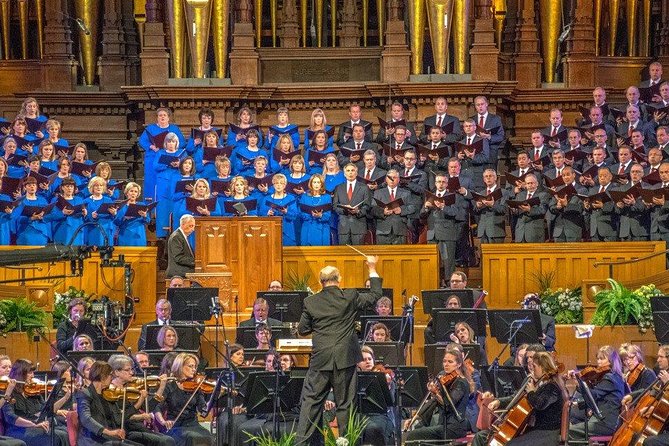
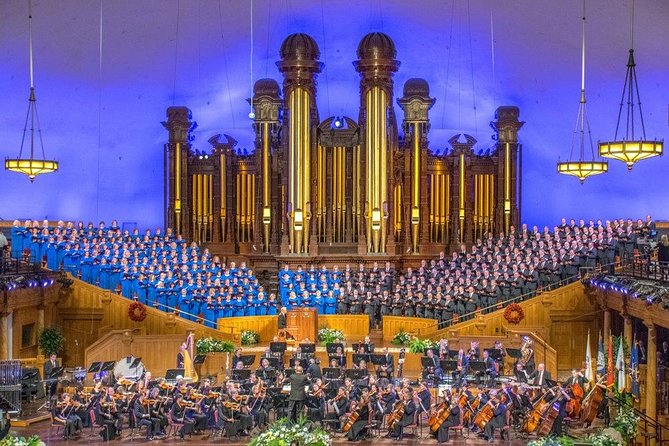
On Sunday, you attend a live broadcast of Music and the Spoken Word, the world’s longest-running continuous broadcast since 1929. You’ll sit with 360 voices performing inspiring music in Temple Square, at the Salt Lake Tabernacle (with the choir connected to the larger broadcast tradition that’s been running for generations). This choir has also performed for six U.S. Presidents—so yes, it carries serious cultural weight.
On Thursday, you shift from a full program to something more behind-the-scenes. You can watch the choir’s weekly rehearsal with exclusive access. It’s typically the sort of thing most visitors never get—watching the conductor work with the ensemble, hearing multiple performances, and experiencing the room in a way that feels close and human.
The venue may change by season
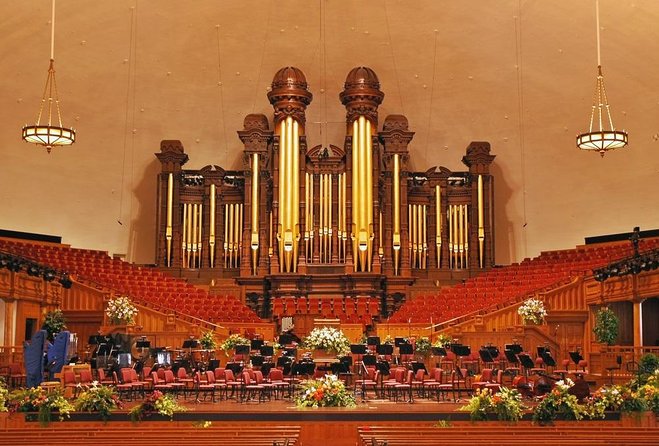
Depending on the time of year, the choir performance may take place at the Historic Salt Lake Tabernacle or at the LDS Conference Center (during summer, the performances move to the Conference Center). Either way, the day is about acoustics. This isn’t marketing fluff: the Tabernacle is known for hearing extremely soft sound—described as hearing a pin drop from far away—plus the signature organ presence (the Tabernacle Organ has 11,632 pipes).
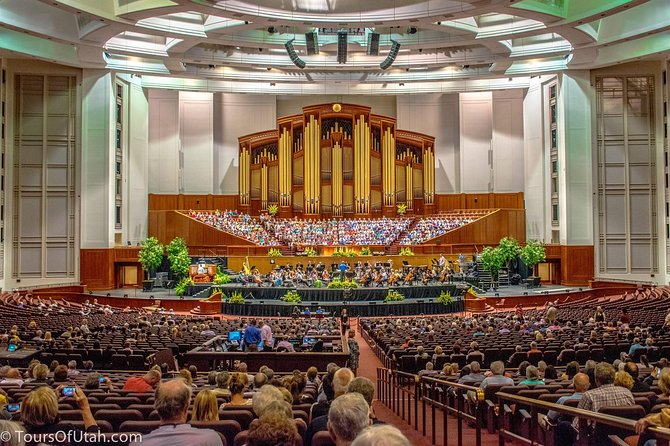
The Conference Center is the modern counterpoint: it seats about 21,000 people and is designed for advanced acoustics, with a 7,667-pipe organ. If you like the idea of hearing a historic music tradition inside a state-of-the-art hall, this is a great pairing.
The bus loop: how Salt Lake City becomes understandable fast
After the choir, you go into tour mode—bus, narration, and stops that translate the city into a readable “map story.” The timing is tight, and that’s partly the point: you come away with the major neighborhoods and landmarks placed in your head.
The Utah State Capitol sets the tone
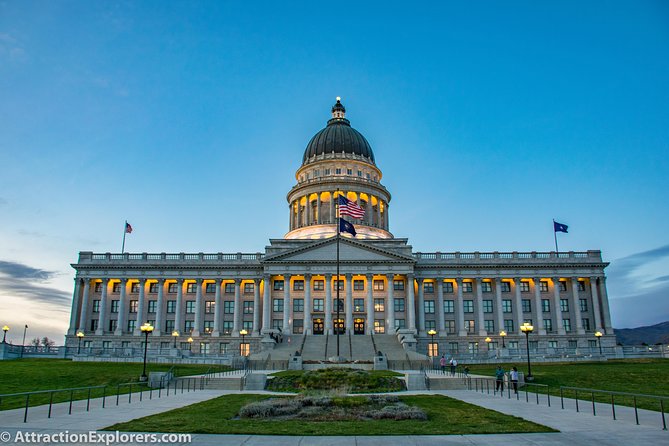
You start near the Utah State Capitol, a Neoclassical building completed in 1916 with a copper dome that rises 285 feet. The big value here isn’t just architecture—it’s what the guide explains about Utah’s path to statehood and the symbolism inside the rotunda. You also get that classic view setup from Capitol Hill, framed by the Wasatch Mountains.
One practical note: the Capitol is impressive, but it can feel like a quick taste. If you love museum time, this is still worth it, just don’t expect a long, slow interior visit.
Pioneer migration stops: where the city’s origin story clicks
Then you move into the pioneer narrative. The tour takes you through several places where you can picture the 1,300-mile journey from Illinois and understand why this valley became a destination.
- Mormon Pioneer Trail / Mormon Battalion / trail markers: You’ll hear how the migration shaped settlement, and you’ll also get a broader lens through the Mormon Battalion Monument—a tribute to 500 Latter-day Saints who enlisted during the Mexican-American War and completed a 2,000-mile march.
- This is the Place Heritage Park: This is where the Brigham Young moment gets anchored. You’ll learn about the 1847 arrival and the 60-foot monument commemorating the pioneers’ “right place” decision, plus you’ll enjoy the park atmosphere.
- This is a “see it and feel it” section: the bus gets you there; the guide gives the story; and you leave with a sense of geography rather than just names.
If you’ve ever tried to read about Mormon pioneer history on your own and felt stuck, the tour format helps. It ties landmarks to the people moving through them.
Temple Square: the heart of everything
The tour spends time at Temple Square, the spiritual and historical center set on 10 landscaped acres. If you’re trying to understand why Salt Lake looks the way it does, Temple Square is the fastest key.
You’ll get stops around:
- the Salt Lake Temple (you’ll admire the granite exterior and learn the 40-year construction timeline; the interior is reserved for Church members, so you’re mainly there for exterior context and photo views),
- the historic Tabernacle building,
- the Assembly Hall (Gothic-style, built with leftover temple granite, and connected to early community worship),
- and major Temple Square features such as the Eagle Gate and pioneer monuments.
The Meridian Marker and Brigham Young monument help too. They connect the city layout to land surveying—how a frontier outpost became a mapped center.
Other faith and architecture stops add real perspective
Salt Lake City isn’t just one tradition, and the tour reflects that. You’ll stop at places like the Cathedral of the Madeleine, the only Catholic cathedral in Utah, known for Gothic Revival spires and stained glass (plus the fact that it was built in a largely Latter-day Saint city and later restored).
You’ll also pass or view other architecture-related landmarks that broaden the city beyond Temple Square, including the Salt Lake Masonic Temple (neoclassical, completed in 1927). It’s a quick outside look, but it adds a useful layer: Utah’s downtown growth includes civic and fraternal pride, not only religious landmarks.
Olympic-era Salt Lake shows up in the middle
For modern Salt Lake context, you’ll see Olympic symbols like the Olympic Cauldron Park and also get a look at venues connected to the 2002 Winter Games era. It’s not a deep history lesson in every stop, but the guide ties it to why the city changed its image and infrastructure after hosting athletes from around the world.
The result is a city that feels like two timelines: pioneer roots, then modern Salt Lake growth.
The stop-by-stop feel: what you’ll notice at each one
Even though this is a highlights loop, each stop has a job. Here’s the practical way to read it.
Temple Square Visitors’ Center and Assembly Hall
Early in the Temple Square time, you’ll get a grounding stop at the Temple Square South Visitors’ Center. It’s designed to explain the “why” before you wander into the iconic views. From there, Assembly Hall adds texture: it’s smaller, older in the pioneer feel, and it helps you picture worship and community gathering in the early days.
City Hall and Capitol Hill
The Capitol is the headline, but you’ll also see civic architecture like the City and County Building (Romanesque Revival, sandstone, with a clock tower rising 256 feet). It gives you a sense of how Salt Lake built “serious” government buildings while still honoring its pioneer identity.
Downtown transitions: City Creek Center and The Gateway
As the tour moves toward downtown modern life, you’ll see places like:
- City Creek Center—a large mixed-use destination designed to blend retail with outdoor landscaped spaces and a restored creek,
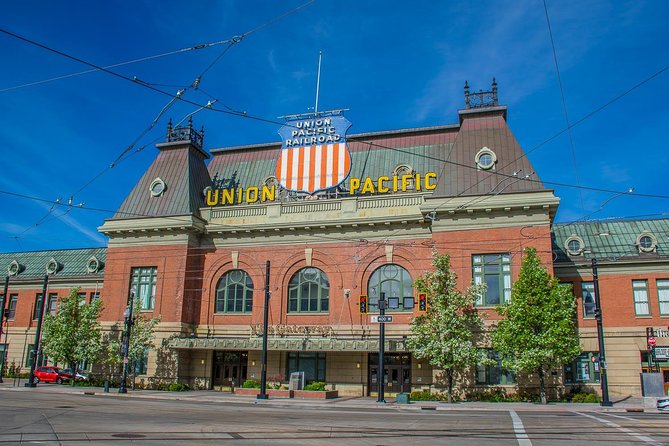
- The Gateway—an entertainment and public space that replaced a rail-yard area and ties back to the Olympic transformation story.
These stops are short. But if you’ve never been to Salt Lake’s downtown core, they’re the difference between seeing buildings and understanding how the city re-shaped itself.
University and arts stops
You’ll also pass or view the University of Utah area landmarks like Rice-Eccles Stadium (Olympic ceremonies connection) and Kingsbury Hall (performing arts venue). You might only get a minute here, but it helps you place why Salt Lake feels like a campus city with big community venues.
Pacing and comfort: avoiding the rush feeling
This tour is compact, and you’ll likely be on and off the bus several times. That’s the tradeoff for packing in choir plus a large city circuit.
If you want the best experience without getting annoyed, do these two things:
- Plan your mindset: think orientation, not slow sightseeing.
- Bring basics for a short day: a review mentioned bringing water and a fully charged camera, and honestly that’s smart for any 3.5-hour outing with multiple stops.
Also, note the children rule. For Sunday concerts, kids under age 8 may be seated separately because of sensitive acoustics and sound recording equipment. If you’re traveling with young kids and the Sunday choir is your priority, plan around that.
Choir rehearsal timing can feel flexible
In rehearsal mode (Thursday), there can be moments where you may have the ability to leave early or stay longer, depending on how the session runs. That’s a nice perk if you’re traveling with older kids or if you’re sensitive to sitting still for long stretches.
Value check: is $89 for 3.5 hours a smart buy?
At $89 per person for about 3 hours 30 minutes, this is usually a good value when you factor in two things you can’t DIY as well: the choir access and a guided “story spine” for the city.
What makes the price make sense:
- Choir ticket is effectively the anchor: the Tabernacle Choir part is the big-ticket emotional and cultural draw, and you get it as a live experience (either Sunday broadcast format or Thursday rehearsal).
- You get local narration in an air-conditioned bus: that’s not just entertainment. It helps you connect Temple Square, Capitol Hill, pioneer landmarks, and modern downtown without building a research plan.
- Small group size: up to 30 people means you’re not lost in a huge crowd.
What might make the price feel less perfect:
- If you want deep time in only a few sites, the number of stops can feel like a speed-run. One critique was that the pacing made it feel rushed at times, with time pressure around nearby retail stops. That doesn’t mean the tour is bad, just that it’s built for first-time orientation, not slow wandering.
Who should book this tour?
Book it if:
- you want a first-time Salt Lake orientation that you can build on later,
- you care most about the Tabernacle Choir (Sunday broadcast or Thursday rehearsal),
- you don’t want to rent a car or you’d rather have the logistics handled.
You might skip it if:
- you hate feeling rushed and want long stays at just a couple of locations,
- you’re traveling with kids who need a predictable seating setup (especially for Sunday, due to the under-8 separation rule).
A note on guides: the tour’s personality matters
One reason this experience gets consistently high marks is the way guides shape the day. I’ve seen names like Matthew, Todd, and Mark mentioned for clear narration and keeping the story flowing from the bus to Temple Square. On some choir-focused days, you may also meet a former choir member joining the group for extra insight—one example was Bob, which adds a “you’re hearing this from someone who lived it” layer.
Should you book the Tabernacle Choir + Salt Lake City guided bus tour?
If your trip includes Salt Lake City for only a short time, I’d book this. The choir component alone is worth planning around, and the bus tour is the right size to help you understand what you’re looking at afterward. You’ll come away with the big landmarks placed in context, plus a music experience that’s hard to match in any other venue.
If you’re picky about pacing, aim for the mindset of a highlights orientation day. Then do follow-up sightseeing on your own where you want more time—Temple Square grounds, specific neighborhoods, or the university/arts side of downtown—now that you’ve got the story straight.
FAQ
How long is the Tabernacle Choir + Salt Lake City guided bus tour?
It runs about 3 hours 30 minutes.
What is included in the tour price?
You get live access to the Tabernacle Choir, guided bus commentary, and an air-conditioned vehicle.
Is the choir experience different on Thursday vs Sunday?
Yes. Thursday offers an intimate weekly rehearsal experience. Sunday is set up around the live broadcast format of Music and the Spoken Word.
Where does the tour start and end?
It starts at the Radisson Hotel Salt Lake City Downtown, 215 W S Temple St, Salt Lake City, UT 84101, and ends back at the same meeting point.
Where does the choir performance take place?
Depending on the time of year, it may be at the LDS Conference Center or the Historic Salt Lake Tabernacle in Temple Square.
Can I see the inside of the Salt Lake Temple?
The interior is reserved for Church members, so the tour focuses on the exterior and photo opportunities.
Are there limits on group size?
Yes, the maximum group size is 30 travelers.
Is the tour offered in English?
Yes, the tour is offered in English.
What about kids under age 8 on Sunday?
Kids under 8 may be seated in a separate location for Sunday due to sensitive acoustics and sound recording equipment.
FAQ
How long is the Tabernacle Choir + Salt Lake City guided bus tour?
It runs about 3 hours 30 minutes.
What is included in the tour price?
You get live access to the Tabernacle Choir, guided bus commentary, and an air-conditioned vehicle.
Is the choir experience different on Thursday vs Sunday?
Yes. Thursday offers an intimate weekly rehearsal experience. Sunday is set up around the live broadcast format of Music and the Spoken Word.
Where does the tour start and end?
It starts at the Radisson Hotel Salt Lake City Downtown, 215 W S Temple St, Salt Lake City, UT 84101, and ends back at the same meeting point.
Where does the choir performance take place?
Depending on the time of year, it may be at the LDS Conference Center or the Historic Salt Lake Tabernacle in Temple Square.
Can I see the inside of the Salt Lake Temple?
The interior is reserved for Church members, so the tour focuses on the exterior and photo opportunities.
Are there limits on group size?
Yes, the maximum group size is 30 travelers.
Is the tour offered in English?
Yes, the tour is offered in English.
What about kids under age 8 on Sunday?
Kids under 8 may be seated in a separate location for Sunday due to sensitive acoustics and sound recording equipment.