Istanbul hits fast, so ride smart. This open-top hop-on hop-off bus turns a long city into a simple loop, with major stops from Sultanahmet to the Asian side and an audio guide you can follow as you go.
I like that you can do this one-day overview at your pace. English commentary helps a lot, and the hop-on flexibility means you can linger at the markets or move on when crowds get thick.
The big trade-off is time. If traffic is heavy or the bus is delayed, you can end up spending less time at stops than you planned, and some audio/headset setups may not work perfectly.
In This Review
- Key highlights worth your attention
- How the open-top hop-on hop-off format helps you plan Istanbul
- Sultanahmet Square: Hagia Sophia, the Blue Mosque, and that “I’m here” feeling
- Eminönü: The Spice Bazaar and Grand Bazaar area without the map headache
- Karaköy and Galataport: Cafes, Ottoman bones, and a modern waterfront reset
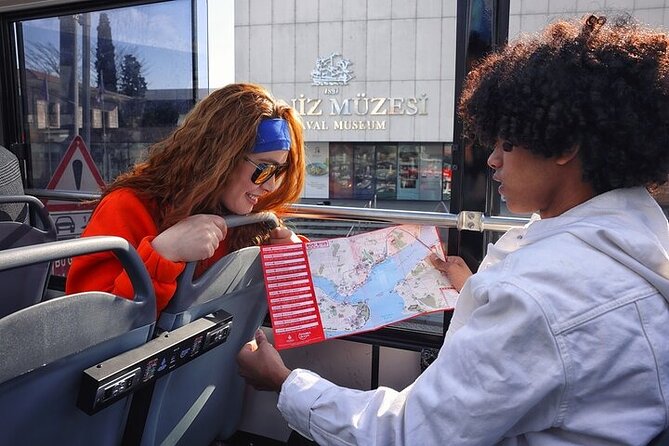
- Dolmabahçe and the Naval Museum: Ottoman power with Bosphorus backdrop
- Beylerbeyi Palace on the Asian side: a calmer Bosphorus pause
- Beşiktaş Çarşısı, Taksim, and Istiklal: markets to city energy
- Şişhane Sokak and your final runback toward Sultanahmet
- Ticketing, audio, and the common “this can go wrong” issues
- Timing and traffic: why your day can shrink even when buses are running
- Price and value: is $68 really worth it?
- Who should book this Istanbul hop-on hop-off bus (and who should skip)
- Final call: should you book this Istanbul hop-on hop-off bus tour?
- FAQ
- How long is the Istanbul hop-on hop-off bus tour?
- What language is the audio guide offered in?
- What does the tour include for tickets?
- Where does the tour stop during the day?
- How much does the tour cost?
- Is confirmation received after booking?
- What is the cancellation policy?
Key highlights worth your attention
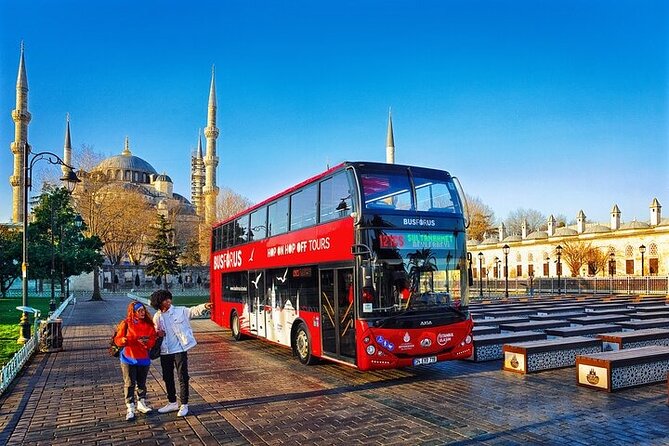
- Open-top views for Sultanahmet domes, Bosphorus waterfronts, and skyline moments
- Audio guide in English (plus other language choices) so you’re not stuck reading alone
- Sultanahmet to Taksim coverage in one day for first-time orientation
- Markets built into the route, including Egyptian/Spice Bazaar and the area around it
- Bosphorus palaces on the itinerary, including Dolmabahçe and Beylerbeyi
- Real-world timing can vary, especially in peak downtown traffic
How the open-top hop-on hop-off format helps you plan Istanbul
This tour is built for the classic Istanbul problem: the sights are spread out, and the traffic can turn a “quick stop” into a slow slog. The hop-on hop-off setup is meant to solve that by giving you one main vehicle route, then letting you choose which stops deserve your feet and which ones you just view from the top deck.
The best part is that you can treat the bus as a moving orientation tool. If you want to shop at the Spice Bazaar area, you can jump off and come back when you’re done. If you’d rather just see the big architecture from the ride, you can stay onboard and get the timeline of districts without committing to every walk.
Just go in with realistic expectations: you’re paying for convenience and coverage, not guaranteed speed.
Sultanahmet Square: Hagia Sophia, the Blue Mosque, and that “I’m here” feeling

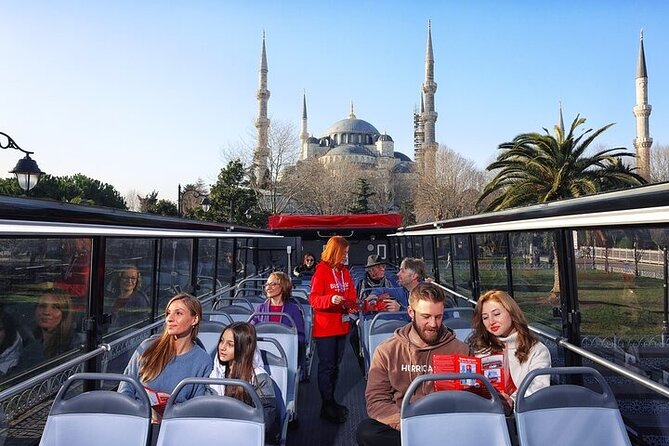
Sultanahmet is where the visuals are instantly recognizable. You’ll be close to the mosaic-filled Hagia Sophia mosque and the Ottoman-era Blue Mosque, with its prominent minarets. The area also ties in famous landmarks like the Egyptian Obelisk of Theodosius and the old Stone of Million ruin, plus square gardens, fountains, and a park.
Why this stop matters: it’s the emotional center of many Istanbul trips. Even if you don’t plan a full museum day, the bus angle here helps you understand how close these landmarks are and where the streets funnel you next.
One practical consideration: this is a crowd magnet. If you’re hoping for quiet photos, pick a realistic time window and don’t plan to “do everything” in one short burst. Use the bus to set your bearings, then focus on whichever site you care about most in the moment.
Eminönü: The Spice Bazaar and Grand Bazaar area without the map headache
In Eminönü, you’re in the thick of ferry docks, bazaars, and day-to-day city life. This is where the bus route makes sense for most first-timers: you get dropped near the action rather than having to piece together multiple transit rides with Istanbul’s traffic and signage.
Your standout here is the Egyptian Bazaar, also called the Spice Bazaar. Expect stalls full of fruit, teas, spices, and everyday shopping items that look better in real life than in photos. The Grand Bazaar halls sit nearby too, packed with the usual mix of carpets, textiles, lamps, and jewelry.
Also in this neighborhood, you’ll pass by or get close to major religious landmarks such as Süleymaniye Mosque and the tile-famous Rustem Pasha Mosque (known for Iznik tiles). That means you’re not just shopping—you’re getting a quick sense of the city’s religious and cultural geography too.
Tip that saves time: if you want both bazaar browsing and mosque time, don’t assume you can do it all in one hop-off window. Choose. A short, well-paced visit beats trying to “complete” everything.
Karaköy and Galataport: Cafes, Ottoman bones, and a modern waterfront reset
Karaköy is a harborside district where you’ll see a mix of hip cafes and late-night spots alongside older neighborhood businesses. The visual style is different from Sultanahmet: more street art on Ottoman-era structures, plus modern galleries tucked into the streets.
A specific draw here is the Kılıç Ali Paşa complex, which includes a mosque and therapeutic baths. Even if you don’t go inside, it helps to know the stop isn’t just “trend district” but also a cultural layer from the 16th century.
Then the route continues to Galataport, a cruise ship port and mixed-use area in Galata on the European side near where the Bosphorus meets the Golden Horn. This is a good place to take a breath between dense sightseeing blocks, especially if you want a waterfront pause.
Practical note: cruise ports can feel busy depending on ship schedules. If your timing is tight, use Galataport as your quick reset point rather than a deep-dive stop.
Dolmabahçe and the Naval Museum: Ottoman power with Bosphorus backdrop
Dolmabahçe Palace is on the European coast of the Bosphorus in Beşiktaş. It served as a major administrative center of the Ottoman Empire for long stretches, and the palace is also tied to the empire’s later period when power and governance were shifting. If you enjoy “grand scale” architecture, this stop gives you a clear visual contrast with the older stone-and-mosaic atmosphere of Sultanahmet.
Next, you hit the Istanbul Naval Museum in Beşiktaş. It was established in 1897 by the Ottoman Minister of Navy Bozcaadalı Hasan Hüsnü Pasha, and it focuses on military artifacts from the Ottoman Navy.
Why I think this pairing works: it anchors you in two different kinds of Ottoman storytelling—administration and maritime power—while keeping you on the Bosphorus side of town where the views help your pacing.
If you’re short on time, don’t force a full museum plan at both palace and naval stop. Choose one as your “must-see” and let the other be a photo-and-walk visit.
Beylerbeyi Palace on the Asian side: a calmer Bosphorus pause
To cross the Bosphorus vibe more clearly, the route includes Beylerbeyi Palace on the Asian side in Üsküdar. Beylerbeyi means Lord of Lords, and the palace is an Ottoman imperial summer residence built between 1861 and 1865.
It’s also described as being immediately north of the First Bosphorus Bridge, which is useful context: you’re not just seeing a palace in isolation. You’re seeing it in the real geography of Istanbul’s modern connections.
This is a great stop if you like palace visits but want a slightly different mood than the European-side heavy-hitters. The Asian side can feel like a better “breathing space” depending on day and crowd levels.
Beşiktaş Çarşısı, Taksim, and Istiklal: markets to city energy
Büyük Beşiktaş Çarşısı (the Beşiktaş Bazaar) is a Sunday market where the scene is part shopping, part social life. You’ll see colors and a wide range of goods, from everyday items like tomatoes up to high-end jewelry. It’s the kind of stop where you don’t need a shopping list to enjoy it.
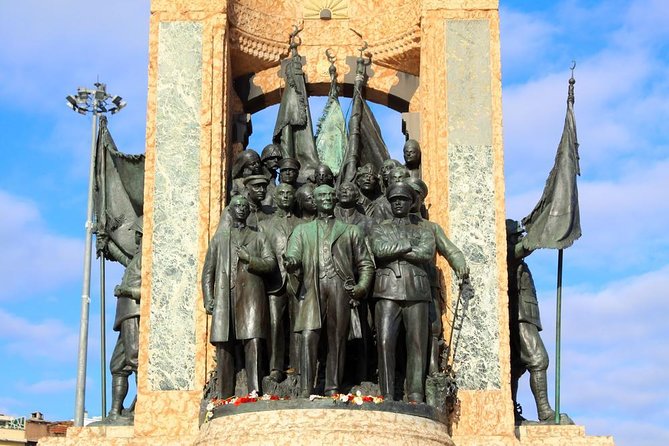
Then you move to Taksim Square, which fans out into one of Istanbul’s main nightlife, shopping, and dining zones. You’ll find the Republic Monument, plus vintage trams running along İstiklal Caddesi, the city’s main pedestrian boulevard lined with 19th-century buildings, shops, movie theaters, and cafes.
One practical reason this stop is valuable: it’s easy to start planning “after the bus.” If you get off near Taksim, you can build a flexible evening with side streets, bars, antique shops, and rooftop dining spots that claim Bosphorus views.
If you’re sensitive to noise, plan for it here. Taksim is not a quiet sightseeing stop.
Şişhane Sokak and your final runback toward Sultanahmet
Şişhane Sokak is a street that’s changed over time. It was known for lighting shops and heavy traffic, but the area is being transformed, with fin-de-siècle buildings and easier access thanks to the metro station. The name has roots tied to a former municipal office, which adds a small historical thread to the street-level vibe.
Toward the end, the route brings you back toward the Egyptian Bazaar area again and then returns to Sultanahmet to close the day.
This “loop back” structure is helpful if you want one more look at markets before you head out. Just remember: the longer you leave your key stops for later, the more likely you are to feel rushed if timing slips.
Ticketing, audio, and the common “this can go wrong” issues
On paper, this kind of tour is straightforward: mobile ticket, hop-on at stops, pick your audio language, and go. In real life, the difference is how smoothly the audio and ticket validation work.
A few issues show up repeatedly in the real-world experience:
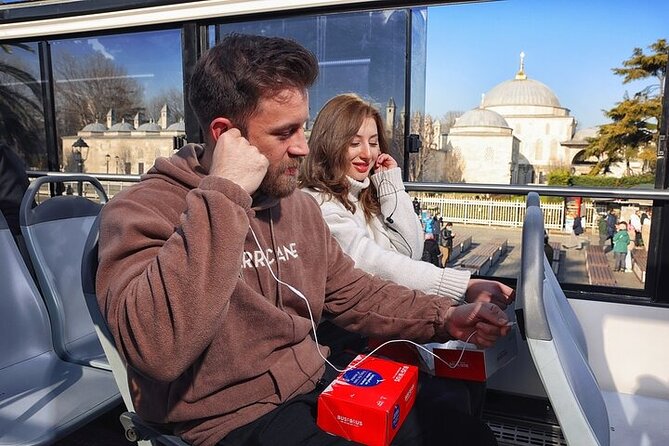
- Audio can be too quiet or hard to understand depending on where you sit.
- Some buses can have seat-level audio outlets that don’t work, pushing you into awkward situations.
- Recorded commentary can be out of sync with what you’re looking at.
- Voucher/ticket handling can be painful if your downloaded pass isn’t accepted exactly as expected at the bus.
My practical advice: once you board, test the audio quickly and sit where you get a clear sound channel. If you’re relying on audio for the “what am I looking at” part, don’t assume every outlet and every volume level will be perfect.
Also, if you plan to go through a third-party voucher process, be mentally ready for a possible ticket kiosk or extra confirmation step. One smoother plan is buying directly from the operator site (Excursionbazaar.com) so you’re not playing phone/tag at the start.
Timing and traffic: why your day can shrink even when buses are running
Istanbul traffic is the real boss fight on days like this. Even if the bus follows a schedule at the start, downtown congestion can stretch the whole loop, and stop times can feel shorter once you’re stuck in gridlock.
Some experiences report long stretches stuck in traffic, and others report that hop-off time at certain stops was less than what the printed plan suggested. There are also complaints about coordination when street activity or protests crowd the area, causing detours or delays.
Here’s how I’d protect your day:
- Start early and treat your “must-see” stop as the first one you want to do.
- If you’re tight on timing for dinner reservations or a cruise pickup, build a cushion. Don’t assume the bus will save you if things go sideways.
- If you want bazaar time, keep your expectations tight. Decide what you want to buy or see before you hop off, so you don’t lose an hour just wandering.
One rider even reported that the hop-on service stopped running around 5:45 pm, leaving people scrambling to reach a cruise ship area by tram. If you’re connecting to a ship or a strict departure, plan a backup route that doesn’t depend on waiting for the next bus.
Price and value: is $68 really worth it?
At $68 per person for an approximately one-day experience, the price is in the “good convenience value” range. But whether it feels like a win depends on what you’re trying to get out of the day.
This bus is best value when you do two things:
1) Use it for orientation across districts you might not connect easily on your own.
2) Pick 2–4 stops you truly care about, then use the rest as context.
The value drops fast if you expected the hop-off windows to be generous and instead spend much of the day in traffic or waiting for departures. You can also lose value if audio is hard to hear and you end up feeling like you paid for a route you didn’t fully understand.
If you only want two sites, it may be cheaper and less stressful to use transit (tram/metro/ferry) and taxis to get direct to those locations. Some people also compare costs to a private car with driver, especially when traffic makes the bus loop feel long.
So here’s my straight take: if you want a guided-style overview and you’re flexible with timing, $68 can be a solid deal. If you’re scheduling like a stopwatch or you hate crowds, you may feel ripped off.
Who should book this Istanbul hop-on hop-off bus (and who should skip)
This tour makes sense if you’re:
- On your first trip to Istanbul and want an easy city overview without building a route
- Interested in mixing Sultanahmet landmarks, a big market stop, Bosphorus palaces, and a lively city area like Taksim
- Comfortable with the idea that traffic and crowd levels can change your day
I’d skip or rethink if you:
- Have very strict time windows for a cruise departure or a single evening event
- Need crystal-clear audio to enjoy your sightseeing, and you’re sensitive to audio outlet issues
- Want a fast, efficient day with minimal waiting
And one more practical match: if you’re the type to enjoy people-watching in areas like Taksim and to browse markets without turning it into a full shopping mission, this route can feel fun rather than exhausting.
Final call: should you book this Istanbul hop-on hop-off bus tour?
Book it if you want an easy one-day framework across European and Asian sides, with audio narration and frequent chances to get off near major sights. It’s especially useful for getting your bearings around Sultanahmet and the bazaar districts, plus getting Bosphorus palace context without planning every transit step.
Skip it if you’re hoping for speed and perfect coordination. Treat the timetable as flexible, and if your day depends on exact timing, add buffer and have a backup transit plan.
If you do book, the smartest move is to verify your ticket process before you arrive, then test your audio right away so you’re not stuck guessing what you’re seeing.
FAQ
How long is the Istanbul hop-on hop-off bus tour?
It’s listed as 1 day, approximately. The stops are arranged as a full-day loop ending back at Sultanahmet.
What language is the audio guide offered in?
The tour offers audio in English, and you can listen to the audio guide in a language of your choice.
What does the tour include for tickets?
You receive a mobile ticket.
Where does the tour stop during the day?
Key stops include Sultanahmet, Eminönü (Spice Bazaar area), Karaköy, Galataport Istanbul, Dolmabahçe, the Naval Museum, Beylerbeyi Palace, Beşiktaş Çarşısı, Taksim Square, Şişhane Sokak, and then it returns toward the Egyptian Bazaar and ends in Sultanahmet.
How much does the tour cost?
The price is $68.00 per person.
Is confirmation received after booking?
Yes. Confirmation is received at the time of booking.
What is the cancellation policy?
You can cancel for a full refund if you cancel up to 24 hours in advance. If you cancel less than 24 hours before the start time, the amount paid is not refunded.