Your best Trieste intro fits in 90 minutes, and the audio guide rides with you through the waterfront and the old town. I love the hop-on hop-off freedom to choose where to linger, but you’ll need to coordinate your timing to get back on, and the San Giusto stop is affected by roadworks. If you’re short on time, this is a smart way to get oriented fast—without sacrificing the big sights.
This is a comfortable, city-center-friendly loop that gives you a clear sense of Trieste’s geography: sea first, then hilltop views, then the historic core. The ride is 1.5 hours, but your ticket is valid for 24 hours, so you can spread it across a day (or even two) and build your own walking plan.
Key highlights at a glance
- Synced multi-language audio as you pass each landmark (English, German, Italian, Spanish)
- 24-hour ticket that lets you return for another round without paying again
- Big waterfront hits like Molo Audace and the Barcola coast on one route
- Real city structure: port, Roman-era center, churches, then Miramare and sea views
- Helpful on-board assistance so you can plan hop-offs and your return
In This Review
- Starting at Molo Audace: the orientation win
- Hop-on, hop-off in real life: seats and timing
- Audio guide quality: what you’ll hear while the bus rolls
- Trieste stop-by-stop: from Roman streets to Miramare views
- Molo Audace and the waterfront story
- Unità d’Italia Square and the Mandracchio Shore
- Salone degli Incanti (Eataly area) for a quick break
- La Lanterna, lighthouse views, and Campo Marzio
- Trieste Maritime Museum and the Sea Museum area
- Venezia Square and the shift toward the historic center
- Roman Theatre area and Santa Maria Maggiore
- Orthodox Serbian Temple of Saint Spyridon and neighboring churches
- Vittorio Veneto Square, Grande Canal, and Ponterosso Square
- Piazza della Borsa and the civic core
- San Giusto Hill: Castle and Church, but roadworks affect the stop
- Goldoni Square, Carducci Boulevard, and tram station views
- Piazza della Libertà and the train station area
- Old Port engineering: Central Hydrodynamics pass-by
- Barcola: pinewood, beach, and seaside breaks
- Miramare Castle: the big payoff
- Greek Orthodox Church of Saint Nicolò and the final approach back
- Value and cost: what $20 buys you in Trieste
- Small drawbacks to plan for (so you don’t get annoyed)
- Who this tour suits best
- Before you board: quick checklist
- Should you book the Trieste Bus Tour with Audio Guide?
- FAQ
- How long is the Trieste bus tour?
- Is the audio guide included, and what languages are available?
- Can I hop off and get back on the same day?
- Where do I board the bus?
- Are pets allowed?
- Is the San Giusto stop operating normally?
Starting at Molo Audace: the orientation win

Most Trieste visitors come in expecting a postcard city. This bus tour gives you something better: a map in motion. You board at the Molo Audace area in front of Unità d’Italia Square, right where Trieste’s seafront story begins.
You’re also buying yourself time. In about 1.5 hours, the bus traces a loop that connects the main waterfront stretches, the old-city center, and the Miramare/Barcola side. That means you can spend your energy walking where you actually want to, instead of wandering randomly trying to understand what’s where.
The ride is designed for comfort: it’s an air-conditioned bus, and there’s a USB charger onboard. The audio guide is included in multiple languages (English, German, Italian, Spanish), and it’s timed to the route so you’re not guessing what you’re looking at while the bus moves.
Hop-on, hop-off in real life: seats and timing
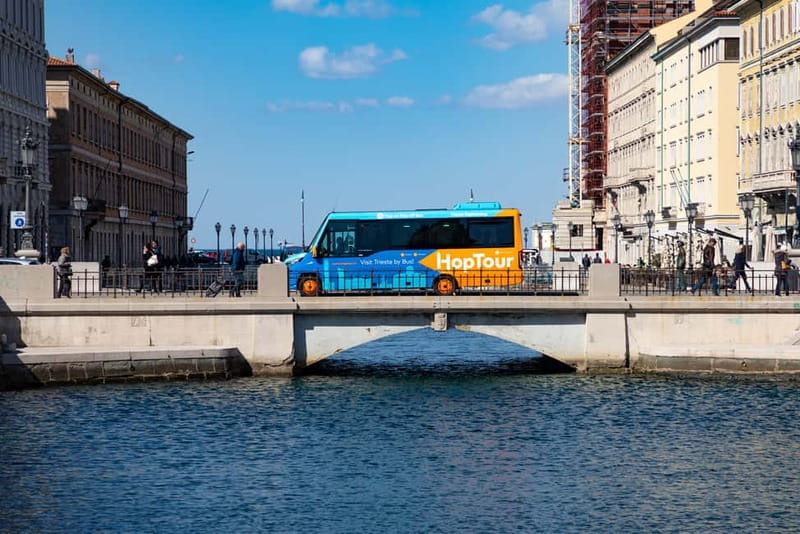
On paper, hop-on hop-off sounds easy. In practice, your experience depends on two details: the seat policy and how busy the route is.
Your ticket is valid for 24 hours. That’s great for building in flexibility—grab one long stop at Miramare, then come back later for San Giusto or the Roman core. But seat guarantee is tied to the specific course you booked, so when you hop back on, you may need to catch the next bus if there isn’t a free seat.
The staff system helps. On some stops, you’ll be asked for your name when you go back on, which is how the team helps make sure you’re not left behind. Still, if the bus is fully booked, you may find it harder to jump on and off freely at every stop. The best move is to plan your two or three “must-do” stops first, then use the others for quick looks.
One more practical tip: start early if you can. There’s enough time to enjoy the city, but gaps between buses mean you’ll get more out of the hop-off option when you’re not trying to cram everything into the last hour.
Audio guide quality: what you’ll hear while the bus rolls
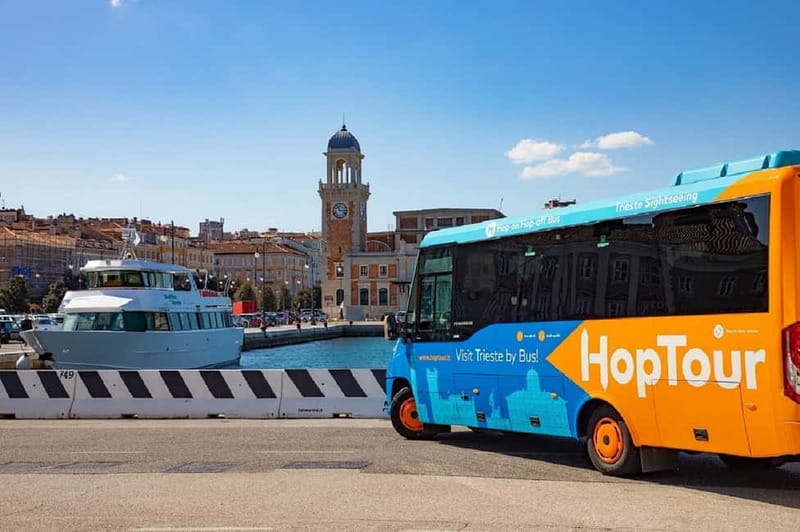
I like tours where the information matches the view. This one does that well. The audio guide is synchronized with the route, so you’re hearing context as the bus passes things like the Roman Theatre area, church landmarks in the center, and the coastline spots heading toward Miramare.
The languages are solid: you get English, German, Italian, and Spanish. And it’s delivered through an onboard system with the kind of clarity people tend to notice—multiple riders specifically praised the audio and how helpful it is for first-time orientation.
There are a couple of small caveats to keep in mind. One person reported a speaker issue for English on their ride, and on very hot days you may appreciate that the bus is air-conditioned—though at least one rider mentioned the air wasn’t working on their trip. If you’re sensitive to heat, it’s worth bringing a small fan or staying strategic with your hop-off timing.
Trieste stop-by-stop: from Roman streets to Miramare views
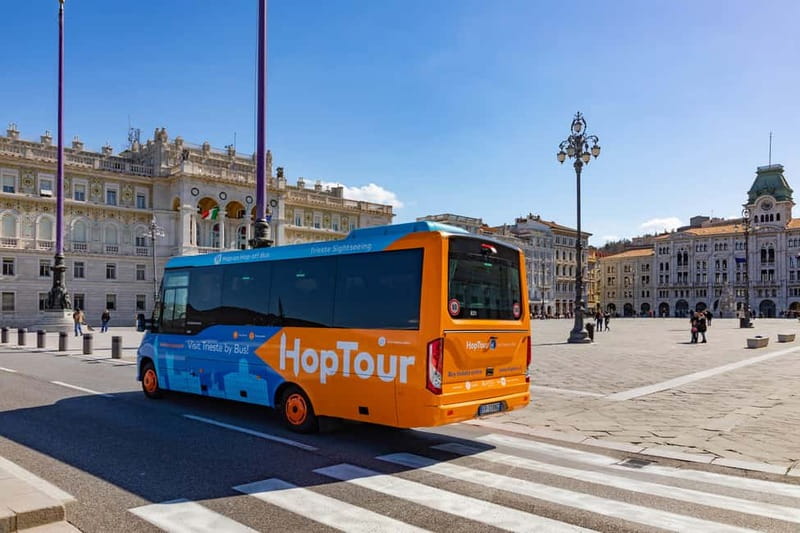
This loop is built to show you Trieste’s layers. Some stops are best for photos from the road; others are where you’ll want to get out and walk. Below is the route in a way you can actually use when you’re planning your day.
Molo Audace and the waterfront story
You start around Molo Audace, the seafront pier area that’s closely tied to Trieste’s maritime past. A standout detail here is the pier’s construction: it was built on the wreck of an older ship. That’s the kind of fact the audio guide brings to life, and it frames Trieste as a port city from minute one.
If you’re doing this on a cruise day, the location is also convenient—many cruise passengers appreciate being close to the start point so they’re not burning time in transit.
Unità d’Italia Square and the Mandracchio Shore
As you roll along the Mandracchio Shore, you’ll pass Unità d’Italia Square. This is where the city begins to feel more “working port” than “romantic postcard,” which is useful because Trieste really has both moods.
You don’t need to get out here for long. For most people, this segment is about understanding the waterfront layout so later stops make more sense.
Salone degli Incanti (Eataly area) for a quick break
Next up is the Nazario Sauro Shore area, including Salone degli Incanti and the Eataly stop nearby. This is a good option if you want a short pause for coffee, a snack, or a look around before continuing onward.
Even if you don’t plan to shop or eat, it’s a helpful stop because it anchors the more modern-looking waterfront points of the tour.
La Lanterna, lighthouse views, and Campo Marzio
As the bus reaches Via Ottaviano Augusto, you’ll pass the lighthouse and the La Lanterna Baths, near Campo Marzio Station. This is one of those “Trieste looks like the sea is part of the city” moments—good for photos and for understanding how the city’s coastline curves.
If you like maritime architecture or just want a change of scenery without changing plans, this is a smart place to hop off briefly.
Trieste Maritime Museum and the Sea Museum area
The Sea Museum appears on the route (near Campo Marzio Street), and it’s the kind of place you’d only choose if you know you’re interested. Even if you don’t go in, seeing it from the bus helps you map where the serious maritime attractions sit.
I’d use this stop as a “maybe” based on your interests and your remaining time.
Venezia Square and the shift toward the historic center
Heading onward to the Grumula Shore – Venezia Square area, you’re moving closer to Trieste’s older urban fabric. This stop works best if you want a photo reset before tackling the center.
It’s also a reminder that Trieste isn’t just a straight-line seafront walk. The city bends and rises, and this tour helps you see that structure early.
Roman Theatre area and Santa Maria Maggiore
One of the main cultural moments is near Teatro Romano Street, where the bus passes Santa Maria Maggiore Church and the Roman Theatre of Trieste. This is the part of the tour that makes Trieste feel older than you expected.
If you only get out once during the tour, this is a strong candidate. Even a short walk in this area can make the audio commentary feel real, not abstract.
Orthodox Serbian Temple of Saint Spyridon and neighboring churches
As you continue through Saint Spiridione Street, the route includes Maria Teresia and the Orthodox Serbian Temple of Saint Spyridione. From here, you also pass Saint Antonio Square and Church of Sant’Antonio Nuovo.
This is a fascinating section because Trieste’s faith landscape is part of its identity. The audio guide helps you connect what you see to why it exists, especially if you haven’t studied the city’s background before arriving.
Vittorio Veneto Square, Grande Canal, and Ponterosso Square
Next, you pass Vittorio Veneto Square, the Grande Canal, and Ponterosso Square. If you’ve ever heard Trieste compared to Venice, this is where that vibe begins to make sense.
Even if you don’t stay here long, it’s a useful mental checkpoint. You’ll feel the city center opening up, and your later stops in the port and at Miramare will line up more clearly in your head.
Piazza della Borsa and the civic core
The bus reaches Piazza della Borsa on Italia Boulevard. This is a key civic square in the tour loop—less about a single monument and more about how the city organizes its public space.
From a sightseeing standpoint, it’s great for orientation. You can treat it like a waypoint: if you’re deciding where to focus your walking time, you’ll know where you are after this pass-by.
San Giusto Hill: Castle and Church, but roadworks affect the stop
Now comes the hilltop. The route includes San Giusto Castle and Church, but here’s the issue: the Bus stop n. 6 on San Giusto Hill has been suspended due to roadworks. That changes how easy it is to reach the castle area directly from this bus.
If San Giusto is a top priority for you, plan extra walking time or build in a buffer. This is especially important for people who don’t want long climbs.
One of the most common reasons people like this tour is that it can help you avoid tough walking early in your day. Still, with the stop suspended, you’ll want comfortable shoes and realistic expectations.
Goldoni Square, Carducci Boulevard, and tram station views
As you move through Piazza Carlo Goldoni and Via Giosuè Carducci, you’re back in the flow of the central city. The route also passes Oberdan Square, near a Tram Station.
These parts of the loop matter because they show you where Trieste’s street life lives between the big monuments. They’re also where you can use the bus like a reset button: get off for a short walk, then return when you’re ready.
Piazza della Libertà and the train station area
Passing Libertà Square means you’re close to the Train Station. This isn’t just a landmark for logistics; it helps you see how the city connects to rail travel and how close the core is to the transit network.
If you’re arriving by train or moving onward later, this stop is useful for planning your next step.
Old Port engineering: Central Hydrodynamics pass-by
The route includes Central Hydrodynamics of the Old Port of Trieste. It’s a more niche stop, but that’s why it’s interesting: Trieste isn’t only about architecture; it also shows the city’s port technology and industrial character.
Even if you don’t go in, passing it keeps the tour grounded in how the city works.
Barcola: pinewood, beach, and seaside breaks
When the bus heads to Barcola, you’ll get a long run of sea-and-coast visuals. Included in the route are the Pinewood of Barcola, Barcola Beach, and Barcola Seafront areas like Topolini Baths.
This is where I’d focus if you want a calmer break from concentrated historic sight-seeing. If you’re traveling in warmer months, this stretch is also where you’ll appreciate simply getting out, stretching your legs, and taking in the sea air.
One practical caution: Miramare is served, but not always right at the castle gate. If you hop off near Barcola Crossroads toward Miramare Castle, be ready for some walking—one rider called out a longer walk from the bus stop to the castle grounds on a hot day.
Miramare Castle: the big payoff
The route passes Miramare Castle along Miramare Boulevard, with a sequence that includes nearby port and seaside points like the Old Port area and Barcola Crossroads. This is where Trieste’s glamour side shows up: sea, cliffs, and a castle that looks like it belongs to a different century.
If you have time, make Miramare your main stop. Even if you don’t go inside, the views from the outside can be the best return on your tour ticket.
Greek Orthodox Church of Saint Nicolò and the final approach back
Before looping back, the route includes Greek Orthodox Church of Saint Nicolò near the Miramare/return side of town. Then you end back at Molo Audace (the tour completes the loop).
If you’re trying to plan for your second round on the 24-hour ticket, this final approach is a good moment to decide what felt most worth revisiting on foot.
Value and cost: what $20 buys you in Trieste
At $20 per person for about 1.5 hours, this tour is good value when you use it for what it’s best at: orientation plus smart “where should I walk?” guidance. The ticket doesn’t include entrance fees, so you still pay for museums or castles if you choose to go in. But you’re paying for the transport, the route logic, and the commentary that helps you pick priorities.
The value spikes if you have a time crunch. A single day in Trieste can scatter your energy across port areas, churches, and hilltop views. This bus compresses that spread into one plan. If you’re arriving by cruise or want to avoid a long day of back-and-forth, the timing and central meeting point help.
The 24-hour validity is the big “why” behind the price. You can treat this as two half-days: one round to spot what you care about, the second round to return to the stops that earned your attention. Just remember the seat rules: you might need to time your hop-backs.
Small drawbacks to plan for (so you don’t get annoyed)
For a smooth day, watch these points:
- Roadworks near San Giusto can reduce how directly the bus serves the castle/Church area.
- Miramare stop distance may mean extra walking, especially in heat.
- Hop-on hop-off depends on seats. If you’re hopping frequently when the bus is full, you might not get off and back on as easily as you hoped.
- One audio/air-conditioning hiccup can happen occasionally, so keep your expectations flexible.
If you go in knowing the bus is a guide plus transport, not a perfect valet to every door, you’ll enjoy it more.
Who this tour suits best
I’d recommend this bus tour if:
- you want a first-day orientation for Trieste’s layout
- you’re on a tight schedule and want the major sights grouped in one route
- you like historic city context but don’t want to research for hours before arriving
- you want Miramare and the Barcola coast without getting stuck figuring out public transport
I’d be more cautious if:
- you have limited mobility and hilltop access matters (San Giusto is affected by roadworks)
- you dislike plans that depend on buses arriving on time and seating availability
- you’re expecting the bus to drop you directly at every attraction entrance
Before you board: quick checklist
- Bring comfortable shoes for optional hop-offs, especially near castle grounds.
- If you’re bringing a pet, note that pets are allowed only if wearing the muzzle.
- Bring a pair of headphones/earphones if you prefer, though the tour provides what you need for the audio experience.
- If you want to do Miramare and San Giusto, decide in advance which is your “long stop,” since your best day is built around two priorities.
Should you book the Trieste Bus Tour with Audio Guide?
Yes—if you want an efficient, budget-friendly way to understand Trieste and not miss the major highlights. The 24-hour ticket makes it especially worth it, because you’re not stuck with a single, locked-in 90-minute experience. You’re buying the chance to learn the city as you ride, then return on your own for the parts that grabbed you.
Skip or adjust your expectations if roadworks and walk distances are deal-breakers for you, or if you’re counting on constant hop-on hop-off freedom when the bus is crowded. If you plan around a couple of anchor stops and let the rest be quick views, this tour is a solid way to get your bearings fast.
FAQ
How long is the Trieste bus tour?
The bus tour lasts about 1.5 hours.
Is the audio guide included, and what languages are available?
Yes. The audio guide is included and is available in English, German, Italian, and Spanish.
Can I hop off and get back on the same day?
Yes. The tour is hop-on hop-off, and you can return on the next bus if there is a seat. Your ticket is valid for 24 hours.
Where do I board the bus?
You board at Molo Audace, in front of Unità d’Italia Square.
Are pets allowed?
Pets are allowed only if wearing the muzzle.
Is the San Giusto stop operating normally?
No. The bus stop on San Giusto Hill (Bus stop n. 6) has been suspended due to roadworks.