Verona hits you fast, and this bus helps you plan smart. I like having the open-top panoramic views while the prerecorded multilingual audio commentary does the explaining as you ride. You get a broad layout of the city without committing to a fixed walking route.
My other favorite part is simple: you can split your time using two loops. The Red route covers classic sights like San Zeno and the Roman Theatre, while the Blue route adds a smaller-vehicle feel and gets you up toward the hill viewpoints.
The main drawback to consider is practical timing: buses run about every hour, so if you hop off for a quick stop, you may feel rushed—especially at popular photo spots.
In This Review
- Key takeaways before you ride
- Why a hop-on hop-off bus fits Verona so well
- Red route vs Blue route: pick the loop that matches your priorities
- Red route: best for Roman + medieval anchors
- Blue route: best for hill views and Juliet-area stops
- Piazza Bra: the Arena Square that makes orientation easy
- Red route highlights: gates, San Zeno, Via Diaz, and the Teatro Romano
- Piazza Bra (Arena Square)
- Corso Porta Nuova Giardini Pradaval + Stazione FS Porta Nuova
- Piazza Pozza
- Basilica S. Zeno + Castelvecchio (San Zeno quarter)
- Via Diaz + Porta Borsari
- Teatro Romano
- Porta Leoni + Piazza Leoni (Casa di Giulietta area)
- Blue route highlights: Juliet-area stops plus the hill at Castel S Pietro
- Piazza Bra (start again)
- Via Pallone + Tomba Giulietta
- Via G. Giusti + S. Stefano (Teatro Romano area)
- Castel S Pietro (big viewpoint stop)
- Duomo + Piazza Erbe + Casa di Giulietta
- Porta Leoni + Piazza Leoni (Juliet’s House area)
- Audio commentary in many languages: how to actually use it
- How to pace your 24 or 48-hour ticket without wasting time
- Pricing and value: what $29 buys you (and what it doesn’t)
- Best for: who this works for (and who might skip)
- Quick practical tips for a smoother ride
- Should you book this Verona hop-on hop-off bus?
- FAQ
- Where do the red and blue bus routes start?
- How long is the ticket valid?
- How often do the buses run?
- What are the main stops on the Red route?
- What are the main stops on the Blue route?
- What languages is the audio commentary available in?
- Are attraction tickets included?
- Is there any date when the service may be suspended?
Key takeaways before you ride
- Two routes, one ticket window: Red and Blue are designed to show different parts of Verona so you’re not repeating the same blocks all day.
- Piazza Bra is your hub: Start where the Arena di Verona towers over the square.
- San Zeno + Roman ruins: You’ll see both medieval Verona and ancient Roman landmarks without buying a museum ticket on day one.
- Via Diaz is built for browsing: One of your stops is specifically handy if shopping is part of your trip.
- Blue route often feels more flexible: A smaller bus handles narrow areas better, and it’s a good choice if you like viewpoints.
- Audio is a big part of the value: You’re paying mainly for ride time + guided narration, so bring your own earbuds just in case.
Why a hop-on hop-off bus fits Verona so well
Verona is made for wandering, but it’s also made for getting tired. Cobblestones add up, and the old center is compact enough that you can feel like you’re walking in circles unless you’re using a plan.
This hop-on hop-off format solves that problem in a low-stress way. You ride the loop to read the city—then hop off to explore the exact spots you care about. I also like that the audio gives you context while you’re moving, so you’re not arriving at landmarks cold.
And if you’re traveling on a tight clock—like a stopover day, an opera night, or just one whirlwind afternoon—this is a smart way to make the most of Verona without turning your feet into blister machines.
Red route vs Blue route: pick the loop that matches your priorities
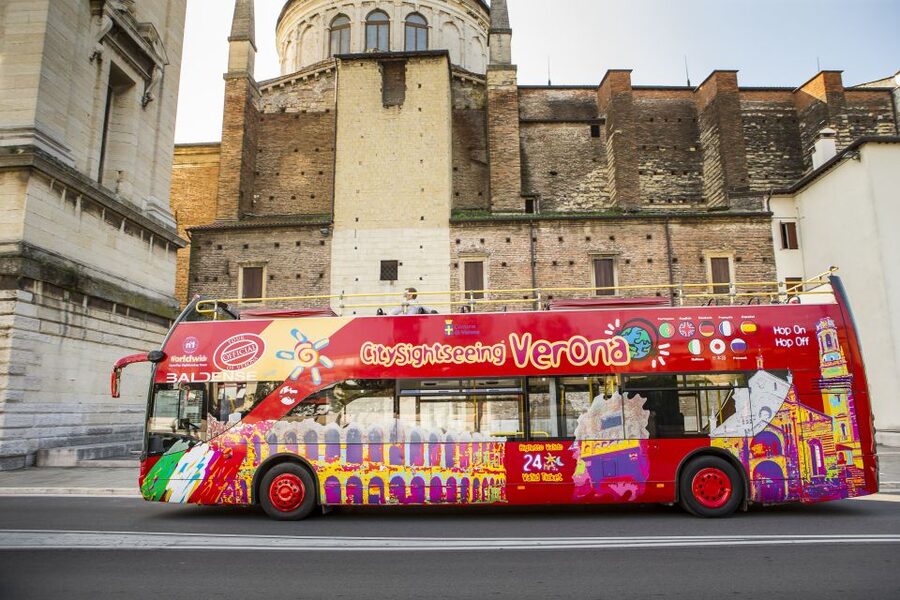
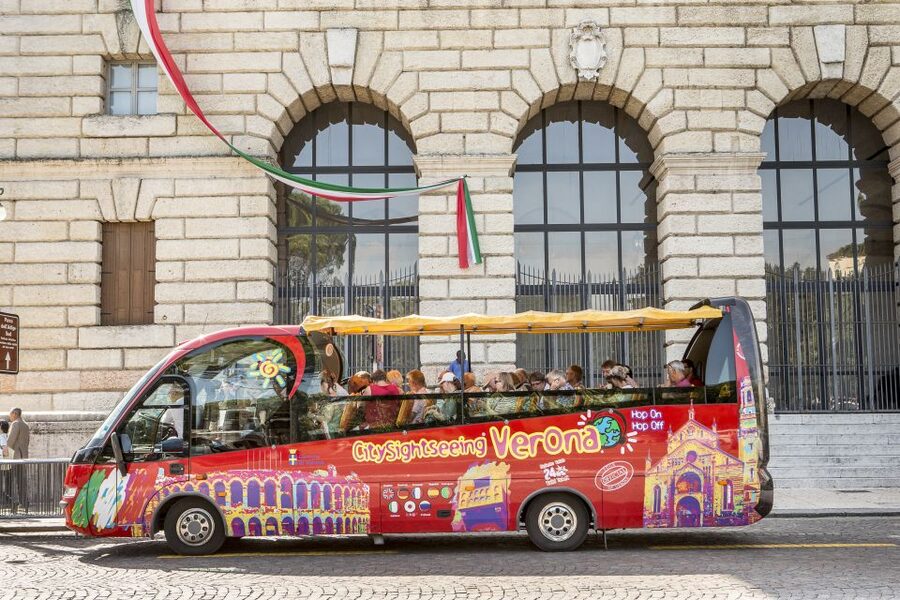
You’ll choose between two routes labeled Red (big open-top bus) and Blue (often a smaller bus/van for parts of the route). The big difference is the type of experience you want: classic highlights with a wider sweep (Red) or a tighter, more varied feel with hill viewpoints and romance-themed stops (Blue).
A great way to use this system is not “either/or,” but “first bearings, then focus.” I’d plan to do at least part of both loops if you can, especially if it’s your first time in Verona.
Red route: best for Roman + medieval anchors
The Red route leans into Verona’s big-name stack: Arena-area start, medieval walls and the San Zeno quarter, plus Roman remains like the Teatro Romano. It also stops near shopping-friendly streets like Via Diaz, and it includes a few gate-to-square moments that make the old city feel readable.
Blue route: best for hill views and Juliet-area stops
The Blue route adds a hill component via Castel S Pietro, which is where you’ll get those postcard-style angles over the city. It also focuses more directly on Romeo and Juliet territory, with stops tied to the Juliet story areas, including Piazza Erbe and the Casa di Giulietta area.
Piazza Bra: the Arena Square that makes orientation easy
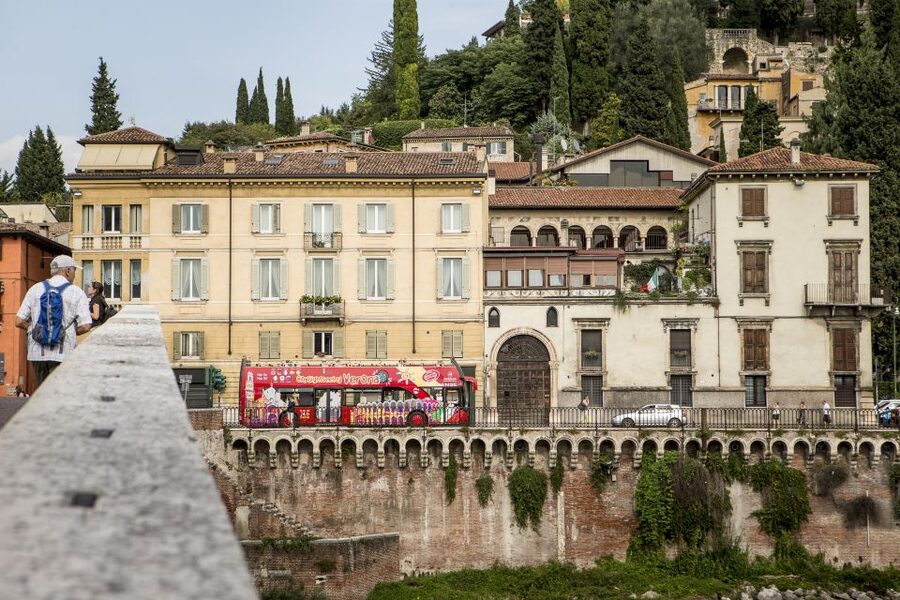
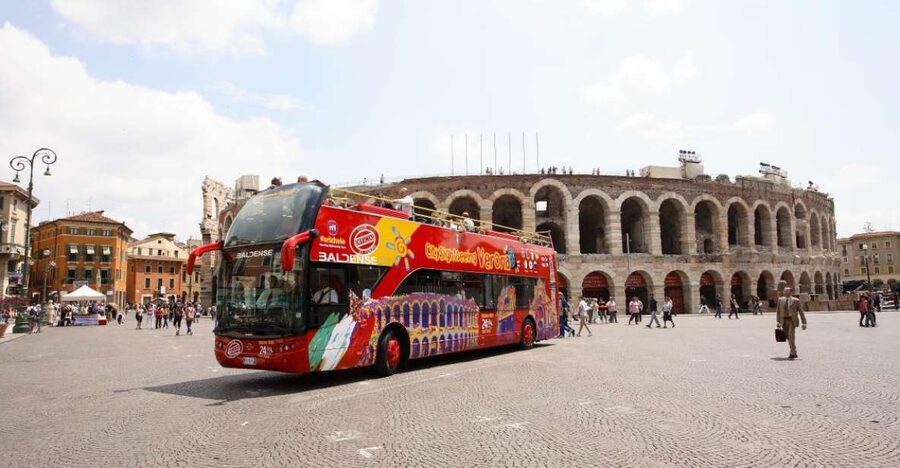
Both routes start at Piazza Bra, the square by the Arena di Verona. That’s a big deal because it means you’re not searching the city for where the buses run—you begin at the loudest landmark in town.
From there, it’s easy to understand Verona’s shape. You can see how the old core wraps around the major squares and gates, and you’ll notice how many key sights cluster around the medieval wall line and nearby neighborhoods.
If you’re only in Verona for a short window, starting at Piazza Bra also makes it simple to structure your day: ride a loop, hop off for photos and a walk, then get back on and continue.
Red route highlights: gates, San Zeno, Via Diaz, and the Teatro Romano
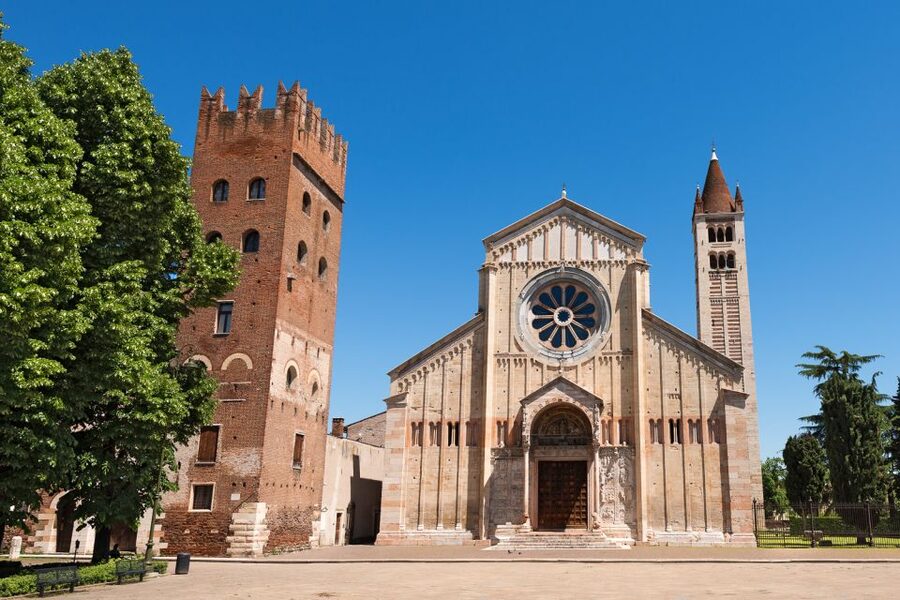
The Red line’s stops are arranged to give you a “greatest hits” understanding of Verona’s mix of medieval and Roman. The ride itself is about an hour per circuit, so it’s a good pace if you want to cover ground without feeling trapped.
Here’s what each key stop means for your day:
Piazza Bra (Arena Square)
You’ll start here, and it’s also one of the most satisfying places to hop on and off because the Arena di Verona is the visual anchor. Even if you don’t go inside, you get the scale and the setting right away.
Corso Porta Nuova Giardini Pradaval + Stazione FS Porta Nuova
These stops are useful if you want smoother movement between parts of Verona. They also help if you’re using the bus as transport rather than only sightseeing—especially if you’re staying near the train station area.
Piazza Pozza
Piazza Pozza is one of those “you’ll know it when you see it” squares. If you want a short walk break, this is a practical hop-off point because it puts you close to central streets without forcing a long trek.
Basilica S. Zeno + Castelvecchio (San Zeno quarter)
This is where the Red route earns its reputation. You’re in the San Zeno area, and the stop is tied to Basilica S. Zeno plus Castelvecchio. This zone is great because it gives you medieval power plus fortress vibes—an easy contrast after Roman-themed visuals.
Via Diaz + Porta Borsari
I like this pair of stops because they connect sightseeing with your leisure time. Via Diaz is a shopping street, so if you want to browse while you’re in the neighborhood, it’s built for that. And Porta Borsari adds a historic gate moment that helps you understand the old defensive layout.
Teatro Romano
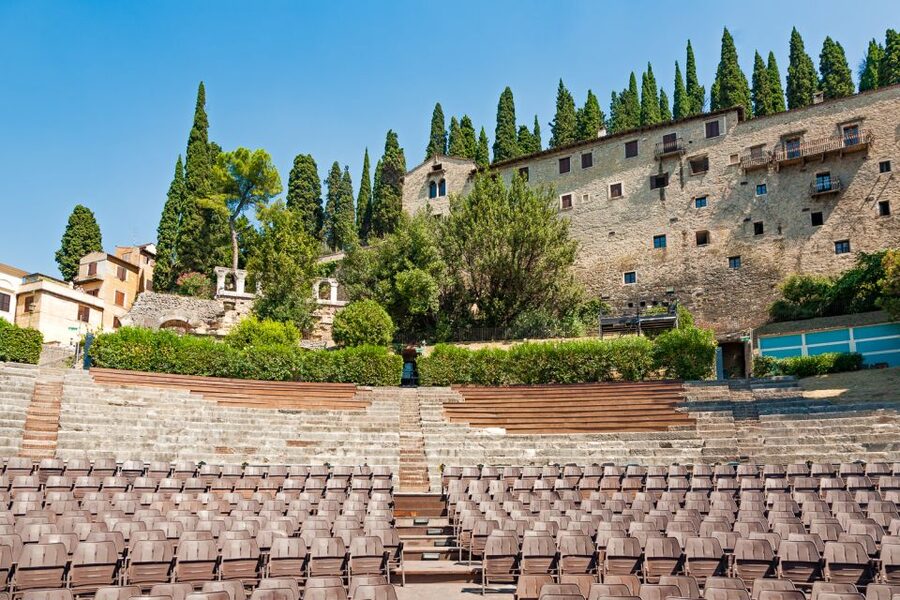
The Teatro Romano stop is one of the most meaningful “Roman Verona” moments. Even if you don’t buy an attraction ticket, the exterior context and setting are worth stopping for, especially if you like seeing where ancient life actually sat in the modern city.
Porta Leoni + Piazza Leoni (Casa di Giulietta area)
The Red route ends its core sightseeing run with the gates and the Piazza Leoni area linked to Juliet’s House. If your plan is only one loop, this gives you a convenient landing spot for Romeo and Juliet tourism without extra planning.
Blue route highlights: Juliet-area stops plus the hill at Castel S Pietro
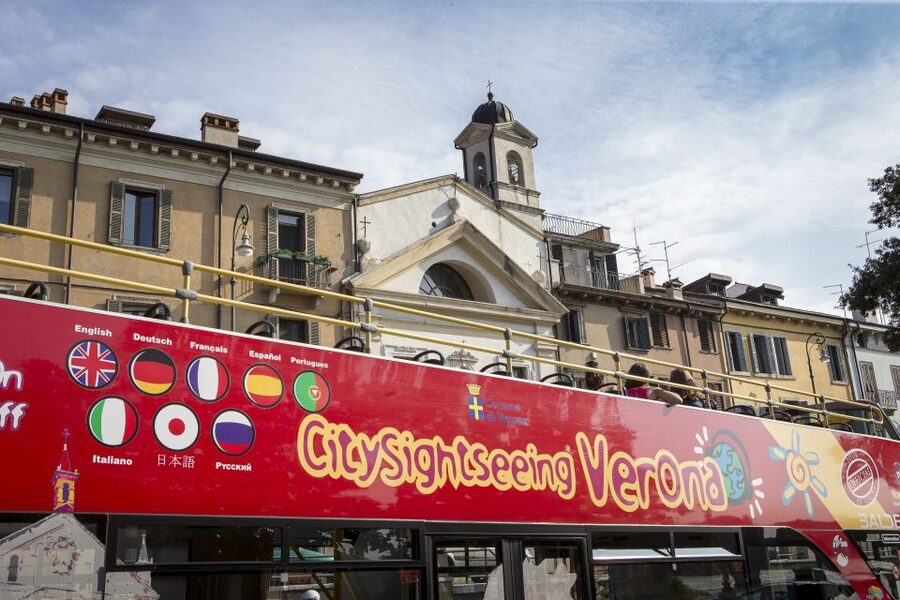
The Blue route is often the one I point people toward if they want more variety in what they see from the bus. It includes romance-related stops and one very practical bonus: a climb to Castel S Pietro for major city views.
Piazza Bra (start again)
Same hub, same start. The difference is where it takes you after that.
Via Pallone + Tomba Giulietta
This stop line is explicitly tied to the Juliet story areas, including Tomba Giulietta. If Shakespeare is your entry point to Verona, this helps you keep that thread without needing a map marathon.
Via G. Giusti + S. Stefano (Teatro Romano area)
These are neighborhood-style stops that feel more walkable for quick exploration. You’ll also be connecting viewpoints and historic layers—more old Verona texture than only headline monuments.
Castel S Pietro (big viewpoint stop)
If you only do one “extra” thing on the Blue route, make it this. The hill viewpoint is where you get the sense of how Verona spreads out and how the river-city vibe looks from above. It’s also a natural spot to hop off, take photos, and then decide if you want to extend your walk or just go back to the bus.
Duomo + Piazza Erbe + Casa di Giulietta
You’ll hit Duomo and Piazza Erbe, which are central for the everyday Verona feel. Piazza Erbe is also handy if you want a quick break for snacks or simply people-watching between stops. And the Casa di Giulietta area connection keeps the Romeo-and-Juliet theme in play.
Porta Leoni + Piazza Leoni (Juliet’s House area)
This brings you back to the same “Juliet zone” area the Red route uses. That overlap is useful: you can choose which loop you ride to reach it, then spend time there without feeling like you’re locked into the rest of one route.
Audio commentary in many languages: how to actually use it
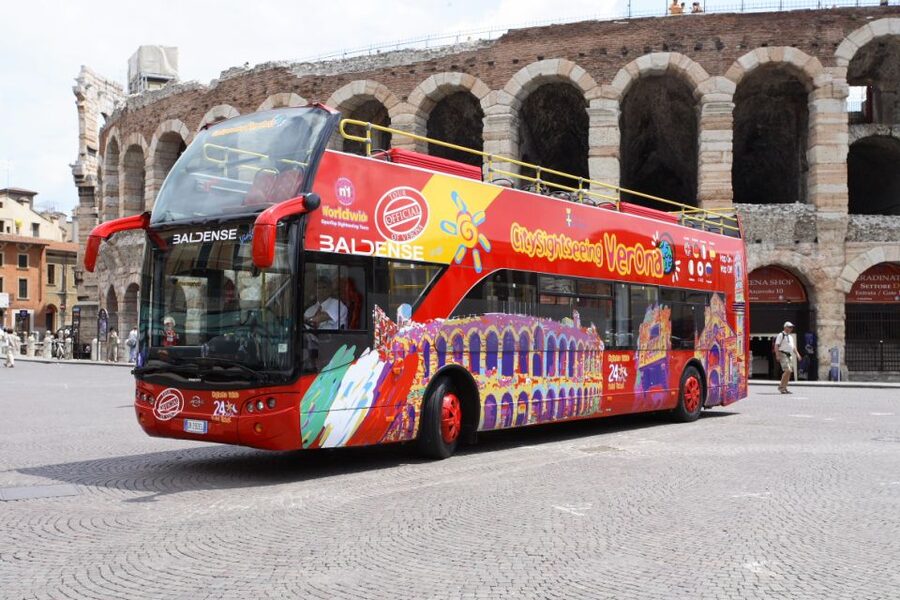
The audio is included, and it’s available in a long list of languages: English, Italian, Spanish, French, German, Portuguese, Japanese, Russian, Arabic, Chinese, Danish, and Dutch. That’s genuinely helpful if you’re traveling with someone whose language isn’t covered well by other tours.
I also like that the narration is tied to what you’re seeing right now. Instead of reading about the Arena later, you get the story while you’re looking at it—so the city feels more connected.
One practical note: some riders say the audio on the Blue line can be weaker and that the narration can repeat facts. Also, there’s a comment that the complimentary headphones are not great, so I’d plan to bring your own earbuds/headphones if you care about sound quality.
How to pace your 24 or 48-hour ticket without wasting time
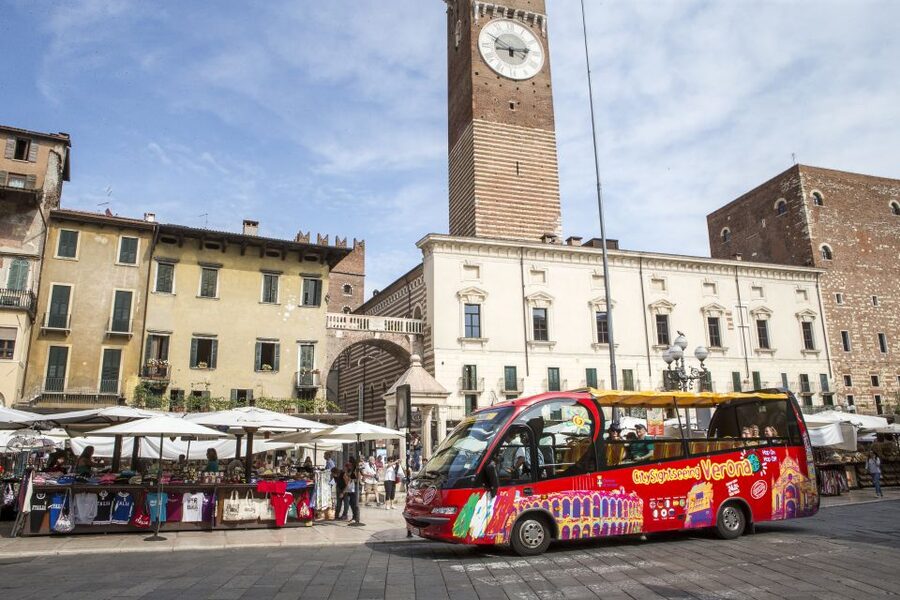
You can choose a 24-hour or 48-hour ticket. The buses run on each route every hour, and each loop is roughly an hour ride, so you can build a schedule that feels realistic.
If you’re doing a 24-hour ticket, I suggest this approach:
- Start with one route in the morning for orientation.
- Hop off at 2–4 stops you genuinely want to walk.
- Use the second loop later only if it adds new sights for you (like San Zeno or Castel S Pietro).
If you have 48 hours, you get freedom to repeat without guilt. This matters in Verona because you might want to return for daylight photos, a slower walk through a square, or another quick pass at the sights clustered around the Arena and old center.
A detail that comes up often: if you hop off for a very short photo stop, every-hour bus timing can make you feel rushed. So use the hop-off system with intention: hop off where you expect to spend at least a little time.
Pricing and value: what $29 buys you (and what it doesn’t)
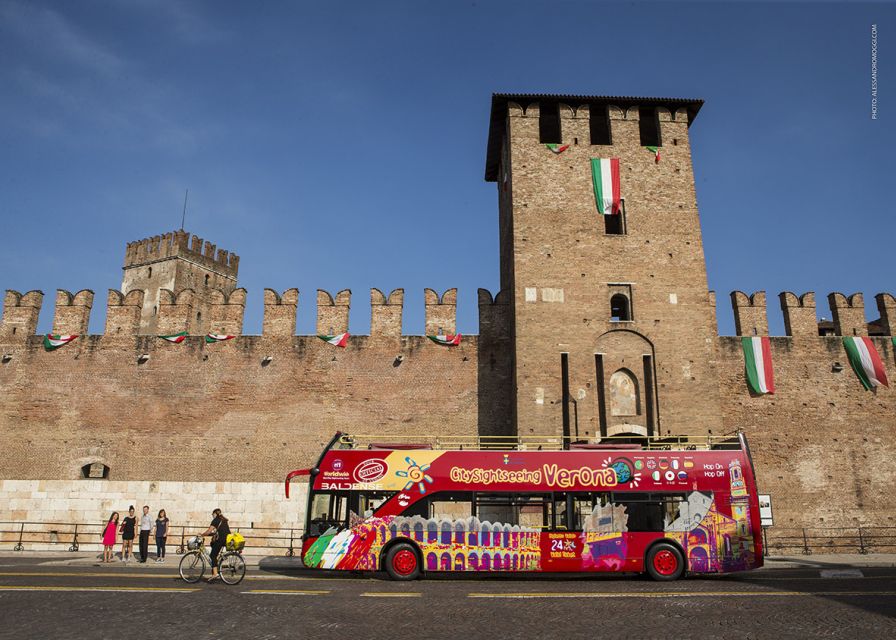
At about $29 per person, this is priced like a transportation-and-guidance package, not like a full attraction day. You do get two key things:
- Hop-on hop-off bus access for 24 or 48 hours
- Multilingual recorded audio
What you don’t get is entrance tickets for major attractions. That’s a plus if you like flexibility—because you can decide on the spot what’s worth paying for. It’s also a minus if you’re hoping the bus ticket replaces everything else. It won’t.
For value, think of it this way: Verona’s top sights are spread out just enough that walking-only can be tiring. This ticket lets you cover more ground than you would on foot in a day, while also giving you “why it matters” context through the audio.
If you’re combining this with a separate city sightseeing pass, the bus can work like the transport backbone. One rider even mentioned pairing it with a Verona card to see more sights with less friction.
Best for: who this works for (and who might skip)
This bus-style format is ideal if you:
- Want to see Verona’s major landmarks fast (especially on a first visit)
- Prefer less walking and more planning flexibility
- Like audio-guided touring where someone else handles the story beats
- Have a child in tow or simply want a break between walks
It may be less ideal if you:
- Hate waiting at stops (since buses run every hour)
- Want deep, museum-style interpretation rather than ride-time narration
- Plan to do only ultra-short hop-offs where the timing might feel tight
Quick practical tips for a smoother ride
A few small choices make the experience feel better right away:
- Bring your own headphones if you’re picky about sound quality. There’s a specific complaint about the included headphones.
- If you’re visiting in hot months, start earlier if you can. One common advantage of this bus is having a cool-off break between walks.
- Use the routes to plan your walking loops. Don’t treat it like teleportation; treat it like a timed map you can ride and adjust.
- If you’re aiming for photos at viewpoint stops, hop off with time in mind. There’s a note that the staff may wait a few minutes at hill viewpoints, but you still shouldn’t count on long photo sessions.
Also, watch for service disruption: on Wednesday 15 October, the service is suspended due to a cycling race.
Should you book this Verona hop-on hop-off bus?
I’d book it if you want the fastest path to understanding Verona—Roman and medieval sights, plus the Juliet story areas—without building a heavy walking itinerary. The combination of two routes, long narration in many languages, and hourly hop-on flexibility makes it a practical way to get bearings quickly.
Skip it only if you’re already confident you’ll only walk specific areas and you don’t care about audio guidance or panoramic bus views. In that case, you could plan a neighborhood-by-neighborhood route and save the bus cost.
FAQ
Where do the red and blue bus routes start?
Both routes start at Piazza Bra (the Arena Square).
How long is the ticket valid?
You can choose either a 24-hour or 48-hour bus ticket. The activity covers 1–2 days depending on the option you pick.
How often do the buses run?
The buses run on each route every hour.
What are the main stops on the Red route?
Key Red route stops include: Piazza Bra, Piazza Pozza, Basilica S. Zeno / Castelvecchio, Via Diaz / Porta Borsari, Teatro Romano, Porta Leoni, and Piazza Leoni (Juliet’s House).
What are the main stops on the Blue route?
Key Blue route stops include: Piazza Bra, Tomba Giulietta (Via Pallone), Via G. Giusti, S. Stefano (Teatro Romano area), Castel S Pietro, Duomo, Piazza Erbe (Casa Giulietta), Porta Leoni, and Piazza Leoni (Juliet’s House).
What languages is the audio commentary available in?
The audio commentary is available in English, Italian, Spanish, French, German, Portuguese, Japanese, Russian, Arabic, Chinese, Danish, and Dutch.
Are attraction tickets included?
No. Attraction tickets are not included.
Is there any date when the service may be suspended?
Yes. On Wednesday 15 October, the service is suspended due to a cycling race.